
The Historical Accounts of Greek Travelers in Ancient India

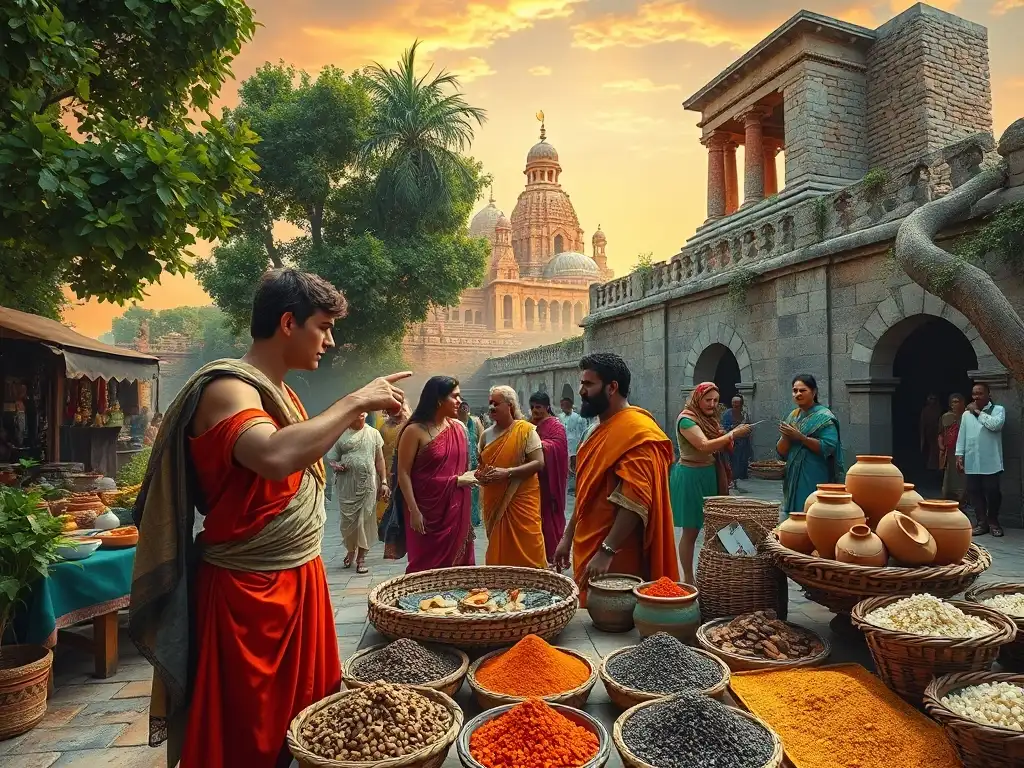
Welcome to Ancient India History, where we delve into the rich tapestry of civilizations that shaped the Indian subcontinent. In our featured article, “The Historical Accounts of Greek Travelers in Ancient India,” we embark on a fascinating journey through time, uncovering the insights and observations of Greek visitors who encountered the wonders of ancient India. What did they think of its cultures, people, and innovations? Join us as we explore their captivating narratives and discover how these interactions influenced the course of history. Prepare to be intrigued and inspired—there’s so much more to uncover!
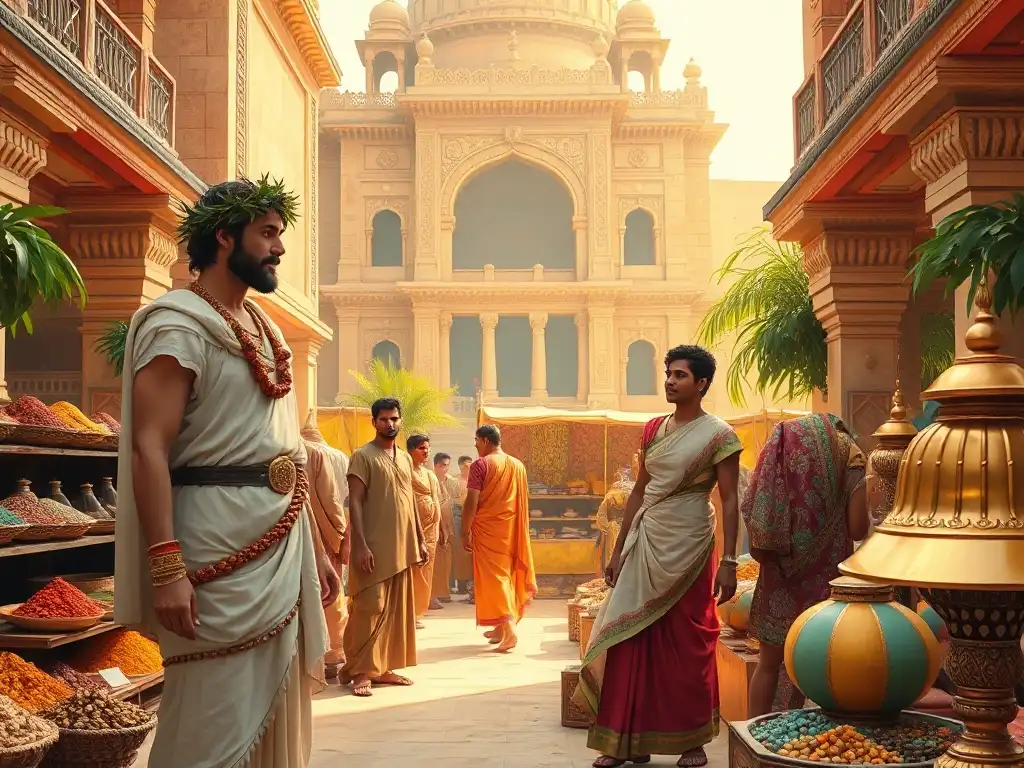
Introduction to Greek Travelers in Ancient India
The historical interactions between Greece and India represent a fascinating chapter in the narrative of ancient civilizations. The accounts of Greek travelers in ancient India serve as a crucial lens through which we can explore the cultural, economic, and political exchanges that occurred between these two great civilizations. From the sophisticated urban centers of the Indus Valley to the philosophical musings of the Gupta Empire, ancient India presented a rich tapestry of life that intrigued Greek visitors. Their observations not only documented the diversity of Indian culture but also highlighted the profound influence of Hellenistic thought on Indian society.
As we delve into the historical accounts of these Greek travelers, it becomes evident that their writings provide invaluable insights into the customs, governance, and societal structures of ancient India. Moreover, these accounts reflect the broader context of Indian-Greek relations during a period marked by exploration, conquest, and cultural exchange. Understanding these interactions allows us to appreciate the complexities of ancient history and the lasting impact of these early encounters.
Overview of Greek Influence on Ancient Indian Civilization
The influence of Greek culture on ancient Indian civilization is evident in various facets of life, including art, philosophy, and trade. Following the conquests of Alexander the Great, a new era of contact emerged, facilitating not only the exchange of goods but also ideas and cultural practices.
- Art and Architecture: Greek elements can be seen in the art and architecture of the period, characterized by intricate designs and the introduction of new sculptural techniques.
- Philosophy: The interaction led to the dissemination of philosophical ideas, with Greek thinkers influencing Indian philosophies and vice versa, fostering a rich intellectual environment.
- Trade Routes: The establishment of trade routes between India and Greece facilitated economic exchanges that enriched both cultures, leading to a flourishing of commerce and interaction.
In essence, the Greek influence on ancient Indian civilization was multifaceted, leaving a lasting legacy that shaped various aspects of Indian culture.
Importance of Greek Accounts in Historical Context
The accounts of Greek travelers are of paramount importance in the historical context of ancient India. They serve as primary sources that offer unique perspectives on the social, political, and cultural dynamics of the time. The writings of these travelers provide evidence of:
- Cultural Exchange: Insights into the cultural practices, religious beliefs, and daily lives of the Indian populace.
- Political Structures: Descriptions of the political landscape, including the governance systems and the relationships between various kingdoms.
- Economic Conditions: Observations regarding trade practices, agricultural methods, and the economic interactions between different regions.
These accounts not only enrich our understanding of ancient India but also contribute to the broader narrative of cross-cultural interactions in the ancient world.
Notable Greek Travelers to Ancient India
Several Greek travelers left a significant mark on the historical accounts of ancient India. Their journeys and writings have become crucial in piecing together the intricate web of Indian-Greek relations.
Megasthenes: The Ambassador of Seleucus
Megasthenes, a Greek ambassador to the Mauryan court during the reign of Chandragupta Maurya, is one of the most notable figures among Greek travelers in ancient India. His work, Indica, offers a detailed account of the Mauryan Empire's political structure, social customs, and economic practices.
- Political Insights: Megasthenes described the administrative divisions and the governance system in place, highlighting the efficiency and organization of the Mauryan state.
- Cultural Observations: He also documented various aspects of Indian life, including the caste system, religious practices, and the role of women in society.
Onesicritus: The Explorer and Chronicler
Onesicritus, a student of the philosopher Diogenes, traveled to India with the fleet of Alexander the Great. His writings provide a unique perspective on the encounters between Greek and Indian cultures.
- Philosophical Exchanges: Onesicritus is known for documenting philosophical discussions he had with Indian sages, showcasing the intellectual curiosity that characterized this period.
- Cultural Differences: His accounts highlight the contrasts between Greek and Indian ways of life, particularly in terms of governance and social hierarchies.
Arrian: The Historian of Alexander’s Campaign
Arrian, another significant Greek historian, chronicled Alexander's campaigns in his work Anabasis Alexandri. His records include descriptions of the territories that Alexander traversed, including parts of India.
- Military Insights: Arrian's accounts provide valuable information about the military strategies employed during Alexander's encounters with Indian kings.
- Geographical Descriptions: His detailed observations of the landscapes and cities encountered during the campaign enrich our understanding of ancient Indian geography.
The accounts of these Greek travelers not only document their experiences in ancient India but also serve as vital historical sources that continue to inform our understanding of Indian civilization and its interactions with the wider world.
Themes in Greek Accounts of Ancient India
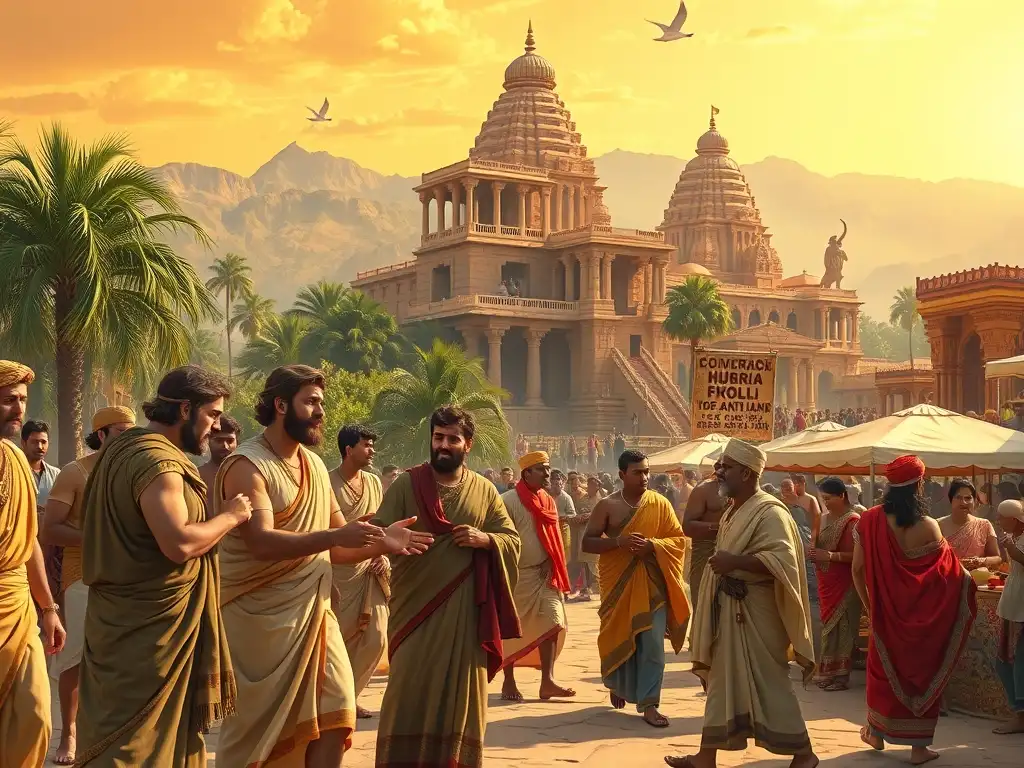
The historical accounts of Greek travelers in ancient India reveal a rich tapestry of themes, reflecting their observations, interactions, and interpretations of Indian society. These themes not only provide insights into the cultural and social dynamics of the time but also illustrate the perceptions held by the Greeks regarding the subcontinent. Prominent among these themes are the perceptions of Indian society and culture, trade relations and economic exchanges, and the political structures and leadership that characterized ancient India.
Perception of Indian Society and Culture
Greek travelers, such as Megasthenes and Arrian, offered detailed descriptions of Indian society and culture, often contrasting it with their own. They noted the diversity of languages, customs, and practices across various regions of India. Megasthenes, in his work Indica, highlighted the social hierarchy prevalent in Indian society, which included a variety of classes and occupations. The Greeks were particularly struck by the prominence of ethical living and the importance placed on physical health and education within Indian culture.
Furthermore, the travelers documented the religious practices of the Indians, including the veneration of multiple deities and the influence of ascetic traditions. The philosophical schools, such as Buddhism and Jainism, were also subjects of interest, showcasing India's rich spiritual landscape. Greek accounts often reflected a mix of admiration and bewilderment, as they grappled with the complexities of Indian customs and beliefs, contributing to a nuanced understanding of this ancient civilization.
Trade Relations and Economic Exchanges
The Greek accounts provide valuable insights into the trade relations between India and Greece, highlighting the economic exchanges that flourished during this period. Greek travelers noted the vast wealth of India, particularly its resources such as spices, textiles, and precious stones, which were highly sought after in the Mediterranean markets. This trade was facilitated through established routes, including land and maritime pathways, which enabled the movement of goods and ideas.
The accounts detail how Indian ports became vital hubs of commerce, attracting traders from various regions, including the Hellenistic world. The Greeks were impressed by the sophistication of Indian markets and the variety of goods available, leading to increased interactions between the two civilizations. This economic exchange not only enriched both societies but also fostered cultural exchanges, as ideas and practices traveled alongside commodities.
Political Structures and Leadership
The Greek travelers provided observations on the political structures and leadership of ancient India, often focusing on the governance style of Indian rulers. Megasthenes, for example, offered insights into the Mauryan Empire under Chandragupta Maurya, describing the administrative organization and the ruler's approach to governance. Greek accounts often emphasized the centralization of power and the role of the king, who was viewed as both a political leader and a figure of moral authority.
Greek travelers also noted the relationships between different kingdoms and the concept of diplomacy in ancient India. They documented instances of alliances and conflicts, reflecting the dynamic political landscape. This exploration of political structures not only enhanced Greek understanding of Indian governance but also provided a comparative framework for analyzing their own political systems.
Analysis of the Impact of Greek Travelers
The impact of Greek travelers on the understanding of ancient India was profound, shaping perceptions and creating a legacy that would influence future interactions between the two cultures. Their accounts served as a bridge, facilitating knowledge exchange and offering a lens through which subsequent civilizations would view India.
Influence on Greek Understanding of India
The writings of Greek travelers significantly influenced the Greek understanding of India, contributing to a broader awareness of its rich cultural and historical narrative. Through their detailed accounts, the Greeks gained insights into India's diverse societies, philosophies, and customs. This exposure not only enriched Greek intellectual thought but also sparked interest in Indian philosophy and spirituality.
Moreover, the documented observations of trade and economic practices led to increased commercial interests among Greek merchants, further connecting the two civilizations. The travelers' narratives played a crucial role in shaping Greek imaginations of India, often blending admiration with exoticism, which would resonate in later literature and artistic representations.
Legacy of Greek Accounts in Indian History
The legacy of Greek accounts in Indian history is multifaceted, influencing both historical scholarship and cultural narratives. These early observations laid the groundwork for future studies of Indian civilization by providing one of the first comprehensive analyses of its societal structures, trade practices, and political frameworks.
In addition, Greek travelers' writings contributed to the development of a cross-cultural dialogue that would endure for centuries. Their interpretations of Indian customs and governance influenced later historians and scholars, impacting how India was perceived in the broader context of world history. The intermingling of Greek and Indian cultures, as documented by these travelers, has left a lasting imprint on the historical narrative, demonstrating the significance of these early interactions in shaping the course of both civilizations.
Conclusion: The Significance of Greek Travelers in Ancient Indian History
The accounts of Greek travelers in ancient India provide invaluable insights into the cultural, social, and economic dynamics of the time. These travelers, such as Megasthenes and Onesicritus, not only documented the political landscapes but also delved into the daily life of the Indian populace, offering a glimpse into the rich tapestry of Indian civilization. Their observations serve as primary sources that illuminate the complexities of ancient Indian society, including its diverse religious practices, sophisticated governance structures, and vibrant trade networks.
The significance of these accounts extends beyond mere historical records; they represent a critical bridge between the East and West, showcasing the interactions that shaped the ancient world. Through their writings, Greek travelers contributed to a broader understanding of India, fostering curiosity and engagement that would influence subsequent generations of scholars, traders, and explorers. Their narratives helped to construct an image of India that was both exotic and intriguing, leading to increased interest in Indian culture and philosophy in the Hellenistic world.
Reflection on Cultural Interactions
The cultural interactions between Greek travelers and Indian society were profound and multifaceted. These encounters facilitated not only the exchange of ideas but also the sharing of traditions and practices. For instance, the Greeks were introduced to Indian philosophies such as Buddhism and Jainism, which later influenced Hellenistic thought. In turn, the Greeks brought with them their own cultural elements, including art and architecture, which can be seen in the subsequent development of Indo-Greek styles that merged elements from both cultures.
Furthermore, these interactions played a pivotal role in the economic integration of the regions. The Greeks, particularly during the time of Alexander the Great, established trade routes that connected India with the Mediterranean world. This not only enabled the flow of goods but also encouraged the exchange of knowledge, leading to advancements in various fields such as mathematics, astronomy, and medicine. The legacy of these cultural interactions is evident today, as they laid the groundwork for the syncretic culture that emerged in subsequent centuries.
The Enduring Legacy of Greek Accounts in Understanding Ancient India
The writings of Greek travelers continue to be a vital resource for historians and archaeologists studying ancient India. Their detailed observations provide context and perspective that enrich our understanding of the time period. For example, Megasthenes’ description of the Mauryan Empire highlights the administrative sophistication and the welfare policies of the time, offering a contrast to contemporary Western societies.
Moreover, these accounts serve as a springboard for further research and exploration into the social dynamics of ancient Indian civilizations. They encourage scholars to investigate not only the historical accuracy of these narratives but also the cultural implications of cross-cultural exchanges. The enduring legacy of these Greek travelers is thus twofold: they provide historical data while also inspiring ongoing dialogues about cultural identity and intercultural relations.
The accounts of Greek travelers in ancient India are more than just historical texts; they are vital links that connect diverse civilizations through shared narratives, enriching our understanding of human history and cultural evolution. Their significance in illustrating the interconnectedness of ancient societies remains relevant, reminding us of the importance of cultural exchange in shaping our world.
- Introduction to Greek Travelers in Ancient India
- Overview of Greek Influence on Ancient Indian Civilization
- Importance of Greek Accounts in Historical Context
- Notable Greek Travelers to Ancient India
- Themes in Greek Accounts of Ancient India
- Analysis of the Impact of Greek Travelers
- Conclusion: The Significance of Greek Travelers in Ancient Indian History
- What contributions did Greek travelers make to our understanding of ancient India?
- Who were some notable Greek travelers who visited ancient India?
- What are some key themes found in the writings of Greek travelers in ancient India?
- How did the accounts of Greek travelers influence modern perceptions of ancient Indian history?
- Why are the accounts of Greek travelers considered important for studying ancient Indian civilizations?
Frequently Asked Questions
What contributions did Greek travelers make to our understanding of ancient India?
Greek travelers documented their observations on Indian culture, geography, and society, providing invaluable insights that helped later historians understand the complexities of ancient Indian civilizations.
Who were some notable Greek travelers who visited ancient India?
Notable figures include Megasthenes and Fa-Hien, who provided detailed accounts of Indian life, governance, and the social structure during their respective visits in the Mauryan and Gupta periods.
What are some key themes found in the writings of Greek travelers in ancient India?
Their writings often focus on trade, religion, social customs, and the political systems of Indian kingdoms, highlighting the cultural exchanges between Greece and India.
How did the accounts of Greek travelers influence modern perceptions of ancient Indian history?
These accounts helped shape the narrative of Indian history by introducing the Western world to India's rich traditions, contributing to a broader understanding of its cultural heritage.
Why are the accounts of Greek travelers considered important for studying ancient Indian civilizations?
They serve as primary sources that provide context and details about daily life, trade, and politics, enriching our knowledge of a significant period in Indian history.
Final Reflection: The Enduring Legacy of Greek Travelers in Ancient India
The accounts of Greek travelers in ancient India reveal a rich tapestry of cultural exchange that remains profoundly relevant today. As we navigate an increasingly interconnected world, the insights shared by these early explorers remind us of the importance of understanding and appreciating diverse cultures. Their journeys not only documented the wonders of India but also highlighted the universal human quest for knowledge and connection, underscoring that the spirit of exploration is timeless.
The narratives of these Greek travelers have significantly shaped our understanding of ancient civilizations and continue to influence contemporary discourse on cultural interactions. Their observations provide a lens through which we can examine the complexities of cross-cultural relationships. As historian Richard Stoneman aptly noted, The accounts of ancient travelers serve as bridges between cultures, illuminating the paths of understanding and mutual respect.
This ongoing dialogue between cultures fosters a sense of shared humanity, reminding us that our histories are intertwined.
As we reflect on the journeys of these Greek travelers, let us embrace the lessons they impart about curiosity and openness. I invite you to explore the rich histories and cultures around you, recognizing that every encounter is an opportunity for growth and understanding. By engaging with the stories of others, we can cultivate a deeper appreciation for our shared heritage and inspire future generations to continue the journey of exploration and connection.
Embark on Your Own Journey of Discovery!
Thank you for diving into the fascinating world of Greek travelers in Ancient India! Your interest in this historical narrative underscores the rich tapestry of cultural exchange that has shaped our world. Now, it’s time to take your exploration further—here’s how you can engage even deeper with this captivating topic:
- Rediscover Ancient Routes: Plan a virtual or in-person exploration of the historic trade routes that connected Greece and India. Consider visiting local museums or exploring online exhibits that showcase their shared heritage.
- Join the Conversation: Share your thoughts on the article in the comments below, or connect with fellow history enthusiasts in online forums or social media groups. Your insights could spark intriguing discussions!
- Explore Further Literature: Seek out books and documentaries that delve into the lives and experiences of these travelers. You might even organize a small book club with friends to discuss these fascinating perspectives.
What insights or connections do you see between Greek and Indian cultures that could inspire modern dialogue?