
Sanskrit in the Context of Ancient Indian Astronomy

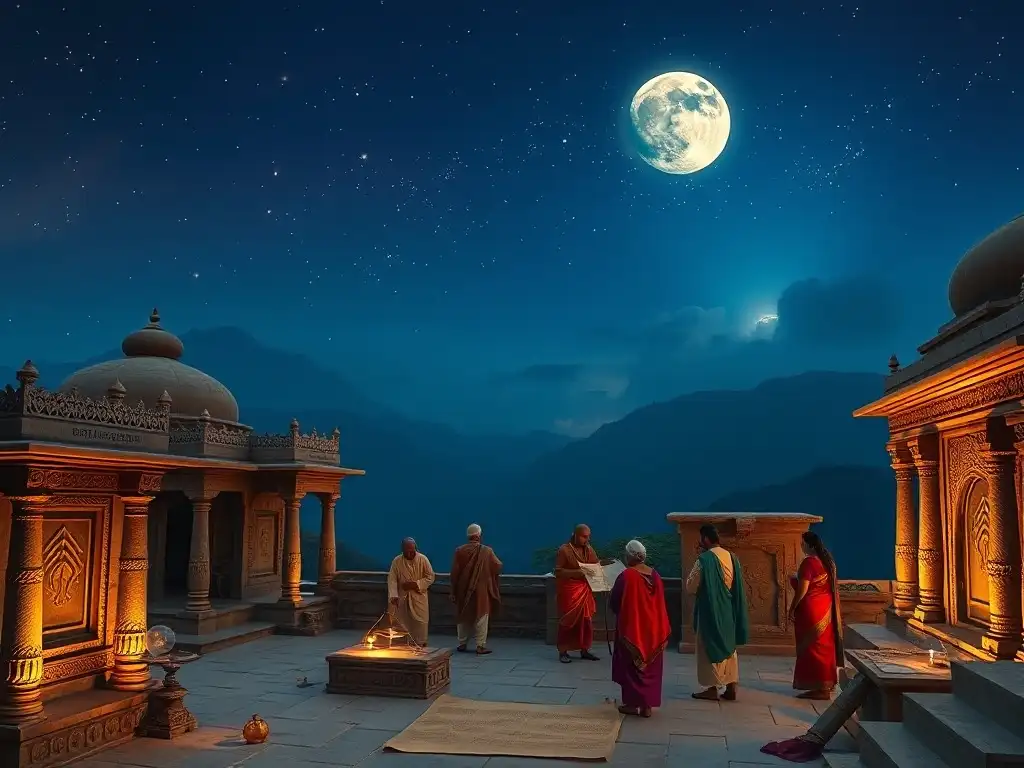
Welcome to Ancient India History, where we invite you to embark on an enlightening journey through the rich tapestry of India's past. Delve into the fascinating world of Sanskrit and ancient Indian astronomy, where language and science intertwine, revealing the profound insights of civilizations that shaped human understanding of the cosmos. Curious about how the ancient scholars of India contributed to astronomy through their linguistic prowess?
Join us as we explore the intricate connections that illuminate not just the stars, but also the very foundation of knowledge itself. Read on to uncover the secrets that lie within this captivating intersection of language and science!
- Introduction to Sanskrit and Ancient Indian Astronomy
- Historical Context of Sanskrit in Astronomy
- Terminology and Concepts in Sanskrit Astronomy
- The Influence of Sanskrit on Astronomical Practices
- Comparative Analysis of Sanskrit and Other Ancient Languages in Astronomy
- The Legacy of Sanskrit in Modern Astronomy
- Conclusion
-
Frequently Asked Questions
- What role did Sanskrit play in ancient Indian astronomy?
- How did ancient Indian astronomers contribute to our understanding of the cosmos?
- Were there any notable texts on astronomy written in Sanskrit?
- How did the Gupta Empire influence astronomy in ancient India?
- Is there a connection between Sanskrit and other scientific fields in ancient India?
- Final Reflection: The Timeless Connection Between Sanskrit and Ancient Indian Astronomy
- Unveil the Wisdom of Ancient Indian Astronomy!
Introduction to Sanskrit and Ancient Indian Astronomy
The study of Sanskrit is inextricably linked to the rich tapestry of ancient Indian astronomy, which flourished thousands of years ago. As one of the oldest languages in the world, Sanskrit served not only as a medium of communication but also as a vessel for the transmission of knowledge, culture, and scientific thought.
In this article, we will delve into the profound impact of Sanskrit on ancient Indian astronomy, exploring how this classical language facilitated the documentation, dissemination, and advancement of astronomical concepts and practices. By examining the intersections of language and science, we can better appreciate the contributions of ancient Indian civilizations, from the Indus Valley to the Gupta Empire, in shaping our understanding of the cosmos.
Overview of Sanskrit's Role in Ancient Indian Culture
Sanskrit was more than just a language; it was the cornerstone of ancient Indian intellectual and spiritual life. It was the language of the Vedas, the sacred texts that form the foundation of Hindu philosophy and rituals. Sanskrit's structure and vocabulary enabled scholars to articulate complex ideas, including those related to astronomy.
- Literary Contributions: Many astronomical texts, including the Surya Siddhanta and Aryabhata's works, were written in Sanskrit. These texts not only recorded astronomical observations but also provided mathematical formulas and astrological predictions.
- Preservation of Knowledge: Through oral traditions and later written manuscripts, Sanskrit played a crucial role in preserving astronomical knowledge across generations. This continuity allowed for the evolution of astronomical thought and practice.
- Cultural Significance: Sanskrit was deeply embedded in various aspects of ancient Indian culture, including art, music, and philosophy, which often intersected with astronomical themes. This cultural integration enriched the understanding of celestial phenomena.
Importance of Astronomy in Ancient India
Astronomy held a prominent place in ancient Indian society, influencing various facets of life, from agriculture to religious practices. The ancient Indian astronomers were not merely observers of the heavens; they were also mathematicians and philosophers who sought to comprehend the universe.
- Agricultural Planning: The understanding of celestial cycles was essential for agriculture, guiding farmers in determining the best times for sowing and harvesting crops.
- Religious Observances: Many Hindu festivals and rituals were linked to astronomical events, such as solstices and lunar phases, reflecting the deep connection between astronomy and spirituality.
- Scientific Advancements: Ancient Indian astronomers made significant contributions to the field, including the introduction of the concept of zero, advancements in trigonometry, and the development of sophisticated astronomical instruments.
The interplay between Sanskrit and ancient Indian astronomy not only highlights the linguistic richness of the period but also underscores the significance of astronomical knowledge in shaping ancient Indian civilization. Through this exploration, we gain valuable insights into the intellectual legacy of ancient India and its enduring impact on the world.
Historical Context of Sanskrit in Astronomy

Sanskrit, an ancient language of India, serves as a critical lens through which we can explore the advancements in astronomy during ancient times. The roots of Sanskrit can be traced back to the Vedic period, where it evolved as a sophisticated medium for philosophical, scientific, and literary expression. Its development paralleled significant astronomical observations and theories that emerged in ancient Indian civilization, especially during the Gupta Empire, which is often regarded as a golden age for science and mathematics.
During this period, Sanskrit became the preferred language for scholarly works, enabling the dissemination of astronomical knowledge across various regions. The meticulous documentation of celestial phenomena, calculations for timekeeping, and the development of mathematical principles all found expression in Sanskrit texts. Scholars utilized this language not only to record observations but also to communicate complex theories, thereby laying the groundwork for future astronomical studies.
Development of Sanskrit Language in Ancient India
The development of Sanskrit as a language can be divided into several phases, each contributing to its richness and complexity. Initially, the language was primarily oral, with the Vedas, the oldest scriptures of Hinduism, being transmitted verbally. The transition to a written form occurred later, around the 3rd century BCE, which facilitated the preservation and dissemination of knowledge.
- Vedic Sanskrit: The earliest form, used in the Vedas, primarily focused on religious rituals and hymns. This form laid the foundation for later developments in both language and thought.
- Classical Sanskrit: Around 500 BCE, Classical Sanskrit emerged, marked by the grammar and phonetics outlined by Panini in his seminal work, Ashtadhyayi. This period saw an expansion in vocabulary and syntax, allowing for more complex expressions of scientific thought, including astronomy.
- Literary and Scientific Texts: The flourishing of literature during the Gupta period saw Sanskrit being used in various genres, including poetry, drama, and scientific treatises. The clarity and precision of the language made it ideal for documenting astronomical theories and calculations.
The evolution of Sanskrit thus mirrors the advancements in ancient Indian astronomy, reflecting how language can shape scientific discourse and understanding.
Several key texts in Sanskrit have significantly contributed to the field of astronomy, showcasing the intellectual rigor of ancient Indian scholars. These texts not only document astronomical knowledge but also demonstrate the integration of mathematics and astronomy, a hallmark of ancient Indian science.
Aryabhata's Contributions
Aryabhata, a prominent mathematician and astronomer of the 5th century CE, is best known for his work, the Aryabhatiya. This seminal text consists of four sections, addressing arithmetic, algebra, and astronomy.
- Key Contributions:
- Aryabhata introduced the concept of zero and the place-value system, revolutionizing mathematics.
- In astronomy, he calculated the circumference of the Earth and proposed that the Earth rotates on its axis, a significant advancement over contemporary beliefs.
- He also devised methods for calculating the positions of celestial bodies and predicted eclipses with remarkable accuracy.
Aryabhata's use of Sanskrit not only made his findings accessible to scholars of his time but also ensured that his ideas continued to influence generations of mathematicians and astronomers.
Varahamihira's "Brahmasphutasiddhanta"
Varahamihira, a contemporary of Aryabhata, made substantial contributions to astronomy through his work, Brahmasphutasiddhanta, written in the 6th century CE. This text serves as a comprehensive guide to astronomical principles and practices.
- Key Features:
- Varahamihira expanded upon Aryabhata's findings and integrated various sources of knowledge, including Greek and Babylonian astronomy.
- He emphasized the importance of observation in astronomy and provided methods for calculating planetary positions and timings for eclipses.
- His work also includes discussions on astrology, reflecting the intertwined nature of astronomy and astrology in ancient Indian culture.
The Brahmasphutasiddhanta, written in eloquent Sanskrit, not only reflects Varahamihira's scholarly acumen but also illustrates the rich tradition of astronomical inquiry in ancient India.
The contributions of scholars like Aryabhata and Varahamihira, documented in Sanskrit texts, highlight the importance of this language in the development of ancient Indian astronomy. The precision and clarity of Sanskrit enabled the transmission of complex astronomical ideas, ensuring that they could be studied and built upon by future generations.
Terminology and Concepts in Sanskrit Astronomy

Sanskrit astronomy, also known as Jyotisha, is a profound field that intertwines linguistic, mathematical, and astronomical concepts. It is critical to understand the terminology and concepts used in ancient Indian astronomy to appreciate its contributions to the scientific world. The richness of the Sanskrit language allowed ancient astronomers to articulate complex ideas related to celestial phenomena, mathematical calculations, and observational practices.
Sanskrit Terms for Celestial Bodies
In Sanskrit, celestial bodies are referred to using specific terms that reflect their characteristics, movements, and significance in the cosmos. Here is a list of key terms:
- Graha (ग्रह): This term refers to planets and is derived from the root meaning "to seize" or "to grasp," indicating the influence these celestial bodies have on earthly matters.
- Nakshatra (नक्षत्र): Referring to lunar mansions or constellations, this term is essential in Vedic astrology and denotes specific regions in the sky where celestial bodies are observed.
- Tara (तारा): This term means "star" and is often used in poetic contexts to evoke the beauty of the night sky.
- Chandra (चन्द्र): Meaning "moon," this term is significant in both astronomical observations and astrological practices.
- Surya (सूर्य): The term for "sun," which symbolizes light, knowledge, and power in various texts.
These terms not only serve as identifiers but also encapsulate the philosophical and cultural understandings of the universe in ancient Indian thought.
Mathematical Concepts in Ancient Indian Astronomy
Ancient Indian astronomy is marked by its sophisticated mathematical frameworks, which were expressed through the medium of Sanskrit. The interplay between mathematics and astronomy is evident in various texts, particularly in the works of notable scholars like Aryabhata and Brahmagupta.
Use of Sanskrit in Astronomical Calculations
Sanskrit served as a powerful tool for articulating complex astronomical calculations. For instance, Aryabhata’s Aryabhatiya includes numerous formulas and algorithms for calculating the positions of celestial bodies, eclipses, and timekeeping. The use of Sanskrit shlokas (verses) allowed astronomers to encode mathematical principles in a concise manner, facilitating easier memorization and transmission of knowledge.
Some specific methodologies include:
- Trigonometric Functions: Sanskrit texts incorporated concepts of sine and cosine, often referred to as ardha-jya (half-chord) and jya (chord), respectively, showcasing an advanced understanding of geometry.
- Time Calculation: The concept of a yuga (epoch) and maha-yuga (great epoch) were used to quantify vast periods of time, reflecting an understanding of celestial cycles.
Influence of Sanskrit on Mathematical Terminology
Sanskrit has significantly influenced the mathematical terminology used in astronomy. Many mathematical terms have Sanskrit origins, which laid the groundwork for subsequent developments in mathematics and science. For example:
- Sankhya (संख्य): Meaning "number," it is the basis for various mathematical operations and is still used in modern contexts.
- Samkhya (सांख्य): A system of philosophical thought that incorporates mathematical concepts, impacting both theoretical and practical aspects of astronomy.
The continued relevance of these terms in contemporary mathematics highlights the enduring legacy of Sanskrit in the realm of astronomical inquiry. The precision and clarity provided by the Sanskrit language have enabled scholars to explore and expand upon ancient astronomical knowledge, ensuring its preservation and evolution through the ages.
The Influence of Sanskrit on Astronomical Practices
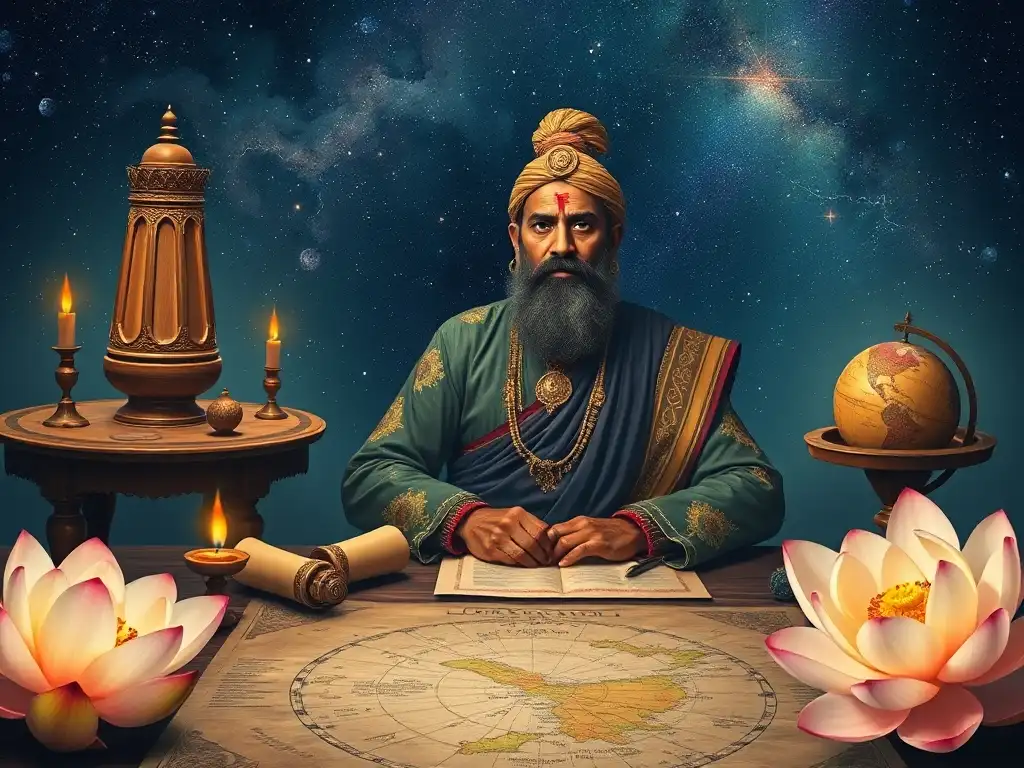
Sanskrit, the classical language of India, played a pivotal role in shaping the astronomical practices of ancient Indian civilizations. Its intricate structure and rich vocabulary provided the framework necessary for the precise expression of complex astronomical concepts and theories. The lexicon of Sanskrit allowed scholars to document celestial phenomena, formulate calculations, and create texts that have survived through centuries.
Rituals and Astronomy in Ancient India
In ancient India, astronomy was intertwined with religious rituals and cultural practices. The movement of celestial bodies was believed to influence terrestrial events, and thus, accurate astronomical knowledge was deemed essential for performing rituals.
- Astrological Significance:
- Vedic texts emphasized the importance of aligning rituals with auspicious planetary positions. The term "Muhurta," referred to a specific time frame deemed favorable for conducting ceremonies, was derived from Sanskrit and indicates the deep connection between timekeeping and astronomy.
- Each celestial body was associated with different deities, and their movements were meticulously recorded in texts like the Vedanga Jyotisha, which provided guidelines for timing rituals based on astronomical observations.
- Calendrical Systems:
- Sanskrit texts contributed to the development of sophisticated calendrical systems, such as the Lunar Calendar and the Solar Calendar. These systems were crucial for determining the dates of religious festivals and agricultural activities.
- The Surya Siddhanta, a seminal text in Sanskrit, detailed methods for calculating the positions of celestial bodies and understanding the cyclical nature of time, reinforcing astronomy’s role in societal functions.
- Astronomical Instruments:
- Sanskrit literature mentions various instruments used for astronomical observations, such as the Gnomon and Water Clock. Descriptions of these instruments are found in texts like the Aryabhatiya, authored by the mathematician Aryabhata, showcasing the practical applications of astronomical theories in daily life and rituals.
The Role of Sanskrit in Astronomical Observations
The use of Sanskrit in astronomical observations was vital for the preservation and transmission of knowledge. Scholars employed the language to articulate their findings and theories in a systematic manner.
- Textual Preservation:
- Key astronomical texts were written in Sanskrit, ensuring that knowledge could be passed down through generations. The Aryabhatiya and Brahmasphutasiddhanta are prime examples, providing not only astronomical data but also mathematical methods for calculations.
- The precision of Sanskrit allowed astronomers to detail observations of phenomena such as eclipses, planetary motions, and other celestial events. This meticulous record-keeping enabled future scholars to build upon earlier works.
- Mathematical Framework:
- Sanskrit’s grammatical structure facilitated the formulation of mathematical equations important for astronomical calculations. The use of terms like “Kshetra” (field) and “Sankhya” (number) in astronomical contexts underscores the mathematical foundation of ancient astronomy.
- Techniques such as interpolation and extrapolation were discussed extensively in these texts, demonstrating an understanding of mathematical principles that are still relevant in modern astronomy.
- Philosophical Underpinnings:
- Sanskrit texts often explore the philosophical implications of celestial phenomena. Concepts such as “Kala” (time) and “Akasha” (space) were not merely physical measurements but were also imbued with metaphysical significance, reflecting the holistic worldview of ancient Indian scholars.
- This philosophical approach influenced how astronomical data was interpreted and applied, emphasizing a blend of science and spirituality that characterized ancient Indian thought.
Sanskrit served as the bedrock for the development of astronomical knowledge in ancient India, influencing both practical applications in rituals and theoretical frameworks for celestial observations. Its legacy continues to resonate in the fields of astronomy and mathematics, underscoring the profound contributions of ancient Indian civilization to global knowledge.
Comparative Analysis of Sanskrit and Other Ancient Languages in Astronomy

In exploring the realm of ancient Indian astronomy, the significance of Sanskrit cannot be understated. This classical language not only served as a medium for astronomical texts but also engaged in a rich dialogue with other ancient languages, particularly Greek. A comparative analysis reveals both similarities and differences that illuminate the unique contributions of Sanskrit to the field of astronomy.
Similarities and Differences with Greek Astronomy Terminology
When examining Sanskrit and Greek terminology in astronomy, several parallels emerge, reflecting the shared intellectual pursuits of these ancient civilizations.
- Conceptual Overlaps: Both Sanskrit and Greek astronomers focused on celestial phenomena, utilizing similar concepts such as constellations, planets, and eclipses. Terms like Nakshatra (Sanskrit for constellation) and Asterism (Greek) denote the same celestial patterns, illustrating a common understanding of the night sky.
- Numerical Systems: The mathematical approaches used in both cultures also show striking similarities. For instance, Sanskrit texts such as the Aryabhatiya employ a place-value decimal system that parallels the Greek use of numerals for astronomical calculations. Both cultures excelled in geometry, which was essential for mapping celestial bodies.
- Differences in Terminology: Despite these similarities, substantial differences exist in the terminology and frameworks used. Sanskrit astronomy is characterized by an intricate system of Yogas (planetary combinations) and Dasha (planetary periods), which have no direct counterpart in Greek astronomy. This reflects a distinct philosophical approach to celestial phenomena, emphasizing the importance of time and auspiciousness in Hindu astrology.
- Cultural Context: The cultural context surrounding astronomy also diverges significantly. Greek astronomy was often associated with philosophical inquiry and scientific exploration, while Sanskrit astronomy is deeply intertwined with religious and astrological practices. For example, texts like the Surya Siddhanta not only provide astronomical calculations but also link these to cosmic cycles and rituals.
Influence of Sanskrit on Other Indian Languages
Sanskrit's profound impact on the development of other Indian languages, especially in the context of astronomy, is a testament to its enduring legacy.
- Linguistic Contributions: Many Indian languages, including Hindi, Bengali, and Kannada, have inherited astronomical terminology from Sanskrit. Terms like Graha (planet) and Chandra (moon) have been seamlessly integrated into these languages, showcasing the linguistic influence of Sanskrit.
- Cultural Integration: The dissemination of astronomical knowledge through Sanskrit texts facilitated the spread of scientific ideas across various regions of India. As scholars translated and adapted these works into local languages, they not only preserved the astronomical wisdom but also enriched regional dialects with specialized vocabulary.
- Educational Framework: Sanskrit served as the foundational language for astronomy education in ancient India. The tradition of Shastrartha (scholarly debate) in Sanskrit ensured that astronomical concepts were rigorously discussed and refined, influencing the vocabulary and scientific understanding within regional languages.
- Modern Relevance: In contemporary India, the influence of Sanskrit on regional languages continues to be evident in academic and cultural discussions surrounding astronomy. Terms derived from Sanskrit are frequently used in educational curricula, emphasizing their relevance in modern scientific discourse.
Through this comparative analysis, it is clear that Sanskrit not only played a pivotal role in ancient Indian astronomy but also influenced the broader linguistic and cultural landscape of the region. The interplay between Sanskrit and other ancient languages, particularly Greek, highlights a rich tapestry of shared knowledge and unique contributions that have shaped our understanding of the cosmos.
The Legacy of Sanskrit in Modern Astronomy
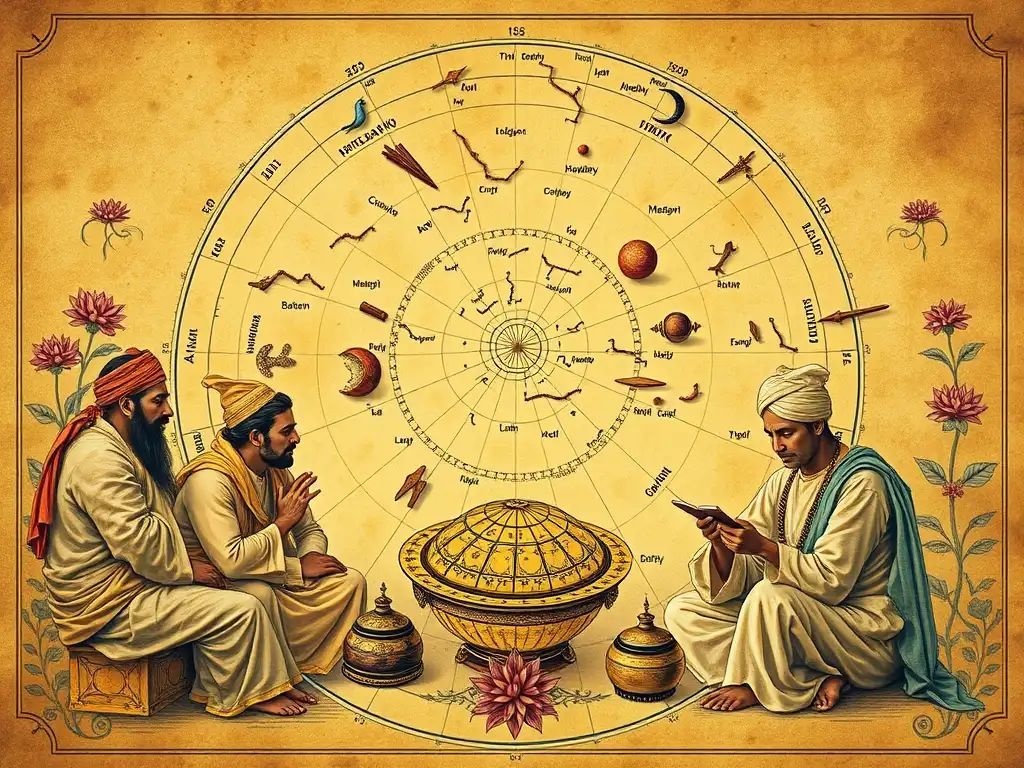
The profound legacy of Sanskrit extends beyond literature and philosophy into the realm of modern astronomy, where ancient texts continue to resonate with contemporary scientific inquiry. The contributions of ancient Indian astronomers, articulated in Sanskrit, laid foundational principles that are still relevant today. These texts not only documented celestial observations but also engaged in complex mathematical formulations that underpin modern astronomical practices.
Relevance of Ancient Sanskrit Texts Today
Ancient Sanskrit texts such as the Surya Siddhanta and the Aryabhatiya are pivotal in understanding the evolution of astronomical knowledge. The Surya Siddhanta, attributed to an unknown author, serves as a comprehensive manual on astronomy, detailing concepts such as:
- Ecliptic Coordinate System: Introducing the idea of celestial coordinates, which is fundamental in modern astronomy.
- Lunar and Solar Calculations: Providing methods for calculating lunar phases and solar positions, which remain relevant for contemporary astronomical calendars.
The Aryabhatiya, penned by Aryabhata, is significant for its early calculation of the Earth's circumference and the approximation of π (pi). These contributions highlight the advanced understanding of mathematics and geometry in ancient India.
Furthermore, the translations of these texts into various languages have helped preserve their teachings, making them accessible to scholars worldwide. The use of ancient Sanskrit concepts in modern research showcases their relevance, as seen in:
- Astrophysics: Where ancient equations are revisited for advanced modeling.
- Satellite Navigation: Drawing on ancient positional calculations for satellite trajectory planning.
Continuing Influence of Ancient Indian Astronomy
The influence of ancient Indian astronomy, articulated through the lens of Sanskrit, persists in various ways. Modern astronomers and mathematicians often refer back to these early texts for inspiration and validation of their theories. The methodologies outlined in these works demonstrate a depth of understanding that aligns closely with contemporary practices.
- Cultural Heritage: Ancient astronomy is integrated into cultural practices today, such as Hindu calendar systems which are still utilized for determining auspicious dates for festivals and rituals. The astronomical calculations derived from Sanskrit texts form the backbone of these calendars.
- Educational Framework: Many institutions incorporate the teachings of ancient Indian astronomers into their curricula, fostering a greater appreciation for the historical context of modern astronomy. This educational approach encourages new generations of scientists to explore the mathematical and astronomical foundations set forth in these ancient works.
- Research and Collaboration: Recent interdisciplinary studies have emerged, where astronomers collaborate with historians and linguists to reinterpret ancient manuscripts, leading to new insights in both fields. This collaborative approach underscores the lasting impact of Sanskrit on modern scientific discourse.
The legacy of Sanskrit in the context of ancient Indian astronomy is not merely a historical curiosity but a living influence that continues to shape modern astronomical practices and educational frameworks. The rich tapestry of knowledge woven through these texts offers valuable insights into the complexities of the universe, affirming the importance of preserving and studying these ancient works.
Conclusion
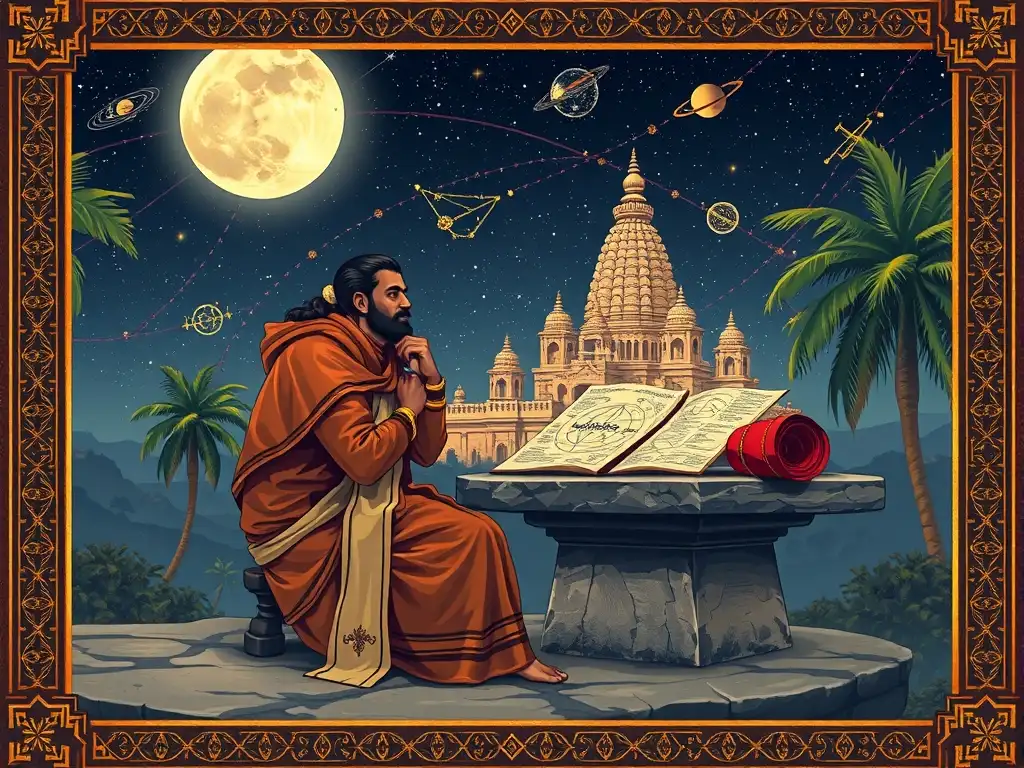
Summary of Sanskrit's Impact on Ancient Indian Astronomy
Sanskrit has played a pivotal role in the development of ancient Indian astronomy, serving as the primary language for scientific discourse and documentation. The vast corpus of astronomical texts, written in Sanskrit, highlights the sophistication of ancient Indian astronomical thought. Key contributions include:
- Surya Siddhanta: This foundational text, attributed to the 4th century CE, provides complex calculations for planetary positions and eclipses, showcasing the advanced understanding of celestial mechanics by ancient astronomers.
- Aryabhata's Aryabhatiya: Aryabhata's work, dating back to 499 CE, introduced the revolutionary concept of the Earth’s rotation on its axis, a notion that was remarkable for its time. His use of Sanskrit not only facilitated the dissemination of ideas but also established a standard for scientific language that influenced subsequent scholars.
- Brahmagupta's Brahmasphutasiddhanta: Written in the 7th century, this text further developed theories on planetary motions and provided methods for solving quadratic equations, reflecting the integration of mathematics and astronomy through the medium of Sanskrit.
The meticulous nature of Sanskrit, with its precise grammatical rules and rich vocabulary, allowed astronomers to articulate complex ideas clearly and concisely. This linguistic precision was crucial in ensuring that astronomical knowledge could be accurately transmitted across generations.
Final Thoughts on the Importance of Preserving Sanskrit Knowledge in Astronomy
Preserving the vast repository of Sanskrit texts related to astronomy is essential for several reasons:
- Cultural Heritage: The works of ancient Indian astronomers encapsulate the intellectual achievements and cultural richness of India. Maintaining these texts ensures that future generations appreciate this heritage.
- Scientific Value: The astronomical concepts documented in Sanskrit are not merely historical curiosities; they contain insights that can contribute to contemporary scientific discourse. Understanding ancient methods of calculation and observation can inspire modern advancements in astronomy.
- Linguistic Significance: As a language, Sanskrit offers unique structural and philosophical perspectives that can enhance the study of language and its evolution. The preservation of astronomical texts is integral to the broader understanding of Sanskrit's impact on various fields.
The interplay between Sanskrit and ancient Indian astronomy is a testament to the intellectual prowess of ancient civilizations. The ongoing efforts to study, translate, and disseminate these texts are vital for both cultural preservation and the advancement of knowledge in astronomy. By valuing and protecting this rich legacy, we not only honor our past but also lay a foundation for future explorations in the cosmos.
Frequently Asked Questions
What role did Sanskrit play in ancient Indian astronomy?
Sanskrit served as the primary language for astronomical texts, allowing scholars to document and share their observations and theories effectively.
How did ancient Indian astronomers contribute to our understanding of the cosmos?
Ancient Indian astronomers made significant contributions, including the calculation of planetary positions and the development of mathematical models that influenced later astronomical studies.
Were there any notable texts on astronomy written in Sanskrit?
Yes, texts like the Surya Siddhanta and Aryabhatiya are prominent examples, showcasing advanced astronomical concepts and calculations in Sanskrit.
How did the Gupta Empire influence astronomy in ancient India?
The Gupta Empire marked a golden age for science, where astronomy flourished, leading to advancements in calculations, calendar systems, and the use of Sanskrit for scholarly works.
Is there a connection between Sanskrit and other scientific fields in ancient India?
Absolutely, Sanskrit was not only pivotal in astronomy but also in fields like mathematics, medicine, and philosophy, demonstrating its broad impact on ancient Indian scholarship.
Final Reflection: The Timeless Connection Between Sanskrit and Ancient Indian Astronomy
The intricate relationship between Sanskrit and ancient Indian astronomy remains profoundly relevant today, as it not only showcases the rich intellectual heritage of India but also highlights the importance of preserving and understanding ancient knowledge systems. In our fast-paced modern world, where technology often overshadows traditional wisdom, revisiting these ancient texts can offer invaluable insights into our universe and our place within it.
Cultural narratives and scientific advancements are deeply intertwined, and the legacy of Sanskrit in the realm of astronomy serves as a testament to this connection. The wisdom embedded in these ancient texts continues to inspire scholars and enthusiasts alike, reminding us of the brilliance of ancient Indian thinkers. As Carl Sagan once said, "> The cosmos is within us.
We are made of star-stuff. We are a way for the universe to know itself." This quote encapsulates the essence of our exploration into ancient Indian astronomy, urging us to recognize our shared heritage and the knowledge that has shaped our understanding of the cosmos.
As we reflect on the lessons from Sanskrit and ancient Indian astronomy, I invite you to consider how this knowledge can enrich your own life. Take a moment to explore the wisdom of the past and allow it to inform your present. Whether through studying ancient texts, engaging in discussions about astronomy, or simply gazing at the stars, let this journey inspire you to connect with the universe in a deeper way. Embrace the timeless teachings of Sanskrit and the wonders of ancient Indian astronomy, and carry that inspiration forward into the future.
Unveil the Wisdom of Ancient Indian Astronomy!
Thank you for immersing yourself in the fascinating intersection of Sanskrit and ancient Indian astronomy! You've unlocked insights into the profound knowledge of the cosmos that our ancestors cherished. Now, it’s time to take the next steps—dive deeper, engage with others, and integrate this knowledge into your daily life.
Here’s how you can continue your journey:
- Explore further: Delve into classic texts and translations of astrological works from ancient India. Familiarize yourself with the concepts that shaped this rich tradition of astronomy.
- Join a community: Share your newfound knowledge by participating in online forums or local study groups dedicated to ancient astronomy. Engage in discussions and analyses of these historical texts together.
- Participate in workshops: Seek out events or webinars that focus on ancient Indian sciences or techniques of celestial observation. Engaging in these activities can deepen your understanding and connect you with fellow enthusiasts.
What aspect of ancient Indian astronomy resonates with you the most, and how do you envision applying this knowledge in your personal explorations?