
Warfare and Diplomacy in Northern India: Key Battles and Alliances

Welcome to Ancient India History, your gateway to the fascinating tapestry of civilizations that shaped the Indian subcontinent! Here, we delve deep into the rich and diverse history of ancient India, unveiling the intricate layers of culture, achievements, and the pivotal moments that defined eras. In our featured article, "Warfare and Diplomacy in Northern India: Key Battles and Alliances," we explore the strategic maneuvers and alliances that influenced the course of history.
What drove these ancient warriors, and how did their diplomacy shape the region? Join us as we embark on a journey through time, where each battle tells a story and every alliance holds a lesson. Your adventure into the past starts here!
- Warfare in Ancient Indian Civilizations: An Overview
- Key Battles in Northern India’s History
- Diplomatic Alliances in Ancient Northern India
- Warfare Techniques and Innovations in Ancient India
- Cultural Impacts of Warfare and Diplomacy
- Conclusion: The Interplay of Warfare and Diplomacy in Shaping Northern India
- Frequently Asked Questions
- Final Reflection: The Enduring Legacy of Warfare and Diplomacy in Ancient Indian Civilizations
- Embrace the Legacy of Northern India's Warfare and Diplomacy!
Warfare in Ancient Indian Civilizations: An Overview
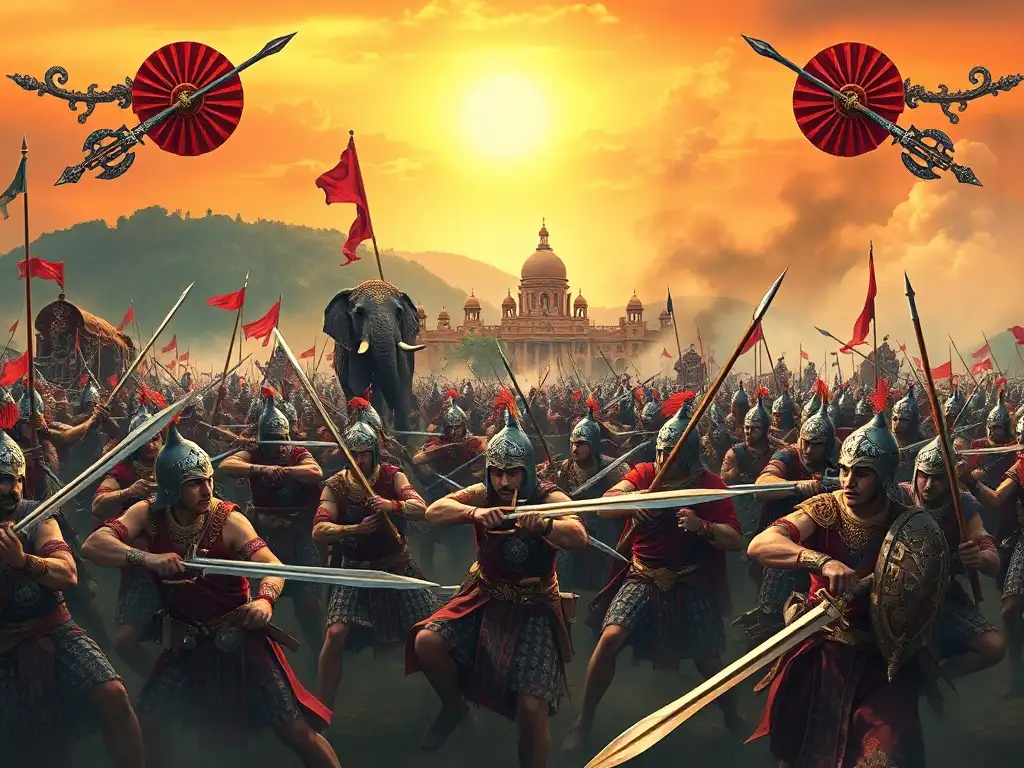
Warfare in ancient Indian civilizations presents a fascinating tapestry of strategies, alliances, and conflicts that shaped the political landscape of the region. From the early city-states of the Indus Valley to the expansive empires of the Mauryas and Guptas, the history of warfare in Northern India is marked by a series of key battles, diplomatic maneuvers, and shifting allegiances.
This article aims to delve into the complexities of these military engagements and diplomatic relations, highlighting how they contributed to the evolution of power dynamics in ancient Northern India. Understanding the interplay between warfare and diplomacy not only enriches our comprehension of historical events but also sheds light on the cultural and societal norms that influenced these practices.
Understanding the Context of Warfare in Northern India
The context of warfare in Northern India is deeply rooted in its historical, cultural, and socio-political frameworks. The region has been a melting pot of diverse cultures, languages, and traditions, leading to a multitude of tribal and state formations. As various kingdoms rose and fell, the need for military engagement became paramount.
- Key Kingdoms and Empires:
- The Maurya Empire: Known for its extensive military organization and strategies.
- The Gupta Empire: Often referred to as the "Golden Age," where warfare was frequently paired with diplomacy.
- Regional powers like the Kushans and Shakas also played significant roles in the military history of Northern India.
The motivations behind warfare were varied, including territorial expansion, resource acquisition, and the assertion of political power. Additionally, religious and ideological factors often intertwined with military campaigns, as seen in the conflicts between different sects and dynasties.
The Influence of Geography on Warfare Strategies
Geography played a crucial role in shaping the warfare strategies employed by ancient Indian civilizations. The diverse landscape of Northern India, ranging from the fertile plains of the Ganges River to the rugged terrains of the Himalayas, influenced military tactics and logistics.
- Key Geographic Features:
- The Himalayan Mountains: Served as natural barriers, impacting the movement of armies and trade.
- The Indo-Gangetic Plain: A fertile region that became a battleground for many historical conflicts due to its agricultural wealth.
- Rivers and Waterways: Rivers like the Ganges and Yamuna were not only vital for sustenance but also served as strategic military routes.
The geographical diversity necessitated varied military strategies, including the use of cavalry in open plains and guerrilla tactics in mountainous regions. Understanding these geographic influences provides valuable insights into the military practices of ancient Indian civilizations and how they adapted to their environments.
Key Battles in Northern India’s History
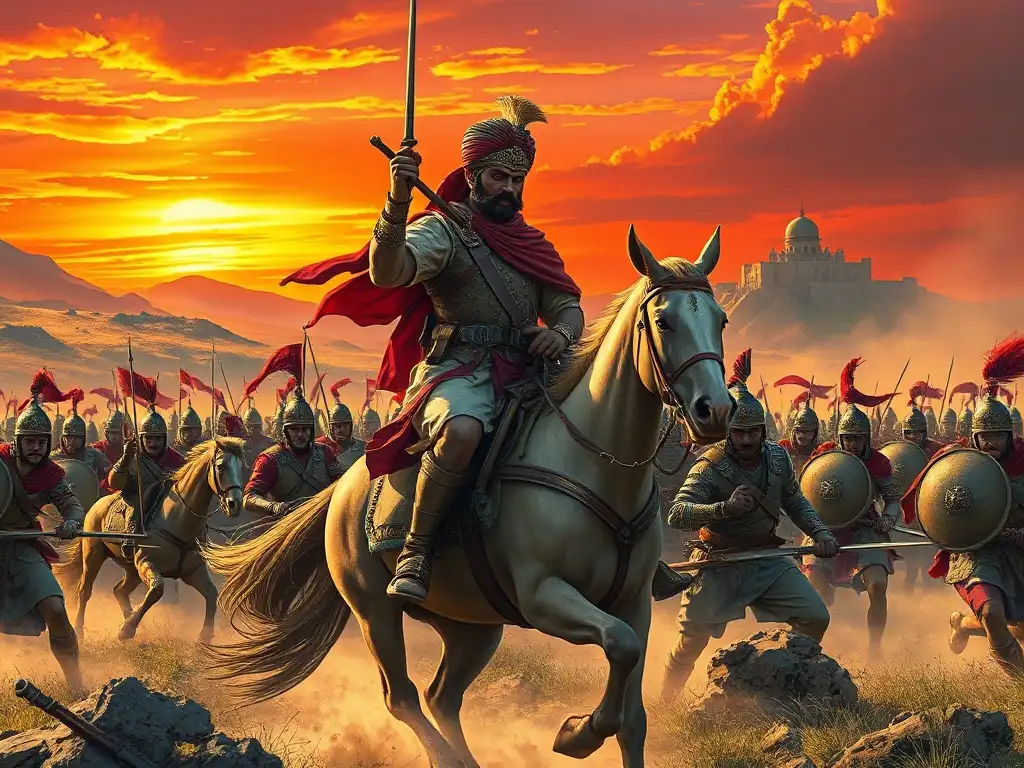
The Battle of the Ten Kings: A Pivotal Conflict
The Battle of the Ten Kings, or Dasarajna, is a significant event in the history of Northern India, chronicled in the Rigveda. This battle, which took place around 1500 BCE, involved a coalition of ten tribes opposing the rising power of King Sudas of the Bharata tribe. The conflict is not only a hallmark of ancient Indian warfare but also illustrates the complex political and social landscape of the time.
In this battle, the Bharatas, led by Sudas, faced a formidable alliance comprising various tribes, including the Druhyus, Anus, and Purus. The reasons for the coalition stemmed from a mixture of territorial disputes, resource competition, and the desire to maintain tribal autonomy against an emerging centralized power.
Key Elements of the Battle:
- Tactics and Strategy: The Bharatas utilized superior tactics, leveraging their knowledge of the terrain. They employed a combination of chariots and infantry, showcasing early forms of organized military strategies.
- Outcome and Significance: Sudas emerged victorious, a turning point that solidified the Bharata's dominance in the region. This victory laid the groundwork for the consolidation of power in Northern India and influenced future tribal alliances.
The Mahabharata War: Mythical Warfare and Its Historical Roots
The Mahabharata War, as depicted in the epic Mahabharata, is a legendary conflict that holds profound significance in Indian culture and history. Scholars debate the historicity of the events described, but many believe that it reflects a real conflict that occurred between the Kauravas and Pandavas, likely around 1000 BCE.
Key Aspects of the Mahabharata War:
- Cultural and Philosophical Impact: The war is not only a tale of rivalry but also embodies themes of duty (dharma), righteousness, and moral dilemmas faced by warriors. Bhagavad Gita, a central text of Indian philosophy, is embedded within this narrative, offering deep insights into ethics and governance.
- Military Innovations: The Mahabharata highlights various forms of warfare, including the use of war elephants, chariots, and advanced archery. The characters, such as Arjuna and Bhishma, are often portrayed as paragons of martial skill, reflecting the valor and sophistication of military practices of the time.
- Historical Context: While the epic may contain mythical elements, it is believed that it mirrors real socio-political conflicts in ancient India, particularly among ruling clans vying for power in the fertile plains of Northern India.
The Invasions of Alexander the Great: Impacts on Indian Warfare
The incursions of Alexander the Great in 326 BCE marked a watershed moment in the history of warfare in ancient Indian civilizations. His campaign introduced new military tactics and technologies, profoundly influencing Indian warfare and diplomacy.
Key Impacts of Alexander's Invasions:
- Military Techniques: Alexander employed advanced tactics such as the phalanx formation and effective cavalry maneuvers, which impressed Indian rulers and military leaders. The introduction of these techniques would later influence local warfare strategies and training regimens.
- Cultural Exchange: The invasions facilitated a significant cultural exchange between the Hellenistic world and Indian civilizations. This interaction led to the introduction of new ideas, art forms, and philosophies that enriched Indian culture.
- Diplomatic Relations: Following his campaigns, Alexander established alliances with local states, such as the Porus Kingdom. These interactions laid the groundwork for future diplomatic relations in the region, shaping the political landscape.
The invasions of Alexander not only altered the course of warfare in ancient India but also initiated a period of significant socio-political transformation, influencing subsequent civilizations and their military strategies.
The Battle of Chandragupta Maurya: Foundations of the Mauryan Empire
The Battle of Chandragupta Maurya is a pivotal moment in the establishment of the Mauryan Empire, marking a significant shift in the political landscape of ancient India. This battle took place in the 4th century BCE and was instrumental in the rise of Chandragupta Maurya, who would go on to become one of the most formidable rulers of ancient India.
Chandragupta Maurya, initially a young leader with ambitions to unify Northern India, faced numerous challenges, including the dominance of the Nanda dynasty. The Nandas were a powerful lineage with a well-established empire. However, with the guidance of his mentor, Chanakya (also known as Kautilya), Chandragupta devised a strategy that would ultimately lead to the overthrow of the Nandas. Chanakya's expertise in statecraft and warfare, as detailed in his seminal work, the Arthashastra, provided Chandragupta with the theoretical foundation necessary for his military expeditions.
The decisive battle occurred in 321 BCE, where Chandragupta's forces confronted the Nanda army. Despite being outnumbered, Chandragupta employed innovative tactics, utilizing guerrilla warfare and forming strategic alliances with local chieftains who were discontent with Nanda rule. This coalition enabled Chandragupta to launch surprise attacks and disrupt Nanda supply lines, gradually weakening their military might.
The victory at this battle not only led to the fall of the Nanda dynasty but also established Chandragupta as the first emperor of the Mauryan Empire. He subsequently expanded his territory, unified numerous small kingdoms under his rule, and laid the groundwork for a centralized administration that would flourish under his grandson, Ashoka the Great.
The Battle of Chandragupta Maurya is a fundamental chapter in the narrative of warfare in ancient Indian civilizations. It illustrates the interplay of military strategy, political alliances, and leadership that shaped the future of Northern India and set the stage for the Mauryan Empire's extensive contributions to governance, culture, and trade. This battle underscores the significance of strategic warfare and diplomacy in the formation of one of India's most iconic empires.
Diplomatic Alliances in Ancient Northern India
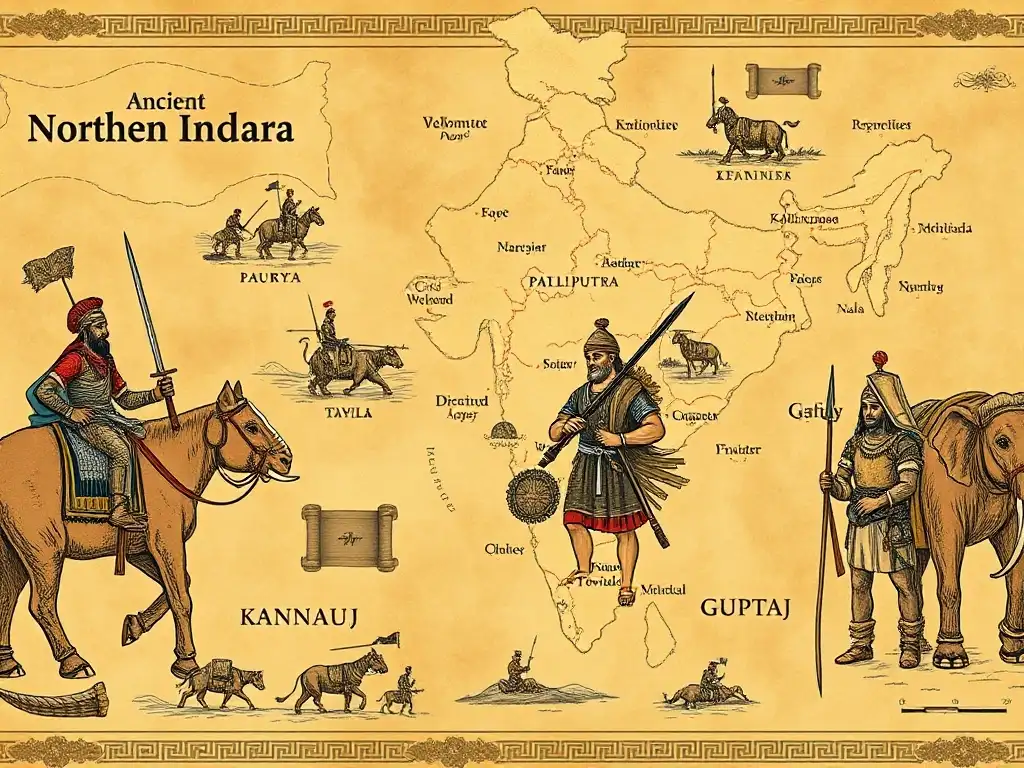
The Role of Diplomacy in Ancient Indian Warfare
Diplomacy played a crucial role in shaping the warfare strategies of ancient Indian civilizations. While battles and military might were significant, the art of negotiation and alliance-building often determined the outcomes of conflicts. Rulers understood that establishing diplomatic ties could lead to advantageous situations, such as securing peace treaties, obtaining military support, or creating buffer zones against common enemies.
- Strategic Marriages: Many kingdoms employed marital alliances as a diplomatic tool. By marrying daughters to powerful rulers or forming matrimonial ties with influential clans, kings could secure peace and mutual support. For example, the intermarriages among the Kuru and Panchala kingdoms helped stabilize the region for extended periods.
- Tributary Relationships: Smaller states often entered into tributary agreements with larger powers. This allowed them to maintain autonomy while providing military support during conflicts. Such arrangements were common, especially in the context of the expanding Mauryan and Gupta empires.
- Use of Envoys: Diplomatic envoys were frequently sent to negotiate terms, resolve disputes, or even to seek alliances against mutual foes. The ability to communicate effectively and persuasively was a valued skill among ancient Indian diplomats, enhancing their rulers' strategic options on the battlefield.
Notable Alliances: The Kuru and Panchala Kingdoms
The Kuru and Panchala kingdoms are prime examples of how alliances shaped the political landscape of ancient Northern India. These two powers, located in the present-day Haryana and Uttar Pradesh, were influential during the Vedic period.
- Kuru Kingdom: The Kuru dynasty is known for its pivotal role in the Mahabharata, particularly due to its internal rivalries and alliances. The Kuru rulers, such as King Dhritarashtra and Pandu, navigated complex political scenarios, often forming temporary alliances with neighboring states to bolster their military strength.
- Panchala Kingdom: In contrast, the Panchalas were known for their strategic maneuvers and military prowess. Their alliance with the Kuru kingdom was significant during the Kurukshetra War, where both kingdoms joined forces against common adversaries. The Panchala king, Drupada, played a vital role in this alliance, showcasing how regional powers could come together for mutual benefit.
- Impact on Warfare: These alliances not only affected the military strategies of both kingdoms but also influenced the broader political dynamics in Northern India. The resulting power shifts often led to new conflicts or peace agreements, illustrating how diplomacy intertwined with warfare.
The Gupta Empire: Diplomacy and Warfare Strategies
The Gupta Empire (circa 320–550 CE) is often considered a golden age in ancient Indian history, marked by significant achievements in culture, science, and politics. The Gupta rulers adeptly combined warfare with diplomacy to expand their influence across Northern India.
- Military Conquests and Diplomatic Engagements: The Gupta Empire, under rulers like Chandragupta II, engaged in numerous military campaigns while simultaneously establishing diplomatic relations with neighboring kingdoms. This dual approach enabled them to both conquer territories and secure peaceful relations with powerful allies.
- Cultural Diplomacy: The Guptas utilized cultural diplomacy effectively, promoting trade and cultural exchanges with foreign powers. By fostering relationships with regions such as Southeast Asia, they not only expanded their economic base but also created a network of alliances that enhanced their military capabilities.
- Strategic Alliances: Key alliances were formed through both marriage and military pacts. The marriage of Chandragupta II to a Lichchhavi princess is a prime example, strengthening ties with a powerful clan. Such alliances were crucial for maintaining stability and ensuring loyalty among vassal states.
The Gupta Empire exemplifies how a balanced approach of diplomacy and warfare could yield a prosperous and influential civilization, laying the groundwork for future generations in the region.
Warfare Techniques and Innovations in Ancient India
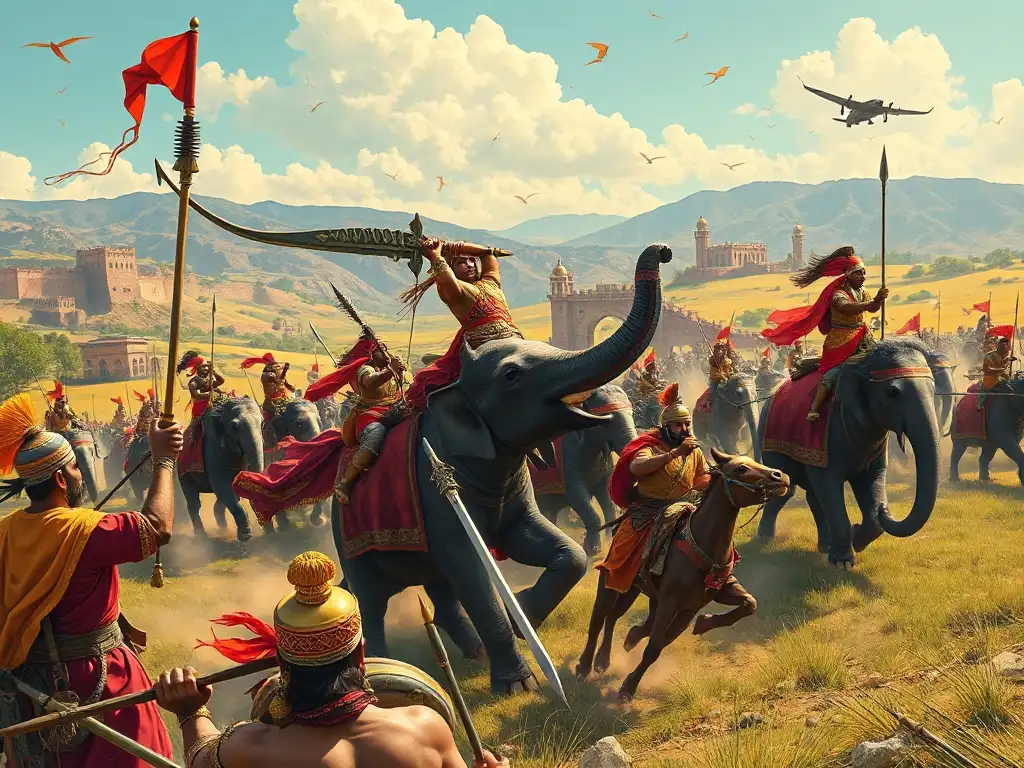
The evolution of warfare in Ancient Indian civilizations is marked by a remarkable blend of indigenous innovations and adaptations influenced by neighboring cultures. This section explores the prominent warfare techniques and innovations that shaped military strategies and outcomes in Northern India.
Chariots and Elephants: The Armored Forces
Chariots and elephants were pivotal in ancient Indian warfare, serving as both powerful weapons and symbols of status.
- Chariots: Typically drawn by horses, chariots were used extensively in battles for their speed and maneuverability. They allowed archers to shoot arrows while being mobile, creating a significant tactical advantage. The Mahabharata, an epic narrative, vividly describes chariot warfare during the Kurukshetra War, showcasing their importance in military strategy.
- War Elephants: Elephants were another formidable component of ancient Indian armies. They were used for various purposes:
- Shock Troops: Elephants charged into enemy ranks, causing chaos and disruption.
- Transport: They carried troops and supplies across challenging terrains.
- Psychological Warfare: The sheer size and strength of elephants instilled fear in adversaries, making them valuable assets in battles.
The combination of chariots and elephants created a formidable force that was instrumental in many key battles, such as the battles fought by the Mauryan Empire under Chandragupta Maurya and later, Ashoka.
Infantry and Archery: Techniques of Ancient Indian Warfare
The infantry and archery units in ancient Indian armies were crucial to the overall effectiveness of military campaigns.
- Infantry Composition: The infantry consisted of foot soldiers equipped with various weapons, including swords, spears, and shields. These soldiers played a vital role in close combat situations, often forming the backbone of the army.
- Archery: Archers were highly valued for their ability to engage the enemy from a distance. They employed different types of bows, such as the longbow and the composite bow, which allowed for greater power and accuracy. The famous archer Arjuna, from the Mahabharata, exemplifies the significance of archery in warfare.
- Tactics and Formations: Ancient Indian armies utilized various formations to enhance their combat effectiveness:
- Phalanx Formation: Infantry soldiers would align in a dense formation, creating a shield wall to protect against cavalry attacks.
- Skirmishers: Lightly armored soldiers were deployed to harass the enemy and disrupt their formations.
Overall, the combination of skilled infantry and expert archers made ancient Indian armies versatile and capable of adapting to different combat scenarios.
The Use of Fortifications and Strategic Locations
Fortifications played a crucial role in ancient Indian warfare, serving as defensive measures against invasions and strategic strongholds during conflicts.
- Types of Fortifications: Ancient Indian cities were often protected by robust walls and fortifications. Some notable examples include:
- Mud Forts: Constructed using local materials, these forts were effective in resisting sieges.
- Stone Fortifications: As technology advanced, stone structures provided even greater defense against enemy attacks.
- Strategic Locations: The selection of battlefield locations was paramount in ancient military strategy. Key factors included:
- Terrain Advantage: Commanding heights or narrow passes could be used to gain an upper hand against adversaries.
- Water Sources: Proximity to rivers or lakes ensured the availability of resources for sustaining troops during prolonged engagements.
- Examples of Notable Forts:
- The Kumbhalgarh Fort, known for its massive walls and strategic position, exemplifies the architectural ingenuity of the time.
- The Rajput forts in Rajasthan served as bastions against invasions, showcasing the importance of fortified locations in ancient warfare.
By leveraging fortifications and strategically important locations, ancient Indian kingdoms could effectively defend their territories and maintain control over crucial trade routes and resources.
Through these techniques and innovations, warfare in ancient Indian civilizations reflected a sophisticated understanding of military strategy, demonstrating the rich and diverse history of Northern India's military practices.
Cultural Impacts of Warfare and Diplomacy
The Influence of Warfare on Ancient Indian Society
Warfare in ancient Indian civilizations was not merely a series of battles; it profoundly influenced societal structures, cultural practices, and economic systems. The frequent conflicts among kingdoms, such as the Kuru and Panchala states during the Mahabharata era, shaped not only military strategies but also social hierarchies.
- Militarization of Society: The constant threat of invasions led to a militarized society where warriors held a prominent status. The Kshatriya class, responsible for governance and protection, emerged as a powerful social group, often intertwined with the ruling elite. The valor of warriors was celebrated in epics and folklore, fostering a culture that revered martial skills.
- Economic Impact: Warfare also had significant economic implications. Resource allocation towards military endeavors often strained agrarian economies. However, victorious campaigns typically resulted in the acquisition of wealth, land, and slaves, which could rejuvenate local economies. For instance, the conquests of the Mauryan Empire expanded trade routes and facilitated economic prosperity.
- Cultural Exchange through Conflict: Warfare frequently acted as a catalyst for cultural exchange. As different cultures clashed and merged, this led to the diffusion of ideas, technologies, and religious practices. The interactions between the Indo-Greeks and native Indian states during the post-Mauryan period exemplify how warfare facilitated the exchange of Hellenistic art, philosophy, and governance practices.
Legacy of Alliances: Political and Cultural Exchange
The intricate web of alliances formed through diplomacy and warfare significantly shaped the political landscape of ancient Northern India. These alliances were often born out of necessity, forging connections that would impact the region for centuries.
- Marital Alliances: One of the most common diplomatic strategies was through marital alliances. Rulers would often marry their daughters to kings of allied states to secure peace and strengthen ties. The marriage of Chandragupta Maurya to a princess of the Lichchhavi clan is a prime example, reinforcing the Mauryan dynasty's power and influence.
- Cultural Synthesis: The political alliances were not limited to mere treaties; they also led to a rich cultural synthesis. The interaction between various kingdoms facilitated the sharing of artistic styles, religious beliefs, and administrative techniques. The Gupta Empire, for instance, is noted for its promotion of art and literature that reflected diverse influences, creating a rich tapestry of cultural heritage.
- Impact on Governance: Diplomatic strategies also influenced governance structures. Alliances often required a degree of administrative cooperation, leading to the establishment of shared systems of governance. The confederacy of the Mahajanapadas illustrates how political alliances could lead to collaborative governance, thereby enhancing stability and security in the region.
Artistic Representations of Warfare in Ancient Indian Culture
Art and literature from ancient India provide a lens through which we can understand the significance of warfare in shaping cultural identity. The representation of warfare in various art forms reveals the values and beliefs of ancient societies.
- Sculptural Depictions: Temples and monuments often featured intricate sculptures that depicted scenes of battle, showcasing the valor of warriors and the divine support they sought in conflicts. The famous sculpture of the Chola dynasty, for instance, illustrates the dynamic movements of warriors and their chariots, reflecting the importance of warfare in their culture.
- Literary Narratives: Epics like the Mahabharata and the Ramayana are rich with narratives centered around warfare. These texts not only recount battles but also delve into the moral and ethical dilemmas faced by warriors, thus portraying warfare as a complex interplay of duty, honor, and righteousness. Characters such as Arjuna and Rama embody the ideals of the warrior class, emphasizing the cultural significance attributed to martial prowess.
- Symbolism in Art: Warfare also influenced artistic symbolism. The use of weapons, armor, and battle scenes in art often conveyed broader themes of struggle and victory, serving as metaphors for the eternal conflicts in human life. The representation of divine figures like Durga, who is often depicted slaying the buffalo demon, symbolizes the triumph of good over evil, linking warfare to spiritual and moral narratives.
The cultural impacts of warfare and diplomacy in ancient Indian civilizations are multifaceted, influencing societal structures, fostering political alliances, and inspiring artistic expression. Understanding these dynamics enriches our comprehension of the historical landscape of Northern India and the legacies that continue to resonate today.
Conclusion: The Interplay of Warfare and Diplomacy in Shaping Northern India
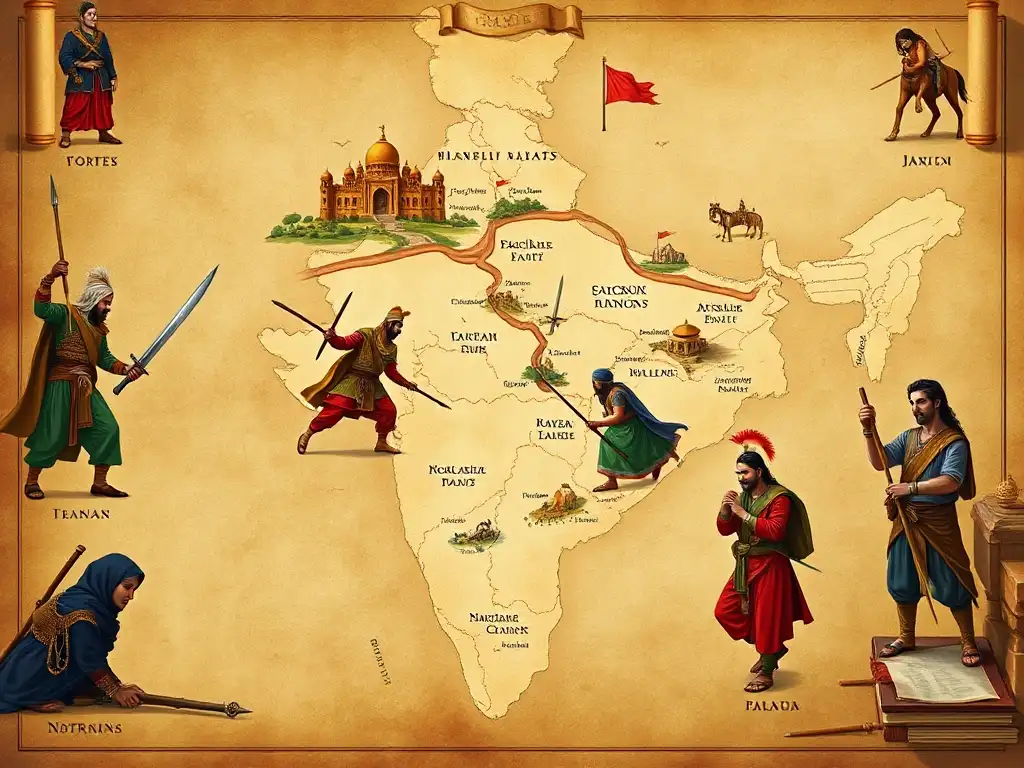
The historical landscape of Northern India is a complex tapestry woven with threads of warfare and diplomacy. The interplay between these two elements has significantly influenced the evolution of ancient Indian civilizations. From the strategic military engagements of the Maurya and Gupta empires to the intricate alliances crafted through diplomacy, these dynamics have shaped not only the political boundaries but also the cultural and social fabric of the region.
Reflections on the Impact of Warfare in Ancient Civilizations
Warfare in ancient Indian civilizations was not merely a means of territorial expansion but a fundamental aspect of statecraft and identity. Key battles, such as the Kalinga War, exemplify how conflicts could lead to profound transformations, extending beyond military outcomes. The Kalinga War, fought by Ashoka the Great, resulted in a significant shift in his policies, leading him to embrace Buddhism and promote non-violence. This transition illustrates how warfare can precipitate ideological changes within a civilization, impacting its future trajectory.
Moreover, the tactics and strategies employed in warfare reflected the technological advancements and military organization of the time. The use of war elephants, chariots, and infantry formations showcased a sophisticated understanding of combat and logistics, which were critical for success on the battlefield. The implications of these military innovations extended to trade and cultural exchanges, as victorious kingdoms often sought to integrate conquered peoples into their socio-political systems, fostering a diverse cultural milieu.
The Lasting Legacy of Military and Diplomatic Strategies in Indian History
The legacy of military and diplomatic strategies from ancient Indian civilizations continues to resonate in contemporary contexts. The alliances forged during the reigns of powerful empires, such as the Gupta Empire, often revolved around strategic marriages and treaties that ensured stability and mutual defense against common enemies. These practices laid the groundwork for future diplomatic relations, emphasizing negotiation and cooperation over conflict.
In addition, the historical narratives surrounding warfare have influenced modern perceptions of national identity and pride. The valor and heroism associated with legendary figures such as Chandragupta Maurya and his successors are celebrated in various forms of art and literature, echoing their significance in shaping Indian history. The ideological underpinnings of these military campaigns, often intertwined with cultural and religious beliefs, highlight the enduring impact of warfare on societal values and collective memory.
The examination of warfare in ancient Indian civilizations reveals a complex interplay with diplomacy that has had lasting effects on the historical and cultural development of Northern India. The lessons learned from these ancient practices continue to inform contemporary discussions on conflict resolution and strategic partnerships, reaffirming the relevance of this rich historical legacy.
Frequently Asked Questions
What were the key battles in Warfare in Ancient Indian Civilizations?
Key battles included the Battle of the Hydaspes and the Kalinga War, which were pivotal in shaping territorial control and political alliances in ancient India.
How did diplomacy play a role in ancient Indian warfare?
Diplomacy was vital, with many kingdoms forming alliances to strengthen their positions against common enemies, often negotiating peace terms to avoid prolonged conflict.
What were the major strategies used in ancient Indian warfare?
Ancient Indian kingdoms employed various strategies such as guerrilla tactics, siege warfare, and the use of war elephants, which were integral to their military success.
How did the Gupta Empire influence warfare in ancient India?
The Gupta Empire advanced military organization and technology, leading to more structured armies and improved tactics, which helped maintain stability and expand their territory.
What role did cultural factors play in warfare?
Cultural factors, including religion, literature, and art, influenced warfare by shaping the motivations of warriors and the ideologies behind conquests and defensive strategies.
Final Reflection: The Enduring Legacy of Warfare and Diplomacy in Ancient Indian Civilizations
Warfare and diplomacy have shaped the course of history in Northern India, revealing the intricate dance between conflict and cooperation. Today, as we navigate a world marked by geopolitical tensions and alliances, the lessons from ancient Indian civilizations resonate more than ever. The strategic maneuvers and pivotal battles discussed in this article remind us that the past is not merely a series of events but a rich tapestry that informs our present and future.
The interplay of warfare and diplomacy in ancient India has left an indelible mark on the cultural and social landscape of the region. From the valor of legendary warriors to the astute negotiations of rulers, these historical narratives continue to inspire contemporary leaders and thinkers. As Mahatma Gandhi once said, "> The weak can never forgive. Forgiveness is the attribute of the strong." This quote encapsulates the essence of strength in both conflict and resolution, urging us to reflect on how the lessons of the past can guide our actions today.
As we conclude this exploration of warfare in ancient Indian civilizations, I invite you to reflect on how these historical dynamics influence your understanding of conflict and cooperation in your own life. Consider how the principles of strategic alliances and the lessons learned from past battles can empower you to navigate challenges with wisdom and resilience. Embrace the complexity of human interactions, and let the stories of those who came before us inspire you to forge a path of understanding and collaboration in your own journey.
Embrace the Legacy of Northern India's Warfare and Diplomacy!
Thank you for diving into the intricate world of warfare and diplomacy in Northern India. You've gained valuable insights into the key battles and alliances that shaped this fascinating region. Now, let's take those insights and turn them into action!
Here are some exciting steps you can take next:
- Dive Deeper: Explore detailed accounts of specific battles discussed in the article. Discover their lasting impact on modern India through our extensive resources.
- Engage with History: Join our vibrant online community where you can share your thoughts and insights on the complex nature of historical alliances. Your perspective is invaluable!
- Spread the Knowledge: Share this article with friends or on social media to ignite conversations about the significant events that have shaped our world.
What aspect of Northern India's battles and alliances resonates with you the most, and how do you think it influences today's diplomacy? We invite you to share your thoughts below!