
The Connection Between Agriculture and Internal Trade in Ancient India


Welcome to Ancient India History, where we embark on a fascinating journey through the rich tapestry of ancient Indian civilizations. In this exploration, we delve into the critical role of agriculture in shaping trade connections that not only fueled local economies but also interconnected diverse cultures across the subcontinent.
Our featured article, "The Connection Between Agriculture and Internal Trade in Ancient India," unveils the intricate systems and practices that transformed agricultural surplus into vibrant trade networks. Prepare to uncover the profound impact of these connections on society, culture, and the economy, as we invite you to delve deeper into the remarkable legacy of ancient India.
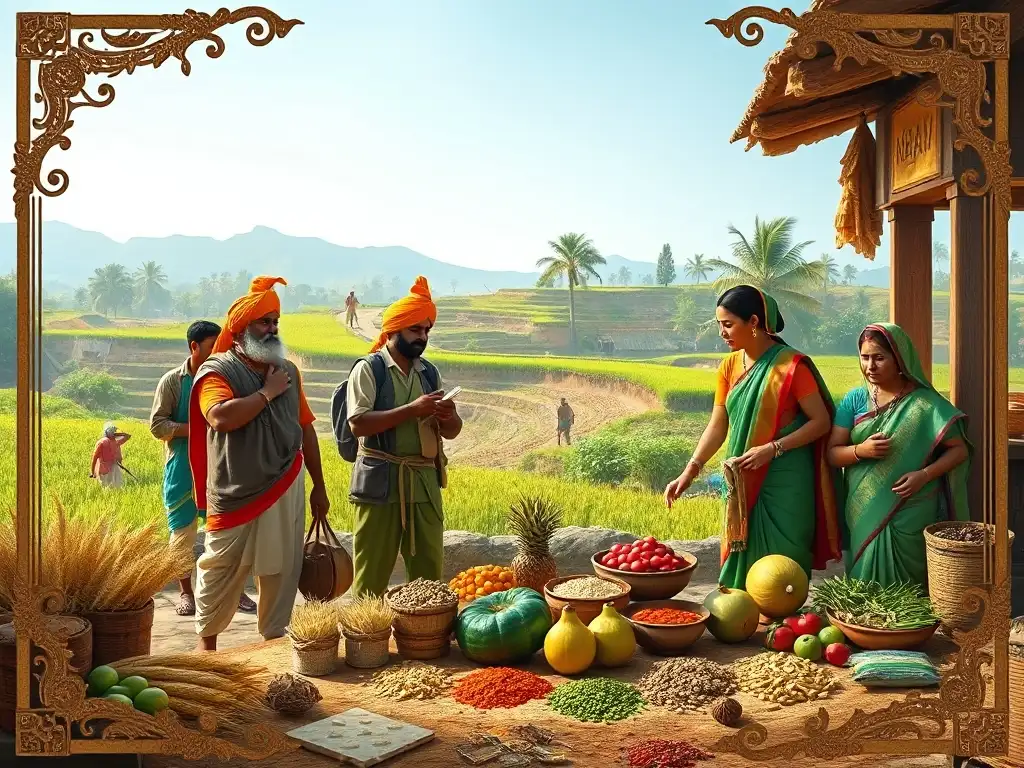
Introduction to Agriculture in Ancient India
Agriculture served as the backbone of ancient Indian civilization, shaping not only the economy but also the social and cultural fabric of society. The connection between agriculture and internal trade in ancient India reveals a complex web of interactions that facilitated economic growth and regional integration. From the fertile plains of the Indus Valley to the agrarian innovations during the Gupta Empire, the agricultural practices of ancient India were foundational to its internal trade networks. This article explores the pivotal role of agriculture in enhancing trade connections, examining how agricultural productivity and trade practices evolved throughout the ages.
Overview of Ancient Indian Agriculture
Ancient Indian agriculture was characterized by a variety of farming techniques and crops, reflecting the diverse climatic and geographical conditions across the subcontinent. Major regions, such as the Indus Valley, were known for their advanced irrigation systems and crop rotation practices. Key staples included:
- Rice: Predominantly grown in the eastern regions, particularly in Bengal.
- Wheat: Cultivated mainly in the northern plains, especially in the Punjab and Haryana.
- Barley: Grown in arid regions, showcasing adaptability to less fertile soils.
- Millets: Such as finger millet and pearl millet, were important in dry and semi-arid regions.
In addition to these staples, various pulses, oilseeds, and cash crops like cotton and spices were cultivated, contributing to a diverse agricultural economy that supported local and regional trade.
Importance of Agriculture in Ancient Indian Society
Agriculture was not only crucial for sustenance but also played a vital role in social structure and cultural identity. The agrarian lifestyle fostered a sense of community and belonging, as families and villages relied on collective farming efforts. Key aspects of agriculture's importance include:
- Economic Stability: Agriculture provided the primary source of income and employment for the majority of the population.
- Cultural Practices: Agricultural cycles influenced festivals, rituals, and seasonal celebrations, embedding farming into the cultural ethos.
- Social Hierarchies: Land ownership and agricultural surplus contributed to the establishment of social classes and power dynamics within communities.
The Role of Agriculture in Internal Trade
The interplay between agriculture and internal trade in ancient India created a robust economic landscape that facilitated the exchange of goods, ideas, and cultures. Agricultural surplus not only ensured food security but also enabled the growth of trade networks.
How Agriculture Influenced Trade Practices
As agricultural productivity increased, so did the volume of trade. Surpluses allowed for the emergence of specialized trades, leading to the development of markets and trade routes. Key influences include:
- Barter System: Farmers exchanged surplus produce for goods they lacked, fostering community interdependence.
- Market Towns: Agricultural hubs evolved into thriving market towns where trade flourished.
- Transportation: The need to transport agricultural goods led to improvements in infrastructure, such as roads and river routes, enhancing trade efficiency.
Key Agricultural Products in Ancient India
Several key agricultural products emerged as significant trade commodities, shaping internal trade dynamics. Some of these include:
| Product | Description | Trade Impact |
|---|---|---|
| Rice | Staple food, especially in southern and eastern regions | High demand led to extensive trade networks |
| Wheat | Central in northern diets, particularly in Punjab | Facilitated trade between northern and southern regions |
| Cotton | Essential for textile production, a major export | Boosted trade with regions beyond India's borders |
| Spices | Sought after for culinary and medicinal purposes | Created an international trade interest |
The synergy between agriculture and trade in ancient India not only bolstered the economy but also contributed to the rich tapestry of cultural exchanges that defined the subcontinent's history.
Internal Trade Networks in Ancient India
The internal trade networks of ancient India were integral to the flourishing of agriculture and the economy. These networks facilitated the exchange of agricultural products, allowing surplus produce from rural areas to reach urban centers, which in turn became hubs of commerce. The interconnectivity of various regions through these trade routes promoted not only the distribution of goods but also the exchange of ideas and cultural practices among different communities.
Agriculture was the backbone of the ancient Indian economy, and its products such as grains, spices, and textiles were pivotal in trade. Farmers often collaborated with merchants to ensure their goods reached larger markets, thereby enhancing their livelihoods. The development of trade networks also encouraged agricultural innovations, leading to improved farming techniques and crop varieties over time.
Major Trade Routes Connecting Agricultural Regions
The trade routes in ancient India were extensive and strategically located to connect key agricultural regions. Prominent routes included:
- The Grand Trunk Road: This ancient highway linked the eastern and western parts of India, facilitating the movement of goods from the fertile plains of the Ganges to the trade centers of the west.
- The Silk Road: Although primarily known for connecting the East and West, certain branches of this route passed through northern India, allowing for the exchange of agricultural products alongside silk and spices.
- River Routes: Major rivers like the Ganges and Indus served as natural highways for transporting goods, particularly during the monsoon season when water levels were high.
These routes not only facilitated trade but also allowed for cultural exchanges, as various communities interacted along the way.
Role of Urban Centers in Agricultural Trade

Urban centers in ancient India played a crucial role in the agricultural trade network. Cities such as Pataliputra, Taxila, and Ujjain emerged as bustling marketplaces where agricultural products were traded. These urban areas attracted farmers, merchants, and consumers, creating a vibrant economic environment.
The concentration of population in urban centers led to increased demand for agricultural goods, thus incentivizing farmers to produce more. Additionally, urban markets provided a platform for the standardization of prices and quality, which helped streamline agricultural trade. The availability of local artisans and craftsmen also meant that agricultural products could be processed and transformed into more valuable goods, further enhancing trade.
Mechanisms of Agricultural Trade
Various mechanisms ensured the smooth operation of agricultural trade in ancient India, adapting to the needs of both producers and consumers.
Barter System in Ancient Agricultural Trade
The barter system was the primary method of trade in ancient India, where goods and services were directly exchanged without the use of currency. Farmers would trade their surplus produce for essential goods, such as tools, textiles, or pottery. This system relied heavily on mutual agreement regarding the value of goods, fostering relationships between traders and consumers.
While effective, the barter system had limitations, particularly in terms of the need for a "double coincidence of wants"—both parties needing what the other offered. Despite this, it played a crucial role in the local economy, especially in rural areas where currency was less prevalent.
Use of Currency and Trade Tokens
As trade expanded, the limitations of the barter system led to the introduction of currency. Coins made from precious metals became common and facilitated easier transactions, allowing for a more standardized method of trade. Additionally, trade tokens, which represented a specific value, were used in various regions to simplify exchanges.
The introduction of currency not only enhanced the efficiency of trade but also enabled larger-scale agricultural transactions. Farmers could now sell their produce for money, which could be saved or used to purchase a wider variety of goods than what barter would allow.
Role of Traders and Merchants in Agriculture Trade
Traders and merchants were pivotal in the agricultural trade of ancient India. They acted as intermediaries between farmers and urban markets, ensuring that agricultural products reached consumers efficiently. Merchants often specialized in specific goods, such as grains or spices, and developed networks that extended across regions.
These traders played a significant role in determining market prices based on supply and demand, thus influencing agricultural production. Their knowledge of different markets enabled them to optimize profits for both themselves and the farmers they represented. Moreover, many traders were instrumental in the dissemination of agricultural knowledge and innovations, contributing to the overall improvement of agricultural practices in ancient India.
The Impact of Agriculture on Local Economies
Agriculture served as the backbone of ancient Indian economies, significantly influencing local economies and trade practices. The predominance of agrarian societies meant that the cultivation of crops not only provided sustenance but also generated surplus products for trade. This surplus became a key driver for local economies, enabling diverse trade networks to flourish. The establishment of markets in proximity to agricultural hubs facilitated the exchange of goods, stimulating economic growth and enhancing the interconnectivity of various regions.
In regions such as the fertile plains of the Ganges and the Deccan plateau, agricultural production was so prolific that it laid the foundation for bustling trade activities. The exchange of staples like rice, wheat, and pulses fostered a barter system that allowed communities to trade not only agricultural products but also crafts, textiles, and other goods, creating a multifaceted economy.
How Agriculture Shaped Economic Structures
Agriculture profoundly shaped the economic structures of ancient Indian societies. The wealth generated from farming activities led to the emergence of different socio-economic classes, with landowners and wealthy farmers gaining significant influence over local governance and trade policies. This stratification resulted in a complex interplay between agriculture, trade, and social hierarchies.
Additionally, trade routes developed around agricultural centers, promoting internal trade networks that connected different regions. The establishment of trade guilds, often composed of merchants and farmers, facilitated organized trade activities, ensuring the efficient distribution of agricultural produce. These guilds played a crucial role in setting prices, maintaining quality, and negotiating trade agreements, thus further embedding agriculture into the fabric of the economy.
Case Studies of Agricultural Trade Successes
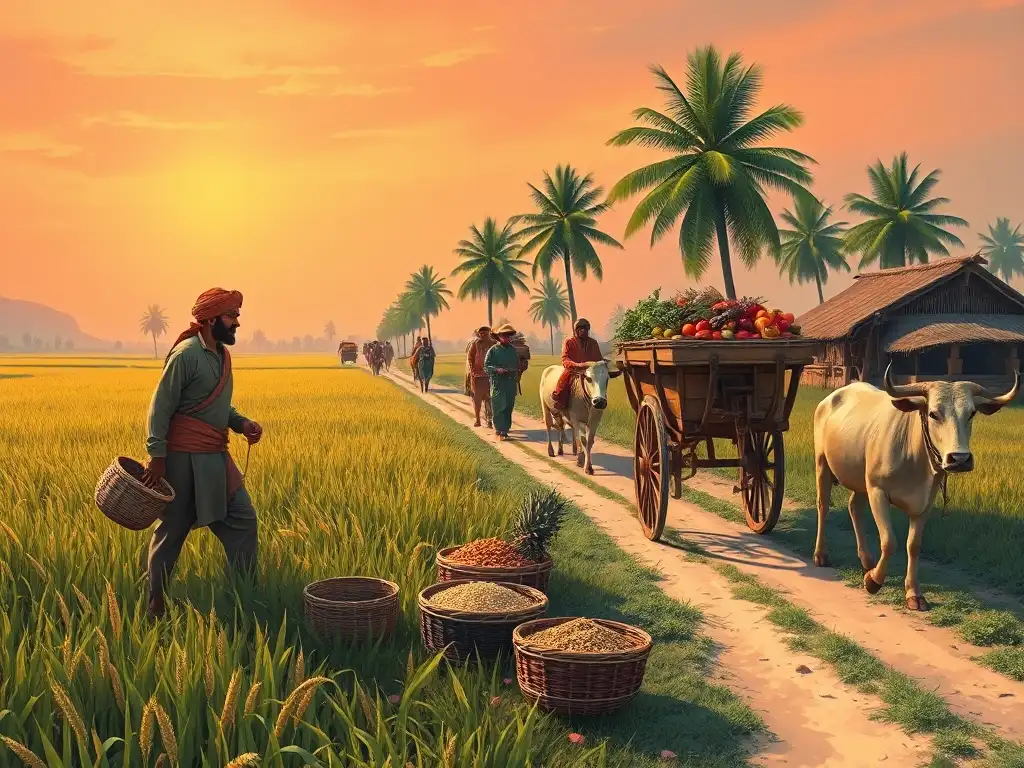
Several ancient Indian civilizations exemplify the successes of agricultural trade connections.
- The Indus Valley Civilization (c. 3300–1300 BCE): Known for its advanced urban planning and agricultural practices, cities like Mohenjo-Daro and Harappa thrived on the trade of surplus crops, particularly barley and wheat. Archaeological findings indicate that these cities had well-established trade networks extending to Mesopotamia, highlighting the importance of agriculture in international trade.
- The Maurya Empire (c. 322–185 BCE): Under rulers like Ashoka, the Maurya Empire expanded agricultural production through irrigation and improved farming techniques. This expansion not only met local demands but also facilitated trade with neighboring regions, including trade in spices and textiles, which became highly sought after in international markets.
- The Gupta Empire (c. 240–550 CE): This era saw a flourishing of agriculture, which laid the groundwork for a vibrant economy. The Guptas encouraged the cultivation of cash crops, such as cotton and indigo, leading to increased trade both internally and with foreign markets. The Silk Road and maritime routes were pivotal for the trade of these agricultural products, showcasing the empire's agricultural prowess.
Challenges Faced by Agricultural Trade
Despite the successes, agricultural trade in ancient India faced numerous challenges that impacted its efficiency and sustainability.
Environmental Factors Affecting Agriculture and Trade
Environmental factors played a crucial role in shaping agricultural practices and trade dynamics. Monsoons were vital for irrigation, but erratic weather patterns could lead to droughts or floods, devastating crop yields. For instance:
- Droughts: Periods of insufficient rainfall could lead to crop failures, directly impacting the availability of goods for trade. This scarcity often resulted in inflated prices and trade disputes.
- Flooding: Conversely, excessive rainfall could inundate fields, leading to soil erosion and loss of arable land, which further hampered agricultural output and trade.
These unpredictable environmental conditions necessitated adaptive strategies, such as the development of irrigation systems and crop rotation practices, to mitigate risks and ensure a stable supply for trade.
Political Influences on Agricultural Trade Networks
Political influences also significantly impacted agricultural trade networks in ancient India. The rise and fall of empires could alter trade routes and agricultural practices. For example:
- Taxation Policies: Emperors often imposed taxes on agricultural produce, affecting farmers' profits and their willingness to engage in trade. Heavy taxation could stifle trade activities, leading to resentment among agricultural producers.
- Regulatory Frameworks: The establishment of trade regulations by various dynasties influenced agricultural trade. For instance, the Mauryan and Gupta empires implemented policies to promote trade, but local rulers could impose restrictions that disrupted established trade networks.
These political dynamics underscore the interconnectedness of agriculture and trade within the broader context of governance in ancient India, highlighting how political stability or instability could directly influence agricultural productivity and trade efficacy.
Conclusion: The Legacy of Agriculture and Trade in Ancient India
The interplay between agriculture and internal trade in ancient India laid the foundational framework for economic prosperity and cultural exchange. This intricate relationship not only fostered the development of trade networks but also contributed significantly to the agricultural practices that have influenced the region for centuries. Farmers cultivated a variety of crops, including rice, wheat, and pulses, which became staples in the diet and economy. As agricultural productivity increased, surplus goods emerged, creating opportunities for trade both locally and regionally.
The legacy of this agricultural trade can be seen in the way it shaped societal structures, urbanization, and the emergence of marketplaces. By facilitating the movement of goods, ancient Indian civilizations were able to foster connections between rural producers and urban consumers, enhancing the overall economic landscape. As cities grew, they became hubs of trade and commerce, leading to the establishment of standardized measures and currency, which further streamlined trade processes.
Ultimately, the enduring influence of these ancient practices can still be observed in contemporary India, where agriculture remains a vital sector, and trade networks continue to evolve, drawing on ancient principles of exchange and collaboration.
Summary of Agricultural Trade Contributions to Ancient Indian Economy
Agriculture served as the backbone of the ancient Indian economy, with trade acting as a catalyst for its expansion. The cultivation of diverse crops not only provided sustenance but also created a surplus that fueled internal trade. Key contributions include:
- Increased Productivity: Advances in agricultural techniques and irrigation led to higher yields, allowing for greater surplus and trade.
- Development of Trade Routes: The need to transport agricultural products spurred the establishment of trade routes that connected various regions, enhancing overall economic integration.
- Cultural Exchange: Trade facilitated the exchange of ideas, technologies, and cultural practices, enriching the social fabric of ancient Indian society.
- Urban Growth: The rise of trade centers linked to agriculture contributed to the growth of urban areas, which became focal points for commerce and economic activity.
Ultimately, the agricultural trade contributed to a robust and diverse economy that supported the development of one of the world’s earliest civilizations.
Lasting Influence on Modern Trade Practices in India
The agricultural trade practices established in ancient India have left a lasting legacy that continues to influence modern trade practices. Some of the key areas of influence include:
- Market Structures: The concept of local markets and trade fairs, rooted in ancient practices, persists today in various forms, supporting the local economy.
- Supply Chains: Modern supply chains can trace their origins to the efficient distribution systems developed for transporting agricultural goods in ancient times.
- Cultural Significance: Festivals and markets that celebrate agricultural bounty are a continuation of ancient traditions, highlighting the ongoing importance of agriculture in Indian culture.
- Government Policies: Contemporary agricultural policies often reflect historical practices aimed at promoting trade and supporting farmers, demonstrating the enduring impact of ancient systems.
By recognizing the historical significance of agricultural trade, India can continue to strengthen its economic foundations while honoring its rich heritage.
Further Reading on Agriculture and Trade in Ancient India
To gain a deeper understanding of the connections between agriculture and trade in ancient India, the following resources can provide valuable insights:
Recommended Books and Articles
-
"The Economic History of Ancient India" by R.C. Majumdar
This comprehensive book explores the economic practices of ancient Indian civilizations, including detailed discussions on agriculture and trade networks.
-
"Trade and Trade Routes in Ancient India" by R. K. Mookerji
This work focuses on the various trade routes established during ancient times and their impact on economic growth and cultural exchanges.
-
"Agriculture in Ancient India" by R. S. Sharma
This book delves into agricultural practices, innovations, and their significance in the broader context of ancient Indian society.
Notable Archaeological Findings Related to Agriculture and Trade
Several archaeological discoveries have shed light on the agricultural and trade practices of ancient India:
- Indus Valley Civilization Sites: Excavations at Harappa and Mohenjo-Daro revealed advanced agricultural techniques, such as irrigation systems, and evidence of trade with distant regions.
- Trade Seals and Weights: Artifacts, including seals used for trade and standardized weights, found at various sites underscore the organized nature of trade in agricultural products.
- Grain Storage Facilities: Archaeological sites have uncovered large storage granaries, indicating the importance of surplus production and trade in ancient economies.
These findings highlight the sophistication of ancient Indian agricultural practices and their integral role in shaping trade networks that facilitated economic prosperity.
- Introduction to Agriculture in Ancient India
- The Role of Agriculture in Internal Trade
- Internal Trade Networks in Ancient India
- Major Trade Routes Connecting Agricultural Regions
- Role of Urban Centers in Agricultural Trade
- Mechanisms of Agricultural Trade
- The Impact of Agriculture on Local Economies
- How Agriculture Shaped Economic Structures
- Case Studies of Agricultural Trade Successes
- Challenges Faced by Agricultural Trade
- Conclusion: The Legacy of Agriculture and Trade in Ancient India
- Further Reading on Agriculture and Trade in Ancient India
Frequently Asked Questions
What role did agriculture play in ancient India?
Agriculture was the foundation of the economy, providing food and resources that supported internal trade and the growth of civilizations.
How did trade connections develop in ancient India?
Trade connections flourished due to agricultural surplus, enabling the exchange of goods both locally and with foreign regions, enhancing economic ties.
What were the key agricultural products in ancient India?
Key products included grains like rice and wheat, along with spices and cotton, which were vital for domestic consumption and trade.
How did geography influence agriculture and trade in ancient India?
The diverse geography provided various climates and resources, which affected crop cultivation and facilitated regional trade connections across the subcontinent.
What impact did the Gupta Empire have on agriculture and trade?
The Gupta Empire promoted agricultural innovation and trade networks, leading to economic prosperity and the cultural exchange that characterized this golden age of ancient India.
Final Reflection: The Enduring Legacy of Ancient India’s Agricultural Trade Connections
The intricate relationship between agriculture and internal trade in Ancient India remains profoundly relevant today, as it highlights the foundational role of agricultural practices in shaping economic systems. The lessons drawn from this historical interplay not only illuminate the past but also offer valuable insights into contemporary agricultural policies and trade dynamics. Understanding how these ancient practices fostered community resilience and economic growth can inspire modern societies to cultivate similar connections in our increasingly globalized world.
The influence of Ancient India's agricultural trade connections is palpable in today’s cultural and social landscapes, where the echoes of these practices can still be felt in local markets and sustainable farming movements. The interconnectedness of agriculture and trade fostered a sense of community and shared prosperity that resonates with current efforts to promote local economies and sustainable practices. The true measure of any society can be found in how it treats its most vulnerable members.
– Mahatma Gandhi. This quote encapsulates the essence of how agricultural trade not only supported economic growth but also nurtured social cohesion, a principle that remains vital in our modern society.
As we reflect on the lessons of Ancient India, let us embrace the call to action: consider how we can strengthen our own communities through the principles of sustainable agriculture and trade. Each of us has the power to contribute to a more interconnected and resilient economy, drawing inspiration from the past to shape a better future. Take a moment to reflect on your role in this ongoing narrative, and think about how you can foster connections that honor the rich legacy of agricultural trade while paving the way for sustainable practices in your own life.
Unveil the Secrets of Ancient Trade!
Thank you for exploring the fascinating relationship between agriculture and internal trade in ancient India! Your curiosity about this vibrant history not only enriches your understanding but also connects you to the roots of civilization. Now, let’s take the next step in uncovering these ancient practices.
- Dive deeper into the historical texts and maps of ancient trade routes. Look for resources online or at your local library that detail the agricultural hubs of early Indian civilization!
- Join a community or forum dedicated to the study of ancient trade. Engage with fellow enthusiasts to share insights and discoveries—your contributions can spark stimulating discussions!
- Try creating a visual representation of the agricultural trade dynamics in ancient India. Utilize tools like infographics to illustrate the connections you’ve uncovered!
What aspect of ancient trade or agriculture intrigues you the most, and how do you think it influenced societal norms?