
The Role of Currency in Facilitating Ancient Indian Trade

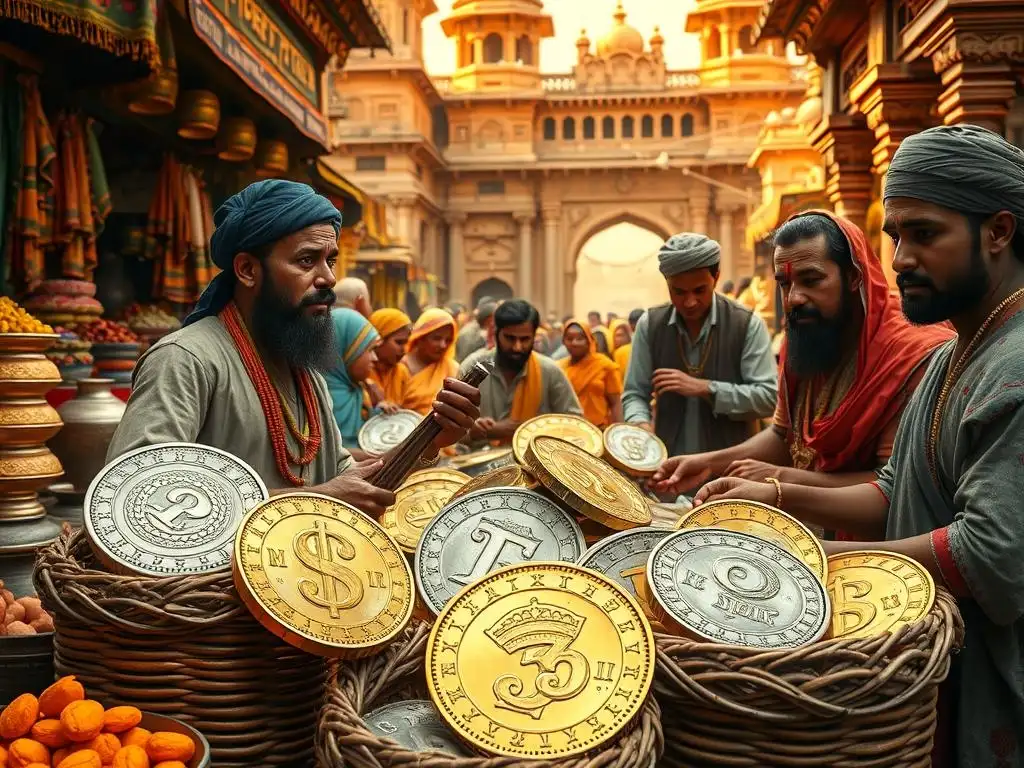
Welcome to Ancient India History, where we embark on a fascinating journey through the vibrant tapestry of ancient Indian civilizations. From the bustling markets of the Indus Valley to the thriving trade routes of the Gupta Empire, our exploration unveils the intricate connections that shaped the economy and culture of this remarkable land. Dive into our featured article on ancient Indian trade currency, where we unravel the pivotal role that currency played in facilitating commerce and fostering cultural exchange.
Prepare to be intrigued as we reveal how these early financial systems laid the groundwork for the economic dynamics we see today. Join us and discover the treasures of the past that still resonate in our modern world!
Introduction to Ancient Indian Trade Currency
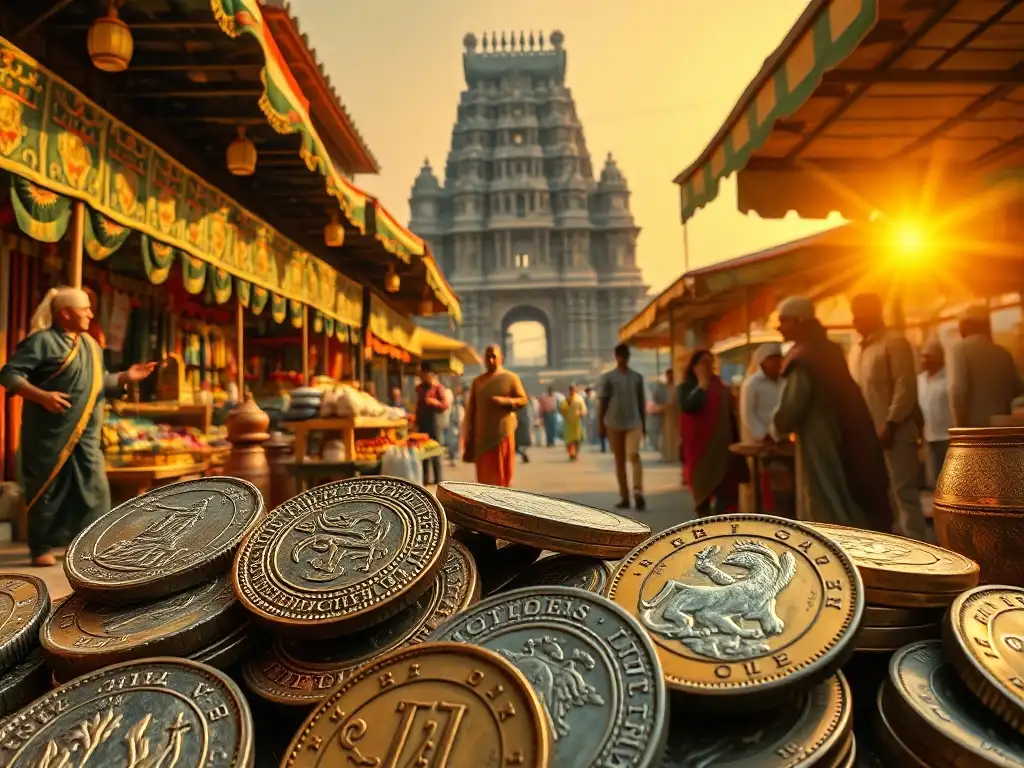
The evolution of currency played a pivotal role in shaping the landscape of ancient Indian trade. As civilizations flourished along the banks of the Indus River and beyond, the need for efficient economic exchanges became paramount. The introduction of various forms of currency not only facilitated trade within the subcontinent but also established India as a significant player in global trade networks. This article delves into the intricate relationship between currency and trade in ancient India, highlighting how these elements combined to foster economic growth and cultural exchange.
Overview of Trade in Ancient India
Ancient India was a hub of trade, with its rich resources and strategic location making it an attractive destination for traders. Key trade routes, such as the Silk Road, connected India with regions as far as the Mediterranean and Southeast Asia. Major commodities traded included spices, textiles, precious stones, and metals, creating a vibrant market that thrived on both local and international exchanges.
- Key Trade Goods:
- Spices (e.g., black pepper, cardamom)
- Textiles (e.g., silk, cotton)
- Precious stones (e.g., diamonds, rubies)
- Metal products (e.g., gold, silver)
The intricate network of trade routes facilitated not only the movement of goods but also the exchange of ideas and cultures, further enriching the Indian civilization.
Importance of Currency in Economic Exchanges
In the context of ancient Indian trade, currency served as a crucial medium of exchange that streamlined transactions and reduced the inefficiencies associated with the barter system. The development of currency allowed traders to:
- Standardize Value: Currency provided a common measure for the value of goods, making transactions simpler and more transparent.
- Facilitate Long-Distance Trade: As trade networks expanded, the use of currency enabled traders to conduct business over larger distances without the need for cumbersome barter exchanges.
- Encourage Economic Growth: The increased efficiency in trade transactions led to greater economic activity, fostering the growth of urban centers and marketplaces.
Types of Currency Used in Ancient Indian Trade
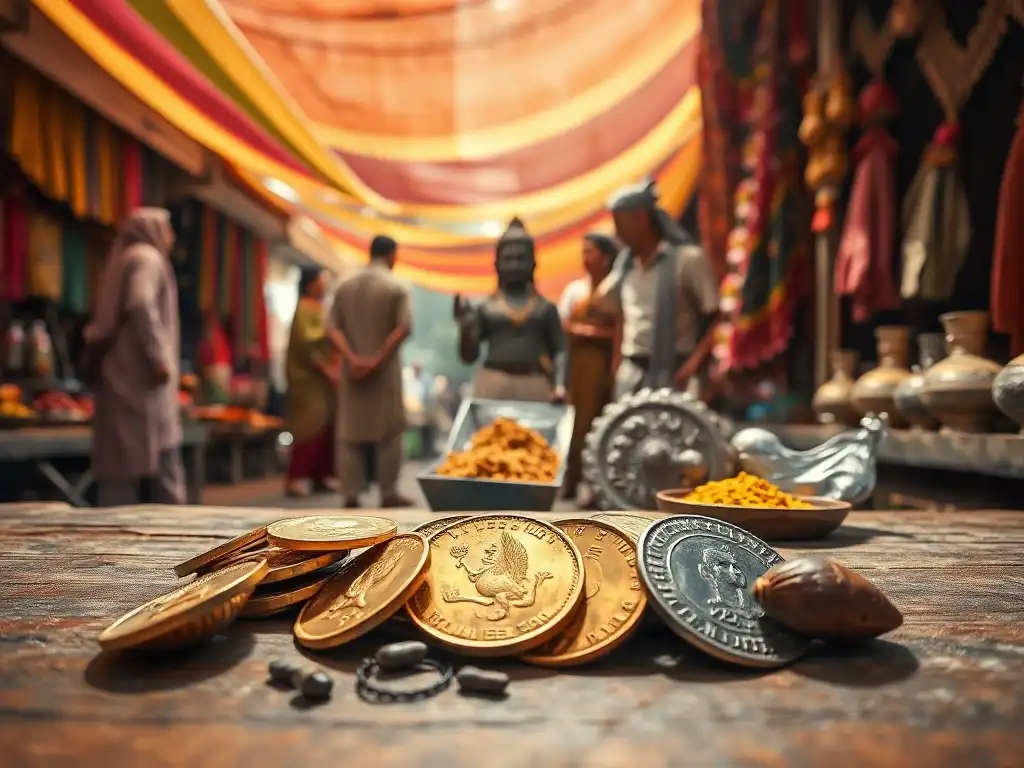
Understanding the forms of currency used in ancient Indian trade is essential to grasping its economic dynamics. Various types of currency evolved over time, each serving specific purposes within the trade system.
Barter System and Its Limitations
Before the advent of currency, the barter system was the primary means of trade. This system involved the direct exchange of goods and services, which had several limitations:
- Double Coincidence of Wants: Both parties needed to have what the other wanted, making trades often difficult.
- Indivisibility of Goods: Some goods could not be easily divided into smaller units for exchange.
- Valuation Challenges: Determining the relative value of different goods was subjective and could lead to disputes.
Introduction of Metal Coins
The introduction of metal coins, around the 6th century BCE, marked a significant turning point in ancient Indian trade. Coins made of silver, gold, and copper became widely adopted, simplifying transactions and enhancing trade efficiency.
- Notable Coins:
- Punch-marked Coins: One of the earliest forms of coins, characterized by their unique designs and marks.
- Nanda and Maurya Coins: Coins minted by influential dynasties that standardized currency across their territories.
Other Forms of Currency: Cowrie Shells and Trade Goods
In addition to metal coins, other forms of currency also played a role in ancient Indian trade:
- Cowrie Shells: These shells were widely used as a form of currency due to their availability and uniformity, especially in coastal regions.
- Trade Goods: Certain goods, such as salt and grain, were sometimes used as currency, particularly in local transactions where immediate needs dictated the exchange.
The diverse forms of currency in ancient India contributed to a robust trading system, laying the foundation for the economic principles that would evolve over centuries.
The Evolution of Currency in Ancient Indian Trade
The evolution of currency in ancient Indian trade marks a significant transformation from primitive forms of exchange to more sophisticated monetary systems. Initially, trade was conducted through barter, where goods and services were directly exchanged. However, as societies grew more complex, the limitations of barter became apparent, leading to the adoption of currency. Currency facilitated smoother transactions, allowed for the storing of wealth, and enabled trade over greater distances.
The earliest forms of currency in ancient India included cowrie shells, which were widely used in various regions due to their availability and durability. Eventually, metal coins emerged, with copper, silver, and gold being commonly utilized. These coins often bore inscriptions and images signifying their legitimacy and value, reflecting the authority of the issuing state or kingdom. Over time, the standardization of these coins fostered trade relations not only within India but also with neighboring regions, enhancing economic interactions and cultural exchanges.
Transition from Barter to Currency-Based Trade
The transition from barter to currency-based trade in ancient India was a gradual process influenced by several factors. As communities expanded and trade networks became more intricate, the inefficiencies of barter, such as the requirement for a double coincidence of wants, prompted the need for a more effective medium of exchange. The emergence of currency simplified transactions by providing a universally accepted means of valuing goods and services.
This transformation was marked by the introduction of various forms of currency, including metal coins and standardized weights. The use of coins allowed merchants to conduct trade with ease, as they could now carry a defined value rather than bulky goods. Additionally, the rise of urban centers, where trade thrived, further encouraged the adoption of currency, as merchants sought to maximize efficiency and profitability.
Influence of Neighboring Civilizations on Indian Currency
Ancient Indian currency was significantly influenced by neighboring civilizations, particularly through trade and cultural exchanges. The interactions with Persian, Greek, and later, Roman traders introduced new ideas about currency, coinage, and valuation. For instance, the introduction of the Achaemenid Empire’s silver coins had a profound impact on Indian merchants, prompting local rulers to mint their own coins in similar styles.
Moreover, the influx of foreign cultures and practices led to the incorporation of various designs and inscriptions on coins, reflecting a blend of artistic influences. The Mauryan Empire, under rulers like Chandragupta Maurya and Ashoka, adopted standardized coinage that mirrored these external influences while also establishing a unique identity. The trade routes connecting India with Central Asia and beyond facilitated the exchange of not just goods but also ideas, leading to the evolution of currency systems that were more aligned with global practices.
Major Trade Routes and Their Connection to Currency
The major trade routes of ancient India played a critical role in the development and dissemination of currency. These routes not only facilitated the exchange of goods but also enabled the spread of monetary practices across vast distances.
The Silk Road and Its Impact on Ancient Indian Trade
The Silk Road, a network of trade routes connecting China with the Mediterranean, had a profound impact on ancient Indian trade and currency. As Indian merchants participated in this extensive trade network, they exchanged valuable spices, textiles, and gemstones for silk and other goods. The increasing volume of trade necessitated a reliable currency system, leading to the further development of coinage in India.
Indian coins began to circulate along the Silk Road, contributing to the establishment of a more interconnected economy. The demand for Indian products in foreign markets encouraged local rulers to standardize their currencies, facilitating smoother transactions across cultures. Additionally, the interactions along the Silk Road fostered cultural exchanges that influenced coin designs, inscriptions, and the overall monetary system in India.
Maritime Trade Routes and Currency Exchange
Maritime trade routes also played a significant role in ancient Indian trade, particularly through the Indian Ocean. Indian ports became crucial hubs for commerce, connecting traders from Africa, the Middle East, and Southeast Asia. This vibrant maritime trade led to the development of a unique system of currency exchange, where Indian merchants often dealt with various regional currencies.
The use of coins in maritime trade allowed for the establishment of trust between traders, as coins often bore known weights and inscriptions. This standardization was essential for trade, as it minimized disputes over value. Notably, the use of gold and silver coins became prevalent in these exchanges, as they were universally accepted and easily transportable. The flourishing maritime trade routes thus propelled the evolution of ancient Indian trade currency, allowing for richer economic interactions across oceans.
Regional Trade Networks and Local Currencies
In addition to major trade routes, regional trade networks significantly influenced the development of local currencies in ancient India. Various kingdoms and city-states established their own monetary systems, often tailored to the specific needs of their local economies. For example, regions known for agriculture might have utilized different currency forms compared to urban centers focused on crafts and trade.
Local currencies often took the form of coins or weights that were specific to a region, facilitating trade within local markets. This diversity of currencies allowed for flexibility in transactions, as merchants could negotiate and adapt to the specific economic context of their trade networks. As trade flourished, these local currencies were sometimes pegged to more widely accepted coins, creating an intricate web of economic interdependence across India.
The evolution of currency in ancient Indian trade reflects a rich tapestry of economic practices that were shaped by cultural exchanges, trade routes, and the growing complexity of societal needs. The movement from barter to currency-based trade not only facilitated commerce but also laid the foundations for the economic landscape of ancient India.
The Role of Currency in Trade Transactions
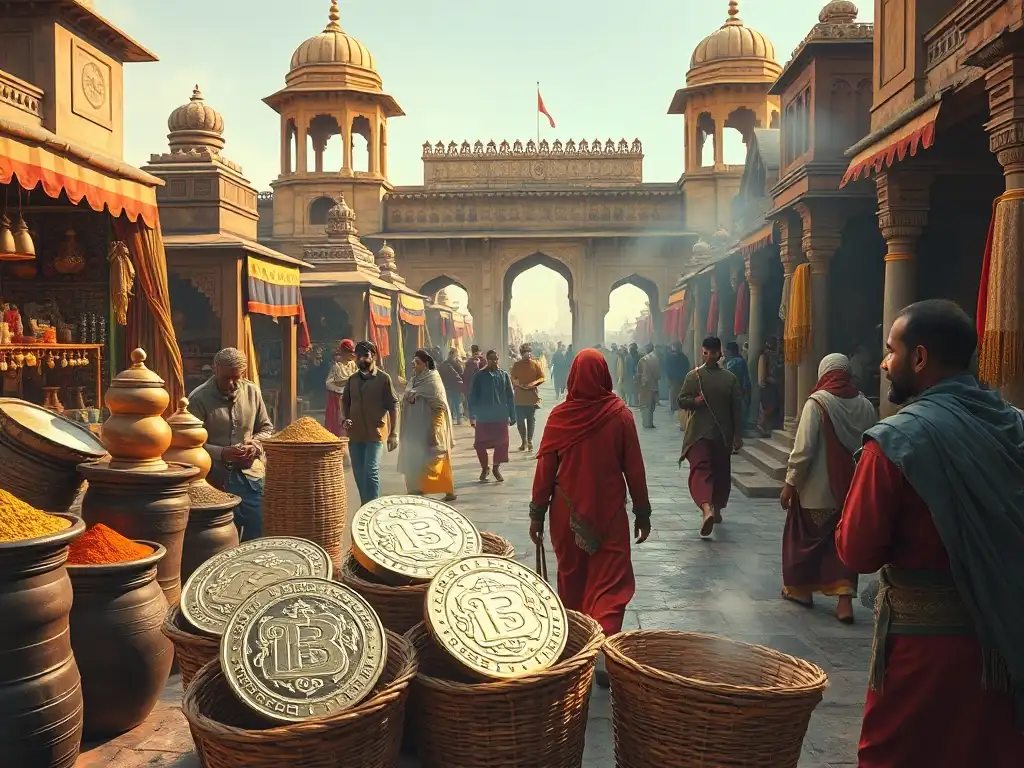
The development and use of currency played a pivotal role in the facilitation of trade transactions in ancient India. As trade expanded beyond local bartering systems, the need for a standardized medium of exchange became essential. Currency not only streamlined transactions but also enhanced the efficiency and volume of trade activities. By adopting various forms of currency, ancient Indian merchants were able to engage in more complex transactions, fostering inter-regional trade networks that connected diverse cultures and economies.
Currency as a Medium of Exchange
In ancient India, currency served as a tangible medium of exchange that simplified trade dealings. Initially, trade was conducted through barter, where goods were directly exchanged for other goods. However, as the economy grew more sophisticated, this method became impractical due to the difficulty of finding mutually beneficial exchanges. The introduction of metal coins, such as those made from silver, gold, and copper, provided a solution. These coins were minted with specific weights and stamped with symbols that represented their authenticity and value, allowing traders to easily assess their worth.
The use of currency allowed traders to:
- Standardize Values: Establishing a common measure for goods and services.
- Facilitate Long-Distance Trade: Making it easier to engage in commerce with distant regions.
- Encourage Specialization: Allowing artisans and farmers to focus on their production rather than the logistics of barter.
Currency and Marketplaces in Ancient India
Marketplaces in ancient India, known as "mandis," became bustling hubs of commerce where currency played an essential role. These centers of trade were not only places for buying and selling goods but also served as social and cultural exchange points. With the presence of currency, traders could engage in more extensive and varied transactions, leading to the establishment of a vibrant marketplace culture.
Key features of ancient Indian marketplaces included:
- Diverse Goods: Traders could offer a wide array of products, from spices and textiles to jewelry and pottery.
- Currency Acceptance: Different regions adopted unique currencies, enabling traders to engage with various local economies.
- Regulated Trade Practices: Local rulers often implemented regulations to manage trade activities, ensuring fair practices and protecting merchants.
The Impact of Currency on Trade Relationships
The introduction of currency transformed trade relationships in ancient India by fostering trust and reducing transaction risks. With a standardized medium of exchange, merchants could establish credit systems, allowing for deferred payments and long-term business relationships. This evolution of trade dynamics encouraged more extensive networks of commerce, connecting various regions and cultures.
The impact of currency on trade relationships manifested in several ways:
- Enhanced Trust: The use of currency provided a sense of security, reducing the reliance on barter systems.
- Long-Term Partnerships: Merchants could build lasting relationships based on credit and mutual benefit.
- Cultural Exchange: The flow of goods and currency facilitated the exchange of ideas, customs, and technologies among different cultures.
Conclusion: The Legacy of Ancient Indian Trade Currency
The legacy of ancient Indian trade currency is evident in the historical developments of commerce and economic systems. The innovations in currency not only shaped the trade practices of their time but also laid the groundwork for future economic frameworks.
Contribution to Economic Development
Ancient Indian trade currency significantly contributed to economic development by promoting trade efficiency and stimulating economic growth. The ability to trade goods with a standardized medium allowed for the expansion of markets, increased productivity, and led to the establishment of prosperous city-states. The economic interactions fostered by currency created wealth and led to the development of a complex socio-economic landscape.
Influence on Modern Indian Trade Practices
The principles of currency used in ancient Indian trade continue to influence modern Indian trade practices. Today, India operates within a sophisticated monetary system that reflects the historical evolution of currency in facilitating trade. The emphasis on standardized currency and regulated markets can be traced back to ancient practices. Furthermore, the cultural and commercial exchanges initiated through ancient trade routes still resonate in contemporary trade relationships, highlighting the enduring legacy of ancient Indian trade currency.
References and Further Reading
Understanding the role of currency in facilitating ancient Indian trade is enriched by a variety of resources, including books and academic articles. These materials provide comprehensive insights into the economic systems, trade practices, and the evolution of currency in ancient India.
Suggested Books on Ancient Indian Trade Currency
-
"The Ancient Economy" by M.I. Finley
This classic work explores the economic systems of ancient civilizations, including India. It provides a foundational understanding of how currency influenced trade dynamics.
-
"Coins and Currency of Ancient India" by M.K. Dhavalikar
This book offers an in-depth look at the types of currency used in ancient India, including coins and bartering systems. It discusses their role in trade and the economy.
-
"Trade and Traders in Ancient India" by R. Champakalakshmi
This scholarly work delves into the intricacies of trade networks in ancient India, highlighting how currency facilitated transactions and economic relationships.
-
"Finance and Trade in Ancient India: A Study of the Mauryan and Post-Mauryan Period" by R. S. Sharma
This book specifically focuses on the Mauryan Empire and its economic systems, providing insights into the use of currency in trade during this significant period.
-
"The Indus Valley Civilization: An Interdisciplinary Perspective" by J. M. Kenoyer
This work covers various aspects of the Indus Valley Civilization, including its trade practices and the early forms of currency that emerged during this time.
Academic Articles on Currency and Trade in Ancient India
-
"The Role of Coinage in Ancient Indian Trade"
This article discusses the evolution of coinage in ancient India and its critical role in facilitating trade routes, particularly during the Mauryan period.
-
"Barter to Currency: The Transition of Trade in Ancient India"
An exploration of the shift from barter systems to currency-based trade, examining how this transition impacted economic interactions in ancient societies.
-
"Economic Policies in Ancient India: The Role of Currency"
This academic piece analyzes the economic strategies employed by ancient Indian rulers and how currency played a central role in their trade policies.
-
"Ancient Indian Trade Networks: Currency and Beyond"
A study focusing on the extensive trade networks in ancient India, detailing how currency was not only a medium of exchange but also a facilitator of cultural exchange.
-
"Currency and Commerce in the Gupta Empire"
This article investigates the prosperous trade practices of the Gupta Empire, emphasizing the significance of currency in enhancing trade relations both domestically and with foreign entities.
These resources are invaluable for anyone looking to gain a deeper understanding of ancient Indian trade currency and its critical influence on the economic landscape of ancient India.
- Introduction to Ancient Indian Trade Currency
- Overview of Trade in Ancient India
- Importance of Currency in Economic Exchanges
- Types of Currency Used in Ancient Indian Trade
- The Evolution of Currency in Ancient Indian Trade
- Major Trade Routes and Their Connection to Currency
- The Role of Currency in Trade Transactions
- Conclusion: The Legacy of Ancient Indian Trade Currency
- References and Further Reading
Frequently Asked Questions
What was the primary form of currency used in ancient Indian trade?
The primary form of currency varied over time, including metal coins made from gold, silver, and copper, as well as barter systems before coinage was widely adopted.
How did ancient Indian trade influence cultural exchange?
Ancient Indian trade facilitated cultural exchange by allowing diverse ideas, art forms, and religions to spread across regions, significantly enriching the cultural tapestry of the subcontinent.
What were the major trade routes in ancient India?
Major trade routes included the Silk Road, which connected India to Central Asia and beyond, as well as maritime routes that linked Indian ports to traders in Southeast Asia and the Middle East.
How did the Gupta Empire impact currency and trade?
The Gupta Empire standardized currency, promoting trade across its vast territories, which led to increased economic stability and a flourishing of commercial activities.
What role did trade play in the economy of ancient India?
Trade was a crucial component of the economy, facilitating the exchange of goods and resources, thereby contributing to wealth accumulation and the development of urban centers in ancient India.
Final Reflection: The Enduring Legacy of Ancient Indian Trade Currency
The role of currency in facilitating ancient Indian trade is not just a historical footnote; it is a testament to the ingenuity and adaptability of human societies. As we navigate an increasingly globalized economy today, the principles of trade and currency that emerged in ancient India resonate more than ever. The sophisticated systems of exchange that our ancestors developed laid the groundwork for modern financial practices, illustrating that the essence of trade transcends time and geography.
The influence of ancient Indian trade currency extends beyond mere economic transactions; it has shaped cultural exchanges and social structures as well. The intricate networks of trade established by ancient Indian merchants fostered a rich tapestry of cultural interactions, which continue to inspire contemporary societies. As noted by historian R. S. Sharma, Trade is not merely an economic activity; it is a bridge that connects diverse cultures and ideas.
This perspective invites us to appreciate the profound impact of trade on our shared human experience and encourages us to recognize the value of cultural exchange in our modern world.
As we reflect on the lessons learned from ancient Indian trade currency, let us consider how we can apply these insights in our own lives. I invite you to explore the ways in which trade—be it of goods, ideas, or cultures—can enrich your understanding of the world. Embrace the spirit of collaboration and exchange that characterized ancient trade, and allow it to inspire you to build connections that transcend boundaries. In doing so, we honor the legacy of those who came before us and contribute to a more interconnected and harmonious future.
Unveil the Secrets of Ancient Trade!
Thank you for taking the time to explore the fascinating world of ancient Indian trade and the pivotal role currency played in its progress. We hope you found valuable insights that enrich your understanding of this remarkable history. Now, it’s time to take action!
- Dive deeper into the trade practices of ancient India by exploring archaeological findings in your local library or through reputable online resources.
- Share your thoughts! Engage with friends and family about what you learned and discuss why you believe currency was crucial for trade.
- Join an online forum or social media group focused on ancient civilizations and contribute your ideas to meaningful discussions.
What new insights about ancient trade and currency do you wish modern society could adopt?