
The Cultural Impact of the Mauryan Empire on Hellenistic Greece

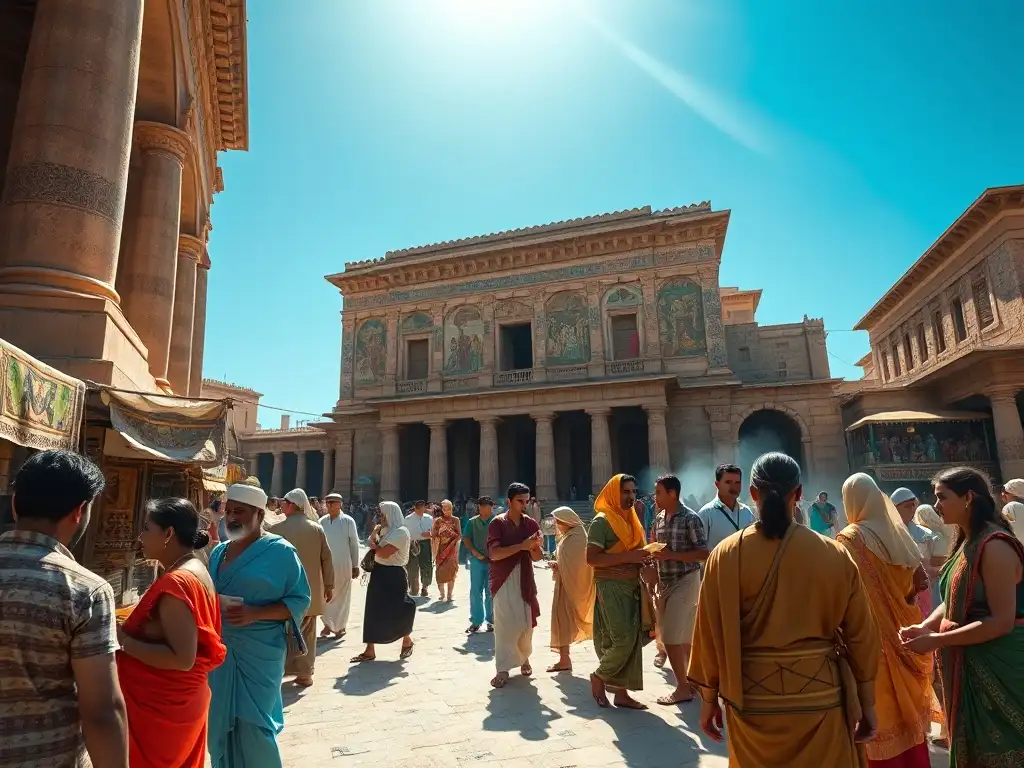
Welcome to Ancient India History, where we embark on an extraordinary journey through the rich tapestry of India's past. Here, we delve into the profound cultural influence of the Mauryan Empire, a pivotal force that shaped not only the Indian subcontinent but also left an indelible mark on Hellenistic Greece. What secrets and connections lie within this fascinating intersection of civilizations?
Join us as we uncover the intricate threads that wove together two worlds, inviting you to explore the remarkable contributions and interactions that defined an era. Prepare to be captivated by the legacy of ancient India and its enduring impact on global history!
The Mauryan Empire, one of the largest and most influential empires in ancient India, flourished from 322 to 185 BCE and played a pivotal role in shaping cultural dynamics across regions beyond its borders. Notably, its cultural influence reached far into Hellenistic Greece, fostering a unique exchange of ideas, art, and philosophy that would leave a lasting legacy on both civilizations.
This article delves into the multifaceted interactions between the Mauryan Empire and Hellenistic Greece, exploring how these exchanges contributed to an enriched cultural tapestry that bridged diverse traditions and philosophies. By examining trade routes, diplomatic ties, and the spread of religious and artistic practices, we aim to uncover the profound ways in which the Mauryan Empire shaped the cultural landscape of Hellenistic Greece, asserting its significance in the broader narrative of ancient history.
Historical Context of the Mauryan Empire and Hellenistic Greece
The Mauryan Empire emerged during a period of significant transformation in India, marked by the unification of various regional kingdoms under the leadership of Chandragupta Maurya. This rise coincided with the aftermath of Alexander the Great's conquests in the 4th century BCE, which established a Hellenistic presence in northwest India. The intersection of these two powerful entities set the stage for a rich dialogue between Indian and Greek cultures, fostering exchanges that would influence art, philosophy, and governance.
Trade and Economic Interactions
Trade played a crucial role in the cultural interactions between the Mauryan Empire and Hellenistic Greece. The establishment of trade routes, such as the famous Silk Road, facilitated the exchange of goods, ideas, and cultural practices. Notable exports from the Mauryan Empire included:
- Spices: Highly sought after in Greek markets.
- Textiles: Indian fabrics were renowned for their quality and craftsmanship.
- Jewelry: Artisans crafted exquisite pieces that showcased Indian artistry.
These trade relations not only enriched the economies of both regions but also acted as conduits for cultural diffusion.
Philosophical and Religious Exchanges
The Mauryan Empire, particularly under Emperor Ashoka, championed the spread of Buddhism, which found its way into Hellenistic thought. The interactions led to:
- Philosophical Syncretism: Greek philosophers began to engage with Indian philosophical concepts, particularly those related to ethics and governance.
- Spread of Buddhism: Ashoka's mission to spread Buddhism influenced Hellenistic thinkers and contributed to the establishment of Buddhist communities in regions like Bactria.
This exchange prompted a reevaluation of moral and ethical frameworks in Hellenistic societies.
Artistic Influences
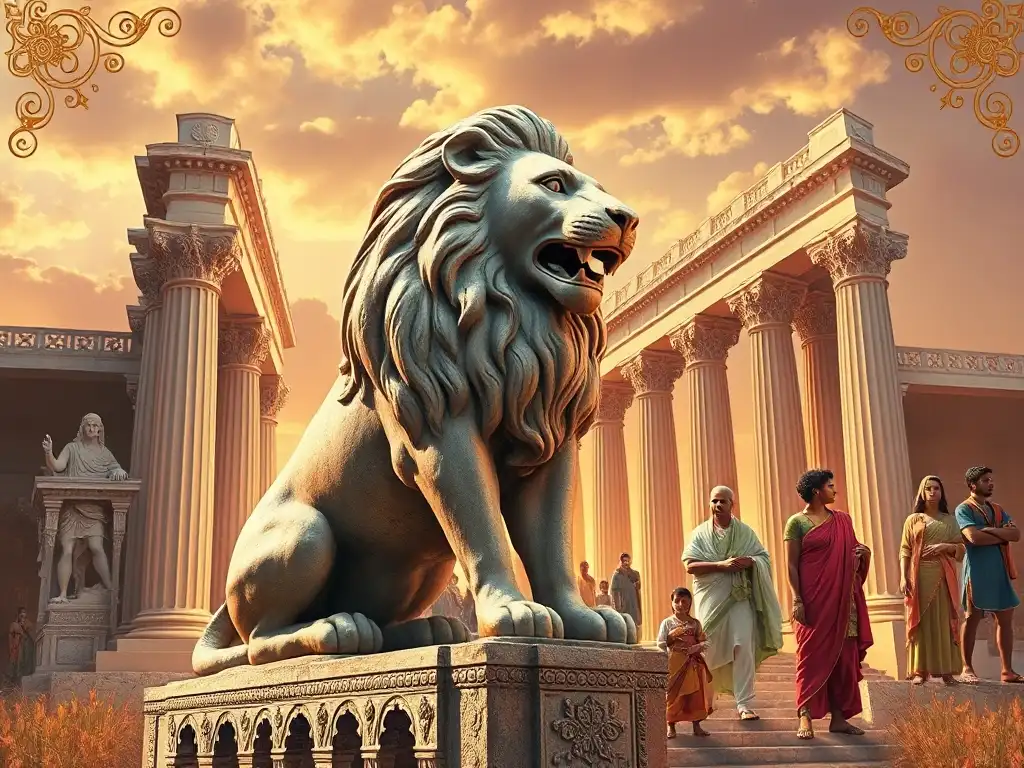
The artistic legacy of the Mauryan Empire also left its mark on Hellenistic art. The introduction of Indian motifs and styles enriched Hellenistic sculptures, pottery, and architecture. The fusion of artistic techniques is evident in several key areas:
- Sculpture: The introduction of intricate carvings and symbolism reflecting Indian spiritual themes.
- Stupas and Temples: Architectural styles influenced by Indian designs can be seen in Hellenistic structures.
This artistic dialogue showcases the blending of aesthetics that emerged from the interactions between these two great civilizations.
Conclusion
The cultural impact of the Mauryan Empire on Hellenistic Greece is a testament to the power of cross-cultural interactions in shaping human history. Through trade, philosophical discourse, and artistic exchanges, the Mauryan Empire not only influenced its immediate neighbors but also left an enduring legacy that resonated through the corridors of time. This article will explore these themes in greater detail, highlighting the significance of the Mauryan Empire's cultural influence in the context of Indian-Greek relations.
- Historical Context of the Mauryan Empire and Hellenistic Greece
- Trade and Economic Interactions
- Philosophical and Religious Exchanges
- Artistic Influences
- Conclusion
- What was the Mauryan Empire known for in terms of cultural influence?
- How did the Mauryan Empire contribute to trade and cultural exchange?
- What are some examples of artistic influences from the Mauryan Empire on Hellenistic Greece?
- Did the Mauryan Empire influence philosophy in Hellenistic Greece?
- What role did Ashoka play in the cultural exchange between the Mauryan Empire and Hellenistic Greece?
Introduction to the Mauryan Empire and Hellenistic Greece
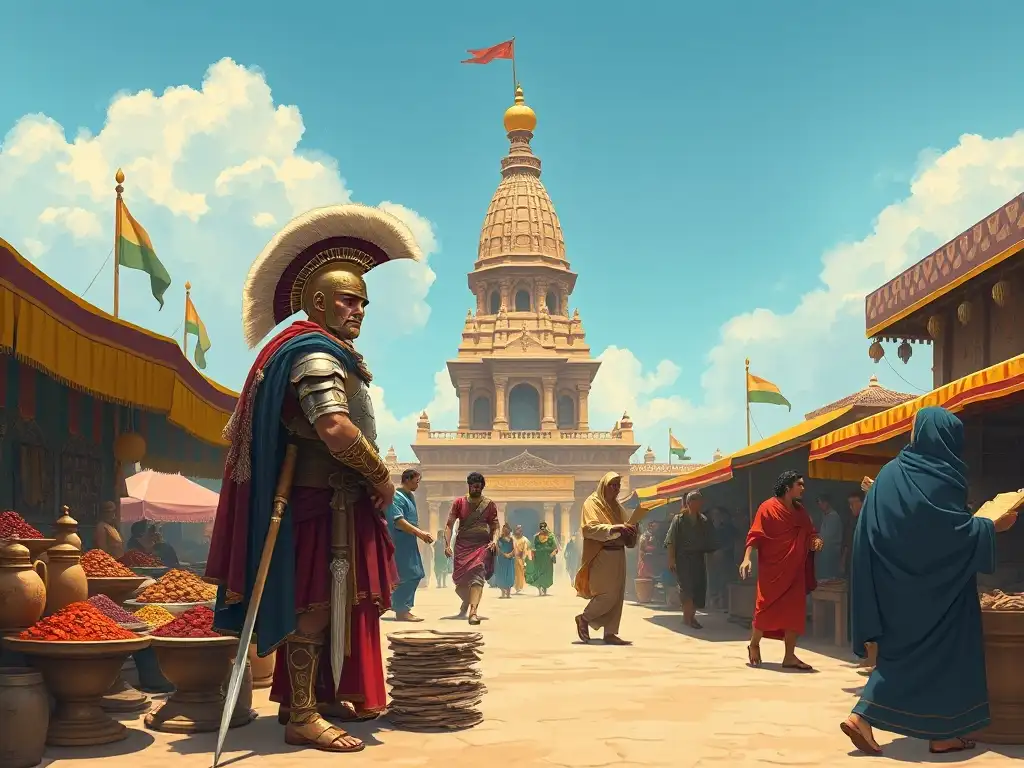
The Mauryan Empire, emerging in the 4th century BCE, stands as one of the most significant and formidable empires in ancient Indian history. Spanning a vast territory that included much of the Indian subcontinent, the empire is renowned for its profound cultural, political, and economic achievements. At the same time, Hellenistic Greece, which flourished following the conquests of Alexander the Great, was undergoing significant transformations, marked by the blending of Greek culture with local traditions across the regions Alexander had conquered.
This section will delve into the Mauryan Empire's cultural influence on Hellenistic Greece, highlighting how this cross-cultural interaction enriched both civilizations. By examining the rise and expansion of the Mauryan Empire, the historical context of Hellenistic Greece, and the importance of cultural exchange, we can better understand the intricate ties that shaped their legacies.
Overview of the Mauryan Empire's Rise and Expansion
The Mauryan Empire was founded by Chandragupta Maurya around 322 BCE after overthrowing the Nanda dynasty. Under Chandragupta and later his grandson Ashoka, the empire expanded significantly, reaching its zenith in the 3rd century BCE.
- Major Stages of Expansion:
- Chandragupta's Conquests: Chandragupta initially focused on consolidating power in Magadha, gradually expanding into Punjab and parts of present-day Afghanistan.
- Ashoka's Reign: Ashoka, who ruled from 268 to 232 BCE, was instrumental in furthering the empire's boundaries, including conquests in Kalinga. His campaigns, however, also led to a profound transformation in his governance philosophy towards non-violence and Buddhism.
- Cultural Contributions: The Mauryan Empire is notable for its efforts in promoting trade, art, and religion.
- Trade Networks: The empire established extensive trade routes connecting India with regions as far as the Mediterranean, creating a conduit for cultural exchange.
- Art and Architecture: The period saw the construction of monumental stupas, such as those at Sanchi and Sarnath, which reflect a blend of Indian and Hellenistic artistic styles.
This extensive network of trade and cultural exchange laid the foundation for interactions between the Mauryan Empire and Hellenistic Greece, setting the stage for mutual influence.
Brief History of Hellenistic Greece Post-Alexander the Great
Following Alexander the Great's death in 323 BCE, Hellenistic Greece entered a new era characterized by the fragmentation of his vast empire. The division of his territories among his generals led to the formation of several Hellenistic kingdoms, including the Seleucid Empire and the Ptolemaic Kingdom in Egypt.
- Cultural Developments:
- Blending of Cultures: The Hellenistic period was marked by a significant fusion of Greek and Eastern cultures. This syncretism influenced art, philosophy, and science, paving the way for advancements in various fields.
- Philosophical Schools: Schools such as Stoicism and Epicureanism emerged during this time, reflecting a blend of Greek thought and local traditions.
- Economic Interactions: Hellenistic Greece thrived economically, benefiting from trade with the East. Goods, ideas, and cultural practices flowed between the Mediterranean and Asian markets, facilitating a rich tapestry of cultural interactions.
The geographic proximity and trade connections between the Mauryan Empire and Hellenistic Greece fostered an environment ripe for cultural exchanges that would leave a lasting impact on both civilizations.
Importance of Cultural Exchange Between Civilizations
The cultural exchange between the Mauryan Empire and Hellenistic Greece was pivotal in shaping the historical trajectory of both regions. This interaction had several key implications:
- Influence on Art and Architecture: The Mauryan architectural style, characterized by its intricate carvings and stupas, influenced Hellenistic art forms. Similarly, Greek artistic techniques found their way into Indian sculpture, as seen in the Greco-Buddhist art of Gandhara.
- Philosophical and Religious Syncretism: The spread of Buddhism during the Mauryan Empire coincided with the Hellenistic era's fascination with philosophical thought. As trade routes opened, ideas about ethics, governance, and spirituality exchanged hands, enriching both cultures.
- Trade and Economic Growth: The interaction fostered by trade not only enhanced economic ties but also allowed for the exchange of technologies, agricultural practices, and innovations. This contributed to growth and prosperity in both civilizations.
The Mauryan Empire's cultural influence on Hellenistic Greece was marked by a rich exchange of ideas, artistic expressions, and economic interactions. This multifaceted relationship underscores the importance of understanding ancient civilizations as interconnected entities rather than isolated units, revealing a shared legacy that continues to resonate in the cultural tapestry of modern times.
The Mauryan Empire's Cultural Influence on Hellenistic Greece
Key Aspects of Mauryan Culture
The Mauryan Empire, flourishing from 322 to 185 BCE, is recognized for its profound cultural influence that extended beyond the Indian subcontinent, reaching Hellenistic Greece. This influence can be categorized into various aspects, including art, architecture, religion, philosophy, language, and literature.
Art and Architecture in the Mauryan Empire
Mauryan art and architecture are distinguished by their grandeur and sophistication, reflecting a blend of indigenous styles and foreign influences. One of the most notable contributions is the Ashoka Pillars, intricately carved sandstone columns that served both as edicts and religious symbols. These pillars exhibit animal motifs, particularly lions, which later influenced Hellenistic sculpture.
Additionally, the construction of stupas, such as the Great Stupa at Sanchi, represents the architectural advancements of the Mauryan period. The ornate carvings and intricate relief work in these structures likely inspired Greek architects, who were exposed to similar forms during trade interactions.
Religion and Philosophy: Buddhism's Role
Buddhism, as propagated by Emperor Ashoka, played a pivotal role in fostering cultural ties between the Mauryan Empire and Hellenistic Greece. Ashoka's Edicts, inscribed in various languages, promoted messages of peace and moral values, resonating with Greek philosophical thought.
Furthermore, the spread of Buddhism into the Hellenistic world facilitated the exchange of ideas, particularly the concepts of ethics and governance. Greek thinkers such as Pyrrho of Elis, who traveled to India, integrated Buddhist philosophy into their own teachings, highlighting the profound impact of Mauryan religious thought.
Language and Literature Contributions
The Mauryan Empire's linguistic diversity also contributed to its cultural influence. Sanskrit, as the primary language of administration, was a conduit for literature and scholarly works. The Kautilya's Arthashastra, a treatise on statecraft, showcases the complexity of Mauryan governance and political philosophy, likely sparking interest among Hellenistic rulers.
In addition, the translation of Buddhist texts into Greek provided a rich literary exchange. The Dhammapada, for instance, influenced Hellenistic thought on ethics and morality, emphasizing the interconnectedness of cultures through literature.
Hellenistic Greece: A Cultural Melting Pot
Hellenistic Greece, characterized by its openness to external influences following the conquests of Alexander the Great, served as a fertile ground for the cultural impact of the Mauryan Empire. The confluence of Eastern and Western ideas created a vibrant cultural landscape.
Influence of Eastern Cultures on Greek Society
The Hellenistic period saw the integration of Eastern cultures, including Indian influences, into Greek society. This was evident in various domains such as art, philosophy, and religion. The representation of Indian themes in Hellenistic art, including the depiction of Indian deities, indicates a cross-cultural dialogue.
Moreover, the philosophical schools of the time began to incorporate elements of Eastern thought, leading to a more eclectic and syncretic approach to philosophy. This blending of ideas enriched the intellectual landscape of Hellenistic Greece.
The Role of Trade in Cultural Exchange
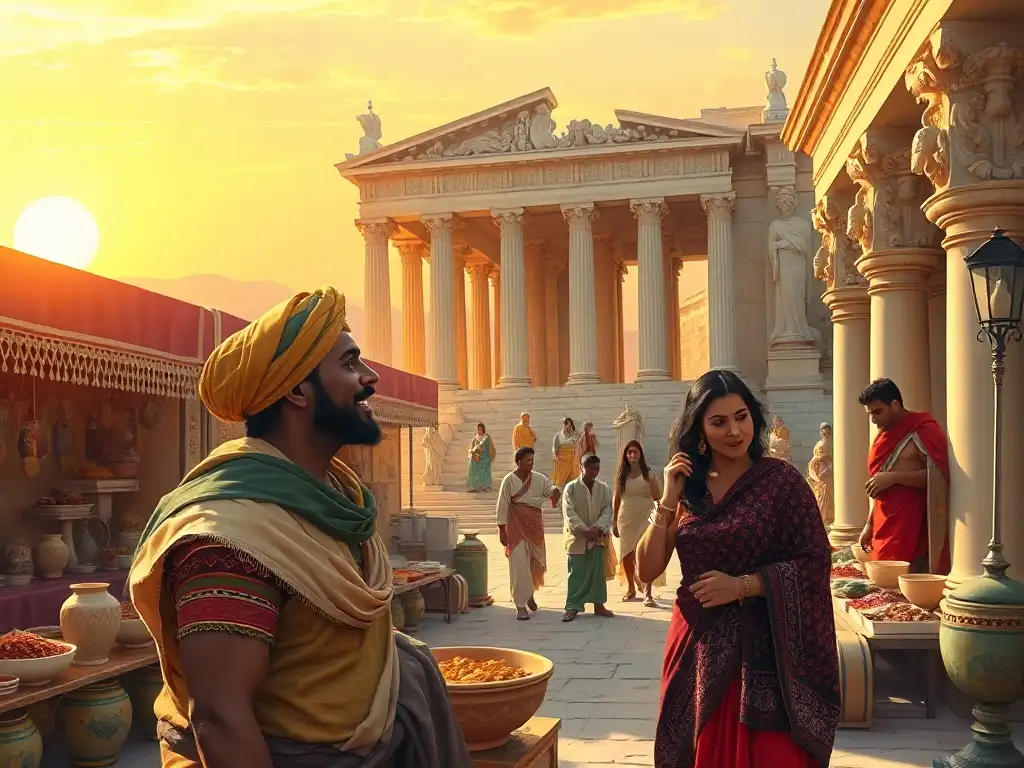
Trade routes established during the Mauryan Empire facilitated the exchange of goods, ideas, and cultural practices. The Silk Road, which connected India and Greece, played a crucial role in this cultural amalgamation. Goods like silk, spices, and textiles were traded alongside philosophical ideas and artistic techniques.
Marketplaces became melting pots of cultural exchange, where Indian merchants interacted with Greek traders, leading to the dissemination of Mauryan cultural influence throughout Hellenistic territories. The fusion of artistic styles and the adoption of Indian motifs in Hellenistic art can be traced back to this vibrant trade interaction.
The Mauryan Empire's cultural influence on Hellenistic Greece is a testament to the interconnectedness of ancient civilizations. Through art, philosophy, language, and trade, the legacies of the Mauryan Empire contributed to the rich tapestry of Hellenistic culture, showcasing the enduring impact of cross-cultural interactions.
Direct Interactions Between the Mauryan Empire and Hellenistic Greece
Diplomatic Relations: Envoys and Treaties
The Mauryan Empire, known for its vast territorial expanse and centralized governance, established significant diplomatic relations with Hellenistic Greece following Alexander the Great's campaigns. One of the most notable figures in this context was Megasthenes, an ambassador from the Mauryan Emperor Chandragupta Maurya to the court of Seleucus I Nicator, a successor of Alexander.
Megasthenes' accounts, documented in his work Indica, provide a comprehensive overview of Indian society, politics, and culture as perceived by the Greeks. His detailed descriptions of the Mauryan capital, Pataliputra, highlighted its grandeur, urban planning, and the sophisticated administration that characterized the empire.
- Key Treaties: The Treaty of Samarkand between the Mauryan Empire and the Seleucid Empire facilitated not only political alliances but also paved the way for cultural and economic exchanges. This treaty helped to stabilize relations, allowing for mutual benefits in trade and military cooperation.
The alliance between the Mauryan Empire and the Hellenistic kingdoms marked a significant shift in the dynamics of ancient diplomacy, showcasing the Mauryans' openness to international relations.
Trade Routes and Economic Exchanges
The Mauryan Empire played a crucial role in the development of trade routes that linked India with Hellenistic Greece. The Silk Road, which traversed vast regions, became a conduit for goods, ideas, and cultural practices.
- Major Trade Goods:
- Spices: Indian spices were highly sought after in Greek markets, influencing culinary practices.
- Textiles: The exquisite fabrics produced in India became a staple of Hellenistic fashion.
- Precious Stones: Indian gems were prized possessions among the elite in Greece.
The establishment of these trade routes not only fostered economic cooperation but also encouraged the transfer of knowledge and cultural practices. Indian merchants frequently traveled to Greek territories, bringing with them not only goods but also ideas about governance, philosophy, and art.
- Economic Benefits: The influx of Indian goods into Greek markets resulted in a significant increase in trade volume, benefiting both civilizations economically. The Mauryan Empire capitalized on this by imposing trade tariffs, which contributed to its treasury and facilitated further expansion.
Cultural Exchanges Through Trade Goods
Cultural exchanges between the Mauryan Empire and Hellenistic Greece were significantly influenced by the trade of various goods. These exchanges were not limited to material items but extended to ideas, art forms, and religious beliefs.
- Art and Architecture: The influence of Hellenistic styles can be observed in certain Mauryan art forms, particularly in sculpture. The Lion Capital of Ashoka, which is emblematic of Mauryan artistry, exhibits stylistic elements reminiscent of Greek sculptures.
- Philosophical Ideas: The interaction between the two cultures led to a cross-pollination of philosophical ideas. Greek philosophers, such as Pyrrho, who traveled to India, encountered Indian philosophies like Buddhism and Jainism, which emphasized ethics and metaphysics.
- Religious Practices: The introduction of Greek gods and their syncretism with Indian deities can be traced back to these cultural exchanges. The blending of religious practices enriched the spiritual landscape of both civilizations.
Trade was not merely an economic transaction; it was a significant medium for cultural transmission that shaped the identities of both the Mauryan Empire and Hellenistic Greece.
The Mauryan Empire's cultural influence on Hellenistic Greece was profound, facilitated by diplomatic relations, trade routes, and the exchange of cultural goods. This interaction not only transformed economic landscapes but also fostered a rich tapestry of cultural exchange that shaped the historical narrative of both civilizations.
Comparative Analysis of Cultural Elements
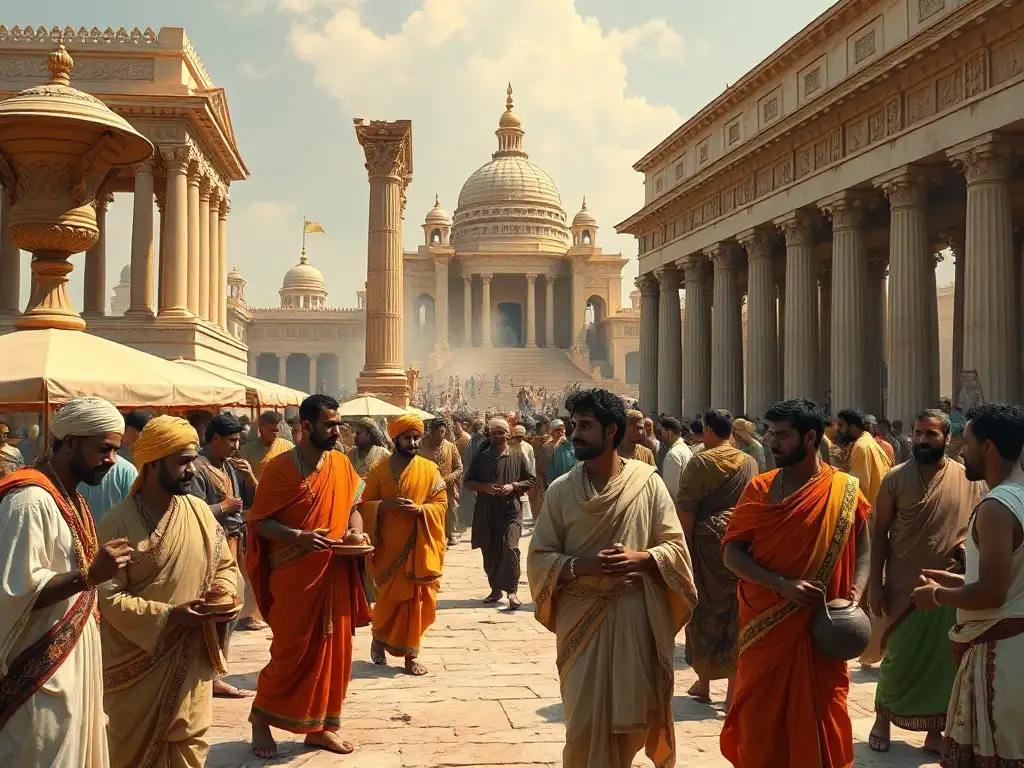
In exploring the Mauryan Empire cultural influence on Hellenistic Greece, it is essential to examine the comparative elements that shaped their respective cultures. The interaction between these two civilizations led to a fascinating exchange of ideas, artistic expressions, and architectural innovations.
Art: Mauryan vs. Hellenistic Artistic Styles
The artistic styles of the Mauryan Empire and Hellenistic Greece showcase distinct characteristics that reflect their cultural values and aesthetics.
- Mauryan Art: Primarily characterized by its emphasis on religious themes, Mauryan art is best exemplified by the intricate carvings of the Ashoka Pillars and the Sanchi Stupa. These artworks often depict scenes from Buddhist teachings, animals, and floral motifs, showcasing a profound spiritual connection.
- Hellenistic Art: In contrast, Hellenistic art is marked by its realism and emotional expression. Artists like Lysippus and Praxiteles created sculptures that emphasized human emotion and movement, reflecting the complexities of life and the divine.
| Feature | Mauryan Art | Hellenistic Art |
|---|---|---|
| Themes | Religious, primarily Buddhist | Mythological, emotional |
| Style | Symbolic, intricate carvings | Realistic, dynamic |
| Materials | Stone, terracotta | Marble, bronze |
The cross-cultural exchange fostered by trade routes may have led to the introduction of Hellenistic techniques into Indian art, possibly influencing the stylization of figures and the portrayal of motion.
Philosophical Ideas: Buddhism's Influence on Hellenistic Thought
The philosophical underpinnings of the Mauryan Empire, particularly through Buddhism, had a notable impact on Hellenistic thought.
- Buddhism's Core Teachings: Central to Buddhism are the concepts of impermanence, suffering, and the pursuit of enlightenment. These ideas resonated with the Hellenistic emphasis on individualism and the quest for personal fulfillment.
- Intellectual Exchange: The presence of Buddhist monks and scholars in regions like Bactria facilitated the spread of Buddhist philosophy into the Hellenistic world. This led to dialogues that merged Buddhist concepts with Stoicism and Epicureanism, enriching the philosophical landscape of Greece.
Furthermore, the adoption of Buddhist principles can be seen in the development of ethical frameworks within Hellenistic philosophy, guiding moral conduct and personal development.
Architectural Innovations: Stupas and Temples
The architectural achievements of the Mauryan Empire, particularly the construction of stupas, were significant in influencing Hellenistic architecture.
- Stupas: These monumental structures served as reliquaries for Buddhist relics and were characterized by their domed shape, surrounded by a circumambulatory path. The Great Stupa at Sanchi is a prime example, showcasing not just architectural ingenuity but also the integration of symbolic elements representing the Buddhist cosmology.
- Hellenistic Temples: In contrast, Hellenistic temples like the Temple of Apollo at Delphi and the Parthenon in Athens were designed to honor the gods and serve as centers of civic life. They emphasized grandeur and symmetry, often adorned with elaborate sculptures.
| Architectural Feature | Mauryan Stupas | Hellenistic Temples |
|---|---|---|
| Purpose | Religious (Buddhist relics) | Religious (honoring deities) |
| Design | Dome-shaped, circular paths | Rectangular, colonnaded |
| Decoration | Symbolic carvings, narrative reliefs | Elaborate friezes, sculptures |
The Mauryan stupas' influence on Hellenistic temple designs can be seen in their increasing complexity and the integration of symbolic elements, which may have encouraged Greek architects to experiment with new forms and spiritual representations in their structures.
The Mauryan Empire cultural influence on Hellenistic Greece illustrates a rich tapestry of artistic, philosophical, and architectural exchanges that enriched both civilizations. The subsequent blending of these elements laid the groundwork for future cultural developments in the region.
The Long-term Effects of Mauryan Cultural Influence
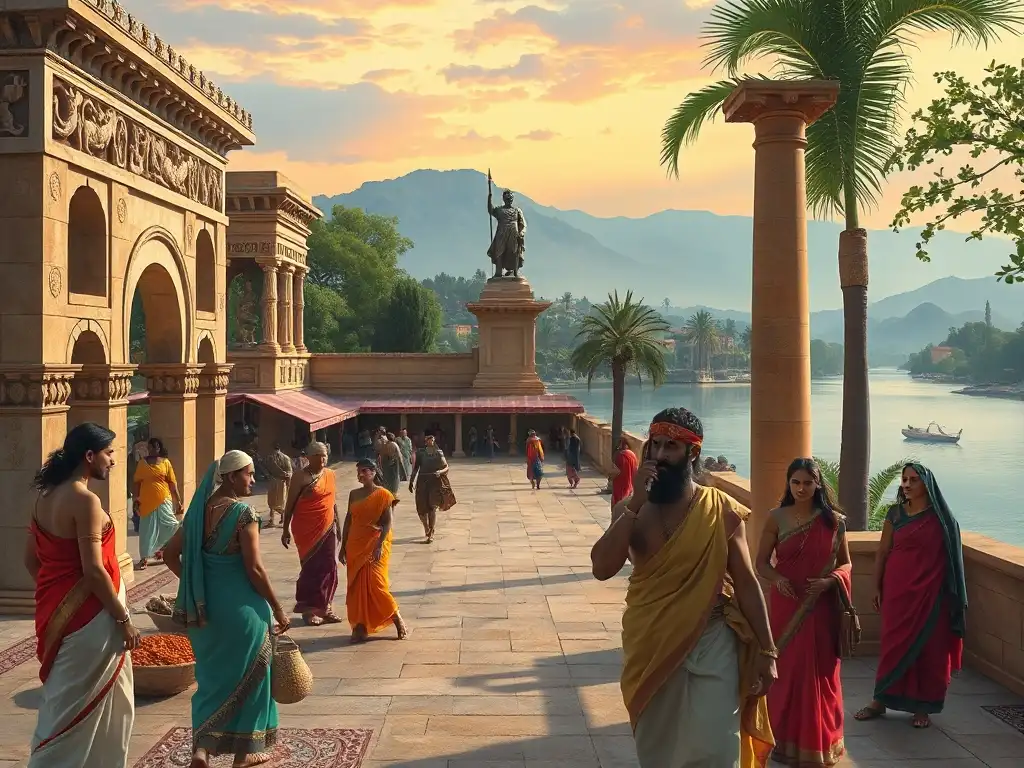
Lasting Influence on Hellenistic Art and Architecture
The Mauryan Empire, known for its vast territory and rich cultural tapestry, left an indelible mark on Hellenistic art and architecture. This influence is particularly evident in the adoption of stylistic elements and motifs that merged Indian aesthetics with Greek artistic principles.
- Sculptural Techniques: The intricate techniques used in Mauryan sculpture, especially during the reign of Ashoka, showcased a level of realism and emotional depth that resonated with Hellenistic artists. For instance, the famous Lion Capital of Ashoka exemplifies the sophistication of Indian craftsmanship, which inspired similar representations in Hellenistic sculpture, notably in the portrayal of animals and human forms.
- Stupas and Temples: The construction of stupas, which served as reliquaries and places of worship, influenced Hellenistic architectural designs. Greek architects began incorporating circular forms and domes into their structures, echoing the design principles seen in Mauryan stupas. This can be traced in the architecture of the Buddhist stupas at Sanchi, which exhibit a blend of Indian and Hellenistic techniques.
- Iconography: The syncretism between Indian and Hellenistic iconography is apparent in the depiction of deities. For example, the portrayal of the Buddha began to include elements reminiscent of Greek gods, such as the draped clothing and idealized features seen in Hellenistic sculptures. This blending of iconography not only enriched the visual culture but also facilitated cross-cultural dialogues about divinity and representation.
Impact on Subsequent Indian and Greek Relations
The cultural exchanges initiated by the Mauryan Empire laid the groundwork for future interactions between Indian and Greek civilizations. These interactions can be categorized into several key areas:
- Philosophical Dialogues: The exchange of ideas during the Mauryan period fostered a dialogue between Indian philosophies, particularly Buddhism, and Greek thought. Philosophers such as Megasthenes, who served as an ambassador in the Mauryan court, documented Indian philosophies in his works, contributing to a shared intellectual heritage that influenced later thinkers in both cultures.
- Trade and Commerce: The Mauryan Empire established trade routes connecting India with the Hellenistic world. This facilitated not just the exchange of goods—such as spices, textiles, and precious stones—but also cultural exchanges that enriched both civilizations. The Silk Road and maritime routes became conduits for the further spread of Mauryan cultural influence into Hellenistic territories.
- Political Alliances: The Mauryan Empire's diplomatic efforts with Hellenistic kingdoms led to political alliances that had lasting effects on regional stability. These alliances were often marked by cultural exchanges, as diplomatic envoys carried with them not only political messages but also artistic and cultural treasures.
The Legacy of the Mauryan Empire in Western Thought
The legacy of the Mauryan Empire transcends its geographical boundaries, influencing Western thought in several profound ways:
- Introduction of Non-violence: The Mauryan principle of Ahimsa (non-violence) propagated by Ashoka had a significant impact on later Western philosophical and ethical discussions. This concept found resonance in the works of thinkers like Leo Tolstoy and Mahatma Gandhi, who drew upon Ashoka's teachings to advocate for non-violent resistance and ethical governance.
- Cultural Syncretism: The blending of Indian and Hellenistic cultures during the Mauryan period serves as an early example of cultural syncretism, which is a recurring theme in Western thought. This interaction paved the way for later explorations of cultural identity and hybridity, influencing disciplines such as anthropology, philosophy, and art history.
- Historical Narratives: The writings of historians and chroniclers from both the Indian and Hellenistic worlds contributed to a more nuanced understanding of cultural interactions. The accounts of ancient historians, such as Arrian and Diodorus, have been crucial in shaping the narrative of cross-cultural exchanges, emphasizing the importance of the Mauryan Empire as a catalyst for dialogue between civilizations.
The Mauryan Empire's cultural influence not only shaped the artistic and architectural landscapes of Hellenistic Greece but also facilitated enduring relations between Indian and Greek civilizations, leaving a legacy that continues to resonate in modern thought and practice.
Conclusion: The Significance of the Mauryan Empire's Cultural Influence
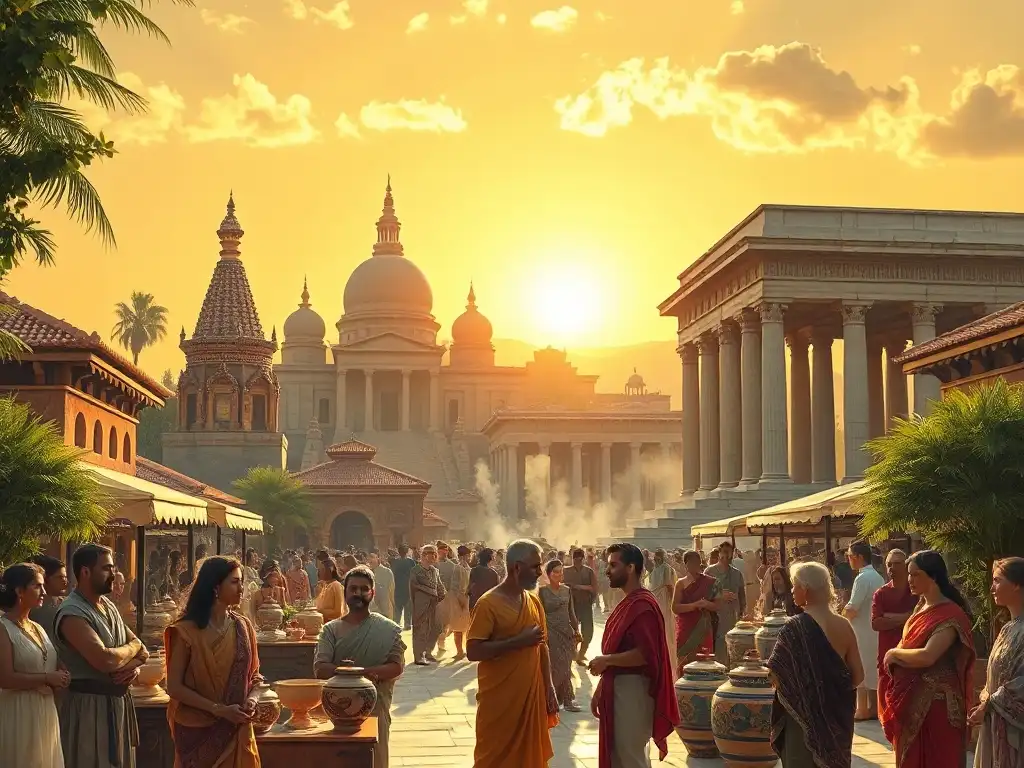
The Mauryan Empire, which thrived from 322 to 185 BCE, stands as a monumental chapter in the history of ancient India. Its cultural influence extended far beyond the subcontinent, particularly impacting the Hellenistic world. The exchange of ideas, art, and philosophies between these two great civilizations not only enriched their respective cultures but also laid the groundwork for future interactions between the East and the West.
Reflection on the Importance of Cross-Cultural Interactions
Cross-cultural interactions during the Mauryan period exemplify the transformative power of cultural exchange. The interactions between Indian and Hellenistic cultures were facilitated through trade routes, diplomatic missions, and the movement of scholars and artisans. Notable figures, such as the Greek ambassador Megasthenes, documented their experiences and observations in India, providing invaluable insights into the cultural fabric of the Mauryan Empire.
- Art and Architecture: The Mauryan architectural style, characterized by grand stupas like those at Sanchi and Bharhut, encountered Hellenistic influences, leading to a unique fusion of artistic elements. This blending is evident in the intricate carvings and sculptures that embody both Indian and Greek aesthetics.
- Philosophy and Religion: The Mauryan Empire's embrace of Buddhism under Emperor Ashoka brought about a significant exchange of philosophical ideas. Ashoka's edicts, which promoted Buddhist values of non-violence and compassion, resonated with Hellenistic philosophies such as Stoicism, fostering a dialogue that transcended cultural boundaries.
- Trade and Economy: The Mauryan Empire's extensive trade networks facilitated the exchange of goods, ideas, and technologies. Spices, textiles, and precious stones flowed from India to the Mediterranean, while Greek innovations in metallurgy and coinage influenced Mauryan economic practices.
These interactions underscore the importance of cultural exchange as a catalyst for growth and innovation. The blending of Mauryan and Hellenistic cultures not only enriched both societies but also paved the way for future exchanges across the globe.
Final Thoughts on the Mauryan Empire's Role in Shaping Hellenistic Culture
The Mauryan Empire's cultural influence on Hellenistic Greece represents a significant historical phenomenon that highlights the interconnectedness of ancient civilizations. Through trade, diplomacy, and the exchange of ideas, the Mauryan Empire contributed to the evolution of Hellenistic culture in various ways:
- Literature and Language: The introduction of Sanskrit texts and literature into Greek intellectual circles enriched the literary landscape of Hellenistic Greece. This exchange fostered a greater understanding of Indian philosophies and narratives, influencing Greek writers and thinkers.
- Scientific Knowledge: The Mauryan Empire's advancements in mathematics and astronomy had a lasting impact on Hellenistic science. Scholars such as Aryabhata and Brahmagupta contributed to mathematical concepts that were later integrated into Greek scientific discourse.
- Cultural Legacy: The legacy of the Mauryan Empire is evident in the enduring influences of Indian art, philosophy, and spirituality on subsequent cultures. The synthesis of Indian and Hellenistic ideas created a rich tapestry of thought that informed the development of later civilizations.
The cultural influence of the Mauryan Empire on Hellenistic Greece exemplifies the profound effects of cross-cultural interactions. This relationship not only enriched both civilizations but also fostered an enduring legacy that continues to shape our understanding of cultural exchange today. The Mauryan Empire's contributions serve as a testament to the power of collaboration and the shared human experience across diverse cultures.
Further Reading and Resources
Recommended Books on the Mauryan Empire and Hellenistic Greece
To gain a deeper understanding of the Mauryan Empire cultural influence on Hellenistic Greece, the following books are essential reads:
- "The Mauryan Empire" by Romila Thapar
- This comprehensive work explores the political, social, and economic aspects of the Mauryan Empire, providing insights into its interactions with neighboring cultures, including Hellenistic Greece.
- "Hellenistic Philosophy: Stoics, Epicureans, Skeptics" by John M. Rist
- Rist's examination of Hellenistic thought includes discussions on how Eastern influences, including those from the Mauryan Empire, shaped philosophical developments in Greece.
- "India and the Hellenistic World" by R. C. Majumdar
- This book delves into the cultural exchanges between Indian and Hellenistic civilizations, highlighting the Mauryan Empire's significant contributions to art, science, and philosophy.
- "The Impact of the Mauryan Empire on India and Beyond" by Michael W. Meister
- Meister analyzes the far-reaching effects of the Mauryan Empire, including its cultural exchanges with Greek civilization, providing a nuanced view of this historical interaction.
- "The Indian Subcontinent and the Hellenistic World" by A. K. Narain
- This work investigates the connections between the Indian subcontinent and the Hellenistic world, emphasizing trade, culture, and the spread of ideas during the Mauryan period.
Online Resources for Exploring Indian-Greek Relations
Numerous online platforms offer valuable information and resources on the cultural exchanges between the Mauryan Empire and Hellenistic Greece. Here are some noteworthy sites:
- Ancient History Encyclopedia
- This resource provides articles and timelines detailing the Mauryan Empire's history, including its interactions with Hellenistic Greece. The user-friendly format makes it easy to navigate through various topics.
- Internet Archive
- A treasure trove of historical texts and scholarly articles, the Internet Archive hosts a variety of publications related to the Mauryan Empire and its cultural influence on Greece.
- Google Scholar
- For those seeking academic papers and research articles, Google Scholar is an excellent tool to find peer-reviewed studies discussing the Mauryan Empire's impact on Hellenistic culture.
- BBC History
- The BBC History website features articles and multimedia content on ancient civilizations, including sections on Indian history and its connections to the wider world of Hellenistic Greece.
- JSTOR
- This digital library provides access to thousands of academic journals, books, and primary sources related to history, including works focusing on the Mauryan Empire and Indian-Greek relations.
These resources collectively enhance the understanding of the Mauryan Empire cultural influence, providing various perspectives and in-depth analyses of this pivotal period in history.
Frequently Asked Questions
What was the Mauryan Empire known for in terms of cultural influence?
The Mauryan Empire was significant for its cultural exchange, particularly in art, architecture, and philosophy, which impacted neighboring regions, including Hellenistic Greece.
How did the Mauryan Empire contribute to trade and cultural exchange?
The Mauryan Empire facilitated trade routes that connected India with Hellenistic Greece, leading to an exchange of goods, ideas, and cultural practices that enriched both civilizations.
What are some examples of artistic influences from the Mauryan Empire on Hellenistic Greece?
The Mauryan Empire's use of stupas, intricate carvings, and sculptures influenced Hellenistic art, leading to a fusion of styles that enhanced architectural and artistic expressions in Greece.
Did the Mauryan Empire influence philosophy in Hellenistic Greece?
Yes, the philosophical ideas from the Mauryan Empire, particularly those related to Buddhism and Jainism, had an impact on Hellenistic thought, promoting dialogues about ethics and morality.
What role did Ashoka play in the cultural exchange between the Mauryan Empire and Hellenistic Greece?
Ashoka, the third Mauryan emperor, actively promoted Buddhism and established diplomatic relations with Hellenistic rulers, enhancing the cultural exchange and spread of ideas across regions.
Final Reflection: The Enduring Legacy of the Mauryan Empire's Cultural Influence
The cultural influence of the Mauryan Empire resonates profoundly in today's global landscape, reminding us of the interconnectedness of civilizations throughout history. As we explore the intricate exchanges between the Mauryan Empire and Hellenistic Greece, we uncover a tapestry of ideas, art, and philosophy that transcends time. This historical dialogue not only shaped the cultures of the past but continues to inform our understanding of cultural exchange in the modern world.
The impact of the Mauryan Empire on Hellenistic Greece serves as a testament to the power of cultural dialogue and adaptation. The blending of Indian and Greek philosophies, art forms, and governance models has left an indelible mark on both societies. This ongoing influence is evident in various aspects of contemporary culture, from literature to political thought. As historian Romila Thapar aptly stated, History is not just about the past; it is a living dialogue that shapes our present and future.
This perspective encourages us to recognize the significance of historical interactions in shaping our cultural identities today.
As we reflect on the lessons drawn from the Mauryan Empire's cultural influence, let us embrace the spirit of curiosity and openness to diverse ideas. Consider how the rich tapestry of our own cultural experiences can be enhanced by engaging with the histories of others. I invite you to explore the connections between your own culture and those of different civilizations, fostering a deeper understanding of our shared human experience. By doing so, we not only honor the legacy of the Mauryan Empire but also contribute to a more interconnected and harmonious world.
Explore the Enduring Legacy of the Mauryan Empire!
Thank you for taking the time to dive into the fascinating cultural interplay between the Mauryan Empire and Hellenistic Greece. Your interest enriches our understanding of how these ancient civilizations shaped each other and continue to influence our world today.
Now, let’s turn that knowledge into action! Here are some steps you can take to deepen your journey:
- Research further: Discover more about key figures such as **Ashoka**, who played a significant role in spreading Buddhist philosophy and ethics. Browse through recommended readings and documentaries to gain new insights.
- Join the conversation: Share your thoughts on social media or in our comments section. How do you see the influences of these ancient civilizations manifesting in today's culture?
- Engage in cultural experiences: Attend local exhibits or virtual seminars focusing on ancient civilizations. This is a great opportunity to connect with like-minded enthusiasts and expand your understanding.
What aspect of the Mauryan Empire's influence on Hellenistic Greece intrigues you the most? Let's discuss!