
How Royal Edicts in Inscriptions Influenced Governance in Ancient India


Welcome to Ancient India History, where we embark on an enlightening journey through the vast tapestry of ancient Indian civilizations. Have you ever wondered how royal edicts shaped the very fabric of governance in this remarkable era? In our featured article, "How Royal Edicts in Inscriptions Influenced Governance in Ancient India," we delve into the significant role these inscriptions played in not only establishing authority but also in fostering cultural unity and administrative efficiency.
Join us as we uncover the fascinating stories behind these powerful declarations and their lasting impact on the subcontinent's history. Prepare to be captivated and inspired as you explore the depths of ancient India's legacy!
- Introduction to Royal Edicts in Ancient India
- Historical Context of Royal Edicts in Ancient India
- The Influence of Royal Edicts on Governance
- Case Studies of Notable Royal Edicts
- The Impact of Royal Edicts on Society
- Conclusion: The Lasting Legacy of Royal Edicts in Ancient India
- References and Further Reading on Royal Edicts in Ancient India
- Frequently Asked Questions
- Final Reflection: The Enduring Legacy of Royal Edicts in Ancient India
- Unveil the Impact of Royal Edicts on Modern Governance!
Introduction to Royal Edicts in Ancient India
The governance of ancient India was deeply intertwined with the communication of royal authority, a practice that is vividly illustrated through the use of royal edicts inscribed on stone and metal. These edicts served not only as proclamations of laws and decrees but also played a pivotal role in shaping the political landscape and societal norms of the time.
By examining the influence of royal edicts, we can gain insights into the governance mechanisms, cultural values, and administrative practices that characterized ancient Indian civilizations. This article delves into the profound impact of these inscriptions, exploring how they conveyed the will of the rulers and influenced the administration across various dynasties, from the Indus Valley through to the Gupta Empire.
Definition of Royal Edicts
Royal edicts, also known as inscriptions, were formal announcements issued by rulers in ancient India. These documents were typically inscribed on durable materials such as stone, metal, or clay, ensuring their longevity and authority. The content of these edicts varied widely, encompassing:
- Laws and Regulations: Proclamations regarding governance, taxation, and societal conduct.
- Religious Decrees: Instructions pertaining to religious practices and temple constructions.
- Public Welfare Initiatives: Announcements about infrastructure projects, such as roads and irrigation systems.
The significance of these edicts lies in their role as a bridge between the ruling class and the populace, effectively communicating the rulers' intentions and policies.
Importance of Inscriptions in Ancient Governance
Inscriptions played a crucial role in the governance of ancient India for several reasons:
- Legitimacy and Authority: By publicly displaying royal edicts, rulers reinforced their legitimacy and demonstrated their commitment to governance and justice.
- Record Keeping: Inscriptions provided a historical record of laws, events, and administrative decisions, serving as a reference for future generations.
- Cultural Identity: The language and style of inscriptions reflected the cultural context of the time, contributing to a shared identity among the populace.
The use of inscriptions allowed rulers to maintain control over vast territories, ensuring that their directives were disseminated widely and understood by diverse communities.
Overview of the Article's Focus on Royal Edicts Influence in Ancient India
This article will explore the multifaceted influence of royal edicts in ancient India, examining key aspects such as:
- Case Studies of Prominent Edicts: Analyzing specific inscriptions, such as those from the Mauryan and Gupta Empires, to understand their content and implications.
- Impact on Legal and Social Structures: Investigating how these edicts shaped societal norms and legal frameworks.
- Cultural and Historical Legacy: Reflecting on the lasting impact of royal edicts on contemporary governance and cultural identity in India.
Through this exploration, we aim to highlight the significance of royal edicts in the historical narrative of ancient India, illustrating their critical role in governance and society.
Historical Context of Royal Edicts in Ancient India
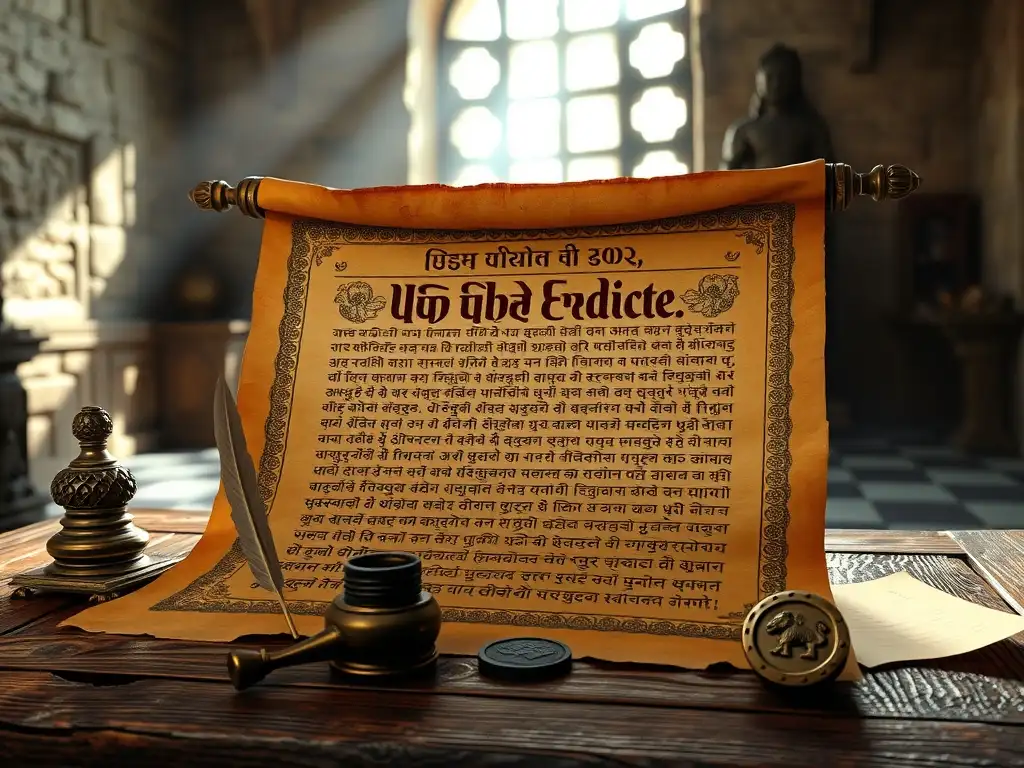
In ancient India, royal edicts served as crucial tools for governance, communication, and societal regulation. These public proclamations were often inscribed on stone pillars, rocks, and various materials, making them accessible to the populace. The historical context surrounding these edicts reflects a complex interplay between power, culture, and the political landscape of the time.
Emergence of Inscriptions in Ancient Indian Society
The practice of inscribing royal edicts can be traced back to the Indus Valley Civilization (c. 3300–1300 BCE), where early forms of writing emerged. However, it was during the Maurya Empire (c. 322–185 BCE) that inscriptions became prominent, particularly under the reign of Ashoka the Great. Ashoka's edicts, carved on pillars and rocks across his empire, were significant not just for their content but also for their accessibility and visibility.
- Purpose of Inscriptions:
- Administrative Communication: Edicts were utilized to convey laws, policies, and directives to officials and the general populace.
- Cultural and Religious Guidance: Many edicts reflected the emperor's religious beliefs, promoting moral conduct and social harmony.
- Historical Record-Keeping: Inscriptions served as a permanent record of a ruler's achievements and philosophies.
- Geographical Spread:
- Inscriptions were found throughout the Indian subcontinent, from the northern regions to the southern territories, indicating a widespread governmental system.
- Impact on Society:
- The visibility of these edicts fostered a sense of unity and identity among diverse populations, as they often included messages that transcended regional dialects and customs.
Key Dynasties Utilizing Royal Edicts
Several dynasties in ancient India effectively employed royal edicts to reinforce their authority and influence governance:
- Maurya Dynasty:
- Ashoka's edicts are the most well-known, emphasizing Dhamma (moral law) and promoting non-violence, tolerance, and welfare. His inscriptions were pivotal in spreading Buddhism and establishing ethical governance across vast areas.
- Gupta Empire:
- The Guptas utilized inscriptions to assert their divine right to rule. Edicts during this period often highlighted achievements in arts, science, and religious tolerance, reflecting the stability and prosperity of the era.
- Chola Dynasty:
- The Cholas were known for their extensive use of inscriptions for administrative purposes, documenting land grants, temple constructions, and local governance, which reinforced their control over vast territories.
- Mughal Empire:
- Mughal edicts represented a blend of Persian and Indian influences, often issued in the context of consolidating power and promoting cultural integration. These inscriptions were crucial in establishing a centralized bureaucracy.
The Role of Language and Script in Edicts
The language and scripts used in royal edicts played a significant role in their effectiveness and reach:
- Prakrit and Sanskrit:
- Many early edicts were inscribed in Prakrit, a vernacular language, making them more accessible to the common people. However, Sanskrit became prominent in later inscriptions, particularly during the Gupta period, reflecting a shift towards a more literate elite audience.
- Scripts Used:
- Various scripts were employed over time, including Brahmi and Kharosthi. The adaptation of these scripts facilitated the spread of ideas and governance across regions, as they were often standardized for official use.
- Symbolism and Imagery:
- Inscriptions often incorporated symbolic imagery, such as animals and motifs, which communicated deeper messages about the ruler's virtues and the ideals of governance.
The historical context of royal edicts in ancient India reveals a sophisticated system of governance and communication. By examining the emergence of inscriptions, the key dynasties that utilized them, and the role of language and script, we can understand how these edicts significantly influenced the political and cultural landscape of ancient Indian civilization.
The Influence of Royal Edicts on Governance

Royal edicts, inscribed on stone and metal, played a crucial role in the governance of ancient India. These declarations, often issued by emperors or kings, provided insights into the political, social, and ethical frameworks of their time. By examining various inscriptions, historians can discern how these royal edicts influenced governance structures, administrative practices, and the everyday lives of citizens across different ancient Indian civilizations.
Administrative Control and Law Enforcement
Royal edicts served as foundational documents that established laws and regulations, thereby facilitating administrative control. These inscriptions often delineated the duties of officials, the rights of subjects, and the procedures for dispute resolution. For instance, the edicts of Emperor Ashoka, inscribed on pillars throughout his empire, emphasized the importance of Dharma (moral law) and outlined the responsibilities of both rulers and subjects.
The following key points exemplify how royal edicts influenced administrative control:
- Standardization of Laws: Edicts often provided a uniform set of laws applicable across regions, reducing discrepancies in legal interpretation.
- Empowerment of Officials: By clearly defining the roles of local officials, these inscriptions ensured efficient governance and law enforcement.
- Public Accountability: The visibility of royal edicts made it difficult for officials to act arbitrarily, as citizens could reference the laws directly.
The efficacy of these edicts in promoting administrative control can be observed in the successful governance of vast empires like the Maurya and Gupta, where centralized authority was maintained through well-defined legal frameworks.
Royal edicts were not solely focused on laws; they also promoted social welfare and ethical governance. The inscriptions often highlighted the ruler's commitment to the welfare of the populace, encouraging practices that benefited society as a whole. For example, Ashoka's edicts emphasized compassion, non-violence, and the importance of caring for the less fortunate.
Key aspects of this influence include:
- Public Health Initiatives: Edicts often mandated the establishment of hospitals and the care of animals, reflecting a holistic approach to welfare.
- Moral and Ethical Guidelines: Many edicts contained exhortations for ethical behavior, advocating for honesty, integrity, and social harmony.
- Promotion of Education: Inscriptions often encouraged the establishment of educational institutions, thus fostering an informed citizenry.
The emphasis on social welfare in royal edicts instilled a sense of responsibility among rulers and contributed to the overall stability and prosperity of ancient Indian societies.
Royal Edicts as Tools for Propaganda and Legitimacy
In addition to their administrative and welfare-oriented roles, royal edicts functioned as powerful tools for propaganda and establishing legitimacy. By publicly proclaiming their achievements and divine right to rule, kings utilized inscriptions to reinforce their authority and enhance their image among their subjects.
The significant features of this aspect include:
- Divine Association: Many edicts claimed divine sanction for the ruler’s authority, linking their governance to higher moral or spiritual principles.
- Celebration of Military Victories: Edicts often commemorated victories in battle, serving to rally public support and reinforce the ruler's status.
- Cultural Identity: By promoting specific cultural values and historical narratives, royal edicts helped to shape a cohesive national identity among diverse populations.
Thus, royal edicts were instrumental not only in governance but also in shaping the ideological landscape of ancient India, allowing rulers to maintain power and influence over their realms effectively.
The influence of royal edicts in ancient India was multifaceted, encompassing administrative control, social welfare promotion, and the establishment of legitimacy. These inscriptions remain vital for understanding the complexities of governance in ancient Indian civilizations and their lasting legacy on contemporary governance models.
Case Studies of Notable Royal Edicts
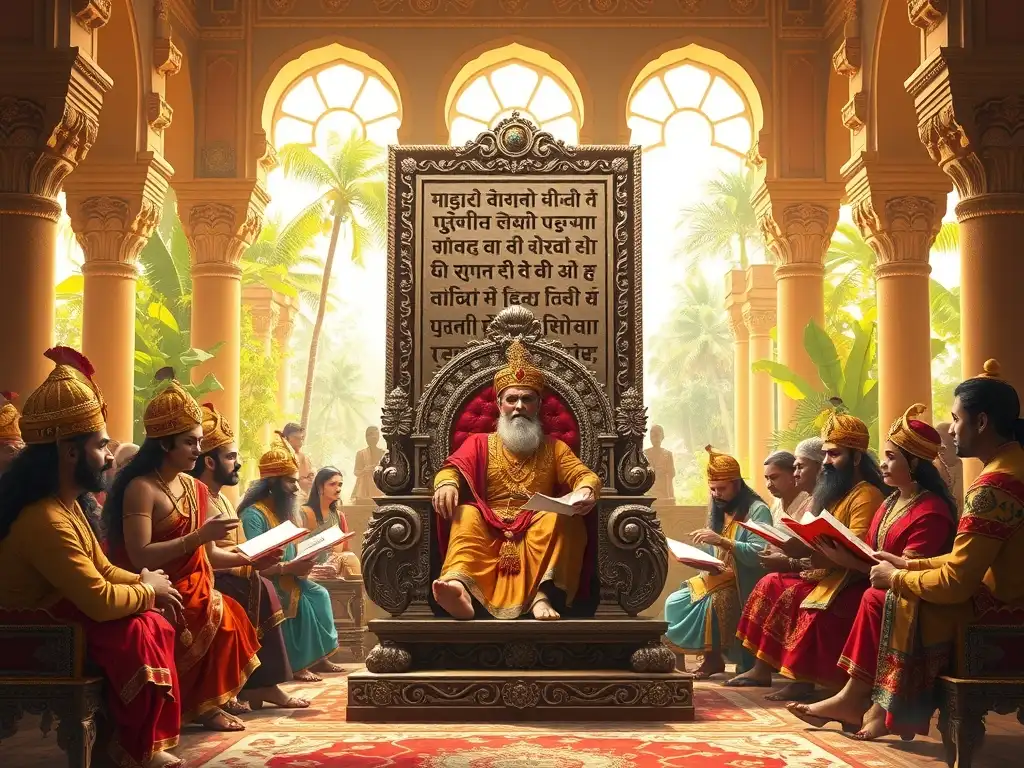
The Edicts of Ashoka: A Transformative Influence
The Edicts of Ashoka, inscribed on rocks and pillars throughout his empire, are among the most significant royal edicts in ancient India. Ashoka, the third Mauryan emperor, ruled from approximately 268 to 232 BCE and is renowned for his conversion to Buddhism and the promotion of non-violence and dharma (moral law). His edicts reflect a transformative influence on governance and societal norms, marking a departure from the militaristic approaches of previous rulers.
Content and Themes of Ashoka's Edicts
The content of Ashoka's edicts encompasses a wide array of themes, including:
- Moral and Ethical Conduct: Ashoka emphasized the importance of ethical behavior, compassion, and respect for all living beings. His edicts encouraged citizens to practice non-violence and tolerance.
- Public Welfare: The edicts outlined initiatives aimed at the welfare of the populace. Ashoka advocated for the establishment of hospitals, the planting of trees for shade, and the digging of wells to provide water.
- Religious Tolerance: Ashoka's edicts promote respect for all religions, advocating for dialogue and understanding among various faiths, which was revolutionary at the time.
- Administrative Instructions: Several edicts contained directives for local officials regarding how to govern justly and fairly, ensuring that the principles of dharma were upheld.
The inscriptive nature of these edicts allowed for widespread dissemination of Ashoka's policies, reinforcing his role as a benevolent ruler committed to the well-being of his subjects.
Impact on Local Governance and Society
The impact of Ashoka's edicts on local governance and society was profound:
- Decentralization of Power: Ashoka's emphasis on local governance allowed regional officials to exercise a degree of autonomy while adhering to the overarching principles of dharma. This fostered a sense of local responsibility and accountability.
- Promotion of Social Harmony: By advocating for tolerance and ethical behavior, Ashoka's edicts contributed to a more cohesive society, minimizing conflicts among different religious and social groups.
- Influence on Future Governance: The principles embedded in Ashoka's edicts set a precedent for subsequent rulers who sought legitimacy through moral governance, shaping the political landscape of ancient India for generations to come.
The Edicts of Chandragupta Maurya
Chandragupta Maurya, the founder of the Maurya Empire, introduced a series of royal edicts that laid the groundwork for administrative governance in ancient India. His reign, which began around 321 BCE, was characterized by strategic military conquests and the establishment of a centralized state.
Governance Strategies and Administrative Reforms
The edicts of Chandragupta Maurya primarily focused on:
- Centralized Administration: Chandragupta implemented a centralized system of governance, standardizing legal codes and administrative procedures. His edicts outlined the roles and responsibilities of officials, ensuring effective management of the vast empire.
- Taxation and Revenue Collection: Detailed instructions regarding taxation were inscribed, emphasizing fair practices and the need for transparency in revenue collection, which fostered trust between the rulers and the ruled.
- Infrastructure Development: The edicts called for the development of infrastructure, including roads and trade routes, which facilitated commerce and communication across the empire, thereby enhancing economic stability.
These strategies not only strengthened the Mauryan Empire but also provided a model for future governance in the region.
Lasting Effects on Subsequent Rulers
The governance model established by Chandragupta Maurya through his edicts had lasting effects on subsequent rulers in ancient India:
- Legacy of Centralized Authority: The centralized governance structure became a hallmark of many later empires, influencing dynasties such as the Gupta Empire, which adopted similar administrative practices.
- Foundational Principles for Governance: Chandragupta's emphasis on ethical administration and public welfare set a benchmark for future rulers, who sought to emulate his approach to governance.
- Cultural Integration: The edicts promoted a sense of unity and cultural integration within the diverse populations of the empire, laying the groundwork for a shared identity among the subjects.
The royal edicts of both Ashoka and Chandragupta Maurya significantly influenced the political landscape of ancient India, shaping governance practices and societal norms that resonated well beyond their reigns.
The Impact of Royal Edicts on Society
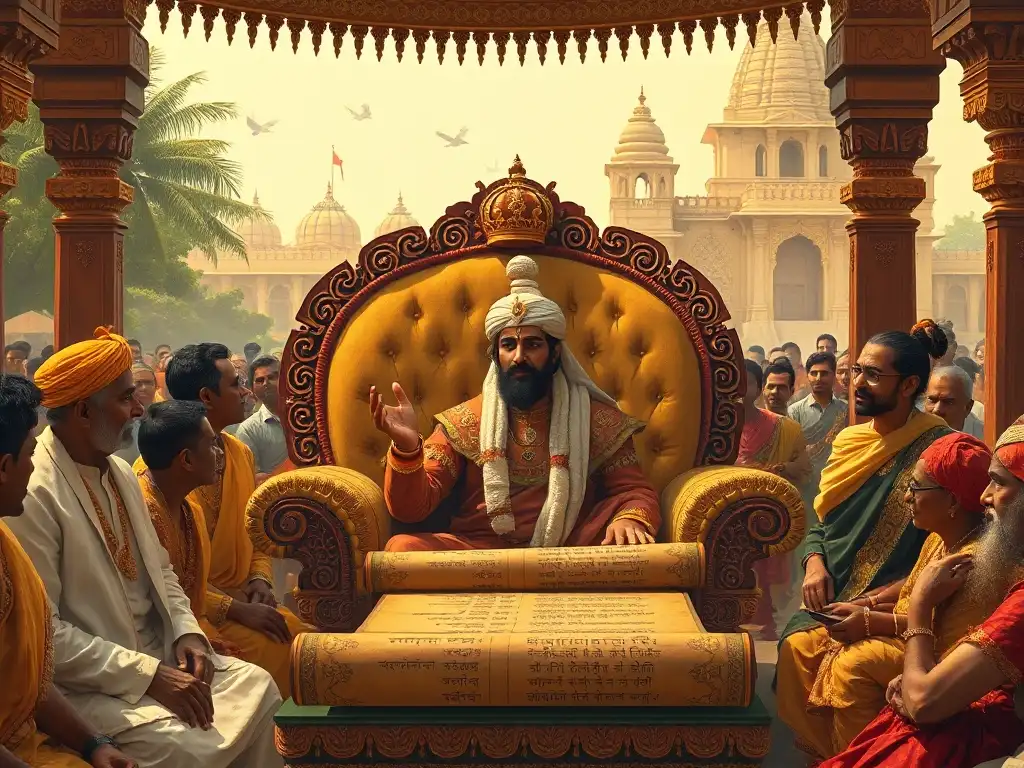
Royal edicts in ancient India served as crucial tools for enforcing social order and delineating class dynamics. These inscriptions often reflected the prevailing hierarchies and aimed to reinforce the established social norms. For instance, the Edicts of Ashoka, inscribed during the reign of Emperor Ashoka (268–232 BCE), emphasized moral conduct and social responsibility, which had profound implications for the caste system.
- Promotion of Dharma: Ashoka's edicts promoted the concept of Dharma (moral law), which encouraged social harmony across different classes. By advocating compassion and non-violence, these edicts subtly aimed to mitigate the rigidities of the caste system.
- Inclusion of the Shudras: Some edicts explicitly recognized the rights of the lower classes, including the Shudras, which signified a shift towards a more inclusive governance model. This recognition was significant as it empowered marginalized groups, allowing them to participate in societal affairs in ways that were previously restricted.
The impact of these royal edicts extended beyond mere governance; they instigated a transformation in societal attitudes towards class dynamics, encouraging a more egalitarian approach in some regions.
Influence on Religion and Cultural Practices
Royal edicts were pivotal in shaping the religious landscape of ancient India, often intertwining governance with spiritual ideals. Rulers utilized inscriptions to propagate specific religious doctrines and practices, thereby influencing cultural norms across their realms.
- Buddhism and Ashoka's Edicts: Ashoka's edicts are particularly noteworthy for their role in promoting Buddhism as a state-sponsored religion. By embedding Buddhist teachings within his inscriptions, Ashoka not only reinforced his authority but also facilitated the spread of Buddhism throughout India and beyond. The edicts included directives that encouraged the construction of stupas and viharas (monasteries), fostering a culture that revered Buddhist practices.
- Integration of Local Cultures: Inscriptions often displayed a blend of local customs with royal decrees. For example, the Gupta period (c. 240–550 CE) saw edicts that recognized local deities and traditions, integrating them into the broader imperial framework. This approach not only strengthened the rulers' legitimacy but also fostered loyalty among diverse populations.
Through these mechanisms, royal edicts influenced religious practices and cultural expressions, showcasing the interconnectedness of governance and spirituality in ancient Indian society.
The Role of Public Participation in Governance
The dissemination of royal edicts was instrumental in fostering public participation in the governance process. Inscriptions often served as a medium to communicate the ruler's policies and expectations directly to the populace, thereby promoting civic engagement.
- Transparency and Accountability: By publicly inscribing their edicts, rulers established a form of transparency that encouraged accountability. Citizens were informed about laws, tax obligations, and civic duties, which facilitated a sense of shared responsibility towards governance. This transparency helped to legitimize the rulers' authority as subjects were made aware of their rights and obligations.
- Community Involvement in Implementation: Many edicts called for local administration and community involvement in the implementation of policies. For example, Ashoka's edicts urged local leaders to promote welfare initiatives, such as the construction of wells and hospitals. This encouraged active participation from various societal groups, fostering a collaborative approach to governance.
Royal edicts played a transformative role in ancient India's governance by facilitating public participation, enhancing accountability, and promoting a sense of communal responsibility, ultimately influencing how societies interacted with their rulers and each other.
Conclusion: The Lasting Legacy of Royal Edicts in Ancient India

Summary of Royal Edicts Influence on Ancient Governance
Royal edicts, inscribed on stone and metal tablets, played a pivotal role in shaping governance in ancient India. These inscriptions, often issued by emperors and rulers, served not only as declarations of policy but also as instruments of communication between the ruler and the governed. The influence of royal edicts can be understood through several key aspects:
- Standardization of Law and Policy:
- Edicts provided a framework for legal standards across vast regions, promoting uniformity in governance. For example, the edicts of Ashoka, found throughout the Mauryan Empire, articulated principles of justice and ethical governance that transcended local customs.
- Promotion of Moral and Ethical Values:
- Many royal edicts emphasized the importance of moral conduct, social welfare, and non-violence. Ashoka's Dhamma edicts encouraged compassion and tolerance, which significantly influenced societal values during his reign and beyond.
- Public Engagement and Accountability:
- Edicts often addressed the populace directly, fostering a sense of involvement and awareness among citizens. By publicly declaring laws and policies, rulers held themselves accountable to their subjects, which encouraged civic responsibility.
- Cultural and Religious Integration:
- Inscriptions often reflected the cultural and religious milieu of the time, integrating diverse beliefs and practices into governance. For instance, the edicts of Ashoka promoted Buddhism while respecting Hindu traditions, leading to a more inclusive governance model.
- Historical Documentation:
- Royal edicts served as critical historical records, providing insights into the political, social, and economic conditions of ancient India. They are invaluable resources for historians studying the evolution of governance and societal norms.
Through these facets, royal edicts significantly influenced governance in ancient India, marking a legacy that resonates in contemporary discussions about law, ethics, and public policy.
Reflection on the Relevance of Ancient Inscriptions Today
The relevance of ancient inscriptions, particularly royal edicts, extends far beyond their historical context. In today's rapidly changing world, the insights gleaned from these inscriptions can inform modern governance and societal values in several ways:
- Understanding Governance Principles: The emphasis on accountability, public engagement, and ethical governance found in ancient edicts can guide contemporary leaders in fostering a more transparent and responsible political climate.
- Cultural Heritage and Identity: Ancient inscriptions are a testament to India’s rich cultural heritage, reminding current and future generations of the diverse influences that have shaped national identity. This understanding can promote cultural pride and unity in a diverse society.
- Conflict Resolution and Tolerance: The moral and ethical teachings embedded in royal edicts, such as those advocating for non-violence and tolerance, can serve as foundational principles in conflict resolution and peace-building efforts today.
- Historical Lessons: Analyzing the successes and failures of governance strategies articulated in ancient edicts can provide valuable lessons for modern policymakers. Understanding the historical context can help avoid repeating past mistakes and foster innovative solutions to contemporary issues.
The legacy of royal edicts in ancient India not only shaped the political landscape of its time but also offers timeless insights that remain relevant in addressing today's governance challenges. Their enduring influence underscores the importance of historical awareness in fostering a just and equitable society.
References and Further Reading on Royal Edicts in Ancient India

Understanding the full impact of royal edicts in inscriptions on governance in ancient India requires delving into a variety of scholarly sources. The following sections provide a curated list of suggested readings and online resources that offer valuable insights and comprehensive analyses.
Suggested Books and Articles
- "The Inscriptions of Ashoka" by R. C. Majumdar
- A thorough examination of the edicts of Emperor Ashoka, this book provides context and interpretation that highlights how these inscriptions influenced governance and moral authority in ancient India.
- "Ancient Indian Epigraphy" by J. P. Joshi
- This work explores the techniques and significance of inscriptions throughout Indian history, with a special focus on royal edicts and their implications for administrative practices.
- "Royal Edicts and Political Authority in Ancient India" by S. K. Sharma
- A detailed analysis of how royal edicts served as instruments of political authority, with case studies from various dynasties, including the Mauryas and Guptas.
- "The Role of Inscriptions in the Study of Ancient Indian History" by K. S. Shukla
- This article discusses the methodological approaches in studying inscriptions, emphasizing the role of royal edicts in shaping historical narratives.
- "From Edicts to Governance: The Evolution of Indian Political Thought" by M. N. Rao
- This book traces the evolution of political thought in ancient India, focusing on how royal edicts articulated the relationship between rulers and subjects.
Online Resources for Inscriptions and Epigraphy
- Digital Epigraphy of the Indian Subcontinent
- An online repository of inscriptions from various regions and periods, allowing researchers to access and study the original texts and their translations.
- The Archaeological Survey of India (ASI)
- The official website of ASI provides access to numerous reports and publications on ancient inscriptions, including royal edicts that shaped governance.
- Epigraphia Indica
- A scholarly journal available online that publishes articles and studies on inscriptions, including notable royal edicts and their historical significance.
- Ancient Indian History and Culture Portal
- This resource offers articles, research papers, and primary sources related to ancient Indian history, including sections dedicated to royal edicts and inscriptions.
- The Indian Council of Historical Research (ICHR)
- ICHR’s website features publications and digital resources on ancient inscriptions, providing valuable insights into their governance implications.
By exploring these suggested books, articles, and online resources, readers can gain a deeper understanding of the profound influence that royal edicts in inscriptions had on governance in ancient India.
Frequently Asked Questions
What are royal edicts in ancient India?
Royal edicts were official decrees issued by rulers that communicated laws, policies, and important decisions to the public, significantly influencing governance.
How did royal edicts impact governance in ancient India?
These edicts played a crucial role in establishing authority and ensuring the enforcement of laws across diverse regions, thus maintaining order and unity within the vast empires.
Can you name some famous royal edicts from ancient India?
Notable examples include the Edicts of Ashoka, which promoted Buddhism, moral governance, and social welfare, significantly shaping Indian culture and society.
What was the medium used for inscribing royal edicts?
Royal edicts were often inscribed on stone pillars, rocks, or metal plates, making them accessible to the public and ensuring the dissemination of information across the population.
How do royal edicts reflect the culture of ancient India?
These edicts provide insights into the social values, religious beliefs, and administrative practices of the time, showcasing the diversity and complexity of ancient Indian civilizations.
Final Reflection: The Enduring Legacy of Royal Edicts in Ancient India
The exploration of royal edicts and their profound influence on governance in ancient India reveals a remarkable intersection of authority, culture, and societal values that resonates even today. These inscriptions were not merely proclamations; they were foundational texts that shaped the political landscape and established a framework for justice and order. In a world where governance often feels distant from the governed, the lessons from these ancient edicts remind us of the power of clear communication and the responsibility of leaders to their people.
The impact of these royal edicts extends far beyond their historical context, influencing contemporary discussions on governance and civic responsibility. As we navigate the complexities of modern leadership, the principles embedded in these ancient texts continue to inspire us. The edicts served as a reminder that effective governance is rooted in transparency, accountability, and a commitment to the welfare of the populace.
As Mahatma Gandhi once said, "> The best way to find yourself is to lose yourself in the service of others." This sentiment echoes the essence of the royal edicts, urging leaders to prioritize the needs of their citizens.
As we reflect on the significance of royal edicts in shaping ancient India, let us carry forward their lessons into our own lives. Consider how you can embody the spirit of these ancient principles in your daily interactions and decisions. Whether in your community, workplace, or personal relationships, strive to communicate openly, act with integrity, and serve those around you. By doing so, we honor the legacy of those who came before us and contribute to a more just and compassionate society for future generations.
Unveil the Impact of Royal Edicts on Modern Governance!
Thank you for exploring the fascinating relationship between royal edicts and governance in ancient India. Understanding this history not only enriches our knowledge but also inspires us to examine how past decisions shape our current leadership.
Now, it’s time to take action:
- Reflect on the lessons of leadership: Consider how the governance principles from ancient edicts can apply to today’s challenges. Write down at least three insights you find relevant!
- Join the conversation: Share your thoughts or insights on social media using the hashtag #AncientGovernance, and engage with others who are interested in this topic.
- Explore further: Discover more about specific edicts and their repercussions. Visit our archives for in-depth articles and analyses on related subjects!
What aspect of ancient governance do you believe holds the most significance in today’s political landscape?