
The Vedas and Mathematics: Ancient Innovations in Number Theory


Welcome to Ancient India History, where we embark on a captivating journey through the rich tapestry of ancient Indian civilizations. Today, we invite you to delve into the fascinating world of mathematics, specifically the groundbreaking innovations in number theory that emerged from the Vedic texts. How did these ancient scholars shape the mathematical foundations we use today? Uncover the profound connections between epic literature and mathematical advancements as you explore our latest article, "The Vedas and Mathematics: Ancient Innovations in Number Theory." Prepare to be amazed by the brilliance of ancient minds and the enduring impact of their contributions!

Introduction to Ancient Indian Mathematics Innovations
Ancient Indian mathematics innovations are a testament to the profound intellectual achievements of the civilizations that flourished in the Indian subcontinent. These innovations, deeply intertwined with the spiritual and philosophical insights of the time, found significant expression in the Vedas, which not only shaped the religious and cultural landscape of ancient India but also laid the groundwork for mathematical thought. This article delves into the intricate relationship between the Vedas and mathematics, exploring how these sacred texts contributed to the development of number theory and mathematical practices that influenced later civilizations.
Overview of the Vedas and Their Significance
The Vedas, composed between 1500 and 500 BCE, are the oldest sacred texts of Hinduism and are divided into four main collections: the Rigveda, Samaveda, Yajurveda, and Atharvaveda. Each Veda is a compilation of hymns, rituals, and philosophical discourses that reflect the spiritual and intellectual pursuits of the early Indian society. The significance of the Vedas extends beyond religious teachings; they encompass various fields of knowledge, including astronomy, linguistics, and mathematics.
- Rigveda: Focuses on hymns to deities and includes numerical references.
- Samaveda: Contains melodies and chants, emphasizing rhythm and patterns.
- Yajurveda: A liturgical text that incorporates measurements and calculations for rituals.
- Atharvaveda: Blends magical spells with practical knowledge, including medicinal and mathematical insights.
These texts not only served as spiritual guides but also as repositories of the mathematical concepts that would later evolve into more structured forms of mathematics.
The Interconnection Between Mathematics and Vedic Literature
The relationship between mathematics and Vedic literature is profound and multifaceted. The Vedas introduced various mathematical concepts, including arithmetic, geometry, and even early notions of zero. The rituals detailed in the Vedas often required precise measurements and calculations, leading to the development of techniques that would influence subsequent mathematical thought.
- Numerical Systems: The Vedic texts utilized a decimal system, paving the way for complex calculations.
- Geometric Principles: Ritual constructions and altars relied on geometric designs, demonstrating the application of mathematical principles in everyday life.
- Astronomy and Mathematics: The Vedic understanding of time and celestial movements necessitated mathematical calculations, which later contributed to advancements in astronomy.
Historical Context of Mathematics in Ancient India
To appreciate the innovations of ancient Indian mathematics fully, it is crucial to consider the historical context in which these developments occurred. The period known as the Vedic Era was marked by significant social, cultural, and intellectual growth, providing a fertile ground for mathematical exploration.
The Role of the Vedic Period in Mathematical Development
The Vedic period was instrumental in laying the foundation for mathematical innovations. Scholars during this time engaged in systematic observation and analysis, leading to advancements in various mathematical concepts. The emphasis on rituals and ceremonies required a precise understanding of time, space, and quantity, fostering a culture of mathematical inquiry.
- Ritualistic Calculations: The alignment of rituals with astronomical events demanded accurate calculations.
- Concept of Time: The Vedic understanding of time cycles, such as the Yugas, required mathematical organization and classification.
- Cultural Transmission: Knowledge was transmitted through oral traditions, ensuring that mathematical principles were preserved and refined over generations.
Influences from Earlier Civilizations on Indian Mathematics
The evolution of mathematics in ancient India was not an isolated phenomenon; it was influenced by earlier civilizations, including the Mesopotamians and Egyptians. Trade and cultural exchanges facilitated the flow of ideas and knowledge across regions, enriching the mathematical landscape of ancient India.
- Mesopotamian Influence: The sexagesimal (base-60) system and astronomical calculations from Mesopotamia were gradually integrated into Indian mathematical practices.
- Egyptian Geometry: The geometric techniques used in Egyptian architecture may have inspired similar practices in Vedic rituals.
- Cross-Cultural Dialogues: As ancient India engaged with neighboring civilizations, the exchange of mathematical ideas contributed to the rich tapestry of Indian mathematics.
The Vedas and the mathematical innovations of ancient India are intrinsically linked, reflecting a profound understanding of numbers, space, and time that continues to influence mathematical thought today.
Key Mathematical Concepts Found in the Vedas
The Vedas, revered as the oldest sacred texts of Hinduism, are rich in spiritual insights but also contain significant mathematical concepts that laid the groundwork for advancements in ancient Indian mathematics. Among the key mathematical concepts found in the Vedas are arithmetic, geometry, and measurement. These concepts were not merely theoretical; they were applied in various practical contexts, such as ritual practices, astronomy, and architecture. Through the examination of the Vedic texts, we can discern an early understanding of numbers, calculations, and geometric principles that would influence subsequent mathematical thought.
The Concept of Zero and Its Origins in Vedic Texts
The concept of zero is often considered one of the most revolutionary ideas in mathematics, and its origins can be traced back to Vedic texts. While the explicit symbol for zero did not emerge until later, the philosophical underpinnings of emptiness and void are discussed in the Vedas.
In the Atharva Veda, for instance, there are references to the absence of numbers, which hints at an early recognition of zero as a concept. This abstract thinking laid the foundation for its eventual representation as a numeral, which would later play a crucial role in the development of arithmetic and number theory.
Exploration of Arithmetic and Geometry in Vedic Literature
Vedic literature includes various references to arithmetic operations such as addition, subtraction, multiplication, and division. The Sulbasutras, which are part of the larger Vedic corpus, provide detailed geometric principles for constructing altars and fire pits used in rituals. These texts describe specific geometric shapes, including squares, rectangles, and circles, and offer calculations to determine their areas and perimeters. This practical application of arithmetic and geometry showcases an advanced understanding of mathematical principles, which would influence architectural practices in ancient India and beyond.
Innovations in Measurement and Calculations
The Vedic texts demonstrate significant innovations in measurement and calculations, particularly in the realm of time and space. The concept of measuring time through various cycles—such as lunar months and solar years—illustrates a sophisticated understanding of astronomy in Vedic society. Additionally, the Sulbasutras introduced methods for precise measurements, including the use of a grid system for altar construction. These innovations in measurement not only served religious purposes but also contributed to the development of mathematical techniques that would be refined in later Indian mathematics.
The Influence of Vedic Mathematics on Later Developments
The mathematical concepts and techniques found in the Vedas had a profound influence on the evolution of mathematics in India and beyond. As these ideas were absorbed and expanded upon by later scholars, they paved the way for more advanced mathematical theories and applications. The transition from the Vedic period to the classical Indian mathematical tradition saw the integration of Vedic knowledge into a more structured mathematical framework, which would eventually culminate in significant advancements in algebra, trigonometry, and calculus.
Transition from Vedic Mathematics to Classical Indian Mathematics
The transition from Vedic mathematics to classical Indian mathematics involved the systematic documentation and refinement of mathematical knowledge. Scholars such as Aryabhata and Brahmagupta built upon the foundational concepts established in the Vedic texts. They introduced new mathematical methods and notations that enhanced the understanding of number theory, including the formalization of algorithms for calculations. This evolution marked a departure from the primarily ritualistic applications of Vedic mathematics toward a more comprehensive and theoretical exploration of mathematical principles.
Contributions of Famous Mathematicians in Ancient India
Ancient India produced several mathematicians whose contributions were influenced by Vedic mathematics. Aryabhata, for instance, is celebrated for his work in astronomy and mathematics, particularly for introducing the concept of place value and for his pioneering work on the approximation of pi.
Another notable figure, Brahmagupta, made significant strides in algebra and the rules for arithmetic operations involving negative numbers, building on the early number concepts found in Vedic literature. These mathematicians, among others, not only advanced the field of mathematics in India but also influenced mathematical thought across cultures, as their works were translated and studied in various parts of the world.
Comparing Vedic Mathematics with Other Ancient Civilizations
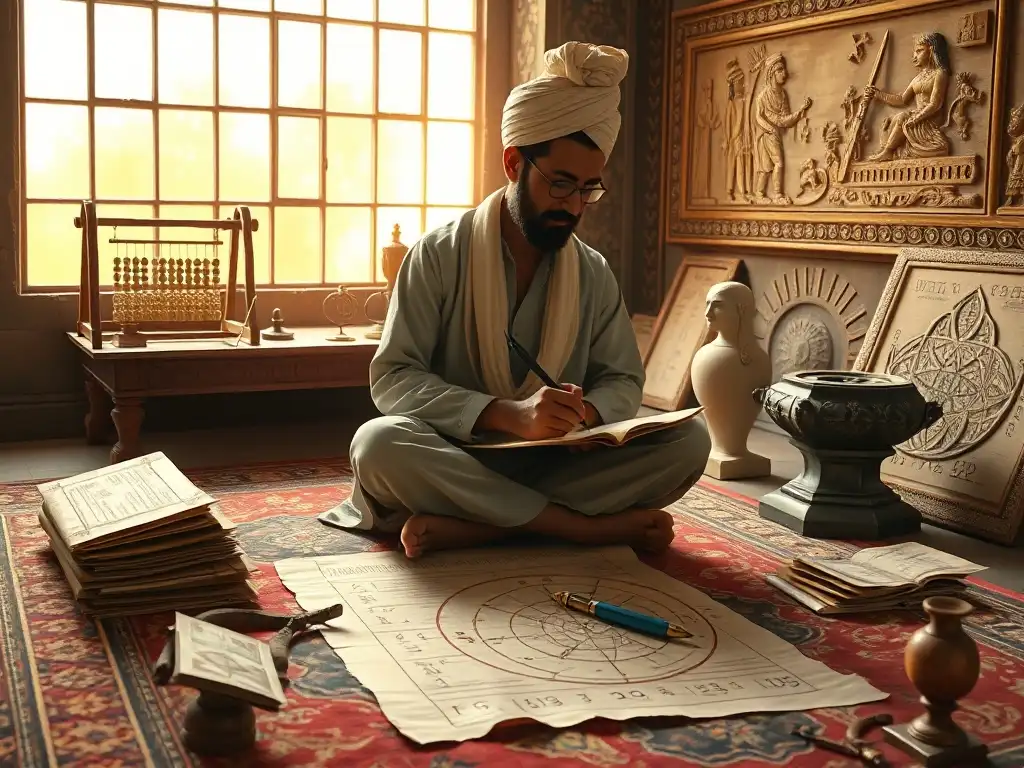
Vedic mathematics, originating from the ancient Indian texts known as the Vedas, showcases a unique approach to number theory that can be compared with mathematical developments from other ancient civilizations, particularly Babylonian and Egyptian cultures. Each of these societies contributed significantly to the evolution of mathematics, yet they employed distinct methodologies and applications. This comparison allows us to appreciate the innovative techniques of Vedic mathematics while recognizing the commonalities and divergences across cultures.
One of the primary distinctions in Vedic mathematics is its reliance on sutras, or aphorisms, which are concise formulas for solving mathematical problems. This contrasts sharply with the more procedural methods seen in other ancient civilizations, where lengthy algorithms were the norm. The intuitive and flexible nature of Vedic mathematics promotes mental calculations, allowing practitioners to solve complex problems rapidly, which is less common in the more rigid frameworks of Babylonian mathematics.
Similarities Between Vedic Mathematics and Babylonian Mathematics
When examining the similarities between Vedic mathematics and Babylonian mathematics, one notable aspect is the use of a base-60 numeral system by the Babylonians. This system is akin to the Vedic approach in its ability to facilitate calculations, especially in astronomy and trade. Both civilizations utilized their mathematical systems for practical applications, such as in commerce and celestial observations.
Furthermore, both Vedic and Babylonian mathematics exhibit a strong emphasis on geometric principles. The Babylonians had advanced knowledge of geometry, demonstrated in their methods for calculating areas and volumes, which parallels the Vedic emphasis on geometric relationships. For instance, Vedic texts contain strategies for solving geometric problems through the manipulation of shapes, showcasing a shared understanding of spatial reasoning.
Unique Aspects of Ancient Indian Mathematics Innovations
Ancient Indian mathematics, particularly as reflected in the Vedas, introduces several innovations that set it apart from other ancient systems. One of the most striking features is the early development of concepts such as zero and the decimal system, which were foundational for future mathematical progress. The Vedic texts illustrate an understanding of positional notation, which allows for the representation of large numbers and complex calculations.
Additionally, Vedic mathematics emphasizes mental calculations and the use of shortcuts—known as "Vedic Sutras." These techniques not only facilitate rapid calculations but also encourage an intuitive understanding of numbers. For example, the sutra "Nikhilam Navatashcaramam Dashatah" provides a method for multiplication that simplifies the process, thereby enhancing computational efficiency.
Case Studies of Mathematical Applications in the Vedas
To truly appreciate the impact of mathematics in the Vedas, it is essential to explore specific case studies that highlight mathematical applications. These examples reveal the practical and theoretical contributions of Vedic mathematics to various fields, including astronomy, architecture, and ritual practices.
Analysis of Specific Vedic Texts Demonstrating Mathematical Principles
One prominent text, the Sulba Sutras, is a collection of ancient Indian texts that delve into geometry and measurement. The Sulba Sutras provide detailed instructions for constructing altars and fire pits used in Vedic rituals, incorporating sophisticated knowledge of proportions and geometric principles. For instance, the construction of a square altar requires precise measurements, which are outlined in the text using mathematical formulas that indicate how to derive lengths and areas.
Another significant text is the Aryabhatiya, authored by the mathematician Aryabhata. Although written later than the Vedas, it draws on Vedic mathematical principles. Aryabhata’s work includes an exploration of arithmetic, algebra, and trigonometry, showcasing a systematic approach to mathematical problems that reflects the earlier innovations present in the Vedic tradition.
Practical Applications of Mathematics in Vedic Rituals and Astronomy
Mathematics in the Vedas also finds practical applications in religious rituals and astronomy. The timing of Vedic rituals often depended on astronomical observations, requiring precise calculations to determine auspicious dates and times. The Vedic priests employed mathematical techniques to track celestial bodies, ensuring that rituals aligned with cosmic events.
Moreover, the Vedic texts include references to the cyclical nature of time—such as the concept of yugas (ages)—which involve complex calculations of time spans. This understanding of cyclical time reflects an advanced grasp of mathematics, as it required the ability to calculate large periods accurately.
The intersection of Vedic mathematics with ancient Indian culture reveals profound innovations in number theory, enriching our understanding of mathematical development in this civilization. The unique methodologies, practical applications, and theoretical contributions of Vedic mathematics stand as a testament to the advanced intellectual heritage of ancient India.
Conclusion: The Legacy of Vedic Mathematics in Modern Times
The legacy of Vedic mathematics is profound and far-reaching, influencing contemporary mathematical practices and education. The Vedas, particularly the Sulbasutras, laid the groundwork for various mathematical concepts that are not only pivotal in ancient times but continue to resonate in modern mathematical thought. The principles outlined in these texts, such as geometric constructions and calculations, serve as an early example of mathematical rigor that laid the foundation for future developments.
The Enduring Impact of Ancient Indian Mathematics Innovations on Contemporary Mathematics
Ancient Indian mathematics innovations have had a lasting impact on various fields, notably in geometry, arithmetic, and algebra. The concepts introduced in the Vedic texts, such as:
- Pythagorean Theorem: While widely attributed to Pythagoras, the principles existed in the Sulbasutras long before his time.
- Decimal System: The use of a place-value system revolutionized numerical representation, making calculations simpler and more efficient.
- Zero and Infinity: The philosophical and practical implications of zero as a number and the concept of infinity have shaped mathematical thought globally.
These innovations have been integrated into modern mathematics, influencing educational curricula and mathematical research. The systematic approach to problem-solving in Vedic texts has inspired contemporary mathematicians and educators to explore alternative methods of teaching and understanding mathematics, promoting a deeper appreciation of the subject.
Final Thoughts on the Importance of Vedic Contributions to Number Theory
The contributions of the Vedas to number theory are not merely historical artifacts; they are integral to the understanding of mathematics as a whole. The methodologies and concepts developed by ancient Indian mathematicians reflect a sophisticated understanding of abstract ideas, logical reasoning, and practical applications.
In recognizing the importance of these contributions, it becomes evident that Vedic mathematics is not only a testament to the ingenuity of ancient scholars but also a rich resource for modern mathematical inquiry. The continued study and application of these ancient innovations offer valuable insights and inspiration for mathematicians and educators alike, affirming that the wisdom of the past remains relevant in shaping the future of mathematics.
- Introduction to Ancient Indian Mathematics Innovations
- Historical Context of Mathematics in Ancient India
- Key Mathematical Concepts Found in the Vedas
- The Influence of Vedic Mathematics on Later Developments
- Comparing Vedic Mathematics with Other Ancient Civilizations
- Case Studies of Mathematical Applications in the Vedas
- Conclusion: The Legacy of Vedic Mathematics in Modern Times
- What are the Vedas and their significance in ancient Indian mathematics?
- How did ancient Indian mathematicians contribute to number theory?
- What innovations in mathematics emerged during the Gupta Empire?
- How does ancient Indian mathematics compare to other ancient civilizations?
- Why is the study of ancient Indian mathematics important today?
Frequently Asked Questions
What are the Vedas and their significance in ancient Indian mathematics?
The Vedas are a collection of ancient texts that form the basis of Hindu philosophy and culture. They contain early references to mathematics, especially in rituals and astronomy.
How did ancient Indian mathematicians contribute to number theory?
Ancient Indian mathematicians made significant contributions to number theory, including the concept of zero and the decimal system, which were crucial for mathematical developments worldwide.
What innovations in mathematics emerged during the Gupta Empire?
The Gupta Empire is known for its advancements in mathematics, particularly in algebra and trigonometry. Notable scholars like Aryabhata and Brahmagupta developed theories that influenced future generations.
How does ancient Indian mathematics compare to other ancient civilizations?
Ancient Indian mathematics was unique in its abstract thinking and use of symbols, which differed from the practical approaches seen in other civilizations like Egypt and Mesopotamia.
Why is the study of ancient Indian mathematics important today?
Studying ancient Indian mathematics helps us understand the foundation of modern mathematics and highlights the diverse contributions of different cultures to the field, promoting appreciation for global history.
Final Reflection: Embracing the Legacy of Ancient Indian Mathematics Innovations
The exploration of ancient Indian mathematics innovations, particularly through the lens of the Vedas, reveals a profound connection between spirituality and numerical understanding that resonates powerfully in today's world. As we navigate an increasingly complex digital landscape, the foundational principles established by ancient mathematicians remind us of the timeless nature of knowledge and the importance of integrating diverse perspectives into our modern understanding of mathematics.
The influence of these ancient innovations extends far beyond historical curiosity; they shape our current educational frameworks and inspire contemporary thinkers. The Vedic texts not only laid the groundwork for number theory but also fostered a culture of inquiry and exploration that continues to thrive. Mathematics is the language in which God has written the universe.
— Galileo Galilei. This quote encapsulates the essence of how ancient Indian mathematicians viewed their work as a divine exploration, a sentiment that still holds relevance as we seek to understand the universe through numbers.
As we reflect on the lessons from the Vedas and the innovations of ancient Indian mathematics, I invite you to consider how these insights can enrich your own life. Take a moment to appreciate the interconnectedness of knowledge across cultures and eras, and let this inspire you to explore the depths of your own intellectual curiosity. Embrace the wisdom of the past as you forge your path in the present, and remember that the pursuit of knowledge is a journey that transcends time.
Unlock the Wisdom of Ancient Mathematics!
Thank you for diving into the fascinating world of the Vedas and their remarkable contributions to mathematics! You’ve uncovered not just historical facts, but the foundation of our numerical understanding. Now, let’s translate that knowledge into action and further explore these ancient innovations.
- Dive Deeper: Learn more about the mathematicians of ancient India and how their discoveries have influenced modern science. Start by exploring related articles on our website!
- Engage with Others: Share this article with friends and family who are intrigued by history and mathematics. Initiate a discussion about how these ancient principles can be applied in contemporary life.
- Expand Your Skills: Incorporate Vedic math techniques into your daily calculations—who knows, it might just revolutionize your approach to numbers!
What surprising insights from the Vedas about mathematics can you apply in your everyday life? Join the conversation in the comments below!