
Ancient Indian Mathematics: Curriculum Innovations That Changed the World


Welcome to Ancient India History, where the vibrant tapestry of ancient civilizations unfolds before your eyes. Dive deep into the remarkable journey of ancient Indian mathematics contributions, a cornerstone of innovation that shaped the world as we know it. Discover how the brilliance of Indian scholars not only revolutionized educational systems but also laid the groundwork for modern mathematics. Are you ready to uncover the secrets of the past that continue to influence our present? Join us as we explore the curriculum innovations that changed the world!
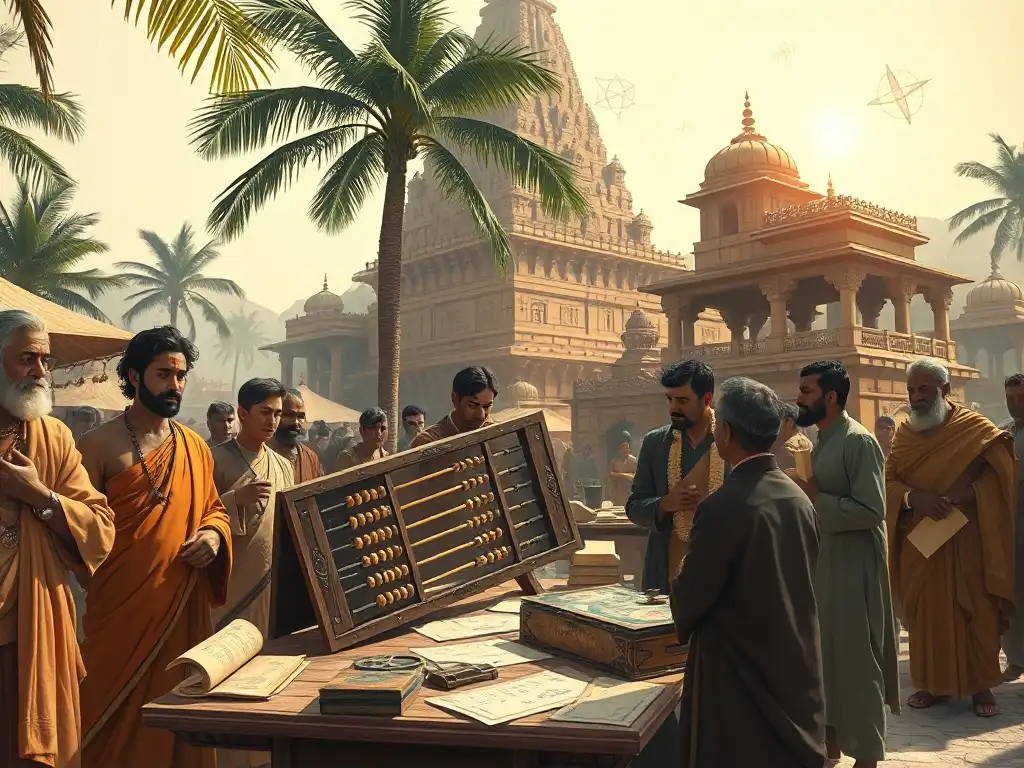
Introduction to Ancient Indian Mathematics
Ancient Indian mathematics stands as a testament to the intellectual prowess and innovative spirit of early Indian civilizations. From the intricate calculations of the Indus Valley to the sophisticated theories developed during the Gupta Empire, mathematics in ancient India was not merely a tool for commerce and trade but a profound science that shaped educational practices and influenced global mathematical thought.
The contributions of ancient Indian mathematicians, such as Aryabhata and Brahmagupta, introduced concepts like zero, the decimal system, and advanced algebra, which have left an indelible mark on both local and international curricula. This article explores the rich tapestry of ancient Indian mathematics, its curriculum innovations, and how these advancements have changed the world.
Overview of Ancient Indian Mathematics Contributions
The contributions of ancient Indian mathematics are vast and varied, encompassing numerous fields such as arithmetic, geometry, astronomy, and algebra. Key points of interest include:
- The Concept of Zero: The introduction of zero as a numeral significantly altered the landscape of mathematics, allowing for more complex calculations.
- Decimal System: The positional decimal system laid the foundation for modern arithmetic.
- Algebraic Innovations: Brahmagupta's rules for solving quadratic equations and his work on negative numbers were groundbreaking for their time.
These contributions have not only enriched the mathematical landscape of India but have also influenced mathematical practices around the world.
Significance of Mathematics in Ancient Indian Education
Mathematics played a crucial role in ancient Indian educational systems. It was interwoven with various disciplines such as astronomy, architecture, and music. The significance of mathematics in education can be summarized as follows:
- Holistic Learning: Mathematics was part of a broader curriculum that included philosophy, grammar, and logic, promoting a well-rounded education.
- Practical Applications: The teaching of mathematics was often linked to real-world applications, such as trade and agriculture, making it relevant to students' lives.
- Cultural Integration: Mathematical concepts were often embedded in religious and cultural contexts, enhancing their acceptance and understanding.
Historical Context of Mathematics in Ancient India
The historical context of mathematics in ancient India is essential to understanding its development and significance. This section delves into the foundational periods that shaped mathematical thought in the region.
The Indus Valley Civilization and Early Mathematical Concepts
The Indus Valley Civilization, which flourished around 2500 BCE, laid the groundwork for mathematical concepts in ancient India. Archaeological findings suggest that the people of this civilization engaged in various mathematical practices, including:
- Measurement Systems: Evidence of standardized weights and measures indicates advanced mathematical understanding.
- Geometry in Town Planning: The precise layout of cities showcases an early application of geometric principles.
These early mathematical concepts set the stage for further developments in the following centuries.
Contributions of Vedic Mathematics to Curriculum Innovations
Vedic mathematics, a system derived from ancient Indian scriptures known as the Vedas, emerged around 1500 BCE. It introduced numerous techniques and sutras (aphorisms) that simplified complex calculations. Key contributions include:
- Quick Calculation Methods: Techniques for rapid mental calculations made mathematics more accessible.
- Integration with Spiritual Practices: The use of mathematics in rituals and astronomy highlighted its importance in daily life.
These innovations not only transformed the curriculum of the time but also influenced educational practices in future generations.
The Role of Mathematics in the Gupta Empire
The Gupta Empire, often regarded as the Golden Age of India (approximately 320 to 550 CE), witnessed significant advancements in mathematics. Scholars like Aryabhata and Brahmagupta made critical contributions that shaped the curriculum, including:
- Algebra and Trigonometry: Aryabhata's work on sine functions laid the groundwork for trigonometry.
- Astronomy and Calendar Calculations: Mathematical principles were applied to astronomical observations, aiding in the development of accurate calendars.
The Gupta period solidified the importance of mathematics in education, ensuring that it remained a vital component of the scholarly discourse in ancient India.
This article aims to give a comprehensive overview of how ancient Indian mathematics contributed not only to local educational practices but also to the global mathematical heritage, emphasizing its lasting significance through curriculum innovations that continue to influence contemporary education.
Key Contributions of Ancient Indian Mathematicians
Ancient Indian mathematicians made significant contributions that laid the foundation for modern mathematics. Their work encompassed various fields, including arithmetic, algebra, geometry, and astronomy. The rich intellectual tradition of ancient India not only advanced mathematical concepts but also influenced the curriculum and educational practices of subsequent generations. Below are notable figures and their remarkable contributions that have had a lasting impact on mathematics worldwide.
Aryabhata: Pioneering Innovations in Mathematics
Aryabhata, active in the 5th century CE, is often hailed as one of the foremost mathematicians and astronomers of ancient India. His seminal work, the Aryabhatiya, encompassed a range of subjects, including arithmetic, algebra, and trigonometry. One of his groundbreaking contributions was the introduction of the concept of zero as a placeholder, which revolutionized numerical representation.
Aryabhata also calculated the value of π (pi) with remarkable accuracy and established methods for extracting square roots and cube roots. Notably, he proposed that the Earth rotates on its axis and calculated the length of a year as 365.358 days, demonstrating an advanced understanding of astronomical phenomena. His influence on mathematics and astronomy extended beyond India, shaping the development of these fields in both the Islamic world and Europe.
Brahmagupta and the Development of Algebra
Brahmagupta, who lived in the 7th century CE, is credited with making foundational contributions to algebra. His notable work, Brahmasphutasiddhanta, provided rules for arithmetic operations on positive and negative numbers, marking one of the earliest systematic treatments of algebra.
He formulated the rules for solving quadratic equations and introduced the concept of "debt" and "credit" in his calculations, which can be interpreted as an early understanding of negative numbers. Brahmagupta's work paved the way for subsequent advancements in algebra and influenced mathematical thought in various cultures. His contributions are considered crucial milestones in the evolution of mathematics.
Bhaskara II: Advances in Calculus and Astronomy
Bhaskara II, also known as Bhaskara the Great, lived in the 12th century CE and is recognized for his extensive work in mathematics and astronomy. His major treatise, Siddhanta Siromani, consists of four parts, with the Lilavati section focusing on arithmetic and geometry, and the Bija Ganita section dedicated to algebra.
One of Bhaskara II's most notable achievements is his work on calculus, where he introduced concepts that resemble differential calculus, particularly in the context of celestial bodies' motion. He also provided solutions to problems involving the rate of change, indicating an advanced understanding of mathematical analysis. His contributions not only enriched the field of mathematics but also influenced astronomical practices and calculations.
Curriculum Innovations Influenced by Ancient Indian Mathematics

The contributions of ancient Indian mathematicians significantly influenced educational practices, leading to innovative curricular developments. The integration of advanced mathematical concepts into the education system helped cultivate a rich intellectual culture that fostered critical thinking and problem-solving skills.
Integration of Geometry in Ancient Indian Education
Geometry played a vital role in ancient Indian education, particularly in architectural and astronomical applications. The concepts of shapes, angles, and measurements were not only taught but were also applied in the construction of temples, public buildings, and astronomical observatories.
Mathematical texts from ancient India, such as the Sulbasutras, provided guidelines for geometric constructions, including the accurate construction of altars and fire pits. These texts emphasized the practical application of geometry in daily life, ensuring that students understood the relevance of mathematical concepts beyond theoretical knowledge.
The Role of Arithmetic in Everyday Life and Trade
Arithmetic was integral to everyday life in ancient India, particularly in trade and commerce. The ability to perform calculations involving addition, subtraction, multiplication, and division was essential for merchants, farmers, and artisans.
Educational practices included practical arithmetic that enabled individuals to manage transactions, measure goods, and calculate profits and losses. The widespread use of arithmetic laid the groundwork for a numerate society, contributing to the economic and social development of ancient Indian civilization.
Introduction of Zero and the Decimal System
The introduction of zero and the decimal system by ancient Indian mathematicians is among the most significant contributions to mathematics. This revolutionary idea transformed numerical representation and calculations, enabling more complex mathematical operations.
The decimal system simplified arithmetic and facilitated the development of algorithms for calculations, paving the way for advancements in mathematics and science. The acceptance of zero as a number in its own right allowed for the representation of large numbers and computations that were previously impossible. This innovation had a profound impact on mathematics globally, influencing various cultures and forming the basis for modern numerical systems.
Impact of Ancient Indian Mathematics on Global Education Systems
Ancient Indian mathematics has profoundly influenced global education systems, shaping the development of mathematical thought and pedagogy across various cultures. The innovations introduced by Indian mathematicians such as Aryabhata, Brahmagupta, and Bhaskara laid a foundation that transcended geographical boundaries, contributing to the evolution of mathematics as a universal discipline. Key concepts such as the decimal system, the concept of zero, and advanced algorithms have been integrated into curricula worldwide, highlighting the significance of these contributions in facilitating mathematical understanding and problem-solving.
The systematic approach to mathematics in ancient India emphasized practical applications, which made learning more accessible and relevant. This approach not only enriched local educational practices but also provided a framework for future generations of scholars. By examining how ancient Indian mathematics has been integrated into global educational systems, we can appreciate its lasting impact on contemporary mathematics education.
Transfer of Knowledge to the Islamic Golden Age
The transfer of knowledge from ancient Indian mathematics to the Islamic Golden Age is a pivotal chapter in the history of mathematics. During this period, scholars in the Islamic world translated and built upon Indian mathematical texts, ensuring that the foundational concepts reached a broader audience. Notable figures such as Al-Khwarizmi, who is often referred to as the father of algebra, incorporated Indian numerals and the concept of zero into his works.
The translation movement, particularly in cities like Baghdad, facilitated the synthesis of Indian and Greek mathematical knowledge. This exchange not only enriched Islamic scholarship but also led to significant advancements in mathematics, astronomy, and engineering. As these ideas were disseminated throughout the Islamic empire, they eventually made their way to Europe, setting the stage for further mathematical developments.
Influence on European Renaissance Mathematics
The influence of ancient Indian mathematics on European Renaissance mathematics is evident in several key areas. The introduction of the Arabic numeral system, which included the Indian numerals and the concept of zero, revolutionized mathematical practices in Europe. Prior to this, European mathematicians relied on cumbersome Roman numerals, which hampered calculations and record-keeping.
Mathematical texts from the Islamic Golden Age, many of which contained translations of Indian works, played a crucial role in rekindling interest in mathematics during the Renaissance. Scholars such as Fibonacci, whose work "Liber Abaci" introduced the Hindu-Arabic numeral system to a European audience, were instrumental in this transformation. The adoption of these numerical systems allowed for more complex calculations and paved the way for modern mathematics, showcasing the enduring legacy of ancient Indian contributions.
Modern Educational Practices Inspired by Ancient Indian Contributions
Modern educational practices in mathematics continue to draw inspiration from the innovative approaches of ancient Indian mathematicians. Concepts such as the use of visual aids, practical problem-solving, and a focus on foundational understanding are increasingly emphasized in contemporary curricula. For example, the introduction of the base-10 system in classrooms reflects the ancient Indian emphasis on the decimal system.
Moreover, the integration of culturally relevant contexts and real-world applications in mathematics education can be traced back to ancient Indian methods. By incorporating stories, problems, and examples from daily life, educators can make mathematics more relatable and engaging for students. The emphasis on collaborative learning and peer discussions found in ancient Indian mathematical practices also resonates with modern educational philosophies, reinforcing the importance of social interaction in learning.
Conclusion: The Lasting Legacy of Ancient Indian Mathematics
The contributions of ancient Indian mathematics have left an indelible mark on the world, shaping not only mathematical thought but also educational practices across cultures. The rich tapestry of innovations and ideas developed by Indian mathematicians continues to resonate in contemporary education, illustrating the importance of acknowledging and preserving these historical legacies.
Reflection on the Importance of Curriculum Innovations
Reflecting on the curriculum innovations of ancient Indian mathematics reveals the timeless value of fostering a deep understanding of mathematical concepts through innovative teaching practices. The ability to think critically and creatively about mathematical problems, as demonstrated by ancient scholars, remains essential in today's fast-paced, technology-driven world. By recognizing the historical significance of these innovations, educators can cultivate a learning environment that promotes inquiry and exploration.
The Future of Mathematics Education Inspired by Ancient India
As we look to the future of mathematics education, the teachings and methodologies of ancient Indian mathematicians offer valuable insights. Emphasizing concepts such as abstraction, problem-solving, and the beauty of mathematics can inspire a new generation of learners. By integrating ancient wisdom with modern educational practices, we can create a curriculum that not only honors the past but also prepares students for the challenges of the future.
The legacy of ancient Indian mathematics continues to inspire and inform educational practices worldwide, ensuring that its contributions are recognized and celebrated in the ongoing evolution of mathematics education.
- Introduction to Ancient Indian Mathematics
- Historical Context of Mathematics in Ancient India
- Key Contributions of Ancient Indian Mathematicians
- Curriculum Innovations Influenced by Ancient Indian Mathematics
- Impact of Ancient Indian Mathematics on Global Education Systems
- Conclusion: The Lasting Legacy of Ancient Indian Mathematics
- What are the main contributions of ancient Indian mathematics?
- How did ancient Indian mathematicians influence modern mathematics?
- What role did ancient Indian texts play in mathematics education?
- How did the decimal system originate in ancient India?
- Why is the study of ancient Indian mathematics important today?
Frequently Asked Questions
What are the main contributions of ancient Indian mathematics?
Ancient Indian mathematics made significant contributions such as the concept of zero, the decimal system, and advancements in algebra and geometry that influenced global mathematics.
How did ancient Indian mathematicians influence modern mathematics?
Mathematicians like Aryabhata and Brahmagupta introduced concepts that laid the groundwork for modern mathematics, particularly in calculation techniques and numerical systems.
What role did ancient Indian texts play in mathematics education?
Ancient texts like the Sulbasutras provided essential curriculum innovations for teaching geometry and measurement, influencing both education and practical applications in architecture.
How did the decimal system originate in ancient India?
The decimal system originated in ancient India, where it was developed as a practical way to simplify arithmetic calculations, leading to its adoption worldwide.
Why is the study of ancient Indian mathematics important today?
Studying ancient Indian mathematics is crucial for understanding the foundations of modern mathematics and appreciating the cultural and intellectual heritage that shaped mathematical thought globally.
Final Reflection: The Enduring Legacy of Ancient Indian Mathematics
The contributions of ancient Indian mathematics are not just historical footnotes; they are foundational pillars that continue to shape modern mathematics and science. As we navigate an increasingly complex world, the principles and innovations developed by ancient Indian mathematicians remind us of the profound impact that intellectual curiosity and rigorous inquiry can have on society. Their work transcends time, illustrating that the quest for knowledge is a universal endeavor that knows no boundaries.
The influence of ancient Indian mathematics can be seen in various aspects of our cultural and social landscape today. From the algorithms that power our digital age to the mathematical concepts taught in classrooms worldwide, the legacy of these early scholars is woven into the very fabric of contemporary education and technology. As the mathematician and philosopher Bhaskara II once said, Mathematics is the language of the universe.
This sentiment resonates deeply as we recognize that the foundations laid by ancient Indian mathematicians continue to guide our understanding of the world around us.
As we reflect on the remarkable achievements of ancient Indian mathematicians, let us take a moment to consider how we can apply their spirit of innovation and inquiry in our own lives. Challenge yourself to explore the mathematical concepts that underpin our daily experiences, and embrace the curiosity that drives discovery.
By doing so, you not only honor the legacy of those who came before us but also contribute to a future where knowledge knows no bounds. Remember, the journey of learning is as important as the destination, and every step you take can lead to new insights and innovations.
Unleash Your Curiosity: Dive Deeper into Ancient Innovations!
Thank you for taking the time to explore the fascinating world of Ancient Indian Mathematics with us! We hope you found inspiration in how these innovations have shaped the modern curriculum and continue to influence our society today. Now, it’s time to take that inspiration and turn it into action!
Here are some engaging steps you can take right away:
- Explore the works of ancient mathematicians like Aryabhata and Brahmagupta. Visit your local library or enroll in online courses to discover their groundbreaking contributions!
- Share your newfound knowledge! Discuss what you’ve learned with friends or on social media to spark interest in the brilliance of Ancient Indian Mathematics.
- Join a community or forum dedicated to mathematics or history to connect with like-minded individuals and exchange thoughts on how these ancient practices can be applied today.
What aspect of Ancient Indian Mathematics fascinates you the most, and how do you think it can inspire future innovations?