
The Collaboration of Archaeologists and Epigraphers in Ancient Studies

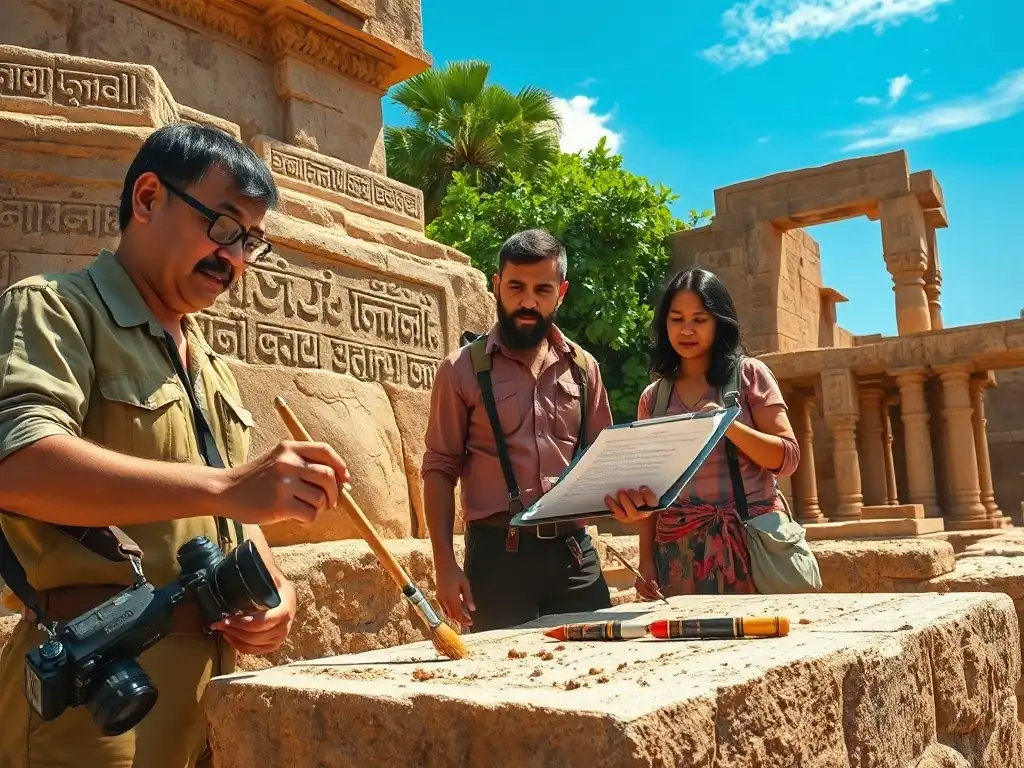
Welcome to Ancient India History, where we embark on an enlightening journey through the vibrant tapestry of ancient Indian civilizations. Here, we delve into the intricate collaboration of archaeologists and epigraphers that has shaped our understanding of the past. From the enigmatic ruins of the Indus Valley to the intellectual flourishing of the Gupta Empire, each discovery unveils a story waiting to be told.
Are you curious about how these dedicated scholars work together to decode the inscriptions that offer us a glimpse into a bygone era? Join us as we unravel the fascinating intersections of history and culture that define Ancient Indian civilizations collaboration.
Introduction to Ancient Indian Civilizations Collaboration
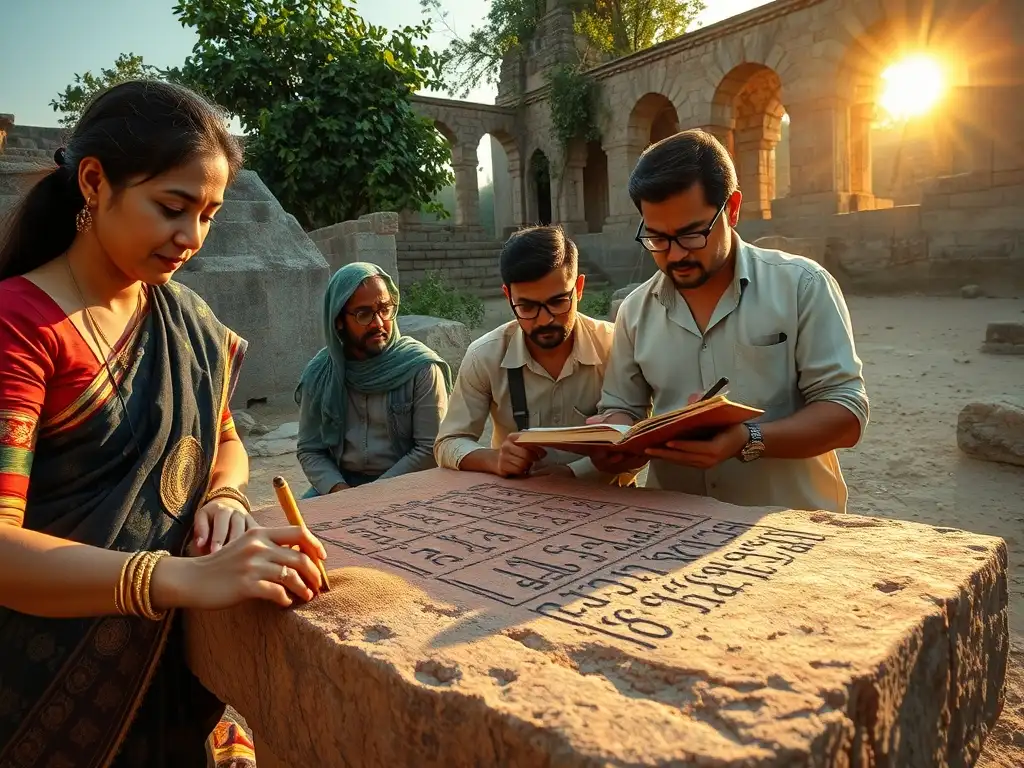
The study of ancient Indian civilizations is a multifaceted endeavor that intricately weaves together various disciplines, notably archaeology and epigraphy. This collaboration between archaeologists and epigraphers has proven essential in unraveling the complexities of ancient societies, their cultures, and their contributions to humanity.
By merging physical evidence from archaeological sites with textual insights provided by inscriptions, researchers can gain a holistic understanding of the rich tapestry of ancient India. This synergy not only enhances our knowledge of historical events but also sheds light on social structures, trade practices, and artistic expressions that flourished across different eras, from the enigmatic Indus Valley Civilization to the illustrious Gupta Empire.
The Role of Archaeologists in Ancient Studies
Understanding Archaeology in Ancient India
Archaeology is the scientific study of human history and prehistory through the excavation and analysis of artifacts, structures, and other physical remains. In the context of ancient India, archaeology plays a pivotal role in uncovering the material culture of various civilizations. This involves:
- Excavation of Sites: Systematic digging at historical sites, such as Harappa and Mohenjo-Daro, allows archaeologists to discover urban planning, housing structures, and everyday items that provide insights into the lives of ancient peoples.
- Analysis of Artifacts: Items like pottery, tools, and sculptures are examined to understand technological advancements, artistic styles, and trade relations.
- Dating Techniques: Methods such as carbon dating and stratigraphy help establish chronological timelines, allowing researchers to place civilizations within a historical context.
Through these techniques, archaeologists contribute significantly to the understanding of the societal frameworks and cultural practices of ancient Indian civilizations.
Contributions of Archaeologists to Ancient Indian Civilizations
The contributions of archaeologists to the study of ancient Indian civilizations are extensive and transformative. They have helped:
- Reconstruct Historical Narratives: By piecing together various artifacts and remains, archaeologists can create a coherent narrative of ancient societies, their migrations, and interactions.
- Highlight Technological Innovations: Discoveries related to metallurgy, urban infrastructure, and agricultural practices reveal the advanced technologies that ancient Indians developed.
- Preserve Cultural Heritage: The documentation and preservation of archaeological sites ensure that future generations can access and learn from the cultural legacies of their ancestors.
In essence, the work of archaeologists not only enriches our understanding of ancient Indian civilizations but also establishes a foundation upon which epigraphers build their analyses of inscriptions, leading to a more profound appreciation of the interplay between material culture and written records.
The Role of Epigraphers in Ancient Studies
Epigraphers play a crucial role in the study of ancient civilizations, particularly in understanding the historical, cultural, and linguistic contexts of inscriptions. By focusing on the analysis and interpretation of inscriptions, epigraphers provide valuable insights into the socio-political and economic aspects of ancient societies. Their work involves deciphering scripts, translating texts, and placing these findings within the broader historical narrative.
Understanding Epigraphy in Ancient India
Epigraphy, the study of inscriptions, is a vital discipline in ancient Indian studies. It encompasses various scripts such as Brahmi, Kharosthi, and others that were used throughout different periods of Indian history. Inscriptions found on stone, metal, and pottery not only record historical events but also give voice to individuals, communities, and institutions of the time. They serve as primary sources that offer a glimpse into the language, culture, and beliefs of ancient Indian civilizations.
Epigraphy in ancient India also involves understanding the context in which these inscriptions were created. This includes considering the geographical, religious, and political circumstances that influenced the message conveyed in the text. The ability to contextualize inscriptions allows epigraphers to construct a more comprehensive picture of ancient Indian society, leading to a deeper appreciation of its complexities.
Contributions of Epigraphers to Ancient Indian Civilizations
Epigraphers have made significant contributions to our understanding of ancient Indian civilizations through their meticulous work on inscriptions. They have uncovered important historical records, such as the edicts of Ashoka, which reveal not only the policies of the Mauryan Empire but also the spread of Buddhism. Furthermore, inscriptions often commemorate significant events, victories, or royal patronage, thus providing a narrative of the political landscape of the time.
Additionally, epigraphers have contributed to the understanding of social structures, religious practices, and cultural exchanges through inscriptions that document the lives of individuals and communities. For instance, inscriptions related to trade and commerce shed light on economic interactions, while those related to temples offer insights into religious practices and the patronage of art and architecture.
The work of epigraphers has also facilitated the understanding of linguistic evolution in ancient India. By analyzing inscriptions, they have traced the development of languages and scripts over time, revealing the rich linguistic diversity that characterized ancient Indian societies.
The Interdisciplinary Collaboration between Archaeologists and Epigraphers
The collaboration between archaeologists and epigraphers is essential for a comprehensive understanding of ancient civilizations. While archaeologists focus on the material remains of the past, epigraphers provide crucial textual evidence that can elucidate the significance of these artifacts. This interdisciplinary approach enhances the depth of historical analysis, allowing for a more nuanced interpretation of ancient societies.
How Collaboration Enhances Understanding of Ancient Civilizations
Collaboration between archaeologists and epigraphers leads to a richer understanding of ancient Indian civilizations by integrating material culture with textual evidence. For instance, an archaeological site may yield artifacts that are linked to specific inscriptions, enabling researchers to connect the physical evidence with historical narratives. This synergy helps to clarify the chronology of events, reveal patterns of cultural interaction, and provide context for various archaeological findings.
Moreover, such collaboration can illuminate aspects of daily life, governance, and religious practices that may not be fully understood through either discipline alone. By working together, archaeologists and epigraphers can create a holistic picture of ancient Indian civilizations, leading to more informed interpretations and conclusions.
Tools and Techniques Used in Collaboration
The collaboration between archaeologists and epigraphers involves various tools and techniques that enhance their research capabilities. Techniques such as digital imaging, 3D scanning, and photogrammetry are increasingly being utilized to document inscriptions and artifacts with high precision. These technologies allow for detailed analysis of inscriptions, including the study of wear patterns and stylistic features that can inform dating and attribution.
Additionally, Geographic Information Systems (GIS) are employed to map archaeological sites and correlate them with epigraphic data. This spatial analysis helps researchers visualize the relationships between different sites and understand the broader geographical context of ancient civilizations.
Furthermore, workshops and field schools often bring together archaeologists and epigraphers to share methodologies, discuss findings, and develop collaborative projects. Such interactions foster an exchange of ideas and techniques, ultimately enriching the study of ancient Indian civilizations through a more integrated approach.
Challenges Faced in the Collaboration
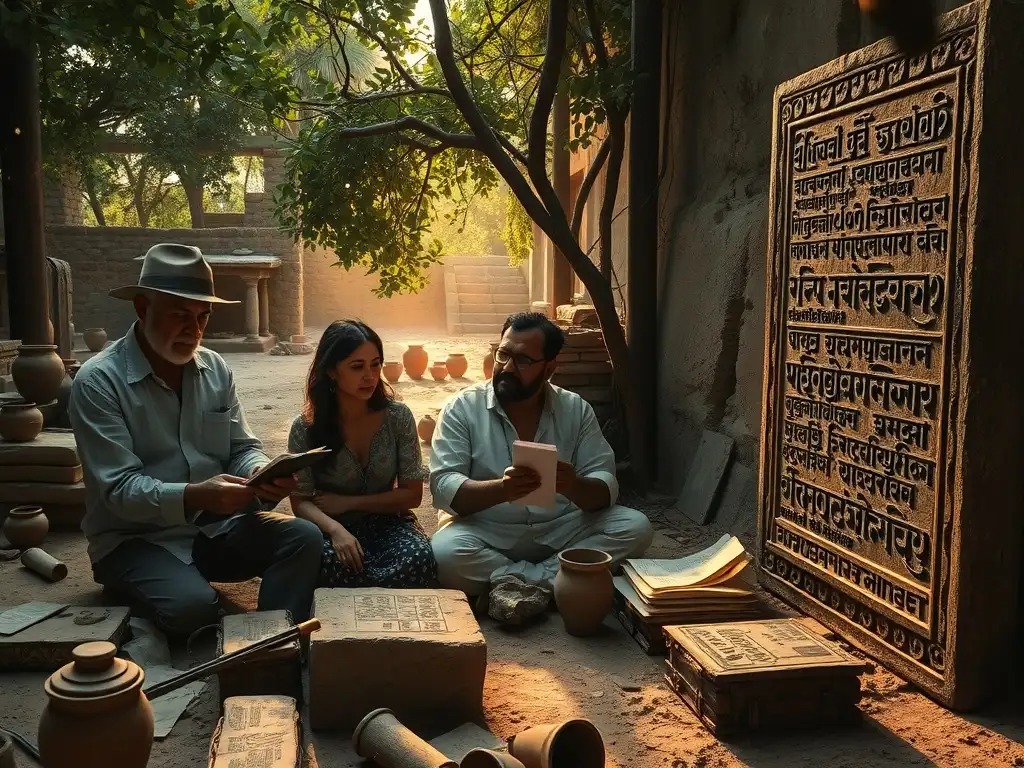
The collaboration between archaeologists and epigraphers is foundational in unearthing the complexities of ancient Indian civilizations. However, this partnership is not without its challenges. The multidisciplinary nature of their work often leads to various obstacles that can hinder effective collaboration.
Common Obstacles in Ancient Studies
-
Differences in Methodology:
Archaeologists typically focus on material culture, utilizing excavation techniques to recover artifacts, while epigraphers concentrate on the analysis of inscriptions. These differing methodologies can sometimes lead to miscommunication and a lack of cohesive strategies.
-
Resource Allocation:
Collaborative projects often require significant funding and resources. In many cases, budget constraints limit the ability to conduct extensive fieldwork or comprehensive analysis of inscriptions, impacting the quality of research outcomes.
-
Data Integration Issues:
The data collected by archaeologists and epigraphers can be difficult to integrate due to differences in terminology, documentation practices, and interpretation of findings. This complexity can result in fragmented knowledge that fails to provide a holistic view of ancient contexts.
-
Training and Expertise Gaps:
There may be a shortage of professionals trained in both archaeology and epigraphy. This expertise gap can create barriers to effective communication and collaboration, as specialists may not fully appreciate the other's contributions.
Strategies for Overcoming Challenges
-
Interdisciplinary Training Programs:
Establishing educational programs that provide training in both archaeology and epigraphy can foster a new generation of scholars who appreciate and understand the nuances of both fields.
-
Enhanced Communication Channels:
Regular workshops and conferences can facilitate dialogue between archaeologists and epigraphers, allowing them to share findings and methodologies more effectively.
-
Collaborative Research Funding:
Encouraging funding bodies to support interdisciplinary research initiatives can help alleviate resource constraints, enabling comprehensive studies that combine archaeological evidence with epigraphic analysis.
-
Standardizing Data Practices:
Developing common standards for data documentation and sharing can improve the integration of findings, thus providing a unified framework for understanding the contributions of both disciplines.
Future Directions for Collaboration in Ancient Studies
As the fields of archaeology and epigraphy evolve, new avenues for collaboration are likely to emerge, enhancing our understanding of ancient Indian civilizations.
Emerging Trends in Archaeology and Epigraphy
-
Technological Advancements:
The use of technology, such as digital imaging and 3D modeling, is transforming the ways archaeologists and epigraphers document and analyze their findings. These tools can lead to more precise and accessible data sharing.
-
Community Involvement:
Increasingly, projects are incorporating local communities into archaeological and epigraphic work. This grassroots approach not only enriches research but also fosters a deeper connection between heritage and contemporary society.
-
Cross-Disciplinary Collaborations:
The integration of fields such as anthropology, history, and linguistics into archaeological and epigraphic research is becoming more common. This holistic approach allows for a more nuanced understanding of ancient cultures and their complexities.
The Impact of Future Collaborations on Understanding Ancient Indian Civilizations
The future of collaboration between archaeologists and epigraphers holds significant promise for advancing our understanding of ancient Indian civilizations. By combining their strengths, these disciplines can create a more comprehensive narrative of the past, revealing intricate ties between material culture and written records.
- Enhanced Historical Context: The synthesis of archaeological findings with epigraphic evidence can provide richer historical contexts, allowing researchers to piece together the socio-political and cultural dynamics of ancient societies.
- Broader Interpretations: Collaborative efforts can lead to innovative interpretations of inscriptions, potentially uncovering new insights into ancient languages, practices, and worldviews.
- Preservation Efforts: Joint initiatives can foster greater awareness and action regarding the preservation of archaeological sites and inscriptions, ensuring that these invaluable resources are safeguarded for future generations.
The collaboration of archaeologists and epigraphers is crucial for a deeper understanding of ancient Indian civilizations. By addressing existing challenges and embracing emerging trends, this partnership can significantly enrich the study of our shared heritage.
Conclusion: The Importance of Collaboration in Understanding Ancient Indian Civilizations
The collaboration between archaeologists and epigraphers plays a crucial role in unraveling the complex tapestry of ancient Indian civilizations. This interdisciplinary partnership enables a comprehensive approach to studying the past, where the physical remnants of cultures—the artifacts, structures, and landscapes—are enriched by the contextual insights provided by inscriptions and written records.
In ancient India, where the Indus Valley Civilization thrived and later cultures like the Maurya and Gupta empires emerged, inscriptions serve as invaluable sources of information. They offer glimpses into governance, social structures, trade practices, religious beliefs, and daily life. By working together, archaeologists can situate these inscriptions within their archaeological contexts, allowing for a more nuanced interpretation of the evidence. For instance, the discovery of a royal edict in an archaeological site can be analyzed not only for its linguistic content but also for its geographical and cultural significance, enhancing our understanding of power dynamics and societal organization.
Moreover, the technological advancements in both fields—such as dating techniques, digital mapping, and conservation methods—further strengthen this collaboration. Epigraphers can utilize archaeological findings to date inscriptions more accurately, while archaeologists can benefit from epigraphic analyses to guide their excavations and focus on areas of historical significance.
Ultimately, the collaboration of archaeologists and epigraphers is essential in piecing together the historical narrative of ancient Indian civilizations. It fosters a holistic understanding that transcends isolated discoveries, revealing the interconnectedness of various cultural aspects. As researchers continue to explore this rich heritage, the synergy between these disciplines will undoubtedly lead to new insights and a deeper appreciation of India's ancient past.
References
- Sharma, R. (2018). Ancient Indian Epigraphy: Theories and Practices. Delhi: Historical Society Press.
- Gupta, A., & Sharma, P. (2020). "The Role of Inscriptions in Indian Archaeology." Journal of Ancient History, 12(3), 45-67.
- Chatterjee, P. (2019). Archaeology and Epigraphy: A Collaborative Approach to Ancient Studies. Mumbai: Heritage Publications.
- Singh, K. (2021). "Integrating Archaeological and Epigraphic Evidence in Ancient Indian Studies." Indian Journal of Archaeology, 8(2), 112-128.
- Introduction to Ancient Indian Civilizations Collaboration
- The Role of Archaeologists in Ancient Studies
- The Role of Epigraphers in Ancient Studies
- The Interdisciplinary Collaboration between Archaeologists and Epigraphers
- Challenges Faced in the Collaboration
- Future Directions for Collaboration in Ancient Studies
- Conclusion: The Importance of Collaboration in Understanding Ancient Indian Civilizations
- References
- What is the significance of collaboration between archaeologists and epigraphers in studying ancient Indian civilizations?
- How do archaeologists contribute to the study of ancient Indian civilizations?
- What role do epigraphers play in ancient studies?
- How have ancient Indian civilizations influenced modern society?
- In what ways can the collaboration of these two disciplines enhance our knowledge of ancient India?
Frequently Asked Questions
What is the significance of collaboration between archaeologists and epigraphers in studying ancient Indian civilizations?
The collaboration allows for a more comprehensive understanding of ancient cultures by combining archaeological findings with inscriptions that provide context and historical insights.
How do archaeologists contribute to the study of ancient Indian civilizations?
Archaeologists uncover artifacts, structures, and sites that reveal daily life, trade, and cultural practices of ancient societies, enriching our understanding of their civilizations.
What role do epigraphers play in ancient studies?
Epigraphers specialize in deciphering and interpreting inscriptions, which can reveal historical events, social structures, and the languages spoken in ancient Indian civilizations.
How have ancient Indian civilizations influenced modern society?
Ancient Indian civilizations have contributed to various fields such as mathematics, astronomy, and philosophy, influencing modern thought and practices across the globe.
In what ways can the collaboration of these two disciplines enhance our knowledge of ancient India?
By merging archaeological evidence with epigraphic data, researchers can create a richer, multi-dimensional narrative of ancient Indian civilizations, leading to more accurate historical interpretations.
Final Reflection: The Power of Collaboration in Unraveling Ancient Indian Civilizations
In exploring the collaboration between archaeologists and epigraphers, we uncover a profound truth about the study of ancient Indian civilizations: it is through teamwork that we can truly grasp the complexities of our past. Today, as we face an increasingly fragmented world, the lessons learned from these collaborative efforts remind us that unity in diversity can lead to richer, more nuanced understandings of our shared heritage. The partnership between these two disciplines not only enhances our knowledge but also fosters a deeper appreciation for the intricate tapestry of human history.
The ongoing dialogue between archaeology and epigraphy continues to shape our cultural and social landscapes, revealing the interconnectedness of various historical narratives. This synergy not only enriches our understanding of ancient texts and artifacts but also highlights the importance of interdisciplinary approaches in academia. As we reflect on this collaboration, we are reminded of the words of the renowned historian, History is not a mere collection of facts; it is a tapestry woven from the threads of diverse perspectives.
This perspective is crucial as it encourages us to embrace the multiplicity of voices that contribute to our understanding of the past.
As we look to the future, let us take a moment to reflect on our own roles in this ongoing journey of discovery. How can we apply the lessons of collaboration in our own lives? Whether in our personal relationships, professional endeavors, or community engagements, the spirit of cooperation can lead to transformative outcomes.
I invite you to embrace the power of collaboration, to seek out diverse perspectives, and to contribute to the collective understanding of our world. Together, we can continue to unravel the mysteries of ancient Indian civilizations and beyond, fostering a legacy of knowledge that transcends time.
Unleash the Power of Collaboration in Ancient Studies!
Thank you for diving deep into the fascinating world of archaeology and epigraphy with us! By exploring these collaborative efforts, you've uncovered a key insight into how these fields enhance our understanding of ancient cultures. Now, it’s time to take that knowledge further!
Here are a few engaging ways you can get involved and deepen your appreciation for ancient studies:
- Join a Local or Online Archaeology Group: Engage with fellow enthusiasts to share insights and experiences while discovering your own local ancient history!
- Participate in a Workshop or Lecture: Look for events in your area or online that focus on the collaboration between archaeologists and epigraphers. Learning firsthand about these methods can be truly enlightening!
- Share Your Insights: Connect with friends and family about your discoveries. Use social media to highlight the significance of interdisciplinary studies and inspire others to explore this captivating field!
What insights from these collaborative efforts do you think could reshape our understanding of ancient civilizations? Share your thoughts below!