
The Interdisciplinary Nature of Education in Ancient Indian Universities


Welcome to Ancient India History, where we embark on a fascinating journey through the rich tapestry of ancient Indian civilizations. In this exploration, we invite you to delve into the intriguing world of Ancient Indian universities education. Discover how these institutions were not merely places of learning but vibrant hubs of interdisciplinary knowledge that laid the groundwork for various fields of study. Are you ready to uncover the secrets behind the educational brilliance of the Indus Valley to the Gupta Empire? Let’s dive deeper into the remarkable legacy that continues to influence modern education.
Introduction to Ancient Indian Universities Education
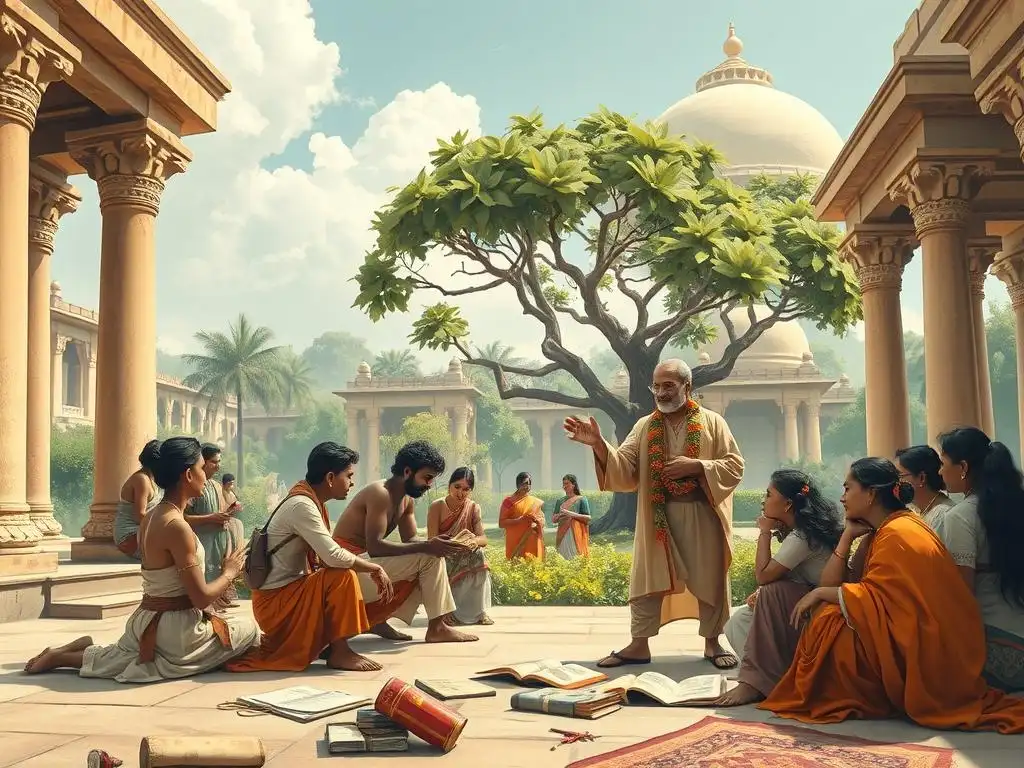
The educational landscape of ancient India was marked by a profound interdisciplinary approach that fostered a holistic understanding of knowledge and learning. Ancient Indian universities, such as Nalanda and Takshashila, served as beacons of wisdom, where scholars from diverse fields gathered to exchange ideas, philosophies, and research. The emphasis on integrating various disciplines—ranging from philosophy and astronomy to medicine and grammar—reflects a unique educational framework that prioritized a comprehensive understanding of the world.
This article delves into the intricate nature of education in ancient Indian universities, exploring their historical significance, evolution, and the influence of philosophical thought on their educational systems. By examining these aspects, we aim to highlight the enduring legacy of ancient Indian universities and their impact on education systems worldwide.
Overview of Ancient Indian Universities
Ancient Indian universities were not merely institutions for higher learning; they were vibrant centers of intellectual and cultural exchange. Established around the 5th century BCE, these universities attracted students from across Asia, creating a melting pot of ideas and knowledge.
- Key Features:
- Curriculum Diversity: Subjects ranged from the Vedas and philosophy to science and arts.
- Teaching Methods: A blend of oral traditions, debates, and practical demonstrations.
- Student Autonomy: Students often had a say in their learning paths, promoting critical thinking.
These universities played a pivotal role in shaping not only individual scholars but also the broader cultural and intellectual fabric of the time.
Significance of Education in Ancient India
Education in ancient India was considered a sacred pursuit, integral to personal and societal development. It was not only about acquiring knowledge but also about cultivating virtues and ethical conduct.
- Core Values:
- Dharma (Duty): Education was seen as a means to fulfill one's responsibilities towards society.
- Personal Growth: Emphasis on self-realization and mastery of one's mind and body.
- Community Contribution: Scholars were encouraged to use their knowledge for the welfare of society.
This holistic approach to education ensured that learning went hand-in-hand with moral and ethical development, leading to a well-rounded character.
Historical Context of Ancient Indian Universities
The historical evolution of educational institutions in ancient India reflects the dynamic interplay between culture, politics, and philosophy. Understanding this context is essential to appreciate the significance of ancient Indian universities in shaping the intellectual landscape of the region.
Evolution of Educational Institutions in Ancient India
The roots of education in ancient India can be traced back to the Vedic period, where learning was primarily transmitted orally within a guru-shishya (teacher-student) framework. Over centuries, this evolved into more structured institutions:
- Vedic Schools (Gurukulas): Informal settings where students learned under the guidance of a guru.
- Monastic Universities: Institutions like Nalanda emerged, offering a more formalized curriculum and attracting students globally.
- Influence of Buddhism: The establishment of Buddhist monasteries as centers of learning significantly contributed to the growth of educational institutions.
This evolution reflects the changing needs of society and the increasing complexity of knowledge.
Key Universities: Nalanda and Takshashila
Among the many ancient universities, Nalanda and Takshashila stand out for their contributions to education and scholarship.
- Nalanda University:
- Established in the 5th century CE, it became a premier center for Buddhist studies.
- Attracted thousands of students and scholars, including notable figures such as Xuanzang.
- Takshashila University:
- One of the earliest universities, dating back to around the 6th century BCE.
- Known for its diverse curriculum, including medicine, military science, and philosophy.
Both institutions exemplified the interdisciplinary nature of education, fostering a spirit of inquiry and intellectual collaboration.
Influence of Ancient Indian Philosophies on Education
The philosophies that emerged from ancient Indian thought significantly shaped the educational methodologies and objectives of universities. Key philosophies include:
- Vedanta and Sankhya: Focused on metaphysical inquiries and the nature of reality.
- Buddhism: Emphasized critical examination, meditation, and ethical living.
- Yoga Philosophy: Integrated physical, mental, and spiritual practices into the learning process.
These philosophies promoted an integrative approach to education that transcended mere academic learning, encouraging students to seek wisdom and enlightenment.
By understanding the interdisciplinary nature of education in ancient Indian universities, we can appreciate the depth and richness of their contributions to the global heritage of knowledge and learning.
Interdisciplinary Approach in Ancient Indian Education
The concept of interdisciplinary education in ancient Indian universities, such as Nalanda and Takshashila, was remarkably advanced for its time. This approach recognized the interconnectedness of various fields of study, allowing students to explore a diverse array of subjects that complemented and enhanced one another.
The curriculum was not confined to a single discipline; instead, it encouraged the blending of knowledge from multiple domains, such as philosophy, mathematics, astronomy, medicine, and the arts. This holistic method of education fostered critical thinking and creativity, equipping scholars with a broad spectrum of skills and knowledge that were vital for addressing complex societal issues.
The interdisciplinary nature of education in these ancient universities was reflected in the way subjects were taught. For instance, a student might study logic alongside linguistics and ethics, learning how these disciplines intersected and informed one another. This integrated approach not only enriched the learning experience but also prepared students for practical applications of their knowledge in various fields, contributing to the development of a well-rounded intellectual and cultural landscape.
Definition of Interdisciplinary Education
Interdisciplinary education can be defined as an educational approach that integrates concepts, theories, and methodologies from different disciplines to provide a more comprehensive understanding of complex topics. In the context of ancient Indian universities, it involved the synthesis of knowledge from various fields, enabling students to draw connections between seemingly disparate subjects and apply their insights in a holistic manner.
This educational philosophy was grounded in the belief that knowledge is interrelated and that learning should reflect the complexity of real-world problems. By fostering an environment where students could engage with multiple disciplines, ancient Indian universities nurtured versatile thinkers capable of innovative problem-solving and creative expression.
Integration of Various Disciplines in Curriculum
The curriculum in ancient Indian universities was characterized by a rich integration of various disciplines. Students were often exposed to a broad spectrum of subjects, including:
- Philosophy: Exploring metaphysical concepts and ethical frameworks.
- Mathematics: Learning about geometry, algebra, and astronomical calculations.
- Medicine: Studying Ayurveda and surgical techniques.
- Literature and Poetry: Engaging with classical texts and creative writing.
- Politics and Governance: Understanding statecraft and administration.
This integration allowed students to see the practical applications of their learning and to appreciate the interconnectedness of knowledge. For example, a student studying astronomy would also learn about mathematics to calculate celestial movements, while those engaged in political studies would delve into historical texts that informed governance principles. Such a curriculum not only enriched students' academic experiences but also prepared them to tackle real-world challenges through an interdisciplinary lens.
The Role of Scholars in Ancient Indian Universities
The scholars who taught in ancient Indian universities played a pivotal role in shaping the educational landscape. They were not only experts in their fields but also mentors who guided students through a process of inquiry and exploration. Their contributions extended beyond the classroom, as many scholars engaged in extensive research and wrote influential texts that laid the groundwork for future generations of thinkers.
These scholars were often recognized for their wisdom and knowledge, and their teachings were highly sought after by students from across the region. The vibrant intellectual community within these universities fostered collaboration and dialogue, allowing for the exchange of ideas and perspectives that enriched the overall educational environment.
Influential Scholars and Their Contributions
Several influential scholars emerged from ancient Indian universities, each leaving a lasting impact on their respective fields. Notable figures include:
- Aryabhata: A mathematician and astronomer who made significant contributions to the understanding of the solar system and developed a decimal place value system.
- Charaka: An early physician known for his foundational work in Ayurveda, which emphasized a holistic approach to health and well-being.
- Gautama Buddha: Although primarily known as a spiritual leader, his philosophical teachings influenced various disciplines, including ethics and metaphysics.
- Vatsyayana: Author of the Kama Sutra, which explored aspects of human behavior and relationships from a multidisciplinary perspective, integrating elements of sociology, psychology, and literature.
These scholars not only advanced their fields but also contributed to the interdisciplinary nature of education by engaging with diverse subjects and encouraging their students to do the same.
The Teacher-Student Relationship in Ancient Indian Education
The teacher-student relationship in ancient Indian education was characterized by mutual respect, trust, and a shared commitment to learning. Teachers, referred to as "gurus," were revered figures who not only imparted knowledge but also played a crucial role in the moral and spiritual development of their students. This dynamic was deeply rooted in the belief that education was a holistic process that involved the cultivation of both intellect and character.
The relationship was often informal and interactive, encouraging open dialogue and exploration. Students were encouraged to ask questions, engage in discussions, and actively participate in their learning journey. This pedagogical approach not only fostered a deeper understanding of the subjects being taught but also empowered students to think critically and independently.
Moreover, the teacher-student bond extended beyond academics. Gurus often acted as mentors who guided students in their personal development, instilling values such as humility, integrity, and compassion. This nurturing environment helped shape well-rounded individuals who were prepared to contribute positively to society, reflecting the holistic educational philosophy of ancient Indian universities.
Pedagogical Methods in Ancient Indian Universities
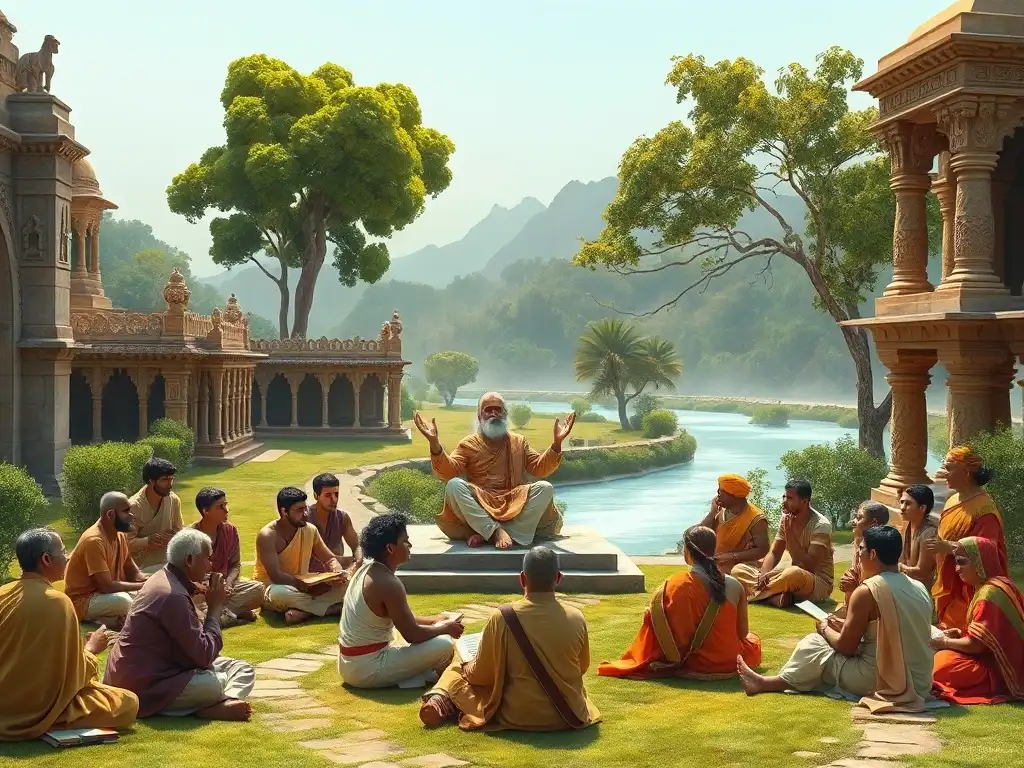
The pedagogical methods employed in ancient Indian universities, such as Nalanda and Takshashila, were characterized by a holistic approach to education. This system emphasized not only the accumulation of knowledge but also the development of critical thinking and moral values. Teachers, known as Acharyas, played a pivotal role in this educational framework. They were not merely transmitters of knowledge but mentors who engaged students in a dialogue that encouraged exploration and understanding.
Student-Centric Approaches were central to the teaching methods, allowing learners to pursue their interests within a structured environment. Students often engaged in self-directed learning, where they could choose subjects that aligned with their career aspirations and personal passions. This flexibility fostered a sense of ownership over their education, leading to a deeper engagement with the material.
Key Teaching Methods and Techniques
Ancient Indian universities utilized a variety of teaching methods that contributed to the comprehensive education of students. Among these, oral transmission was paramount. Knowledge was often conveyed through lectures, discussions, and storytelling, allowing for the dynamic exchange of ideas. This method not only preserved oral traditions but also facilitated immediate feedback and interaction.
- Group Learning: Students frequently participated in group discussions and collaborative projects, promoting teamwork and collective problem-solving.
- Practical Learning: Institutions included practical experiences alongside theoretical studies. For example, subjects like medicine and metallurgy involved hands-on training.
- Mentorship: The relationship between students and their mentors was crucial. Acharyas provided guidance, encouragement, and insights that went beyond the curriculum, shaping the personal and professional development of their pupils.
The Importance of Debates and Discussions
Debates and discussions were integral to the educational ethos of ancient Indian universities. These forums allowed students to articulate their thoughts, challenge ideas, and refine their understanding through constructive criticism. The method of dialectics was particularly valued, fostering a culture of inquiry and intellectual rigor.
- Enhancing Critical Thinking: Engaging in debates helped students develop critical thinking skills and the ability to analyze different viewpoints.
- Moral and Ethical Reasoning: Discussions often encompassed philosophical and ethical dimensions, encouraging students to ponder moral dilemmas and societal values.
- Preparation for Leadership: The skills honed through such interactions prepared students for future roles as leaders, educators, and decision-makers in society.
Use of Texts and Manuscripts in Learning
Ancient Indian universities placed significant importance on texts and manuscripts as foundational elements of education. Scholars meticulously preserved and copied texts, ensuring that a wealth of knowledge was accessible to future generations. The study of these texts was not merely about memorization; it involved deep analysis and interpretation.
- Diverse Subjects: Students studied a wide range of subjects, including philosophy, mathematics, astronomy, medicine, and literature, often using classical texts such as the Vedas and Upanishads.
- Commentaries and Interpretations: Scholars frequently wrote commentaries on existing texts, which promoted deeper understanding and innovation in thought.
- Preservation of Knowledge: The role of libraries in these universities was crucial, as they housed vast collections of manuscripts, fostering an environment of scholarly pursuit.
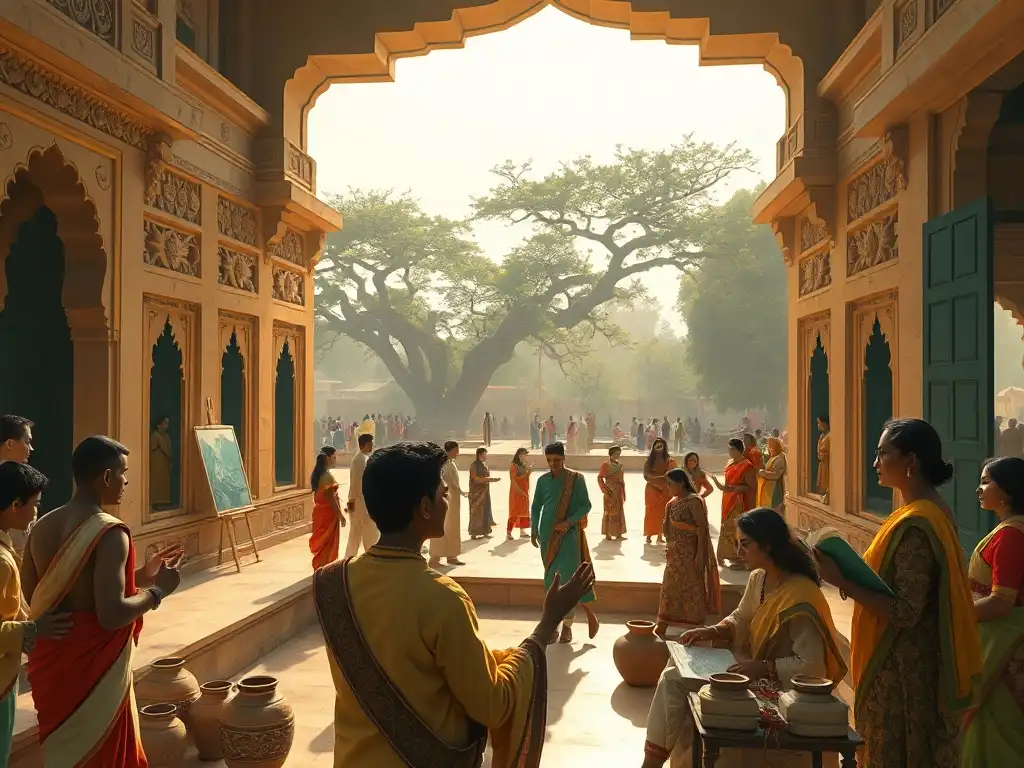
Ancient Indian universities had a profound impact on the culture and society of their time. They served as hubs of knowledge and learning that transcended regional boundaries, attracting students from various parts of Asia and beyond. This cultural melting pot enriched the educational experience and facilitated the exchange of ideas.
- Centers of Cultural Exchange: Universities like Nalanda were not only centers of learning but also vibrant cultural exchanges, where diverse cultures and philosophies interacted.
- Promotion of Arts and Sciences: The universities nurtured advancements in various fields, leading to significant contributions in arts, sciences, and literature.
Influence on Society and Culture
The influence of ancient Indian universities extended far beyond academia. Graduates of these institutions often assumed influential roles in society, contributing to governance, philosophy, and the arts. The emphasis on moral and ethical values in education shaped the character of leaders and scholars, promoting a sense of responsibility towards society.
- Social Reforms: Many graduates engaged in social reforms, advocating for justice, equality, and the welfare of the underprivileged.
- Cultural Preservation: The continuous study and interpretation of ancient texts helped preserve cultural heritage and traditions, fostering a sense of identity among communities.
The Legacy of Ancient Indian Universities in Modern Education
The legacy of ancient Indian universities is evident in modern educational practices. Principles such as interdisciplinary learning, critical thinking, and the importance of mentorship continue to inspire contemporary educational systems.
- Interdisciplinary Approach: Modern curricula are increasingly embracing interdisciplinary methods, akin to the ancient practices that encouraged the blending of various fields of study.
- Focus on Holistic Development: The emphasis on not just academic performance but also moral and ethical development reflects the ancient approach to education.
Interactions with Other Civilizations and Knowledge Transfer
Ancient Indian universities were pivotal in fostering interactions with other civilizations, facilitating a vibrant exchange of knowledge. Students and scholars traveled from regions such as China, Tibet, and Persia, bringing with them diverse perspectives and ideas.
- Cross-Cultural Influences: This exchange enriched both Indian scholarship and that of visiting scholars, leading to advancements in various fields, including astronomy, mathematics, and medicine.
- Historical Significance: The universities served as crucial nodes in the historical development of global knowledge networks, influencing educational practices in other civilizations and contributing to the collective intellectual heritage of humanity.
Challenges and Decline of Ancient Indian Universities

The decline of ancient Indian universities such as Nalanda and Vikramashila marked a significant turning point in the educational landscape of the region. This decline was not sudden; rather, it resulted from a confluence of factors that undermined the very foundation of these prestigious institutions. The challenges faced by ancient Indian universities included political instability, cultural shifts, and external invasions, which collectively contributed to a deterioration in their operational capacity and academic integrity.
In addition to external pressures, internal factors such as administrative inefficiencies and a lack of adequate funding also played a role. The vibrant intellectual environment that once thrived began to fade, leading to diminished enrollment and a decrease in the quality of education. As a result, the rich tradition of interdisciplinary education that characterized these institutions suffered significantly.
Factors Leading to the Decline of Educational Institutions
Several interconnected factors contributed to the decline of ancient Indian universities.
- Political Instability:
- The fragmentation of political entities and the rise of regional powers weakened the patronage that universities relied upon for support.
- Frequent changes in rulers led to inconsistent policies regarding education and scholarship.
- Cultural Shifts:
- The arrival of new religious ideologies and cultural practices altered the societal perception of education.
- A growing emphasis on religious orthodoxy often overshadowed the secular, philosophical teachings that were the hallmark of ancient universities.
- External Invasions:
- Invasions, particularly by Turkic and Afghan forces, resulted in widespread destruction of educational centers.
- The pillaging of libraries and the killing or displacement of scholars decimated the intellectual community.
- Economic Factors:
- A decline in the economy reduced the resources available for educational institutions, leading to inadequate infrastructure and facilities.
- Without financial support, the universities struggled to attract and retain talented faculty and students.
Historical Events Impacting Education in Ancient India
Numerous historical events profoundly affected the landscape of education in ancient India.
- The Fall of Nalanda (12th Century): The university was destroyed by Bakhtiyar Khilji’s forces, a significant blow to the intellectual traditions of India. This event not only led to the loss of invaluable manuscripts and texts but also instilled fear within the scholarly community, causing many to flee to other regions, thereby disrupting the continuity of education.
- Rise of Regional Kingdoms: The emergence of regional powers during the medieval period often meant that educational priorities shifted. Many rulers favored localized forms of education that aligned with their political and cultural goals rather than the broader, more inclusive curricula offered by ancient universities.
- The Spread of Islamic Scholarship: The establishment of madrasas introduced a new form of education focused more on religious teachings, which began to overshadow the traditional secular subjects taught in ancient universities. This shift in educational focus diverted resources, students, and intellectual efforts away from the ancient institutions.
Conclusion
The decline of ancient Indian universities was a multifaceted phenomenon influenced by a variety of external and internal factors. Despite their downfall, the legacy of these institutions continues to resonate in modern educational practices.
Summary of the Interdisciplinary Nature of Education
The interdisciplinary nature of education in ancient Indian universities fostered a rich tapestry of knowledge that encompassed various fields such as philosophy, mathematics, astronomy, medicine, and literature. This holistic approach to learning not only cultivated a spirit of inquiry but also encouraged collaboration among scholars from diverse backgrounds. The curriculum was designed to promote critical thinking and dialogue, allowing students to draw connections between different disciplines.
The Lasting Impact of Ancient Indian Universities on Education Today
The contributions of ancient Indian universities to the field of education are still evident today. Their emphasis on interdisciplinary study laid the groundwork for modern educational reforms that prioritize a well-rounded approach to learning. Furthermore, the values of inquiry, debate, and critical analysis that were cultivated in these ancient institutions continue to inspire contemporary educational paradigms. As we reflect on the past, it is essential to recognize the profound impact these universities had on shaping not only Indian education but also the global academic landscape.
References
The interdisciplinary nature of education in ancient Indian universities, particularly in centers like Nalanda and Takshashila, has been documented in various scholarly works. These references provide a deeper understanding of the educational frameworks, curricula, and philosophies that permeated these institutions.
- R. C. Majumdar - History of Ancient India: This comprehensive work explores the evolution of Indian education, including the roles of various universities in shaping intellectual thought.
- Romila Thapar - Early India: From the Origins to AD 1300: Thapar's analysis offers insights into the socio-political context of ancient education and the significance of universities in disseminating knowledge.
- D. N. Jha - Ancient India: In Historical Outline: Jha provides a concise overview of educational practices, including the interdisciplinary nature that characterized ancient Indian learning.
- H. C. Ray - Nalanda: A Glorious Chapter in Indian History: This book focuses specifically on Nalanda University, detailing its curriculum and the diverse fields of study.
- S. R. Sharma - Buddhism and Education: This text examines the influence of Buddhist teachings on educational practices in ancient India, particularly in universities.
Suggested Readings and Sources for Further Exploration
For readers interested in further exploring the topic of ancient Indian universities and their educational systems, the following sources are recommended:
- "The Upanishads": These ancient texts delve into philosophical and spiritual education, which formed the backbone of learning in ancient universities.
- "The Philosophy of Education in Ancient India" by R. S. Sharma: This work explores the philosophical underpinnings of education during the ancient period, offering context to interdisciplinary studies.
- "The Role of Gurukuls in Ancient Indian Education": This article discusses the informal educational systems that complemented formal universities, highlighting the holistic approach to learning.
- "Science and Technology in Ancient India": This collection of essays examines how scientific disciplines were integrated into the curriculum of ancient universities.
Additional Resources
Links to Related Articles
- "The Role of Nalanda University in Shaping Medieval Indian Education": An exploration of how Nalanda influenced educational trends beyond its period of prominence.
- "Takshashila: The First University of the World": An article detailing the historical significance and educational methodologies of Takshashila.
- "Influence of Indian Education on the World": A discussion on how ancient Indian educational practices impacted global educational systems.
- "Philosophy and Education in Ancient India": An article focusing on the philosophical frameworks that guided educational practices in ancient universities.
Suggested Academic Journals
For further academic inquiry, consider exploring these journals that frequently publish research on ancient Indian education and universities:
- Journal of Ancient Indian History: A peer-reviewed journal that covers various aspects of ancient Indian civilization, including educational systems.
- Indian Journal of History of Science: This journal focuses on the historical development of science and technology in India, including educational contexts.
- History of Education Quarterly: A journal that, while broader in scope, often includes articles on the history of education in ancient civilizations, including India.
- International Journal of Asian Studies: This publication includes research on various aspects of Asian history, including the educational practices of ancient Indian universities.
- Introduction to Ancient Indian Universities Education
- Historical Context of Ancient Indian Universities
- Interdisciplinary Approach in Ancient Indian Education
- The Role of Scholars in Ancient Indian Universities
- Pedagogical Methods in Ancient Indian Universities
- Key Teaching Methods and Techniques
- The Importance of Debates and Discussions
- Use of Texts and Manuscripts in Learning
- Cultural and Social Impact of Ancient Indian Universities
- Influence on Society and Culture
- The Legacy of Ancient Indian Universities in Modern Education
- Interactions with Other Civilizations and Knowledge Transfer
- Challenges and Decline of Ancient Indian Universities
- Conclusion
- References
- Additional Resources
- What were the main subjects taught in ancient Indian universities?
- How did ancient Indian universities differ from modern universities?
- What role did ancient Indian universities play in society?
- Who were some notable figures associated with ancient Indian universities?
- How did ancient Indian universities contribute to global education?
Frequently Asked Questions
What were the main subjects taught in ancient Indian universities?
Ancient Indian universities offered a diverse curriculum that included subjects like philosophy, mathematics, astronomy, and medicine, reflecting the interdisciplinary nature of education.
How did ancient Indian universities differ from modern universities?
Ancient Indian universities focused on holistic education, emphasizing spiritual and practical knowledge, unlike modern universities which often prioritize specialization in specific fields.
What role did ancient Indian universities play in society?
These universities were crucial in preserving and transmitting knowledge and culture, serving as centers for scholarship and intellectual exchange, thereby influencing societal development.
Who were some notable figures associated with ancient Indian universities?
Notable scholars like Aryabhata and Charaka emerged from these institutions, contributing significantly to mathematics and medicine, showcasing the academic excellence of ancient Indian education.
How did ancient Indian universities contribute to global education?
Ancient Indian universities were instrumental in the dissemination of knowledge, influencing educational practices across Asia and beyond, thereby establishing a legacy of learning that resonates even today.
Final Reflection: Embracing the Wisdom of Ancient Indian Universities
The interdisciplinary nature of education in ancient Indian universities remains profoundly relevant today, as it underscores the importance of holistic learning in a rapidly evolving world. In an era where specialization often overshadows comprehensive understanding, the teachings from institutions like Nalanda and Takshashila remind us that true knowledge transcends boundaries. These ancient centers of learning not only fostered intellectual growth but also nurtured a spirit of inquiry that is essential for addressing contemporary challenges.
The impact of these ancient educational philosophies continues to resonate in our cultural and social landscapes, shaping how we perceive knowledge and learning. The integration of diverse disciplines, such as philosophy, science, and arts, cultivated well-rounded scholars who contributed significantly to society. As we navigate the complexities of modern education, we can draw inspiration from the past. Education is the most powerful weapon which you can use to change the world.
— Nelson Mandela. This quote encapsulates the enduring legacy of ancient Indian universities, emphasizing the transformative power of a well-rounded education.
As we reflect on the lessons from ancient Indian universities, let us embrace the call for a more interconnected approach to learning in our own lives. Consider how you can integrate various fields of knowledge and foster a spirit of curiosity in your educational journey.
Whether through interdisciplinary studies, collaborative projects, or simply engaging with diverse perspectives, each of us has the opportunity to contribute to a richer, more holistic understanding of the world. The wisdom of the past can guide us as we shape the future of education, ensuring that it remains a powerful tool for change and enlightenment.
Embrace the Wisdom of the Past!
Thank you for exploring the fascinating world of ancient Indian universities with us! You’ve discovered the rich tapestry of interdisciplinary education that shaped thinkers and scholars. Now, it’s time to put that knowledge into action and connect with this remarkable heritage!
Here are some steps you can take to deepen your understanding and share this knowledge:
- Dive Deeper: Research an ancient Indian text or philosopher that resonates with you. Embrace their teachings and discover how they apply to today’s interdisciplinary studies.
- Engage with the Community: Join a local history group or participate in online discussions focused on ancient education. Share your newfound insights and learn from others who are passionate about this subject.
- Spread the Word: Share this article with friends or post it on social media to spark conversations about the significance of ancient educational practices in our modern world.
What aspect of ancient interdisciplinary education inspires you the most, and how can it influence your learning journey today?