
The Symbolism Behind Ashoka’s Ashoka Chakra in Indian Flag


Welcome to Ancient India History, where we embark on an intriguing journey through the rich tapestry of India's past! Here, we delve into the symbolism behind Ashoka’s Ashoka Chakra, a powerful emblem resonating with the ideals of peace and dharma. As we explore the profound significance of this icon, we invite you to uncover how it reflects the legacy of one of India’s most revered emperors, Ashoka the Great.
Join us as we unravel the mysteries and stories woven into the fabric of ancient Indian civilization, and discover what makes this symbol a beacon of hope and unity even today. Are you ready to explore the depths of history that shaped a nation?
The Ashoka Chakra, prominently featured in the Indian national flag, is a powerful emblem of India's rich historical legacy and cultural heritage. It symbolizes the eternal wheel of law, progress, and righteousness, drawing its roots from the reign of Emperor Ashoka, one of ancient India's most revered figures.
Understanding the symbolism behind the Ashoka Chakra not only sheds light on its aesthetic appeal but also connects us to the profound philosophies and principles that governed ancient Indian civilization. This article delves into the intricate history and significance of the Ashoka Chakra, exploring its design, features, and the historical context within which it emerged.
Introduction to Ashoka Chakra Symbolism
The Ashoka Chakra is not merely a decorative element on the flag; it represents a deeper philosophical and moral framework that has influenced Indian society through the ages. Its association with Emperor Ashoka, who ruled during the 3rd century BCE, evokes themes of non-violence, justice, and the pursuit of truth. Ashoka's conversion to Buddhism and his efforts to propagate its teachings led to the establishment of a moral compass that continues to resonate in contemporary India.
Understanding the Ashoka Chakra and its Historical Significance
The historical significance of the Ashoka Chakra can be traced back to the pillars erected by Emperor Ashoka, which feature the chakra as a central motif. The most famous of these is the Lion Capital of Ashoka, which stands as a national emblem. The chakra symbolizes the idea of dharma (righteousness) and serves as a reminder of the importance of moral and ethical conduct in governance and society. Its inclusion in the Indian flag serves to reinforce the values that underpin the nation’s identity.
The Role of Ashoka in Ancient Indian History
Emperor Ashoka, often referred to as Ashoka the Great, played a crucial role in shaping ancient Indian history. His reign marked a period of unprecedented peace and prosperity, following the bloody Kalinga War, which led to his profound transformation and commitment to non-violence. Ashoka's promotion of Buddhism and his efforts to spread its teachings across Asia not only influenced religious thought but also established India as a center of cultural and spiritual learning.
The Ashoka Chakra: Design and Features
The design of the Ashoka Chakra is distinctive and carries significant meaning. It consists of a navy blue wheel with 24 spokes, positioned at the center of the Indian flag. This design is not only visually striking but is also imbued with layers of meaning that reflect the philosophical underpinnings of ancient Indian thought.
Description of the Ashoka Chakra
The Ashoka Chakra is a circular symbol that embodies the concept of the eternal cycle of life and the importance of justice and righteousness. Its smooth edges and symmetrical form contribute to its aesthetic appeal, while the vibrant navy blue color signifies strength and stability. The chakra’s design is a testament to the ingenuity and artistic sensibilities of ancient Indian craftsmen.
The 24 Spokes and Their Symbolic Meaning
Each of the 24 spokes in the Ashoka Chakra holds a specific significance, often interpreted as representing various virtues and principles that guide human conduct. Some interpretations include:
- Justice: Upholding fairness and equality.
- Truth: The pursuit of honesty and integrity.
- Peace: The importance of harmony in society.
- Dharma: The moral law that governs individual conduct.
This multifaceted symbolism reflects the comprehensive ethical framework that Ashoka championed during his rule, making the Ashoka Chakra a profound emblem of India's historical and cultural identity.
Historical Context of the Ashoka Chakra
The Ashoka Chakra, a prominent symbol in the Indian flag, is deeply rooted in the historical tapestry of ancient India. This emblematic wheel represents not only a significant aspect of Indian heritage but also encapsulates the philosophies and values that emerged during the reign of Emperor Ashoka, a pivotal figure in Indian history. The Chakra serves as a link between the past and present, symbolizing the continuity of ideas and ideals that have shaped the Indian civilization.
Origins of the Ashoka Chakra in Ancient India
The origins of the Ashoka Chakra can be traced back to the ancient Indian symbol known as the Dharma Chakra, which represents the wheel of law and the cycle of life. The concept of the Dharma Chakra is derived from Buddhist teachings, where it symbolizes the path to enlightenment and the moral and ethical responsibilities of individuals. Emperor Ashoka, who ruled from 268 to 232 BCE, embraced Buddhism after witnessing the devastation of the Kalinga War. He adopted the Dharma Chakra as a powerful emblem to promote his vision of peace, non-violence, and dharma (righteousness).
Ashoka's edicts, inscribed on stone pillars and rocks across his empire, often featured the Chakra, reinforcing its significance as a symbol of governance based on moral authority rather than force. The Chakra thus became an integral part of Ashoka's legacy, representing a commitment to social justice and ethical leadership.
The Chakra's Connection to Ashoka the Great's Reign
The Ashoka Chakra is intricately linked to the reign of Ashoka the Great, whose policies and philosophies significantly influenced Indian society. Following his conversion to Buddhism, Ashoka transformed from a conquering king to a benevolent ruler focused on the welfare of his subjects. He propagated the principles of Dharma, emphasizing compassion, tolerance, and respect for all living beings.
Under Ashoka's reign, the Chakra symbolized the dissemination of Buddhist teachings and the promotion of moral values. The four lions that form the emblem of the Ashoka Chakra, derived from the Lion Capital of Ashoka, further emphasize strength, courage, and the protection of dharma. This connection to Ashoka's ideals makes the Chakra not just a historical artifact but a living representation of the ethical framework that has shaped Indian civilization.
The Ashoka Chakra in the Indian Flag
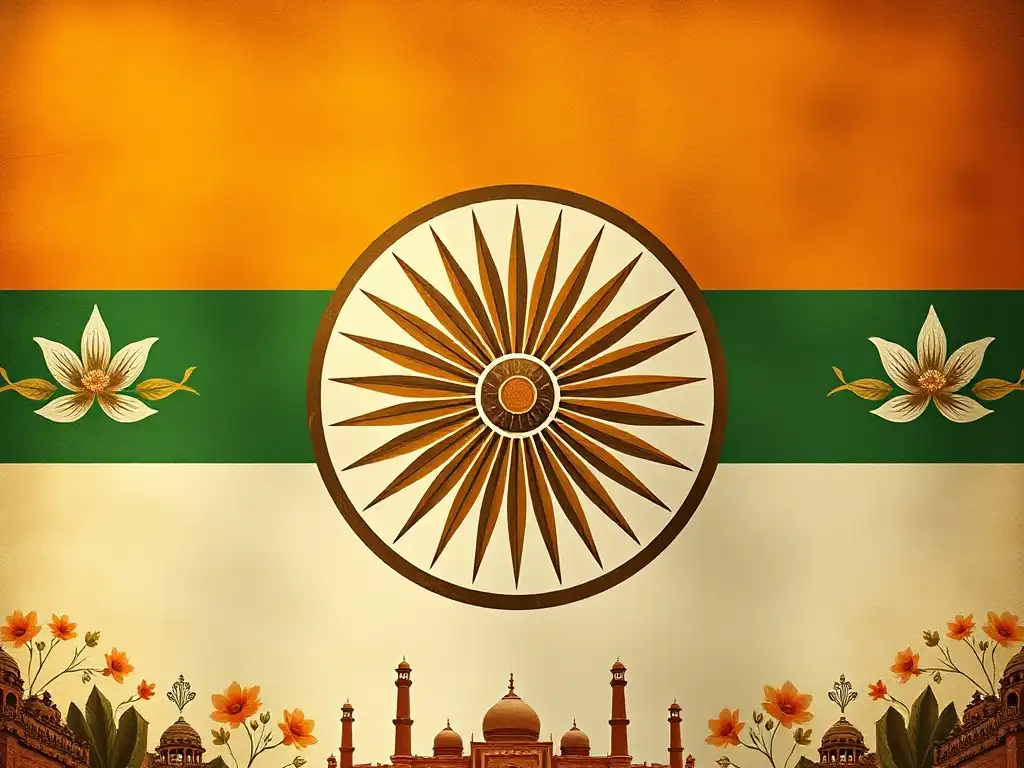
The Ashoka Chakra was officially incorporated into the Indian national flag in 1947, as India gained independence from colonial rule. Its inclusion was a conscious decision to reflect the ideals of justice, peace, and the moral foundation of the nation. The Chakra, with its 24 spokes, symbolizes the movement and dynamism of life, echoing the ongoing journey of the Indian people towards progress and enlightenment.
Historical Adoption of the Ashoka Chakra in the National Flag
The adoption of the Ashoka Chakra in the national flag was a significant moment in India’s history, representing the country’s transition to self-governance. The flag was designed by Pingali Venkayya, and the Chakra was chosen to replace the Union Jack, which had been a symbol of colonial oppression. The Ashoka Chakra's presence in the flag signifies India's commitment to uphold democratic values and the rule of law, reflecting the principles that were championed by Emperor Ashoka.
The choice of the Chakra aligns with India's post-independence ethos, emphasizing the importance of justice and equality. It represents the nation's aspiration to embrace its historical heritage while forging a new path in the modern world.
Significance of the Ashoka Chakra in Indian National Identity
The Ashoka Chakra holds profound significance in the context of Indian national identity. It serves as a reminder of the ancient values that underpin Indian culture, such as non-violence, tolerance, and respect for diversity. The Chakra embodies the spirit of unity in diversity, symbolizing the collective aspiration of the Indian populace towards peace and prosperity.
Moreover, the Ashoka Chakra has become a symbol of pride for Indians, representing their rich historical legacy and commitment to democratic principles. It is a source of inspiration, encouraging citizens to uphold the ideals of justice and righteousness in their everyday lives. In this way, the Ashoka Chakra not only encapsulates the past but also acts as a guiding light for the future of India, fostering a sense of belonging and purpose among its people.
Symbolism of the Ashoka Chakra in Contemporary India
The Ashoka Chakra, prominently featured in the center of the Indian national flag, represents a myriad of values and principles that resonate deeply within contemporary Indian society. This wheel, with its 24 spokes, is not merely an artistic embellishment but a powerful emblem of justice, governance, and moral authority. Its symbolism extends beyond the historical figure of Ashoka the Great to embody the aspirations and ideals of modern India.
In the context of contemporary India, the Ashoka Chakra symbolizes progress and dynamism. The spokes represent the 24 hours of the day, signifying the importance of time and the relentless pursuit of righteousness (Dharma) and duty (Karma) in everyday life. The Chakra serves as a reminder that the quest for truth and ethical governance must be a continuous endeavor, reflecting the nation's commitment to uphold democratic values and social justice.
The Ashoka Chakra as a Symbol of Peace and Dharma
One of the most profound aspects of the Ashoka Chakra is its representation of peace and Dharma, which are central to Ashoka's legacy. Following his conversion to Buddhism after the Kalinga War, Ashoka became a proponent of non-violence and compassion, advocating for a society rooted in ethical principles. This transformation is encapsulated in the Chakra, which symbolizes the idea that true strength lies in peace rather than aggression.
The presence of the Ashoka Chakra in the Indian flag emphasizes the nation’s commitment to peaceful coexistence and harmony among diverse communities. It serves as a powerful reminder of the need for ethical governance, where leaders prioritize the welfare of their citizens and promote policies that foster social harmony. This emphasis on peace is particularly relevant in today's global context, where conflicts often threaten the fabric of society.
Influence of Ashoka Chakra Symbolism on Modern Indian Culture
The symbolism of the Ashoka Chakra has significantly influenced various aspects of modern Indian culture, from art and literature to social movements and political ideologies. Artists and writers often draw inspiration from the principles embodied in the Ashoka Chakra, infusing their works with themes of justice, equality, and moral integrity.
Social movements, especially those advocating for human rights and social justice, frequently invoke the Ashoka Chakra to emphasize their alignment with the values of non-violence and ethical conduct. These movements reflect a collective aspiration to build a society that honors the legacy of Ashoka, advocating for the rights of marginalized communities and promoting inclusivity.
Moreover, the Ashoka Chakra has become a symbol of national pride, resonating with citizens who identify it as a representation of their collective identity. It inspires a sense of belonging and responsibility, encouraging individuals to contribute positively to society while upholding the principles of peace and justice.
Conclusion: The Enduring Legacy of Ashoka Chakra Symbolism in History
The enduring legacy of the Ashoka Chakra extends far beyond its historical origins, shaping contemporary discourse around governance, ethics, and social responsibility. Its presence in the Indian flag is a testament to the values that underpin the nation’s identity, reflecting the teachings of Ashoka the Great and his commitment to Dharma.
Reflecting on the Importance of Ashoka Chakra in Indian Heritage
The Ashoka Chakra serves as a crucial link to India's rich heritage, reminding citizens of the importance of historical consciousness in shaping their future. It encapsulates the essence of Indian civilization, which has long valued principles of justice, compassion, and non-violence. The Chakra encourages individuals to reflect on their roles as stewards of these values, fostering a culture that honors the past while striving for a just and equitable society.
As India continues to navigate the challenges of modernity, the significance of the Ashoka Chakra remains ever relevant. It evokes a sense of responsibility to uphold the ideals for which Ashoka stood, promoting a culture of peace, tolerance, and social harmony.
Final Thoughts on Ashoka's Contributions to Symbolism and Governance
Ashoka’s contributions to symbolism and governance are profound and far-reaching. The Ashoka Chakra not only symbolizes the essence of his rule but also serves as a guiding principle for contemporary governance in India. It underscores the importance of ethical leadership and the need for policies that prioritize the welfare of all citizens.
As India moves forward, the Ashoka Chakra will continue to inspire generations, reminding them of the need to strive for a society that embodies the values of justice, peace, and inclusivity. The legacy of Ashoka the Great endures, and with it, the hope for a future that reflects the ideals he championed.
- Introduction to Ashoka Chakra Symbolism
- The Ashoka Chakra: Design and Features
- Historical Context of the Ashoka Chakra
- The Ashoka Chakra in the Indian Flag
- Symbolism of the Ashoka Chakra in Contemporary India
- Conclusion: The Enduring Legacy of Ashoka Chakra Symbolism in History
Frequently Asked Questions
What is the Ashoka Chakra?
The Ashoka Chakra is a 24-spoke wheel that symbolizes the eternal law and dharma, representing the progress of life and movement towards truth and justice.
Why is the Ashoka Chakra significant in the Indian flag?
The Ashoka Chakra in the Indian flag represents the transition from darkness to light and embodies a commitment to justice, peace, and the principles of non-violence.
What historical figure is associated with the Ashoka Chakra?
The Ashoka Chakra is named after Emperor Ashoka, who ruled during the Maurya Dynasty and is renowned for his promotion of Buddhism and moral governance.
How does the Ashoka Chakra reflect Indian values?
The Ashoka Chakra signifies dynamic action and serves as a reminder of the importance of righteousness and ethical conduct in both governance and personal life.
What are some other symbols associated with Ashoka?
Aside from the Ashoka Chakra, symbols like the Lion Capital of Ashoka also represent sovereignty, courage, and the protection of dharma, further illustrating his legacy.
Final Reflection: The Enduring Legacy of Ashoka Chakra Symbolism
The Ashoka Chakra, with its rich symbolism rooted in history, continues to resonate profoundly in contemporary India. As a representation of the eternal wheel of law and righteousness, it serves as a reminder of the values of justice and peace that are crucial in today's tumultuous world. The Chakra's presence on the Indian flag not only signifies national pride but also embodies a commitment to uphold the principles of dharma in our daily lives.
Culturally and socially, the Ashoka Chakra has transcended its historical origins to become a powerful emblem of unity and resilience in modern India. Its influence can be seen in various facets of society, from art and literature to political discourse. As Mahatma Gandhi once said, “A 'No' uttered from the deepest conviction is better than a 'Yes' merely uttered to please, or worse, to avoid trouble.” This quote encapsulates the spirit of the Ashoka Chakra, urging us to stand firm in our beliefs and advocate for justice, even in the face of adversity.
As we reflect on the significance of the Ashoka Chakra, let us embrace its lessons in our own lives. I invite you to consider how you can embody the principles of justice, peace, and righteousness in your daily actions. Whether through acts of kindness, standing up for what is right, or fostering unity in your community, each of us has the power to contribute to a more just and harmonious society. Together, let us honor the legacy of the Ashoka Chakra by living out its ideals and inspiring others to do the same.
Unveil the Meaning: Take Action with the Ashoka Chakra!
Thank you for diving into the fascinating world of the Ashoka Chakra and its significance in the Indian flag! We hope you’ve gained a deeper understanding of its rich symbolism and its role in Indian history. Now, let's turn that knowledge into action!
Here are some steps you can take to further engage with this inspiring topic:
- Join a local discussion or community group focused on Indian history to share insights and learn from others who are equally passionate.
- Visit a national monument or museum that highlights India’s independence movement and see the Ashoka Chakra come to life in its historical context.
- Share this article with friends or on social media to spark conversations about the deeper meanings behind national symbols!
What personal connection do you feel with the Ashoka Chakra, and how does it inspire you to explore more about India's cultural heritage?