
The Role of Trade Routes in Spreading Indian Innovations


Welcome to Ancient India History, where we embark on an enlightening journey through the tapestry of time that weaves together the rich and diverse narrative of ancient Indian civilizations. Today, we delve into the captivating world of ancient Indian trade routes history, uncovering how these vital pathways not only facilitated commerce but also served as conduits for innovation and cultural exchange. Prepare to be intrigued as we explore the role these routes played in spreading groundbreaking advancements across continents. Join us as we unlock the secrets of a past that continues to shape our world today!
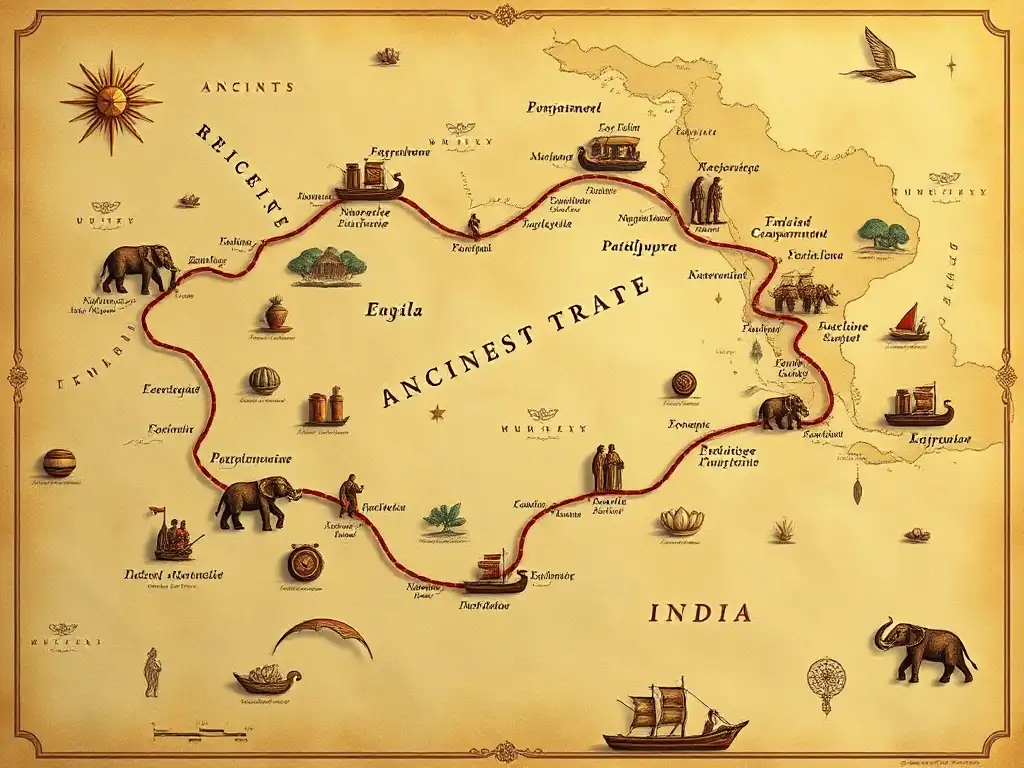
Introduction to Ancient Indian Trade Routes History
The history of trade routes in ancient India is a testament to the country's rich legacy of commerce, innovation, and cultural exchange. Spanning from the sophisticated urban centers of the Indus Valley Civilization to the flourishing trade networks of the Gupta Empire, these routes served as vital arteries of economic and cultural interaction.
They not only facilitated the exchange of goods but also played a crucial role in the dissemination of ideas, technologies, and innovations that shaped the development of India and influenced neighboring regions. Understanding the ancient Indian trade routes history allows us to appreciate how trade was integral to the growth of civilization, contributing to a vibrant tapestry of cultural and economic interconnections.
Overview of Trade Routes in Ancient India
Ancient India was crisscrossed by a multitude of trade routes, both overland and maritime, which connected various regions within the subcontinent and beyond. These routes can be categorized into:
- Internal Trade Routes: Connecting cities and regions within India, facilitating the movement of goods such as spices, textiles, and metals.
- External Trade Routes: Linking India with distant lands, including the Middle East, Southeast Asia, and even Europe, allowing for the exchange of precious stones, silk, and other luxury items.
The combination of these routes fostered a dynamic economy that not only thrived on trade but also spurred technological advancements and cultural exchanges, enriching the societies involved.
Importance of Trade in Ancient Indian Civilizations
Trade was pivotal in shaping ancient Indian civilizations, playing several key roles:
- Economic Development: It stimulated local economies, leading to urbanization and the rise of powerful city-states.
- Cultural Exchange: Trade routes acted as conduits for ideas, religious beliefs, and artistic influences, promoting cultural diversity.
- Technological Advancements: Innovations in navigation, shipbuilding, and infrastructure (like roads and ports) were driven by the demands of trade.
- Political Alliances: Trade fostered relationships between different kingdoms and empires, often resulting in treaties and alliances that furthered mutual interests.
These aspects highlight how trade was not merely a means of economic transaction but a catalyst for broader social and cultural development in ancient India.
Key Trade Routes in Ancient India
Major Internal Trade Routes of India
The internal trade routes of ancient India were crucial for the movement of goods, people, and ideas. Some of the major routes included:
- North-South Routes: Connecting the northern plains to the Deccan Plateau, these routes facilitated the trade of agricultural products, textiles, and metalwork.
- East-West Routes: Linking the eastern coastal regions with the western ports, these routes were essential for the transport of spices, silk, and other luxury goods.
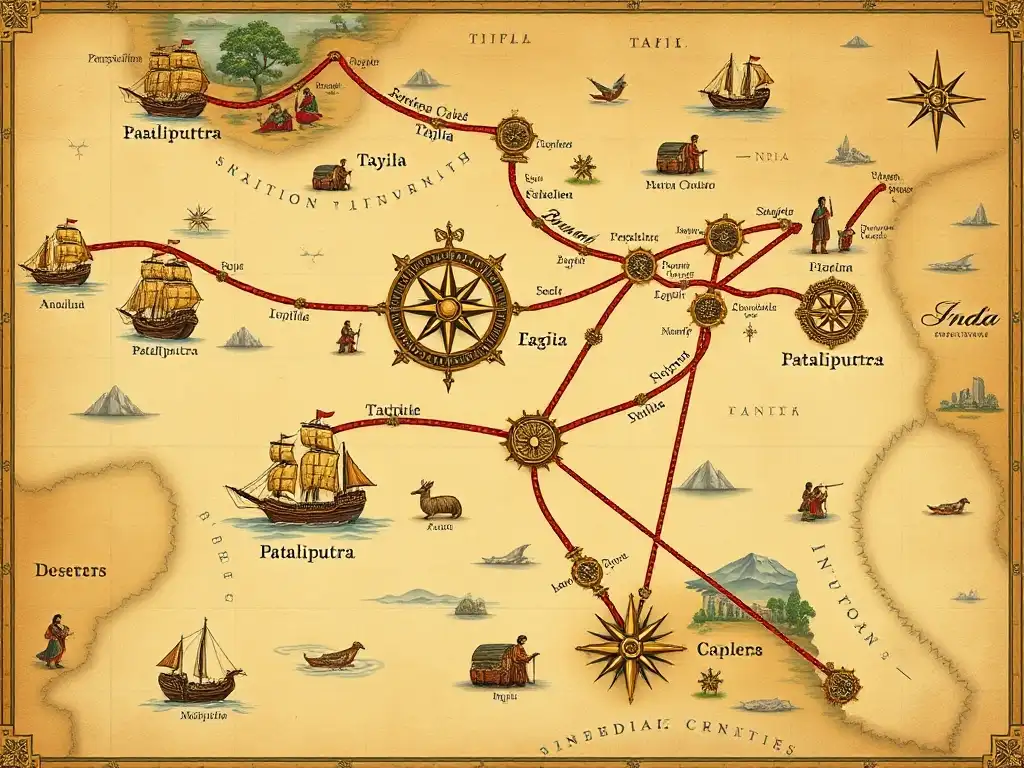
The development of these routes was often supported by the establishment of markets and trade centers, such as Pataliputra and Taxila, which became hubs of economic activity.
Influential External Trade Routes Connecting India to the World
Ancient India's external trade routes played a significant role in its interactions with other civilizations. Key routes included:
- Maritime Trade Routes: Connecting India with the Arabian Peninsula, Southeast Asia, and beyond, these routes enabled the export of Indian goods to distant lands and the import of foreign commodities.
- Overland Trade Routes: Such as the Royal Road and various Silk Road paths, these routes facilitated trade with regions like Persia, Central Asia, and the Mediterranean.
These routes not only fostered economic ties but also led to the exchange of cultural and technological innovations.
The Silk Road and India's Contribution to Global Trade
The Silk Road, one of the most historically significant trade networks, connected Asia with Europe and served as a vital link for the exchange of goods and ideas. India's contribution to this global trade network was substantial, particularly in the following areas:
- Spices and Textiles: Indian spices such as black pepper, cardamom, and textiles like silk and cotton were highly sought after, making India a key player in the spice trade.
- Cultural Exchanges: The movement of traders along the Silk Road also facilitated the spread of philosophies, religions (notably Buddhism), and scientific knowledge, highlighting India's role in global cultural interactions.
Ancient Indian trade routes were instrumental in not only fostering economic prosperity but also in shaping the cultural and technological landscape of the ancient world.
Innovations Spread through Trade Routes
Trade routes in ancient India were not merely conduits for the exchange of goods; they were vital channels for the dissemination of innovations that significantly impacted agriculture, technology, and culture. These routes facilitated interactions between diverse civilizations, allowing for the sharing of knowledge, agricultural practices, and technological innovations. The interconnectedness fostered by these trade networks played a crucial role in shaping the socio-economic fabric of ancient Indian society and the broader regions that it engaged with. As a result, innovations spread across vast distances, influencing communities far beyond their points of origin.
Agricultural Innovations and Their Impact
Agricultural advancements were among the most significant innovations shared along ancient Indian trade routes. The introduction of new crops, such as cotton and sugarcane, revolutionized agricultural practices. Techniques such as irrigation, crop rotation, and the use of plowing tools were exchanged, enhancing productivity and sustainability. For instance, the ingenious use of the plough, developed in the fertile plains of the Indus Valley, not only improved farming efficiency but also allowed for the cultivation of previously uncultivated lands.
The impact of these agricultural innovations extended beyond mere food production; they contributed to the rise of urban centers as populations grew and surplus food became available. This surplus facilitated trade, as communities could exchange their agricultural products for other goods, thereby enriching the economy and fostering social complexity. Furthermore, the advancements in agriculture provided the foundation for a thriving market economy, which was pivotal in the development of India's internal and external trade networks.
Technological Advancements in Ancient India
Ancient Indian trade routes were instrumental in the exchange of technological innovations that played a critical role in various industries. The development of metallurgy, particularly in iron and copper, showcased the advanced skills of ancient Indian artisans. The knowledge of smelting and metalworking spread along trade routes, leading to improved tools and weapons that enhanced agricultural productivity and military capabilities.
Additionally, innovations in shipbuilding and navigation techniques allowed for more efficient maritime trade. The use of ocean currents and monsoon winds was mastered, making long-distance sea voyages possible. This not only facilitated the movement of goods but also enabled cultural and technological exchanges with distant civilizations, including those in Southeast Asia and the Arabian Peninsula.
Cultural Exchange: Ideas and Artistic Influences
The trade routes also acted as conduits for cultural exchange, where ideas, philosophies, and artistic influences blended and evolved. Through trade, the principles of Buddhism and Jainism spread across the subcontinent and beyond, significantly impacting societal structures. Merchants and travelers carried with them not only goods but also stories, religious texts, and artistic motifs that enriched the cultural landscape of the regions they visited.
Artistic influences were particularly pronounced, with the fusion of styles giving rise to unique forms of art and architecture. For example, the intricate carvings of Buddhist stupas drew from various artistic traditions along the Silk Road, reflecting a blend of cultural influences. This artistic exchange not only enhanced local aesthetics but also promoted a sense of shared identity among diverse communities.
Case Studies of Trade Routes and Innovations
The Indus Valley Civilization and Early Trade Practices
The Indus Valley Civilization (IVC) is one of the earliest examples of sophisticated trade practices in ancient India. Evidence suggests that the IVC engaged in extensive trade with neighboring regions, including Mesopotamia. The use of standardized weights and measures, as well as the development of early forms of currency, facilitated trade and commerce. Artifacts such as seals and pottery found in archaeological sites indicate that the IVC traded goods like textiles, metals, and agricultural products, which in turn fostered innovation in production techniques.
The urban planning and architectural innovations of the IVC, such as advanced drainage systems and grid layouts, were likely influenced by the need to support trade activities and population growth. These practices laid the groundwork for future civilizations in India, showcasing the interconnection between trade and innovation.
Mauryan Empire: Trade Expansion and Innovation
The Mauryan Empire marked a significant expansion of trade networks across ancient India. Under the reign of Emperor Ashoka, the empire established a vast system of roads that facilitated trade and communication. This period saw the flourishing of trade routes connecting northern India to distant regions, including Central Asia and the Mediterranean.
The Mauryan period was characterized by remarkable innovations in administration and governance, which supported trade activities. The introduction of a standardized coinage system, along with infrastructure improvements, made trade more efficient and accessible. Additionally, the spread of Buddhism during this time contributed to cultural exchanges that enriched both trade and innovation, as merchants became conduits for new ideas and religious practices throughout Asia.
Gupta Empire: The Golden Age of Trade and Cultural Exchange
The Gupta Empire, often referred to as the Golden Age of India, witnessed a peak in trade and cultural exchange. The empire established a network of trade routes that connected India to the Silk Road, facilitating the movement of goods such as textiles, spices, and precious stones. This era saw the emergence of a thriving merchant class, which played a pivotal role in the economy and cultural life.
Innovations during the Gupta period included advancements in mathematics, astronomy, and medicine, many of which were disseminated through trade interactions. The concept of zero and the decimal system, developed by Indian mathematicians, became foundational to global mathematical practices. Moreover, artistic expressions flourished, as evidenced by the exquisite sculptures and architectural feats of the period, which drew influences from both domestic and foreign cultures. The Gupta Empire's trade routes not only enriched its economy but also positioned it as a melting pot of ideas and innovations.
The Influence of Trade on Economic Development
Trade has historically played a pivotal role in shaping the economic landscape of ancient India. The establishment and expansion of trade routes directly influenced the prosperity of various regions, facilitating the exchange of not only goods but also ideas, culture, and technological innovations. As merchant networks developed, they nurtured urban centers, leading to increased agricultural productivity and industrial growth. This interconnectedness fostered a vibrant economy, allowing diverse communities to thrive through commerce.
The exchange of commodities such as spices, textiles, and precious stones attracted traders from distant lands, promoting economic interdependence. Additionally, the influx of wealth through trade contributed to the patronage of arts and sciences, further enriching Indian civilization. Thus, the role of trade routes in economic development cannot be overstated; they were the arteries of growth, connecting various socio-economic spheres across ancient India.
Economic Growth Driven by Trade Networks
Ancient Indian trade networks, such as the Silk Road and maritime routes, significantly contributed to economic growth by enabling the movement of goods across vast distances. These routes facilitated the exchange of agricultural products, handicrafts, and luxury items, thereby elevating local economies and integrating them into a broader market system.
For instance, the trade of cotton textiles, which became a cornerstone of Indian exports, not only enhanced the textile industry but also stimulated agricultural practices to meet the growing demand. The economic benefits were further amplified by the establishment of trade fairs and marketplaces, which encouraged local artisans and farmers to participate in the economy actively.
Moreover, the influx of foreign merchants and the establishment of trade settlements led to the exchange of knowledge and practices. This cultural diffusion resulted in the introduction of new agricultural techniques and innovations in crafts, contributing to sustained economic growth.
The Role of Merchant Guilds in Trade Expansion
Merchant guilds played a crucial role in the expansion of trade during ancient India. These organizations, which comprised traders and craftsmen, provided a structured system for regulating trade practices and protecting the interests of their members. By establishing standards for quality and pricing, guilds enhanced trust among merchants, which was vital for long-distance trade.
Guilds also acted as mediators between different communities, fostering relationships that transcended regional boundaries. They facilitated the exchange of not only goods but also cultural and technological innovations, enriching local practices. Furthermore, many guilds operated their own banking systems, which provided the necessary capital for trade ventures, thus promoting larger-scale economic activities.
Additionally, guilds often took on a semi-political role, influencing local governance and establishing trade agreements with foreign entities. Their collective bargaining power enabled them to negotiate better terms, further expanding the reach and impact of trade networks across ancient India.
Conclusion: The Lasting Impact of Trade Routes on Indian Innovations
The trade routes of ancient India were instrumental in the dissemination of innovations and ideas that shaped the region's development. From advancements in metallurgy and mathematics to the spread of religious philosophies, the interactions facilitated by trade significantly contributed to India’s rich cultural tapestry.
Summary of Key Innovations Spread through Trade
Several key innovations can be traced back to the interactions enabled by ancient Indian trade routes:
- Numerical System: The numeral system, including the concept of zero, spread through trade, influencing mathematics globally.
- Textile Production: Innovations in dyeing and weaving techniques were shared among cultures, enhancing textile production methods.
- Metallurgy: Techniques for producing high-quality steel, known as Wootz steel, were disseminated to various regions, impacting weapon production.
- Ayurveda and Medicine: The principles of Ayurveda traveled along trade routes, promoting health practices across Asia.
These innovations not only improved daily life in ancient India but also left a lasting legacy that influenced civilizations far beyond its borders.
The Legacy of Ancient Indian Trade Routes in Modern Times
The legacy of ancient Indian trade routes continues to resonate in contemporary times. The routes established a foundation for modern trade practices and cultural exchanges that persist today. The principles of trade and commerce developed during this period laid the groundwork for India’s current status as a significant player in the global economy.
Moreover, the historical significance of these trade routes is celebrated through various cultural festivals and events that honor the rich heritage of trade. The exchange of ideas and innovations initiated through these routes paved the way for India's contributions to science, art, and philosophy that are still appreciated and studied worldwide.
In essence, the ancient Indian trade routes not only facilitated economic development but also fostered a spirit of innovation and cultural exchange that continues to influence the world today.
- Introduction to Ancient Indian Trade Routes History
- Key Trade Routes in Ancient India
- Innovations Spread through Trade Routes
- Case Studies of Trade Routes and Innovations
- The Influence of Trade on Economic Development
- Conclusion: The Lasting Impact of Trade Routes on Indian Innovations
Frequently Asked Questions
What were the main trade routes in ancient India?
Ancient India was connected by several key trade routes, including the Silk Road and the Maritime Spice Route, facilitating trade with regions as far as China and Rome.
How did trade routes contribute to cultural exchange?
Trade routes were vital for cultural exchange, allowing ideas, technologies, and artistic influences to flow between civilizations, enriching societies along the way.
What innovations spread through these trade routes?
Innovations such as mathematics, astronomy, and metallurgy were disseminated through ancient Indian trade routes, showcasing the region's significant contributions to global knowledge.
How did the Indus Valley Civilization utilize trade routes?
The Indus Valley Civilization utilized trade routes to engage in commerce with neighboring regions, exchanging goods like cotton textiles and precious metals, which boosted their economy.
What impact did the Gupta Empire have on trade?
The Gupta Empire significantly enhanced trade through improved infrastructure and political stability, making it a thriving hub for merchants and fostering economic growth across ancient India.
Final Reflection: The Enduring Legacy of Ancient Indian Trade Routes
The intricate web of ancient Indian trade routes not only facilitated the exchange of goods but also served as vital conduits for the dissemination of innovations that shaped civilizations. Today, as we navigate a globalized world, the lessons from these historical pathways remind us of the profound impact that trade and cultural exchange can have on societal progress. The innovations that traveled along these routes—be it in mathematics, medicine, or metallurgy—continue to influence our lives and underscore the importance of connectivity in fostering creativity and advancement.
The legacy of these trade routes extends far beyond their historical significance; they have woven a rich tapestry of cultural exchange that resonates in our contemporary society. The innovations that emerged from India, such as the concept of zero and advancements in astronomy, have left an indelible mark on the world.
As Mahatma Gandhi once said, “A nation’s greatness is measured by how it treats its weakest members,” reminding us that the true value of innovation lies in its ability to uplift and empower all. This ongoing influence of ancient trade routes serves as a testament to the power of collaboration and the sharing of knowledge across borders.
As we reflect on the lessons of ancient Indian trade routes, let us embrace the spirit of innovation and collaboration in our own lives. Consider how you can contribute to the exchange of ideas and knowledge in your community, fostering connections that inspire growth and creativity. By honoring the legacy of these historical pathways, we can create a future where innovation knows no bounds and where the spirit of cooperation continues to thrive, just as it did along the bustling trade routes of ancient India.
Unveil the Legacy: Take Action on Indian Innovations!
Thank you for diving into the fascinating world of Indian innovations and their journey along ancient trade routes! Your interest highlights the profound impact these exchanges have had on our history and modern life. Now, it's time to take your newfound knowledge to the next level.
Here are a few engaging steps you can take right now:
- Explore Local Innovations: Visit a nearby museum or cultural center that showcases Indian inventions. Immerse yourself in the history that shaped our world!
- Join the Discussion: Share this article with friends and family on social media to spark a conversation about the significance of trade in cultural exchange.
- Support Local Artisans: Discover and purchase products from artisans who are reviving ancient techniques and innovations today. Your support can make a meaningful difference!
Which Indian innovation resonates with you the most, and how do you see its influence in today's society? Let’s discuss it in the comments below!