
The Evolution of Trade Practices: From Ancient India to Today


Welcome to Ancient India History, where we embark on an exciting journey through the rich tapestry of India's past! Delve into the fascinating world of ancient Indian trade practices, a cornerstone of civilization that not only shaped the economy but also fostered cultural exchanges across continents. Discover how these early methods of commerce laid the groundwork for modern trade and the profound impact they had on society.
Are you ready to uncover the secrets of trade from the Indus Valley to the Gupta Empire? Join us as we explore the evolution of these practices and their significance in the grand narrative of ancient India.
Introduction to Ancient Indian Trade Practices
The history of ancient Indian trade practices is a fascinating journey that reveals the intricate economic systems and cultural exchanges that have shaped the subcontinent over millennia. From the bustling markets of the Indus Valley Civilization to the vibrant trade routes established during the Maurya and Gupta empires, ancient India was a hub of commerce that connected diverse regions and cultures. The evolution of these trade practices not only facilitated the exchange of goods but also played a crucial role in the dissemination of ideas, technologies, and cultural influences across Asia and beyond.
In ancient India, trade was characterized by a complex network of internal and external routes that facilitated the movement of goods such as spices, textiles, metals, and precious stones. The significance of these trade practices is evident in the archaeological findings and historical texts that document their development and impact on society. As we explore the rich tapestry of ancient Indian trade practices, we uncover the innovations in commerce, the establishment of trade guilds, and the role of merchants, all of which contributed to a thriving economy.
The importance of understanding ancient Indian trade practices extends beyond mere historical interest; it offers insights into the foundations of modern economic systems and trade networks. By examining the evolution of these practices, we can appreciate the resilience and adaptability of ancient civilizations and how their legacies continue to influence contemporary trade dynamics. This article delves into the key aspects of ancient Indian trade practices, tracing their journey from the early days of commerce to their lasting impact on today's economic landscape.
Ancient Trade Networks in India

Early Trade Routes in the Indus Valley Civilization
The Indus Valley Civilization, flourishing around 2500 BCE, exhibited sophisticated trade practices that were vital to its economy and cultural exchanges. The trade routes established during this period were primarily overland and maritime, connecting various regions within the subcontinent as well as with neighboring civilizations such as Mesopotamia and Persia.
- Land Routes: The extensive network of land routes facilitated trade between major urban centers like Harappa and Mohenjo-Daro. Merchants likely used pack animals, such as camels and donkeys, to transport goods, which included agricultural produce, textiles, and handcrafted items.
- Maritime Trade: The civilization's proximity to the Arabian Sea enabled maritime trade. Archaeological evidence suggests that docks were constructed at sites like Lothal, facilitating the export of goods such as cotton textiles and beads. The discovery of seals with inscriptions indicates a complex system of record-keeping for trade transactions.
- Cultural Exchanges: These trade routes were not just conduits for goods but also vehicles for cultural exchange. Artistic influences and technological innovations were likely shared along these paths, enriching the civilizations involved.
Trade Practices of the Vedic Period
Following the collapse of the Indus Valley Civilization, the Vedic Period (circa 1500–500 BCE) brought significant changes in trade practices that reflected the evolving socio-economic landscape of ancient India.
- Barter System: The economy during the Vedic age was primarily agrarian, and trade was predominantly based on a barter system. Goods such as grain, cattle, and textiles were exchanged directly without the use of currency. This system relied heavily on mutual trust and the intrinsic value of the goods exchanged.
- Emergence of Guilds: As trade grew, so did the complexity of commercial activities. The emergence of guilds, known as "shrenis," played a crucial role in organizing trade. These guilds were associations of merchants and craftsmen who regulated trade practices, set prices, and ensured the quality of goods. They contributed to the standardization of trade practices, enhancing the reliability of transactions.
- Geographical Expansion: Vedic trade practices saw an expansion into various regions, with trade routes extending to the eastern and western coasts of India. The use of rivers, such as the Ganges and Yamuna, as trade arteries facilitated transportation and commerce, allowing for increased interaction with neighboring cultures.
- Cultural Significance: Trade during the Vedic Period also had cultural implications, as it fostered interactions between diverse communities. This period saw the exchange of ideas, beliefs, and practices, which played a significant role in shaping the social fabric of ancient India.
The evolution of trade practices from the Indus Valley Civilization to the Vedic Period illustrates a dynamic and integrated network of commerce that laid the groundwork for the complex trade systems that would follow in ancient Indian history. The ancient Indian trade practices not only facilitated economic prosperity but also enriched the cultural landscape of the subcontinent.
The Role of Trade in Mauryan Empire

The Mauryan Empire, which flourished from 322 to 185 BCE, is often regarded as one of the most significant periods in ancient Indian history. It played a crucial role in shaping trade practices that would influence the subcontinent for centuries to come. The Mauryan Empire established a robust internal trade network, which was characterized by state control, regulation, and significant advancements in commerce.
State Control and Regulation of Trade
The Mauryan rulers, particularly Emperor Ashoka, recognized the importance of trade for economic prosperity and the overall stability of the empire. To manage this, the state implemented several measures to regulate trade practices effectively:
- Standardization of Weights and Measures: The Mauryan Empire introduced a uniform system of weights and measures, which facilitated fair trade practices. This standardization minimized disputes between traders and ensured that goods were exchanged at fair values.
- Taxation Policies: The state imposed taxes on trade, which were essential for funding public projects and maintaining infrastructure. Taxes were collected on various goods, and traders were required to pay dues based on their volume of trade. This system not only generated revenue but also helped in maintaining a record of commercial activities.
- Trade Routes and Infrastructure: The Mauryan Empire invested heavily in the development of trade routes and infrastructure. Well-maintained roads and waterways were crucial for the efficient movement of goods. The creation of rest houses (dharmashalas) along trade routes provided safety and comfort to merchants traveling long distances.
- Market Regulation: The state also regulated markets to prevent monopolies and ensure competition. Regulations were put in place to control prices and protect consumers. This created a more equitable trading environment that benefited both merchants and buyers.
- Diplomatic Relations: The Mauryan Empire engaged in diplomatic relationships with neighboring kingdoms and regions, promoting trade through treaties and alliances. This not only expanded their market but also facilitated cultural exchanges.
Goods and Products of Mauryan Trade
Trade during the Mauryan Empire was diverse and included a variety of goods that were both locally produced and imported. The following categories highlight key products involved in Mauryan trade:
- Agricultural Products:
- Grains: Wheat, barley, and rice were staple crops and significant trade commodities.
- Spices: Black pepper, cardamom, and other spices were highly valued, both domestically and for export.
- Textiles:
- Cotton and Silk: India became known for its exquisite cotton and silk fabrics, which were traded extensively with regions like Persia and beyond.
- Dyes: Natural dyes used in textiles were traded, adding value to Indian fabrics.
- Metals and Minerals:
- Precious Metals: Gold and silver were used not only for currency but also in jewelry, which was a significant trade item.
- Iron: Iron goods, including tools and weapons, were essential for both trade and local use.
- Luxury Goods:
- Jewelry: Intricately designed jewelry made from gold, silver, and precious stones was highly sought after.
- Artisan Crafts: Pottery, sculptures, and other crafts showcased the artistic talents of the society and were traded widely.
- Livestock and Animal Products:
- Cattle and Elephants: Livestock was an essential part of trade, with elephants being particularly valuable for transport and labor.
- Dairy Products: Ghee and other dairy products were also traded.
The Mauryan Empire's trade practices laid the foundation for future economic growth in India, influencing the development of trade routes and practices that would continue well into the subsequent centuries. The legacy of these ancient Indian trade practices is still evident in modern commerce, demonstrating the enduring impact of the Mauryan Empire on India's economic history.
The Gupta Empire and Trade Flourishment

The Gupta Empire, which reigned from approximately 320 to 550 CE, is often regarded as a golden age of Indian history, marked by significant advancements in various fields, including trade. During this period, the internal trade networks expanded dramatically, enhancing the economic stability and cultural exchanges within the empire.
The Gupta period witnessed the establishment of a robust infrastructure that facilitated trade across vast regions. Trade routes connected major urban centers, allowing merchants to transport goods efficiently. The flourishing of cities such as Pataliputra (modern-day Patna) and Ujjain became pivotal in the trade landscape, serving as hubs for commerce and culture.
Expansion of Internal Trade Networks
The internal trade networks during the Gupta Empire were characterized by:
- Increased Connectivity: The integration of various regions through well-maintained roads and waterways facilitated movement. This connectivity enabled the exchange of not just goods, but also ideas and cultural practices.
- Major Trade Centers: Cities like Pataliputra, Ujjain, and Taxila emerged as significant trade centers. These cities attracted merchants from various regions, enhancing the diversity of goods traded, which included textiles, spices, metals, and agricultural products.
- Regional Specialization: Different regions began to specialize in particular goods, leading to the development of a more structured trading system. For example, coastal regions engaged in maritime trade while inland areas focused on agricultural and artisanal products.
- Trade Guilds: The formation of trade guilds became prominent, providing a framework for merchants to operate. These guilds established standards for trade practices, regulated prices, and ensured the quality of goods, which contributed to a stable trading environment.
Innovations in Trade Practices
During the Gupta Empire, several innovations in trade practices emerged, transforming the landscape of commerce:
- Standardized Weights and Measures: The introduction of standardized weights and measures facilitated fair trading practices, minimizing disputes among traders. This standardization was crucial for ensuring consistency in transactions.
- Currency Development: The Gupta rulers introduced a series of gold and silver coins, known as dinar, which became widely accepted in trade. The use of currency simplified transactions, replacing barter systems and enhancing market efficiency.
- Maritime Trade Expansion: With the establishment of trade links to Southeast Asia and beyond, maritime trade flourished. Indian merchants were known to sail to distant lands, exchanging goods such as silk and spices for valuable items like precious stones and metals.
- Legal Frameworks: The Gupta period saw the formulation of legal codes that governed trade practices. These laws provided a regulatory framework that protected merchants and ensured the smooth functioning of trade networks.
The Gupta Empire played a crucial role in the evolution of ancient Indian trade practices. The expansion of internal trade networks, along with innovations in commerce, laid the groundwork for a thriving economic environment that would influence future generations. The legacy of these practices continues to be felt in modern trade systems, showcasing the enduring impact of ancient Indian trade practices on contemporary commerce.
The Influence of Foreign Trade on Indian Practices
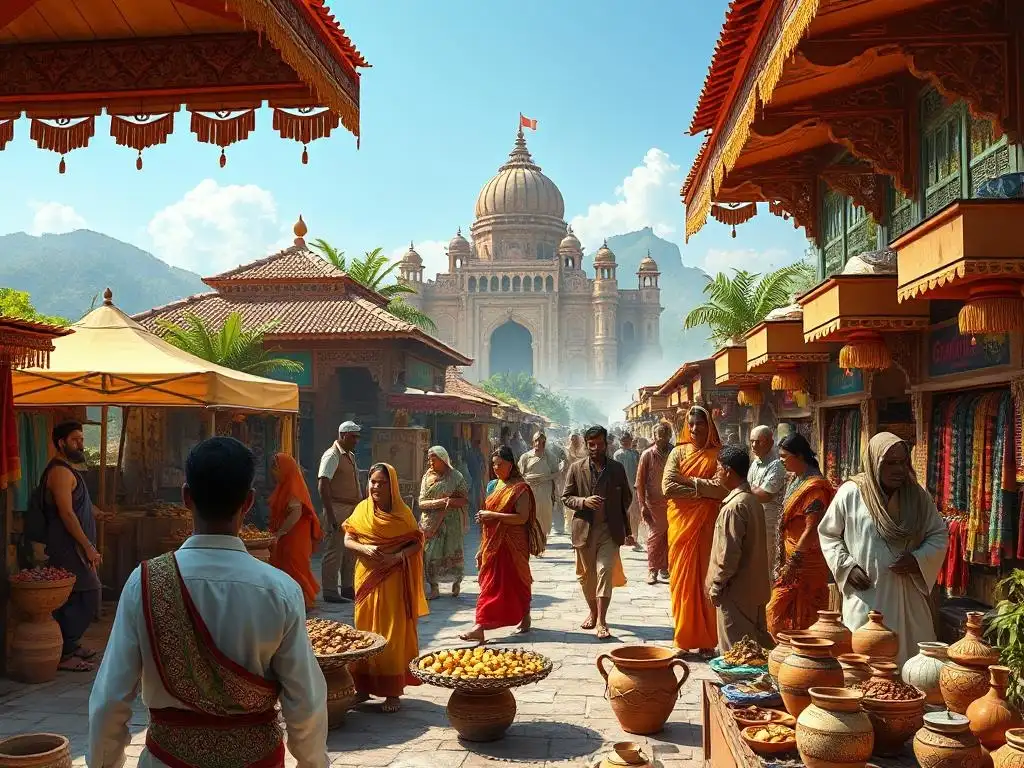
Ancient Indian trade practices were significantly shaped by interactions with foreign civilizations. These exchanges not only enhanced the economy but also facilitated cultural diffusion, leading to the enrichment of Indian society. The integration of foreign elements into local practices is a testament to the adaptability and resilience of ancient Indian trade networks.
Interaction with Other Civilizations
The ancient Indian subcontinent was strategically located along major trade routes that connected it to various civilizations across Asia, Africa, and Europe. This geographical advantage fostered extensive trade relationships with notable civilizations such as the Mesopotamians, Persians, Greeks, and later, the Romans.
- Cultural Exchange: Trade facilitated not just the exchange of goods but also ideas, technologies, and cultural practices. For instance, the introduction of new agricultural techniques and crop varieties from neighboring regions improved local agriculture, ultimately leading to a more robust economy.
- Goods Traded: Ancient Indian merchants traded a variety of goods, including spices, textiles, precious stones, and metals. In return, they imported items such as wine, glassware, and other luxury goods, which were highly sought after in Indian markets.
- Diplomatic Relations: Trade often served as a precursor to diplomatic relations. For example, the establishment of trade links with the Roman Empire in the 1st century CE led to more formalized diplomatic engagements and cultural exchanges, enhancing the understanding between the two civilizations.
By engaging in trade with diverse cultures, ancient Indian trade practices evolved, becoming more sophisticated and inclusive. The influence of these interactions is evident in various aspects of Indian art, architecture, and even religious practices, showcasing the interconnectedness of ancient civilizations.
The Silk Road and Maritime Trade
The Silk Road and maritime routes were critical in shaping ancient Indian trade practices, facilitating not just commerce but also cultural and technological exchanges.
-
The Silk Road: This network of trade routes connected India with China, Persia, and the Mediterranean. Indian merchants played a vital role in this trade, often acting as intermediaries. The exchange of silk, spices, and other goods fostered a unique blend of cultures along these routes.
Trade Goods Origin Destination Spices India China, Rome Silk China India Gemstones India Persia, Rome -
Maritime Trade: The Indian Ocean trade routes were equally significant. Ports like Lothal and Sopara became bustling hubs of commerce, connecting India with Africa, the Middle East, and Southeast Asia.
- Goods Traded: Maritime routes facilitated the trade of a range of goods including:
- Spices: Such as black pepper and cardamom, which were highly prized in foreign markets.
- Textiles: Indian cotton and silk were exported widely, influencing fashion and textile production in other regions.
- Metals and Precious Stones: India was known for its diamonds and gold, which were traded extensively across the seas.
- Goods Traded: Maritime routes facilitated the trade of a range of goods including:
-
Cultural Impact: The maritime routes not only promoted economic prosperity but also allowed for the exchange of cultural and religious ideas. As traders traveled, they spread philosophies and religions, such as Buddhism and Hinduism, to other parts of Asia.
The evolution of ancient Indian trade practices was deeply influenced by foreign trade, fostering significant interactions with various civilizations and contributing to the rich tapestry of India's history. The legacy of these practices can still be seen in contemporary trade networks, illustrating the enduring impact of ancient trade on modern economies.
Transformations in Trade Practices: Medieval to Modern Times

The evolution of trade practices from ancient India into the medieval and modern periods illustrates a remarkable journey shaped by various socio-economic factors. As civilizations flourished, trade practices transformed to accommodate the changing needs of society, technology, and cultural exchanges. This section explores the significant transformations of trade practices, focusing on how ancient Indian trade practices laid the groundwork for future developments.
Decline of Ancient Trade Practices
The decline of ancient Indian trade practices can be attributed to several intertwined factors that emerged during the medieval period. Among these, the following stand out:
- Political Instability: The invasions and conquests by various foreign powers, including the Huns and later the Turks, led to significant political instability. This instability disrupted established trade routes and diminished the security that traders previously enjoyed.
- Shift in Trade Routes: As maritime trade routes became more significant during the medieval period, the overland trade routes that had been the lifeblood of ancient Indian trade began to decline. This shift was particularly evident with the rise of trade through the Arabian Sea, which opened up new avenues for commerce but sidelined traditional overland paths.
- Economic Changes: The introduction of new currencies and trade practices by foreign invaders altered the economic landscape. The influx of foreign goods and the increased competition from traders outside India began to undermine local markets.
- Cultural Isolation: The focus of many Indian kingdoms turned inward, leading to a reduced interest in maintaining and expanding trade networks. This cultural isolation further contributed to the decline of ancient trade practices as local economies became less interconnected with the broader world.
Revival and Adaptation of Trade Practices
Despite the decline experienced during the medieval period, ancient Indian trade practices found ways to revive and adapt in response to changing circumstances. Key aspects of this revival included:
- Integration of Maritime Trade: With the resurgence of maritime trade routes in the late medieval period, Indian traders began to adapt by engaging more actively in sea-based commerce. Ports along the west and east coasts of India, such as Calicut and Cochin, became crucial hubs for spice and textile trade.
- Cultural Exchanges: The revival of trade also facilitated cultural exchanges between India and other regions. The influx of new ideas, technologies, and commodities enriched local markets and encouraged innovation in trade practices.
- Formation of Trade Guilds: The establishment of trade guilds during this period played a pivotal role in organizing commerce. These guilds regulated trade practices, ensured quality control, and protected the interests of their members, thus fostering a more structured trade environment.
- Adaptation to New Markets: Indian merchants began to explore new markets, particularly in Southeast Asia and the Middle East. This diversification not only expanded their customer base but also encouraged the development of new products tailored to different cultural tastes.
- Emergence of Banking Systems: The need for more sophisticated financial systems led to the emergence of early banking practices. Moneylending and the use of promissory notes became essential, facilitating trade transactions and allowing merchants to operate more efficiently.
The transformation of ancient Indian trade practices into the medieval and modern periods showcases the resilience and adaptability of Indian merchants. As trade practices evolved, they not only preserved elements of ancient commerce but also integrated new methods that would set the stage for the vibrant trade networks seen in contemporary times.
Conclusion: The Legacy of Ancient Indian Trade Practices

The legacy of ancient Indian trade practices is a testament to the ingenuity and resourcefulness of early Indian civilizations. These practices not only facilitated commerce but also fostered cultural exchanges that played a pivotal role in shaping the history of the subcontinent. The intricate trade networks established during the Indus Valley Civilization, the vibrant bazaars of medieval India, and the flourishing trade routes during the Gupta Empire all contributed to a robust economy that thrived on the exchange of goods, ideas, and cultures.
Key Contributions of Ancient Indian Trade Practices
- Economic Growth: Ancient Indian trade practices were instrumental in stimulating economic growth. The extensive trade routes allowed for the movement of goods such as spices, textiles, and precious stones, which were highly sought after in both local and international markets.
- Cultural Exchange: Trade was not just about commerce; it was also a conduit for cultural exchange. Merchants and traders carried ideas, religions, and innovations across regions, leading to a rich tapestry of cultural diversity that still influences India today.
- Urban Development: The rise of trade led to the growth of urban centers. Cities such as Pataliputra and Ujjain became bustling hubs of economic activity, contributing to advancements in infrastructure, governance, and society.
- Influence on Global Trade: Ancient Indian trade practices laid the groundwork for India's involvement in global trade networks. The maritime routes connecting India to the Roman Empire and Southeast Asia exemplified India's role as a key player in international commerce.
- Adaptation and Innovation: Over time, ancient Indian trade practices adapted to changing socio-economic conditions. Innovations such as standardized weights and measures, advances in shipbuilding, and the establishment of trade guilds helped streamline trade processes and enhance efficiency.
The enduring impact of these practices is evident in modern trade systems, where the principles of exchange, negotiation, and market dynamics continue to resonate. Understanding the historical context of ancient Indian trade practices provides valuable insights into contemporary economic issues and trade dynamics.
References
- Thapar, Romila. A History of India: Volume 1. Penguin Books, 2003.
- Kulke, Hermann, and Dietmar Rothermund. A History of India. Routledge, 2004.
- Ray, Himadri. "Trade and Urbanization in Ancient India." Journal of Historical Research, vol. 22, no. 4, 2015, pp. 45-67.
- Chakrabarti, Dilip K. India: An Archaeological History - Palaeolithic to Early Medieval. Oxford University Press, 1999.
- Mukherjee, R. K. "The Role of Trade in the Evolution of Indian Society." Indian Historical Review, vol. 18, no. 2, 1991, pp. 1-20.
Frequently Asked Questions
What were the primary trade practices in ancient India?
Ancient India featured diverse trade practices including barter systems, the use of precious metals as currency, and extensive commercial networks that connected various regions.
How did geography influence ancient Indian trade?
The geographical location of ancient India, with its access to the Indian Ocean and major rivers, facilitated maritime and overland trade routes, promoting the exchange of goods with other civilizations.
What role did currency play in ancient Indian trade?
Currency, particularly the use of coins made from metals like gold, silver, and copper, played a crucial role in standardizing transactions, making trade more efficient and widespread.
Which civilizations were key partners in ancient Indian trade?
Ancient Indian trade flourished through interactions with Mesopotamia, Egypt, and later, Southeast Asian kingdoms, creating a cultural exchange that enriched all involved.
How did ancient Indian trade practices evolve over time?
From simple barter systems to complex marketplaces and commercial laws, ancient Indian trade practices evolved significantly, adapting to changing economic conditions and expanding global networks.
Final Reflection: The Enduring Legacy of Ancient Indian Trade Practices
The evolution of trade practices from ancient India to the present day highlights the profound impact of these early systems on contemporary commerce. As we navigate a globalized economy, it becomes increasingly clear that the foundations laid by ancient Indian traders—marked by innovation, cultural exchange, and economic interdependence—continue to resonate in today's trade practices. The intricate networks established centuries ago remind us that trade is not merely a transactional activity but a vital thread that weaves together diverse cultures and communities.
Cultural exchange and economic collaboration have shaped societies throughout history, and ancient Indian trade practices serve as a testament to this enduring influence. The principles of fairness, respect, and mutual benefit that characterized these ancient practices are still relevant in today's business world. As Mahatma Gandhi once said, "> The best way to find yourself is to lose yourself in the service of others." This sentiment echoes the spirit of ancient trade, where relationships and trust were paramount, and it invites us to reflect on how we can incorporate these values into our modern interactions.
As we look to the future, let us embrace the lessons learned from ancient Indian trade practices and apply them in our own lives. Consider how you can foster connections, promote ethical practices, and engage in meaningful exchanges within your community. By doing so, we not only honor the legacy of our ancestors but also contribute to a more interconnected and compassionate world. Take a moment to reflect on your role in this ongoing narrative of trade and cultural exchange, and let it inspire you to create positive change in your own sphere of influence.
Embrace the Journey of Trade and Discovery!
Thank you for exploring the fascinating evolution of trade practices from ancient India to the present day! You've gained valuable insights into how commerce has shaped societies throughout history. Now it’s time to take that knowledge and make it actionable.
Here are some ways you can dive deeper and share your newfound knowledge:
- Explore further: Research a specific trade route from ancient India and share your findings on social media to spark curiosity in your community!
- Join the conversation: Participate in local history seminars or online forums to discuss the influence of trade on modern economies and cultures.
- Connect with fellow enthusiasts: Find or start a local book club focused on ancient civilizations and their trade practices.
Which aspect of ancient trade practices do you believe has had the most significant impact on our global economy today?