
The Legacy of Ancient Indian Sports and Games in Neighboring Cultures

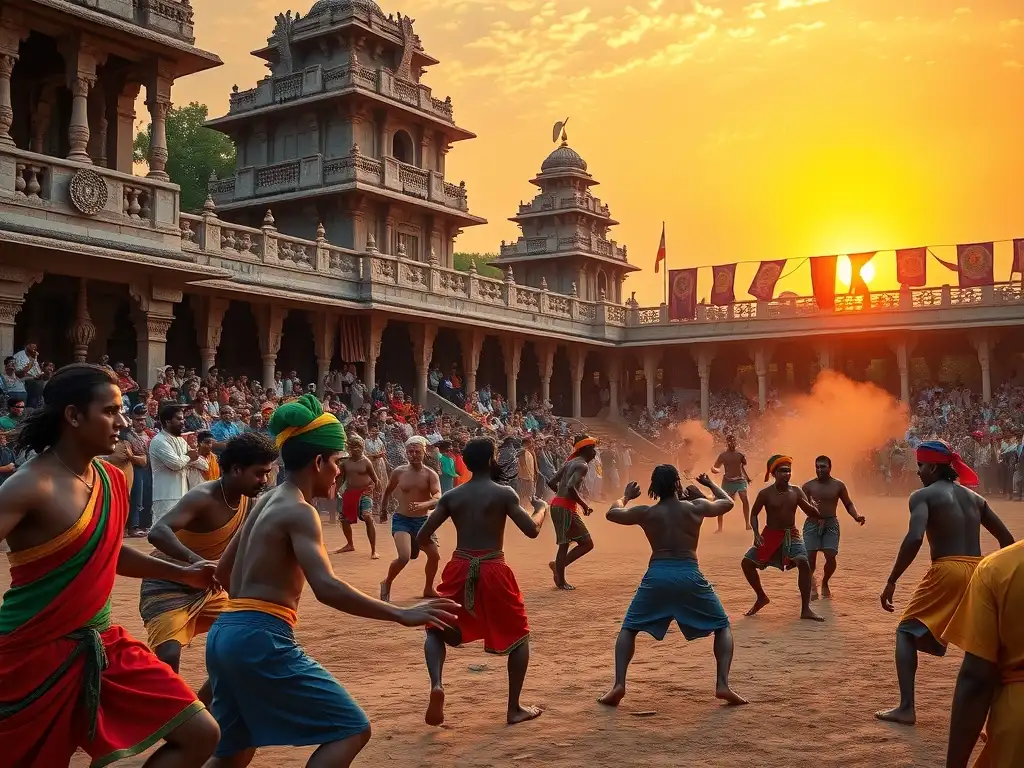
Welcome to Ancient India History, where we journey through the vibrant tapestry of one of the world's oldest civilizations. Have you ever wondered how ancient Indian sports influence shaped the games and recreational activities of neighboring cultures? In our featured article, "The Legacy of Ancient Indian Sports and Games in Neighboring Cultures," we delve into the fascinating exchanges that transcended borders and time, revealing the profound impact of ancient Indian traditions on the athletic practices of the region.
Prepare to be captivated by the stories of competitive spirit and cultural connections that continue to echo through history. Join us as we unravel the past and discover the enduring legacy of ancient Indian sports!
- Introduction to Ancient Indian Sports Influence
- Historical Context of Ancient Indian Sports
- The Influence of Ancient Indian Sports on Neighboring Cultures
- Specific Examples of Cultural Influence
- The Role of Trade and Migration in Spreading Sports
- Conclusion: The Enduring Legacy of Ancient Indian Sports
- References and Further Reading on Ancient Indian Sports Influence
-
Frequently Asked Questions
- What are some popular ancient Indian sports mentioned in the article?
- How did ancient Indian sports influence neighboring cultures?
- What role did religion play in ancient Indian sports?
- Were there any specific texts that documented ancient Indian sports?
- How does the legacy of ancient Indian sports manifest in modern times?
- Final Reflection: The Enduring Influence of Ancient Indian Sports
- Embrace the Legacy of Ancient Sports Today!
Introduction to Ancient Indian Sports Influence
The legacy of ancient Indian sports and games is a fascinating aspect of the rich tapestry of cultural exchanges that have taken place throughout history. From the early civilizations of the Indus Valley to the flourishing Gupta Empire, sports were not merely a source of entertainment but an integral part of societal values, education, and community bonding.
The influence of ancient Indian sports transcended borders, impacting neighboring cultures and civilizations, thereby contributing to a shared heritage of athleticism and physical prowess. This article delves into the various facets of ancient Indian sports, exploring how their practices and philosophies have resonated beyond the subcontinent, shaping sporting traditions in adjacent regions.
Overview of Ancient Indian Sports and Games
Ancient India was home to a plethora of sports and games, many of which have left a lasting legacy. Notable among these were:
- Chaturanga: Often considered a precursor to modern chess, this strategic board game showcased tactical thinking and was played by kings and commoners alike.
- Malla-yuddha: A traditional form of wrestling that emphasized strength, technique, and discipline, it was popular across various regions and often featured in royal courts.
- Gada Yuddha: This ancient sport involved combat using a mace and was not only a test of strength but also of skill and agility.
These games were often accompanied by elaborate rituals and were seen as essential for physical fitness and moral development. The prominence of sports in ancient Indian society is evident through various texts and inscriptions, highlighting their significance in daily life and culture.
Importance of Sports in Ancient Indian Culture
Sports held a place of great importance in ancient Indian culture, serving multiple functions that went beyond mere recreation. Key aspects include:
- Physical Fitness and Training:
- Sports were seen as vital for maintaining physical fitness and preparing individuals for the rigors of life, especially for warriors.
- Ancient texts often emphasize the link between physical prowess and mental strength, suggesting that athletes were revered for their discipline and commitment.
- Social Cohesion:
- Participating in sports fostered a sense of community and belonging, bridging gaps between different social classes.
- Festivals and local competitions brought people together, promoting unity and cultural exchange.
- Cultural Identity:
- Many sports were rooted in local traditions and folklore, reflecting the diverse cultures of ancient India.
- The values and ethics imparted through sports contributed to a collective cultural identity, which was often shared with neighboring regions.
- Spiritual Significance:
- In some instances, sports were intertwined with spiritual practices, where physical activities were seen as a pathway to achieving higher states of consciousness.
By examining these elements, we can appreciate how ancient Indian sports not only shaped the physical landscape of the region but also left an indelible mark on the cultures of neighboring civilizations. The influence of these ancient practices continues to resonate, highlighting the enduring legacy of ancient Indian sports in the contemporary world.
Historical Context of Ancient Indian Sports
Origins of Sports in Ancient India
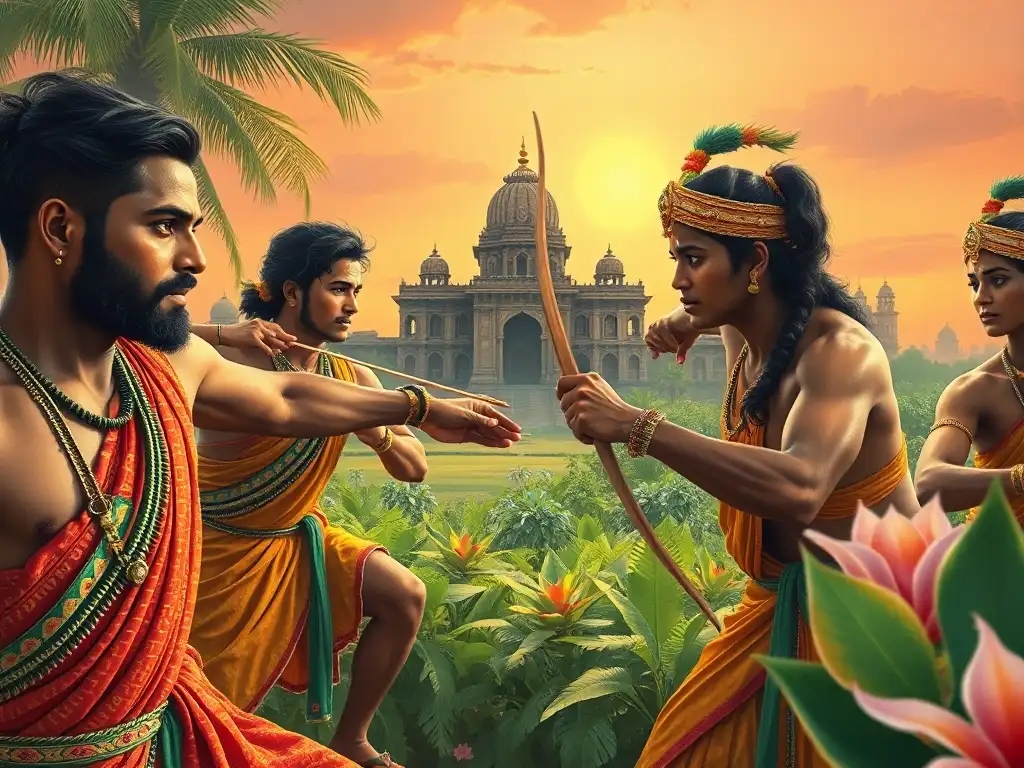
The sport and games in ancient India can be traced back to the early civilizations, particularly during the Indus Valley period (around 2600-1900 BCE). Archaeological findings, such as terracotta figurines and seals, suggest that physical activities were part of daily life and possibly included wrestling, running, and various forms of ball games. The Vedic texts also reference various physical activities, highlighting the cultural significance of sports in ancient Indian society.
As society evolved, the concept of sports began to intertwine with religion and social customs. For instance, the Mahabharata, an ancient epic, describes various competitive events, indicating that sports were integral to noble education and valor. The Kshatriya class, in particular, emphasized martial skills, which included archery, horseback riding, and swordsmanship, reflecting the societal values placed on physical prowess and combat skills.
Sports were not merely for entertainment; they were seen as a means to cultivate discipline, strength, and strategic thinking. The Natyashastra, an ancient text on performance arts, also includes references to sports, indicating their popularity and the artistic representation of physical competitions in society.
Key Sports and Games in Ancient Indian History
Ancient Indian civilizations saw a variety of sports that not only entertained but also served cultural and educational purposes. Here are some of the key sports and games:
- Malla Yuddha (Wrestling):
- Wrestling was a prominent sport in ancient India, often regarded as a test of strength and skill.
- It was practiced in various forms, with local adaptations across regions, demonstrating its widespread popularity.
- Wrestlers were celebrated figures, often featured in royal courts and public festivals.
- Chaturanga (Chess):
- Chaturanga is believed to be the precursor to modern chess, originating in India around the 6th century CE.
- It involved strategic gameplay that mirrored military tactics, making it a favorite among kings and scholars.
- The game's complexity and intellectual demands reflect the ancient Indian emphasis on strategic thinking.
- Dhanur Veda (Archery):
- Archery was not only a sport but also a crucial skill for warriors in ancient India.
- Texts like the Arthashastra outline the importance of archery in warfare and its training as part of a warrior's education.
- Competitions in archery were common, celebrating both skill and precision.
- Ball Games:
- Various forms of ball games were played, with references found in texts and art from different periods.
- Games resembling modern-day polo and cricket were enjoyed by different social classes, indicating a broad appeal.
- The Panchatantra, a collection of ancient fables, includes stories about ball games, further highlighting their cultural significance.
- Traditional Dance and Martial Arts:
- Combining elements of sport and performance, traditional dance forms such as Kalaripayattu incorporated martial techniques, emphasizing agility and discipline.
- These practices not only served as entertainment but also were vital for physical conditioning and combat training.
The influence of these ancient Indian sports extended beyond the subcontinent, impacting neighboring cultures through trade and cultural exchanges. As ancient India engaged with civilizations like Persia and Greece, elements of Indian sports found their way into the cultural fabric of these societies, highlighting the enduring legacy of ancient Indian sports influence.
By examining the historical context and specific sports, we can appreciate how ancient Indian sports laid the groundwork for future athletic practices, shaping not only regional but also global sporting traditions.
The Influence of Ancient Indian Sports on Neighboring Cultures
Cultural Exchanges with Persia
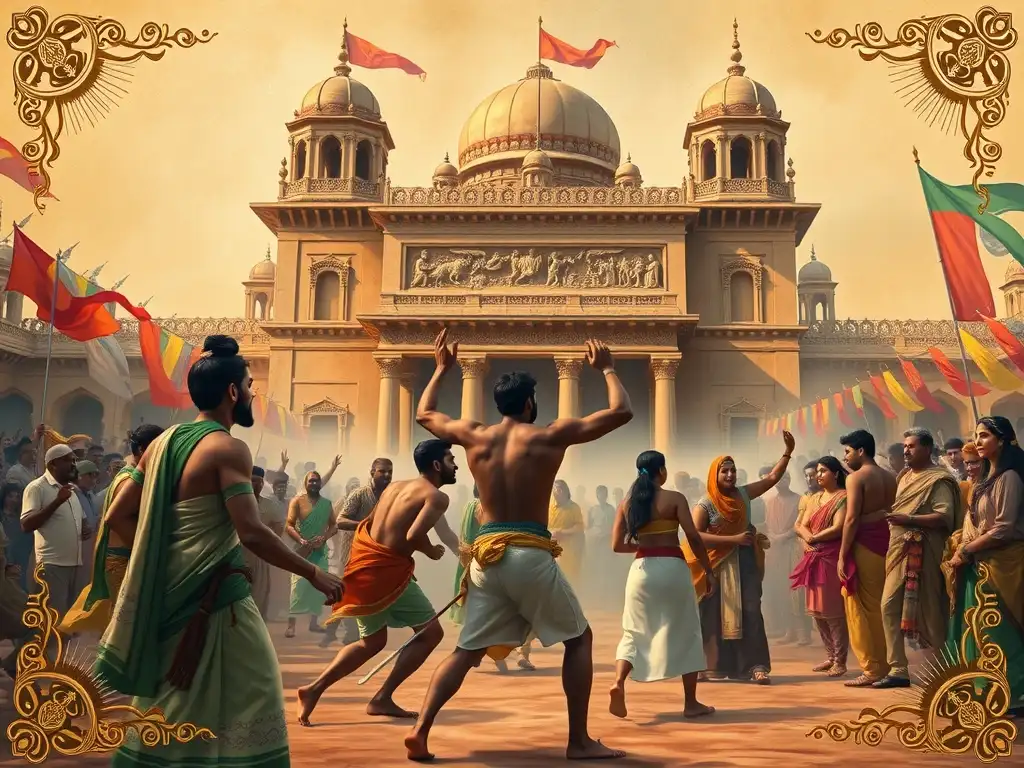
The interactions between ancient India and Persia were marked by significant cultural exchanges, especially in the realm of sports and games. The ancient Persians were known to have a rich tradition of athletic activities, and the influence of ancient Indian sports can be seen in various aspects of Persian culture.
- Martial Arts and Wrestling: One of the most notable influences is found in the Persian form of wrestling known as Pahlavani. It is believed that this form of wrestling, which emphasizes not just strength but also grace and strategy, was influenced by Indian wrestling traditions, especially those practiced during the Vedic period. Indian wrestling, or Malla-yuddha, emphasized similar principles, suggesting a sharing of techniques and philosophies between the two cultures.
- Equestrian Sports: Both cultures placed high importance on horsemanship. The Persian game of Chogan, an early form of polo, likely drew inspiration from the Indian game of Chaugan. Historical texts indicate that Indian rulers enjoyed equestrian games, which eventually found their way into Persian courts, emphasizing the significance of horses as symbols of power and prestige in both cultures.
- Board Games: The game of Chaturanga, an ancient Indian strategy game, is another example of cultural exchange. This game, which later evolved into chess, spread to Persia where it became known as Shah. The Persian adaptation further influenced the development of chess in the Arab world and Europe, showcasing how ancient Indian sports influenced not just play but also strategic thought across cultures.
The blending of sports between India and Persia illustrates how physical activities were not merely for entertainment but served as a conduit for deeper cultural interactions.
Impact on Southeast Asian Cultures
The influence of ancient Indian sports extended significantly into Southeast Asia, where Indian traders, travelers, and cultural emissaries brought various games and athletic practices that were integrated into local traditions.
- Martial Arts Evolution: In regions such as Indonesia and Malaysia, the Indian martial art Kalaripayattu influenced local martial arts forms. These traditions not only included combat skills but also incorporated dance and ritualistic elements, reinforcing the cultural significance of sports as a form of expression and identity.
- Traditional Sports: The Indian game of Kabaddi has also found its way into the cultural fabric of Southeast Asia. Variants of this game can be observed in local sports, where teams engage in similar tag-based gameplay. This demonstrates how ancient Indian sports contributed to communal bonding and physical prowess in these cultures.
- Cultural Rituals and Festivals: Sports and games were often woven into the fabric of festivals. For instance, the influence of Indian festivals that celebrated physical prowess can be seen in various Southeast Asian cultures, where athletic competitions form a part of larger cultural celebrations. This merging of sports with cultural rituals highlights the role of ancient Indian sports in shaping social structures in these regions.
Influence on Central Asian Civilizations
The legacy of ancient Indian sports also made its way into Central Asia, where trade routes facilitated cultural exchanges and interactions.
- Horse Racing and Archery: Central Asian nomadic cultures, known for their exceptional equestrian skills, were influenced by the Indian emphasis on horse racing and archery. The techniques of mounted archery practiced in ancient India likely resonated with Central Asian warriors who adopted similar methods, enhancing their own martial traditions.
- Games of Strategy: The strategic aspects of ancient Indian games such as Chaturanga also permeated Central Asian societies. Evidence suggests that variations of this game were played among Central Asian elites, signifying the role of games as a medium for intellectual engagement and strategy development.
- Cultural Festivals: Sports events often coincided with cultural festivals in Central Asia, where Indian influences can be traced. The incorporation of games such as wrestling and horse riding into local festivities reflects the deep-rooted impact of ancient Indian sports on social and cultural practices in the region.
The transmission of sports and games across borders is a testament to the dynamic interactions between ancient Indian civilizations and their Central Asian neighbors.
The influence of ancient Indian sports on neighboring cultures is a vivid illustration of how athletic practices serve as powerful channels for cultural exchange, creating rich legacies that continue to resonate in contemporary societies. The ancient Indian sports influence is not merely historical; it is an ongoing narrative that underscores the interconnectedness of civilizations through shared physical and cultural endeavors.
Specific Examples of Cultural Influence
Wrestling Traditions Across Borders
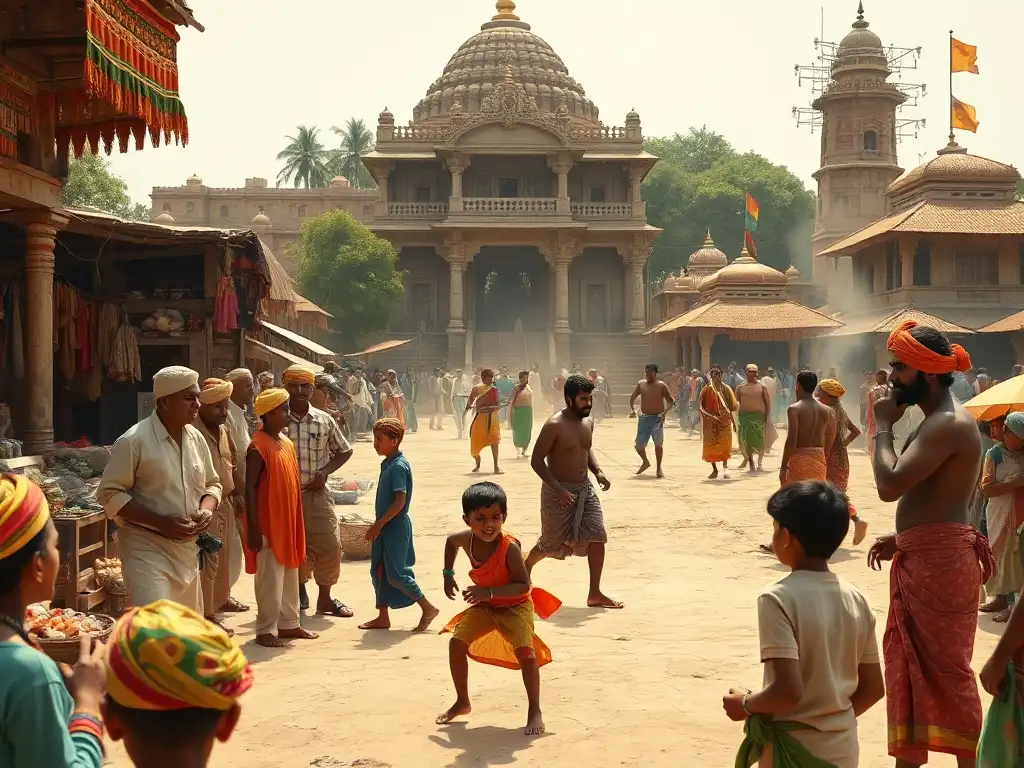
Wrestling, known as Kushti in India, has a rich history that extends beyond its borders, influencing various cultures in neighboring regions. The sport's origins can be traced back to ancient texts, such as the Vedas and the Mahabharata, which highlight its significance in societal rituals and warrior training.
- Cultural Exchange with Persia:
- The Persian wrestling style, known as Pahlavani, shares similarities with Kushti, particularly in its techniques and training methods. Both forms emphasize strength, agility, and mental discipline. Historical accounts suggest that traders and travelers brought these wrestling techniques across borders, leading to a blend of styles and practices.
- Influence on Central Asian Wrestling:
- The ancient Indian Kushti has also influenced wrestling practices in Central Asia, particularly in countries like Uzbekistan and Kazakhstan. The use of similar techniques and the cultural significance of wrestling as a rite of passage for young men can be observed in these regions, reflecting the shared heritage.
- Modern Adaptations:
- Today, wrestlers from India compete in international tournaments, showcasing techniques rooted in ancient traditions. The ongoing legacy of Kushti is evident in the wrestling styles practiced in neighboring countries, where ancient Indian sports influence continues to thrive.
The Spread of Martial Arts Techniques
Martial arts in ancient India, particularly Kalaripayattu and Gatka, have had a profound effect on the martial traditions of neighboring cultures. These techniques were not only methods of self-defense but also deeply embedded in the cultural fabric of India.
- Kalaripayattu:
- Originating from Kerala, this ancient martial art form is characterized by its fluid movements and weapon training. As traders and travelers moved between India and Southeast Asia, they carried with them the principles and techniques of Kalaripayattu, which later influenced martial arts in countries like Thailand and Malaysia.
- For example, the Silat martial arts of Indonesia exhibits striking similarities to Kalaripayattu, particularly in its use of stances and fluid motions.
- Gatka:
- This Sikh martial art focuses on the use of swords and other weapons, and its practices have influenced martial traditions in Punjab and neighboring regions. The techniques of Gatka have been adopted by various armed forces in the region, showcasing the adaptability and resilience of ancient Indian martial practices.
The cross-cultural exchanges facilitated through trade routes and conquests have allowed these martial arts techniques to evolve while retaining their Indian roots.
Indigenous Games Adapted in Neighboring Regions
Ancient Indian sports have not only thrived within the subcontinent but have also been adopted and adapted by neighboring cultures, leading to a rich tapestry of indigenous games.
- Pachisi:
- Often regarded as the precursor to modern board games like Ludo and Parcheesi, Pachisi originated in India and has found its way into the game culture of countries such as Persia and Afghanistan. The game emphasizes strategy and luck, often played on large, colorful boards, making it a social activity that transcends borders.
- Kabaddi:
- The traditional Indian sport of Kabaddi has gained immense popularity in countries like Bangladesh and Iran. Each region has developed its own variations, but the core principles remain intact. The game's emphasis on teamwork and physical prowess reflects the cultural values of the regions it has permeated.
- Gilli Danda:
- This indigenous game, akin to cricket, has seen adaptations in various forms across neighboring countries. In Afghanistan, for instance, a similar game known as Kooch has emerged, showcasing how traditional games can adapt to local cultures while retaining their basic mechanics.
Through these examples, it is clear that ancient Indian sports influence has significantly shaped the recreational practices of neighboring civilizations, highlighting the interconnectedness of cultural heritage across borders.
The Role of Trade and Migration in Spreading Sports
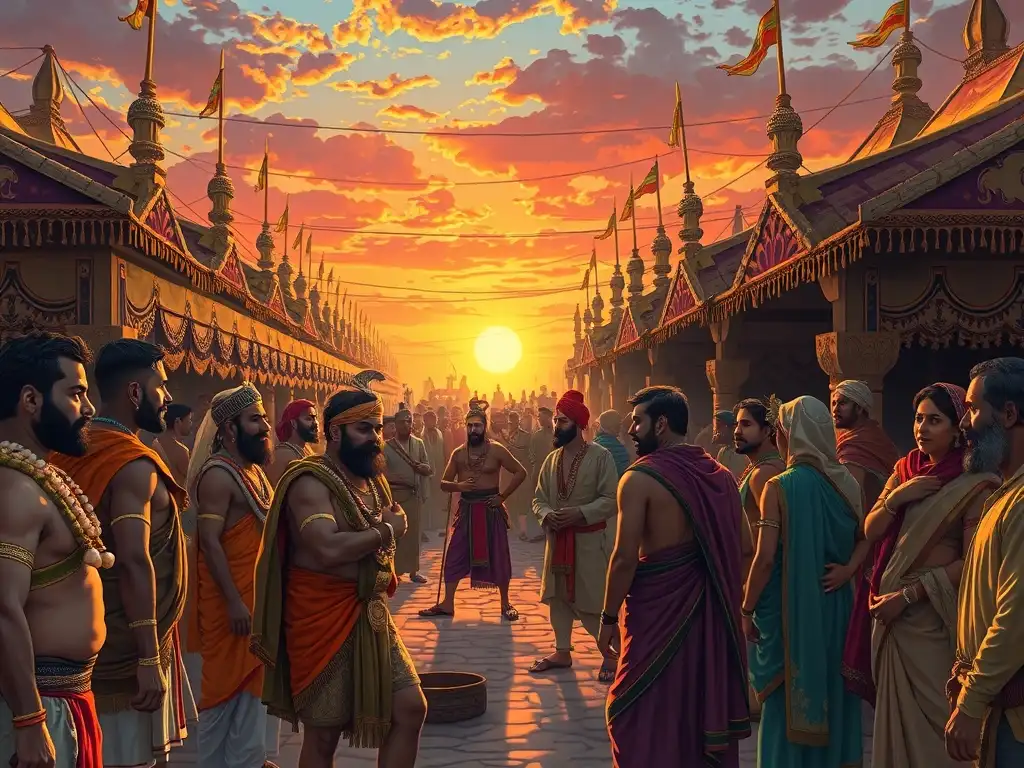
The influence of ancient Indian sports on neighboring cultures cannot be understated. Central to this exchange were the intricate networks of trade and migration that facilitated not only the movement of goods but also the sharing of cultural practices, including sports. Through these interactions, various forms of physical activities and games transcended geographical boundaries, enriching the cultural tapestry of the region.
Trade Routes and Their Impact on Sports Exchange
Ancient India was crisscrossed by numerous trade routes that connected it to Central Asia, the Middle East, and beyond. These routes served as conduits for cultural exchange, allowing for the dissemination of not just commodities but also ideas and practices, including sports.
- Major Trade Routes:
- Silk Road: This historic route linked India with China and the West, facilitating not only the exchange of silk and spices but also cultural practices, including martial arts and games.
- Maritime Routes: Indian ports such as Lothal and Sopara connected with Southeast Asia and Africa, where Indian sports influences were evident in local games and martial traditions.
The impact of these trade routes on sports exchange can be illustrated through specific examples:
| Trade Route | Cultural Exchange | Sports Influence |
|---|---|---|
| Silk Road | Cultural artifacts and ideas exchanged between India and Persia | Introduction of wrestling techniques and games like chess in Persia |
| Maritime Routes | Spread of Indian wrestling (Kushti) to Southeast Asia | Development of local wrestling styles and martial arts in countries like Thailand |
This cross-pollination of ideas led to the adaptation and evolution of various sports, demonstrating the significant role of trade in shaping athletic practices across cultures.
Migration Patterns Influencing Sports Practices
Migration patterns in ancient India were equally influential in the dissemination of sports. As peoples moved for reasons such as trade, conquest, or settlement, they brought with them their customs, including sports and games.
- Key Migration Waves:
- Aryan Migration: The arrival of the Aryans introduced new forms of physical contests and sports that integrated with existing local practices, leading to a rich blend of traditions.
- Cultural Exchanges during Empires: The Maurya and Gupta empires expanded their territories, often incorporating local sports into their own cultural practices, which in turn influenced neighboring regions.
The impact of migration on sports can be summarized as follows:
- Adaptation of Sports: Migrant communities often adapted their traditional sports to local conditions, leading to unique versions of games. For instance, the Indian game of Pachisi evolved into various forms across Southeast Asia.
- Martial Arts Influence: Migrants shared martial arts techniques, which led to the development of regional styles, such as the Indonesian Pencak Silat and the Filipino Arnis, both reflecting ancient Indian martial traditions.
The dynamic interplay of trade and migration significantly contributed to the spread of ancient Indian sports influence across neighboring cultures. These interactions not only transformed local games but also fostered a deeper appreciation for the diverse athletic traditions that emerged from ancient Indian civilization. The legacy of these exchanges remains evident in the sporting practices and cultural identities of various regions today.
Conclusion: The Enduring Legacy of Ancient Indian Sports
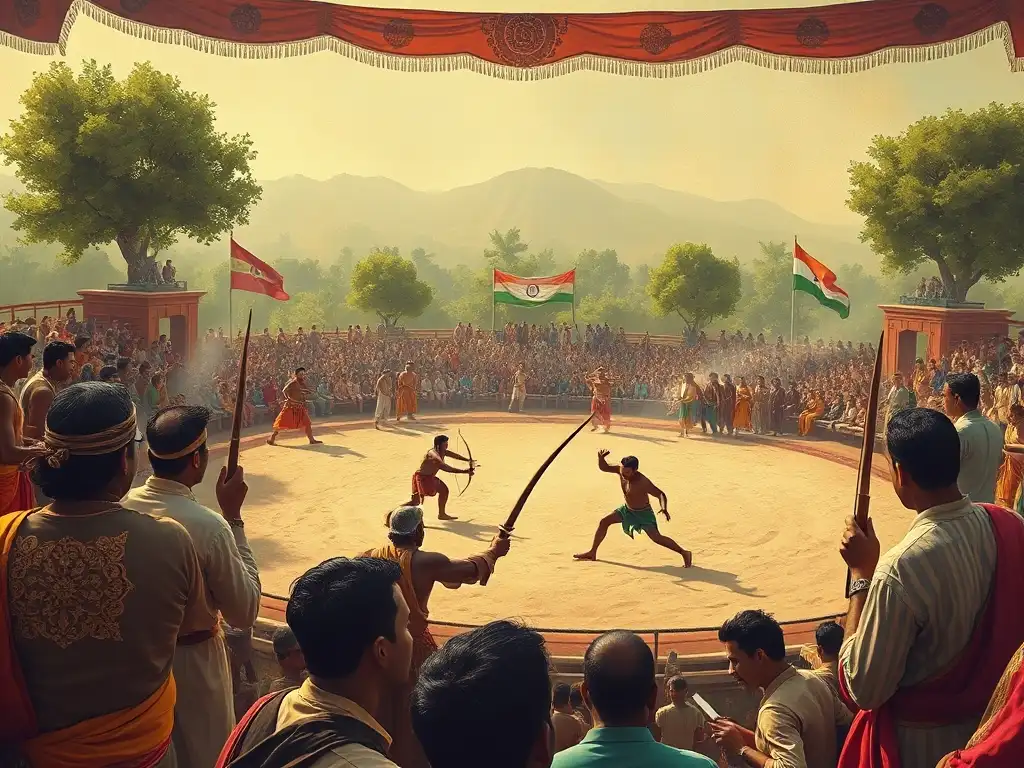
The legacy of ancient Indian sports is a testament to the rich cultural heritage and the profound influence that these games have had on neighboring civilizations. From the strategic gameplay of chess to the physical prowess exhibited in wrestling and archery, ancient Indian sports have transcended time and geography, leaving imprints on various cultures.
Summary of Cultural Contributions
Ancient Indian sports served not only as a means of physical training but also as a vehicle for cultural expression and social cohesion. Key contributions include:
- Chess (Chaturanga): Originating in India, chess influenced strategic games across Persia and Europe. Its principles of strategy and tactics have been adopted in numerous cultures, evolving into the modern chess we know today.
- Wrestling (Malla-yuddha): This ancient sport is believed to have spread to neighboring regions, influencing wrestling styles in Southeast Asia and even the Middle East. The emphasis on physical strength and discipline in wrestling has been a unifying cultural thread.
- Archery: With a rich history in ancient texts, archery techniques developed in India were adopted by various cultures, particularly in warfare. The precision and skill required in archery have inspired similar practices in neighboring countries.
- Martial Arts: The roots of Kalaripayattu, one of the oldest martial arts forms, can be traced back to ancient India. Its techniques and philosophies have been absorbed into various martial traditions in Southeast Asia.
These sports not only promoted physical health but also fostered social interactions and nurtured the values of teamwork, discipline, and strategy. The cultural exchanges facilitated by these games have enriched the social fabric of neighboring civilizations.
The Lasting Impact of Ancient Indian Sports on Modern Cultures
The influence of ancient Indian sports continues to resonate in modern cultures, shaping contemporary recreational practices and competitive sports. This enduring impact can be observed in various aspects:
- Revival of Traditional Sports: There is a growing movement to revive traditional Indian sports such as Kabaddi and Kho-Kho, which are gaining popularity in regional and international competitions. These sports reflect the values and traditions of ancient Indian society.
- Chess Tournaments: Modern chess tournaments, with their roots in ancient Indian gameplay, have become a global phenomenon. The strategic depth of chess continues to attract players from diverse backgrounds, promoting intellectual engagement and cultural exchange.
- Martial Arts: The principles of ancient Indian martial arts are seen in modern self-defense classes and fitness regimes. The holistic approach to physical and mental well-being is gaining traction worldwide, influenced by ancient practices.
- Cultural Festivals: Events celebrating ancient sports, such as wrestling and archery contests, are increasingly featured in cultural festivals, fostering a sense of identity and community. These festivals serve as a platform for showcasing the historical significance and contemporary relevance of these sports.
The ancient Indian sports influence is not merely a historical anecdote; it is a living legacy that continues to shape identities and foster connections across cultures. The rich tapestry of sports originating from ancient India has left an indelible mark on the world, promoting values that transcend borders. As we explore these influences, we acknowledge the profound interconnectedness of cultures through the lens of sports and games.
References and Further Reading on Ancient Indian Sports Influence
Suggested Books and Articles
-
"The Sports of Ancient India" by John Michael:
This comprehensive book delves into the various sports practiced in ancient Indian civilizations, highlighting their cultural significance and the influence they had on neighboring regions. The author meticulously details the origins of different games and their evolution over time.
-
"Games and Sports in Ancient India" by Meena Gupta:
Gupta's work offers an insightful exploration of the role of sports in ancient Indian society. The book discusses how these activities were not merely for entertainment but played a vital part in social and cultural life.
-
"Ancient Indian Civilization: An Introduction" by Ramesh C. Sharma:
This introductory text provides a broader context for understanding ancient Indian civilization, including its social structures and the relevance of sports within them. It includes sections dedicated to the influence of Indian sports on neighboring cultures.
-
"Cultural Exchanges Between India and Its Neighbors" by Anita Desai:
Desai examines the cultural interactions between ancient India and its neighboring regions, including the influence of Indian sports. The book offers a collection of essays that explore different facets of cultural exchange, including sports and games.
-
"The Indus Valley Games: Sports in Early Civilization" by Vikram Singh:
This article focuses on the games played during the Indus Valley civilization, providing archaeological insights and interpretations that link these ancient practices to their influence on later cultures.
Online Resources for Further Exploration
-
Digital South Asia Library:
This online resource offers a wealth of historical documents, maps, and images related to ancient India, including sections on sports and games. It is an excellent starting point for anyone interested in in-depth research.
-
The Indian Historical Review:
This journal frequently publishes articles on various aspects of ancient Indian history, including sports. Searching its archives can yield valuable papers discussing the influence of Indian sports on neighboring cultures.
-
The Archaeological Survey of India:
The official website provides access to excavation reports and findings related to ancient sports artifacts, allowing readers to explore the material culture associated with ancient Indian games.
-
Websites of Cultural Heritage Organizations:
Organizations like INTACH (Indian National Trust for Art and Cultural Heritage) often feature articles and resources discussing the impact of ancient Indian culture, including its sports heritage on neighboring civilizations.
-
YouTube Documentaries:
Several educational channels produce documentaries about ancient Indian civilization and its sports. These visual resources can provide engaging insights and a deeper understanding of the topic.
By exploring these resources, readers can gain a richer understanding of the legacy of ancient Indian sports and their influence on neighboring cultures.
Frequently Asked Questions
What are some popular ancient Indian sports mentioned in the article?
Ancient Indian sports include chariot racing, wrestling, and archery, which were not only forms of entertainment but also played significant roles in military training and social gatherings.
How did ancient Indian sports influence neighboring cultures?
The article highlights that ancient Indian sports contributed to the development of similar games in neighboring regions, illustrating the cultural exchange that took place through trade and conquests.
What role did religion play in ancient Indian sports?
Religion significantly influenced ancient sports, with many games being associated with deities and festivals, helping to promote social cohesion and community participation.
Were there any specific texts that documented ancient Indian sports?
Yes, texts like the Mahabharata and Arthashastra detailed various sports, emphasizing their importance in both education and entertainment in ancient Indian society.
How does the legacy of ancient Indian sports manifest in modern times?
The legacy of ancient Indian sports is seen in contemporary games like kabaddi and malkhamb, which continue to be celebrated and reflect the rich cultural heritage of India.
Final Reflection: The Enduring Influence of Ancient Indian Sports
The legacy of ancient Indian sports and games is not just a relic of the past; it is a vibrant thread woven into the cultural fabric of neighboring societies today. As we explore the rich history of these sports, we uncover their profound impact on contemporary games and athletic practices, highlighting how ancient traditions continue to shape our modern understanding of physical fitness and competition. The influence of ancient Indian sports is a testament to the universal language of play that transcends borders and generations.
Cultural exchange is a powerful force, and the traditions of ancient Indian sports have left an indelible mark on the social landscape of neighboring cultures. From the strategic gameplay of chess, which originated in India, to the martial arts that draw inspiration from ancient Indian combat techniques, we see how these influences foster a sense of unity and shared heritage. Sports can unite us in ways that politics and religion often cannot.
This ongoing dialogue between cultures not only enriches our understanding of sports but also emphasizes the importance of preserving and celebrating these ancient practices.
As we reflect on the lessons learned from the legacy of ancient Indian sports, I invite you to consider how you can incorporate these values of discipline, respect, and community into your own life. Take a moment to appreciate the games you play and the cultures they represent. Whether it's through participating in traditional sports, learning about their histories, or promoting inclusivity in athletic spaces, we all have a role to play in honoring this rich legacy. Let us carry forward the spirit of ancient Indian sports, ensuring that their influence continues to inspire future generations.
Embrace the Legacy of Ancient Sports Today!
Thank you for taking the time to explore the fascinating world of ancient Indian sports and games. Your interest not only honors this rich history but also connects you to a legacy that transcends borders and cultures. Now, let’s take the next step together!
- Dive deeper: Investigate a specific sport or game that has influenced modern practices in your area and discover its historical significance.
- Share your findings: Connect with friends or engage with others on social media. Discuss these ancient sports and inspire a greater appreciation for their cultural importance!
- Rediscover your playfulness: Try playing a traditional game from India or organize a community event to introduce these timeless activities to others.
Which ancient sport or game resonates with you the most, and how can you share its legacy within your community?