
The Role of Spies and Intelligence in Ancient Indian Military Campaigns


Welcome to Ancient India History, where we delve into the fascinating tapestry of one of the world's oldest civilizations. Here, we uncover the rich and diverse narratives that shaped ancient India, from the ingenious architecture of the Indus Valley to the profound wisdom of the Gupta Empire. In our featured article, we explore the intriguing world of ancient Indian military espionage, revealing the pivotal role that spies and intelligence played in military campaigns.
Prepare to be captivated as we unveil stories of cunning strategists and covert operations that not only influenced battles but also the course of history itself. Join us on this journey and discover how the art of espionage shaped the destiny of ancient Indian civilizations!
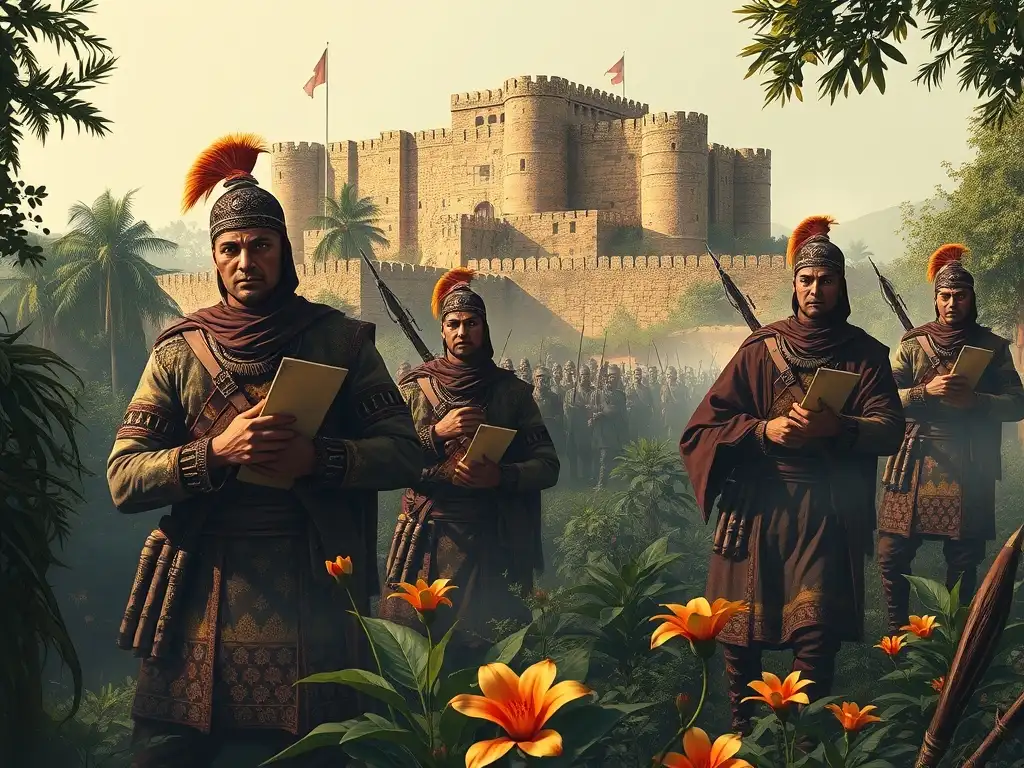
Introduction to Ancient Indian Military Espionage
The intricate tapestry of ancient Indian military history reveals a profound understanding of the art of warfare, encompassing not only the development of weaponry and tactics but also the critical role of espionage. Ancient Indian military espionage was a sophisticated practice employed by various kingdoms and empires to gain strategic advantages over adversaries.
Spies were not merely individuals gathering information; they were integral players in the grand strategy of military campaigns, facilitating informed decision-making and enhancing the efficacy of military operations. This exploration into the realm of espionage highlights how intelligence shaped the outcomes of conflicts and the broader dynamics of power in ancient India.
Definition of Military Espionage in Ancient India
Military espionage in ancient India can be broadly defined as the systematic gathering and analysis of information concerning enemy positions, resources, and strategies. This practice was crucial for preemptive strikes and defensive postures.
- Roles of Spies:
- Informants: Individuals who infiltrated enemy territories to gather firsthand intelligence.
- Counterintelligence Agents: Operatives tasked with identifying and neutralizing enemy spies.
- Diplomatic Spies: Envoys who disguised their missions to extract valuable information while negotiating treaties.
Importance of Intelligence in Warfare
Intelligence played a pivotal role in the success of military campaigns throughout ancient Indian history. The effectiveness of an army was often determined by its ability to anticipate enemy actions and respond accordingly.
- Strategic Planning:
- Knowledge of enemy strengths and weaknesses allowed commanders to devise effective strategies.
- Resource Allocation:
- Information on enemy supply lines and troop movements facilitated optimal resource management.
- Psychological Warfare:
- Disseminating misinformation could demoralize opponents and disrupt their plans.
Historical Context of Espionage in Ancient India
Overview of Ancient Indian Civilizations and Warfare
From the Indus Valley Civilization to the Maurya and Gupta Empires, ancient Indian civilizations exhibited advanced military organization and strategy. Warfare was not merely a clash of arms; it was an intricate interplay of diplomacy, intelligence, and military might.
- Key Civilizations:
- Indus Valley Civilization: Early evidence of organized warfare and trade.
- Maurya Empire: The use of spies under Emperor Chandragupta Maurya and Kautilya’s Arthashastra.
- Gupta Empire: A period of military innovation and strategic intelligence.
Key Historical Texts Discussing Espionage Tactics
Several ancient texts provide insights into the practices of military espionage, reflecting the importance of intelligence in warfare.
-
Arthashastra by Kautilya:
This seminal work outlines various espionage techniques, emphasizing the need for intelligence in statecraft and military operations.
-
Mahabharata:
The epic contains numerous examples of espionage and the strategic use of spies, showcasing their critical role in the Kurukshetra War.
-
Sutras and Shastras:
Various treatises on warfare discuss the deployment of spies and the collection of intelligence as foundational to military success.
Through a thorough examination of these aspects, we can appreciate the multifaceted nature of ancient Indian military espionage and its lasting impact on the conduct of warfare in the subcontinent.
Types of Spies in Ancient Indian Military Campaigns
The landscape of ancient Indian military espionage was diverse and multifaceted, featuring various types of spies who played crucial roles in gathering intelligence for military campaigns. These spies operated at different levels of society, employing unique skills and methods to serve their sovereigns. Understanding the different categories of spies provides insight into the sophisticated nature of ancient Indian military strategies.
Royal Spies: The Role of the Rajput and Kshatriya
Royal spies, primarily hailing from the Rajput and Kshatriya warrior classes, were often entrusted with significant responsibilities. These individuals were not only trained in combat but also skilled in diplomacy and negotiation. Their noble status allowed them to infiltrate enemy camps and gather vital information without raising suspicion.
Rajput spies, known for their loyalty and bravery, often engaged in direct reconnaissance missions. They would blend into enemy territories, leveraging their combat skills to gather intelligence on troop movements, fortifications, and supply lines. Kshatriya spies, on the other hand, utilized their noble connections to obtain information through social interactions, securing insights that were invaluable for strategic planning.
Common Spies: The Use of Informants and Scouts
In contrast to royal spies, common spies comprised informants and scouts who operated at grassroots levels. These individuals were typically drawn from local populations, including merchants, travelers, and even farmers, who had intimate knowledge of the terrain and the socio-political climate.
Informants played a critical role in espionage by providing real-time updates on enemy activities, troop deployments, and even dissent within enemy ranks. Scouts, on the other hand, were tasked with physical reconnaissance, often venturing into enemy territory to map out routes and identify potential ambush sites. Their contributions were essential to ensuring that military leaders could make informed decisions based on accurate and timely intelligence.
Female Spies: The Unique Contributions of Women in Espionage
Female spies in ancient India held a unique position within the espionage framework. Often underestimated due to societal norms, women were able to navigate spaces that men could not, allowing them to gather intelligence effectively. They employed strategies such as disguising themselves as courtesans or traders, which enabled them to gain access to critical information.
Historical accounts highlight that women played pivotal roles in espionage during significant military campaigns. For instance, some women infiltrated royal courts and gained the trust of enemy leaders, allowing them to relay valuable information back to their own rulers. This underlines the fact that female spies were not only instrumental in ancient Indian military espionage but also exemplified the resourcefulness and adaptability of women in the face of societal constraints.
Techniques and Strategies of Espionage

The effectiveness of ancient Indian military espionage was rooted in a variety of techniques and strategies that enhanced the gathering and dissemination of intelligence. These methods were not only innovative but also reflected the cultural and technological advancements of the time.
Gathering Intelligence: Methods Used by Ancient Spies
Ancient Indian spies employed several methods for gathering intelligence, ranging from direct observation to more covert approaches. One primary method was the use of surveillance, where spies would watch enemy movements from a distance, often using natural cover to remain undetected.
Another technique involved infiltration, where spies would enter enemy territories disguised as traders or pilgrims. This allowed them to blend in with local populations, facilitating the collection of information on troop strength, morale, and logistical challenges faced by the enemy. Additionally, interrogation of captured soldiers or defectors was a common practice, enabling spies to extract valuable insights regarding enemy strategies and weaknesses.
Communication: Ciphers and Codes in Ancient India
The communication of gathered intelligence was as critical as the gathering process itself. Ancient Indian spies often used ciphers and codes to relay sensitive information securely. This was particularly important to prevent interception by enemy forces.
Different methods were employed, including symbolic representations and numerical codes that required specialized knowledge to decode. For instance, certain texts might use specific phrases or symbols known only to trusted military leaders, ensuring that information remained confidential. This practice illustrated not just the sophistication of ancient Indian military strategies but also the value placed on secure communication.
Psychological Warfare: Misinformation and Deception Tactics
Espionage in ancient India also extended into the realm of psychological warfare. Spies were often tasked with spreading misinformation and employing deception tactics to confuse and demoralize the enemy.
These tactics could involve creating false reports of troop movements, which would lead enemy commanders to misallocate resources and prepare for attacks that never occurred. Additionally, spies would sometimes spread rumors about impending defections or alliances, further destabilizing enemy morale. Such psychological strategies were crucial in ancient Indian military campaigns as they not only undermined enemy confidence but also provided strategic advantages during confrontations.
Case Studies of Military Campaigns Utilizing Espionage
Ancient Indian military campaigns were often marked by the strategic use of espionage, which played a crucial role in determining the outcomes of various conflicts. Spies were not only tasked with gathering intelligence but also with sowing discord among enemy ranks. By examining specific case studies from different empires, we can understand the pivotal role espionage played in shaping military tactics and strategies.
The Mauryan Empire: Spies in the Conquest of Kalinga
The Mauryan Empire, under the reign of Emperor Ashoka, is one of the most notable examples of effective military espionage. The conquest of Kalinga (circa 261 BCE) was a significant campaign that demonstrated the use of spies for both reconnaissance and psychological warfare. Ashoka deployed agents to gather intelligence on Kalinga’s defenses, troop movements, and local sentiments.
The Mauryan spies were tasked with infiltrating enemy territories and reporting on Kalinga's military strength and strategic advantages. This intelligence allowed Ashoka to devise a comprehensive strategy that included both direct military confrontation and attempts to undermine Kalinga’s morale. The campaign ultimately resulted in a decisive victory for the Mauryans, although it profoundly affected Ashoka, leading him to embrace Buddhism and advocate for non-violence in subsequent years.
The Gupta Empire: Intelligence in Defense Strategies
During the Gupta Empire, which thrived from the 4th to the 6th centuries CE, intelligence gathering became sophisticated and systematic. The Guptas faced numerous threats from various regional powers, necessitating the establishment of a robust espionage network.
One notable instance involved the Gupta ruler Chandragupta II, who employed spies to monitor the movements of the Western Kshatrapas and other rival kingdoms. This intelligence was crucial in formulating defensive strategies and preemptive strikes. The Gupta spies were skilled in gathering information not only on troop deployments but also on the political alliances and social dynamics of neighboring states. By leveraging this intelligence, the Guptas were able to maintain their dominance over a vast territory and effectively counter external threats.
Regional Conflicts: Espionage in the South Indian Kingdoms
In the South Indian kingdoms, such as the Chola and Pandya dynasties, espionage played a vital role in regional conflicts. These kingdoms were often engaged in complex power struggles, with shifting alliances and betrayals being commonplace.
For instance, during the Chola invasions of the Pandya territory, Chola rulers employed spies to infiltrate enemy courts and gather crucial intelligence about military preparations and diplomatic negotiations. This espionage was not limited to battlefield intelligence; it also included gathering information on agricultural outputs and resource availability, which were essential for sustaining long military campaigns.
The intelligence gathered allowed the Cholas to launch successful raids and invasions, significantly expanding their influence in South India. Such tactics highlight the importance of espionage in regional conflicts, where knowledge of the enemy's strengths and weaknesses could turn the tide of war.
Impact of Espionage on Military Outcomes
The role of espionage in ancient Indian military campaigns cannot be overstated, as it had a significant impact on the outcomes of various conflicts. The advantages gained through effective intelligence gathering often determined the success or failure of military endeavors, shaping the political landscape of the time.
Successes Attributed to Effective Intelligence Gathering
Successful military campaigns in ancient India were frequently a direct result of effective intelligence operations. For example, the Mauryan conquest of Kalinga showcased how well-informed strategies could lead to overwhelming victories. The intelligence gathered allowed commanders to exploit weaknesses in enemy formations and tailor their tactics accordingly.
Moreover, the Gupta Empire's ability to repel invasions and maintain stability throughout its reign can be attributed to its sophisticated espionage network. The intelligence collected enabled the Guptas to anticipate enemy movements and respond proactively, thus preserving their territorial integrity and political power.
Failures Resulting from Poor Espionage Practices
Conversely, failures in military campaigns often stemmed from inadequate intelligence and poor espionage practices. For instance, some regional conflicts in South India illustrate how misjudgments due to unreliable or incomplete intelligence could lead to disastrous outcomes. In certain cases, overconfidence in their own military capabilities, combined with a lack of understanding of the enemy's strategies, resulted in defeats for the Chola and Pandya armies.
Additionally, the lack of effective communication and coordination among spies could lead to misinformation, causing commanders to make ill-informed decisions. Such failures highlight the critical importance of espionage in ancient Indian military strategy, where the ability to understand and anticipate enemy actions often determined the fate of entire kingdoms.
The Evolution of Military Espionage in Ancient India

The practice of military espionage in ancient India has deep roots, tracing back to the early civilizations such as the Indus Valley Civilization. As warfare evolved, so did the techniques of intelligence gathering and espionage. The ancient texts, notably the Arthashastra written by Kautilya (Chanakya) in the 4th century BCE, provide profound insights into the systematic approach to espionage. Kautilya emphasized the importance of spies as the eyes and ears of the state, detailing various types of spies, their roles, and the methodologies they employed to gather critical information about enemy movements, troop strengths, and strategic plans.
The espionage network was multifaceted, incorporating both human intelligence (HUMINT) and signals intelligence (SIGINT). Spies were often embedded within enemy ranks or disguised as traders, travelers, or even hermits to obtain classified information. Additionally, the use of coded messages and signals allowed for secure communication of vital information back to military leaders. This evolution of espionage techniques laid the groundwork for sophisticated intelligence operations in subsequent centuries.
Transition from Ancient to Medieval Espionage Techniques
As ancient Indian societies transitioned into the medieval period, the techniques of military espionage became more refined and specialized. The rise of empires like the Mauryas and later the Guptas saw an increase in the necessity for detailed intelligence due to more complex warfare strategies and larger territorial conquests.
The medieval period introduced the use of more formalized intelligence agencies and networks. The establishment of a dedicated espionage department within royal courts allowed for better recruitment, training, and deployment of spies. Unlike the more autonomous operations of earlier periods, these agencies operated under structured hierarchies and protocols, ensuring more reliable intelligence collection.
Moreover, the integration of espionage with diplomacy became prominent. Spies not only gathered military intelligence but also played crucial roles in political maneuvering, such as negotiating peace treaties or inciting rebellion within enemy territories. This dual function of espionage as both a military and diplomatic tool significantly influenced how conflicts were approached and resolved.
Influence of Ancient Indian Espionage on Later Military Strategies
The principles and practices of ancient Indian military espionage have had a lasting impact on later military strategies, not just in India but across various cultures globally. The methodologies outlined in the Arthashastra influenced military thinkers and strategists in neighboring regions and even in the Islamic empires that followed.
The emphasis on intelligence gathering as a prelude to military engagement became a cornerstone of military strategy. Leaders recognized that understanding the enemy's strengths and weaknesses could often determine the outcome of battles. This notion led to the establishment of intelligence units in subsequent armies, including those of the Mughals and later European colonial forces in India.
Furthermore, the legacy of espionage practices in ancient India can be seen in modern military doctrines that prioritize intelligence-led operations. The idea that "information is power" remains a fundamental tenet of military strategy today, demonstrating the enduring influence of ancient Indian military espionage on contemporary practices.
Conclusion: The Legacy of Ancient Indian Military Espionage
Summary of Key Insights
The exploration of ancient Indian military espionage reveals a sophisticated understanding of intelligence that was critical for the success of military campaigns. The evolution from basic information gathering to organized espionage networks illustrates the importance placed on intelligence throughout ancient Indian history. From the insights in Kautilya's Arthashastra to the structured espionage agencies of the medieval period, the practices developed during these times laid the foundation for future military strategies.
Reflection on the Importance of Intelligence in Historical Context
The role of intelligence in ancient military campaigns cannot be overstated. It was not merely a supportive function but a decisive factor in the outcomes of conflicts. The ability to foresee enemy actions, understand terrain, and exploit weaknesses provided states with significant advantages. The legacy of ancient Indian military espionage teaches us that effective intelligence operations have always been central to the art of warfare, a lesson that remains relevant in the modern context of military strategy and national security.
References and Further Reading on Ancient Indian Military Espionage
Understanding ancient Indian military espionage requires a comprehensive exploration of historical texts, scholarly articles, and primary resources. This section provides a curated list of suggested readings and academic journals that delve into the intricacies of espionage practices, intelligence gathering, and military strategies employed by ancient Indian civilizations.
Suggested Texts and Resources
- Kautilya's Arthashastra: This ancient Indian treatise on statecraft, economic policy, and military strategy, attributed to the philosopher Kautilya (Chanakya), offers profound insights into the use of espionage in governance and warfare. Kautilya emphasizes the importance of spies and intelligence agents in gathering information about enemies and allies alike.
- The Mahabharata: This epic poem not only narrates the great war of Kurukshetra but also illustrates various aspects of ancient Indian military tactics and espionage. The characters of spies and their roles in the battlefield provide a narrative understanding of intelligence operations.
- The Ramayana: Similar to the Mahabharata, this epic contains lessons on strategy and espionage, notably through the character of Hanuman, who undertakes extensive reconnaissance missions to gather crucial intelligence about the enemy.
- Historical Accounts by Foreign Travelers: Writings from travelers such as Megasthenes and Faxian provide external perspectives on the military practices of ancient India, including the use of espionage and intelligence.
- Books on Ancient Indian Warfare: Titles like "Warfare in Ancient India" by Michael Witzel and "The Art of War in Ancient India" by J. C. S. Sharma provide analysis and context on military strategies, including intelligence gathering methods.
Recommended Academic Journals on Military History
- Journal of Military History: This peer-reviewed journal publishes articles that cover a wide range of military history topics, including case studies on espionage tactics and their effectiveness in ancient warfare.
- War in History: This journal focuses on the study of war and its impact on society, featuring articles that often discuss intelligence operations in ancient military campaigns.
- Asian Military Review: A publication dedicated to the analysis of military affairs in Asia, it includes research on historical military strategies, including ancient Indian military espionage practices.
- Indian Historical Review: This journal publishes scholarly articles on various aspects of Indian history, including the military history of ancient India, with occasional studies on espionage and intelligence.
- Journal of Asian Studies: While broader in scope, this journal includes articles that delve into the political and military history of Asian regions, often touching on themes of espionage in ancient contexts.
These resources will provide a foundational understanding of ancient Indian military espionage and its significance in shaping the strategies and outcomes of military campaigns throughout history.
- Introduction to Ancient Indian Military Espionage
- Historical Context of Espionage in Ancient India
- Types of Spies in Ancient Indian Military Campaigns
- Techniques and Strategies of Espionage
- Case Studies of Military Campaigns Utilizing Espionage
- Impact of Espionage on Military Outcomes
- The Evolution of Military Espionage in Ancient India
- Conclusion: The Legacy of Ancient Indian Military Espionage
- References and Further Reading on Ancient Indian Military Espionage
- What was the significance of military espionage in ancient India?
- How did ancient Indian civilizations conduct espionage?
- Which historical texts discuss military intelligence strategies?
- Can you provide examples of successful espionage missions in history?
- How did the concept of espionage evolve in ancient Indian military practices?
Frequently Asked Questions
What was the significance of military espionage in ancient India?
Military espionage played a crucial role in ancient Indian warfare, allowing rulers to gather intelligence about enemy movements, strengths, and strategies, which often determined the outcome of battles.
How did ancient Indian civilizations conduct espionage?
Ancient Indian civilizations utilized a network of spies and informants, employing various tactics such as disguises and deception to infiltrate enemy lines and gather vital information.
Which historical texts discuss military intelligence strategies?
Key texts like the Arthashastra by Kautilya outline sophisticated strategies for espionage, emphasizing its importance in statecraft and military operations in ancient India.
Can you provide examples of successful espionage missions in history?
Instances such as the Gupta Empire's intelligence operations against rival kingdoms demonstrate how effective espionage tactics led to successful military campaigns and territorial expansion.
How did the concept of espionage evolve in ancient Indian military practices?
Over time, the practice of espionage became more structured, with dedicated intelligence units and formal methods of information gathering, reflecting the increasing complexity of warfare in ancient India.
Final Reflection: The Enduring Legacy of Ancient Indian Military Espionage
The intricate dance of deception and intelligence has always played a pivotal role in shaping the outcomes of military campaigns, and this is especially true in the context of ancient Indian military espionage. As we delve into the historical significance of spies and intelligence in ancient Indian warfare, we uncover not just strategies of the past, but lessons that resonate with the complexities of modern conflict and diplomacy. The art of espionage is not merely a relic of history; it remains a crucial component of contemporary military and political maneuvers.
Cultural narratives around espionage reveal a profound understanding of human psychology and the importance of information in warfare. Ancient Indian texts, such as the Arthashastra, emphasize the value of intelligence in achieving victory, illustrating that the wisdom of the past continues to influence our present. In the midst of chaos, there is also opportunity.
This quote encapsulates the essence of espionage, reminding us that even in turbulent times, the ability to gather and interpret information can turn the tide of fate.
As we reflect on the lessons of ancient Indian military espionage, I invite you to consider how these insights can be applied in your own life. Think about the power of information and the importance of understanding the world around you. Whether in personal relationships, professional endeavors, or civic engagement, the ability to discern truth from deception is invaluable. Embrace the wisdom of the ancients and cultivate your own skills of observation and analysis, for in doing so, you not only honor their legacy but also empower yourself to navigate the complexities of the modern world.
Unveil the Secrets of Ancient Intelligence!
Thank you for exploring the intriguing role of spies and intelligence in shaping ancient Indian military campaigns! You've opened the door to a fascinating aspect of history that highlights the vital importance of strategic thinking in achieving victory. Ready to take it a step further? Here’s how you can deepen your exploration:
- Dive Deeper: Research a specific military campaign from ancient India and uncover the intelligence strategies utilized—consider sharing your findings with fellow history enthusiasts online!
- Join the Conversation: Share this article with friends or on social media, and spark discussions about how intelligence continues to shape military strategy today.
- Create Your Own Analysis: Write down your thoughts on a historical figure known for their intelligence work and discuss how their methods can be applied in contemporary contexts.
What insights have you gained about the impact of intelligence on success in ancient military history, and how do you see its relevance in today’s strategic operations?