
The Rigveda: The Oldest Testament of Ancient Indian Culture

Welcome to Ancient India History, where we embark on a captivating journey through the rich tapestry of ancient Indian culture and history. Dive deep into the legacies of remarkable civilizations, from the enigmatic Indus Valley to the illustrious Gupta Empire. Our featured article, "The Rigveda: The Oldest Testament of Ancient Indian Culture," invites you to uncover the profound wisdom and epic narratives that shaped a civilization. Prepare to be intrigued as we explore the depths of India’s heritage—your adventure through time begins here!
Introduction to Ancient Indian Culture and History
The Rigveda, one of the oldest sacred texts in the world, serves as a profound testament to ancient Indian culture and history. Composed in Sanskrit over 3,000 years ago, it provides invaluable insights into the social, religious, and philosophical fabric of early Indian civilization. As part of the broader Vedic literature, the Rigveda not only captures the essence of the Vedic period but also lays the groundwork for many cultural practices and beliefs that continue to resonate in contemporary Indian society.
Ancient Indian culture is characterized by its rich tapestry of traditions, languages, and philosophies that evolved over centuries. From the sophisticated urban planning of the Indus Valley Civilization to the spiritual teachings encapsulated in the Vedas, each epoch has contributed significantly to the cultural mosaic of India. The study of ancient Indian history reveals a continuous dialogue between various dynasties, religions, and philosophies, fostering a unique synthesis that is both diverse and unified.
The Rigveda stands out as a foundational text that encapsulates the religious practices, rituals, and worldview of its time. It consists of over 1,000 hymns dedicated to various deities, reflecting the polytheistic beliefs and the importance of nature in the lives of ancient Indians. This sacred scripture not only informs us about the spiritual inclinations of the people but also offers glimpses into their societal structure, norms, and values.
In delving into the Rigveda, we embark on a journey through ancient Indian culture and history, exploring its themes, significance, and lasting impact on the civilization that followed. As we uncover the layers of this text, we gain a deeper appreciation for the cultural richness and historical depth that defines ancient India.
- What is the Rigveda and its significance in ancient Indian culture?
- How does the Rigveda contribute to our understanding of ancient Indian history?
- What themes are explored in the Rigveda?
- How does the Rigveda influence modern Indian culture?
- In what ways is the Rigveda a testament to ancient Indian civilization?
Understanding the Rigveda
Definition and Historical Context
The Rigveda, composed in Sanskrit, is recognized as one of the oldest sacred texts of ancient Indian culture and history. It is a collection of hymns dedicated primarily to various deities, and it forms the foundation of Vedic literature, which has significantly influenced Indian philosophy, spirituality, and culture.
Dating back to approximately 1500–1200 BCE, the Rigveda is believed to have been composed during the early Vedic period, following the decline of the Indus Valley Civilization. This period marks a pivotal transition in ancient Indian history, where the nomadic tribes began to settle and establish agrarian societies. The Rigveda captures this transformation, reflecting the social, political, and religious milieu of early Indo-Aryan society.
Historically, the Rigveda serves as not only a religious document but also a crucial source for understanding the socio-political structures, ritual practices, and linguistic developments of the time. The text is divided into ten books, known as Mandalas, which contain a total of 1,028 hymns (Suktas). Each of these hymns offers a glimpse into the beliefs and values of ancient Indian culture, showcasing the reverence for nature, the importance of ritual, and the quest for knowledge.
Structure of the Rigveda
The Rigveda is characterized by a sophisticated structure, both in terms of its poetic form and thematic organization. The hymns are primarily composed in metrical patterns, predominantly using the Trishtubh meter, which consists of 32 syllables divided into four lines of eight syllables each. This rhythmic structure not only enhances the oral tradition of recitation but also contributes to the aesthetic quality of the text.
Key Components of the Rigveda's Structure:
- Mandalas (Books):
- The Rigveda is divided into ten Mandalas, each with its own thematic focus and significance.
- The first Mandala is particularly renowned for its Hymn of Creation, exploring the origins of the universe and existence.
- Suktas (Hymns):
- Each Mandala consists of several Suktas, which are individual hymns that address specific deities or themes.
- The Suktas are often composed as prayers, invocations, or ritualistic chants, highlighting the relationship between humans and the divine.
- Deities:
- The hymns of the Rigveda predominantly invoke various deities, such as Indra (the king of gods), Agni (the fire god), and Soma (the sacred plant).
- Each deity represents different aspects of nature and human experience, illustrating the polytheism inherent in ancient Indian spirituality.
- Philosophical Concepts:
- The text incorporates early philosophical ideas, including Rta (cosmic order) and the importance of Dharma (moral duty), which are foundational concepts that continue to resonate in later Indian thought.
- Ritual Significance:
- Many hymns serve as liturgical texts for various Vedic rituals, which were integral to the spiritual life of ancient Indian society.
- The Rigveda outlines the procedures for sacrifice and worship, emphasizing the connection between the material and spiritual worlds.
The structure of the Rigveda not only reflects the literary artistry of its composers but also serves as a crucial vehicle for transmitting the cultural heritage and historical legacy of ancient India. Its hymns continue to be studied and revered, providing insight into the early foundations of Indian civilization.
This comprehensive understanding of the Rigveda highlights its essential role in shaping ancient Indian culture and history, making it a vital subject for scholars and enthusiasts alike.
Cultural Significance of the Rigveda

The Rigveda holds an unparalleled position in the tapestry of ancient Indian culture and history. As one of the oldest known texts, it provides a profound insight into the sociocultural fabric of early Indian civilization. Its verses not only depict the religious beliefs of the time but also reflect the values, norms, and daily life of the Vedic people.
The Rigveda is significant in several ways:
- Religious Framework: It is a foundational text for Hinduism, encapsulating the early spiritual consciousness of the Indian subcontinent. Rituals and hymns dedicated to various deities illustrate the polytheistic nature of Vedic religion.
- Social Structure: The text reveals the stratification of society during its time. References to various social roles, including priests (Brahmins), warriors (Kshatriyas), and traders (Vaishyas), indicate the early emergence of the caste system.
- Cultural Practices: The hymns celebrate not only deities but also natural phenomena, emphasizing the connection between the people and their environment. This reflects a worldview where nature and spirituality were intricately linked.
- Philosophical Insights: The Rigveda also poses profound existential questions, hinting at early philosophical thought in ancient Indian culture. Concepts of creation, existence, and the cosmos are woven throughout its verses.
The Rigveda as a Reflection of Ancient Indian Society
The societal structure of ancient India is vividly depicted through the hymns of the Rigveda. It serves as a crucial document for understanding the lives of the Vedic people, capturing various aspects of their existence:
- Family and Gender Roles: The Rigveda references the importance of family units and the roles of women, who are often depicted as strong and influential figures within the household. Women like Gargi and Maitreyi are celebrated for their intellectual contributions.
- Rituals and Sacrifices: The text is rich in descriptions of rituals, such as the Ashvamedha (horse sacrifice), which signify power and prosperity. These rituals were central to the socio-political landscape and were often performed by kings to assert their sovereignty.
- Community and Cooperation: Many hymns emphasize the importance of communal gatherings and collective rituals, indicating a society that valued cooperation and shared religious experiences.
- Interactions with Nature: The Vedic people’s reverence for natural elements is evident in their praises of the sun, the river, and the earth. This connection to nature is integral to understanding their worldview and cultural practices.
Language and Literary Style
The literary style of the Rigveda is as remarkable as its content. Rich in poetic devices and structure, the text exemplifies the early development of Sanskrit literature.
- Metre and Rhythm: The Rigveda is composed in various metres, notably the Trishtubh and Gayatri, which create a musical quality that enhances oral recitation. The rhythmic patterns not only aid memorization but also contribute to the aesthetic experience of the text.
- Symbolism and Imagery: The use of vivid imagery and symbolism is prevalent throughout the hymns. For example, the metaphor of the cosmic ocean represents the source of creation, while the horse symbolizes power and vitality.
- Dialogue and Debate: The Rigveda includes dialogues and philosophical discourse, showcasing an early form of literary exchange. This feature indicates the intellectual rigor of Vedic society, as questions about existence and divinity are explored through poetic dialogue.
- Repetition and Variation: Repetitive structures serve a dual purpose: reinforcing key themes and creating a sense of rhythm. Variations in the retelling of certain hymns reflect the dynamic nature of oral tradition.
The Rigveda not only stands as a testament to ancient Indian culture and history but also serves as a lens through which we can explore the complexities of early Vedic society, its language, and its literary richness. Understanding its cultural significance is crucial for anyone interested in the foundations of Indian civilization.
Major Themes in the Rigveda
The Rigveda, as one of the oldest texts in the world, holds profound significance in understanding ancient Indian culture and history. It encapsulates various themes that reflect the beliefs, practices, and experiences of early Indian civilization. Below, we delve into two major themes: cosmology and creation myths, and rituals and sacrifices.
Cosmology and Creation Myths
The cosmological concepts in the Rigveda offer fascinating insights into how ancient Indians perceived the universe's origin and structure. The text presents multiple creation myths that illustrate the complexity and diversity of thought in ancient Indian culture.
- The Nasadiya Sukta:
-
One of the most famous hymns, the Nasadiya Sukta (10.129), questions the origins of the universe, expressing uncertainty about the creation. It states:
Who really knows? Who can proclaim it here? Whence was it produced? Whence is this creation?
-
This hymn reflects a philosophical inquiry into existence, suggesting a blend of mysticism and rational thought prevalent in ancient Indian culture.
-
- Hymn of Purusha:
- Another significant theme revolves around the cosmic being, Purusha, whose sacrifice by the gods led to the creation of the universe. The hymn describes how various aspects of the cosmos emerged from Purusha's body, including the four varnas (social classes):
- Brahmins (priests)
- Kshatriyas (warriors)
- Vaishyas (traders)
- Shudras (laborers)
- This myth reflects the interconnectedness of the cosmos, society, and the divine, illustrating how ancient Indian culture viewed the order of the universe.
- Another significant theme revolves around the cosmic being, Purusha, whose sacrifice by the gods led to the creation of the universe. The hymn describes how various aspects of the cosmos emerged from Purusha's body, including the four varnas (social classes):
- Symbolism of Elements:
- The Rigveda also emphasizes the significance of natural elements in cosmology. Fire (Agni), water (Apah), and the atmosphere (Vayu) are often personified and revered, showcasing the ancient Indians' deep respect for nature.
These cosmological narratives in the Rigveda are not merely stories but serve to articulate the values and beliefs of ancient Indian society, emphasizing the quest for understanding existence and the universe.
Rituals and Sacrifices
Rituals and sacrifices form a core component of the Rigveda, reflecting the socio-religious practices of ancient Indian culture. The text provides extensive details about various rituals that cater to both the gods and the natural elements.
- Yajna (Sacrificial Rituals):
- The concept of Yajna is central to Vedic rituals. These sacrificial offerings, often involving fire, were believed to sustain the cosmic order. The Rigveda outlines:
- Homa: Offerings made into the sacred fire.
- Soma: A ritual drink believed to confer immortality and divine favor.
- The hymns associated with these rituals emphasize the importance of intention and purity in conducting sacrifices, reflecting a systematic approach to spirituality.
- The concept of Yajna is central to Vedic rituals. These sacrificial offerings, often involving fire, were believed to sustain the cosmic order. The Rigveda outlines:
- Invocation of Deities:
- The Rigveda contains numerous hymns dedicated to various deities, such as Indra, Agni, and Varuna. Each hymn serves as an invocation, calling upon these gods to bless the offerings and protect the community. For instance:
- Indra, the king of gods, is frequently invoked for strength and victory in battles.
- Agni, as the messenger, is vital for delivering offerings to the deities.
- The Rigveda contains numerous hymns dedicated to various deities, such as Indra, Agni, and Varuna. Each hymn serves as an invocation, calling upon these gods to bless the offerings and protect the community. For instance:
- Community and Society:
- Rituals served not only as spiritual acts but also as social gatherings that reinforced community bonds. They were often performed during significant events, such as marriages or agricultural cycles, highlighting their role in the social fabric of ancient Indian culture.
- Philosophical Underpinnings:
- Beyond the physical acts, the Rigveda presents a philosophical understanding of rituals, emphasizing the connection between the material and spiritual worlds. The idea of Rita (cosmic order) suggests that maintaining balance through rituals is essential for the harmony of the universe.
The themes of cosmology and rituals in the Rigveda illuminate the complex tapestry of ancient Indian culture and history. They reflect the deep philosophical inquiries and the integral role of rituals in sustaining both the cosmos and society. Through these themes, the Rigveda continues to be a vital source for understanding the roots of ancient Indian civilization.
The Rigveda's Influence on Later Indian Literature
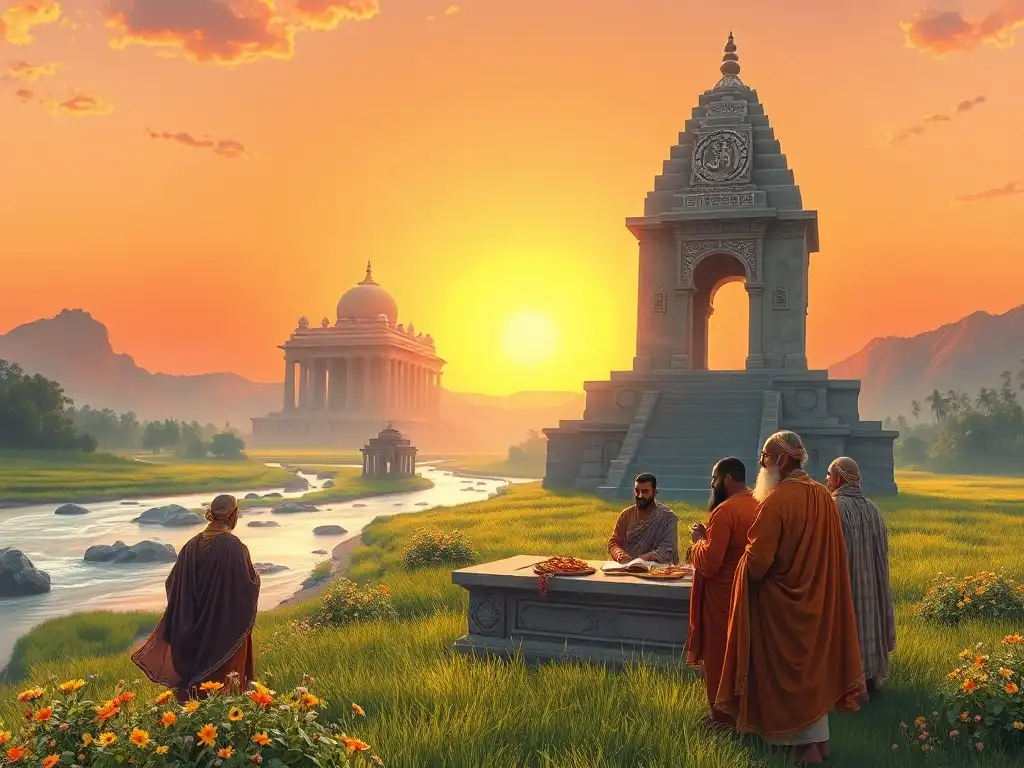
The Rigveda, dating back to approximately 1500 BCE, is not only a foundational text of ancient Indian culture and history but also a profound influence on subsequent Indian literature. Its verses, rich in metaphors and allegorical meanings, provided a literary framework that shaped various genres of later texts, such as the Brahmanas, Upanishads, and even the epic narratives of the Mahabharata and Ramayana.
The poetic structure and thematic elements of the Rigveda set a precedent for future literary works. The use of meter, especially the Trishtubh and Gayatri, became staples in later poetic compositions. Authors and poets drew inspiration from the Rigvedic verses, adapting their styles to mirror its depth and complexity. This intertextuality illustrates the Rigveda's enduring legacy in the literary tradition of ancient India.
Evolution of Vedic Thought
The evolution of Vedic thought is intricately linked to the teachings found within the Rigveda. The text introduces various concepts that later became foundational to Hindu philosophy and spirituality. Notably, the ideas of Dharma (righteousness), Karma (action), and Moksha (liberation) can be traced back to Rigvedic verses.
The Rigveda also emphasizes the connection between the individual and the cosmos, a theme that was further developed in later texts. The early notions of sacrifice (Yajna) and the cosmological hymns in the Rigveda laid the groundwork for the elaborate ritualistic practices found in later Vedic literature.
Moreover, the philosophical inquiries present in the Rigveda regarding the nature of the universe and existence prompted further intellectual exploration. This philosophical evolution is evident in the Upanishads, which delve deeper into metaphysical questions, moving from ritualistic practices to contemplative meditation and the understanding of Brahman (ultimate reality).
Impact on Indian Philosophy and Religion
The impact of the Rigveda on Indian philosophy and religion is profound and far-reaching. Its hymns encapsulate early religious beliefs and practices, including the worship of various deities such as Indra, Agni, and Varuna. These deities symbolized natural forces and cosmic principles, reflecting the early Vedic understanding of divinity.
As Indian thought progressed, the philosophical ideas found in the Rigveda influenced major schools of Indian philosophy. The concepts of Vedanta, Samkhya, and Yoga were built upon the foundational beliefs articulated in the Rigveda. For instance, the notion of Atman (soul) and Brahman (universal spirit) as explored in the Upanishads can be seen as a continuation of the inquiries initiated in the Rigvedic hymns.
Furthermore, the Rigveda's emphasis on ritual and sacredness has had a lasting impact on Hindu practices. The texts established a framework for sacred rituals that have persisted through centuries, influencing modern Hinduism. The verses continue to be recited in various ceremonies, reinforcing their significance in contemporary religious life.
The Rigveda serves as a seminal work that not only narrates the beliefs and practices of ancient Indian culture but also profoundly influenced the trajectory of Indian literature, philosophy, and religion. Its contributions are a testament to the rich tapestry of ancient Indian culture and history, echoing throughout the ages.
Conclusion: Legacy of the Rigveda in Ancient Indian Culture and History
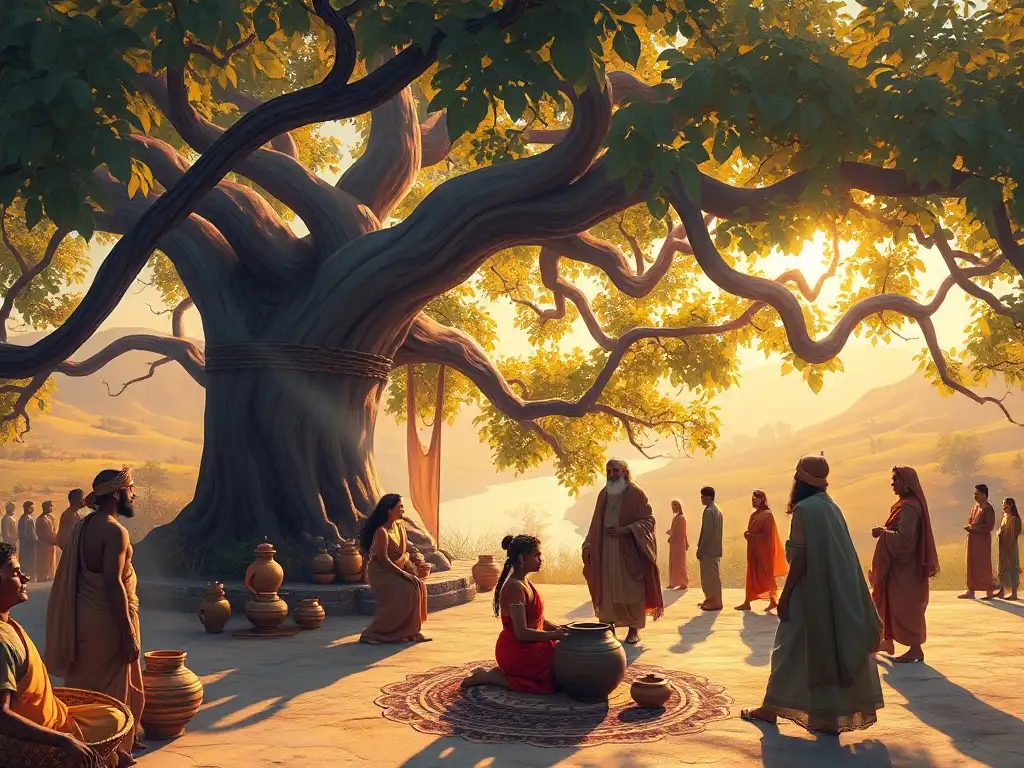
The Rigveda, as one of the oldest texts in human history, holds immense significance in the understanding of ancient Indian culture and history. It is not merely a religious scripture but a treasure trove of knowledge that encapsulates the philosophical, spiritual, and cultural ethos of early Indian civilization. The verses within the Rigveda reflect the social norms, rituals, and cosmological beliefs of the time, providing a window into the lives of the people who composed and recited these hymns.
Lasting Impact on Indian Civilization
The influence of the Rigveda extends beyond its immediate historical context, shaping various aspects of Indian civilization. Its hymns laid the groundwork for later philosophical thought, inspiring texts such as the Upanishads and the Brahmanas. The concept of dharma (duty/righteousness), which is pivotal in Hindu philosophy, finds its roots in the moral teachings embedded within the Rigveda.
Furthermore, the Rigveda's poetic forms and linguistic richness have significantly contributed to the Sanskrit language, which became a crucial medium for literature and scholarship throughout ancient and medieval India. The text's emphasis on ritualistic practices also shaped the religious landscape, influencing various schools of thought and sects that emerged in subsequent centuries.
| Aspect | Influence of the Rigveda |
|---|---|
| Philosophy | Foundation for Upanishads and later texts |
| Language | Development of Sanskrit and poetic traditions |
| Religion | Impact on Hindu rituals and worship practices |
| Social Structure | Reflections on societal roles and duties |
| Cultural Identity | Contribution to the Indian cultural ethos |
Future Research Directions
Future research on the Rigveda should focus on several key areas to further illuminate its role in ancient Indian culture and history:
- Comparative Analysis: Investigating parallels between the Rigveda and contemporary ancient texts from other cultures could provide insights into the shared human experiences and beliefs of the time.
- Linguistic Studies: Analyzing the evolution of language and poetic forms in the Rigveda can help trace the development of early Indo-European languages and their influence on modern languages.
- Archaeological Correlation: Integrating archaeological findings from the Indus Valley and other ancient sites with the themes presented in the Rigveda may yield new understandings of the socio-cultural dynamics of that era.
- Interdisciplinary Approaches: Collaborating with scholars from fields such as anthropology, history, and religious studies can enrich the discourse surrounding the Rigveda, revealing its multifaceted influence on Indian civilization.
References
- Witzel, Michael. The Origins of the World’s Mythologies. Oxford University Press, 2012.
- Jamison, Stephanie W., and Joel P. Brereton. The Rigveda: The Earliest Religious Poetry of India. Oxford University Press, 2014.
- Flood, Gavin. An Introduction to Hinduism. Cambridge University Press, 1996.
- Macdonell, Arthur A. A History of Sanskrit Literature. D. Appleton and Company, 1900.
- Doniger, Wendy. The Rig Veda: An Anthology. Penguin Books, 1994.
Frequently Asked Questions
What is the Rigveda and its significance in ancient Indian culture?
The Rigveda is one of the oldest sacred texts of ancient India, composed around 1500 BCE. It provides invaluable insights into the spiritual, social, and cultural practices of early Indian civilization.
How does the Rigveda contribute to our understanding of ancient Indian history?
The Rigveda serves as a primary source for understanding the beliefs, rituals, and societal norms of ancient Indian culture, reflecting the values and traditions of its time.
What themes are explored in the Rigveda?
The Rigveda explores themes such as creation, nature, deities, and rituals, presenting a comprehensive view of the spiritual beliefs and philosophical thoughts of ancient Indian society.
How does the Rigveda influence modern Indian culture?
The Rigveda's teachings and philosophies continue to influence modern Indian spiritual practices and cultural traditions, emphasizing the continuity of ancient beliefs in contemporary society.
In what ways is the Rigveda a testament to ancient Indian civilization?
The Rigveda is a testament to the linguistic, literary, and philosophical achievements of ancient Indian civilization, showcasing its intellectual depth and rich cultural heritage.
Final Reflection: Embracing the Depths of Ancient Indian Culture
The Rigveda stands as a timeless testament to the richness of ancient Indian culture, reminding us that the roots of our civilization run deep and are intricately woven into the fabric of our modern identity. In a world that often rushes forward, it is crucial to pause and reflect on the wisdom and traditions that have shaped our past, for they continue to influence our present and future.
The verses of the Rigveda not only echo the thoughts and beliefs of our ancestors but also serve as a bridge connecting us to the profound philosophies that have endured through millennia.
Culture is not merely a collection of artifacts or texts; it is a living, breathing entity that evolves while retaining its core essence. The teachings found within the Rigveda have permeated various aspects of life in India, from spirituality to social structures, and they continue to inspire contemporary thought and practice.
As the renowned scholar A. L. Basham once said, "> The Vedic texts are not just ancient scriptures; they are the very foundation upon which Indian civilization is built." This enduring influence highlights the importance of understanding and preserving our cultural heritage, as it shapes our collective identity and informs our values.
As we reflect on the lessons imparted by the Rigveda, I invite you to explore how these ancient teachings resonate in your own life. Consider the ways in which the wisdom of the past can guide your actions and decisions today. Whether through the pursuit of knowledge, the practice of compassion, or the celebration of diversity, let the spirit of ancient Indian culture inspire you to engage with the world around you meaningfully. Embrace the opportunity to learn from history, and carry forward the legacy of the Rigveda into a future that honors our shared heritage.
Unveil the Wisdom of the Rigveda Today!
Thank you for diving into the fascinating world of the Rigveda and exploring the roots of ancient Indian culture! We hope you have gained a deeper appreciation for this monumental text and its timeless wisdom. Now, it’s time to take action and delve even further into its significance.
Here are some steps you can take to continue your journey:
- Explore an excerpt of the Rigveda: Start your own discovery by reading a few verses. Reflect on their meaning and how they resonate with modern life.
- Join a discussion group: Engage with others who share your interest. Look for local or online communities focused on ancient texts, philosophy, or Indian culture.
- Share your insights: Write a short review or share your thoughts on social media about what the Rigveda has meant to you, and invite your friends to join the conversation.
What aspects of the Rigveda resonate with you the most, and how will you incorporate its teachings into your daily life?