
Vedic Cosmology: The Universe According to Ancient Indian Scholars

Welcome to Ancient India History, where we embark on a mesmerizing journey through the vibrant tapestry of India's past! In this exploration, we delve into the fascinating realm of Vedic cosmology and ancient India, unlocking the profound insights of ancient scholars who shaped our understanding of the universe. Discover how their groundbreaking ideas not only influenced their time but continue to resonate in contemporary thought.
Prepare to be captivated as we unravel the mysteries of the cosmos through the lens of epic literature and the rich traditions of ancient Indian civilizations. Join us as we uncover the wisdom that lies within the ancient texts and invites you to think beyond the stars!
Introduction to Vedic Cosmology and Ancient India
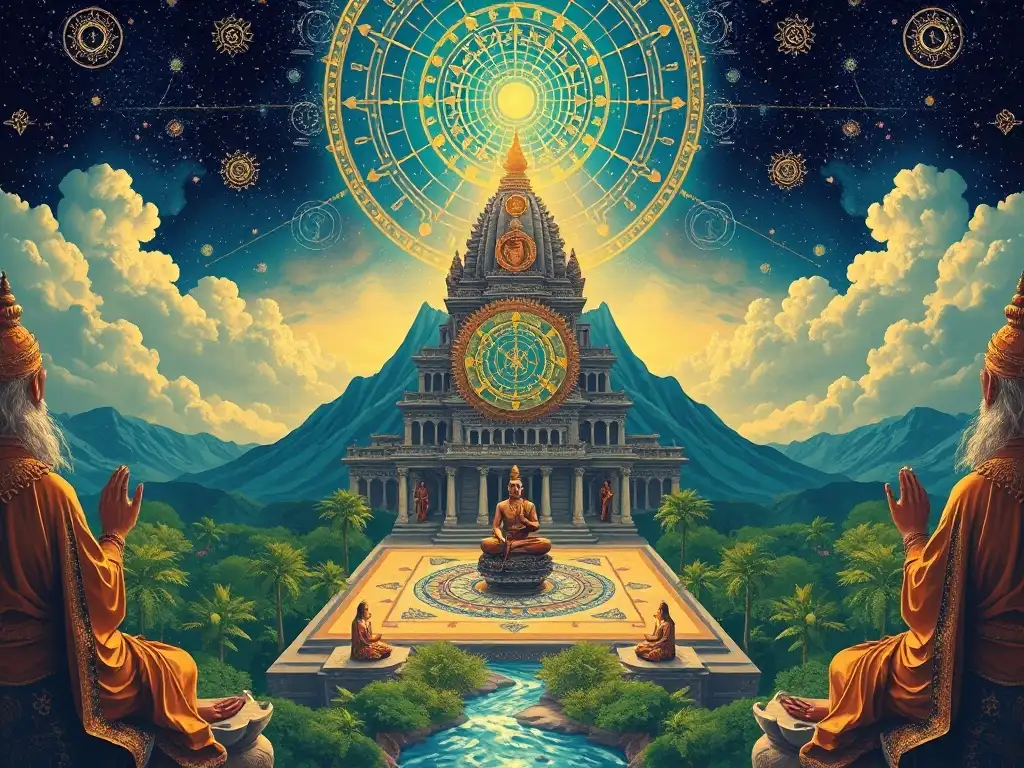
Vedic cosmology, a profound and intricate framework of understanding the universe, stems from the ancient texts known as the Vedas, which date back to approximately 1500 BCE. This cosmological perspective not only illustrates the ancient Indian scholars' views on the creation, structure, and functioning of the universe but also reflects the philosophical and spiritual ethos of the time.
In an era when scientific inquiry was still in its infancy, the insights offered by Vedic cosmology provided a holistic approach to understanding the cosmos, blending metaphysical concepts with natural phenomena. This exploration delves into the significance of Vedic cosmology within the broader tapestry of ancient Indian civilization, highlighting its enduring relevance and influence.
Definition of Vedic Cosmology
Vedic cosmology can be defined as the ancient Indian understanding of the universe's structure, origin, and dynamics as described in the Vedic texts. The Vedas, primarily comprising the Rigveda, Samaveda, Yajurveda, and Atharvaveda, encapsulate a range of cosmological ideas, from the creation of the universe (Srishti) to the cyclical nature of time (Kalachakra).
Key components of Vedic cosmology include:
- The concept of Brahman: The ultimate reality or cosmic spirit, from which the universe emanates.
- The Cosmic Egg (Hiranyagarbha): Symbolizing the universe's birth.
- The idea of Yugas: Cycles of time that influence the moral and spiritual development of humanity.
Importance of Cosmology in Ancient Indian Thought
The significance of cosmology in ancient Indian thought extends beyond mere scientific inquiry; it encompassed philosophical, religious, and cultural dimensions. Vedic cosmology served as a framework for understanding humanity's place in the universe and the interconnectedness of all existence.
- Philosophical Implications: It prompted questions about existence, consciousness, and the nature of reality.
- Cultural Impact: Cosmological ideas influenced various aspects of life, including rituals, art, and literature.
- Spiritual Guidance: Many rituals and practices were designed to align with cosmic principles, reflecting the belief that human actions could harmonize with the universe.
Historical Context of Vedic Cosmology
Overview of Ancient Indian Civilizations
Ancient India, characterized by its diverse civilizations, witnessed the flourishing of various cultures, languages, and philosophies. From the Indus Valley Civilization, known for its advanced urban planning and trade, to the Maurya and Gupta Empires, which made significant contributions to politics, art, and scholarship, the region was a melting pot of ideas.
- Key civilizations included:
- Indus Valley Civilization (c. 3300–1300 BCE)
- Vedic Period (c. 1500–500 BCE)
- Maurya Empire (c. 322–185 BCE)
- Gupta Empire (c. 240–550 CE)
This rich historical backdrop provided fertile ground for the development of Vedic cosmology, as scholars attempted to make sense of their world through the lens of the Vedas.
Influence of the Vedas on Cosmological Concepts
The Vedas served as primary texts that shaped the understanding of cosmology in ancient India. Through hymns, mantras, and philosophical discourses, the Vedas offered insights into the nature of the universe.
- Creation Myths: Various creation narratives explain how the cosmos came into being, often involving deities and metaphysical processes.
- Astronomical Observations: Early Indian scholars made significant observations about celestial bodies, influencing later astronomical studies.
- Philosophical Schools: The Vedas paved the way for various schools of thought, including Samkhya and Vedanta, which further explored cosmological themes and the relationship between the material and spiritual worlds.
Vedic cosmology represents a unique synthesis of spiritual inquiry and empirical observation, making it a vital aspect of ancient Indian history and philosophy. As we delve deeper into the specific components and implications of this cosmology, we can better appreciate its lasting legacy in the fabric of Indian civilization.
Key Texts and Sources in Vedic Cosmology
Vedic cosmology is deeply rooted in the ancient texts of India, primarily the Vedas, which serve as the foundational scriptures of Hindu philosophy. The cosmological ideas presented in these texts reflect a sophisticated understanding of the universe and its workings. The principal sources that outline Vedic cosmology include the Rigveda, the Upanishads, and the Puranas. Each of these texts contributes unique perspectives and insights into the nature of the cosmos, its creation, and its underlying principles.
The Rigveda: The Foundation of Vedic Cosmology
The Rigveda, one of the oldest texts in human history, is crucial in laying the groundwork for Vedic cosmology. This ancient scripture consists of hymns dedicated to various deities, many of which explore the creation of the universe and the role of divine forces.
One of the most notable hymns is the Nasadiya Sukta, which contemplates the origins of the cosmos, questioning how creation came into being and the nature of the creator. It reflects a profound philosophical inquiry into existence, suggesting a universe that emerged from a state of non-being. The Rigveda presents a polytheistic view of the universe, where gods like Vishnu, Rudra, and Agni are seen as vital forces in the cosmic order. Their actions and interactions are believed to maintain the balance of the universe, emphasizing the interconnectedness of all elements within it.
The Upanishads: Philosophical Insights into the Universe
The Upanishads, composed later than the Rigveda, delve deeper into philosophical themes, expanding on the cosmological ideas introduced in the earlier texts. They focus on understanding the ultimate reality, known as Brahman, which is considered the source of the universe.
In the Upanishads, the relationship between the individual self (Atman) and the universal self (Brahman) is a central theme. Texts like the Chandogya Upanishad and the Taittiriya Upanishad articulate complex ideas about the nature of existence, suggesting that the universe is a manifestation of Brahman. They explore concepts such as the cyclical nature of time and the idea that creation, preservation, and destruction are continuous processes governed by cosmic laws. The philosophical inquiries in the Upanishads encourage a meditative approach to understanding the cosmos, promoting the idea that through self-realization, one can comprehend the universe's true nature.
The Puranas: Mythological Narratives and Cosmological Ideas
The Puranas, a genre of ancient Indian literature, blend mythology, history, and cosmology, providing a narrative framework for understanding the universe. These texts, such as the Vishnu Purana and the Bhagavata Purana, recount the stories of gods, sages, and cosmic events that shape the universe's structure.
The Puranas often describe the creation of the world through divine acts and the cyclical nature of time. They introduce the concepts of cosmic cycles (Kalpas) and the recurring ages of the world (Yugas), illustrating the dynamic processes of creation and dissolution. Additionally, these texts present elaborate cosmologies with descriptions of the universe's geography, including the realms of heaven, earth, and the underworld. The narratives within the Puranas serve to convey moral and spiritual lessons, reflecting the belief that understanding the cosmos is essential for achieving harmony in life.
Central Concepts in Vedic Cosmology
Vedic cosmology is characterized by several central concepts that illustrate the ancient Indian scholars' understanding of the universe's structure and functioning. These concepts encompass the layers of existence, the cyclical nature of time, and the philosophical ideas surrounding the ultimate reality.
Layers of the Universe: Lokas and Talas
In Vedic cosmology, the universe is described as consisting of various realms or layers known as Lokas (higher realms) and Talas (lower realms).
- Lokas are often associated with the heavens and divine beings, where gods and enlightened souls reside. Some of the prominent Lokas include:
- Svarga: The realm of pleasure and happiness, often equated with heaven.
- Maharloka: A higher realm for sages who have achieved great spiritual accomplishments.
- Satyaloka: The highest realm, associated with absolute truth and the abode of Brahma.
- Talas, on the other hand, refer to the lower realms, often linked to the material world and darker aspects of existence. Examples include:
- Patala: The underworld, inhabited by serpents and other beings.
- Rasatala: A realm of demons and dark entities.
This layered structure emphasizes the complexity and diversity of existence, allowing for various experiences and spiritual journeys within the cosmos.
Time Cycles: Yugas and Their Significance
Vedic cosmology introduces the concept of Yugas, or cosmic ages, which represent cyclical phases in the evolution of the universe. Each Yuga has distinct characteristics and moral qualities that influence the behavior of beings within it. The four Yugas are:
- Satya Yuga: The age of truth and righteousness, characterized by virtue and long lifespans.
- Treta Yuga: The age where virtue diminishes, yet righteousness still prevails, marked by the advent of significant figures like Rama.
- Dvapara Yuga: The age of duality, where the decline of virtue accelerates, leading to the events of the Mahabharata.
- Kali Yuga: The current age, characterized by darkness, strife, and moral decline. It is believed that this Yuga is marked by the greatest challenges for humanity.
The cyclical nature of Yugas illustrates the belief that time is not linear but rather a series of recurring cycles, each with its own lessons and opportunities for spiritual growth.
The Concept of Brahman and Its Relation to the Universe
At the heart of Vedic cosmology lies the concept of Brahman, the ultimate reality and source of all existence. Brahman is described as infinite, transcendent, and immanent, encompassing everything in the universe.
The relationship between Brahman and the universe is a central theme in the Upanishads, where it is illustrated that all creation emerges from Brahman and ultimately returns to it. The universe is seen as a manifestation of Brahman, reflecting its dynamic and ever-changing nature. This understanding emphasizes the interconnectedness of all beings and the underlying unity of existence.
In Vedic thought, realizing the oneness of Atman (individual self) and Brahman is the ultimate goal of spiritual practice, leading to liberation (moksha) and a profound understanding of the universe's nature. This philosophical insight profoundly influences the spiritual landscape of ancient India, shaping the cultural and religious paradigms that continue to resonate today.
Vedic Cosmology vs. Other Ancient Cosmologies
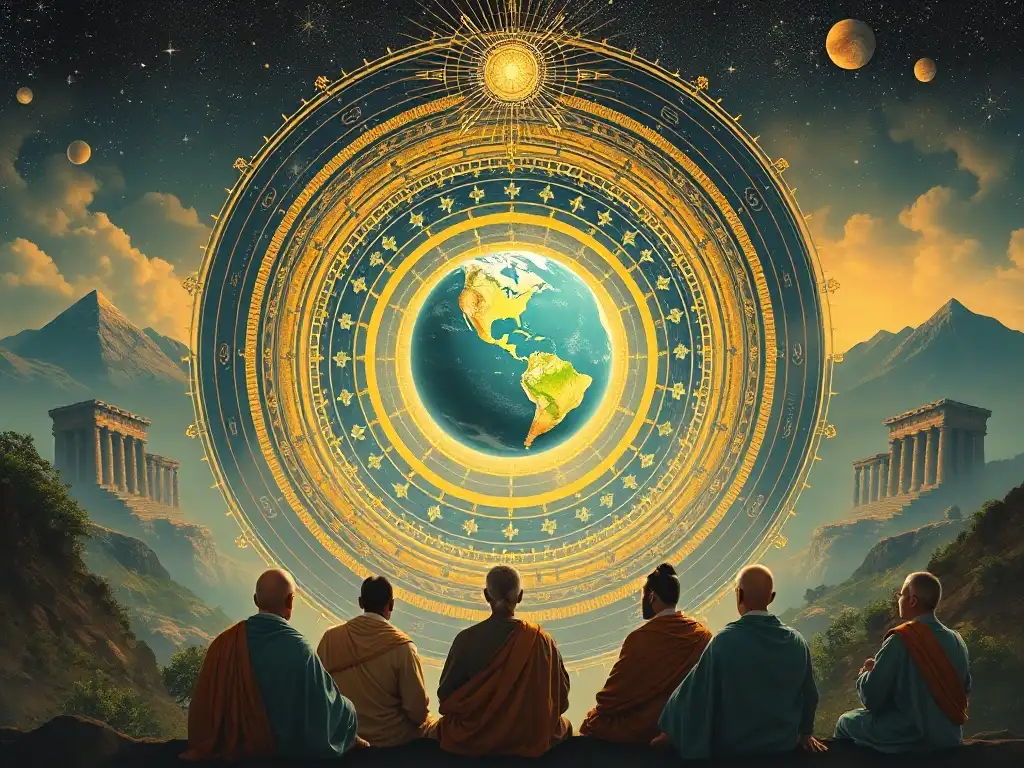
Vedic cosmology presents a distinct framework for understanding the universe, differentiating itself from other ancient cosmological systems. While many ancient cultures attempted to explain the cosmos through mythological narratives or the activities of deities, Vedic cosmology is characterized by its philosophical depth and systematic approach. The Vedas, particularly the Rigveda, contain hymns and verses that reflect a nuanced understanding of the cosmos, encompassing both physical and metaphysical dimensions. This section delves into the comparisons and contrasts of Vedic cosmology with other ancient cosmologies, highlighting its unique features and lasting influence.
Comparison with Ancient Greek Cosmology
Ancient Greek cosmology, primarily articulated through philosophers like Plato and Aristotle, shares some conceptual similarities with Vedic cosmology but is fundamentally different in its frameworks. Greek cosmology often emphasizes a geocentric perspective, where the Earth is at the center of the universe, surrounded by celestial spheres. In contrast, Vedic cosmology views the universe as cyclical, involving a series of creation and dissolution phases known as kalpas.
While both systems recognize a divine order, Greek cosmology tends to focus on rationality and empirical observation, often leading to a more mechanistic worldview. In Vedic thought, however, the cosmos is deeply intertwined with spirituality and the principles of dharma (cosmic order). For instance, the concept of Brahman in Vedic texts signifies the ultimate reality, transcending the physical universe, whereas Greek philosophers like Aristotle viewed the cosmos as a finite entity governed by natural laws. Thus, while both cosmologies sought to explain the universe, their underlying assumptions and implications reflected their respective cultural and philosophical contexts.
Contrasts with Mesopotamian Cosmological Views
Mesopotamian cosmology is rooted in mythological narratives that often depict the universe as created through conflict among gods, particularly in texts like the Enuma Elish. This contrasts sharply with the Vedic cosmological perspective, which emphasizes a more harmonious and cyclic understanding of creation. In Vedic texts, the universe is seen as emerging from the cosmic sacrifice of Purusha, the primordial being, symbolizing the interconnectedness of all life and the cyclical nature of existence.
Additionally, while Mesopotamian cosmology tends to depict the cosmos in terms of anthropomorphic deities who control and manipulate natural forces, Vedic cosmology presents a more abstract and philosophical view. The Vedic texts explore concepts such as time ( kala) and space ( akasha) as fundamental elements of the universe, moving beyond mere mythological explanations to engage with metaphysical inquiries. This philosophical depth distinguishes Vedic cosmology from its Mesopotamian counterparts, reflecting a unique spiritual approach to understanding the cosmos.
Unique Features of Vedic Cosmology
Vedic cosmology is characterized by several unique features that highlight its complexity and depth. One of the most notable aspects is the idea of Srishti (creation), which is viewed as a continuous process rather than a singular event. This cyclical concept of time, embodied in the idea of yugas (ages), suggests that the universe undergoes endless cycles of creation and dissolution, a perspective that resonates with modern scientific theories of cosmology.
Another defining feature is the integration of cosmological concepts with religious practices and rituals. The Vedas provide elaborate descriptions of rituals that are believed to influence cosmic order, linking human actions with the workings of the universe. This relationship between ritual and cosmology underscores the belief in the interconnectedness of all existence.
Moreover, the Vedic texts introduce the concept of the Cosmic Man ( Viraj or Purusha), symbolizing the universe itself. This idea reflects an understanding of the cosmos as a unified whole, where every element is interrelated, contributing to a holistic perspective that has influenced various philosophical and spiritual traditions in India.
The Influence of Vedic Cosmology on Later Indian Thought
The insights of Vedic cosmology have profoundly shaped the philosophical and spiritual landscape of India. Its intricate understanding of the universe has influenced not only Hindu philosophy but also other Indian spiritual traditions, including Buddhism and Jainism. This section examines the far-reaching impact of Vedic cosmology on subsequent thought and belief systems.
Impact on Hindu Philosophy and Spirituality
Vedic cosmology has significantly influenced Hindu philosophy, particularly through the concepts of Brahman and Atman (the individual soul). The notion that the universe is a manifestation of a singular, ultimate reality has led to various philosophical schools, such as Advaita Vedanta, which emphasizes non-duality and the unity of the self with the cosmos.
Furthermore, the cyclical view of time and existence found in Vedic cosmology has shaped Hindu practices, including the celebration of festivals that align with cosmic cycles. The understanding of karma and dharma is also rooted in these cosmological ideas, where individual actions are seen to have cosmic implications, reinforcing the interconnectedness of life.
Vedic Cosmology in Buddhism and Jainism
Buddhism and Jainism, emerging from the cultural milieu of ancient India, have also drawn upon Vedic cosmological concepts. While both traditions diverge in their metaphysical frameworks, they share an appreciation for the cyclical nature of existence and the importance of ethical conduct.
In Buddhism, the concept of samsara (the cycle of birth and rebirth) parallels the Vedic understanding of time as cyclical. The emphasis on enlightenment and liberation from this cycle reflects a distinct interpretation of Vedic ideas. Jainism, on the other hand, incorporates the notion of cosmic cycles in its cosmology, emphasizing the importance of non-violence and truth in maintaining cosmic harmony.
Modern Interpretations of Vedic Cosmological Concepts
In contemporary times, Vedic cosmology has attracted interest from various fields, including philosophy, science, and spirituality. Scholars and practitioners have sought to reinterpret Vedic ideas in light of modern scientific discoveries, particularly in areas such as quantum physics and cosmology.
The cyclical nature of time and the interconnectedness of all beings resonate with current scientific models that suggest an intricate relationship between the universe's structure and behavior. Additionally, the philosophical inquiries found in Vedic texts continue to inspire discussions on consciousness, existence, and the nature of reality, bridging ancient wisdom with modern thought.
Through these diverse interpretations, Vedic cosmology remains a relevant and thought-provoking framework for exploring the universe's mysteries, reflecting its enduring legacy in shaping human understanding across eras.
Conclusion: The Legacy of Vedic Cosmology in Ancient Indian History
Vedic cosmology is a profound aspect of ancient Indian thought that reflects the intricate relationship between the cosmos and human existence. The Vedas, particularly the Rigveda and the Upanishads, encapsulate a rich tapestry of cosmological ideas that not only explain the physical universe but also delve into metaphysical concepts.
The legacy of Vedic cosmology extends beyond mere astronomical observations; it integrates philosophy, spirituality, and science, influencing various realms of Indian culture, including art, literature, and religion. As scholars continue to explore these ancient texts, the insights they offer contribute to a deeper understanding of the universe and humanity's place within it.
Summary of Key Themes
The Vedic texts introduce several key themes in cosmology:
- Creation and Origin: The notion of the universe's creation, often depicted through the concept of "Srishti," emphasizes the cyclical nature of existence, which is a recurring theme in Vedic literature.
- Cosmic Order (Rta): This principle denotes the natural order of the universe, reflecting the interconnectedness of all beings and the importance of harmony within the cosmos.
- Deities and Forces: Various deities represent natural forces and cosmic phenomena, illustrating the Vedic understanding of the universe as a dynamic interplay between divine entities and natural laws.
- Man's Place in the Universe: Vedic cosmology posits that human beings are integral to the cosmic order, emphasizing the importance of dharma (duty) in maintaining balance and harmony.
These themes provide a framework for understanding not only ancient Indian thought but also the cultural practices that stemmed from these beliefs.
The Relevance of Vedic Cosmology Today
In contemporary society, the relevance of Vedic cosmology is increasingly recognized, especially in discussions around sustainability and ecological balance. The Vedic perspective, which emphasizes the interconnectedness of all life forms, resonates with modern environmental movements advocating for a harmonious relationship with nature. Additionally, the philosophical inquiries found in Vedic texts continue to inspire scholars and spiritual seekers alike, encouraging a holistic approach to understanding existence. As the world grapples with complex challenges, revisiting these ancient cosmological insights may offer valuable guidance in fostering a more sustainable and balanced future.
References and Further Reading on Vedic Cosmology and Ancient India
Recommended Books and Articles
- "The Vedas: An Introduction to Hinduism's Sacred Texts": by Roshen Dalal - This book provides an overview of the Vedic texts and their significance in Hindu philosophy, including cosmological aspects.
- "Hindu Cosmology: The Universe According to the Vedas": by David Kinsley - A detailed analysis of Vedic cosmology, exploring its themes and implications in both ancient and modern contexts.
- "The Upanishads: A New Translation": by Vernon Katz and Thomas Egenes - This translation of the Upanishads highlights the philosophical depth of Vedic thought, including discussions on the nature of the universe.
Online Resources and Databases for Further Exploration
- Internet Archive: A treasure trove of ancient texts, including translations of Vedic scriptures and related literature that can be accessed for free.
- Sacred Texts Archive: A comprehensive collection of sacred texts from various cultures, including the Vedas, providing insights into ancient Indian cosmology.
- The Digital Library of India: Offers access to a vast array of texts and resources related to Indian history, philosophy, and cosmology, enabling deeper exploration of Vedic concepts.
By engaging with these resources, readers can deepen their understanding of Vedic cosmology and its lasting impact on ancient Indian history and contemporary thought.
- Introduction to Vedic Cosmology and Ancient India
- Historical Context of Vedic Cosmology
- Key Texts and Sources in Vedic Cosmology
- Central Concepts in Vedic Cosmology
- Vedic Cosmology vs. Other Ancient Cosmologies
- The Influence of Vedic Cosmology on Later Indian Thought
- Conclusion: The Legacy of Vedic Cosmology in Ancient Indian History
- References and Further Reading on Vedic Cosmology and Ancient India
Frequently Asked Questions
What is Vedic cosmology?
Vedic cosmology refers to the ancient Indian understanding of the universe as described in Vedic texts, showcasing a complex structure of the cosmos, including concepts of space, time, and celestial bodies.
How did ancient Indian scholars contribute to cosmology?
Ancient Indian scholars made significant contributions through detailed observations and theories about the universe, particularly in texts like the Rigveda and Surya Siddhanta, which laid the groundwork for future astronomical studies.
What are the key features of Vedic cosmology?
Key features include the idea of the universe's cyclic nature, the concept of time as a dimension, and the belief in multiple worlds (lokas) that reflect a rich understanding of spiritual and physical realms.
How does Vedic cosmology compare to other ancient cosmologies?
Vedic cosmology differs from other ancient systems by emphasizing a harmonious relationship between the cosmos and the spiritual principles, often integrating mythology and philosophy into its scientific observations.
What is the significance of studying Vedic cosmology today?
Studying Vedic cosmology offers insights into the intellectual heritage of ancient India and highlights the interconnectedness of science and spirituality, providing a broader context for our understanding of ancient civilizations.
Final Reflection: Embracing the Wisdom of Vedic Cosmology
In an age where science and spirituality often seem at odds, the insights of Vedic cosmology offer a profound understanding of the universe that remains strikingly relevant today. As we grapple with existential questions and the mysteries of our existence, the ancient Indian scholars' perspectives remind us that the cosmos is not merely a physical entity but a tapestry woven with consciousness, purpose, and interconnectedness. This holistic view challenges us to reconsider our place within the universe and inspires a deeper appreciation for the intricate dance of life that surrounds us.
Vedic cosmology has not only shaped the spiritual landscape of ancient India but continues to resonate in contemporary discussions about the nature of reality and our connection to the cosmos. The teachings encapsulated in these ancient texts encourage us to explore the relationship between the microcosm and the macrocosm, revealing how our inner worlds reflect the vastness of the universe. As Carl Sagan once said, We are made of star-stuff. We are a way for the universe to know itself.
This sentiment echoes the essence of Vedic thought, inviting us to recognize that we are not separate from the cosmos but an integral part of its unfolding story.
As we conclude this exploration of Vedic cosmology, I invite you to reflect on how these ancient teachings can enrich your understanding of the universe and your place within it. Consider how the principles of interconnectedness and consciousness can guide your actions and thoughts in daily life.
Let the wisdom of ancient India inspire you to cultivate a sense of wonder and responsibility towards the world around you, fostering a deeper connection with both the cosmos and your fellow beings. In doing so, we honor the legacy of those who came before us and contribute to a more harmonious existence in the present and future.
Unveil the Mysteries of Vedic Cosmology!
Thank you for exploring the fascinating world of Vedic Cosmology with us! By diving into the insights of ancient Indian scholars, you've gained a unique perspective on the universe's origins and structure. Now, it’s time to take what you’ve learned and connect further with this rich tradition.
Here are some simple yet powerful actions you can take right now:
- Join a Study Group: Seek out or form a local or online group focused on Vedic texts and cosmological studies to deepen your understanding and share insights with others.
- Explore Further: Investigate literature or documentaries that delve into Vedic philosophy to enrich your appreciation and knowledge.
- Share Your Insights: Initiate conversations within your online communities or on social media. Discuss what you’ve learned and invite others to engage in dialogue about ancient Indian wisdom.
What aspect of Vedic Cosmology intrigues you the most, and how do you envision its influence on our contemporary understanding of the universe?