
The Interplay of Internal Trade and Social Stratification in Ancient India


Welcome to Ancient India History, where we invite you to journey through the captivating tapestry of one of the world's oldest civilizations. In our featured article, “The Interplay of Internal Trade and Social Stratification in Ancient India,” we delve into the intricate dynamics of ancient Indian trade and society—a realm where commerce and culture intertwined to shape the lives of countless people.
As you explore the rich narratives of trade routes, societal hierarchies, and the thriving economies from the Indus Valley to the Gupta Empire, prepare to uncover the profound impact these elements had on the evolution of ancient Indian civilization. Join us as we unravel the mysteries and marvels of a past that continues to influence our present!

Introduction to Ancient Indian Trade and Society
The tapestry of ancient Indian civilization is woven with the intricate threads of trade and social structure, reflecting a dynamic interplay that shaped its societies. Ancient Indian trade and society were not merely economic practices but fundamental aspects that contributed to cultural exchanges, the development of urban centers, and the stratification of social classes.
From the bustling markets of the Indus Valley to the flourishing trade routes of the Gupta Empire, internal trade played a pivotal role in connecting diverse communities and facilitating the flow of goods, ideas, and innovations. This article delves into the rich history of internal trade networks and explores how they influenced social stratification, ultimately shaping the fabric of ancient Indian life.
Overview of Internal Trade in Ancient India
Internal trade in ancient India was characterized by a complex system of markets and trade routes that facilitated the exchange of various goods across regions. This network was not only crucial for economic sustenance but also for cultural interaction. Key elements include:
- Trade Centers: Prominent cities such as Pataliputra, Ujjain, and Taxila served as vital hubs for commerce and exchange.
- Market Regulations: Various guilds and local governance structures regulated trade, ensuring fair practices and the protection of merchants.
- Cultural Exchange: The movement of goods often brought with it ideas, beliefs, and practices, enhancing cultural diversity within communities.
The significance of internal trade extended beyond mere economic transactions; it was a catalyst for social change, influencing the hierarchy within society.
Importance of Social Stratification in Indian Civilization
Social stratification in ancient India was a defining feature that structured relationships and interactions among individuals and groups. It was deeply intertwined with trade, as the distribution of wealth and resources significantly affected social standing. Major aspects of social stratification include:
- Varna System: The classification of society into four primary groups—Brahmins, Kshatriyas, Vaishyas, and Shudras—was linked to occupational roles, including those in trade and commerce.
- Economic Mobility: Trade offered avenues for economic advancement, allowing individuals to rise in status, which sometimes blurred the rigid boundaries of the varna system.
- Cultural Identity: The interplay of trade and stratification contributed to the formation of distinct cultural identities, influenced by regional goods, practices, and interactions.
Understanding the dynamics of social stratification is essential to comprehend how trade shaped the societal landscape of ancient India.
Historical Context of Trade in Ancient India
The historical context of trade in ancient India reveals a rich legacy that dates back thousands of years. Internal trade was not only vital for economic development but also served as a means of cultural and social integration across diverse regions.
Major Trade Routes and Networks
The vast network of trade routes in ancient India facilitated the movement of goods and ideas across the subcontinent. Notable trade routes included:
- The Grand Trunk Road: Connecting eastern and western India, this route was essential for the movement of traders and goods.
- Maritime Trade Routes: Ports along the western coast, such as Bharukachchha (modern-day Bharuch), played a significant role in trade with distant lands, including Arabia and Southeast Asia.
- Regional Trade Networks: Local pathways linked villages and towns, fostering intra-regional trade that supported community economies.
These trade routes not only enabled economic transactions but also facilitated cultural exchanges that enriched Indian civilization.
Key Trade Goods and Their Significance
The trade of various goods in ancient India had profound implications for both the economy and society. Some of the key trade goods included:
| Trade Goods | Significance |
|---|---|
| Spices | Highly sought after both locally and internationally, spices like black pepper and cardamom were major exports. |
| Textiles | Indian textiles, particularly silk and cotton, were renowned and played a crucial role in trade networks. |
| Gems and Jewelry | Precious stones and intricate jewelry reflected the artistic accomplishments of the civilization and were highly valued. |
| Agricultural Products | Grains, fruits, and other agricultural products supported local economies and facilitated trade between rural and urban areas. |
The significance of these goods extended beyond mere economic value; they were emblematic of India's rich cultural heritage and craftsmanship, further solidifying the country's status as a center of trade in the ancient world.
By examining these facets of ancient Indian trade and society, we can gain deeper insights into how economic practices shaped social structures and cultural interactions, leaving a lasting legacy in the history of India.
Social stratification in ancient India was a complex and multifaceted structure that played a crucial role in shaping the interactions and relationships within society. This stratification was primarily defined by the caste system, which segmented society into hierarchical groups, each with distinct roles, duties, and privileges. The intricate dynamics of this social structure were closely tied to various factors, including economic roles, trade practices, and cultural norms. Through an examination of these elements, we can gain a deeper understanding of how trade and social stratification interlinked to form the fabric of ancient Indian civilization.
Caste System and Its Influence on Society
The caste system, known as varna, classified individuals into four primary categories: Brahmins (priests and scholars), Kshatriyas (warriors and rulers), Vaishyas (traders and agriculturists), and Shudras (laborers and service providers). Each caste had specific responsibilities and societal roles, which were often hereditary, leading to a rigid social framework.
This system influenced various aspects of daily life, including marriage, occupation, and social interactions. For instance, inter-caste marriages were generally prohibited, reinforcing social boundaries and maintaining the purity of each caste. The caste system also impacted access to resources and wealth, as higher castes often controlled significant economic power and land, while lower castes faced restrictions in economic participation. This stratification not only defined individual identity but also shaped community relationships, resulting in a society where mobility between castes was limited.
Economic Roles within the Caste System
Economic roles within the caste system were intricately linked to the functions assigned to each caste. The Brahmins, while primarily focused on religious and scholarly pursuits, often received donations and offerings, establishing a form of economic power through spiritual authority. Kshatriyas, as the ruling class, engaged in land ownership and military endeavors, contributing to their wealth and status.
The Vaishyas played a crucial role in ancient Indian trade and society as merchants and farmers. They were responsible for producing goods and facilitating trade, both locally and with distant regions, creating a vital economic network that supported the economy. In contrast, the Shudras undertook manual labor and service roles, often without the same economic benefits or social recognition as their higher caste counterparts.
Trade in ancient India was not only a means of economic exchange but also a significant factor in shaping social structures. The development of internal trade networks facilitated the movement of goods and ideas, fostering interactions among different castes and communities. This exchange often led to the emergence of urban centers, where diverse cultures and economic activities coalesced, challenging the traditional boundaries defined by caste.
How Trade Influenced Social Hierarchies
As trade flourished, especially during periods like the Maurya and Gupta empires, the economic power of merchants and traders began to rise, leading to shifts in social hierarchies. Wealth accumulation through trade allowed members of the Vaishya caste to gain influence and status, often rivaling the traditional power held by the Kshatriyas and Brahmins. This challenge to the existing social order sometimes resulted in tensions and conflicts, as the established elites sought to maintain their authority amidst changing economic dynamics.
Additionally, the expansion of trade routes connected ancient India to distant regions, such as the Mediterranean and Southeast Asia, enhancing the wealth and influence of traders. As a result, trade not only provided economic opportunities but also facilitated cultural exchanges, leading to a more fluid social structure in trading hubs.
Impact of Wealth Accumulation on Caste Dynamics
Wealth accumulation through trade had a profound impact on caste dynamics in ancient India. While the caste system traditionally emphasized hereditary roles, the increasing economic power of traders and merchants began to challenge these norms. Successful merchants could gain social recognition and even elevate their status within their communities, blurring the rigid lines of caste.
However, this rise in wealth was not uniform across all castes. While some Vaishyas thrived, other lower castes faced persistent marginalization, emphasizing the complex interplay between wealth and social stratification. The growing economic disparities within the caste system sometimes led to the emergence of new social groups, further complicating the existing hierarchy.
The interplay between internal trade and social stratification in ancient India reflects a dynamic relationship where economic activities influenced societal structures, leading to both opportunities and challenges within the stratified framework of ancient Indian civilization.
Case Studies of Trade and Society in Ancient Indian Cities
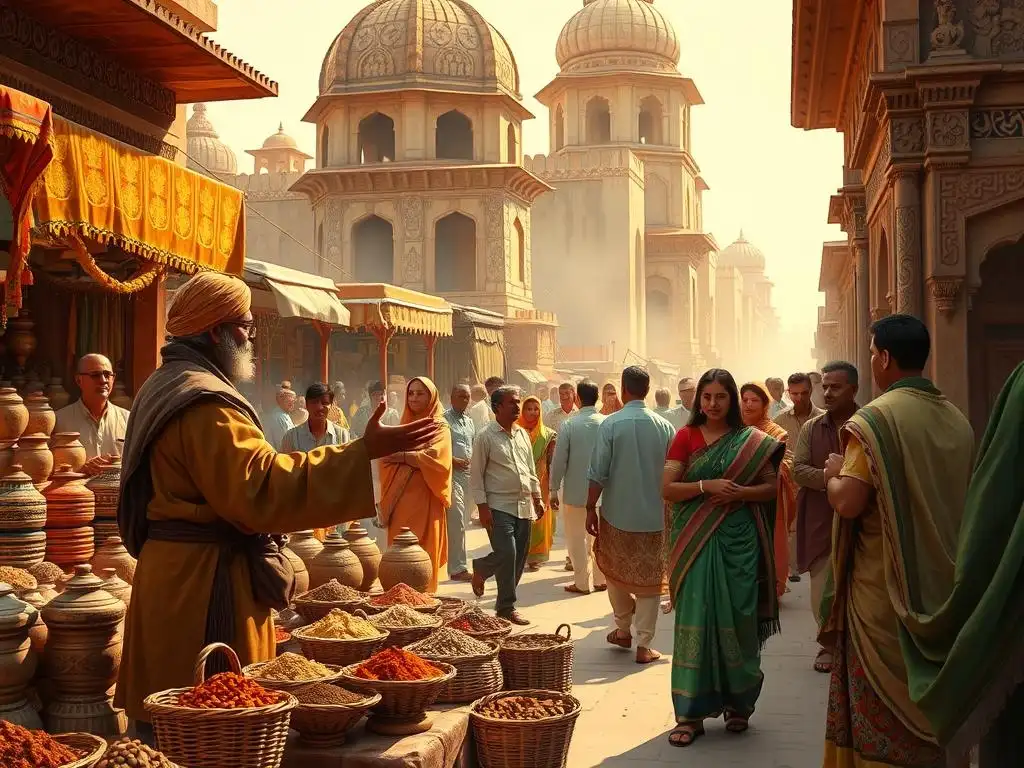
Ancient Indian cities, with their complex trade networks, provide a compelling lens through which to examine the interplay of commerce and social hierarchy. One can observe how cities like Pataliputra and Taxila served not only as economic hubs but also as melting pots of diverse cultures and social orders. The internal trade routes facilitated the movement of goods such as textiles, spices, and metals, creating a vibrant marketplace that attracted merchants, artisans, and consumers from various backgrounds. These bustling urban centers became the backbone of economic activity, influencing the social stratification that characterized ancient Indian society.
The interaction between trade and society in these cities reveals much about the norms and values of the period. For example, the merchants who thrived in these environments often accumulated significant wealth and status, challenging traditional social structures. The relationships formed within these trade networks were pivotal in shaping both local economies and broader societal trends, thus underscoring the significance of internal trade in ancient India.
Trade Centers: Pataliputra and Taxila
Pataliputra, the capital of the Magadha kingdom, emerged as a major trade center due to its strategic location at the confluence of the Ganges and Son rivers. This city became a crucial node in the trade routes connecting the eastern and western parts of India, facilitating the exchange of goods such as silk, pottery, and precious metals. The presence of sophisticated infrastructure, including roads and marketplaces, allowed for the efficient movement of goods and people, thus enhancing its economic prominence.
Similarly, Taxila, located at the crossroads of important trade routes, served as another significant trade hub. It was renowned for its educational institutions and attracted scholars and merchants alike. The city's diverse population contributed to a dynamic marketplace where ideas, goods, and cultures intermingled. The successful trade practices in Taxila not only generated wealth but also helped in the dissemination of knowledge and technology, further elevating its status in ancient Indian society.
The Role of Merchants in Society
Merchants in ancient India played a vital role in shaping both the economy and social structure. They were often seen as both facilitators of trade and pivotal figures in local communities. Merchants could rise to prominence through their economic activities, accumulating wealth and influence that enabled them to engage with the ruling elite. This was particularly evident in cities like Pataliputra, where successful merchants often participated in governance and local decision-making.
Moreover, guilds of merchants, known as "shrenis," became essential institutions that not only regulated trade practices but also provided social security for their members. These guilds allowed merchants to collectively address issues such as disputes and taxation, thus reinforcing their status and influence within society. The interactions between merchants and other social classes reflected the complexities of ancient Indian society, where trade not only generated wealth but also fostered connections across different strata.
The internal trade networks of ancient India significantly impacted social mobility, providing avenues for individuals from various backgrounds to improve their social standing. The economic opportunities generated by trade allowed many to transcend traditional caste boundaries, albeit within certain constraints.
Opportunities for Upward Mobility Through Trade
Trade offered various opportunities for upward social mobility, particularly for individuals engaged in commerce. Wealth generated from successful trading ventures enabled some to rise above their inherited social status. For instance, many merchants were able to acquire properties and establish influential positions within their communities. This shift in social status was often marked by increased participation in local governance and community affairs, as merchants became key players in the economic and political landscape.
Additionally, the rise of urban centers facilitated the establishment of new social hierarchies based on wealth and trade rather than strictly adhering to traditional caste roles. This evolution allowed certain groups, including artisans and traders, to gain recognition and respect, thus demonstrating the transformative power of internal trade on social dynamics.
Limitations Faced by Lower Castes in Trade
Despite the opportunities presented by internal trade, significant limitations persisted for lower castes and marginalized groups. The rigid caste system often restricted these individuals from fully participating in trade activities, limiting their access to resources, markets, and networks essential for successful commerce. Lower castes frequently faced discrimination and were often relegated to low-status occupations, making it challenging to achieve upward mobility through trade.
Moreover, social stigma and legal restrictions further impeded their ability to engage in trade. Even when they managed to participate in local markets, their roles were often confined to menial tasks or they were forced to operate in informal settings. This inequity illustrated the complexities of social mobility in ancient India, where trade could both empower and constrain individuals based on their social origins. The interplay of trade and caste thus created a nuanced social landscape that highlights the contradictions inherent in ancient Indian society.
Conclusion
The examination of ancient Indian trade and society reveals a complex relationship that significantly influenced the region's cultural and economic landscape. Internal trade networks not only facilitated the exchange of goods but also acted as a catalyst for social stratification. As different classes emerged, wealth accumulation and resource distribution led to distinct societal roles, shaping the interactions and relationships among various groups. This interplay of trade and social dynamics established a framework that influenced governance, culture, and even religious practices throughout ancient India.
Summary of the Interplay Between Trade and Society
In ancient India, trade was a vital component of everyday life, connecting various regions and communities. The flourishing trade routes, such as those established during the Maurya and Gupta empires, allowed for the exchange of not just goods, but also ideas and cultural practices. Markets became centers of social interaction and commerce, where merchants, artisans, and laborers engaged in economic activities.
The stratification of society can be traced alongside these trade networks. Different groups, such as traders, craftsmen, and agricultural laborers, developed distinct identities and roles based on their economic contributions. For example, the rise of a merchant class often led to increased wealth and influence, enabling them to gain social status and power. This created a hierarchy that was both an outcome of economic success and a determinant of societal interactions, ultimately influencing the social fabric of ancient Indian civilization.
Reflection on the Legacy of Ancient Indian Trade and Social Structures
The legacy of ancient Indian trade and social structures is profound and continues to resonate in contemporary society. The intricate trade networks established in ancient times laid the groundwork for economic interactions that transcended regional boundaries, fostering a sense of unity among diverse cultures. Furthermore, the social stratification that emerged from these trade practices has left a lasting imprint on India's social hierarchy, which can still be observed today.
Reflecting on this legacy, it is evident that the interplay of trade and social stratification contributed to the richness of ancient Indian civilization. The integration of commerce with social identity not only shaped economic practices but also influenced cultural development, including art, literature, and philosophy. Understanding this relationship helps us appreciate the complexities of ancient Indian society and the enduring impact of its trade practices on modern economic and social structures.
- Introduction to Ancient Indian Trade and Society
- Historical Context of Trade in Ancient India
- Social Stratification in Ancient India
- The Relationship Between Trade and Social Structure
- Case Studies of Trade and Society in Ancient Indian Cities
- The Effects of Internal Trade on Social Mobility
- Conclusion
- What were the main features of ancient Indian trade?
- How did social stratification influence trade in ancient India?
- What role did the Indus Valley civilization play in trade?
- How did the Gupta Empire contribute to trade and society?
- What were the effects of trade on social structures in ancient India?
Frequently Asked Questions
What were the main features of ancient Indian trade?
Ancient Indian trade was characterized by extensive networks that connected various regions. Goods such as spices, textiles, and precious stones were commonly traded, facilitating economic growth.
Social stratification created distinct classes that impacted trade dynamics. Higher castes often controlled trade routes and markets, while lower castes engaged in local trades and crafts, defining their economic roles.
What role did the Indus Valley civilization play in trade?
The Indus Valley civilization was one of the earliest to establish trade links with distant cultures, including Mesopotamia. Their advanced urban planning and seals indicate a sophisticated system of commerce.
How did the Gupta Empire contribute to trade and society?
The Gupta Empire marked a period of economic prosperity and cultural flourishing. It improved trade routes and established a monetary system, enhancing both internal and external trade.
Trade not only stimulated the economy but also led to the emergence of new social classes. Rich merchants gained influence and altered traditional hierarchies, contributing to a more dynamic society.
Final Reflection: The Enduring Legacy of Ancient Indian Trade and Society
The intricate relationship between ancient Indian trade and social stratification remains remarkably relevant today, as it reveals how economic systems can shape societal structures. The dynamics of trade in ancient India not only facilitated the exchange of goods but also influenced social hierarchies, underscoring the profound impact of commerce on community organization. Understanding this interplay provides us with critical insights into the foundations of modern economic and social systems.
The legacy of ancient Indian trade continues to resonate in contemporary society, highlighting the ongoing significance of economic interactions in shaping social identities. The stratification observed in ancient times serves as a reminder of the complexities of societal organization, where wealth and trade routes often dictated social status. As noted by historian Romila Thapar, Trade routes were not merely channels for goods; they were pathways for ideas and cultural exchanges that shaped civilizations.
This observation emphasizes the importance of trade as a catalyst for cultural and social evolution, encouraging us to reflect on how our current economic practices influence social dynamics.
As we contemplate the lessons from ancient Indian trade and society, let us take a moment to reflect on our own roles within the modern economic landscape. Consider how your actions, choices, and interactions contribute to the broader social fabric. Are we fostering inclusivity and equity in our economic engagements? By recognizing the historical significance of trade and its impact on social stratification, we can strive to create a more equitable society that honors the lessons of the past while paving the way for a more just future.
Unveil New Insights on Ancient Indian Trade Dynamics!
Thank you for exploring the fascinating interplay between internal trade and social stratification in Ancient India! Your engagement with this topic not only enriches your understanding but also contributes to a deeper appreciation of history. Now that you’ve delved into the intricacies of this ancient society, it’s time to take action and further your journey!
Here are some actionable steps you can take:
- Join our discussion: Share your thoughts about how trade influenced social structures in your community, both historically and in contemporary society— let's learn from each other!
- Explore further: Check out additional articles on our website that provide a deeper look into the trade practices of ancient civilizations.
- Spread the knowledge: Share this article with friends or on social media— let's keep the conversation alive!
What aspect of Ancient India's trading practices do you think had the most significant impact on its social structure? Share your insights in the comments below!