
The Influence of Ancient Indian Education on Islamic Learning Centers

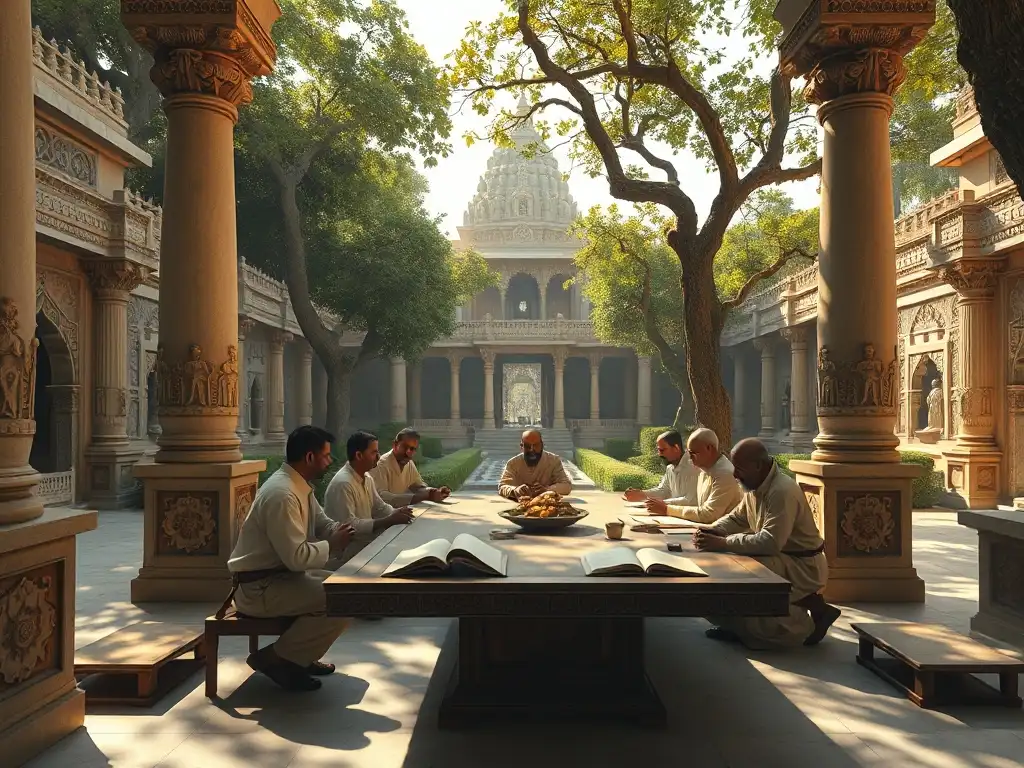
Welcome to Ancient India History, where we embark on a fascinating journey through time to uncover the rich tapestry of ancient Indian civilizations. From the groundbreaking innovations of the Indus Valley to the profound philosophies of the Gupta Empire, each era has left an indelible mark on the world.
In our featured article, we delve into the impact of ancient Indian education on Islamic learning centers, revealing how these historical educational systems shaped knowledge across cultures. Prepare to be inspired as we explore the extraordinary legacy of learning that continues to resonate today—read on to discover the profound connections that bind our past to the present!
- Introduction to Ancient Indian Education Impact on Islamic Learning Centers
- Historical Context of Ancient Indian Education
- Transition from Ancient Indian Education to Islamic Learning Centers
- Key Features of Ancient Indian Education Impact
- Case Studies of Prominent Islamic Learning Centers
- Comparison of Ancient Indian Education and Islamic Learning Centers
- Challenges and Limitations of Ancient Indian Education Impact
- Conclusion: Legacy of Ancient Indian Education on Modern Learning
- Further Reading and Resources on Ancient Indian Education Impact
- Frequently Asked Questions
- Final Reflection: The Enduring Legacy of Ancient Indian Education
- Unveil the Wisdom: Act on Your Learning Journey Today!
Introduction to Ancient Indian Education Impact on Islamic Learning Centers
The impact of ancient Indian education on Islamic learning centers is a fascinating topic that reveals the profound interconnections between two great civilizations. Ancient India, renowned for its rich educational traditions, laid the groundwork for various disciplines, including mathematics, astronomy, medicine, and philosophy. This knowledge was not only preserved but also transmitted across cultures, influencing the development of educational institutions in the Islamic world.
As we delve into this subject, we will explore the intricacies of the ancient Indian education system and its significant contributions to the Islamic learning centers that emerged during the medieval period. Understanding this historical interplay offers insights into how education transcends geographical and cultural boundaries, shaping intellectual thought across epochs.
Overview of Ancient Indian Education System
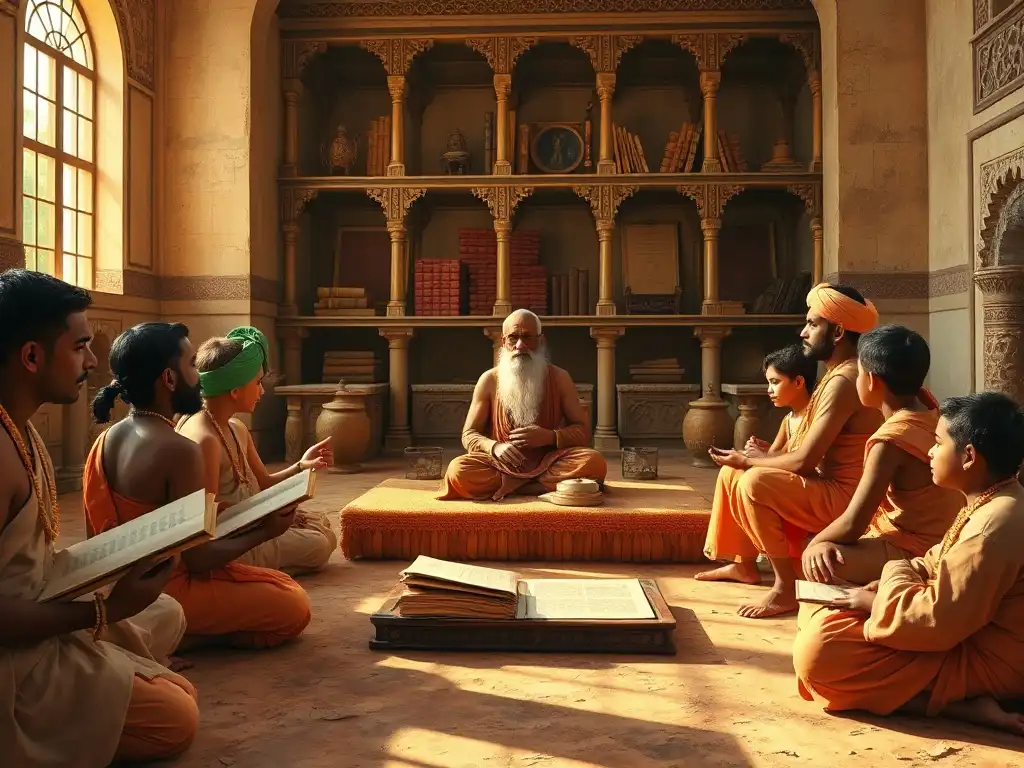
The ancient Indian education system, primarily characterized by the Gurukul tradition, emphasized a holistic approach to learning. Students lived with their teachers (gurus) in ashrams, where they received instruction in various fields, including:
- Vedas and Scriptures: Sacred texts integral to Hindu philosophy and rituals.
- Philosophy and Logic: Disciplines that fostered critical thinking and debate.
- Mathematics and Astronomy: Pioneering studies that laid the foundation for modern sciences.
- Arts and Literature: Cultivating creativity and expression through poetry and drama.
The curriculum was comprehensive, aimed at nurturing not just intellectual capabilities but also moral and ethical values. This system produced scholars and thinkers whose works would later influence other cultures, including those of the Islamic scholars who traveled to India for knowledge.
Significance of Islamic Learning Centers in Historical Context
Islamic learning centers, particularly during the Golden Age of Islam (8th to 14th centuries), were pivotal in the preservation and enhancement of knowledge from various civilizations, including ancient India. These centers, such as Al-Qarawiyyin in Morocco and Al-Azhar in Egypt, became hubs of intellectual activity where scholars gathered to study and disseminate knowledge. The significance of these institutions can be understood through several key aspects:
- Cultural Exchange: Islamic scholars translated and studied ancient Indian texts, particularly in mathematics and astronomy, leading to advancements such as the introduction of the numeral system.
- Integration of Knowledge: The synthesis of Indian knowledge with Greek and Persian texts resulted in a rich tapestry of learning that propelled scientific and philosophical thought forward.
- Legacy of Scholarship: The teachings and discoveries made in Islamic learning centers laid the groundwork for the European Renaissance, illustrating the far-reaching impact of ancient Indian education.
Through this exploration, we can appreciate how ancient Indian education not only shaped its own civilization but also left an indelible mark on the Islamic intellectual tradition, fostering a legacy of learning that continues to resonate today.
Historical Context of Ancient Indian Education
Development of Educational Institutions in Ancient India
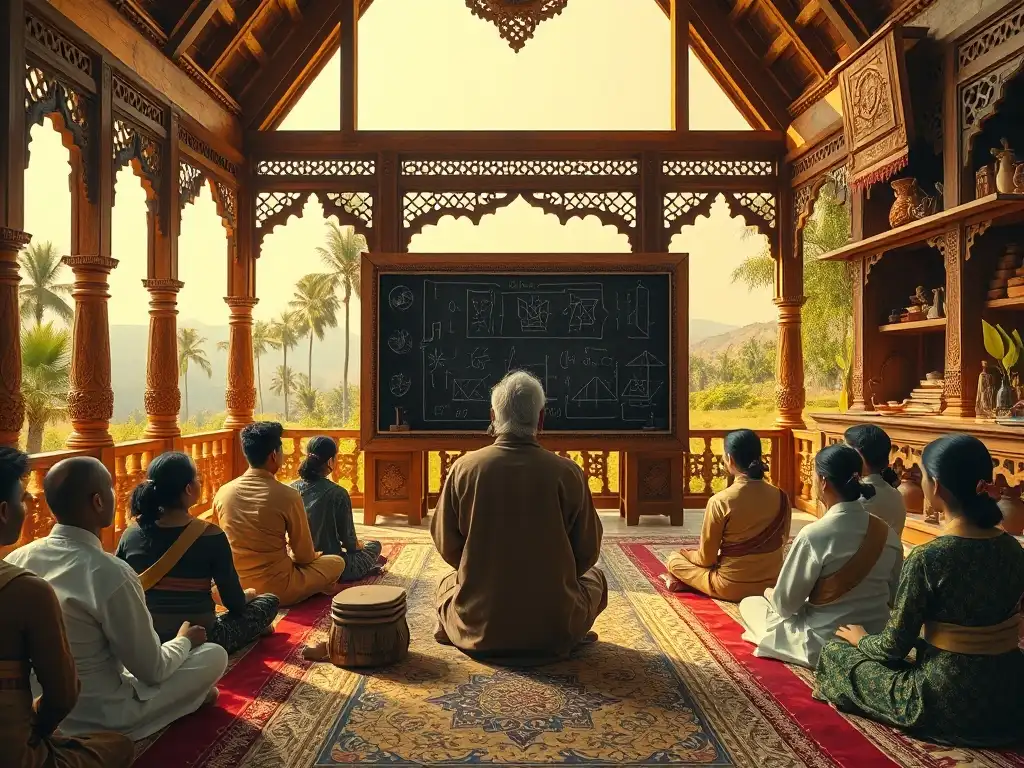
The evolution of educational institutions in ancient India can be traced back to the Vedic period (circa 1500-500 BCE), where education was primarily oral and conducted in a guru-shishya (teacher-student) tradition. This system emphasized the transmission of knowledge through direct interaction between the teacher and the student, fostering a strong mentor-mentee relationship.
- Centers of Learning:
- Gurukuls: These were informal schools located in the homes of gurus, where students lived and learned various subjects like philosophy, grammar, mathematics, astronomy, and the arts. The focus was on holistic development and character building.
- Nalanda and Takshashila: By the 5th century CE, more structured centers of learning emerged, such as Nalanda and Takshashila. These institutions attracted scholars from various regions and offered a variety of courses, including medicine, mathematics, and logic.
- Monastic Universities: Monasteries also served as centers of education, where both religious and secular subjects were taught, fostering the integration of spiritual and intellectual pursuits.
- Curriculum and Subjects:
- The curriculum was diverse, covering six Vedangas (limbs of the Vedas), which included phonetics, grammar, etymology, meter, astrology, and ritual.
- Other subjects such as Nyaya (logic), Vaisheshika (atomism), and Dharma Shastras (law texts) were integral to the education system, emphasizing critical thinking and ethical living.
- Role of Education in Society:
- Education was not only a means of personal advancement but also a tool for social cohesion and cultural dissemination. It played a pivotal role in the transmission of values and knowledge across generations, shaping the social fabric of ancient Indian society.
Key Philosophies and Teaching Methods in Ancient Indian Education
Ancient Indian education was grounded in several key philosophies that shaped its teaching methods and objectives.
- Philosophical Foundations:
- Dharma: The concept of Dharma (moral duty) was central to education, guiding students not only in their studies but also in their ethical responsibilities towards society.
- Brahmanical Tradition: Focused on preserving sacred texts and rituals, this tradition emphasized rote learning and memorization, which were considered essential for spiritual and intellectual growth.
- Teaching Methods:
- Dialogue and Debate: The Shastrartha (debate) method was prevalent, encouraging students to engage in discussions, question assumptions, and develop reasoning skills. This method fostered critical thinking and intellectual rigor.
- Experiential Learning: Education was not limited to theoretical knowledge. Practical skills were also emphasized, with students learning through observation, practice, and real-life experiences, ensuring a well-rounded education.
- Inclusivity in Education:
- While education was primarily accessible to the male elite, there were instances of women and lower castes receiving education, particularly in rural settings. This reflects a degree of inclusivity, though it was often limited by social norms.
Through these philosophies and methods, ancient Indian education laid a strong foundation for intellectual pursuits and social responsibility, which later influenced various Islamic learning centers. The impact of ancient Indian education on these centers is evident in their curricular frameworks and pedagogical approaches, showcasing the enduring legacy of India's educational traditions.
Transition from Ancient Indian Education to Islamic Learning Centers
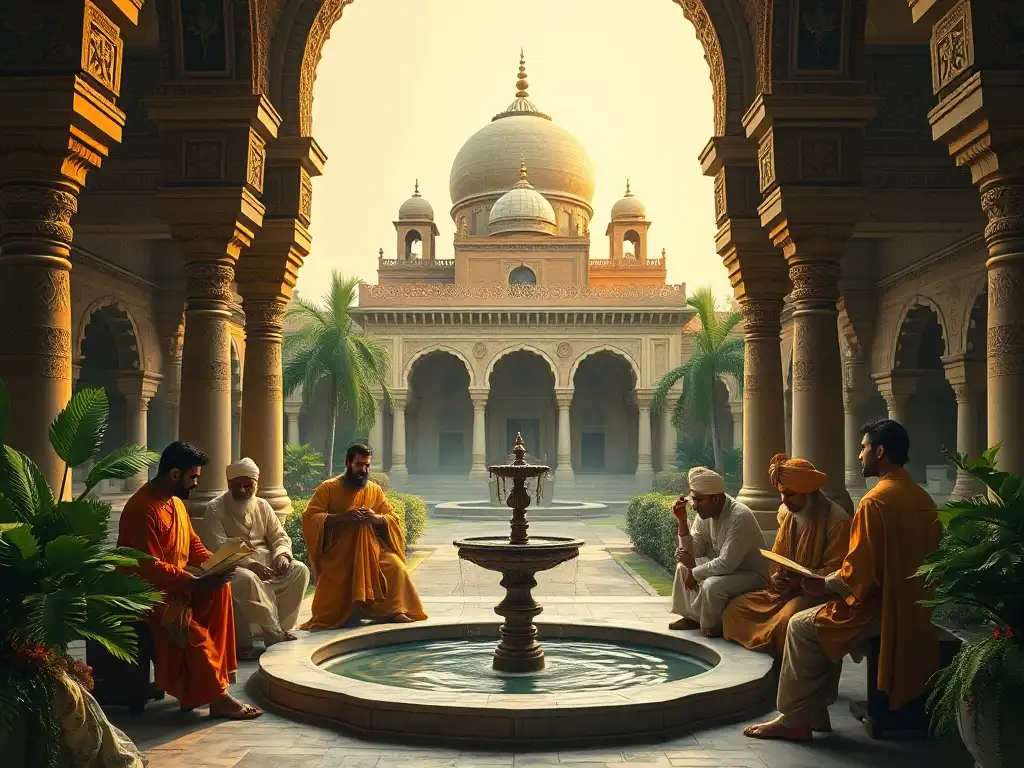
The transition from ancient Indian education to Islamic learning centers represents a significant chapter in the history of knowledge transmission. Ancient Indian education, particularly during the Vedic and post-Vedic periods, laid the groundwork for scholarly pursuits that would later influence Islamic scholars. The educational systems of ancient India were characterized by a unique blend of philosophy, spirituality, and practical knowledge, which became integral as Islamic scholars sought wisdom beyond their borders.
During the period of Islamic expansion in the Indian subcontinent, interactions between Indian and Islamic scholars facilitated the exchange of ideas, texts, and methodologies. Ancient Indian educational practices emphasized critical thinking, dialectical reasoning, and a holistic approach to learning. This intellectual heritage became a source of inspiration for Islamic learning centers, particularly during the medieval period, when the establishment of madrasas began to flourish.
In essence, the melding of ancient Indian educational principles with Islamic scholarly traditions not only enriched the academic landscape but also fostered a collaborative spirit of inquiry. The impact of this transition can be seen in the curriculum and pedagogical methods adopted by Islamic institutions, highlighting the enduring legacy of ancient Indian education.
Influence of Ancient Indian Scholars on Islamic Thought
The influence of ancient Indian scholars on Islamic thought is a profound testament to the interconnectedness of cultures and intellectual traditions. Figures such as Aryabhata and Brahmagupta laid foundational principles in mathematics and astronomy, which significantly impacted Islamic scholars like Al-Khwarizmi and Al-Biruni.
- Mathematics and Astronomy:
- Aryabhata: His work on the place-value system and the concept of zero were groundbreaking. Islamic mathematicians adopted these concepts, facilitating advancements in algebra and trigonometry.
- Brahmagupta: His rules for arithmetic operations and geometry provided a framework that Islamic scholars expanded upon in their studies.
- Philosophy and Logic:
- The philosophical traditions of ancient India, notably those articulated in texts like the Upanishads and the works of Buddhist scholars, influenced Islamic thinkers in their exploration of metaphysics and ethics. The integration of logical reasoning from Indian philosophy enriched Islamic philosophical discourse.
- Medicine and Botany:
- Ancient Indian texts on medicine, particularly the Ayurveda system, were studied and referenced by Islamic physicians. The translation of these texts into Arabic facilitated a synthesis of medical knowledge that benefited both traditions.
The cross-pollination of ideas not only fostered a greater understanding of various subjects but also encouraged a spirit of inquiry that transcended geographical and cultural barriers. This intellectual exchange was crucial in shaping the curriculum and scholarly outlook of Islamic learning centers.
Adaptation of Educational Practices in Islamic Learning Centers
The adaptation of educational practices in Islamic learning centers reflected the deep-seated influences of ancient Indian education. The following aspects highlight how these adaptations manifested:
- Curriculum Development:
- Islamic learning centers incorporated a wide array of subjects, including mathematics, astronomy, philosophy, and medicine, mirroring the broad curriculum of ancient Indian educational institutions like the Gurukula system. This holistic approach to education focused not just on rote learning but on critical thinking and intellectual exploration.
- Pedagogical Techniques:
- Dialogue and debate, which were central to ancient Indian education, found their way into Islamic madrasas. The method of Muhaadara (lectures) and Mubahatha (discussions) encouraged students to engage actively with the material, fostering a dynamic learning environment.
- Textual Transmission:
- The process of copying, translating, and commenting on texts became a staple of Islamic learning centers, echoing the practices of ancient Indian scholars who meticulously preserved and transmitted knowledge through oral and written traditions.
- Cultural Synthesis:
- The fusion of Indian scholarly traditions with Islamic teachings led to the emergence of unique educational models that celebrated both heritages. For example, the integration of Indian logic with Islamic jurisprudence created a distinctive approach to legal studies.
The adaptation of ancient Indian educational practices within Islamic learning centers exemplifies the rich tapestry of knowledge exchange that characterized this era. The impact of ancient Indian education remains evident in the methodologies and curricula that shaped Islamic scholarship, underscoring the importance of this historical interplay in the broader context of global education.
Key Features of Ancient Indian Education Impact

The impact of ancient Indian education on Islamic learning centers is profound and multifaceted, showcasing a rich interplay of knowledge transfer and pedagogical evolution. This section delves into the key features that characterize this influence, particularly focusing on the curriculum, subjects, and teaching methodologies that shaped Islamic education.
Curriculum and Subjects Influencing Islamic Education
The curriculum of ancient Indian education was notably diverse and comprehensive, encompassing a wide range of subjects that laid the groundwork for later Islamic educational systems. The following subjects were particularly influential:
- Mathematics: Ancient Indian mathematicians, such as Aryabhata and Brahmagupta, made significant contributions to algebra and geometry. Their concepts, including the decimal system and zero, were later adopted and disseminated through Islamic scholars like Al-Khwarizmi, who is often referred to as the "father of algebra." This knowledge was instrumental in the development of mathematics in Islamic culture.
- Astronomy: The astronomical texts of ancient India, particularly the Surya Siddhanta, were crucial in shaping Islamic astronomy. Scholars like Al-Battani and Al-Fazari drew from these texts, implementing techniques for astronomical calculations that would influence Islamic navigation and calendrical systems.
- Medicine: The Ayurvedic texts of ancient India provided a foundation for medical practices that were later integrated into Islamic medicine. Prominent figures such as Ibn Sina (Avicenna) acknowledged the contributions of Indian medicine, particularly in herbal remedies and surgical techniques.
- Philosophy and Logic: The Indian philosophical schools, especially the Nyaya and Vaisheshika, offered rich dialogues on logic and epistemology. The transmission of these ideas to the Islamic world influenced thinkers like Al-Farabi and Al-Ghazali, who incorporated Indian logical frameworks into their philosophical discourses.
The integration of these subjects facilitated a blend of cultural and intellectual traditions, enriching the curriculum of Islamic learning centers.
Pedagogical Techniques and Their Adoption in Islamic Learning
The pedagogical techniques employed in ancient Indian education contributed significantly to the methodologies adopted in Islamic learning centers. Some key techniques include:
- Oral Tradition: Ancient Indian education heavily relied on oral transmission of knowledge, where students learned through recitation and memorization. This method was mirrored in Islamic education, where the oral recitation of the Quran became a foundational practice in madrassas.
- Discussion and Debate: The importance of dialogue and debate in ancient Indian philosophical schools fostered critical thinking and analytical skills. This approach was embraced by Islamic scholars, leading to the establishment of Mujadalah (debate) as an essential component of Islamic education.
- Practical Learning: Ancient Indian education emphasized experiential learning, particularly in subjects like medicine and arts. This hands-on approach was mirrored in Islamic institutions, where practical applications of knowledge were valued, particularly in fields such as astronomy and medicine.
- Guru-Shishya Parampara: The teacher-student relationship in ancient Indian education, known as Guru-Shishya Parampara, emphasized mentorship and personal guidance. This model influenced the Islamic concept of Shaykh and Talib, where the bond between teacher and student is revered, fostering a deep commitment to learning.
The impact of ancient Indian education on Islamic learning centers is evident through the integration of diverse subjects and innovative pedagogical techniques. The rich legacy of ancient Indian educational practices continues to resonate in the foundations of Islamic education, highlighting a significant cultural exchange that shaped the intellectual landscape of the medieval world.
Case Studies of Prominent Islamic Learning Centers
Nalanda University and Its Contributions
Nalanda University, one of the oldest centers of higher learning in the world, was established in the 5th century CE in present-day Bihar, India. It served as a beacon of knowledge, attracting scholars from across Asia, including China, Korea, and Japan. The university was a pioneering institution that trained thousands of students in various fields, including philosophy, mathematics, astronomy, medicine, and grammar.
Educational Structure and Curriculum
The curriculum at Nalanda was comprehensive and diverse, reflecting the impact of ancient Indian education methods. The teaching methodologies emphasized:
- Critical Thinking: Students were encouraged to engage in debates and discussions, fostering an environment of inquiry.
- Multidisciplinary Learning: Subjects were not taught in isolation; students explored the interconnections between different fields of knowledge.
- Mentorship: Renowned scholars and teachers guided students, which is reminiscent of the Gurukul system prevalent in ancient Indian education.
The influence of Nalanda's educational structure can be seen in the Islamic learning centers that emerged later, which adopted similar pedagogical approaches, prioritizing debate, critical analysis, and comprehensive subject matter.
Contributions to Islamic Scholarship
Nalanda's impact extended beyond its campus. It played a crucial role in transmitting knowledge to Islamic scholars who later established centers such as Al-Azhar University in Egypt. The texts and teachings refined at Nalanda found their way into Islamic curricula, enhancing the depth of scholarship in Islamic learning through the incorporation of Indian philosophical ideas and scientific knowledge.
Aligarh Muslim University: A Modern Reflection of Ancient Practices
Aligarh Muslim University (AMU), founded in 1875, represents a modern embodiment of ancient educational practices rooted in India's rich past. The university emerged during a time of significant social reform and educational awakening in India, aiming to promote higher education among Muslims.
Integration of Ancient Educational Values
AMU's establishment was influenced by the impact of ancient Indian education, particularly the emphasis on a holistic educational philosophy. Key aspects include:
- Inclusivity: Similar to ancient Indian educational institutions, AMU was designed to be inclusive, welcoming students from various backgrounds and communities, fostering a spirit of unity and collaboration.
- Focus on Practical Knowledge: The curriculum at AMU integrates vocational training with traditional academic disciplines, echoing the ancient Indian educational focus on practical applications of knowledge.
Legacy of Knowledge and Scholarly Exchange
AMU has continued the tradition of scholarly exchange, akin to that of ancient centers like Nalanda. It has hosted numerous conferences and seminars, inviting scholars from around the world, thus perpetuating the legacy of knowledge-sharing that has characterized Indian education throughout history.
Both Nalanda University and Aligarh Muslim University illustrate the profound impact of ancient Indian education on Islamic learning centers. Their contributions highlight the continuity and evolution of educational practices, reflecting a rich tapestry of knowledge that has shaped not only India but also the broader Islamic world.
Comparison of Ancient Indian Education and Islamic Learning Centers
Similarities in Educational Philosophies
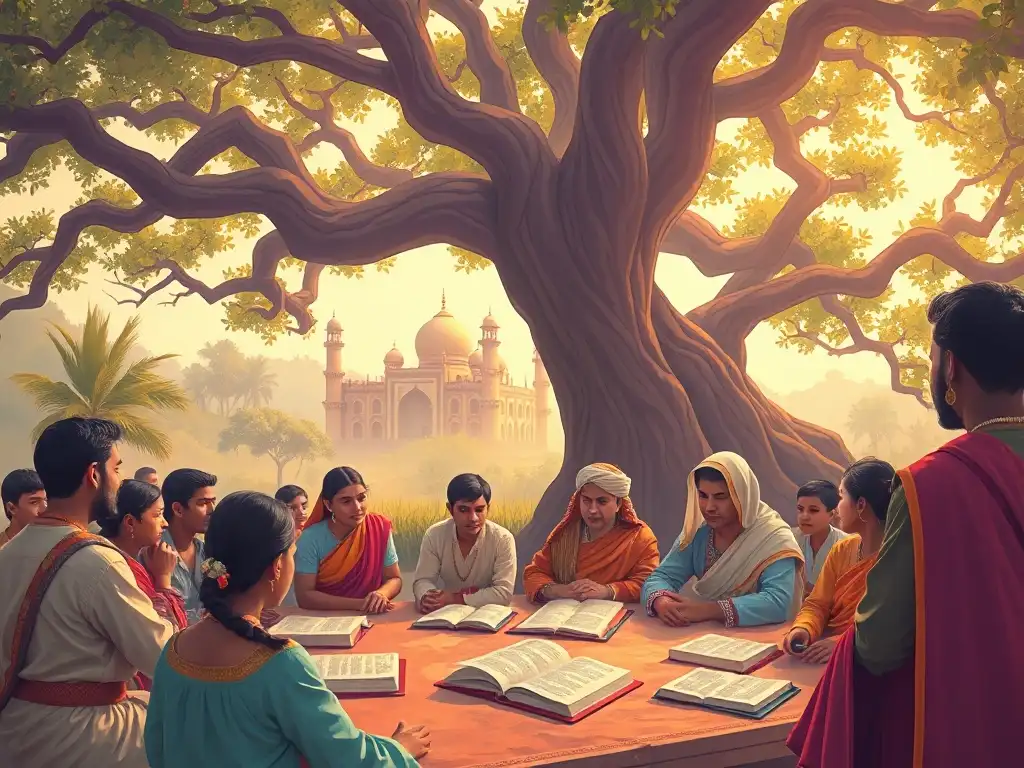
The educational philosophies of ancient Indian education and Islamic learning centers share remarkable similarities, rooted in a commitment to knowledge, moral development, and community service. Both systems emphasized the holistic development of the individual, blending intellectual, ethical, and social dimensions into their curricula.
- Knowledge as a Sacred Pursuit: In ancient India, education was often viewed as a spiritual endeavor, with the pursuit of knowledge seen as a path to liberation (moksha). Similarly, Islamic learning centers regarded knowledge as a divine gift, with the Qur'an encouraging the quest for understanding as an act of worship. This shared reverence for knowledge fostered environments where scholars could freely explore various disciplines.
- Emphasis on Rhetoric and Debate: Both educational systems valued the art of rhetoric and debate. In ancient Indian institutions like the Gurukula, students engaged in discussions and dialogues, enhancing their critical thinking skills. Islamic centers, particularly the madrasas, also prioritized dialectical reasoning, encouraging students to engage in debates over theological and philosophical issues.
- Mentorship and Guru-Shishya Tradition: A strong mentor-student relationship characterized both educational frameworks. In ancient India, the guru played a pivotal role in guiding students, imparting not only knowledge but also wisdom and life lessons. Islamic learning centers similarly featured scholars ( ulama) who served as mentors, fostering a close-knit educational community.
Differences in Curriculum and Teaching Approaches
While ancient Indian education and Islamic learning centers shared philosophical underpinnings, they also exhibited significant differences in curriculum and instructional methods.
- Curriculum Content:
- Ancient Indian Education: The curriculum was diverse, encompassing subjects such as philosophy, mathematics, astronomy, medicine, and the arts. Texts like the Vedas, Upanishads, and Sanskrit literature were central to the education process. Students were encouraged to explore various fields, fostering a culture of interdisciplinary learning.
- Islamic Learning Centers: The curriculum in Islamic centers focused primarily on religious studies, including the Qur'an, Hadith, and Islamic jurisprudence ( fiqh). While subjects like mathematics and philosophy were also taught, the religious framework largely dictated the content and purpose of education.
- Teaching Approaches:
- Ancient Indian Education: The pedagogical methods in ancient India were predominantly experiential. Learning involved practical applications, discussions, and the use of oral traditions. The Gurukula system allowed students to live with their mentors, facilitating immersive learning experiences.
- Islamic Learning Centers: In contrast, teaching in Islamic centers was often more formalized and structured. Lectures and memorization were common, particularly for religious texts. The sitting-in-circle method, where students gathered around a teacher, was a hallmark of Islamic pedagogy, emphasizing direct instruction and collective learning.
The comparison of ancient Indian education and Islamic learning centers reveals a rich tapestry of similarities and differences, highlighting the profound impact of ancient Indian education on Islamic learning traditions. The ancient Indian education impact can be seen in the foundational principles of knowledge-seeking and moral development that both systems espoused, even as they diverged in curriculum and methods of instruction.
Challenges and Limitations of Ancient Indian Education Impact
Historical Barriers to Knowledge Transfer
The impact of ancient Indian education on the development of Islamic learning centers was significant; however, several historical barriers impeded the seamless transfer of knowledge. One of the primary challenges was the linguistic diversity prevalent in ancient India. With an array of languages such as Sanskrit, Pali, and regional dialects, communication and the dissemination of educational texts became complex. This multiplicity of languages created obstacles for scholars who aimed to translate and adapt Indian educational philosophies into Islamic contexts.
Another barrier was the geographical fragmentation of ancient Indian civilization. The vastness of Indian territories meant that educational practices varied widely, often influenced by local customs and traditions. This regionalism resulted in a lack of a unified educational curriculum, which made it difficult for Islamic scholars to assimilate diverse educational practices and philosophies into their own systems.
Additionally, the political dynamics of the time played a crucial role. The invasions and the subsequent establishment of different empires often led to a dilution of Indian educational practices. For example, during the period of Islamic conquests, many Indian scholars were either displaced or discouraged from continuing their educational pursuits. This disruption in the continuity of knowledge transfer created gaps in the understanding and integration of ancient Indian educational methodologies into Islamic learning.
Contemporary Misinterpretations of Educational Influence
In modern times, the influence of ancient Indian education on Islamic learning centers is frequently misinterpreted or oversimplified. One prevalent misconception is that the educational systems in Islamic centers were entirely independent of earlier Indian practices. In reality, many of the pedagogical techniques and subjects taught in Islamic institutions were deeply rooted in earlier Indian methodologies. For instance, the emphasis on mathematics, astronomy, and philosophy reflects a direct lineage to the educational frameworks established in ancient Indian universities such as Nalanda and Takshashila.
Another common misinterpretation lies in the cultural contributions made by Indian scholars to Islamic learning. Many contemporary narratives neglect to acknowledge the collaborative nature of knowledge exchange between ancient Indian and Islamic scholars. This exchange was not merely a one-sided transfer but rather a rich dialogue that fostered advancements in various fields. For instance, the works of mathematicians like Aryabhata and Brahmagupta significantly influenced Islamic scholars, yet these contributions are often overshadowed by the glorification of Islamic advancements alone.
Moreover, the contextualization of ancient Indian education impact is often lost in contemporary discussions. The educational practices of ancient India were not just about rote learning but emphasized critical thinking, debate, and a holistic understanding of knowledge. This pedagogical approach significantly shaped the methodologies employed in Islamic learning centers. Recognizing the depth and complexity of ancient Indian education is crucial to understanding its true impact on Islamic scholarship.
While ancient Indian education laid a foundational influence on Islamic learning centers, the challenges and limitations, both historical and contemporary, have often obscured this relationship. Understanding these nuances is essential for a clearer appreciation of the intricate tapestry of educational exchange between these civilizations.
Conclusion: Legacy of Ancient Indian Education on Modern Learning

The legacy of ancient Indian education is profound and far-reaching, influencing not only the educational systems within the Indian subcontinent but also extending its impact globally. From the structured approach of the Gurukula system to the emphasis on critical thinking and debate in institutions like Nalanda and Takshashila, ancient Indian education laid the groundwork for progressive learning methodologies that resonate even today.
The core principles of learning—holistic development, inclusivity, and an interdisciplinary approach—continue to be relevant in contemporary educational debates. The focus on fostering not just academic knowledge but also moral and ethical values has paved the way for a more rounded educational philosophy, championed by many modern educational theorists.
Lasting Impact on Educational Systems Worldwide
Ancient Indian education has left an indelible mark on educational systems across the globe. The following aspects highlight its significant influence:
- Curriculum Diversity: Ancient Indian institutions offered a wide-ranging curriculum that included the sciences, arts, philosophy, and spirituality. This holistic approach inspired various educational reforms worldwide, notably in Islamic learning centers where the integration of diverse subjects became a hallmark.
- Pedagogical Techniques: The methods of teaching derived from ancient Indian practices—such as storytelling, dialogue, and experiential learning—are now recognized as effective pedagogical techniques. They are increasingly incorporated into modern classrooms to enhance engagement and comprehension.
- Cultural Exchange: The dissemination of knowledge through ancient Indian education facilitated cultural exchanges, particularly during the medieval period when scholars from various regions congregated in Indian educational hubs. This cross-pollination of ideas helped shape the curricula in Islamic universities, enriching them with Indian philosophies and scientific advancements.
- Emphasis on Critical Thinking: The ancient Indian education system encouraged questioning and critical analysis, attributes that are central to modern educational paradigms. This legacy has influenced the development of curricula aimed at fostering analytical skills in students worldwide.
Reflection on Continued Relevance of Ancient Practices in Education
The principles and practices from ancient Indian education continue to hold relevance in today's educational landscape. Key reflections include:
- Inclusivity in Education: The ancient Indian approach of making education accessible to different strata of society is echoed in modern movements advocating for inclusive education. This historical perspective emphasizes the importance of equality in learning.
- Interdisciplinary Learning: The ancient model of integrating various fields of study resonates with current trends in interdisciplinary education, where the boundaries between subjects are blurred to foster a more comprehensive understanding of complex topics.
- Moral and Ethical Education: The focus on character-building and ethical studies in ancient Indian education is increasingly acknowledged in modern curricula, where educators seek to develop not just knowledgeable but also responsible citizens.
- Adaptation of Ancient Techniques: Modern educators are revisiting traditional methods, such as mentorship and peer learning, to create supportive and nurturing learning environments reminiscent of ancient practices.
The impact of ancient Indian education on modern learning is significant and multifaceted. By reflecting on these historical practices, contemporary educational systems can draw valuable lessons that enhance learning experiences and outcomes for students around the world.
Further Reading and Resources on Ancient Indian Education Impact
Recommended Books and Articles
To gain a deeper understanding of the ancient Indian education impact on subsequent educational systems, particularly Islamic learning centers, consider the following recommended readings:
-
"The History of Indian Education" by R. C. Dutt
This book provides a comprehensive overview of educational practices in ancient India, detailing the methodologies and philosophies that shaped learning. It specifically addresses how these practices influenced later educational systems.
-
"Education in Ancient India" by R. S. Sharma
Sharma’s work delves into the Vedic and post-Vedic periods, exploring how ancient Indian education laid the groundwork for various learning traditions, including Islamic scholarship.
-
"The Cultural Heritage of India: Education and Culture" by K. R. Cama
This book highlights the significance of cultural exchanges between ancient India and the Islamic world, particularly through educational institutions.
-
"Islamic Learning and the Indian Context" by R. S. Khare
Khare examines the interplay between Islamic and Indian educational practices, showcasing the synthesis of knowledge that emerged from their interaction.
-
"The Role of Education in the Development of Indian Civilization" by J. N. Singh
This article discusses how ancient Indian educational systems contributed to the broader framework of civilization, influencing various aspects of society, including governance and religion.
Online Resources for Deeper Understanding of the Topic
For those looking to explore the ancient Indian education impact further through digital means, the following online resources are invaluable:
-
Digital Library of India
This resource provides access to a vast collection of texts, including ancient manuscripts and educational treatises that highlight the principles of ancient Indian education.
-
India’s Ancient Educational Systems: An Overview (Webinar Series)
Offered by various educational institutions, these webinars explore the methodologies and philosophies of ancient Indian education and its influence on later Islamic learning centers.
-
The Indian Council of Historical Research (ICHR)
The ICHR provides a repository of research papers and articles that focus on ancient educational practices and their impact on global educational paradigms.
-
The Archaeological Survey of India (ASI)
ASI’s website features reports and findings related to ancient educational sites, such as the Takshashila and Nalanda universities, which were pivotal in shaping educational thought.
-
Open Access Journals: Journal of Indian Education
This journal publishes articles on various aspects of Indian education, including historical perspectives on ancient learning systems and their influence on modern education.
By utilizing these resources, one can gain a more nuanced understanding of how ancient Indian education has shaped not only its own civilization but also the educational frameworks of subsequent cultures, including the Islamic learning centers that emerged later.
Frequently Asked Questions
What was the significance of ancient Indian education?
Ancient Indian education laid the foundation for learning systems that emphasized philosophy, science, and mathematics, significantly influencing educational practices worldwide.
How did ancient Indian education impact Islamic learning centers?
The curricula and teaching methodologies from ancient Indian education were adopted and adapted by Islamic learning centers, enriching their academic environment and fostering a blend of cultures.
What were the key contributions of ancient Indian scholars?
Ancient Indian scholars made groundbreaking advances in astronomy, medicine, and literature, which were crucial in shaping subsequent educational developments in both India and the Islamic world.
How did the Gurukul system influence education?
The Gurukul system emphasized personal mentorship and holistic education, which inspired similar approaches in various cultures, including the Islamic educational frameworks that followed.
What are some lasting effects of ancient Indian education today?
The principles of critical thinking, debate, and interdisciplinary studies from ancient Indian education continue to influence modern educational systems and methodologies across the globe.
Final Reflection: The Enduring Legacy of Ancient Indian Education
The impact of ancient Indian education on Islamic learning centers is not just a historical curiosity; it is a testament to the power of knowledge transcending cultural boundaries. In today's interconnected world, where education continues to evolve and adapt, understanding the roots of our learning systems becomes increasingly relevant. The rich traditions of ancient Indian education have laid a foundation that still influences modern pedagogical approaches, emphasizing critical thinking, holistic development, and the pursuit of wisdom.
The legacy of ancient Indian education is woven into the very fabric of our contemporary educational landscape. Its principles have shaped not only Islamic learning centers but also various educational institutions around the globe. This ongoing influence reminds us that knowledge knows no borders and can flourish in diverse environments. As Mahatma Gandhi once said, Live as if you were to die tomorrow. Learn as if you were to live forever.
This quote encapsulates the essence of lifelong learning that both ancient Indian education and Islamic scholarship promote, encouraging a continuous quest for knowledge that transcends time and culture.
As we reflect on the lessons drawn from the interplay between ancient Indian education and Islamic learning centers, I invite you to consider how these insights can be applied in your own life. How can you embrace the spirit of inquiry and the pursuit of knowledge in your daily experiences? Let this reflection inspire you to seek wisdom from diverse sources, fostering a mindset that values learning as a lifelong journey. In doing so, we honor the rich legacy of education that has shaped our world and continue to build bridges across cultures for generations to come.
Unveil the Wisdom: Act on Your Learning Journey Today!
Thank you for diving into the rich interconnections between ancient Indian education and Islamic learning centers. Your curiosity contributes to a deeper appreciation of the historical influences that shape our modern world. Now, it’s time to take what you’ve learned and transform your understanding into action!
- Explore historical texts: Seek out translations or interpretations of ancient educational works and writings from renowned scholars to deepen your understanding.
- Join local discussion groups: Engage with your community to share insights and perspectives about the evolution of educational practices.
- Share your knowledge: Discuss these enlightening connections on social media or write a blog post—your voice can inspire others!
What aspect of ancient education inspires you to explore further, and how will you share this newfound knowledge with others?