
From Oral Traditions to Written Texts: The Evolution of Ancient Indian Education

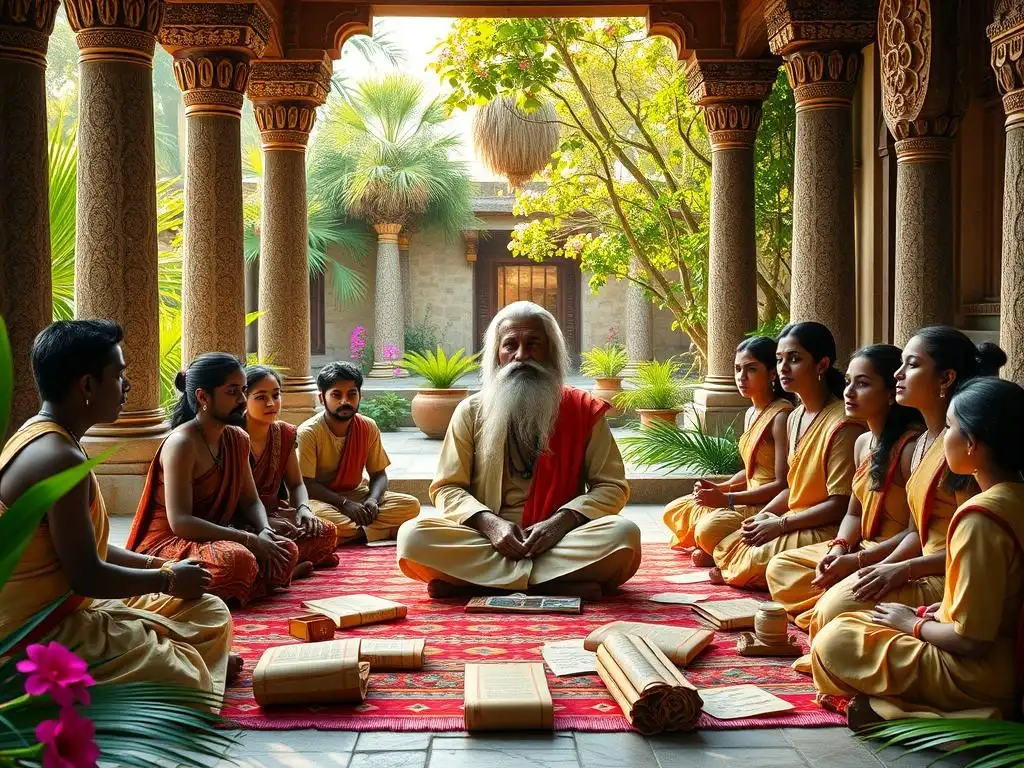
Welcome to Ancient India History, where we journey through the tapestry of time to uncover the rich and diverse heritage of ancient Indian civilizations. In our featured article, “From Oral Traditions to Written Texts: The Evolution of Ancient Indian Education,” we delve into the fascinating world of ancient Indian education history. Discover how the transition from oral storytelling to the written word shaped learning and knowledge in a society that revered wisdom.
Join us as we explore the pivotal moments and influential figures who contributed to this evolution, igniting a passion for knowledge that resonates even today. Let the exploration begin!
- Introduction to Ancient Indian Education History
- Oral Traditions in Ancient Indian Education
- Transition from Oral to Written Texts
- Major Educational Centers in Ancient India
- Curriculum and Subjects Taught in Ancient Indian Education
- Contributions of Ancient Indian Education to Global Knowledge
- Challenges Faced in Ancient Indian Education
- Conclusion: The Legacy of Ancient Indian Education History
- References and Further Reading on Ancient Indian Education History
-
Frequently Asked Questions
- What was the primary mode of education in ancient India?
- How did written texts influence ancient Indian education?
- What were the major subjects taught in ancient Indian education?
- How did the Gurukul system function in ancient India?
- What role did the Gupta Empire play in the evolution of education?
- Final Reflection: The Enduring Legacy of Ancient Indian Education
- Embrace the Legacy of Ancient Learning!
Introduction to Ancient Indian Education History
The history of education in ancient India is a fascinating journey that reflects the evolution of knowledge, culture, and societal values over millennia. From the earliest oral traditions that passed down wisdom and skills through generations, to the establishment of formal educational institutions like the Gurukul system, ancient Indian education offers a rich tapestry of methods and philosophies that shaped the intellectual landscape of the subcontinent.
This article delves into the intricate tapestry of ancient Indian education history, exploring its diverse practices, significant contributions, and the lasting impact it has had on contemporary educational systems. By understanding the nuances of this history, we can appreciate how ancient civilizations prioritized learning and knowledge dissemination, laying the groundwork for future generations.
Overview of Education in Ancient India
Ancient Indian education was deeply intertwined with the cultural, spiritual, and social fabric of society. Education began in the Vedic period (approximately 1500–500 BCE), where knowledge was primarily transmitted orally. Key features of education during this time included:
- Vedic Learning: Emphasis on oral recitation of Vedas, which were sacred texts containing hymns, rituals, and philosophies.
- Gurukuls: Traditional schools where students lived with their guru (teacher) and learned various subjects, including philosophy, science, mathematics, and arts.
- Focus on Holistic Development: Education was not solely academic; it also involved moral and spiritual training, promoting a balanced development of the individual.
As time progressed, the Buddhist and Jain influences in the 6th century BCE introduced new educational paradigms, leading to the establishment of monastic schools that attracted students from various regions. Such institutions emphasized logical reasoning, ethics, and philosophy, marking a significant evolution in educational practices.
Importance of Studying Ancient Indian Education
Studying ancient Indian education is crucial for several reasons:
- Cultural Heritage: Understanding ancient educational practices provides insights into the cultural and philosophical heritage of India, revealing how historical contexts shaped learning methods.
- Influence on Modern Systems: Ancient Indian education has significantly influenced modern educational frameworks in India and across the globe. Many contemporary pedagogical approaches can trace their roots back to these historical practices.
- Preserving Knowledge: By examining the evolution of educational systems, we can better appreciate the importance of preserving traditional knowledge and integrating it with modern educational practices.
- Interdisciplinary Insights: The study of ancient education intersects with various fields such as history, sociology, and anthropology, enriching our understanding of how education functions within different societal structures.
The evolution of education in ancient India is not just a historical inquiry but a vital exploration of the values and practices that continue to resonate today. By examining this rich history, we gain a deeper appreciation of the foundations of learning and the enduring legacy of ancient Indian civilizations.
Oral Traditions in Ancient Indian Education
Definition and Significance of Oral Traditions
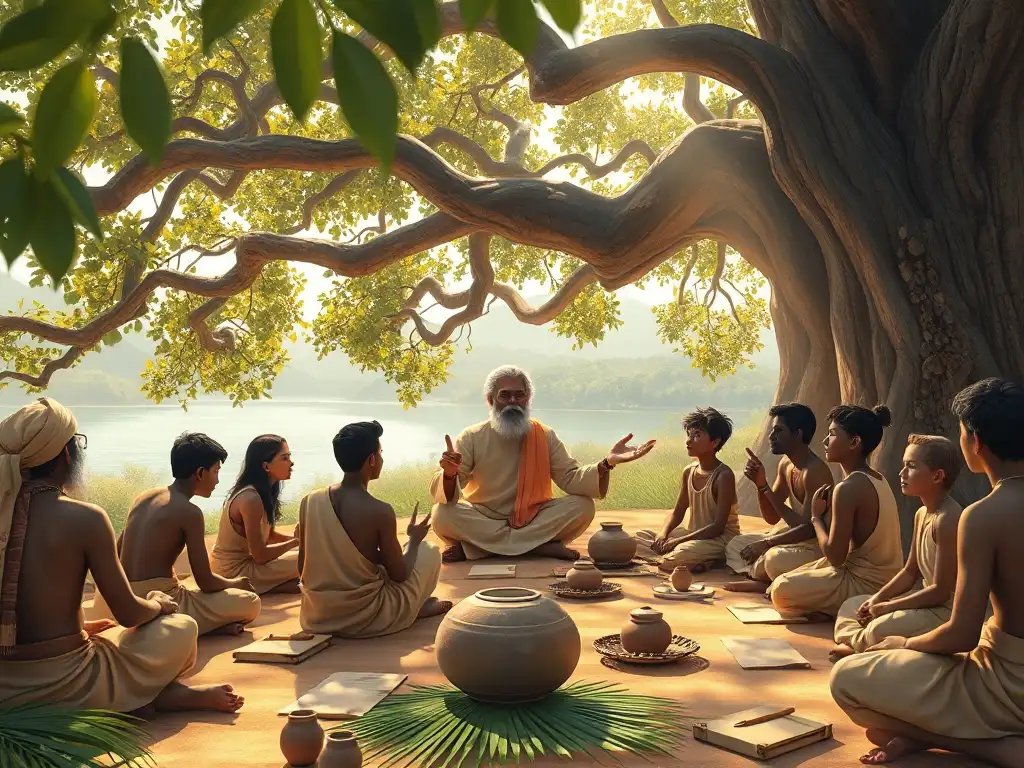
Oral traditions in ancient Indian education refer to the methods of knowledge transmission that relied exclusively on spoken word rather than written texts. These traditions played a crucial role in preserving cultural identities, histories, and teachings across generations. The significance of oral traditions lies in their ability to foster community engagement, facilitate memory retention, and adapt teachings to the audience's context.
Oral traditions included various forms of expression, such as songs, chants, stories, and recitations, which were often interwoven with moral lessons, historical accounts, and philosophical discourses. This method of education was particularly important in a largely illiterate society, where written texts were scarce, and knowledge needed to be accessible to all members of the community.
Role of Gurus and Disciples in Oral Learning
In the context of ancient Indian education, the relationship between gurus (teachers) and disciples (students) was foundational. The transmission of knowledge was predominantly interpersonal, with the guru serving not only as a teacher but also as a mentor and guide. This system was characterized by:
- Personalized Instruction: Gurus would tailor their teachings to the individual needs and capabilities of each disciple, ensuring a deep understanding of the subject matter.
- Oral Examination: Disciples were often assessed through oral questioning, encouraging them to articulate their understanding and engage in dialogue with their guru. This fostered critical thinking and deep comprehension.
- Cultural and Ethical Values: The guru-disciple relationship was steeped in mutual respect and trust, embodying the ethical values of ancient Indian society. This bond ensured that not only knowledge but also cultural values were imparted effectively.
The Gurukul system epitomized this educational approach, where students lived with their gurus in a residential setting, absorbing lessons in various disciplines, including philosophy, mathematics, and the arts, directly from their mentors.
Examples of Oral Literature and Knowledge Transmission
Oral literature constituted a rich repository of knowledge and cultural heritage in ancient India. Here are a few notable examples of how knowledge was transmitted orally:
- Vedas: The oldest sacred texts of Hinduism, the Vedas were composed in ancient Sanskrit and transmitted orally for centuries before being written down. Their mantras and teachings were memorized and recited by scholars, preserving their deep philosophical and ritualistic insights.
- Epics: The Mahabharata and Ramayana, two of the most significant epics, were traditionally recited by bards and storytellers. These narratives not only conveyed moral and ethical lessons but also served as historical accounts that reflected societal values and norms.
- Folk Traditions: Various regional folk tales and songs were passed down through generations, often featuring moral lessons and cultural practices unique to specific communities. These stories served as a means of education, entertainment, and cultural preservation.
- Philosophical Dialogues: Texts like the Upanishads emerged from oral discussions between gurus and their disciples, exploring profound philosophical concepts such as the nature of reality and the self. These dialogues shaped the intellectual landscape of ancient Indian thought.
The oral tradition not only helped in preserving ancient Indian education history but also enriched the cultural tapestry of India, ensuring that knowledge was accessible, adaptable, and deeply rooted in the community.
Transition from Oral to Written Texts
Factors Leading to the Shift in Educational Practices
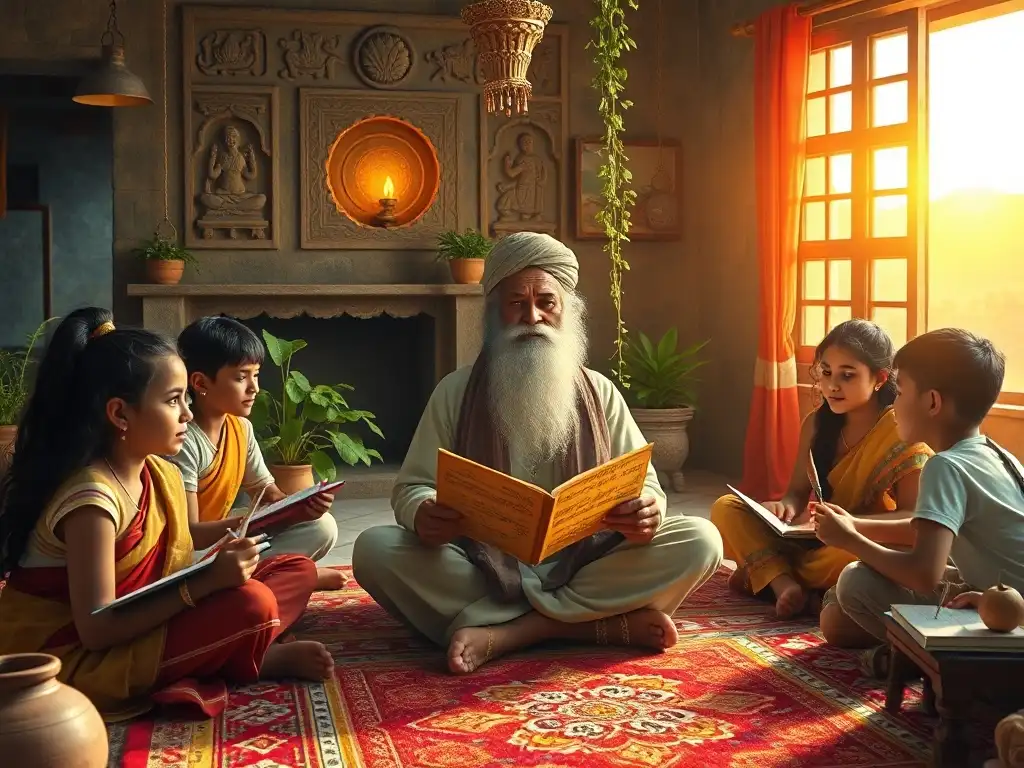
The transition from oral to written forms of education in ancient India was a complex process influenced by various factors. Here are some of the key elements that contributed to this shift:
- Cultural Evolution: As societies progressed, there was a growing need for systematic knowledge preservation. Oral traditions, while rich and vibrant, were limited in their ability to store vast amounts of information accurately over generations. The increasing complexity of societal structures necessitated a more reliable method of documentation.
- Development of Scripts: The emergence of various scripts, such as Brahmi and Kharosthi, provided the tools needed for writing. The earliest inscriptions date back to the 3rd century BCE, marking a significant milestone in the history of ancient Indian education. This technological advancement allowed for the transcription of oral teachings, philosophies, and methodologies.
- Religious and Philosophical Texts: The rise of religious texts, including the Vedas and Upanishads, played a pivotal role in the shift. These texts not only served spiritual purposes but also became educational material, facilitating the transmission of knowledge across generations.
- Rise of Institutions: The establishment of formal educational institutions, such as the ancient universities of Nalanda and Takshashila, encouraged written scholarship. These centers attracted scholars from various regions, fostering an environment where knowledge was compiled, written, and shared.
The Impact of Writing on Ancient Indian Education
The advent of writing profoundly transformed the landscape of ancient Indian education. Here are several significant impacts:
- Standardization of Knowledge: Writing allowed for the standardization of educational content. Previously, knowledge passed through oral traditions was subject to variations. Written texts ensured uniformity, which was crucial for the teaching of complex subjects like mathematics, astronomy, and philosophy.
- Accessibility and Preservation: Written texts made knowledge more accessible. They could be copied, distributed, and studied by a larger audience, expanding the reach of education beyond localized oral traditions. This preservation of texts also safeguarded knowledge against the potential loss inherent in oral transmission.
- Diverse Learning Materials: With writing, a diversity of learning materials emerged, including manuals, commentaries, and treatises. This variety catered to different fields of study and allowed for specialized education, fostering expertise in particular disciplines.
- Critical Thinking and Debate: Written texts encouraged critical analysis and debate among scholars. The ability to reference specific texts fostered a culture of questioning, dialogue, and intellectual rigor, which enriched the educational experience.
- Historical Documentation: Writing allowed for the accurate recording of historical events, cultural practices, and educational methodologies. This documentation enabled future generations to learn from the past, creating a continuum of knowledge that shaped the future of ancient Indian education.
Key Texts and Manuscripts in Early Education
Several significant texts and manuscripts emerged during the transition to written education in ancient India, contributing to the foundation of educational practices. Here are some of the most important:
- The Vedas: Comprising four texts—Rigveda, Samaveda, Yajurveda, and Atharvaveda—the Vedas are among the oldest sacred scriptures. They encompass hymns, rituals, and philosophical teachings, serving as a core component of early education.
- The Upanishads: These philosophical texts explore spiritual knowledge and metaphysical concepts. They became crucial in the curriculum of ancient educational institutions, emphasizing critical thought and philosophical inquiry.
- Panini's Ashtadhyayi: This ancient text on Sanskrit grammar is a landmark in linguistic studies. Panini's systematic approach to language laid the groundwork for future linguistic education and study.
- The Dharmashastras: Texts like Manusmriti outlined societal laws and ethical codes, serving both educational and legal purposes. They provided a framework for moral education and governance.
- Mathematical Texts: Works such as the Sulbasutras provided instructions for geometric constructions and rituals, combining mathematics with practical applications in society.
These texts not only reflect the educational practices of ancient India but also highlight the intricate relationship between education, culture, and societal development, forming a vital part of the ancient Indian education history.
Major Educational Centers in Ancient India
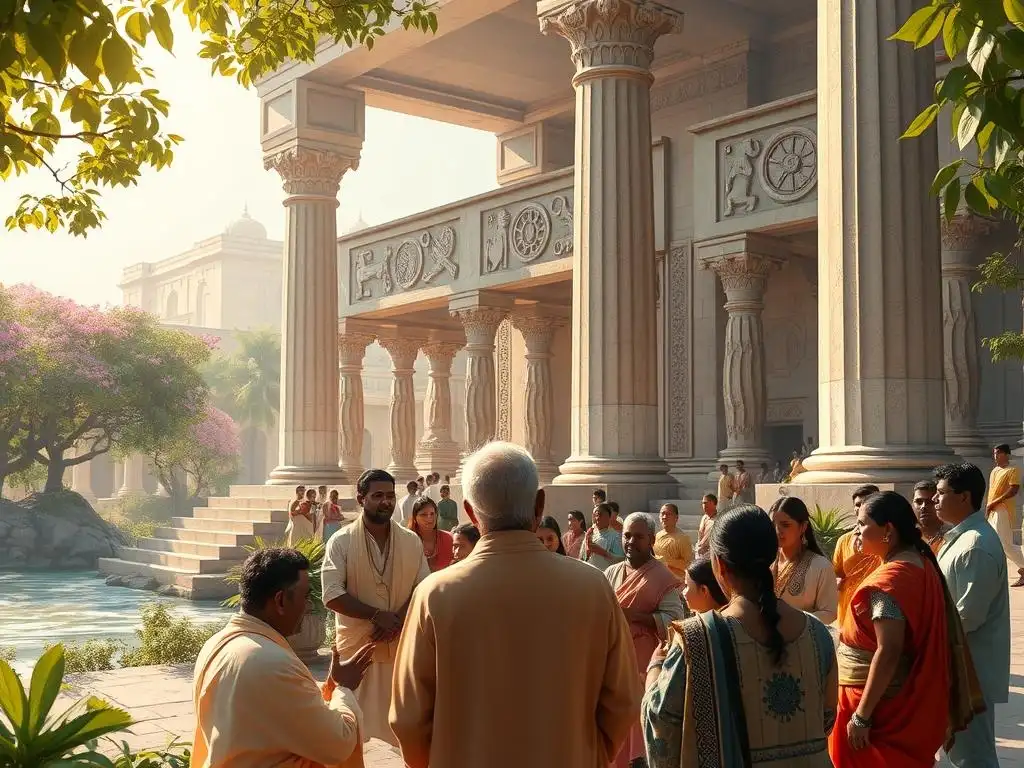
Ancient India was home to several prominent educational institutions that played a crucial role in the development of knowledge, philosophy, and culture. These centers not only provided formal education but also fostered a spirit of inquiry and debate, influencing the educational practices that followed. The major educational institutions of ancient India, including Nalanda University and Takshashila, served as pivotal hubs for scholars and students from diverse regions.
Nalanda University: A Beacon of Knowledge
Nalanda University, established in the 5th century CE, is often regarded as one of the first residential universities in the world. It attracted students from various parts of Asia, including China, Korea, Japan, and Tibet.
- Curriculum and Subjects: The university offered a wide range of subjects, including:
- Buddhism and its philosophies
- Mathematics and astronomy
- Medicine and metallurgy
- Grammar, poetics, and philosophy
- Teaching Methodologies: The pedagogical approaches at Nalanda included:
- Lectures delivered by eminent scholars
- Debates that fostered critical thinking
- Practical training in various fields
- Infrastructure and Facilities: Nalanda boasted impressive facilities:
- Libraries housing thousands of manuscripts
- Residential quarters for students and teachers
- Meditation halls and study rooms
Nalanda's legacy continued for centuries until its decline in the 12th century, when it faced invasions and was eventually destroyed. Its contributions to education, however, remain significant in the study of ancient Indian education history.
Takshashila: The Cradle of Learning
Takshashila, also known as Taxila, is another ancient educational center that thrived around the 6th century BCE. It is often credited with pioneering the concept of higher education in the Indian subcontinent.
- Diverse Curriculum: The subjects taught at Takshashila included:
- Vedic studies and philosophy
- Law and politics
- Medicine and surgery
- Military science and strategies
- Influential Scholars: Takshashila was home to renowned scholars, such as:
- Chanakya, who later became the prime minister of the Maurya Empire
- Jivaka, a famous physician in ancient India
- Cultural Exchange: The institution facilitated cultural exchanges, drawing students from various backgrounds, thus contributing to a rich and diverse intellectual tradition.
Takshashila's influence extended beyond its geographical boundaries, impacting education systems in neighboring regions and contributing to the development of ancient Indian education history.
Other Significant Educational Institutions
In addition to Nalanda and Takshashila, several other educational institutions made notable contributions to ancient Indian education:
- Vikramshila University: Founded during the reign of the Pala dynasty in the 8th century CE, Vikramshila became an important center for Buddhist studies, rivaling Nalanda in prominence.
- Kanchi University: Located in Tamil Nadu, Kanchi was a significant center for studying philosophy, astronomy, and music. Its influence extended into South India and beyond.
- Ujjain: Known for its astronomical and mathematical studies, Ujjain attracted scholars interested in the sciences, especially during the Gupta period.
These institutions not only enriched the educational landscape of ancient India but also laid the groundwork for future educational practices, emphasizing the importance of knowledge, debate, and cultural exchange in the evolution of ancient Indian education history.
Curriculum and Subjects Taught in Ancient Indian Education
Core Subjects in Ancient Indian Education
The curriculum of ancient Indian education was diverse and comprehensive, often tailored to the societal and cultural needs of the time. The core subjects included:
- Vedic Studies: Central to ancient Indian education, Vedic studies focused on the recitation and interpretation of the Vedas, which are the oldest sacred texts of Hinduism. Students learned about rituals, hymns, and philosophies that formed the basis of spiritual and religious life.
- Grammar and Linguistics: Mastery of language was emphasized, particularly through the study of Sanskrit. Scholars like Panini significantly contributed to the field of grammar, laying down rules that governed the structure of the language.
- Mathematics: Ancient Indian mathematicians made remarkable advances in arithmetic, algebra, and geometry. Texts such as the Sulbasutras provided guidelines on geometric constructions for altars and ritual sites, showcasing the practical application of mathematical concepts.
- Astronomy: The study of celestial bodies and their movements was crucial for agricultural planning and religious festivals. Ancient texts like the Aryabhatiya by Aryabhata not only recorded astronomical calculations but also established a mathematical foundation for further advancements.
- Medicine: The practice of Ayurveda, a holistic system of medicine, was a significant part of education. Students learned about herbal remedies, surgical techniques, and the philosophy behind health and wellness.
The Influence of Religion and Philosophy on the Curriculum
Religion and philosophy played pivotal roles in shaping the curriculum of ancient Indian education. The intertwining of these disciplines fostered a holistic approach to learning. Key influences included:
- Religious Texts: The study of texts such as the Upanishads and the Bhagavad Gita contributed to moral and ethical education. Students were encouraged to explore concepts of dharma (duty), karma (action), and moksha (liberation), which influenced their worldview and societal responsibilities.
- Philosophical Schools: Various philosophical schools, such as Nyaya (logic), Vaisheshika (atomism), and Mimamsa (ritualistic theology), offered frameworks for critical thinking and inquiry. These subjects encouraged students to engage in debates and discussions, refining their analytical skills.
- Integration of Arts: The curriculum also included arts like music, dance, and drama, which were often linked to religious rituals and societal celebrations. This integration promoted creative expression and cultural continuity.
- Role of Gurus: The guru-shishya (teacher-student) tradition emphasized personal mentorship, where gurus not only imparted knowledge but also instilled values and ethics. This relationship formed the backbone of the educational system, ensuring that teachings were deeply rooted in cultural and spiritual contexts.
Skills and Knowledge for Practical Life
Ancient Indian education was not solely focused on theoretical knowledge; it also emphasized practical skills essential for daily life and societal participation. Key areas included:
- Agricultural Techniques: As agriculture was the primary occupation, education included advanced farming techniques, crop rotation, and irrigation methods. Knowledge was shared through oral traditions and practical demonstrations.
- Craftsmanship and Trade: Students were trained in various crafts such as pottery, weaving, and metallurgy. These skills prepared individuals for roles in local economies and trade, which were vital for community sustenance.
- Military Training: With the rise of various kingdoms and empires, military education became important. Training in archery, swordsmanship, and strategy was common among the warrior class, preparing them for defense and warfare.
- Social Skills and Governance: Education also encompassed learning about governance, law, and social conduct. Students were taught the principles of justice and administration, which were essential for those who aspired to positions of leadership within their communities.
Ancient Indian education history reveals a rich tapestry of subjects and practical skills designed to create well-rounded individuals capable of contributing to both spiritual and material aspects of society. The integration of core subjects with religious and philosophical influences, alongside practical life skills, laid the foundation for a sophisticated educational system that thrived for centuries.
Contributions of Ancient Indian Education to Global Knowledge
Influence on Other Civilizations
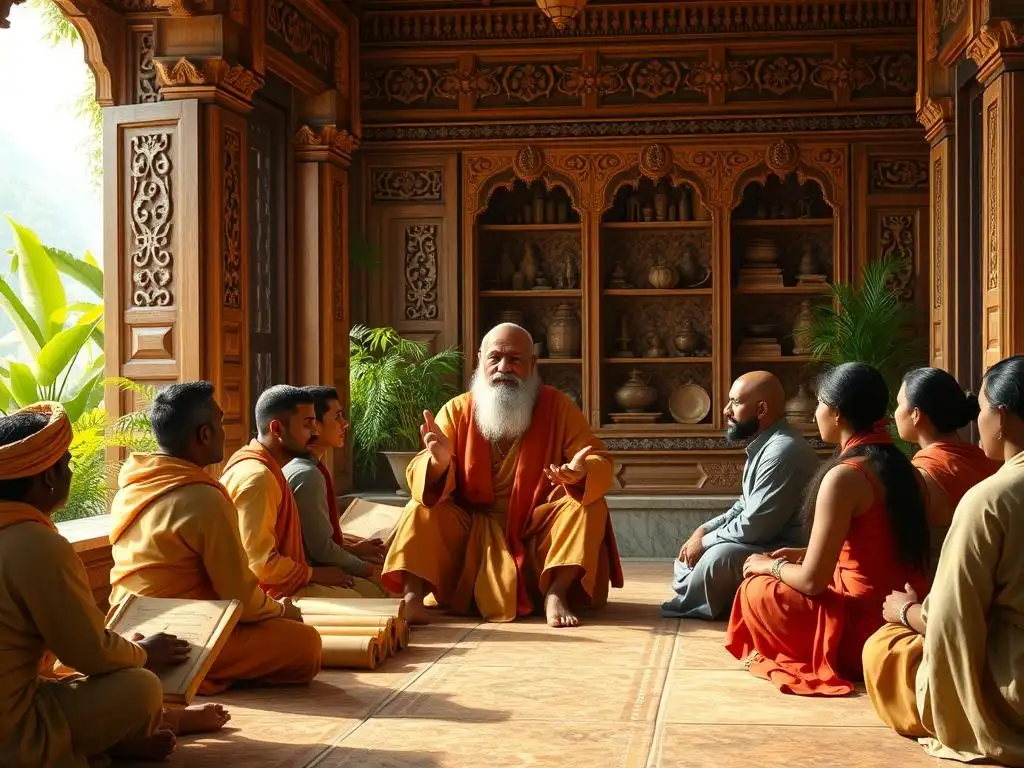
Ancient Indian education has significantly influenced various civilizations across the globe, particularly through its philosophical, mathematical, and scientific contributions. The Gurukul system, where students lived and learned under the guidance of a guru, set the groundwork for educational practices in not just India but also in neighboring regions.
Key Contributions:
- Philosophical Thought:
- The teachings of ancient Indian philosophers, such as Gautama Buddha and Adi Shankaracharya, laid the foundations for various schools of thought, influencing not only Indian culture but also shaping philosophical discourses in countries like Tibet, China, and even Greece.
- Indian texts like the Upanishads and the Bhagavad Gita have been translated into numerous languages, impacting global spiritual and ethical discussions.
- Mathematics and Astronomy:
- The decimal system, which originated in ancient India, revolutionized mathematics and is now a fundamental aspect of modern mathematics worldwide.
- Notable mathematicians such as Aryabhata and Brahmagupta made significant advancements in algebra and astronomy, with Aryabhata's work influencing scholars in the Islamic Golden Age and later European mathematics.
- Medicinal Practices:
- The ancient Indian practice of Ayurveda has garnered attention globally for its holistic approach to health and wellness. Its principles are now integrated into complementary medicine practices worldwide.
These contributions have facilitated a rich exchange of ideas and knowledge, allowing ancient Indian education to leave an indelible mark on global intellectual traditions.
Preservation and Dissemination of Knowledge
The methods of preservation and dissemination of knowledge in ancient India played a crucial role in ensuring that educational practices flourished and evolved over centuries.
Strategies Employed:
- Oral Traditions:
- Initially, knowledge was passed down orally, with shlokas and mantras being memorized. This method ensured that teachings were preserved in their authentic form, fostering a deep sense of cultural identity.
- Written Texts:
- The invention of writing systems, particularly the Brahmi script, allowed for the documentation of knowledge, leading to the creation of numerous texts in philosophy, mathematics, and medicine. Significant works like the Vedas, Mahabharata, and Siddhanta served as educational resources for generations.
- Institutions of Learning:
- Renowned centers of education, such as Nalanda and Takshashila, became hubs of knowledge where students from different parts of the world gathered to learn. These institutions were pivotal in the dissemination of knowledge, attracting scholars from as far as China, Korea, and the Middle East.
- Translation Movements:
- The translation of texts into various languages helped spread Indian knowledge beyond its geographical boundaries. For instance, translations during the Mughal era and later during colonial times played a significant role in making ancient Indian texts accessible to a global audience.
The contributions of ancient Indian education to global knowledge are profound and multifaceted. Through continuous efforts in the preservation and dissemination of knowledge, ancient Indian educational practices have transcended time, influencing numerous cultures and laying the groundwork for modern educational systems.
Challenges Faced in Ancient Indian Education
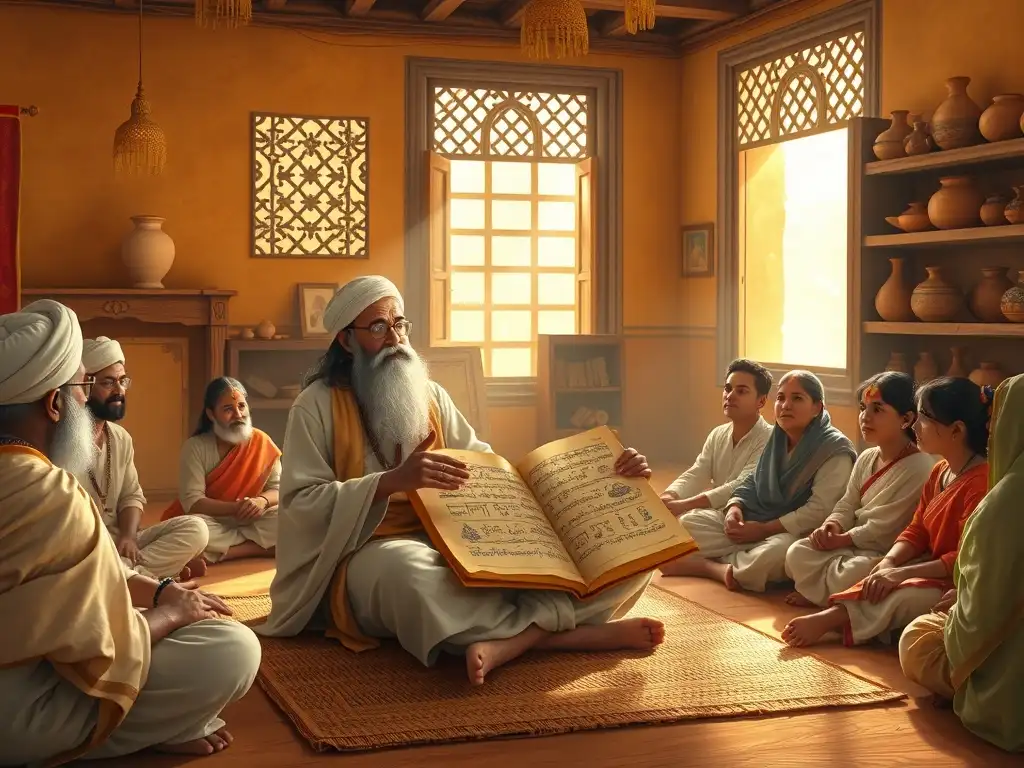
Ancient Indian education was deeply interwoven with the social and cultural fabric of the time, presenting various challenges that affected its accessibility and effectiveness. One significant barrier was caste-based discrimination, which influenced who could receive education. The Brahmins, as the priestly class, had privileged access to knowledge and texts, while the Shudras and other lower castes were often excluded from formal educational settings. This division not only limited educational opportunities for many but also hindered the overall intellectual and cultural development of society.
Additionally, gender disparities played a critical role in shaping the landscape of ancient Indian education. Educational institutions predominantly catered to males, with women receiving minimal access to formal learning. Despite some exceptions, such as the education of women in specific households or certain philosophical schools, the overarching trend was one of exclusion. This resulted in a lack of female representation in scholarly and educational spheres, severely impacting the preservation and transmission of knowledge.
Moreover, regional variations in educational practices contributed to unequal access to learning. Different regions in ancient India, influenced by local customs, languages, and traditions, developed distinct educational systems. While some areas thrived with centers of learning like Nalanda and Takshashila, others remained isolated, lacking formal educational institutions altogether. This disparity created a fragmented educational landscape, where knowledge and learning could not be uniformly disseminated across the subcontinent.
The Decline of Educational Institutions
The decline of educational institutions in ancient India can be traced to several interrelated factors that unfolded over centuries. One major contributing factor was the invasions and external attacks during the medieval period. The arrival of foreign powers, such as the Huns and later the Turks, led to the destruction of prominent educational centers. For instance, the sacking of Nalanda University in the 12th century resulted in a catastrophic loss of educational resources, manuscripts, and intellectual heritage.
Furthermore, the shift in political power during this period created instability and a lack of patronage for educational institutions. As new rulers prioritized military and administrative control, funding for education diminished. Many scholars and teachers fled to safer regions, leading to a significant brain drain and further weakening the educational framework.
Another critical aspect was the rise of religious orthodoxy, which often prioritized dogma over inquiry and rational thought. In some cases, this led to a suppression of secular education and a focus on religious teachings, limiting the scope of learning to a narrow set of beliefs. The decline of philosophical inquiry, particularly in the realms of science and mathematics, stunted intellectual growth and led to a stagnation in educational progress.
The decline of ancient Indian educational institutions was a complex phenomenon, influenced by social, political, and cultural changes. The combination of invasions, shifting political priorities, and an increasing focus on religious orthodoxy significantly impacted the rich tapestry of ancient Indian education history, leading to a gradual but profound transformation in the educational landscape.
Conclusion: The Legacy of Ancient Indian Education History
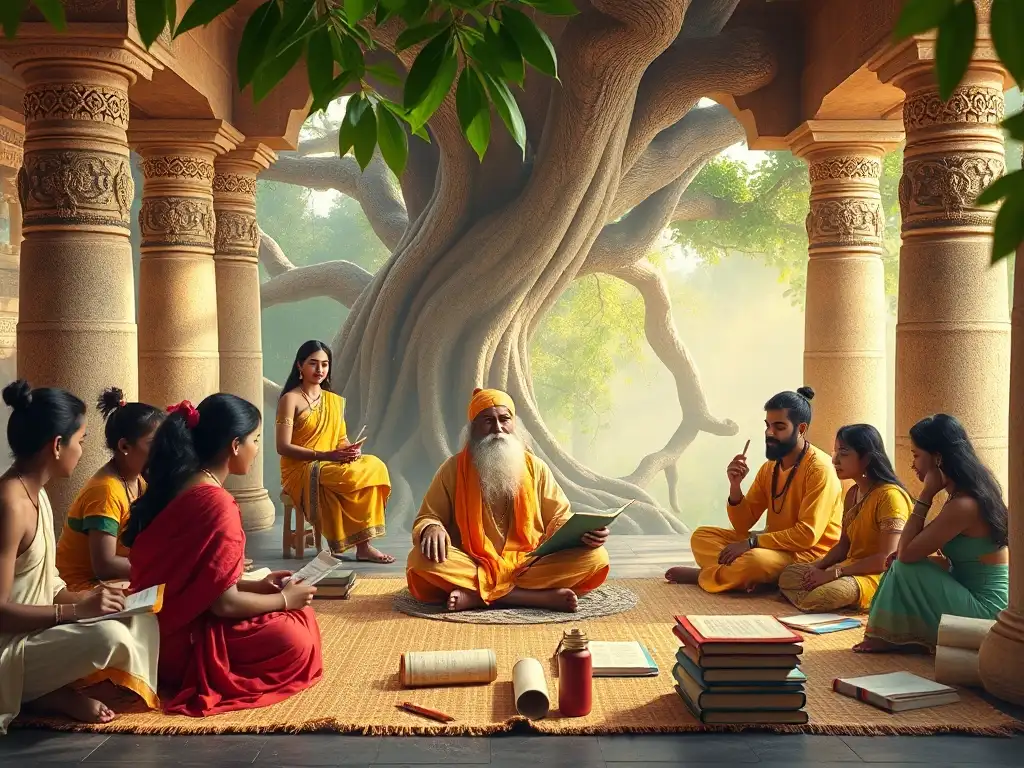
The evolution of ancient Indian education history is a profound testament to the intellectual and cultural richness of the subcontinent. From the oral traditions that shaped early knowledge systems to the emergence of written texts and formal institutions, this legacy has left an indelible mark on both Indian society and the broader educational landscape. The emphasis on holistic development, critical thinking, and moral education in ancient Indian practices continues to inspire modern educational frameworks.
Lasting Impact on Modern Educational Systems
Ancient Indian education history has significantly influenced contemporary educational systems, not only in India but also in various parts of the world. The Gurukul system, which emphasized personalized learning and mentorship, is mirrored in modern pedagogical approaches that prioritize student-teacher relationships. Furthermore, the integration of diverse subjects—ranging from mathematics and astronomy to philosophy and arts—can be seen in today’s interdisciplinary curricula.
| Aspect | Ancient Indian Education | Modern Educational Systems |
|---|---|---|
| Learning Environment | Gurukuls and ashrams | Schools and universities |
| Teaching Methodology | Oral transmission, experiential learning | Interactive and collaborative learning |
| Curriculum Focus | Holistic development, respect for knowledge | Standardized subjects, critical thinking |
| Assessment | Continuous evaluation | Formal examinations |
The legacy of ancient Indian education is also evident in the nurturing of ethical values and civic responsibility among learners. The teachings of sages and scholars from ancient texts such as the Vedas and Upanishads continue to inspire educational philosophies that prioritize character development alongside academic achievement.
Reflection on the Evolution of Education in India
The progression from oral traditions to written texts in ancient Indian education reflects broader societal changes and advancements in knowledge dissemination. Initially, knowledge was passed down through oral storytelling, which fostered community bonding and cultural preservation. As written scripts developed, particularly with the advent of Brahmi and Kharosthi, the scope of education expanded, allowing for more structured learning and the recording of complex ideas.
This evolution is marked by distinct phases:
- Oral Traditions: Knowledge shared through myths, epics, and oral recitations, emphasizing memory and participation.
- Scripture and Texts: The transition to written forms, such as the Vedas, which allowed for greater preservation and standardization of knowledge.
- Institutional Learning: The establishment of centers like Nalanda and Takshashila, which became hubs for advanced studies and attracted scholars globally.
The transition in ancient Indian education reflects a dynamic interplay between culture, philosophy, and practical needs, shaping a rich educational heritage that continues to evolve. As we reflect on this journey, it becomes clear that understanding ancient Indian education history is crucial for developing educational practices that honor tradition while embracing innovation.
References and Further Reading on Ancient Indian Education History
Recommended Books and Articles
-
"A History of Ancient Indian Education" by Suresh Kumar
This comprehensive book delves into the evolution of educational practices in ancient India, discussing the transition from oral traditions to written texts, as well as the various educational institutions that emerged throughout different periods.
-
"The Gurukul System: An Ancient Indian Education Method" by R. Sharma
This article provides an in-depth analysis of the Gurukul system, highlighting its structure, teaching methodologies, and the role of the Guru in shaping the educational landscape of ancient India.
-
"Education in Ancient India: A Historical Perspective" by A. B. Mishra
Focusing on the significant contributions of ancient Indian philosophers and educators, this book examines the curriculum and pedagogical approaches prevalent during various epochs, including the Vedic and post-Vedic periods.
-
"The Role of Sanskrit in Ancient Indian Education" by P. N. Rao
This article explores the importance of Sanskrit as a language of instruction and its influence on educational practices, literature, and philosophy in ancient India.
-
"From Oral Tradition to Text: The Evolution of Educational Practices in Ancient India" by K. Tiwari
This research paper discusses the shift from oral transmission of knowledge to written texts, emphasizing how this transformation impacted the educational framework in ancient Indian civilizations.
Online Resources for Further Exploration
-
Digital Library of India
A vast repository of ancient texts and manuscripts, this online resource provides access to a wealth of historical documents related to ancient Indian education, including scriptures, treatises, and educational manuals.
-
Ancient India Education History Wiki
This collaborative platform offers an extensive collection of articles, timelines, and images regarding the history of education in ancient India, ideal for both casual readers and researchers.
-
Khan Academy: The History of Indian Education
This educational platform features free online courses covering various aspects of Indian history, including a module dedicated to ancient education practices and their evolution.
-
The Indian Heritage Project
This initiative is focused on preserving and promoting the rich heritage of India, including its educational systems. The site includes articles, documentaries, and interactive timelines that highlight the significance of ancient Indian education.
-
Academia.edu: Research Papers on Ancient Indian Education
This platform allows researchers to share and access papers on various topics, including ancient Indian education. Users can find detailed studies and analyses from scholars around the globe, contributing to a deeper understanding of the subject.
Frequently Asked Questions
What was the primary mode of education in ancient India?
The primary mode of education in ancient India was through oral traditions. Knowledge was transmitted verbally from guru to shishya (students), emphasizing memorization and personal interaction.
How did written texts influence ancient Indian education?
The introduction of written texts marked a significant shift in ancient Indian education. It allowed for the preservation of knowledge, making it more accessible and facilitating the development of scholarly communities.
What were the major subjects taught in ancient Indian education?
Ancient Indian education encompassed a wide range of subjects, including mathematics, astronomy, medicine, and philosophy. These subjects were integral to the holistic development of students, preparing them for various roles in society.
How did the Gurukul system function in ancient India?
The Gurukul system was a traditional form of education where students lived with their guru in a secluded place. This system fostered close mentor-student relationships and emphasized discipline, spirituality, and practical skills.
What role did the Gupta Empire play in the evolution of education?
The Gupta Empire is often referred to as a golden age of learning in ancient India. During this period, there was significant progress in scholarship, leading to the establishment of renowned educational institutions like Nalanda and Taxila.
Final Reflection: The Enduring Legacy of Ancient Indian Education
The evolution of ancient Indian education, from oral traditions to written texts, remains profoundly relevant today as we navigate the complexities of modern learning. The rich tapestry of knowledge passed down through generations not only shaped the intellectual landscape of India but also laid the groundwork for educational systems worldwide. As we reflect on this journey, it becomes clear that the principles of inquiry, dialogue, and holistic development that characterized ancient Indian education continue to resonate in contemporary discussions about effective teaching and learning.
The impact of ancient Indian education on our cultural and social fabric is undeniable, influencing everything from philosophical thought to scientific inquiry. This legacy is a reminder of the importance of nurturing curiosity and critical thinking in our educational practices. As Mahatma Gandhi once said, Live as if you were to die tomorrow. Learn as if you were to live forever.
This quote encapsulates the spirit of lifelong learning that was central to ancient Indian education and remains vital in our rapidly changing world.
As we conclude this exploration of ancient Indian education history, I invite you to reflect on how these timeless lessons can be integrated into your own life and learning journey. Consider how the values of inquiry, respect for knowledge, and the pursuit of wisdom can inspire you to become a more engaged and thoughtful learner. Embrace the opportunity to learn from the past as you shape your future, fostering a lifelong passion for knowledge that honors the rich heritage of education that has come before us.
Embrace the Legacy of Ancient Learning!
Thank you for diving into the fascinating evolution of education in Ancient India with us! You’ve uncovered the rich tapestry of oral traditions that laid the groundwork for written texts, showcasing the profound impact of these practices on modern education. Now, it’s time to take that newfound knowledge and apply it!
Here are some exciting actions you can take:
- Start your own storytelling circle: Gather friends or family to share tales from your heritage, fostering a deeper appreciation for oral histories.
- Explore ancient texts: Visit a local library or utilize online resources to read more about ancient Indian philosophies and educational practices that can inspire contemporary learning.
- Share your insights: Discuss what you've learned on social media or in community groups, sparking conversations about the importance of education's roots and its future.
As you reflect on the profound influences of education throughout history, consider the ancient wisdom that you would carry forward into today’s learning environment.