
The Influence of Nyaya on Other Philosophical Schools: A Web of Ideas


Welcome to Ancient India History, where we embark on a fascinating journey through the vibrant tapestry of India’s past. Here, we delve into the profound influence of Nyaya philosophy, unveiling its impact on various philosophical schools and the rich cultural fabric of ancient civilizations. As you explore our latest article, "The Influence of Nyaya on Other Philosophical Schools: A Web of Ideas," prepare to uncover the intricate connections that shaped thought and discourse in India. What can the principles of Nyaya teach us about the evolution of ideas? Dive in to discover the answers and more!
Introduction to Nyaya Philosophy
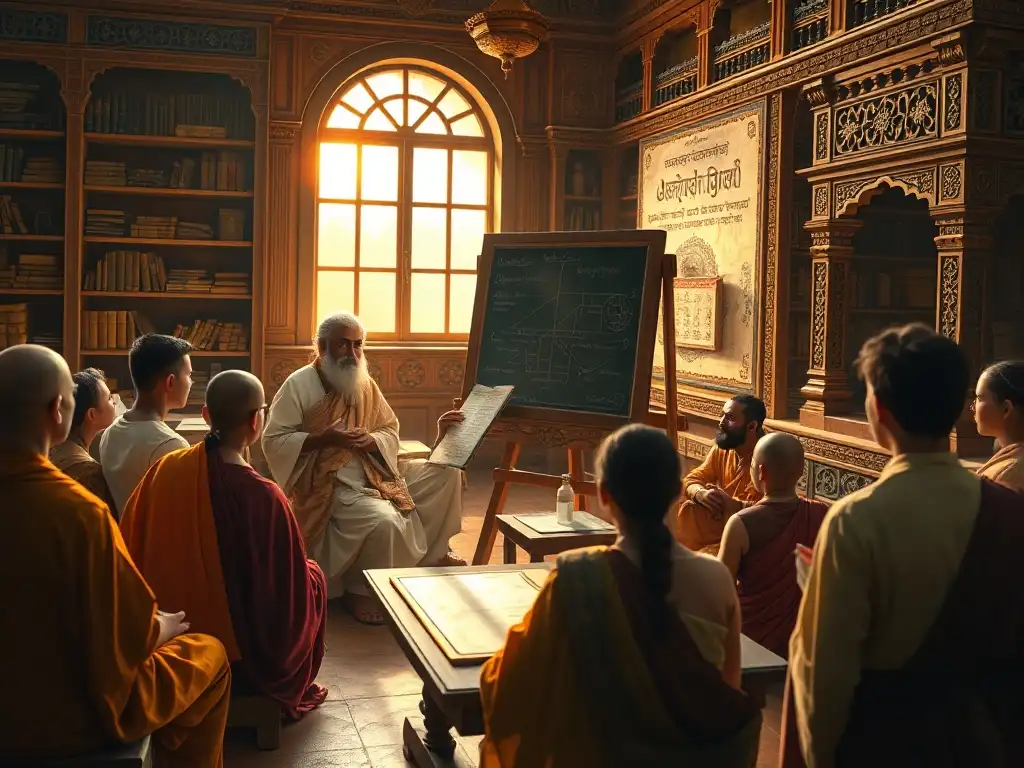
Nyaya philosophy, one of the six orthodox schools of Indian philosophy, plays a pivotal role in shaping the intellectual landscape of ancient India. The term "Nyaya" translates to "justice" or "logic," reflecting its foundational emphasis on reasoning and logical analysis. Emerging around the 6th century BCE, Nyaya provides a systematic framework for understanding reality, knowledge, and the processes of valid reasoning.
Its intricate principles not only influenced other philosophical traditions within India but also laid the groundwork for various aspects of Indian thought, including ethics, metaphysics, and epistemology. In this article, we will delve into the multifaceted influence of Nyaya philosophy on other philosophical schools, illustrating how its ideas created a rich web of interconnected thoughts that continue to resonate in the study of Indian philosophy today.
Overview of Nyaya Philosophy
Nyaya philosophy centers on the pursuit of knowledge and the methods through which it can be obtained. It is primarily concerned with the means of valid cognition, known as Pramana, which includes perception, inference, comparison, and testimony. The Nyaya Sutras, authored by the sage Gautama, serve as the foundational text for this school, outlining its principles and guiding inquiries into the nature of reality. The emphasis on logic and debate in Nyaya has not only contributed to philosophical discussions but has also influenced fields such as law and ethics across different Indian civilizations.
Historical Context of Nyaya in Ancient India
The historical context of Nyaya is essential for understanding its development and influence. Originating during a period of significant intellectual activity in ancient India, Nyaya emerged alongside other philosophical schools such as Vaisheshika, Sankhya, and Buddhism. This was a time marked by a quest for knowledge and understanding, as scholars engaged in rigorous debates and discussions. The interactions between these schools led to a vibrant exchange of ideas, where Nyaya's logical frameworks and epistemological insights became foundational in shaping the discourse of Indian philosophy.
Key Figures in Nyaya Philosophy
Several prominent figures have contributed to the evolution of Nyaya philosophy, each adding depth and complexity to its teachings. Among them, Gautama (or Gotama) is revered as the founder of Nyaya, establishing its foundational texts and principles. Later philosophers like Vatsyayana and Uddyotakara further developed Nyaya thought, addressing critiques and expanding its epistemological scope. Their works not only solidified Nyaya's standing within the philosophical community but also facilitated its influence on other schools, highlighting the interconnected nature of Indian philosophical traditions.
The Core Principles of Nyaya Philosophy
Nyaya philosophy is characterized by its systematic approach to understanding knowledge and reality. It encompasses several core principles that articulate its epistemological and logical frameworks, which serve as the basis for its influence on other philosophical schools.
Epistemology in Nyaya: Sources of Knowledge
At the heart of Nyaya philosophy lies its epistemology, which delineates the various sources of knowledge. Nyaya identifies four primary means of acquiring knowledge:
- Perception (Pratyaksha) - Knowledge gained through direct sensory experience.
- Inference (Anumana) - Knowledge derived from deductive reasoning based on observed phenomena.
- Comparison (Upamana) - Knowledge acquired through analogy or comparison with known entities.
- Testimony (Sabda) - Knowledge obtained from reliable sources, such as scriptures or credible individuals.
This comprehensive framework allows for a nuanced understanding of how knowledge can be validated, influencing other schools, such as Sankhya and Vedanta, which adopted and adapted aspects of Nyaya's epistemological insights.
The Role of Logic in Nyaya Thought
Logic plays a crucial role in Nyaya philosophy, serving as a tool for establishing valid arguments and discerning truth. The Nyaya school emphasizes the importance of logical reasoning in philosophical inquiry, advocating for rigorous debate and dialectical methods. This commitment to logic not only fosters critical thinking but also provides a method for resolving philosophical disputes. Consequently, Nyaya's logical methodologies have permeated other philosophical traditions, emphasizing the importance of rational discourse in the pursuit of knowledge.
Nyaya's Concept of Valid Cognition (Pramana)
Central to Nyaya philosophy is the concept of Pramana, or valid cognition, which delineates the criteria for what constitutes true knowledge. Nyaya philosophers argue that for knowledge to be considered valid, it must meet specific conditions, including clarity, coherence, and consistency. This rigorous approach to validating knowledge has had a profound impact on subsequent philosophical developments in India. Schools like Vaisheshika and Advaita Vedanta have drawn from Nyaya’s understanding of Pramana, integrating its principles into their own frameworks for evaluating knowledge and reality.
The influence of Nyaya philosophy on other philosophical schools demonstrates a rich interplay of ideas that have shaped the course of Indian intellectual history. As we explore further, we will uncover the intricate ways in which Nyaya's logical and epistemological insights continue to resonate within the broader tapestry of Indian philosophy.
Nyaya's Influence on Other Philosophical Schools
Nyaya philosophy, with its rigorous emphasis on logic and epistemology, has significantly shaped the landscape of Indian philosophical thought. Originating in the 2nd century BCE, Nyaya provides a systematic framework for reasoning and argumentation, which has influenced various philosophical schools across India.
Its methods of debate, analysis, and understanding of perception and inference have not only enriched its own doctrines but have also woven a complex web of interactions with contemporaneous and later philosophical traditions. The core tenets of Nyaya, particularly its focus on the means of valid knowledge (pramana), have been absorbed and adapted by other schools, ultimately leading to a more robust philosophical discourse in ancient India.
The Impact of Nyaya on Vaisheshika Philosophy
The relationship between Nyaya and Vaisheshika philosophy is particularly noteworthy, as both schools share a common foundation in logic and metaphysics. Vaisheshika, founded by Kanada around the same period as Nyaya, focuses on the categorization of reality and the nature of substances. The two schools complement each other: while Nyaya provides the epistemological tools to discern valid knowledge, Vaisheshika offers a detailed ontological framework that categorizes entities in the universe.
One major influence of Nyaya on Vaisheshika is the integration of logical analysis into the latter's discussions on the nature of substances. Vaisheshika philosophers adopted Nyaya's principles of inference and syllogism to strengthen their arguments regarding the existence and nature of categories such as substance, quality, and action. The collaboration between these two schools has fostered a dual emphasis on both epistemology and ontology, creating a comprehensive philosophical approach that addresses fundamental questions about existence and knowledge.
The Relationship Between Nyaya and Sankhya Philosophy
Nyaya also shares a significant relationship with Sankhya philosophy, particularly in its epistemological pursuits. Sankhya, recognized for its dualistic framework of purusha (consciousness) and prakriti (matter), engages with Nyaya's concepts of knowledge acquisition and inferential reasoning. The interplay between these schools is evident in their discussions about the nature of reality and the paths to liberation.
The influence of Nyaya on Sankhya can be seen in the latter's adoption of Nyaya's pramanas (means of knowledge) to substantiate its claims about the nature of consciousness and the material world. For instance, Sankhya philosophers utilize Nyaya's logical methodologies to establish the validity of their categorizations of reality, which include the five great elements and the various states of consciousness. This interaction has enriched Sankhya's philosophical discourse, allowing it to engage more deeply with questions regarding the nature of knowledge and the mechanisms of cognition.
Nyaya's Contribution to Advaita Vedanta
Nyaya philosophy has also made substantial contributions to Advaita Vedanta, particularly in the areas of logic and epistemology. Advaita Vedanta, a non-dualistic philosophical system articulated by Adi Shankaracharya, leverages Nyaya's analytical tools to support its assertions regarding the nature of ultimate reality (Brahman) and the illusory nature of the material world (Maya).
The rigorous logical framework provided by Nyaya allows Advaita thinkers to construct coherent arguments against dualistic interpretations of reality. In this context, Nyaya's modes of reasoning, such as the use of logical inference and the analysis of contradictory statements, serve to clarify and defend the non-dualistic position. The dialogues between Nyaya and Advaita have led to sophisticated discussions on the nature of knowledge, perception, and the path to liberation, reinforcing the philosophical foundations of Advaita Vedanta.
Cross-Influences with Other Indian Philosophical Traditions
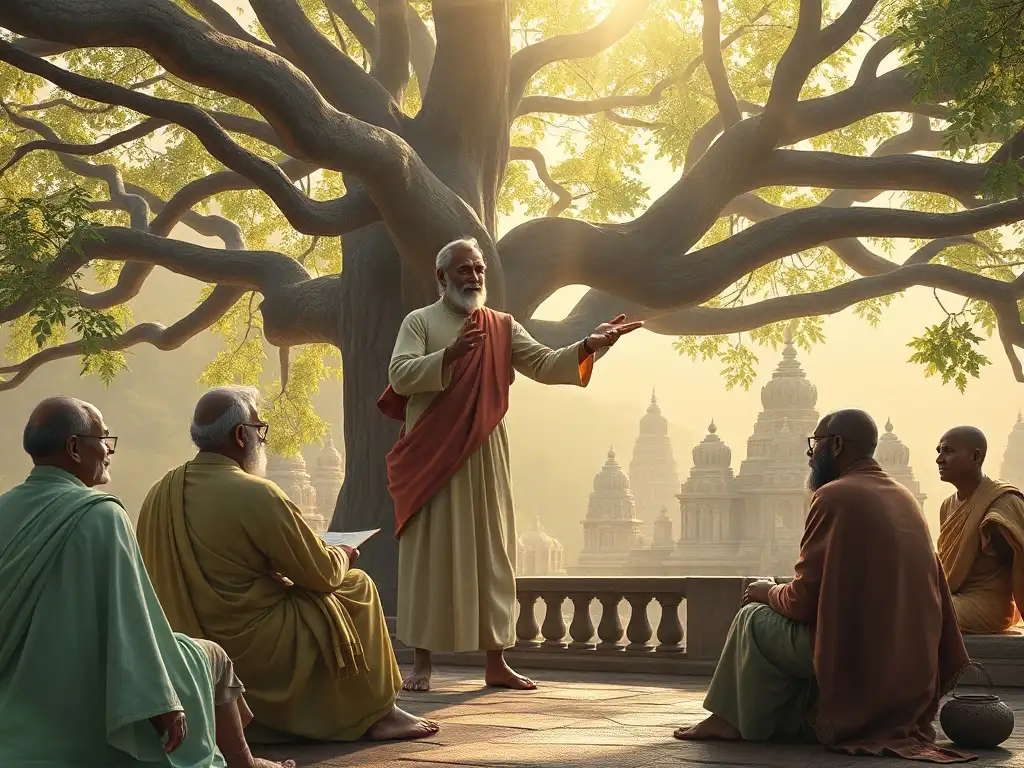
The influence of Nyaya extends beyond its direct relationships with fellow philosophical schools; it has also interacted with various other Indian philosophical traditions, establishing a broad intellectual network that has shaped the evolution of Indian thought.
Nyaya and Buddhist Thought
The engagement between Nyaya and Buddhist philosophy is marked by a dynamic exchange of ideas, particularly in the realm of epistemology and logic. Buddhist thinkers, especially those from the Madhyamaka and Yogachara schools, have critically engaged with Nyaya's concepts of valid knowledge and perception.
One notable influence is the Buddhist critique of Nyaya's notion of self and causation. While Nyaya posits a substantial self as the knower, Buddhists argue for the concept of anatta (non-self), challenging Nyaya's assertions. This philosophical tension has prompted deeper explorations into the nature of reality and the mechanisms of perception, illustrating the richness of dialogue between Nyaya and Buddhism.
The Interplay Between Nyaya and Jain Philosophy
The interplay between Nyaya and Jain philosophy reveals another layer of philosophical discourse in ancient India. Jainism, with its emphasis on non-violence (ahimsa) and the multiplicity of viewpoints (anekantavada), has engaged with Nyaya's logical frameworks to articulate its own metaphysical claims.
Jain thinkers have drawn upon Nyaya's pramanas to validate their assertions about the nature of reality and the existence of multiple truths. The influence of Nyaya is particularly evident in Jain epistemology, where logical reasoning is employed to navigate the complexities of truth and perception. This cross-pollination of ideas has led to enriched dialogues regarding ethics, metaphysics, and the nature of knowledge, underscoring the collaborative spirit of Indian philosophical traditions.
The influence of Nyaya philosophy on other philosophical schools is profound and multifaceted, establishing a rich tapestry of ideas that continue to resonate within the broader context of Indian thought. Through its interactions with Vaisheshika, Sankhya, Advaita Vedanta, Buddhism, and Jainism, Nyaya has not only contributed to the development of individual schools but has also fostered a vibrant intellectual culture that thrives on dialogue and critique.
Case Studies of Nyaya Influence in Ancient Texts
Nyaya philosophy, renowned for its rigorous logical analysis and epistemological frameworks, has significantly shaped the intellectual landscape of ancient India. Several key texts illustrate the profound influence of Nyaya on various philosophical schools. One prominent example is the "Brahma Sutras," where Nyaya's logical structuring is evident in the arguments presented regarding the nature of Brahman and the soul. The Sutras employ Nyaya's principles of inference and debate to clarify complex metaphysical concepts.
Another critical text is the "Nyaya Sutras" itself, attributed to Gautama, where the systematic exposition of logic and epistemology laid foundational principles that others would build upon. The Nyaya system’s focus on pramanas (means of knowledge) has influenced texts across various philosophical traditions, including the "Sarva-Darsana-Samgraha" by Madhusudana Sarasvati, which synthesizes different philosophical viewpoints, showcasing how Nyaya principles are integrated into broader philosophical discourses.
Analysis of Key Texts Influenced by Nyaya
In examining key texts influenced by Nyaya, one cannot overlook the "Caraka Samhita," a foundational text in Ayurveda. This text demonstrates the application of Nyaya’s logical framework in medical discourse, particularly in the categorization and analysis of diseases and treatments. The emphasis on systematic reasoning in diagnosis reflects Nyaya's influence on empirical methodologies in ancient Indian medicine.
Additionally, the "Vedanta Sutras" reveal Nyaya's impact through their analytical approach to understanding Vedantic philosophy. The use of Nyaya's logical tools to dissect spiritual concepts like the nature of reality and the self illustrates the interconnectivity of philosophical thought in ancient India. This synergy shows how Nyaya philosophy provided a robust framework for critical analysis across various domains of knowledge.
Modern Implications of Nyaya Philosophy Influences
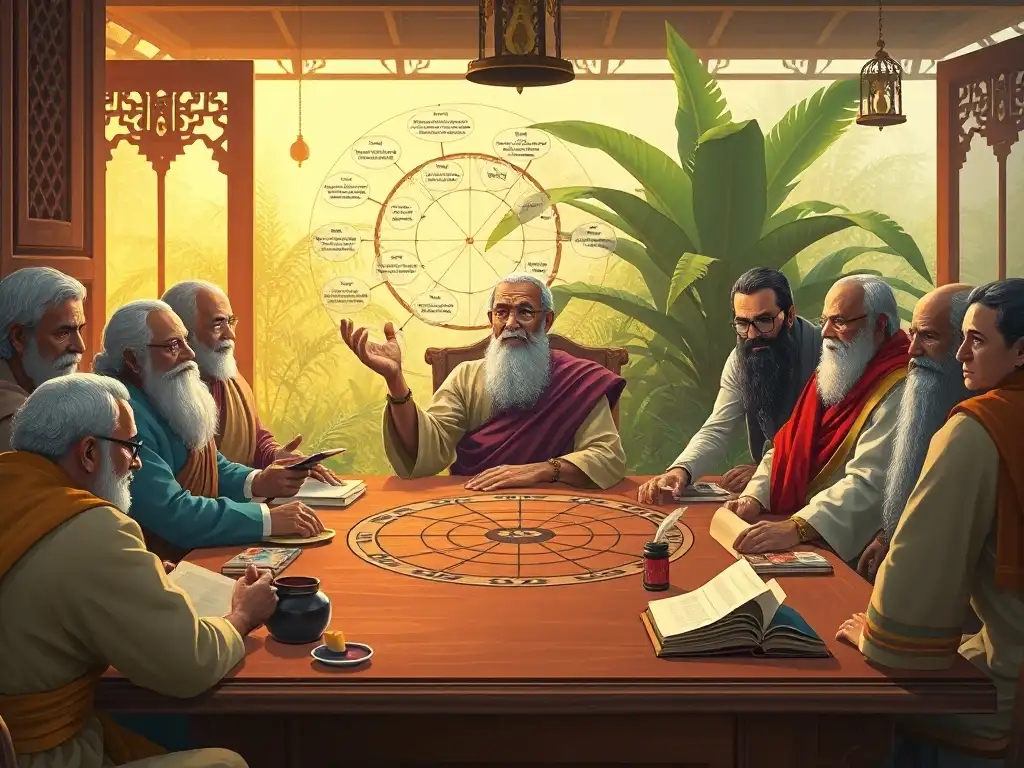
In today's philosophical landscape, the relevance of Nyaya philosophy remains significant, particularly in the fields of logic, ethics, and epistemology. Its emphasis on rigorous logical reasoning and debate fosters critical thinking skills that are essential in contemporary discourse. The principles of Nyaya can be seen as precursors to modern logical frameworks, influencing how arguments are constructed and evaluated in current philosophical discussions.
Furthermore, Nyaya's insights into the nature of knowledge and perception resonate with contemporary epistemological inquiries, prompting discussions about the validity and sources of knowledge in a rapidly evolving world. Its systematic approach encourages a nuanced understanding of truth, making it a valuable resource for modern philosophers and scholars alike.
The Relevance of Nyaya in Contemporary Philosophy
The relevance of Nyaya in contemporary philosophy is evident through its contributions to discussions on the nature of reality, ethics, and the philosophy of science. Modern thinkers draw upon Nyaya's analytical techniques to address questions about the relationship between perception and reality, the methodologies of scientific inquiry, and moral reasoning.
Nyaya's framework encourages a dialogical approach, promoting the idea that philosophical discourse thrives through debate and the exchange of ideas. This aspect is particularly pertinent in today's multicultural and interdisciplinary contexts, where diverse viewpoints are essential for a holistic understanding of complex issues.
Nyaya's Influence on Modern Indian Thinkers
Nyaya philosophy has left a lasting mark on modern Indian thinkers, shaping their approaches to various philosophical and sociopolitical issues. Figures such as B.R. Ambedkar drew upon Nyaya's principles to advocate for social justice and equality, emphasizing the importance of logical reasoning in critiquing social norms and structures.
Additionally, contemporary philosophers like Gauri Ma and Swami Vivekananda have infused Nyaya's analytical rigor into their teachings, blending traditional insights with modern concerns. Their works reflect an ongoing engagement with Nyaya, demonstrating its adaptability and relevance in addressing contemporary challenges in ethics, politics, and spirituality.
Nyaya philosophy continues to influence modern Indian thought, fostering a rich dialogue between ancient wisdom and contemporary philosophical inquiry. Its legacy persists as a vital resource for understanding and navigating the complexities of modern life.
Conclusion: The Lasting Legacy of Nyaya Philosophy
Nyaya philosophy stands as a cornerstone of Indian thought, influencing not just its contemporaries but also shaping the landscape of philosophical discourse in subsequent centuries. Its rigorous logical framework and its emphasis on epistemology have left a profound impact on various schools of thought, including Vaisheshika, Sankhya, and even later developments in Buddhist philosophy. The principles established by Nyaya, particularly regarding the means of knowledge (pramanas), have been integral in fostering critical thinking and analytical reasoning within the broader context of Indian philosophy.
Nyaya's legacy can be seen in its contributions to various fields, including ethics, metaphysics, and epistemology. The philosophical dialogues initiated by Nyaya thinkers have encouraged a culture of debate and discussion, leading to a rich tapestry of ideas that continues to resonate in modern philosophical inquiries. As a critical lens through which to examine truth and knowledge, Nyaya philosophy remains relevant, guiding scholars and practitioners alike in their quest for understanding.
Summary of Nyaya's Philosophical Impact
Nyaya's influence permeates multiple dimensions of Indian philosophy. Its foundational concepts, such as the four types of valid knowledge (pramanas) — perception, inference, comparison, and testimony — have been adopted and adapted by various schools. For instance, the Vaisheshika school, which focuses on the nature of reality, incorporated Nyaya's epistemological insights to bolster its own metaphysical claims.
Moreover, Nyaya's logical methods have been pivotal in critiquing and refining arguments across different philosophical traditions. The emphasis on sound reasoning and clear definitions has encouraged a systematic approach to philosophical inquiry that is still echoed in contemporary thought. The interactions between Nyaya and other philosophical schools exemplify a dynamic intellectual exchange that has enriched the philosophical landscape of ancient India.
Reflection on the Web of Ideas in Indian Philosophy
The intricate web of ideas in Indian philosophy illustrates a unique interplay of thought where schools do not exist in isolation but rather influence and challenge one another. Nyaya, with its rigorous analytical approach, has played a crucial role in this network. By engaging with ideas from Buddhism, Jainism, and other schools, Nyaya philosophers have both contributed to and transformed the broader philosophical discourse.
This interconnectedness is evident in the way concepts such as causation, perception, and existence have been debated and redefined across various traditions. The dialogues between Nyaya and its contemporaries reflect a vibrant intellectual culture that values inquiry and diversity of perspectives. As such, understanding Nyaya is essential for appreciating the complexity and richness of ancient Indian philosophy as a whole.
Further Reading on Nyaya and Its Influence
Engaging with Nyaya philosophy offers a deeper insight into not only its principles but also its far-reaching effects on the philosophical landscape of India. Here are some resources to explore further.
Recommended Books and Articles
- "Nyaya Philosophy: A Critical Introduction" by Raghunath Ghosh: This book provides a comprehensive overview of Nyaya philosophy, its main tenets, and its historical context.
- "The Nyaya Sutras of Gautama" translated by G. J. K. Ramanujan: A translation of the foundational texts, offering insights into the original arguments and discussions of Nyaya thinkers.
- "Logic in Indian Philosophy" by Bimal K. Matilal: This work explores the logical aspects of Nyaya and its influence on other Indian philosophical schools.
Online Resources for Exploring Nyaya Philosophy
- Stanford Encyclopedia of Philosophy: Offers an extensive entry on Nyaya philosophy, providing scholarly insights and references for further reading.
- Internet Archive: Hosts a variety of texts on Nyaya, including original works and critical analyses available for free.
- Online Lectures and Courses: Websites like Coursera and edX often feature courses on Indian philosophy that include sections on Nyaya, allowing for a deeper dive into its concepts and impacts.
Engaging with these materials will enrich your understanding of Nyaya philosophy and its enduring influence on the philosophical traditions of India.
- Introduction to Nyaya Philosophy
- The Core Principles of Nyaya Philosophy
- Nyaya's Influence on Other Philosophical Schools
- Cross-Influences with Other Indian Philosophical Traditions
- Case Studies of Nyaya Influence in Ancient Texts
- Analysis of Key Texts Influenced by Nyaya
- Modern Implications of Nyaya Philosophy Influences
- Conclusion: The Lasting Legacy of Nyaya Philosophy
- Further Reading on Nyaya and Its Influence
Frequently Asked Questions
What is Nyaya philosophy?
Nyaya is one of the six orthodox schools of Indian philosophy, focusing on logic, reasoning, and epistemology. It emphasizes the importance of valid knowledge in understanding reality.
How has Nyaya influenced other philosophical schools in India?
Nyaya has significantly impacted schools like Vaisheshika, Mimamsa, and Advaita Vedanta, particularly in areas of logic and epistemology, shaping their methodologies and arguments.
What role does logic play in Nyaya philosophy?
Logic is central to Nyaya philosophy, which seeks to establish valid reasoning through a structured approach. This focus on logical analysis has influenced various disciplines, including science and law.
How does Nyaya philosophy contribute to modern Indian thought?
Nyaya philosophy's emphasis on critical thinking and rational discourse fosters a culture of analytical reasoning in contemporary Indian philosophy, making it relevant to modern debates on knowledge and truth.
Can Nyaya philosophy be applied to everyday life?
Yes, the principles of Nyaya encourage individuals to engage in logical reasoning and critical analysis in decision-making processes, promoting a more thoughtful approach to everyday challenges.
Final Reflection: The Enduring Legacy of Nyaya Philosophy
The intricate web of ideas woven by Nyaya philosophy continues to resonate profoundly in contemporary discourse, illustrating how Nyaya philosophy influences India in multifaceted ways. As we navigate a world increasingly defined by complexity and nuance, the principles of logic and reasoning championed by Nyaya serve as a beacon for critical thinking and rational discourse.
Delving into the rich tapestry of Indian philosophical thought, we can observe how Nyaya has not only shaped its contemporaries but also laid the groundwork for future explorations in ethics, metaphysics, and epistemology. The mind is not a vessel to be filled, but a fire to be kindled.
This quote encapsulates the essence of Nyaya's influence, reminding us that the pursuit of knowledge is an active, dynamic process that continues to inspire intellectual curiosity and debate.
As we reflect on the teachings of Nyaya, I invite you to consider how these principles can be applied in your own life. Engage with the world through the lens of inquiry and reason, and allow the wisdom of Nyaya to guide your understanding of complex issues. Embrace the challenge of questioning assumptions, fostering dialogue, and cultivating a deeper appreciation for the interconnectedness of ideas. In doing so, you not only honor the legacy of Nyaya but also contribute to a more thoughtful and enlightened society.
Unveil the Depths of Nyaya's Influence!
Thank you for diving into the rich insights about Nyaya and its impact on other philosophical schools! We hope you found valuable connections that inspire a deeper exploration of these ancient ideas.
Now, it’s time to turn that curiosity into action! Here are a few steps you can take to further enrich your understanding and engage with this captivating topic:
- Explore further: Read additional texts or commentaries on Nyaya and its interactions with other philosophical schools. This will deepen your perspective on how different ideas interconnect.
- Join the conversation: Share this article with friends or fellow philosophy enthusiasts and discuss your thoughts on Nyaya's significance in the broader philosophical landscape.
- Delve deeper: Consider attending a lecture or workshop related to ancient Indian philosophy. Expanding your knowledge through interactive experiences can unlock even more insights!
What aspect of Nyaya's influence intrigued you the most, and how do you think it shapes our understanding of philosophy today? We invite you to share your thoughts below!