
Ancient Algorithms: The Mathematical Innovations of India that Transformed Technology


Welcome to Ancient India History, where we embark on a journey through the rich tapestry of civilizations that shaped the subcontinent. Dive into the realm of mathematical innovations of ancient India, as we unravel the fascinating story behind the algorithms that revolutionized technology.
From the ingenious calculations of the Indus Valley to the groundbreaking advancements during the Gupta Empire, discover how these ancient minds laid the foundations for modern mathematics and technology. Prepare to be captivated as we explore the brilliance of ancient algorithms and their lasting impact on our world today—read on to unlock the secrets of India's profound contributions!

Introduction to the Mathematical Innovations of Ancient India
The mathematical innovations of ancient India represent a profound legacy that has significantly shaped the fields of mathematics, science, and technology as we know them today. From the intricate calculations of the Indus Valley Civilization to the sophisticated theories developed during the Gupta Empire, ancient Indian mathematicians introduced concepts and methods that were not only groundbreaking but also transformative.
These innovations laid the groundwork for various technological advancements, influencing not just local practices, but also the broader trajectory of global mathematics. Understanding these contributions allows us to appreciate the depth and richness of ancient Indian civilization, revealing how their insights continue to resonate in modern technology.
The Origins of Ancient Indian Mathematics
The origins of ancient Indian mathematics can be traced back to various civilizations, each contributing unique ideas and methods that advanced mathematical thought. This section delves into the early developments that set the stage for future innovations, highlighting key figures and milestones in the timeline of Indian mathematics.
Early Number Systems and Place Value
Ancient Indian mathematicians were pioneers in the development of number systems, particularly the concept of place value. The earliest known numeral system, dating back to around 3000 BCE, involved simple counting methods using symbols for different values. By the time of the Aryabhata in the 5th century CE, the place value system had evolved significantly, enabling more complex calculations.
- Key Features of Early Number Systems:
- Base-10 System: The decimal system, which is still in use today, was formalized during this period.
- Symbol Representation: Different symbols represented numbers, allowing for easier computation.
- Development of Fractions: Ancient Indian mathematicians also made strides in understanding and using fractions, which were pivotal for trade and commerce.
These innovations were crucial for the practical applications of mathematics in daily life, trade, astronomy, and architecture.
The Concept of Zero: A Revolutionary Idea
Perhaps one of the most significant mathematical innovations of ancient India is the concept of zero. This seemingly simple idea revolutionized mathematics and opened up new avenues for computation and theoretical exploration.
- Historical Context:
- The earliest recorded use of zero in India dates back to the 5th century CE, as seen in the works of mathematicians like Brahmagupta.
- Zero was not merely a placeholder; it represented the concept of 'nothingness,' which significantly influenced mathematical operations.
- Impact on Mathematics and Technology:
- Zero allowed for the development of algebra and complex calculations, paving the way for advancements in various scientific disciplines.
- Its introduction into the numeral system facilitated the representation of large numbers and made calculations more efficient.
The adoption of zero marked a turning point in mathematical history, with effects that would ripple through time into modern computational systems and technologies.
Key Mathematical Innovations of Ancient India
Ancient India is renowned for its significant contributions to mathematics, which laid the groundwork for numerous advancements in technology and science. Among the key innovations are the concepts of zero, the decimal system, and sophisticated techniques in algebra and geometry. The introduction of zero as a numerical digit revolutionized arithmetic and made complex calculations feasible. Alongside this, the decimal system, which utilized place value, facilitated easier computation and laid the foundation for modern mathematics.
Moreover, ancient Indian mathematicians developed methods for solving equations that were remarkably advanced for their time. The Sulbasutras, ancient texts associated with construction and geometry, provided practical rules for geometric constructions and measurements. These innovations not only influenced mathematics in India but also spread to other cultures, significantly impacting global mathematical thought.
Algebraic Techniques and Their Applications
Algebraic techniques in ancient India were remarkably sophisticated, with texts like the "Aryabhatiya" by Aryabhata presenting methods for solving both linear and quadratic equations. These methods included systematic approaches to finding unknowns, which were essential for trade, astronomy, and engineering. The use of symbols and an understanding of algebraic identities can be traced back to Indian mathematicians, who significantly advanced the discipline.
The Bakhshali Manuscript, dated to around the 7th century, showcases early forms of algebra, including the use of negative numbers and the concept of an unknown quantity represented by a symbol. These innovations not only exemplified mathematical theory but also had practical applications in areas such as land measurement, trade calculations, and even astronomy, where precise calculations were vital for predicting celestial events.
Geometry: The Foundation of Engineering and Architecture
Geometry played a pivotal role in ancient Indian civilization, serving as the foundation for engineering and architecture. The Sulbasutras, a collection of texts, provided detailed instructions on constructing altars and fire pits, emphasizing geometric principles. These texts included methods for constructing squares, rectangles, and circles, as well as the Pythagorean theorem, long before its formal introduction in the West.
The application of geometry extended beyond religious architecture to the construction of impressive structures like the temples of Khajuraho and the stepwells of Gujarat. The intricate designs and calculations required for these constructions demonstrate the advanced understanding of geometry among ancient Indian architects and builders, highlighting the interplay between mathematics and technology in shaping ancient Indian society.
Algorithms and Their Influence on Modern Computing
Algorithms, defined as a set of rules for solving problems, have roots in the mathematical innovations of ancient India. The systematic approaches to computation developed by Indian mathematicians laid the groundwork for later advancements in computer science. The algorithms used in ancient Indian mathematics, especially those for arithmetic calculations and solving equations, resonate with the logic employed in modern computing.
One notable example is the "Chakravala" method for solving indeterminate equations, which has parallels in contemporary algorithmic techniques. This method illustrates the rich heritage of problem-solving strategies that continue to influence mathematical practices today. As computers evolve, the efficiency of ancient algorithms speaks to their timelessness and adaptability, revealing the deep connections between ancient knowledge and modern technology.
The Role of Ancient Algorithms in Technology
Ancient algorithms have played a crucial role in shaping various technological advancements. The computational techniques developed by mathematicians like Brahmagupta and Bhaskara not only influenced mathematics but also found applications in fields such as astronomy, navigation, and engineering. Their methods for calculating square roots and handling fractions are particularly noteworthy, serving as a precursor to more complex computational methods used in technology today.
In engineering, the geometric principles and algorithms outlined in ancient texts facilitated the construction of intricate structures and enabled accurate measurements. The emphasis on precision and efficiency in these algorithms has persisted, influencing modern engineering practices and computer algorithms that prioritize optimization and resourcefulness.
The Contribution of Indian Mathematicians to International Mathematics
The contributions of Indian mathematicians to international mathematics are profound and far-reaching. Figures like Aryabhata, Brahmagupta, and Bhaskara made foundational contributions that transcend cultural boundaries, influencing mathematical thought across the globe. Their work on the number system, algebra, and geometry not only enriched Indian mathematics but also played a crucial role in the mathematical renaissance in the Islamic world and later in Europe.
The introduction of the decimal system and the concept of zero from India to the Arab world in the 8th century facilitated the development of advanced mathematical concepts in the Middle Ages. This knowledge eventually made its way to Europe, where it revolutionized mathematics and science. The legacy of ancient Indian mathematicians continues to be recognized and celebrated today, highlighting the significance of their work in shaping the global mathematical landscape.
The Legacy of Ancient Indian Mathematics Today
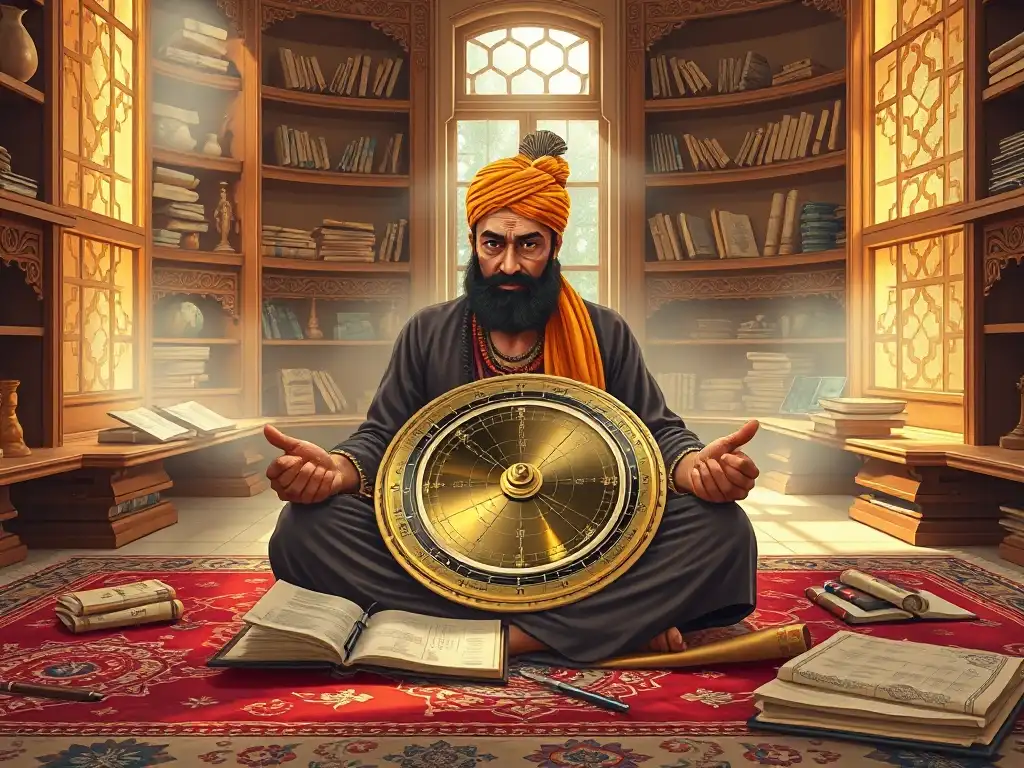
The mathematical innovations of ancient India have left a profound and lasting legacy that continues to influence various fields, including mathematics, astronomy, and technology. From the concept of zero to sophisticated algorithms, Indian mathematicians laid the groundwork for many mathematical principles that are integral to modern science and engineering. The ancient texts, such as the Sulba Sutras and the Aryabhatiya, provide insights into advanced mathematical concepts, including geometry, arithmetic, and trigonometry, showcasing the remarkable intellect of ancient Indian scholars.
The impact of these innovations can be seen in various contemporary applications. For instance, the positional numeral system, which originated in India, is fundamental to computing and digital technology today. The introduction of zero as a number revolutionized arithmetic operations, enabling complex calculations that are now commonplace in modern mathematics. Furthermore, algorithms developed by ancient Indian mathematicians paved the way for advancements in computational techniques, influencing everything from cryptography to data analysis.
Continuing Influence on Modern Mathematics and Technology
The contributions of ancient Indian mathematicians are not relics of the past but rather active components in the ongoing development of modern mathematics and technology. Concepts such as the decimal system, developed around the 6th century CE, are essential for mathematical computations and are the backbone of our current numerical system. The work of scholars like Brahmagupta and Bhaskara II in algebra and calculus has been instrumental in shaping mathematical thought worldwide.
In technology, the algorithms created by ancient Indian mathematicians have found applications in computer science. For example, the techniques used in ancient Indian astronomy for calculating planetary positions have parallels in modern astronomical software, which utilizes similar algorithms for celestial navigation and satellite positioning. Additionally, the principles of geometry established in ancient texts are foundational in fields such as architecture and engineering, influencing the design of structures and systems even today.
Educational Resources and Tools for Learning Ancient Mathematics
To fully appreciate the mathematical innovations of ancient India, various educational resources and tools are available for learners and enthusiasts. Textbooks and academic papers exploring the history of Indian mathematics often provide a comprehensive overview of key figures, theories, and techniques. Online platforms and courses that focus on ancient mathematics offer interactive learning experiences, making it easier for students to grasp complex concepts.
Additionally, mathematical software and applications incorporate ancient algorithms, allowing users to experiment with historical techniques. Workshops and seminars hosted by universities and cultural organizations often delve into ancient Indian mathematical practices, promoting awareness and understanding of this rich heritage. By utilizing these resources, individuals can engage with ancient mathematics and recognize its relevance in contemporary society.
Conclusion: The Timeless Impact of Ancient Indian Mathematical Innovations
The mathematical innovations of ancient India represent a remarkable intellectual heritage that has significantly shaped the course of human knowledge. From the development of zero to sophisticated algorithms, these contributions have not only transformed ancient practices but have also laid the groundwork for modern mathematics and technology. The enduring influence of these innovations underscores the importance of preserving and studying ancient Indian mathematics, ensuring that future generations can appreciate and build upon this rich legacy.
The legacy of ancient Indian mathematics serves as a testament to the ingenuity and creativity of its scholars. As we continue to explore and understand the depth of their contributions, we recognize that these mathematical innovations are not merely historical achievements but are vital to our technological advancements today and in the future.
References and Further Reading
To explore the mathematical innovations of ancient India in greater depth, consider the following references and resources that provide a wealth of information on the subject:
-
Books:
-
"The History of Mathematics: A Brief Course" by Roger L. Cooke
This book offers a comprehensive overview of the history of mathematics, including significant contributions from ancient Indian mathematicians.
-
"Mathematics in India" by Kim Plofker
Plofker's work delves into the historical context and the development of mathematical concepts in ancient India, highlighting key figures and innovations.
-
"The Origins of Mathematical Thought in Ancient India" by J. M. B. S. H. V. S. R. K. R. A. A. B. S. K. K. S. R. C. A. V. G. S. R. M. G. N. R. S. K. J. K. D. K. K. R. G. S. S. S. D. C. S. C. B. S. N. T. R. A. R. V. R. S. S. S. V. A. P. S. B. E. U. S. S. R.
This book explores the innovations and methodologies in ancient Indian mathematics, providing insights into how they laid the groundwork for modern mathematical practices.
-
-
Journals:
-
"The Indian Journal of History of Science"
This journal publishes research articles that examine the contributions of ancient Indian scholars to various fields, including mathematics.
-
"Mathematics of India: The Ancient and Modern Perspectives"
An academic journal that focuses on historical and contemporary mathematical developments in India, featuring studies on ancient algorithms and their applications.
-
-
Online Resources:
-
The MacTutor History of Mathematics Archive
A well-organized online resource that offers detailed biographies of prominent Indian mathematicians and their contributions to mathematics.
-
The Digital Library of India
A comprehensive collection of texts and manuscripts related to the mathematical heritage of India, available for public access.
-
-
Documentaries and Lectures:
-
"The Story of Mathematics - Indian Mathematics" (BBC Documentary)
This documentary provides an engaging overview of the mathematical achievements of ancient India and their impact on the world.
-
YouTube Lectures by Notable Scholars
Various educational channels feature lectures by historians and mathematicians discussing the mathematical innovations of ancient India, providing a visual and auditory learning experience.
-
These resources will enrich your understanding of the mathematical innovations of ancient India and their lasting influence on technology and mathematics today.
- Introduction to the Mathematical Innovations of Ancient India
- The Origins of Ancient Indian Mathematics
- Key Mathematical Innovations of Ancient India
- Algorithms and Their Influence on Modern Computing
- The Legacy of Ancient Indian Mathematics Today
- Conclusion: The Timeless Impact of Ancient Indian Mathematical Innovations
- References and Further Reading
- What are some key mathematical innovations from ancient India?
- How did ancient Indian mathematicians influence modern technology?
- What role did the Indus Valley Civilization play in mathematics?
- Who were some notable mathematicians from ancient India?
- How did the Gupta Empire contribute to the field of mathematics?
Frequently Asked Questions
What are some key mathematical innovations from ancient India?
Ancient India made significant contributions such as the concept of zero, the decimal system, and the invention of algorithms, which laid the foundation for modern mathematics.
How did ancient Indian mathematicians influence modern technology?
Their work on algorithms and numerical systems has greatly impacted various fields, including computer science, where these principles are still applied today.
What role did the Indus Valley Civilization play in mathematics?
The Indus Valley Civilization is known for its early use of measuring systems and urban planning, which required advanced mathematical knowledge for construction and trade.
Who were some notable mathematicians from ancient India?
Key figures like Aryabhata, who introduced the concept of place value, and Brahmagupta, known for his work on quadratic equations, were instrumental in advancing mathematical thought.
How did the Gupta Empire contribute to the field of mathematics?
During the Gupta Empire, there was a significant flourishing of mathematics, including the development of trigonometry and advances in astronomy, which showcased the integration of mathematics in scientific exploration.
Final Reflection: The Enduring Legacy of Ancient Indian Mathematical Innovations
The mathematical innovations of ancient India are not just relics of the past; they are the very foundations upon which modern technology stands. As we navigate an increasingly complex digital world, the principles established by ancient Indian mathematicians resonate with unprecedented relevance. Their groundbreaking work in algorithms, number systems, and geometry continues to shape the way we approach problem-solving today. The brilliance of these ancient thinkers reminds us that innovation is often rooted in the wisdom of those who came before us.
Cultural and social landscapes have been profoundly influenced by these mathematical advancements. The algorithms developed in ancient India laid the groundwork for modern computing and data analysis, demonstrating how knowledge transcends time and geography. As we embrace technology, we must recognize and honor the contributions of these early mathematicians. Their legacy is encapsulated in the words of the renowned mathematician Carl Friedrich Gauss, who stated, “Mathematics is the queen of the sciences.” Their work exemplifies this truth, showcasing how mathematics can illuminate our understanding of the universe.
As you reflect on the mathematical innovations of ancient India, consider how these lessons can inspire your own journey. Embrace the spirit of inquiry and creativity that defined these early thinkers. Challenge yourself to explore new ideas, question established norms, and apply the timeless principles of mathematics in your daily life. In doing so, you not only honor the legacy of ancient Indian mathematicians but also contribute to the ongoing evolution of knowledge and innovation in our world.
Unleash the Power of Ancient Innovation!
Thank you for exploring the incredible mathematical innovations of ancient India with us! We hope you’ve gained valuable insights into how these algorithms not only shaped technology in their time but continue to influence our lives today. Now, let's take action and delve deeper into this fascinating journey!
Here’s how you can expand your understanding and connect with this topic further:
- Discover more: Dive into related articles on our site to explore the rich legacy of ancient Indian mathematics and its profound impact on contemporary technology.
- Join the community: Share your thoughts and insights in the comments below or connect with fellow enthusiasts on our social media platforms.
- Reflect and apply: Consider how ancient algorithms can inspire your own problem-solving. Try implementing a mathematical concept from history in your daily tasks or projects!
What aspect of ancient Indian mathematics captivates you the most, and how do you believe it can influence modern technological advancements?