
Barter to Currency: The Evolution of Internal Trade in Ancient India


Welcome to Ancient India History, where we invite you to embark on a captivating journey through the rich tapestry of India's past. Our exploration today centers around the intriguing evolution of trade, specifically the history of trade in ancient India. From the sophisticated barter systems to the introduction of currency that transformed economic exchanges, the story of trade reveals the ingenuity and cultural dynamism of ancient Indian civilizations.
Prepare to uncover how these practices not only shaped economies but also interlinked diverse communities across vast landscapes. Join us as we delve deeper into this fascinating topic and discover the profound impact of trade on India's historical narrative.
Introduction to the History of Trade in Ancient India
The history of trade in ancient India is a fascinating narrative that encapsulates the evolution of economic practices, cultural exchanges, and the transformation of societal structures over millennia. From the early barter systems of the Indus Valley Civilization, where goods were exchanged directly, to the sophisticated use of currency during the Gupta Empire, the journey of trade reflects the dynamic interplay between various civilizations and their economic frameworks.
Trade was not merely a means of transaction; it was a catalyst for cultural diffusion, technological advancement, and the establishment of vast internal trade networks that connected diverse regions. As societies transitioned from bartering goods to employing currency, the economy flourished, facilitating not only commerce but also the spread of ideas, art, and religion across the subcontinent.
This article delves into the intricate evolution of internal trade in ancient India, highlighting the significant milestones, the role of various empires, and the impact of trade on the socio-economic landscape of the time.
Overview of Internal Trade Networks in Ancient India
Internal trade networks in ancient India were extensive and complex, serving as the backbone of economic activity across various regions. These networks can be categorized into several key components:
- Geographical Regions: Trade routes traversed diverse landscapes, including:
- The fertile plains of the Ganges
- The coastal trade along the Arabian Sea and the Bay of Bengal
- The mountainous passes of the Himalayas
- Trade Goods: Ancient Indian traders exchanged a wide variety of products, including:
- Agricultural produce like rice, wheat, and spices
- Textiles such as silk and cotton
- Artisanal crafts, including pottery, metalwork, and jewelry
- Marketplaces and Trade Centers: Prominent cities became hubs of trade, such as:
- Taxila: Known for its education and trade links with Central Asia
- Pataliputra: A thriving metropolis during the Mauryan and Gupta periods
These networks not only enabled the exchange of goods but also facilitated the movement of people, ideas, and cultural practices, ultimately shaping the rich tapestry of ancient Indian civilization. The interplay of local and long-distance trade further enhanced the economic prosperity, leading to advancements in infrastructure, including roads and ports, which were crucial for sustaining these vibrant trade routes.
In the following sections, we will explore the various stages of this evolution, examining how barter systems laid the groundwork for currency-based trade and the implications of these changes on ancient Indian society.
- Introduction to the History of Trade in Ancient India
- Overview of Internal Trade Networks in Ancient India
The Barter System in Ancient India

Definition and Mechanism of Barter Trade
The barter system was the primary method of trade in ancient India, characterized by the direct exchange of goods and services without the use of money. In this system, individuals would trade items of perceived equal value to meet their needs. For example, a farmer might exchange a bushel of wheat for a pot made by a potter. This system relied heavily on the double coincidence of wants, meaning that both parties involved in the exchange had to want what the other offered.
The mechanism of barter trade was relatively simple but highly dependent on mutual agreement regarding the value of goods. Often, communities developed norms and practices to facilitate these exchanges, leading to the establishment of local markets. These markets became vital hubs for trade, enabling artisans, farmers, and merchants to interact. The absence of a standardized currency meant that trade could vary significantly based on local conditions and the availability of goods.
Significance of Barter in Early Indian Economies
The significance of barter in early Indian economies cannot be overstated. It served as a foundational system that promoted social interactions and established economic relationships. Here are some key points highlighting its importance:
- Economic Stability: Barter created a stable environment for trade, as communities relied on the exchange of goods rather than monetary transactions, which were not yet developed.
- Cultural Exchange: Through barter, various regions could exchange not only goods but also cultural practices and knowledge, fostering a sense of community and shared identity.
- Resource Utilization: Barter allowed for the efficient utilization of local resources. For instance, coastal areas could trade fish for grains from inland regions, ensuring that both parties benefitted from their respective geographic advantages.
- Foundation for Future Trade Systems: The barter system laid the groundwork for later developments in trade, including the introduction of currency. As trade networks expanded, the limitations of barter became evident, prompting the evolution towards more sophisticated systems.
Limitations of the Barter System
Despite its significance, the barter system had several limitations that eventually led to its decline in favor of currency-based trade:
- Inefficiency: The requirement for a double coincidence of wants made barter inefficient. If a farmer wanted shoes, they would first need to find a shoemaker who wanted wheat, complicating the trading process.
- Lack of Standardization: Without a common measure of value, the worth of goods could vary greatly. This lack of standardization often led to disputes and dissatisfaction in trades.
- Storage and Transport Issues: Certain goods were perishable or difficult to transport, making long-distance trade challenging. This limitation restricted the scope of barter to local exchanges.
- Limited Scope for Savings and Investment: Barter did not allow for saving in a tangible sense, as goods could deteriorate over time. This limitation stifled economic growth and investment in larger projects.
While the barter system played a crucial role in the history of trade in ancient India, its inherent limitations necessitated the evolution towards a more efficient and standardized currency system, which would ultimately transform internal trade networks significantly.
Transition from Barter to Currency
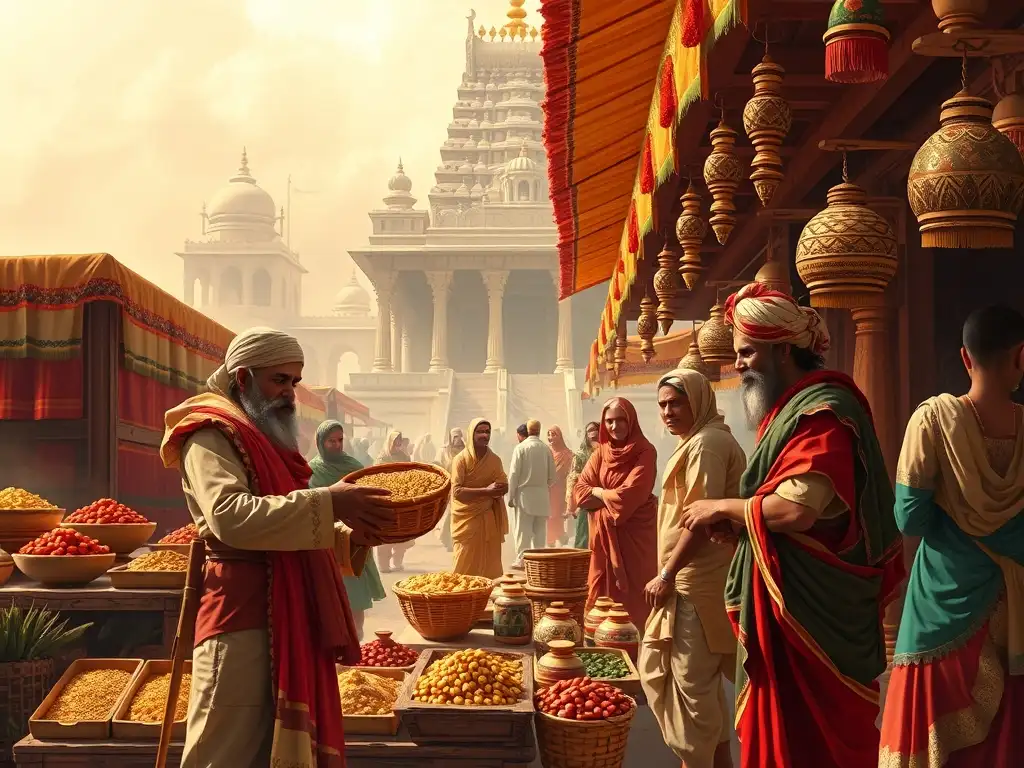
The transition from barter to currency in ancient India marks a significant evolution in the history of trade in ancient India. The barter system, where goods and services were exchanged directly for one another, had inherent limitations. As trade expanded beyond local communities, the need for a more efficient system became evident. The development of currency was a crucial step in facilitating trade on a wider scale, allowing for more complex economic interactions among diverse regions and cultures.
The Need for a More Efficient Trade System
As communities grew and trade networks expanded, the limitations of the barter system became increasingly apparent. Key issues included:
- Double Coincidence of Wants: In a barter system, both parties must have what the other wants. This often made transactions difficult or impossible.
- Lack of Standardization: Different regions had various goods, making it challenging to evaluate the worth of commodities during trade.
- Storage and Durability: Perishable goods could not be stored long-term, limiting the ability to save for future trade.
To address these challenges, ancient Indian societies began to seek a more reliable medium of exchange. The development of currency provided a solution that not only simplified transactions but also enabled the growth of trade networks across vast distances.
Introduction of Commodity Money
The first step towards currency in ancient India was the introduction of commodity money, which included items that held intrinsic value. This type of money served as a standard of value and could be used for trade. Some notable forms of commodity money included:
- Grains: Often used in agricultural societies, grains were a reliable and widely accepted form of currency.
- Livestock: Animals such as cows or goats were valued not only for their economic worth but also as a measure of wealth in many communities.
- Shells and Beads: In coastal regions, cowrie shells became a popular medium due to their durability and accepted value across various communities.
Commodity money allowed for easier trade by providing a common standard against which goods could be measured. However, as trade networks expanded, the limitations of using physical goods as currency became evident, leading to the next phase in the evolution of trade.
Emergence of Metal Currency in Ancient India
The emergence of metal currency in ancient India marked a pivotal moment in the history of trade in ancient India. Metal coins offered several advantages over commodity money, including:
- Durability: Metal coins could withstand wear and tear, maintaining their value over time.
- Portability: Coins were easier to carry than bulk goods, facilitating trade over long distances.
- Divisibility: Metal coins could be minted in various denominations, allowing for transactions of differing values.
The earliest known coins in India date back to the 6th century BCE, during the Mahajanapada period. These coins, known as punch-marked coins, were made from silver and featured various symbols stamped onto them. As trade continued to flourish, the use of coins spread throughout the subcontinent, leading to the standardization of currency in various regions.
The rise of metal currency not only transformed internal trade networks but also laid the groundwork for more complex economic systems in ancient India. By providing a reliable and efficient means of exchange, metal coins played a crucial role in the development of commerce and the overall economy, shaping the trajectory of trade in ancient India for centuries to come.
Types of Currency Used in Ancient India

Overview of Different Forms of Currency
The evolution of currency in ancient India reflects the dynamic nature of trade and economic practices over centuries. Initially, the history of trade in ancient India was characterized by barter systems, where goods and services were exchanged directly. However, as trade networks expanded and became more complex, the need for a standardized medium of exchange emerged.
The different forms of currency utilized in ancient India can be broadly categorized into:
- Barter Goods: These included commodities such as grain, livestock, textiles, and spices, which had intrinsic value and were used in direct exchanges.
- Cowry Shells: Widely used as a form of currency by around 1200 BCE, cowry shells provided a convenient medium for smaller transactions due to their portability and availability.
- Metal Objects: Before the advent of coins, various metal objects, including rings and rods made of copper and bronze, were used as a medium of exchange. These items often held value based on their weight and material.
- Coins: The introduction of coins, particularly during the Mahajanapada period (600 BCE - 300 BCE), revolutionized trade. Coins made from metals like silver and gold emerged, providing a more efficient means of conducting transactions.
Role of Silver and Gold Coins
Silver and gold coins played a pivotal role in the economy of ancient India, particularly during the Mauryan Empire (322 BCE - 185 BCE) and later under the Gupta Empire (c. 240 CE - 550 CE). The significance of these coins can be summarized as follows:
- Standardization: The use of silver and gold coins helped standardize trade practices, allowing for easier valuation of goods and services. This uniformity facilitated both local and long-distance trade.
- Trust and Acceptance: Coins minted by state authorities carried the assurance of quality and authenticity, leading to broader acceptance among traders and consumers. The trust in these coins promoted economic stability.
- Wealth Accumulation: Gold and silver coins became symbols of wealth and status, influencing social hierarchies. Merchants and rulers often accumulated vast reserves of these precious metals.
- Trade Expansion: The durability and portability of metal coins enabled traders to engage in more extensive trade networks, reaching beyond regional borders to connect with distant civilizations, such as those in Persia and the Mediterranean.
The Impact of Punch-marked Coins on Trade
Punch-marked coins, which emerged around the 6th century BCE, are one of the most significant innovations in the history of trade in ancient India. These coins were typically made of silver and featured a series of symbols punched onto their surfaces. The impact of punch-marked coins on trade can be understood through several key points:
- Facilitation of Trade: The simplicity and acceptance of punch-marked coins made them a favored medium of exchange among traders, simplifying transactions and promoting economic activity.
- Regional Variations: Different regions produced unique punch-marked coins with distinct symbols, reflecting local economic practices and cultural influences. This diversity enriched the trade landscape, enabling traders to adapt to various markets.
- Historical Insight: The study of punch-marked coins provides valuable insights into the socio-economic conditions of the time, including trade routes, prevalent goods, and the interactions between different cultures.
- Transition to Advanced Coinage: The popularity of punch-marked coins laid the groundwork for more advanced coinage systems developed later, including the coins of the Mauryan and Gupta periods, which incorporated intricate designs and inscriptions.
The types of currency used in ancient India, particularly the role of silver and gold coins and the impact of punch-marked coins, illustrate the transformation of trade practices and the evolution of economic systems from simple barter to more sophisticated monetary exchanges. This transition not only facilitated internal trade but also positioned ancient India as a significant player in the broader economic landscape of the ancient world.
Key Internal Trade Routes in Ancient India
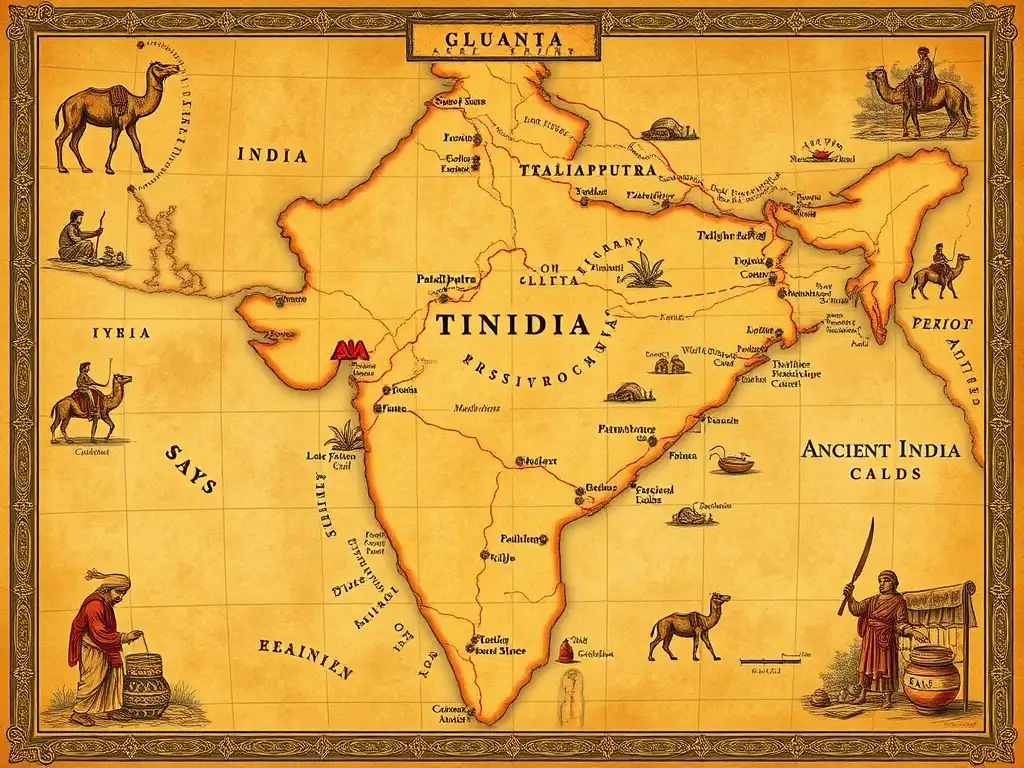
Major Trade Routes Connecting Regions
The internal trade in ancient India was characterized by a complex network of trade routes that facilitated the movement of goods, cultures, and ideas across various regions. These routes played a pivotal role in the economic integration of diverse civilizations, such as those in the Indus Valley, the Mauryan Empire, and the Gupta Empire.
The Grand Trunk Road, one of the oldest trade routes, extended from Chittagong in the east to Kabul in the west, connecting major cities like Pataliputra, Lahore, and Delhi. This route not only facilitated the exchange of goods, such as textiles, spices, and precious stones, but also acted as a conduit for cultural and religious interactions.
Other significant routes included:
- The Ujjain to Kanchi Route: Linking the north and south, this route was crucial for the movement of goods like silk and spices.
- The Silk Route: Although primarily known for connecting India with Central Asia and China, it also had branches that penetrated deep into the Indian subcontinent, allowing for the exchange of luxury goods.
- The Coastal Trade Routes: These routes were vital for maritime trade, connecting the ports of Gujarat and Kerala with Southeast Asia, facilitating the trade of spices, textiles, and other commodities.
Influence of Geography on Trade Patterns
Geography played a fundamental role in shaping the trade patterns of ancient India. The diverse landscapes, including mountains, plains, rivers, and coastal areas, influenced the accessibility and flow of trade.
- Mountains and Plateaus: The Himalayas acted as a natural barrier, limiting trade with regions to the north, but also provided routes through passes that were used by traders. The Deccan Plateau offered a unique landscape that facilitated the movement of goods between the eastern and western coasts.
- Plains and Valleys: The fertile plains of the Ganges and the Indus supported agriculture, leading to surplus production, which in turn stimulated trade. The Gangetic Plain became a bustling hub for trade, as it was crucial for both agricultural output and ease of transport.
- Coastal Areas: The western and eastern coasts provided access to maritime trade routes. The Arabian Sea and the Bay of Bengal facilitated trade with distant lands, enhancing internal trade by allowing the exchange of coastal products with inland goods.
The Role of River Systems in Facilitating Trade
The river systems of ancient India were vital arteries for trade, serving both as means of transport and as boundaries that defined trading regions.
- The Indus River: This river system supported the early urban centers of the Indus Valley Civilization, such as Harappa and Mohenjo-Daro. The navigability of the Indus allowed for the transport of goods like cotton textiles and metalwork.
- The Ganges River: Serving as a primary trade route, the Ganges facilitated the movement of agricultural goods and raw materials. Cities along its banks, including Varanasi and Patna, thrived as trade centers due to their strategic locations.
- The Brahmaputra River: This river system also contributed to trade, particularly in the northeastern regions. It connected various local markets and allowed the exchange of goods between the Himalayan foothills and the plains.
The interplay of geography and river systems significantly contributed to the development of trade in ancient India, which was characterized by a thriving network of internal trade routes that fostered economic growth and cultural exchange.
The Cultural Impact of Trade on Ancient Indian Society
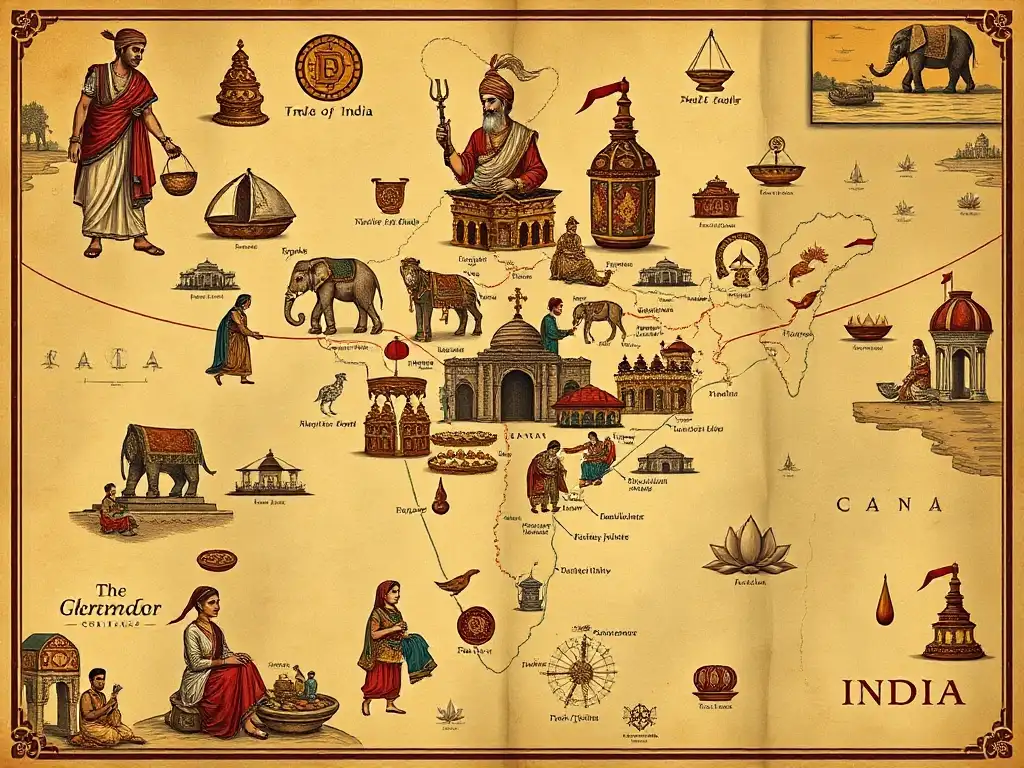
Exchange of Goods and Ideas
The exchange of goods in ancient India was not merely an economic activity; it was a significant cultural exchange that shaped society. As goods traveled along trade routes, they carried with them ideas, beliefs, and practices that influenced the local cultures. The trade networks, especially those connecting the Indus Valley Civilization to Mesopotamia and beyond, facilitated the flow of not only commodities but also knowledge. For instance, the introduction of new agricultural practices and technologies can be traced back to interactions with traders from other regions.
- Key Goods Exchanged:
- Cotton textiles: Indian cotton was highly sought after, influencing clothing styles in foreign lands.
- Spices: The demand for Indian spices like black pepper and cardamom led to trade routes being established.
- Metals: The exchange of metals, particularly copper and bronze, played a crucial role in technological advances.
As these goods were exchanged, they also brought about a sharing of philosophies and religious beliefs. The spread of Buddhism along trade routes is a prime example, where merchants not only traded goods but also ideas, helping to establish cultural links between distant regions.
Influence of Trade on Art and Craftsmanship
The impact of trade on art and craftsmanship in ancient India is profound. Artisans and craftsmen were often influenced by the styles and techniques brought in by traders from other cultures. This cross-pollination of ideas resulted in the evolution of unique art forms and craftsmanship techniques.
- Notable Influences:
- Sculpture and Statuary: The Greco-Buddhist art of Gandhara is a prime example of how trade with the Hellenistic world influenced local artistic expressions.
- Pottery: The exchange of pottery styles led to the emergence of distinctive Indian pottery forms, characterized by intricate designs and vibrant colors.
- Textile Patterns: The influx of various patterns through trade resulted in an incredible variety of textile artistry, which became symbols of cultural identity.
Furthermore, the availability of new materials through trade, such as glass and ivory, allowed artisans to experiment and innovate, leading to an explosion of creativity in art and craftsmanship across ancient India.
The Role of Merchants in Ancient Indian Culture
Merchants played a pivotal role in shaping ancient Indian society and culture. They were not only economic agents but also cultural ambassadors who connected diverse communities. The merchant class enjoyed a significant status in society, often being patrons of arts and education.
- Social Influence:
- Cultural Exchange: Merchants facilitated interactions between different cultures, helping to create a cosmopolitan atmosphere in trade centers such as Taxila and Pataliputra.
- Philanthropy: Many merchants engaged in acts of charity, funding temples, schools, and health care facilities, thus contributing to social welfare.
Merchants also played a critical role in the dissemination of religious ideas. For example, they were instrumental in spreading Buddhism and Jainism to different parts of Asia, showcasing their influence beyond mere trade.
The history of trade in ancient India reflects a rich tapestry of cultural interactions that significantly shaped the social, artistic, and economic landscape of the time. The legacy of these exchanges continues to resonate in modern India's diverse culture.
Conclusion: The Legacy of Internal Trade in Ancient India

Summary of the Evolution of Trade Systems
The history of trade in ancient India is marked by a significant evolution from simple barter systems to more complex monetary exchanges. Initially, trade was conducted through barter, where goods were directly exchanged without a standardized medium. This method, while effective in small communities, posed challenges as trade expanded across regions.
As ancient Indian civilizations, such as the Indus Valley, flourished, the need for a more efficient system became evident. The introduction of weights and measures facilitated trade, making transactions more precise. By around 600 BCE, coins began to emerge, revolutionizing the trade landscape. The use of metal coins, such as the punch-marked coins of the Mauryan period, provided a universal medium of exchange, simplifying trade both locally and over long distances.
Throughout the subsequent periods, including the Gupta Empire, trade networks expanded significantly. These networks interconnected various regions, fostering not only economic exchanges but also cultural and knowledge transfers. The establishment of trade routes such as the Silk Road and maritime paths contributed to the prosperity of cities like Pataliputra and Taxila, which became major trading hubs.
Lasting Impacts on Modern Indian Economy
The legacy of ancient trade practices continues to influence the modern Indian economy. The foundational concepts of trade established during ancient times have persisted, underpinning contemporary economic frameworks. The introduction of currency as a medium of exchange can be traced back to these early systems, promoting efficiency and trust in transactions.
Furthermore, the internal trade routes established in ancient India laid the groundwork for today's logistics and supply chain management. The strategic positioning of ancient trade centers has evolved into modern economic corridors, fostering regional connectivity and economic integration.
Additionally, the cultural exchanges that occurred through trade have enriched India's diverse heritage, which remains a vital aspect of its contemporary identity. The ongoing appreciation for traditional crafts and goods, many of which have their roots in ancient trade practices, underscores the enduring impact of these early economic systems.
Reflection on the History of Trade in Ancient India
Reflecting on the history of trade in ancient India reveals a vibrant tapestry of economic activity that shaped not only the region's prosperity but also its cultural and social dynamics. The transition from barter to currency was not merely a shift in economic practice; it represented a broader transformation in societal organization, communication, and interaction among diverse groups.
The internal trade networks facilitated by ancient Indian civilizations were characterized by their inclusivity, connecting various communities and enabling the exchange of goods, ideas, and innovations. This rich history underscores the importance of understanding trade as a multifaceted phenomenon that transcends mere economic transactions, influencing various aspects of life in ancient India.
The history of trade in ancient India is a testament to the ingenuity and adaptability of its civilizations. The evolution from barter to currency and the establishment of extensive trade networks not only spurred economic growth but also fostered cultural exchanges that continue to resonate in modern India. The legacy of these ancient practices serves as a foundation for the current economic landscape, reflecting the enduring significance of internal trade throughout Indian history.
References for Further Reading on Ancient Indian Trade
Understanding the history of trade in ancient India requires delving into a variety of sources that provide insights into the economic practices, trade routes, and cultural exchanges that shaped the subcontinent. Here are some recommended readings that can enhance your knowledge of this fascinating subject:
-
"The Indus Valley Civilization: A Historical Perspective" by Jane McIntosh
This book offers a comprehensive overview of the Indus Valley Civilization, exploring its trade networks and economic structures. McIntosh examines archaeological findings that shed light on the commercial practices of one of the earliest urban societies in India.
-
"Trade and Traders in Ancient India" by Raj Kumar
Raj Kumar's work focuses specifically on the internal trade mechanisms in ancient India, detailing the roles of various traders, guilds, and the commodities that were exchanged. This book is invaluable for understanding the intricate web of trade relationships that existed throughout the region.
-
"The Economic History of India: 1857-1947" by Tirthankar Roy
While primarily focused on the later periods, this book traces the evolution of economic practices from ancient times to the colonial era. Roy provides context on how ancient trade practices laid the groundwork for the modern economy of India.
-
"Ancient Indian Economy" by A. K. Sahu
This text delves into the various aspects of the ancient Indian economy, including agriculture, industry, and trade. Sahu discusses the significance of trade routes and how they facilitated economic growth and cultural exchange.
-
"Silk Roads: Highways of Culture and Commerce" by Xinru Liu
Though not exclusively about India, this book provides an expansive view of the trade networks that connected Asia, including the Indian subcontinent. Liu highlights the importance of these routes in the development of economic and cultural exchanges in ancient times.
-
"Coins and Currency in Ancient India" by B. N. Sharma
This resource covers the evolution of currency in ancient India, detailing how the shift from barter to coinage facilitated trade. Sharma discusses various types of coins and their impact on trade practices and economic interactions.
-
"The Gupta Empire" by Romila Thapar
Thapar’s work provides insights into the Gupta period, highlighting its economic prosperity and trade networks. This book is essential for understanding how the Gupta Empire influenced trade in ancient India.
These readings not only provide historical facts but also explore the socio-economic contexts and cultural implications of trade practices in ancient India. They are essential for anyone looking to gain a deeper understanding of the history of trade in ancient India and its lasting legacy.
Frequently Asked Questions
What was the primary method of trade in ancient India?
In ancient India, the primary method of trade was barter, where goods and services were exchanged directly without the use of money.
How did currency evolve in ancient India?
The evolution of currency in ancient India began with barter systems, transitioning to the use of metal coins, which facilitated internal trade and economic growth.
What role did the Indus Valley Civilization play in trade?
The Indus Valley Civilization was crucial for trade, as its advanced urban centers had well-planned markets and engaged in long-distance trade with other cultures, enhancing economic connections.
How did the Gupta Empire influence trade in ancient India?
The Gupta Empire marked a significant period of prosperity, fostering trade through improved infrastructure and the establishment of trade routes, which helped in the exchange of goods and cultural ideas.
What were some major goods traded in ancient India?
Ancient India was known for trading spices, textiles, and precious stones. These goods were highly sought after, both domestically and in international markets, contributing to India's economic significance.
Final Reflection: The Enduring Legacy of Trade in Ancient India
The evolution of trade from barter systems to currency in ancient India is not merely a historical narrative; it is a testament to the ingenuity and adaptability of human societies. Today, as we navigate a global economy that is increasingly interconnected, understanding the roots of trade in ancient India provides invaluable insights into our current economic practices and cultural exchanges. The transition from simple barter to complex monetary systems illustrates how necessity drives innovation, a principle that remains relevant in our rapidly changing world.
Cultural and social landscapes have been profoundly shaped by the dynamics of trade, and the legacy of ancient Indian commerce continues to resonate today. The intricate networks established by traders facilitated not only the exchange of goods but also the sharing of ideas, beliefs, and technologies across vast distances. This interconnectedness laid the groundwork for the rich tapestry of cultural diversity we experience in contemporary India. As Mahatma Gandhi once said, “The best way to find yourself is to lose yourself in the service of others,” highlighting the importance of collaboration and mutual benefit in trade and society.
As you reflect on the lessons from the history of trade in ancient India, consider how these principles apply to your own life and community. Embrace the spirit of collaboration and innovation that characterized ancient trade practices, and seek opportunities to engage with others in meaningful exchanges.
Whether through supporting local businesses, participating in community initiatives, or fostering cross-cultural dialogues, you have the power to contribute to a thriving economic and social environment. Let the legacy of ancient Indian trade inspire you to create connections that enrich not only your own life but also the lives of those around you.
Transform Your Understanding: Dive Deeper into Ancient Trade!
Thank you for exploring the fascinating evolution of internal trade in Ancient India! We hope you found the insights into barter systems and the transition to currency enlightening. Now it's your turn to continue your journey into this rich history and its implications.
Here’s how you can take action:
- Engage with History: Visit our website to explore a wealth of articles that delve deeper into trade practices and their significant impact on society.
- Share Your Insights: Discuss this intriguing topic with friends or on social media—your perspective can spark engaging conversations!
- Join the Community: Subscribe to our newsletter to stay informed about the latest discoveries in Ancient Indian history—become a part of our vibrant community of history enthusiasts.
What aspect of ancient trade fascinates you the most, and how do you think it has influenced modern economic systems? We’d love to hear your thoughts!