
The Role of Ancient Trade in the Spread of Hinduism and Buddhism

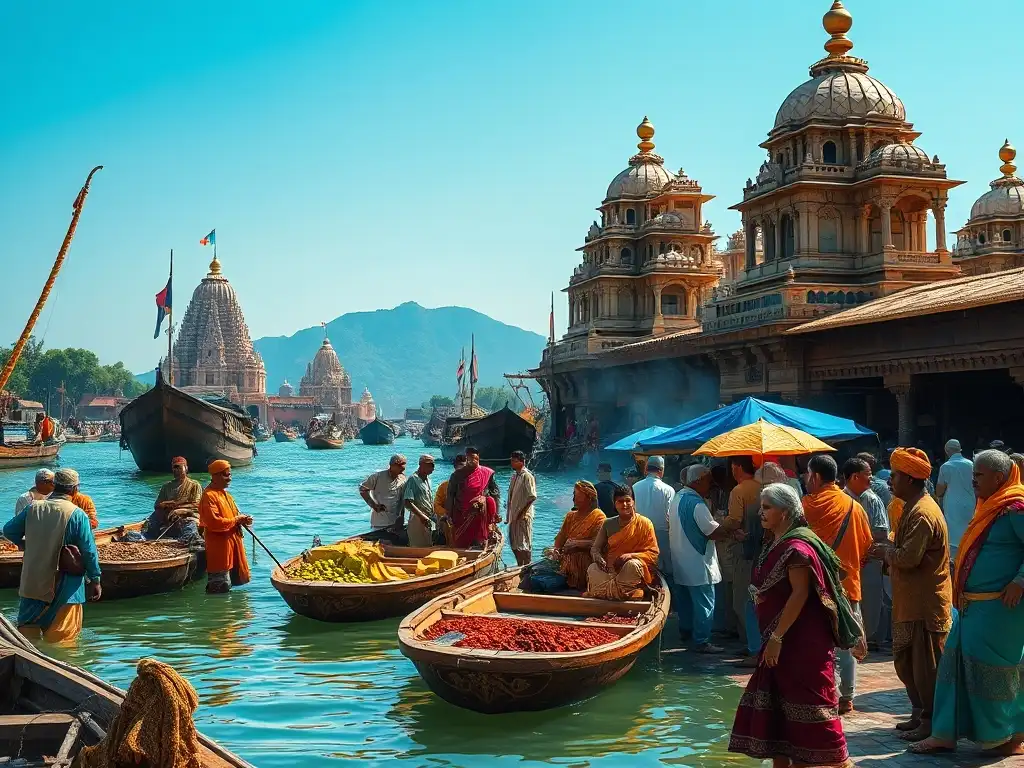
Welcome to Ancient India History, where we embark on a fascinating journey through the rich tapestry of India's past! Delve into the intricate world of ancient trade, a powerful force that not only shaped economies but also facilitated the spread of profound philosophies like Hinduism and Buddhism. Prepare to uncover how bustling trade routes served as arteries of culture and belief, forging connections that transcended borders. Join us as we explore the pivotal role of commerce in the shaping of spiritual and cultural identities in ancient Indian civilizations. Your adventure into the depths of history begins now!
Introduction to Ancient Trade and Religion in India
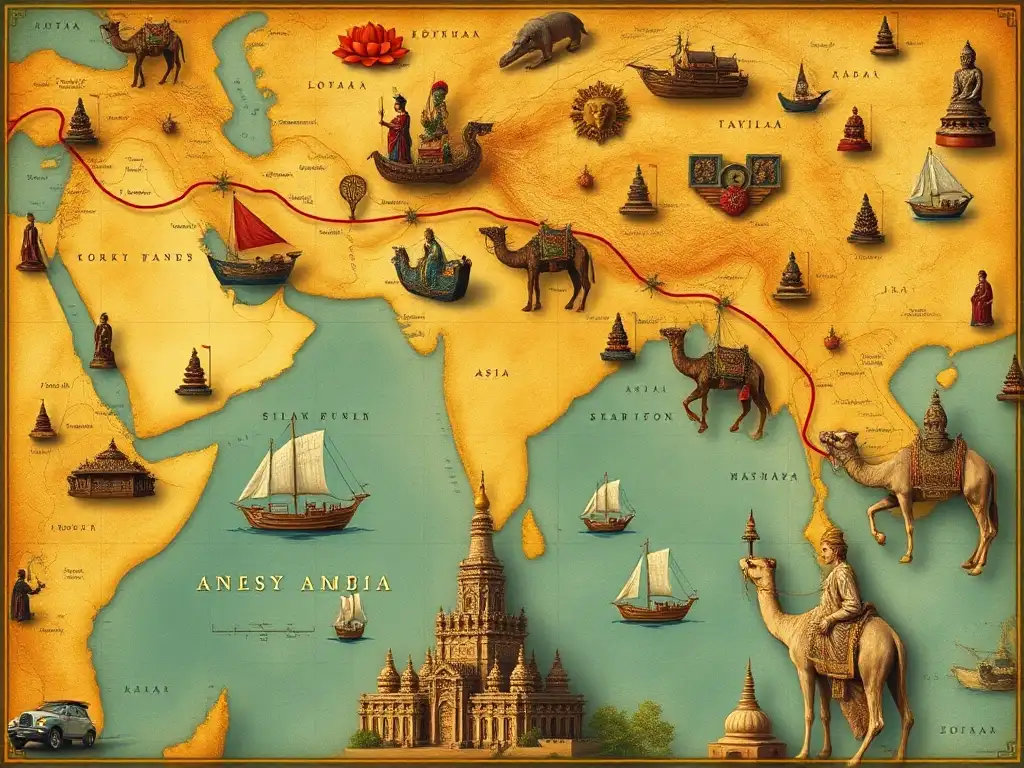
The interplay between ancient trade and the development of religious beliefs in India offers a fascinating glimpse into the cultural exchanges that shaped civilizations. Trade routes were not merely conduits for the exchange of goods; they were vital channels for the dissemination of ideas, philosophies, and spiritual practices.
As merchants traversed these routes, they brought with them not only commodities like spices, textiles, and precious stones but also the rich traditions of Hinduism and Buddhism. This article delves into the significant role that ancient trade played in the spread of these two major religions, highlighting how economic interactions fostered cultural integration and religious diffusion across vast distances.
Overview of Ancient Trade Networks
Ancient India was at the crossroads of several prominent trade networks, facilitating interactions with regions as far-reaching as the Mediterranean, the Middle East, and Southeast Asia. Notable trade routes included:
- The Silk Road: Connecting China to the Mediterranean, this route enabled the exchange of silk, spices, and religious ideas.
- Maritime Trade Routes: These sea routes linked India with the islands of Southeast Asia, allowing for the export of Indian culture and religious practices.
- Local Trade Routes: Within India, various regional routes facilitated commerce and cultural exchange among local communities.
These networks not only enriched the economies of the regions involved but also played a pivotal role in the transmission of philosophical and religious ideologies, particularly Hinduism and Buddhism.
Significance of Hinduism and Buddhism in Ancient India
Hinduism and Buddhism emerged as two of the most influential religions in ancient India, each offering distinct perspectives on spirituality, ethics, and the nature of the universe.
- Hinduism: With its complex pantheon of deities and rich philosophical texts like the Vedas and Upanishads, Hinduism laid the groundwork for many cultural and spiritual practices in India and beyond.
- Buddhism: Founded by Siddhartha Gautama (the Buddha), Buddhism emphasized the path to enlightenment through the Four Noble Truths and the Eightfold Path, offering an alternative spiritual framework that appealed to diverse populations.
Both religions were not only central to Indian identity but also experienced significant expansion through ancient trade, as traders and travelers shared their beliefs with communities along their routes.
Ancient Trade Routes Influencing Religion
The Silk Road: A Crucial Channel for Cultural Exchange
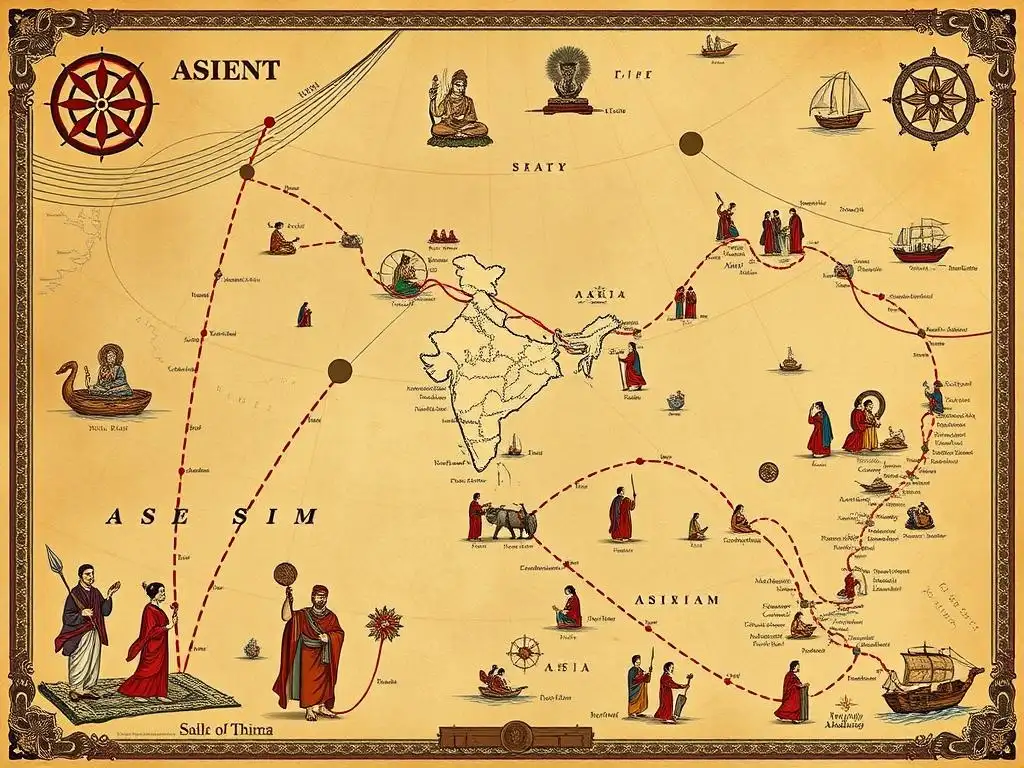
The Silk Road was a major artery of trade that connected India with Central Asia and the Western world. It played a crucial role in the spread of Buddhism, particularly during the Mauryan Empire when Emperor Ashoka sent missionaries to various regions. The interactions along this route allowed for:
- Cultural Exchange: Ideas and practices were shared, leading to the syncretism of various religious traditions.
- Artistic Influence: Buddhist art and iconography spread to regions like China and Central Asia, adapting local styles while maintaining core Buddhist themes.
The Maritime Trade Routes: Connecting India to Southeast Asia
The maritime trade routes enabled the movement of goods and people between India and Southeast Asia, fostering the establishment of trade cities and cultural hubs. Key aspects include:
- Spread of Buddhism: As traders sailed to ports in modern-day Indonesia, Malaysia, and Thailand, they introduced Buddhist teachings, resulting in the establishment of significant Buddhist centers like Borobudur.
- Hindu Influence: Hindu merchants also played a role in spreading their beliefs, as seen in the establishment of Hindu kingdoms in Southeast Asia, such as the Majapahit Empire.
The Role of Local Trade Routes in Regional Spread of Religions
Local trade routes within India facilitated the spread of both Hinduism and Buddhism among diverse communities. Significant factors included:
- Pilgrimage Routes: Major pilgrimage sites, such as Varanasi and Bodh Gaya, became focal points for trade and religious pilgrimage, enhancing the prominence of these religions.
- Market Interactions: Regular interactions in local markets allowed for the blending of religious practices and ideas, contributing to a rich tapestry of regional beliefs.
Ancient trade networks were instrumental in the dissemination of Hinduism and Buddhism, showcasing how economic endeavors can intertwine with spiritual growth and cultural development. Understanding this intricate relationship enhances our appreciation of the historical significance of trade in shaping religious landscapes.
Interaction Between Traders and Religious Practices
The interaction between traders and religious practices was a pivotal element in the dissemination of Hinduism and Buddhism throughout ancient routes. As merchants traveled across vast distances, they not only exchanged goods but also ideas, beliefs, and cultural practices. This interaction fostered an environment where religious teachings could be shared and adapted to different cultural contexts. Traders, often well-versed in multiple languages and local customs, served as intermediaries, facilitating the spread of religious philosophies that would otherwise remain confined to their regions of origin.
Traders frequently established relationships with local communities, leading to a mutual exchange of customs and beliefs. For instance, as Indian traders ventured into Southeast Asia, they brought with them not only spices and textiles but also the foundational elements of Hinduism and Buddhism. These traders often engaged in discussions about their beliefs, leading to a syncretism that enriched local cultures and incorporated elements of Indian spirituality into their practices.
Moreover, the marketplaces themselves became vibrant centers for cultural exchange, where stories of deities, religious texts, and spiritual philosophies were shared. Such interactions contributed significantly to the evolution of local belief systems, as traders adapted and integrated Hindu and Buddhist concepts into existing traditions, allowing these religions to flourish beyond their Indian origins.
Traders as Cultural Mediators in Hinduism and Buddhism
Traders played a crucial role as cultural mediators between different civilizations, particularly in the context of Hinduism and Buddhism. As they traveled along major trade routes like the Silk Road and maritime paths across the Indian Ocean, they encountered diverse cultures and religious beliefs. This exposure enabled them to act as conduits for the exchange of ideas, facilitating the introduction of Indian religious practices to new regions.
Merchants often formed communities in foreign lands, where they maintained ties to their homeland while also integrating into local societies. This dual identity allowed them to promote Hindu and Buddhist teachings effectively. For example, the establishment of Indian merchant colonies in places like the Malay Archipelago led to the gradual adoption of Hindu and Buddhist practices among indigenous populations. Traders not only carried religious texts but also engaged in dialogues that explained complex philosophies, making them accessible to local audiences.
Additionally, the prestige associated with successful traders lent credibility to the religions they promoted. Their status often encouraged local leaders to adopt new beliefs, seeing them as beneficial for trade relations and social cohesion. Consequently, traders became pivotal figures in the spread of Hinduism and Buddhism, shaping the spiritual landscape of regions far removed from their origins.
Spread of Religious Texts and Artifacts through Trade
The dissemination of religious texts and artifacts through trade routes was instrumental in the spread of Hinduism and Buddhism. Merchants not only transported goods but also carried sacred scriptures, such as the Vedas, Upanishads, and Buddhist sutras, to new territories. These texts were often copied and translated into local languages, allowing them to reach a broader audience and facilitating the understanding of complex religious concepts.
Additionally, artifacts such as statues, carvings, and religious symbols were exchanged along trade routes. These items played a significant role in visualizing religious beliefs and practices for local populations. For instance, the introduction of Buddha statues and Hindu deities in Southeast Asia led to the establishment of temples that became focal points for worship. Such physical manifestations of faith helped solidify the presence of these religions in foreign lands, making them more tangible and accessible to the local populace.
The movement of these texts and artifacts was not merely a transactional activity; it was also a cultural pilgrimage that enriched the spiritual lives of those who encountered them. The presence of Indian religious paraphernalia in foreign lands often inspired local adaptations, leading to the creation of unique syncretic practices that blended Indian traditions with indigenous beliefs.
Influence of Trade on Religious Practices and Festivals
Trade significantly influenced the religious practices and festivals of communities that adopted Hinduism and Buddhism. The influx of traders and their goods often coincided with the celebration of local festivals, leading to a blending of traditions. For instance, as Hindu merchants introduced the festival of Diwali to various regions, it was often adapted to incorporate local customs and deities, creating a unique celebration that resonated with both Indian and indigenous beliefs.
Moreover, trade routes facilitated the movement of religious leaders and scholars who would travel to spread teachings and participate in local festivals. This interaction not only enriched the spiritual traditions but also fostered a sense of community among diverse groups. The cross-pollination of ideas during these festivals often resulted in innovative practices that reflected a harmonious coexistence of different faiths.
The economic benefits derived from trade also played a role in the promotion of religious practices. Wealth generated through commerce enabled the construction of temples and monasteries, which became centers for worship, learning, and community gathering. Such establishments often hosted festivals that attracted pilgrims and traders alike, further embedding Hinduism and Buddhism into the cultural fabric of the regions they reached.
Key Regions Impacted by Ancient Trade
The impact of ancient trade on the spread of Hinduism and Buddhism was felt across various key regions, each experiencing unique adaptations of these religions. The interconnectedness of trade routes allowed for a dynamic exchange of beliefs, customs, and practices that profoundly influenced local cultures.
The Influence of Trade on the Indian Subcontinent
Within the Indian subcontinent, trade routes facilitated the exchange of not only goods but also religious ideas between different kingdoms and cultures. Major trade centers like Taxila and Pataliputra became melting pots of diverse philosophies, where Hinduism and Buddhism thrived alongside local traditions. The patronage of rulers played a crucial role in this process; many kings supported the construction of temples and monasteries, further embedding these religions into the social structure.
Furthermore, the interactions between traders and local populations often led to the evolution of practices. For example, the blending of Hindu and Buddhist elements in art and architecture is evident in the stupas and temples built during this period. The shared use of symbols and motifs reflected a cultural syncretism that enriched both religious traditions, allowing them to coexist and flourish within the region.
Southeast Asia: Adoption of Hinduism and Buddhism through Trade
Southeast Asia experienced significant cultural transformation due to the influence of trade and the subsequent spread of Hinduism and Buddhism. Indian traders established vibrant trade networks throughout the region, leading to the establishment of Indianized kingdoms like Srivijaya and Khmer. These kingdoms adopted Hindu and Buddhist beliefs, which were often intertwined with local customs.
The construction of monumental temples, such as Angkor Wat (a Hindu temple) and Borobudur (a Buddhist temple), exemplifies the architectural legacy of this cultural exchange. These structures not only served as places of worship but also as symbols of power and prestige for local rulers who embraced Indian religious traditions. Festivals celebrating Hindu and Buddhist deities became integral to local culture, further solidifying the presence of these religions.
The trade routes also facilitated the exchange of scholars and monks who traveled to disseminate religious teachings. This led to the establishment of schools and centers of learning, contributing to the intellectual and spiritual growth of the region. The adoption of Hinduism and Buddhism in Southeast Asia illustrates the profound impact of ancient trade on the evolution of religious practices.
The Impact on Central Asia and Beyond
The influence of ancient trade routes extended beyond the Indian subcontinent and Southeast Asia into Central Asia and beyond. As traders traversed the Silk Road, they encountered various cultures and religions, leading to the diffusion of Hindu and Buddhist ideas. Cities like Samarkand and Bukhara became significant hubs where merchants and pilgrims exchanged goods and religious concepts.
In Central Asia, Buddhist monks traveled to spread their teachings, often establishing monasteries along trade routes. These monasteries became centers of learning and cultural exchange, promoting the adoption of Buddhism among local populations. The presence of Buddhist art and architecture, influenced by Indian styles, is evident in the region, showcasing the lasting impact of trade on religious practices.
Additionally, the spread of Hinduism reached as far as the Mediterranean through trade networks, influencing various cultures. The interaction between Indian traders and Greco-Roman societies facilitated the introduction of Indian philosophical concepts, which contributed to a broader understanding of spirituality and ethics across civilizations.
The role of ancient trade in the spread of Hinduism and Buddhism was profound and multifaceted, fostering cultural interactions that shaped the spiritual landscapes of diverse regions throughout history.
Case Studies of Trade and Religion
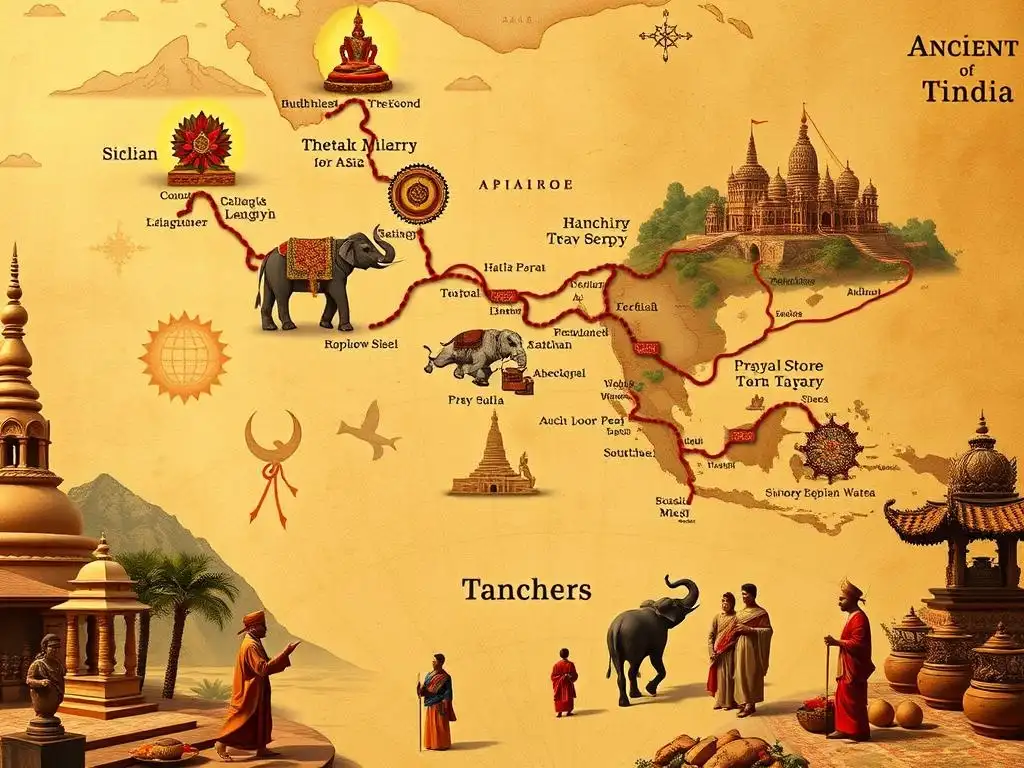
The interconnection between trade and the spread of religions such as Hinduism and Buddhism is vividly illustrated through various historical case studies. These examples provide insight into how commerce facilitated cultural exchange, leading to the dissemination of beliefs and practices across regions. The following case studies highlight significant trade routes and their impact on the propagation of these ancient religions.
Case Study: The Role of the Gujarat Coast in Spreading Buddhism
The Gujarat coast, particularly during the early centuries of the Common Era, emerged as a pivotal hub for maritime trade. This region connected India to various trade networks extending to the Arabian Sea, Persia, and beyond. Buddhist missionaries, traveling along these trade routes, utilized the existing networks to introduce Buddhist teachings to new territories.
Several archaeological findings, including stupas and inscriptions, suggest that ports such as Sopara and Bharukaccha (modern-day Bharuch) served as critical points for the arrival of Buddhist monks. These trade centers not only facilitated the movement of goods but also became melting pots of cultural and religious exchange. By establishing monasteries and engaging local communities, these missionaries were able to spread the core tenets of Buddhism, significantly impacting regions such as Southeast Asia, where Buddhism took root and thrived.
Case Study: The Influence of the Silk Road on Hindu Practices
The Silk Road, a vast network of trade routes connecting the East and West, played a crucial role in the spread of Hindu practices beyond the Indian subcontinent. This trade route enabled merchants, travelers, and religious figures to move freely, facilitating not only the exchange of goods but also cultural and religious ideas.
As traders moved along the Silk Road, they carried with them the rich traditions of Hinduism. Temples and shrines began to emerge in various regions, particularly in Central Asia, where Hindu deities were venerated alongside local religious practices. The influence of Hindu philosophy can be seen in the art, literature, and architecture of places like Gandhara, where Buddhist and Hindu motifs often intertwined.
The interactions along the Silk Road also led to a syncretism of beliefs, as local traditions merged with Hindu ideas, enriching the religious landscape of the areas influenced by these trade routes.
Analysis of Trade Cities and Their Religious Significance
Trade cities such as Taxila, Ujjain, and Varanasi served as not only economic centers but also as vital religious hubs that facilitated the growth of both Hinduism and Buddhism. The convergence of merchants, pilgrims, and scholars in these urban centers created a dynamic environment for the exchange of ideas.
- Taxila: Known for its ancient university, Taxila attracted students and scholars from across the region, allowing for the discourse of both Hindu and Buddhist philosophies. This city became a melting pot of learning, where various schools of thought could flourish.
- Ujjain: Serving as a prominent trading center, Ujjain was integral to the spread of Hinduism. It housed the famous Mahakaleshwar Temple and became a pilgrimage site for worshippers. The Kumbh Mela, held every twelve years, highlights Ujjain's significance as a religious center.
- Varanasi: One of the oldest continuously inhabited cities in the world, Varanasi is a sacred site for Hindus and a place of pilgrimage for Buddhists who come to pay homage to Buddha's teachings. The Ganges River, flowing through Varanasi, is considered holy, further enhancing the city's religious importance.
These trade cities were not merely economic centers; they were vital in shaping the religious landscape of ancient India and its neighboring regions, facilitating the spread and adaptation of Hindu and Buddhist practices.
Conclusion: The Interconnection of Ancient Trade and Religion
The examination of ancient trade routes reveals a profound relationship between commerce and the spread of religions such as Hinduism and Buddhism. Through the movement of goods, cultures, and people, these ancient trade networks laid the foundation for the religious pluralism that characterized much of Asia.
Summary of Key Points on Trade's Role in Spreading Hinduism and Buddhism
- Maritime and Overland Routes: Trade routes like the Gujarat Coast and the Silk Road were instrumental in the dissemination of Buddhist and Hindu beliefs.
- Cultural Exchange: Merchants and missionaries used trade as a means to spread their religious ideals, leading to cultural and philosophical syncretism.
- Significance of Trade Cities: Cities served as crucial nodes for trade and religion, facilitating dialogue and interaction among diverse groups.
Final Thoughts on the Lasting Impact of Ancient Trade on Modern Religions
The legacy of ancient trade in shaping the religious landscapes of Hinduism and Buddhism cannot be overstated. As these religions spread across regions, they adapted to local cultures, influencing modern practices and beliefs. The historical interplay between trade and religion continues to be a vital area of study, offering insights into the interconnectedness of human societies throughout history. As we explore these ancient pathways, we uncover the foundational elements that have shaped spiritual practices and community interactions to this day.
References and Further Reading on Ancient Trade and Religion
The exploration of ancient trade and its impact on the spread of Hinduism and Buddhism is a profound topic that intertwines economic history with cultural evolution. Numerous scholarly works provide insights into how trade routes facilitated not just the exchange of goods, but also ideas, beliefs, and practices that shaped these religions.
Suggested Books and Articles
- "The Silk Roads: A New History of the World" by Peter Frankopan
- This book offers a comprehensive overview of the Silk Road's influence, highlighting how trade routes served as conduits for cultural and religious exchanges, including the propagation of Hinduism and Buddhism.
- "India and the World: A History in Nine Stories" by Sunil Kumar
- Kumar's work delves into various historical narratives, emphasizing the interconnectedness of trade and religion in ancient India, particularly the role of maritime and overland routes.
- "The Spread of Buddhism" by Andrew Huxley
- In this article, Huxley examines how trade facilitated the dissemination of Buddhist teachings into Central Asia and beyond, providing a lens through which to understand the intersections of commerce and religion.
- "Hinduism and Trade: A Historical Perspective" by Ramesh Chandra
- This scholarly article discusses the relationship between trade practices and the evolution of Hindu beliefs, illustrating how merchants played a vital role in spreading religious ideas.
- "Trade and Religion in the Ancient World" by David N. Edwards
- A detailed examination of the broader implications of trade on religious practices, this book provides a comparative analysis of how different faiths, including Hinduism and Buddhism, adapted to and influenced trade networks.
Online Resources for Further Exploration
- The British Museum: Ancient Trade Routes
- This online exhibition showcases artifacts from ancient trade routes, providing context for understanding how these pathways facilitated cultural and religious exchanges.
- The Internet Archive: Digital Library
- A vast resource containing numerous texts and academic papers on ancient trade and its impact on religions, including Hinduism and Buddhism. Users can search for specific topics and access full texts for free.
- Smithsonian Institution: Trade and Cultural Exchange
- This resource offers articles and educational materials that explore the relationship between trade and cultural exchange, focusing on ancient civilizations, including those in India.
- National Geographic: The Silk Road
- An engaging overview that discusses the historical significance of the Silk Road, including its role in spreading Buddhism and other cultural elements across Asia.
- Academia.edu: Research Papers
- A platform where scholars share their research works related to ancient trade and religions. Users can find a plethora of articles discussing various aspects of how trade influenced Hinduism and Buddhism.
By delving into these resources, readers can gain a deeper understanding of the intricate connections between ancient trade and the spread of Hinduism and Buddhism, enriching their knowledge of this critical aspect of history.
- Introduction to Ancient Trade and Religion in India
- Overview of Ancient Trade Networks
- Significance of Hinduism and Buddhism in Ancient India
- Ancient Trade Routes Influencing Religion
- Interaction Between Traders and Religious Practices
- Key Regions Impacted by Ancient Trade
- Case Studies of Trade and Religion
- Conclusion: The Interconnection of Ancient Trade and Religion
- References and Further Reading on Ancient Trade and Religion
Frequently Asked Questions
What was the significance of ancient trade in India?
Ancient trade routes were crucial for the exchange of goods, ideas, and cultural practices, facilitating the spread of Hinduism and Buddhism across regions.
How did Hinduism spread through trade?
Trade facilitated interactions between merchants and travelers, allowing the teachings of Hinduism to reach new areas and integrate with local cultures.
What role did Buddhism play in ancient trade?
Buddhism thrived along trade routes, with monks often traveling with traders, spreading Buddhist philosophy and establishing monasteries in key locations.
Which ancient trade routes were important for the spread of these religions?
Major routes like the Silk Road and the Maritime Spice Route were instrumental in connecting regions, allowing for the dissemination of Hindu and Buddhist beliefs.
How did cultural exchange impact the development of Hinduism and Buddhism?
Cultural exchange through trade led to the adaptation of practices and beliefs, enriching both religions and promoting their diversity as they spread across different cultures.
Final Reflection: The Enduring Legacy of Ancient Trade in Shaping Hinduism and Buddhism
The intricate web of ancient trade routes not only facilitated the exchange of goods but also served as vital conduits for the dissemination of ideas, beliefs, and cultures. Today, as we navigate an increasingly interconnected world, the lessons from the past remind us of the profound impact that trade can have on the spread of religions like Hinduism and Buddhism. The historical significance of these ancient trade networks continues to resonate, illustrating how commerce can transcend mere economic transactions to foster spiritual and cultural exchanges.
The influence of ancient trade on the spread of Hinduism and Buddhism is a testament to the power of human connection and shared beliefs. As merchants traversed vast landscapes, they carried with them not only spices and textiles but also philosophies and practices that would shape entire civilizations. This ongoing legacy is evident in the diverse expressions of these religions across Asia and beyond. Trade is not just about goods; it is about the exchange of ideas and cultures that enrich our collective human experience.
This quote encapsulates the essence of how ancient trade has woven a rich tapestry of spiritual and cultural interconnections that continue to thrive today.
As we reflect on the lessons of ancient trade and its role in the dissemination of Hinduism and Buddhism, let us consider how we can apply these insights in our own lives. How can we foster connections that transcend borders and beliefs in our modern world? I invite you to explore the richness of cultural exchanges in your community, engage with diverse perspectives, and recognize the shared humanity that binds us all. By embracing the spirit of ancient trade, we can contribute to a more harmonious and understanding world, where the teachings of the past inspire a brighter future.
Unveil the Path of Ancient Wisdom!
Thank you for exploring the fascinating interplay of ancient trade and the spread of Hinduism and Buddhism! You've uncovered how these religions traveled across borders and shaped cultures. Now, let’s embark on your own journey to delve deeper into this rich history.
Here are some powerful steps you can take:
- Engage with Local History: Visit a museum or cultural center dedicated to ancient trade routes. Discover artifacts that narrate the journeys of these religions and their profound impact on societies.
- Join a Community: Participate in discussions or forums on social media platforms that focus on ancient religions and their evolution over time. Sharing your insights and discoveries can foster meaningful conversations!
- Explore Further: Read a book or watch a documentary that examines the historical impact of Hinduism and Buddhism on trade and culture. This will deepen your understanding and enrich your perspective.
What insights have you gained about how ancient trade has influenced modern beliefs and practices? Feel free to share your thoughts below!