
The Gupta Empire: Bridging Tradition and Modernity in Ancient Times


Welcome to Ancient India History, where we dive deep into the fascinating tapestry of India's past. In this realm of rich heritage, we invite you to explore the Gupta Empire's cultural contributions, a pivotal era that not only bridged the gap between tradition and modernity but also set the stage for a flourishing of arts, science, and philosophy. Are you ready to uncover the secrets of this remarkable civilization? Join us as we unravel the intricate narratives that shaped ancient India, and discover how the Gupta Empire's legacy continues to resonate through time.

Introduction to the Gupta Empire
The Gupta Empire, often hailed as the "Golden Age" of ancient India, represents a pivotal period in the subcontinent's history, flourishing from approximately 320 to 550 CE. This era is characterized by remarkable achievements in various fields, including art, literature, science, and philosophy, which laid the foundation for India's cultural heritage.
The Gupta Empire is not merely a chapter in the annals of Indian history; it is a vibrant tapestry woven with the threads of tradition and modernity. In this article, we will explore the extensive cultural contributions of the Gupta Empire, highlighting how this civilization bridged the ancient and the modern, shaping the socio-cultural landscape of India.
Overview of the Gupta Empire
The Gupta Empire emerged in northern India, establishing its dominance under the leadership of Chandragupta I. This dynasty is known for its profound influence on Indian society and governance. The empire reached its zenith under the reign of Chandragupta II, also known as Vikramaditya, who expanded the empire's territories and solidified its cultural influence. The Guptas were not only skilled rulers but also patrons of arts and sciences, fostering an environment where scholars and artists could thrive.
Key features of the Gupta Empire include:
- Political Structure: A decentralized administration with local governance.
- Economic Prosperity: Flourishing trade routes and agricultural advancements.
- Cultural Flourishing: A renaissance in literature, art, and science.
Importance of Gupta Empire Cultural Contributions
The cultural contributions of the Gupta Empire are monumental and have had a lasting impact on Indian civilization. The era is marked by advancements in various domains:
- Literature: Renowned poets and playwrights like Kalidasa emerged, producing timeless works.
- Science and Mathematics: Innovations in mathematics, such as the concept of zero and advancements in astronomy, were pioneered during this period.
- Art and Architecture: The Gupta period saw the development of unique artistic styles, notably in sculpture and temple architecture, which influenced subsequent generations.
These contributions not only enriched Indian culture but also laid the groundwork for future developments in various fields, making the Gupta Empire a crucial phase in the historical narrative of India.
Historical Context of the Gupta Empire
To fully appreciate the significance of the Gupta Empire, it is essential to understand the historical context in which it thrived. The period preceding the Gupta era was marked by political fragmentation and invasions, leading to a quest for stability and cultural renaissance.
Timeline of the Gupta Empire
- 320 CE: Establishment of the Gupta Empire by Chandragupta I.
- 375-414 CE: Reign of Chandragupta II, marking the empire's zenith.
- c. 400 CE: Rise of notable achievements in literature and sciences.
- c. 550 CE: Decline of the Gupta Empire due to external invasions and internal strife.
This timeline not only encapsulates the significant milestones of the Gupta Empire but also reflects the dynamic nature of its governance and cultural output.
Key Historical Figures in the Gupta Empire
Several prominent figures played crucial roles in shaping the Gupta Empire and its cultural contributions:
- Chandragupta I: The founder of the Gupta dynasty, known for unifying northern India.
- Samudragupta: Renowned for his military conquests and patronage of the arts.
- Chandragupta II (Vikramaditya): A significant ruler who expanded the empire and is often celebrated for his support of scholars and artists.
- Kalidasa: One of India's greatest poets and playwrights, whose works epitomized the literary excellence of the Gupta period.
These individuals not only exemplify the leadership of the Gupta Empire but also embody the cultural richness that defined this transformative era.
The Gupta Empire's cultural contributions are a testament to its legacy, influencing generations and continuing to resonate in modern India.
Cultural Contributions of the Gupta Empire
The Gupta Empire, often referred to as the "Golden Age" of ancient India, was a period marked by remarkable cultural advancements that laid the foundation for future generations. This era, which spanned from approximately 320 to 550 CE, witnessed a flourishing of arts, literature, science, and religion. The Gupta rulers, keen on promoting intellectual pursuits, fostered an environment where creativity and scholarship thrived. This section delves into the specific cultural contributions of the Gupta Empire, highlighting the various domains that experienced significant growth and transformation.
Literature and Poetry in the Gupta Era
One of the most significant cultural contributions of the Gupta Empire was its profound impact on literature and poetry. The period is renowned for producing some of the most celebrated literary figures, with Kalidasa being the most prominent among them. His works, such as Shakuntala and Meghaduta, are considered masterpieces of classical Sanskrit literature, blending lyrical beauty with profound themes exploring love, nature, and human emotions.
In addition to Kalidasa, other writers like Bhasa and Banabhatta further enriched the literary landscape with their plays and prose. The era also saw the compilation of important texts, including the Panchatantra, a collection of fables that impart moral lessons through captivating storytelling. This emphasis on literature not only served entertainment purposes but also played a crucial role in preserving and transmitting cultural and philosophical ideas across generations.
Advances in Science and Mathematics
The Gupta Empire made remarkable strides in science and mathematics, which have had a lasting impact on various fields. One of the most notable contributions was the development of the numeral system, which included the concept of zero as a placeholder. Mathematicians like Aryabhata and Brahmagupta made significant advancements in arithmetic and algebra, and their works laid the groundwork for modern mathematics.
Aryabhata's treatise, Aryabhatiya, introduced concepts such as the approximation of π (pi) and methods for solving quadratic equations. Similarly, Brahmagupta's Brahmasphutasiddhanta provided rules for arithmetic operations involving negative numbers and solutions to mathematical problems, showcasing the sophistication of Gupta mathematics.
In the realm of astronomy, Gupta scholars accurately calculated the length of the solar year and provided detailed observations of celestial phenomena, demonstrating an advanced understanding of the cosmos. These scientific advancements were not only pivotal for their time but also influenced subsequent generations of scholars in India and beyond.
Artistic Developments and Architecture
Art and architecture flourished during the Gupta Empire, reflecting the era's cultural richness and sophistication. The period is marked by the creation of exquisite sculptures, frescoes, and temple architecture that exemplified the artistic prowess of the time. Notable examples include the rock-cut caves of Ajanta and Ellora, which feature intricate carvings and murals depicting Buddhist themes and narratives.
The Gupta period also saw the construction of temples that showcased a unique blend of architectural styles. The temples of Khajuraho and the Vishnu temple in Deogarh are prime examples of the intricate stonework and detailed iconography that characterized Gupta architecture. These structures not only served as places of worship but also as centers of artistic expression, reflecting the spiritual and cultural ethos of the time.
In addition to visual arts, Gupta artisans excelled in metalwork, producing intricate gold and silver jewelry, coins, and figurines that became highly sought after. This artistic legacy continues to inspire and influence contemporary Indian art and architecture.
Religion and Philosophy During the Gupta Empire
The Gupta Empire was a period of significant religious and philosophical development. Hinduism experienced a revival during this time, leading to the establishment of various sects and the composition of important texts like the Puranas. The era also witnessed the consolidation of the caste system, which began to take a more defined shape in society.
Buddhism, while facing challenges, continued to thrive, particularly in regions like Bengal and Bihar. The Gupta rulers were known for their patronage of Buddhist institutions, which contributed to the construction of stupas and monasteries, including those at Sarnath and Bodh Gaya.
Philosophically, the Gupta period saw the emergence of various schools of thought, including Advaita Vedanta and Nyaya-Vaisheshika. Scholars engaged in extensive debates and writings, refining concepts related to epistemology, metaphysics, and ethics. This intellectual environment laid the groundwork for future philosophical discourse in India.
The Legacy of Gupta Empire Cultural Contributions
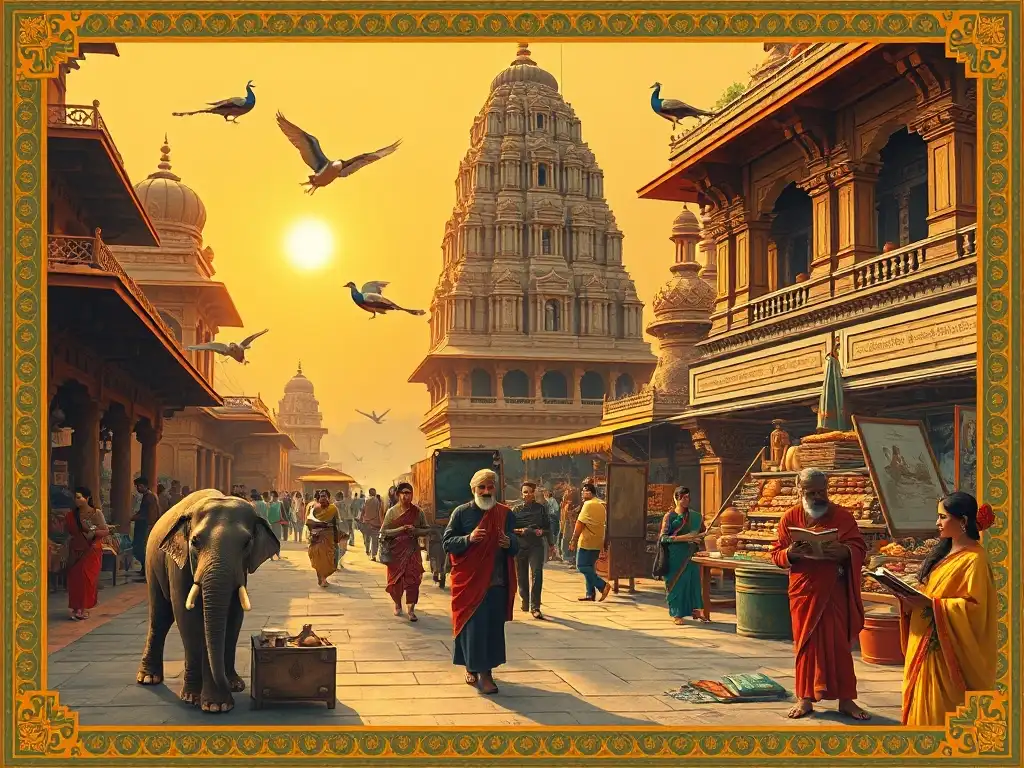
The cultural contributions of the Gupta Empire left an indelible mark on Indian civilization and beyond. The advancements in literature, science, art, and philosophy not only enriched the society of the time but also influenced future generations, shaping the cultural landscape of India.
Lasting Impact on Indian Civilization
The Gupta Empire's emphasis on education and scholarship established a legacy that would endure for centuries. The literary works and scientific treatises produced during this period became essential components of India's educational curriculum, influencing scholars and thinkers for generations. The principles of mathematics and astronomy developed during the Gupta era laid the groundwork for subsequent advancements in these fields, contributing significantly to India's scientific heritage.
Moreover, the artistic and architectural achievements of the Gupta period continue to be celebrated and studied today. The temples and sculptures from this era are not only important historical landmarks but also sources of inspiration for contemporary artists and architects, highlighting the enduring relevance of Gupta cultural contributions.
Influence on Neighboring Cultures and Civilizations
The Gupta Empire's cultural influence extended beyond its borders, impacting neighboring cultures and civilizations. As trade flourished during this period, Indian art, literature, and scientific knowledge spread to regions such as Southeast Asia, Central Asia, and the Middle East. The dissemination of the numeral system, including the concept of zero, profoundly influenced mathematical practices in various cultures.
Additionally, the spread of Buddhism and Hinduism facilitated cultural exchanges, leading to the establishment of Indian-inspired art and architectural styles in countries like Cambodia and Thailand. This interaction not only enriched the cultural tapestry of these regions but also contributed to a shared heritage that transcended geographical boundaries.
The Gupta Empire's cultural contributions represent a significant chapter in the history of ancient India, one that continues to resonate through time and across cultures.
Conclusion
The Gupta Empire, often referred to as the Golden Age of India, stands as a testament to the profound cultural contributions that shaped not only the Indian subcontinent but also influenced various aspects of global civilization. This era, which flourished from approximately 320 to 550 CE, was characterized by remarkable advancements in art, science, literature, and philosophy. The legacy of the Gupta Empire continues to resonate, showcasing how tradition and modernity can coexist and enrich each other.
Summary of the Gupta Empire's Cultural Contributions
The Gupta Empire's cultural contributions are both extensive and diverse, encompassing various fields that laid the foundations for future generations. Key areas of impact include:
- Literature: The period witnessed the emergence of renowned literary figures such as Kalidasa, whose works like "Shakuntala" and "Meghaduta" are celebrated for their poetic beauty and depth. The proliferation of Sanskrit as a literary language fostered a vibrant culture of storytelling, poetry, and drama.
- Science and Mathematics: Gupta scholars made significant strides in mathematics, with notable contributions including the concept of zero and advancements in arithmetic and algebra. Aryabhata, a prominent mathematician and astronomer, provided groundbreaking insights into astronomy, including the calculation of the earth's circumference and the heliocentric model.
- Art and Architecture: The Gupta period is renowned for its exquisite art and architecture. The development of intricate temple sculptures and cave paintings, such as those found in Ajanta and Ellora, showcased the artistic prowess of this era. The architectural style emphasized elegance and intricacy, reflecting the spiritual and cultural ethos of the time.
- Philosophy and Religion: The Gupta Empire was a melting pot of religious and philosophical ideas. The period saw the flourishing of Hinduism, Buddhism, and Jainism, with the promotion of philosophical texts and dialogues that explored ethics, metaphysics, and the nature of existence.
These contributions not only enriched Indian culture but also paved the way for future developments in various disciplines, influencing neighboring regions and cultures.
Reflections on the Significance of the Gupta Empire in Ancient History
The significance of the Gupta Empire in ancient history cannot be overstated. As a beacon of cultural brilliance, it served as a bridge between ancient traditions and emerging modernity. The empire exemplified how a society could thrive by embracing innovation while honoring its rich heritage.
Furthermore, the Gupta Empire's emphasis on education and intellectual pursuits fostered an environment conducive to inquiry and creativity. The establishment of universities, such as the famous Nalanda University, attracted scholars from across the world, facilitating the exchange of ideas and knowledge.
In contemporary times, the Gupta Empire is often invoked as a model of cultural synthesis, demonstrating that the preservation of tradition is essential for fostering innovation. The lessons learned from this golden age continue to inspire modern societies, encouraging a balance between honoring the past and embracing the future. The Gupta Empire's cultural contributions remain a cornerstone of India's historical narrative, reflecting a time when creativity and intellect flourished, leaving an indelible mark on the course of human civilization.
- Introduction to the Gupta Empire
- Historical Context of the Gupta Empire
- Cultural Contributions of the Gupta Empire
- The Legacy of Gupta Empire Cultural Contributions
- Conclusion
- What were the cultural contributions of the Gupta Empire?
- How did the Gupta Empire influence modern Indian culture?
- What role did religion play during the Gupta Empire?
- How did the Gupta Empire's contributions to science and mathematics impact the world?
- What is the significance of art and literature in the Gupta Empire?
Frequently Asked Questions
What were the cultural contributions of the Gupta Empire?
The Gupta Empire is renowned for its advancements in art, science, and literature, marking a golden age in Indian history. Key contributions include the development of classical dance, poetry, and the concept of zero in mathematics.
How did the Gupta Empire influence modern Indian culture?
The cultural legacies of the Gupta Empire have profoundly shaped modern Indian culture through its emphasis on religion, philosophy, and the arts, which continue to resonate in contemporary practices and traditions.
What role did religion play during the Gupta Empire?
Religion was central to the Gupta Empire, with Hinduism and Buddhism flourishing. The period saw the construction of significant temples and the patronage of religious art, contributing to the spiritual and cultural landscape.
How did the Gupta Empire's contributions to science and mathematics impact the world?
The Gupta Empire made groundbreaking contributions to science and mathematics, such as the concept of zero and advancements in astronomy. These innovations laid the foundation for future developments in these fields globally.
What is the significance of art and literature in the Gupta Empire?
Art and literature during the Gupta Empire reached great heights, with notable works like Kalidasa's plays and exquisite sculptures. These cultural achievements reflect the sophistication and creativity of the civilization, influencing future generations.
Final Reflection: Embracing the Legacy of the Gupta Empire
The Gupta Empire's cultural contributions remain profoundly relevant today, as they highlight the enduring power of innovation and tradition in shaping societies. In an age where we often grapple with the balance between preserving our heritage and embracing modernity, the Gupta Empire serves as a timeless reminder that the two can coexist harmoniously. Their advancements in art, science, and philosophy not only laid the groundwork for future generations but also continue to inspire contemporary thought and creativity.
Culture is a living tapestry woven from the threads of history, and the Gupta Empire exemplifies how past achievements can influence the present. The legacy of this remarkable civilization is evident in various aspects of modern life, from the mathematical principles we apply daily to the artistic expressions that resonate in our culture. As Mahatma Gandhi once said, “A nation’s greatness is measured by how it treats its weakest members,” reminding us that the cultural contributions of the Gupta Empire were not just about grandeur but also about fostering a society that valued knowledge and inclusivity.
As we reflect on the lessons from the Gupta Empire, let us consider how we can integrate their spirit of innovation and respect for tradition into our own lives. Take a moment to explore your cultural roots and think about how you can contribute to the tapestry of modern society. Whether through art, education, or community engagement, each of us has the power to bridge the past and the future, ensuring that the legacy of great civilizations like the Gupta Empire continues to inspire and uplift generations to come.
Unveil the Legacy of the Gupta Empire Today!
Thank you for diving into the fascinating world of the Gupta Empire! You've explored how this remarkable civilization bridges tradition and modernity, shedding light on its enduring influence. Now, let’s take that knowledge and transform it into action!
Here’s how you can deepen your engagement with the Gupta Empire's rich history:
- Explore Further: Delve into scholarly articles or books about the Gupta period to gain a more nuanced understanding of its cultural impacts.
- Share Your Insights: Discuss your favorite achievements of the Gupta Empire with friends or on social media. Sharing trivia can ignite interest in ancient civilizations!
- Join a Community: Find an online forum or local club focused on Indian history to connect with fellow enthusiasts and exchange ideas.
What aspect of the Gupta Empire do you find most inspiring, and how do you think it can influence our modern world?