
How the Maurya Empire Set Standards for Future Indian Civilizations

Welcome to Ancient India History, where we embark on a fascinating journey through the rich tapestry of ancient Indian civilizations. In our featured article, we delve into the impact of the Maurya Empire on India, uncovering how this formidable dynasty set unprecedented standards that shaped the future of the subcontinent. Prepare to be captivated by the intricate stories and profound contributions that resonate through time, igniting your curiosity to explore more about the legacies of the Indus Valley to the Gupta Empire. Dive in and discover how these ancient roots continue to influence modern India today!
Introduction to the Maurya Empire
The Maurya Empire, one of the most significant empires in ancient Indian history, laid foundational principles that would influence subsequent Indian civilizations for centuries to come. Established in 322 BCE by Chandragupta Maurya, the empire reached its zenith under the rule of Ashoka the Great, who is renowned for his promotion of Buddhism and ethical governance. The impact of the Maurya Empire on India is profound, shaping not only political structures but also cultural, social, and economic landscapes. Understanding the achievements and legacy of the Maurya Empire is crucial for grasping the evolution of Indian civilization.
Overview of the Maurya Empire's Rise
The Maurya Empire emerged in a period of political fragmentation and turmoil in northern India, characterized by the decline of the Nanda Empire. Chandragupta Maurya, with the guidance of his mentor Chanakya, successfully overthrew the Nandas and established a centralized state. This period was marked by significant military conquests, territorial expansion, and the establishment of a sophisticated administrative system. The Maurya Empire not only unified the Indian subcontinent but also set the stage for a cultural renaissance that would flourish in later centuries.
Key Figures in the Maurya Empire
Several key figures played pivotal roles in the rise and consolidation of the Maurya Empire:
- Chandragupta Maurya: The founder of the Maurya Empire, he was instrumental in establishing a strong centralized authority.
- Chanakya (Kautilya): An astute strategist and philosopher, Chanakya authored the Arthashastra, a seminal text on statecraft and economics that guided the administration of the empire.
- Ashoka the Great: Perhaps the most renowned Mauryan emperor, Ashoka's reign is noted for its promotion of Buddhism and his efforts to spread the principles of Dharma, impacting India's cultural and moral framework.
Importance of the Maurya Empire in Indian History
The Maurya Empire is often seen as a turning point in Indian history. It provided a model for governance that emphasized centralized authority, social welfare, and economic development. The empire's achievements in art, architecture, and education laid the groundwork for future civilizations. Additionally, Ashoka's embrace of non-violence and ethical governance has had lasting implications on Indian thought and philosophy.
The Socio-Political Impact of the Maurya Empire on India
The Maurya Empire's governance and policies established standards that would influence the socio-political landscape of India for generations. Its centralized system, legal reforms, and cultural policies are critical in understanding the empire's enduring legacy.
Centralized Governance and Administration
The Maurya Empire is notable for its highly organized administrative structure, which included a network of officials overseeing various regions. This centralization allowed for efficient tax collection, law enforcement, and public works. The establishment of provincial governors helped maintain order and implement the emperor's policies throughout the vast territories of the empire.
Legal Reforms and the Role of Dharma
One of the most significant contributions of the Maurya Empire was its legal reforms, which were grounded in the concept of Dharma. Ashoka promoted a legal system that emphasized justice, ethics, and moral responsibility, influencing subsequent legal codes in Indian history. His edicts, inscribed on pillars and rocks, communicated these principles to the populace, reflecting the empire's commitment to ethical governance.
Influence on Future Political Structures in India
The political frameworks established during the Maurya Empire laid the groundwork for future Indian empires. The emphasis on centralized authority, efficient administration, and the integration of ethical principles into governance can be seen in later dynasties, such as the Gupta Empire. The Maurya Empire's legacy continues to resonate in contemporary Indian political thought and practice, showcasing its enduring impact on the subcontinent's history.
Economic Contributions of the Maurya Empire
The Maurya Empire, which flourished from 322 to 185 BCE, made significant economic contributions that laid the groundwork for future Indian civilizations. Under the leadership of Chandragupta Maurya and later Ashoka, the empire developed a robust economy characterized by extensive trade networks, agricultural advancements, and innovative economic policies. These contributions not only enhanced the empire's wealth but also influenced the economic structures of subsequent Indian states.
Trade Networks Established by the Maurya Empire
The Maurya Empire established an extensive trade network that connected various regions within India and beyond. Trade routes facilitated the exchange of goods such as textiles, spices, and precious metals, promoting economic interdependence among different areas. Notably, the empire's strategic location along the Silk Road allowed for trade with Central Asia, the Mediterranean, and even regions as far as Southeast Asia.
- Key trade routes included:
- The northwestern routes leading to Persia and the Mediterranean.
- The eastern routes connecting with Southeast Asia.
- The southern routes that engaged with the Deccan and the western coasts.
These trade networks fostered not only economic growth but also cultural exchanges, leading to a rich tapestry of influences that shaped the civilizations that followed.
Agricultural Innovations and Economic Policies
Agriculture was the backbone of the Maurya Empire's economy. The state implemented various agricultural innovations, including advanced irrigation techniques and crop rotation methods, which significantly increased productivity. The empire's emphasis on agriculture was supported by comprehensive economic policies that regulated land use and taxation.
- Key agricultural policies included:
- Standardization of land revenue, which ensured fair taxation and incentivized farming.
- Investment in infrastructure, such as roads and storage facilities, to support agricultural trade.
These innovations not only increased food production but also stimulated trade and commerce, enhancing the overall economic stability of the empire.
Long-term Economic Impact on Subsequent Indian Civilizations
The economic foundations laid by the Maurya Empire had a long-lasting impact on subsequent Indian civilizations. The trade routes established during this period continued to be vital for commerce long after the empire's decline. Additionally, the agricultural practices and policies instituted by the Mauryas influenced later dynasties, which adopted similar approaches to governance and economic management.
- Notable long-term effects:
- Continuation of trade networks that facilitated both economic and cultural exchanges.
- Adoption of agricultural innovations by later empires, contributing to food security and economic growth.
- Establishment of a tax system that would inform revenue collection in future Indian states.
Cultural and Religious Influence of the Maurya Empire
The Maurya Empire was not only an economic powerhouse but also a significant cultural and religious force in ancient India. The empire's promotion of Buddhism, advancements in art and architecture, and integration of diverse cultures and religions played a crucial role in shaping the cultural landscape of India.
Promotion of Buddhism and Its Legacy
One of the most profound impacts of the Maurya Empire was the promotion of Buddhism, particularly under Emperor Ashoka. After his conversion to Buddhism following the Kalinga War, Ashoka became a champion of the faith, sending missionaries across India and beyond to spread its teachings.
- Key contributions included:
- Construction of stupas and monasteries, which became centers for Buddhist learning and practice.
- The issuance of edicts that emphasized ethical governance and social welfare, advocating for non-violence and respect for all living beings.
The legacy of Ashoka's promotion of Buddhism continued to influence Indian society and culture, fostering a spirit of tolerance and coexistence among various religious traditions.
Art and Architecture: Defining Indian Aesthetics
The Maurya Empire also made significant contributions to art and architecture, establishing a distinctive Indian aesthetic that would influence later periods. The empire is renowned for its stone sculptures, intricate carvings, and monumental architecture.
- Noteworthy examples:
- The Lion Capital of Ashoka, which symbolizes the Indian nation and is a testament to Mauryan artistry.
- The construction of the Great Stupa at Sanchi, which exemplifies the architectural prowess of the era.
These artistic achievements not only served religious purposes but also represented the cultural ingenuity of the time, leaving a lasting impact on Indian art and architecture.
Integration of Diverse Cultures and Religions
The Maurya Empire was marked by its ability to integrate various cultures and religions, fostering a pluralistic society. The empire encompassed a wide range of ethnicities and belief systems, which contributed to its rich cultural tapestry.
- Key aspects of cultural integration included:
- Promotion of religious tolerance, allowing Hinduism, Buddhism, and Jainism to coexist and flourish.
- Encouragement of cultural exchanges through trade and diplomatic relations with neighboring regions.
This integration of diverse cultures and religions laid the groundwork for the multicultural framework that would characterize Indian civilization in the centuries to come, influencing social norms, artistic expressions, and philosophical thought.
Military Innovations and Strategies of the Maurya Empire
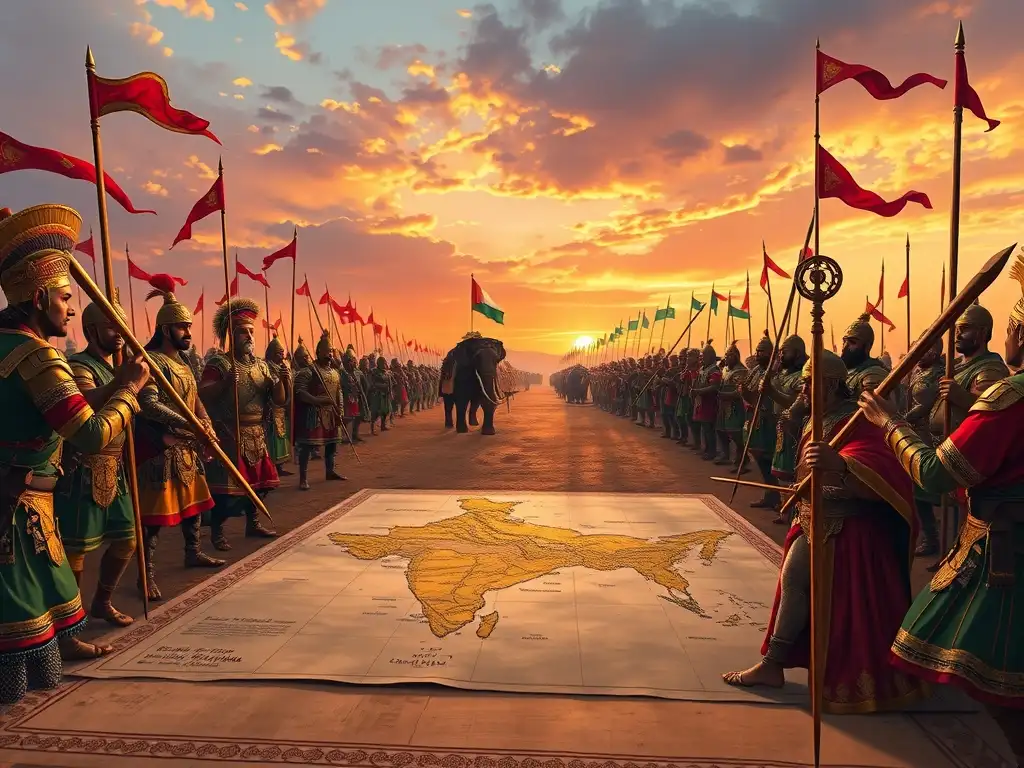
The Maurya Empire, which thrived from 322 to 185 BCE, is renowned for its military innovations and strategic acumen that not only facilitated its expansion but also set a precedent for future Indian powers. Under the leadership of notable figures like Chandragupta Maurya and his grandson Ashoka, the empire developed sophisticated military tactics and organizational structures that contributed significantly to its success.
Military Organization and Tactics Used
The military organization of the Maurya Empire was a key factor in its effectiveness. The army was divided into various units, including infantry, cavalry, and war elephants, each playing a crucial role in battle.
- Infantry: Comprised of foot soldiers, the infantry was the backbone of the Mauryan military, trained in various combat techniques and formations.
- Cavalry: Mounted troops provided mobility and speed, allowing for quick strikes against enemy forces and the ability to retreat if necessary.
- War Elephants: These formidable creatures were used both in combat and for psychological warfare, instilling fear in opposing armies.
The Mauryan military employed innovative tactics such as the use of guerrilla warfare, ambushes, and the strategic deployment of troops in flanking maneuvers. They also utilized fortified camps and siege techniques effectively during conquests. This multifaceted approach to warfare allowed the Maurya Empire to expand its territory significantly and maintain control over vast regions.
The Impact of Maurya Military Strategies on Future Indian Warfare
The military strategies developed during the Maurya Empire had a lasting impact on future Indian warfare. The emphasis on organized units and diverse troop formations became a standard practice in subsequent kingdoms.
- Integration of War Elephants: The use of elephants in battle was adopted by many later Indian dynasties, becoming a symbol of power and prestige.
- Strategic Alliances: The Maurya strategy of forming alliances with local rulers and tribes for support and intelligence gathering set a precedent for diplomatic military strategies in India.
- Fortification Techniques: The construction of fortified cities and military outposts influenced urban planning in later Indian empires, ensuring better defense against invasions.
These military innovations and strategies not only enhanced the effectiveness of the Maurya army but also influenced the military doctrines of subsequent Indian states, demonstrating the empire’s pivotal role in shaping Indian warfare.
Expansion and Defense: Setting Standards for Future Empires
The Maurya Empire's ability to expand its territory while maintaining a robust defense set new standards for future Indian empires. The empire expanded across the Indian subcontinent, from the eastern Bengal to the western regions of present-day Afghanistan.
- Administrative Control: The Mauryas implemented a bureaucratic system that ensured effective governance over their vast territories, a model that later empires like the Gupta and Mughal dynasties would emulate.
- Defensive Strategies: The establishment of fortified cities and a strong naval presence along trade routes exemplified the Maurya approach to both expansion and defense. This practice allowed for secure trade and communication, which were vital for sustaining a large empire.
The Maurya Empire's dual focus on expansion and defense provided a framework that would be adopted by future Indian empires, enabling them to flourish in a complex geopolitical landscape.
The Intellectual Legacy of the Maurya Empire
The Maurya Empire also left a profound intellectual legacy that influenced Indian thought and culture for centuries. Its contributions to science, philosophy, and education were significant, shaping the intellectual landscape of ancient India.
Contributions to Science and Philosophy
The Maurya period is noted for its advancements in various fields of science and philosophy.
- Mathematics and Astronomy: Scholars during this era made significant strides in mathematics, including the use of zero and advancements in geometry. Aryabhata, later in the Gupta period, built upon these foundations.
- Philosophical Thought: The Mauryas, particularly under Ashoka, promoted the principles of Buddhism, which emphasized ethics, compassion, and non-violence. This philosophical framework influenced various schools of thought and spiritual traditions in India.
The intellectual pursuits during the Maurya Empire fostered a rich culture of inquiry and debate, leading to advancements that would resonate throughout Indian history.
The Role of Education and Institutions During the Maurya Era
Education flourished during the Maurya Empire, with the establishment of various institutions dedicated to learning.
- Nalanda University: Though established later, its roots can be traced back to the educational reforms initiated by the Mauryan rulers, who valued education as a means of governance and societal improvement.
- Buddhist Monasteries: These served as centers of learning and education, where scholars gathered to study and disseminate knowledge in various disciplines, including literature, science, and philosophy.
The emphasis on education and institutional development laid the groundwork for a more educated populace and the proliferation of knowledge in subsequent Indian civilizations.
Lasting Influence on Indian Thought and Culture
The intellectual contributions of the Maurya Empire had a lasting influence on Indian thought and culture. The integration of philosophical ideas, particularly those stemming from Buddhism and Jainism, shaped societal values around ethics and governance.
- Cultural Synthesis: The Mauryan era saw a blending of local traditions with broader philosophical frameworks, fostering a rich cultural milieu that would influence literature, art, and religious practices.
- Moral Governance: Ashoka’s edicts, which promoted moral and ethical governance, continue to resonate in contemporary discussions of leadership and statecraft in India.
The legacy of the Maurya Empire is evident in the enduring principles of compassion, ethics, and the pursuit of knowledge that continue to influence Indian society today.
Conclusion: The Enduring Impact of the Maurya Empire on India
The Maurya Empire, which flourished from 322 to 185 BCE, has left a profound and lasting legacy that continues to influence Indian civilization today. Its contributions to governance, culture, economy, and society have set standards that shaped the trajectory of future Indian empires and the very fabric of Indian identity. The principles established during this remarkable period, particularly under the reign of Emperor Ashoka, have resonated through the ages, establishing a model of ethical governance and social responsibility that remains relevant.
Summary of the Maurya Empire's Legacy
The Maurya Empire is renowned for its sophisticated administration, vast network of trade, and promotion of art and culture. Under Ashoka, the empire embraced Buddhism, fostering a culture of peace and non-violence that was articulated in his edicts. These edicts not only served as a communication tool for governance but also as a moral compass for citizens. The integration of various cultures and religions under the Maurya rule set a precedent for pluralism in India, influencing how future empires would approach diversity.
Reflection on How the Maurya Empire Shaped Future Indian Civilizations
The impact of the Maurya Empire on subsequent Indian civilizations cannot be overstated. It laid the groundwork for the later Gupta Empire, which built upon Maurya innovations in administration and culture. The Maurya model of centralized governance influenced later rulers, while the promotion of trade routes established economic foundations that would be utilized by successive dynasties. Furthermore, the Maurya commitment to social welfare and public works continues to inspire modern governance in India, highlighting the enduring relevance of its principles.
The Relevance of Maurya Standards in Modern India
In contemporary India, the values championed by the Maurya Empire, such as tolerance, ethical governance, and social justice, remain pivotal. Political leaders often reference Ashoka's edicts in discussions of governance and public policy. The emphasis on non-violence and community welfare resonates deeply within India's diverse society, making the Maurya legacy not just a historical reference but a guiding philosophy. Educational initiatives and cultural programs frequently celebrate this heritage, ensuring that the lessons from the Maurya Empire continue to inform India's aspirations for the future.
References and Further Reading
Recommended Books on the Maurya Empire
-
"Ashoka: The Search for India's Lost Emperor" by Charles Allen
This book explores the life and legacy of Ashoka, providing insights into his contributions and the broader context of the Maurya Empire.
-
"The Maurya Empire" by Romila Thapar
A comprehensive analysis of the political, economic, and cultural aspects of the Maurya Empire, shedding light on its significance in Indian history.
-
"The Edicts of Ashoka" by Ashoka the Great
A collection of the edicts issued by Ashoka, offering firsthand insight into his philosophy of governance and ethics.
Academic Articles on the Impact of the Maurya Empire on India
-
"The Role of the Maurya Empire in the Evolution of Indian Society"
This article examines the socio-political transformations initiated by the Maurya Empire and their implications for future Indian civilizations.
-
"Mauryan Innovations: Administration and Governance"
An analysis of the administrative systems established during the Maurya Empire and their long-lasting effects on Indian governance models.
Online Resources for Exploring Ancient Indian Civilizations
-
The British Museum - Ancient India
A rich resource featuring artifacts, articles, and exhibits related to ancient Indian civilizations, including the Maurya Empire.
-
The Archaeological Survey of India
This official site provides extensive information on archaeological findings, including those from the Maurya period, and offers insights into India's ancient heritage.
-
Ancient India: A Historical Overview
An online platform dedicated to the history of ancient India, featuring articles, timelines, and resources specifically focused on the Maurya Empire and its impact.
- Introduction to the Maurya Empire
- The Socio-Political Impact of the Maurya Empire on India
- Economic Contributions of the Maurya Empire
- Cultural and Religious Influence of the Maurya Empire
- Military Innovations and Strategies of the Maurya Empire
- The Intellectual Legacy of the Maurya Empire
- Conclusion: The Enduring Impact of the Maurya Empire on India
- References and Further Reading
Frequently Asked Questions
What was the Maurya Empire known for?
The Maurya Empire was known for its political unification of India, extensive trade networks, and the promotion of Buddhism under Emperor Ashoka, significantly influencing the region's culture.
How did the Maurya Empire impact future civilizations in India?
The Maurya Empire set administrative standards, introduced a centralized government, and established legal codes, which influenced subsequent Indian dynasties in governance and societal structure.
Who were the key figures in the Maurya Empire?
Key figures included Chandragupta Maurya, the founder, and Ashoka the Great, known for his philosophy of non-violence and promotion of Buddhism, which greatly impacted Indian society.
What were the cultural contributions of the Maurya Empire?
The Maurya Empire contributed to art, architecture, and literature, including the construction of stupas, development of Sanskrit literature, and the spread of Buddhist teachings across Asia.
How did the Maurya Empire influence trade in ancient India?
The Maurya Empire enhanced trade routes, established commercial relations with other regions, and fostered a thriving economy, which laid the groundwork for future economic systems in India.
Final Reflection: The Enduring Legacy of the Maurya Empire
The impact of the Maurya Empire on India is not merely a chapter in history; it is a foundational pillar that continues to shape the cultural, political, and social landscapes of the subcontinent today. The principles of governance, economic strategies, and social reforms established during the Maurya period resonate through the ages, reminding us of the profound influence that a single empire can wield in defining the trajectory of an entire civilization.
Culture and governance are inextricably linked, and the Maurya Empire serves as a testament to this connection. Its emphasis on administrative efficiency and social welfare laid the groundwork for future Indian empires and modern governance. As we reflect on this legacy, we can appreciate the words of historian Romila Thapar: The Mauryan Empire was not just a political entity; it was a complex web of cultural and social interactions that set the stage for future developments in Indian civilization.
This observation underscores the ongoing relevance of the Maurya Empire, as its ideals continue to inspire contemporary discussions on governance and societal progress.
As we look to the future, let us take a moment to reflect on how the lessons from the Maurya Empire can guide our actions today. Consider how the values of unity, inclusivity, and effective governance can be applied in our own lives and communities. Embrace the opportunity to learn from the past, and strive to embody the principles that foster a thriving society. By doing so, we honor the legacy of the Maurya Empire and contribute to the ongoing evolution of Indian civilization.
Unveil the Legacy of the Maurya Empire Today!
Thank you for taking the time to explore the remarkable legacy of the Maurya Empire with us! You've delved into the foundations of Indian civilization and witnessed how their values and achievements continue to shape our society today. Now, it's time to transform that knowledge into action!
Here are a few ways you can engage further with this fascinating history:
- Dive deeper: Explore a variety of resources and literature about the Maurya Empire to enhance your understanding and appreciation of its enduring influence.
- Share your insights: Discuss this topic with friends or in online communities—let's ignite conversations about how ancient ideals resonate in our contemporary world!
- Reflect and contribute: Consider writing a short post or blog entry that expresses how aspects of the Maurya Empire's governance can inspire today’s leadership practices.
To keep the dialogue going, we’d love to hear from you: What specific aspect of the Maurya Empire do you find most inspiring, and how can it guide our actions in today's society?