
The Impact of Vaisheshika on Arts and Literature in Ancient India

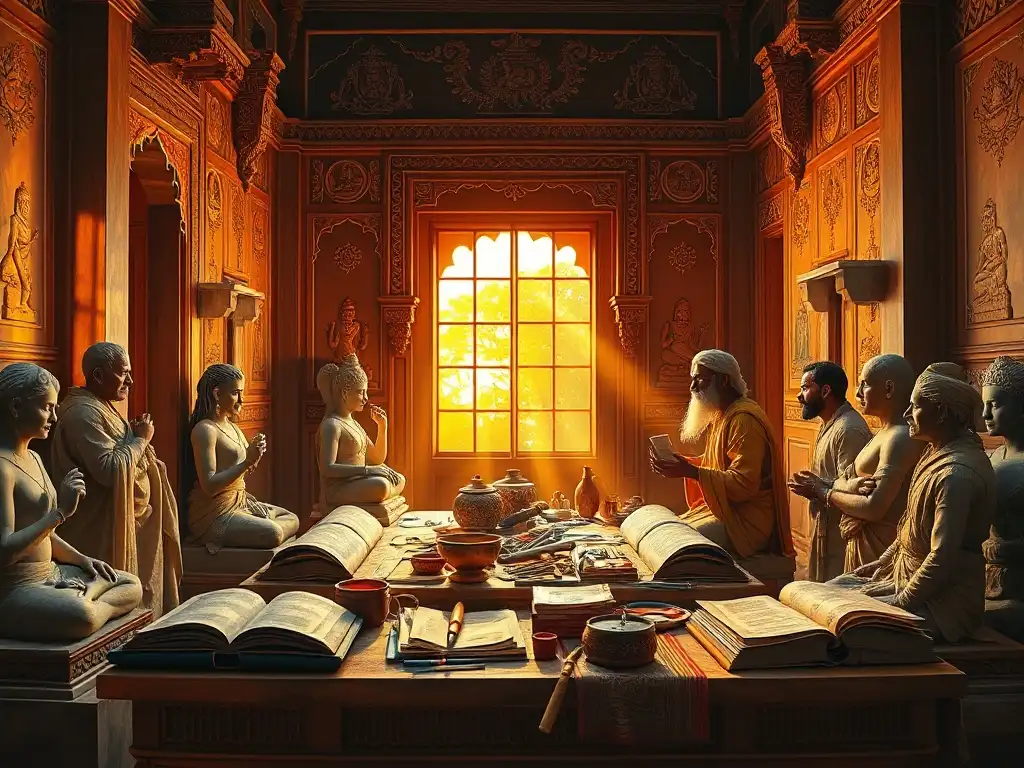
Welcome to Ancient India History, your gateway to the fascinating tapestry of India's past! Here, we delve into the rich and diverse history, culture, and remarkable contributions of ancient Indian civilizations, from the enigmatic Indus Valley to the illustrious Gupta Empire. In our featured article, "The Impact of Vaisheshika on Arts and Literature in Ancient India," we invite you to uncover the profound influence of the Vaisheshika philosophy on the artistic expressions and literary traditions of the time.
What connections can be drawn between philosophy and creativity? Join us on this enlightening journey and explore the intricate interplay between thought and art that shaped a civilization!
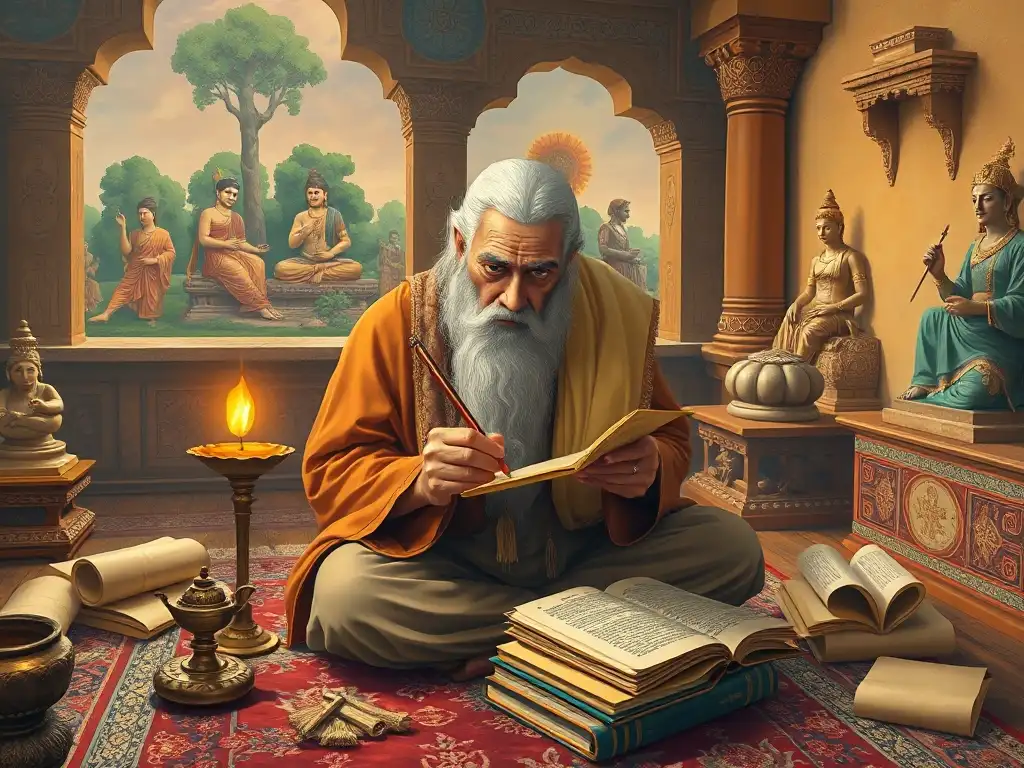
The Vaisheshika school of thought, one of the six classical philosophies of India, has had a profound impact on various aspects of culture and intellectual discourse throughout ancient Indian history. Emerging around the 2nd century BCE, this philosophical framework not only contributed to the fields of metaphysics and epistemology but also left a significant mark on the arts and literature of the time.
The rich tapestry of ideas propounded by Vaisheshika thinkers influenced artistic expressions, sculptural forms, and literary compositions, weaving a complex interaction between philosophy and creativity. As we delve into the nuances of the Vaisheshika influence on ancient arts, we uncover the ways in which its principles shaped the aesthetic sensibilities and cultural narratives of the period, leading to a deeper understanding of India's artistic heritage.
Understanding Vaisheshika Philosophy
Overview of Vaisheshika School of Thought
The Vaisheshika school is primarily known for its unique ontology, which categorizes the nature of reality into various classes of substances, qualities, and actions. Founded by the sage Kanada, Vaisheshika posits that the universe is made up of distinct, individual entities, each possessing specific characteristics and functions. This analytical approach encourages a detailed examination of the physical world, which consequently fosters a greater appreciation for the arts as reflections of this intricate reality.
Key Philosophers and Texts in Vaisheshika
Central to the Vaisheshika tradition are its key philosophers, most notably Kanada and his successors, such as Praśastapāda and Udayana. Their seminal texts, including the Vaisheshika Sutras and Padārthadharmasaṅgraha, provide foundational insights into the philosophical underpinnings of the school. These works discuss concepts such as atomism and the classification of reality, which not only influenced metaphysical thought but also served as a backdrop for artistic and literary explorations.
Fundamental Concepts of Vaisheshika
The fundamental concepts of Vaisheshika include the seven padarthas (categories), which encompass substances, qualities, actions, and more. This classification system encourages a systematic understanding of the world, paving the way for a deeper engagement with the arts. The emphasis on observation and categorization resonates with the careful craftsmanship evident in ancient Indian artworks and literature, reflecting a philosophical appreciation for detail and form.
Vaisheshika Influence on Ancient Arts
Artistic Expressions Influenced by Vaisheshika
The influence of Vaisheshika can be observed in various artistic expressions, where philosophical ideas manifest in visual and performative arts. For instance, the meticulous attention to detail in sculptures and paintings often mirrors the analytical approach of Vaisheshika thinkers. Artists drew inspiration from the natural world, reflecting the school's emphasis on observation and the categorization of forms and colors.
The Role of Vaisheshika in Sculpture and Architecture
Sculpture and architecture in ancient India were significantly impacted by Vaisheshika philosophy. The emphasis on individual substances and their qualities led to a rich tradition of sculptural representation, where each figure was not merely an artistic creation but a representation of deeper metaphysical truths. Architectural forms, such as temples, incorporated elements that aligned with Vaisheshika principles, promoting harmony and balance, essential for spiritual and philosophical contemplation.
Vaisheshika and Its Impact on Traditional Painting
Traditional painting in ancient India also bears the imprint of Vaisheshika philosophy. Painters, influenced by the school's categorization of colors and forms, created works that not only depicted narratives but also engaged in deeper philosophical discourses. The interplay of light, shadow, and color in these artworks reflects a profound understanding of the physical world, as articulated by Vaisheshika thinkers, thereby enriching the cultural landscape of ancient India.
By examining the interconnections between Vaisheshika philosophy and the arts, we gain a comprehensive understanding of how this school of thought helped shape the rich cultural heritage of ancient India, leaving an indelible mark on its artistic and literary traditions.
Vaisheshika Influence on Literature
The influence of Vaisheshika philosophy on literature in ancient India is profound and multifaceted, reflecting its core ideas about the nature of reality, substance, and the classification of knowledge. This philosophical school, founded by Kanada, emphasized the importance of understanding the material world through a systematic approach. As a result, many literary works drew inspiration from its concepts, embedding them within their narratives and themes. Vaisheshika's systematic categorization of substances and its analytical perspective provided a framework that enriched literary expression, particularly in the realms of poetry and drama.
Literary Works Reflecting Vaisheshika Ideas
Several ancient texts embody the principles of Vaisheshika, often merging philosophical discourse with literary artistry. Notably, works like the Mahabharata and Ramayana incorporate philosophical dialogues that echo Vaisheshika's classification of elements and the nature of existence. The Mahabharata, for instance, explores the nature of dharma (duty) and the complexities of human experiences through characters who embody various substances and their relations, which can be seen as a reflection of the Vaisheshika view of the world.
Furthermore, the Tattva Sutra, attributed to Kanada, though primarily a philosophical text, also served as a literary reference for poets and dramatists who sought to weave its analytical insights into their works. The intricate discussions on categories and the nature of reality provided rich material for literary exploration, influencing the narrative styles, character development, and thematic depth of subsequent works.
The Contribution of Vaisheshika to Poetics and Drama
Vaisheshika's systematic approach had a significant impact on ancient Indian poetics and drama. The emphasis on categorization and observation in Vaisheshika philosophy enriched the artistic expression of poets and playwrights. For instance, the concept of rasa (emotion or aesthetic flavor) in drama can be analyzed through a Vaisheshika lens, where different emotional states correspond to various substances and their interactions.
The playwright Bhasa and later Kalidasa incorporated elements of Vaisheshika thinking in their works, presenting characters who navigate the complexities of existence and ethical dilemmas. The use of metaphor and symbolism in their plays often draws from the philosophical underpinnings of Vaisheshika, allowing audiences to engage with deeper existential questions through the lens of art.
Vaisheshika Philosophical Themes in Ancient Texts
The philosophical themes of Vaisheshika—such as the nature of substance, causation, and the epistemology of perception—are recurrent in various ancient texts. For example, the Vishnu Purana and Bhagavata Purana often reference the principles of categorization found in Vaisheshika, presenting a worldview that aligns with its teachings. These texts explore the interconnections between the material and spiritual realms, echoing the Vaisheshika belief in the importance of understanding the physical world to comprehend higher truths.
Moreover, the dialogical format used in philosophical treatises often reflects the analytical methods characteristic of Vaisheshika. Characters in these discussions often engage in debates that mirror the philosophical inquiries of the Vaisheshika school, emphasizing the importance of logical reasoning and empirical observation in understanding life and existence.
Interconnections Between Vaisheshika and Other Philosophical Schools
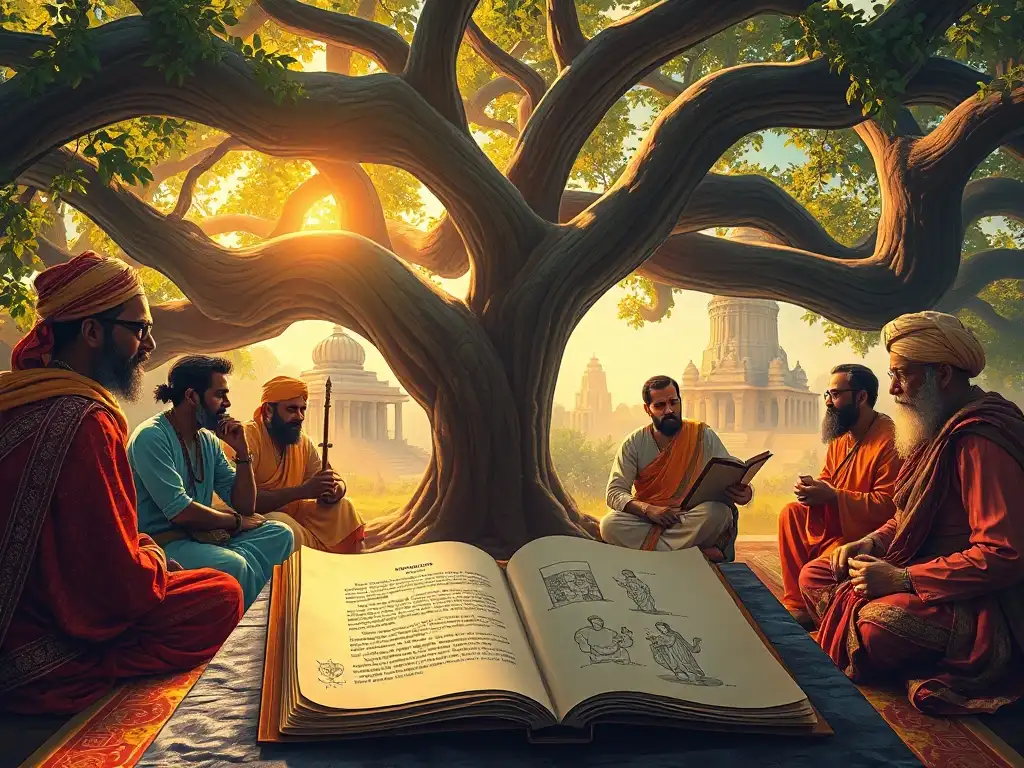
The Vaisheshika school of thought did not develop in isolation but rather interacted with other philosophical systems in ancient India, notably Nyaya and Samkhya. This interrelationship had significant implications for the evolution of philosophical discourse and literary expression.
Comparative Analysis with Nyaya and Samkhya
Nyaya, known for its focus on logic and epistemology, shares a symbiotic relationship with Vaisheshika, particularly in their mutual interests in the nature of knowledge and reality. Both schools emphasize the importance of inference as a means to attain knowledge. While Nyaya provides a more rigorous framework for logical argumentation, Vaisheshika complements it by categorizing the objects of knowledge, thus enriching philosophical discussions and literary explorations.
On the other hand, the Samkhya school, with its dualistic approach, also intersects with Vaisheshika by offering alternative perspectives on the nature of reality and consciousness. The interplay between these philosophical schools can be seen in various literary compositions, where authors often borrow metaphysical concepts to enhance the depth of their narratives, illustrating the dynamism of ancient Indian thought.
Vaisheshika's Influence on Subsequent Philosophical Thought
The legacy of Vaisheshika extends beyond its immediate philosophical contributions, influencing subsequent schools of thought and literary traditions. Its emphasis on empirical observation and categorization resonated with later thinkers, particularly during the medieval period. The integration of Vaisheshika ideas into works by later philosophers like Madhva and Ramanuja illustrates its enduring relevance.
Moreover, the literary implications of Vaisheshika thought can be traced into the works of later poets and playwrights, who adopted its themes to explore human experience, morality, and the nature of reality. The analytical approach fostered by Vaisheshika continues to inspire modern interpretations of ancient texts, demonstrating the lasting impact of this philosophical school on both literature and thought in the broader context of Indian culture.
Conclusion: The Lasting Legacy of Vaisheshika in Arts and Literature
The Vaisheshika school of thought, originating from the philosophical teachings of Kanada, has left an indelible mark on the arts and literature of ancient India. Its unique approach to understanding the nature of reality, through the classification of substances and the emphasis on individual qualities, has influenced not only philosophical discourse but also the creative expressions within literature and visual arts. The principles of Vaisheshika, such as the categorization of knowledge and the exploration of the material world, fostered a rich tapestry of artistic endeavors that mirrored its philosophical tenets.
From poetry that reflects metaphysical inquiries to sculptures depicting the intricacies of the natural world, the lasting legacy of Vaisheshika can be observed throughout various forms of ancient Indian art. Artists and writers were inspired to explore themes of existence, individuality, and the interconnectedness of all things, leading to a flourishing of creativity that resonated through centuries. As a result, Vaisheshika's influence can be seen as a catalyst for the evolution of artistic expression, encouraging a profound engagement with the world and its mysteries.
Summary of Vaisheshika's Contributions to Ancient Indian Culture
Vaisheshika's contributions to ancient Indian culture are multifaceted, encompassing philosophy, science, and the arts. Its emphasis on categorization and analysis laid the groundwork for systematic thought, which permeated various aspects of life in ancient India. Key contributions include:
- Philosophical Framework: The classification of substances into categories such as earth, water, fire, air, and ether created a structured understanding of the material world, influencing not only philosophical discussions but also literary themes.
- Scientific Inquiry: Vaisheshika's focus on observation and empirical evidence fostered a spirit of inquiry that extended to various domains, including astronomy, mathematics, and medicine, which in turn enriched artistic representations of natural phenomena.
- Literary Developments: The philosophical explorations of Vaisheshika found expression in literature, inspiring poets and playwrights to weave complex narratives that examined existential questions, morality, and the nature of reality.
In essence, Vaisheshika provided a comprehensive intellectual foundation that encouraged the flourishing of arts and literature, shaping the cultural landscape of ancient India significantly.
Reflection on the Relevance of Vaisheshika Today
The relevance of Vaisheshika today can be seen in various fields, including philosophy, science, and the arts. Its systematic approach to understanding the universe is echoed in modern scientific methodologies that emphasize categorization and analysis. In a world increasingly driven by empirical evidence and rational thought, the principles established by Vaisheshika resonate strongly.
Moreover, the emphasis on individual qualities and the interconnectedness of all things encourages contemporary artists and writers to explore themes of identity, existence, and the environment in their work. The philosophical inquiries posed by Vaisheshika continue to inspire discussions in both academic and artistic circles, urging individuals to reflect on their place within the broader tapestry of life.
Vaisheshika's influence on ancient arts not only shaped the cultural heritage of India but also provides valuable insights and inspiration for contemporary thought and creativity, ensuring its legacy endures in the modern world.
- Understanding Vaisheshika Philosophy
- Vaisheshika Influence on Ancient Arts
- Vaisheshika Influence on Literature
- Interconnections Between Vaisheshika and Other Philosophical Schools
- Conclusion: The Lasting Legacy of Vaisheshika in Arts and Literature
Frequently Asked Questions
What is Vaisheshika philosophy?
Vaisheshika is an ancient Indian philosophy that focuses on categorizing and understanding the elements of reality, particularly through the lens of atomism and naturalism.
How did Vaisheshika influence ancient arts?
The Vaisheshika philosophy influenced ancient arts by promoting a deeper appreciation of nature and reality, which inspired artists to depict the world more accurately in their work.
What contributions did the Vaisheshika philosophy make to literature?
Vaisheshika laid the groundwork for metaphysical discussions in literature, encouraging writers to explore complex themes of existence, perception, and the nature of reality.
In what ways did Vaisheshika interact with other philosophies?
The Vaisheshika school often interacted with other philosophical systems, such as Nyaya, to enhance debates on epistemology and ontology, enriching the overall intellectual landscape of ancient India.
Can you provide examples of Vaisheshika themes in ancient arts?
Vaisheshika themes can be seen in sculptures and paintings that reflect a fascination with the natural world, showcasing intricate details and a profound understanding of form and structure.
Final Reflection: The Enduring Legacy of Vaisheshika in Ancient Arts
The exploration of Vaisheshika's influence on ancient arts reveals a profound connection between philosophical thought and creative expression that resonates even today. As we delve into the intricate relationships between metaphysics, aesthetics, and literature, we uncover the timeless nature of these ideas that continue to shape our understanding of art and culture. The impact of Vaisheshika is not merely a relic of the past; it serves as a foundation for contemporary artistic endeavors and intellectual pursuits.
The principles of Vaisheshika have undeniably influenced the cultural and social landscape of India, fostering a rich tapestry of artistic expression that reflects the philosophical inquiries of its time. This philosophical framework has not only enriched the arts but has also encouraged a deeper understanding of the human experience. As we reflect on this legacy, we are reminded of the words of the philosopher Acharya Kanada: The essence of reality lies in the particulars, and through understanding these, we can appreciate the beauty of existence.
This perspective invites us to engage with the world around us, recognizing the intricate details that contribute to the larger narrative of our lives.
As we conclude this exploration, I invite you to reflect on the lessons of Vaisheshika and consider how they can inspire your own creative journey. Embrace the idea that every artistic endeavor is an opportunity to engage with the essence of reality, to explore the particulars that define our experiences, and to contribute to the ongoing dialogue of culture and philosophy. Let the influence of Vaisheshika guide you as you create, appreciate, and connect with the arts in your own life, fostering a deeper understanding of both yourself and the world around you.
Unveil the Rich Tapestry of Ancient Indian Arts and Literature!
Thank you for taking the time to explore the profound impact of **Vaisheshika** on arts and literature in ancient India. We hope you’ve gained valuable insights into this fascinating connection that has shaped our cultural legacy.
Now, it’s time to take action and deepen your understanding! Here are some exciting ways you can engage further:
- Explore more: Visit our curated collection of articles on ancient Indian philosophies to see how they influenced various art forms.
- Join the conversation: Share your thoughts on how **Vaisheshika** influences contemporary arts and literature in our comments section!
- Delve into history: Read a classic work or explore a modern interpretation of ancient Indian literature to see these ideas in action.
As you reflect on this cultural interplay, consider: How do you think the principles of **Vaisheshika** could inspire today’s artists and writers?