
The Impact of Foreign Invaders on Ancient Indian Culture and Society

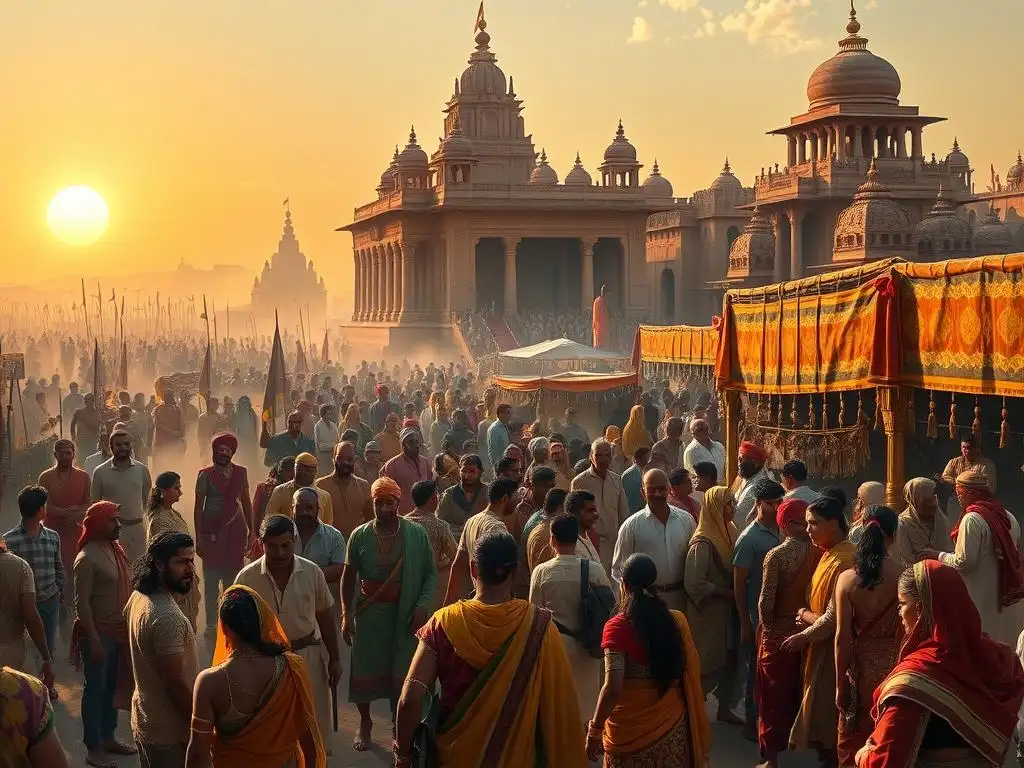
Welcome to Ancient India History, where we embark on a fascinating journey through time to uncover the rich tapestry of one of the world's oldest civilizations. In our featured article, "The Impact of Foreign Invaders on Ancient Indian Culture and Society," we delve into the profound influences that foreign invaders had on India's diverse heritage. From the Indus Valley to the Gupta Empire, these encounters shaped not only the landscape of ancient India but also its culture and society in remarkable ways.
Ready to explore how these interactions forged a unique identity? Join us as we unravel the threads of history that connect us all!
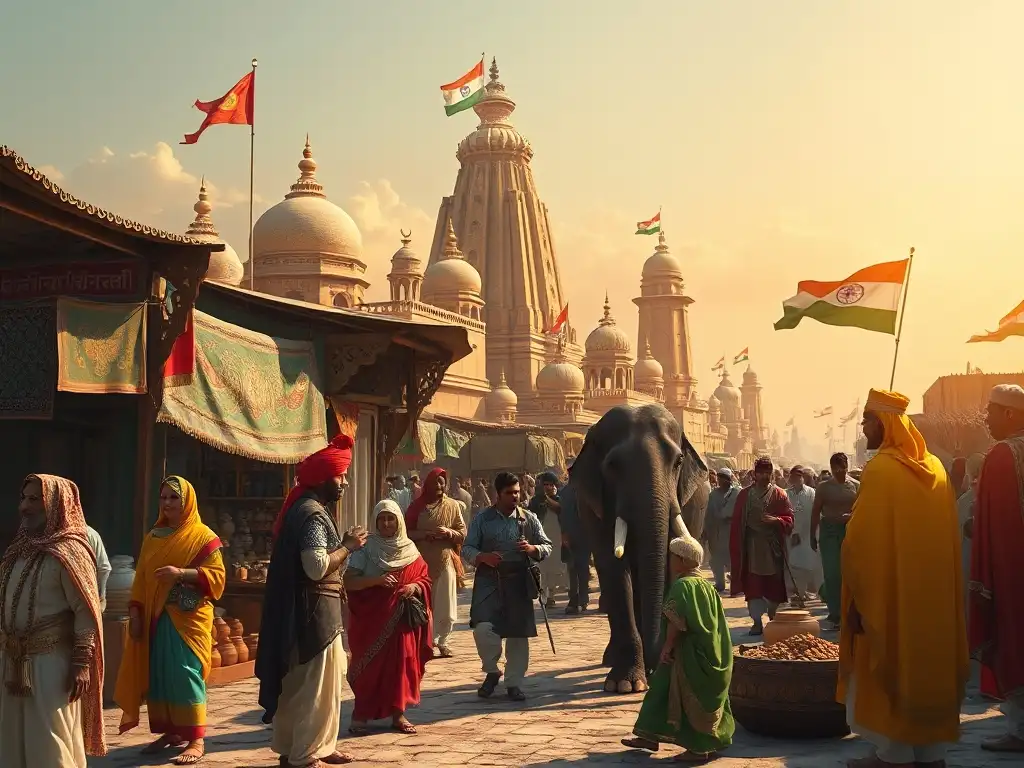
The history of India is marked by a rich tapestry of cultural exchanges, particularly through interactions with foreign invaders. These encounters have significantly shaped the socio-cultural landscape of ancient Indian civilization. From the earliest invasions to the more systematic conquests, foreign invaders have left indelible marks on various aspects of Indian life, including religion, governance, art, and social structures.
Understanding the impact of foreign invaders in India allows us to appreciate the complexities of India's history and the ways in which these interactions fostered a unique synthesis of diverse cultures. This article delves into the historical context, the key players involved, and the profound effects these invasions had on Indian society.
Understanding Foreign Invasion in Ancient India
Historical Context of Foreign Invaders in India
Throughout ancient history, India faced numerous foreign invasions, each leaving a unique imprint on its culture and society. The geographical position of India, coupled with its wealth and resources, attracted various groups seeking conquest and trade. Notable invasions include those by the Persians, Greeks, Scythians, Huns, and later the Turks and Mughals. Each of these groups brought their distinct cultures, ideologies, and practices, leading to a complex interplay between the invader and the indigenous populations.
Overview of Major Foreign Invaders in Ancient Indian History
The landscape of ancient India was shaped by a series of significant foreign invasions:
- Persian Empire (6th century BCE): Under Cyrus and Darius, the Persian influence introduced administrative practices and trade networks.
- Alexander the Great (4th century BCE): His invasion opened up the Indian subcontinent to Hellenistic influences and trade.
- Scythians and Huns (1st century BCE - 5th century CE): These nomadic groups further altered the political and cultural dynamics in northern India.
- Turks and Mughals (12th century - 17th century CE): Their rule marked a significant period of cultural synthesis, particularly in art, architecture, and governance.
The Impact of Foreign Invaders on Indian Society
Social Structure Changes Due to Foreign Influence
The foreign invasions led to substantial changes in the social fabric of ancient Indian society. The introduction of new social hierarchies, often reflective of the invaders' practices, resulted in the reorganization of existing caste systems. For instance, the arrival of the Turks brought about new classes within the society, blending with local traditions and creating a more complex social structure.
Cultural Assimilation and Adaptation
Cultural assimilation was a hallmark of foreign invasions in India. Invaders often adopted local customs while simultaneously imparting their own traditions. This exchange facilitated the development of new art forms, religious practices, and culinary traditions. The synthesis of Islamic and Hindu cultures during the Mughal period is a prime example, leading to the emergence of hybrid art forms such as Indo-Islamic architecture.
Language and Literature: Influences of Invaders
The influence of foreign invaders on language and literature in ancient India is profound. The introduction of Persian and Arabic languages during the Mughal period enriched the existing linguistic landscape, resulting in the creation of a new literary genre. The fusion of Sanskrit with Persian vocabulary gave rise to unique literary works, reflecting the complex interplay of cultures.
The impact of foreign invaders in India was multifaceted, leading to significant transformations in society and culture. Understanding these changes not only sheds light on India’s historical context but also highlights the resilience and adaptability of its civilization in the face of external influences.
The Influence of Foreign Invaders on Indian Religion and Philosophy
The impact of foreign invaders on Indian religion and philosophy has been profound and multifaceted, shaping the spiritual landscape of the subcontinent through the introduction of new beliefs and the merging of diverse practices. Each wave of invasion brought unique religious ideologies that interacted with the existing cultural milieu, fostering a rich tapestry of spiritual thought.
Introduction of New Religions and Beliefs
Foreign invaders introduced various religions to India, significantly influencing the local belief systems. For instance, the arrival of the Greeks, particularly under Alexander the Great, brought Hellenistic thought and practices. This was followed by the arrival of the Kushans, who played a pivotal role in the spread of Buddhism across Central Asia and into India. Their endorsement of Mahayana Buddhism helped develop new philosophical schools and ideas, further enriching Indian spiritual discourse.
The Islamic invasions from the 7th century onwards marked another significant shift, introducing Islam to the Indian subcontinent. This led to the establishment of a new religious framework that coexisted alongside Hinduism and Buddhism, leading to the emergence of various syncretic traditions, such as Sufism, which blended Islamic mysticism with local spiritual practices.
Syncretism: Merging of Local and Foreign Religious Practices
One of the most notable impacts of foreign invasions was the phenomenon of syncretism. As foreign cultures encountered the diverse religious practices of India, they often merged with local traditions, creating new forms of worship and belief systems.
For example, during the Mughal era, the synthesis of Hindu and Islamic practices led to the development of the Bhakti movement, which emphasized personal devotion and sought to bridge the gap between the two faiths. Figures like Kabir and Tulsidas exemplified this blending, promoting a message of universal love and devotion that transcended sectarian boundaries.
Additionally, the architectural and artistic expressions of this syncretism can be observed in the construction of temples and mosques that incorporated elements from both traditions, showcasing a unique cultural amalgamation.
Impact on Philosophical Thought and Schools of Philosophy
The encounters with foreign invaders also stimulated philosophical discourse in ancient India. The introduction of new ideas from Persia and Greece challenged existing paradigms, prompting Indian scholars to engage with diverse philosophical traditions.
For instance, the works of Greek philosophers, such as Plato and Aristotle, found their way into Indian thought through translations and commentaries. This interaction led to the emergence of new schools of philosophy, including those that emphasized logic and empirical reasoning, which were less prevalent in traditional Indian thought.
Moreover, the Islamic philosophical tradition, particularly through scholars like Al-Farabi and Ibn Sina (Avicenna), influenced Indian thinkers, encouraging a dialogue between reason and faith that contributed to the evolution of metaphysical and ethical concepts within the Indian philosophical landscape.
Economic Changes Induced by Foreign Invasions
Foreign invasions also brought significant economic changes to ancient Indian society. The interactions with invaders led to shifts in trade, agriculture, and urban development, which collectively transformed the economic landscape of the region.
Trade Routes and Economic Exchange with Invaders
The establishment of new trade routes by foreign invaders facilitated the exchange of goods, ideas, and cultures. For example, the Persian invasions opened up trade links between India and the Middle East, which enriched local economies and led to the introduction of new commodities and technologies.
The subsequent establishment of the Silk Route further enhanced trade with Central Asia, allowing for the flow of silk, spices, and precious metals. This influx of wealth contributed to the growth of urban centers and the emergence of a merchant class that played a critical role in the economic fabric of society.
Agricultural Practices and Land Ownership Changes
Foreign invasions also resulted in changes to agricultural practices and land ownership structures. The introduction of new crops and farming techniques from various invaders improved agricultural productivity. For instance, the Muslim conquests brought innovations in irrigation and crop rotation, which were adopted by local farmers.
Additionally, the invasions led to significant changes in land ownership patterns. The establishment of feudal systems by some invaders altered the traditional landholding structures, concentrating land in the hands of a few powerful families while displacing others. This shift had lasting implications for social hierarchies and the agrarian economy of ancient India.
The Role of Foreign Invaders in Urban Development
Foreign invaders played a crucial role in urban development across ancient India. The establishment of new cities and the expansion of existing ones can be attributed to the economic opportunities created by foreign trade and military conquests.
The Mughals, for example, were instrumental in developing cities like Agra and Fatehpur Sikri, which became centers of culture, trade, and administration. These urban centers not only facilitated economic growth but also became melting pots of diverse cultures, leading to a flourishing of arts, architecture, and scholarship.
The impact of foreign invaders on ancient Indian culture and society is marked by significant changes in religion, philosophy, and economic structures. The encounters fostered a dynamic interplay of ideas and practices that enriched the Indian civilization, leaving a lasting legacy that continues to influence the region today.
Artistic and Architectural Influences from Foreign Invaders

The foreign invasions in ancient India significantly impacted its artistic and architectural landscape, leading to a profound transformation in the way art and architecture were conceived and executed. The interactions with various invaders brought new styles, techniques, and materials that not only enriched Indian culture but also resulted in a unique fusion of indigenous and foreign elements. This blending is particularly evident in the realms of architecture, sculpture, and painting, as local artisans adapted and incorporated new influences into their work.
Architectural Styles Introduced by Invaders
One of the most notable impacts of foreign invaders, such as the Greeks, Persians, and later the Mughals, was the introduction of diverse architectural styles. For example, the Greeks influenced the urban planning of cities, introducing elements like columns and porticos, which can be seen in structures like the stupa at Sanchi.
The Persian invasions brought intricate tile work, grand arches, and garden layouts that emphasized symmetry and grandeur, which were later adopted and adapted by Indian builders. The Mughal Empire, in particular, marked a significant architectural renaissance with the introduction of Persian-inspired designs, characterized by large domes, elaborate inlay work, and expansive courtyards. Iconic structures such as the Taj Mahal exemplify this synthesis of Persian and Indian styles, demonstrating how architectural practices evolved through interaction with foreign cultures.
Influence on Sculpture and Painting Traditions
Foreign invasions also led to remarkable developments in Indian sculpture and painting. The arrival of Hellenistic influences during the Greco-Bactrian period introduced realistic body proportions and naturalistic poses in sculpture, which were previously less emphasized in Indian art. The Gandhara school of art, which flourished in the northwestern regions of India, is a prime example, showcasing sculptures that reflect Greek stylistic elements merged with Buddhist themes.
Similarly, the Mughal period heralded a new era in painting, where Persian miniature techniques were integrated with Indian themes, creating a distinctive style that depicted royal court scenes, flora, and fauna with intricate detail and vibrant colors. This fusion not only enriched the artistic vocabulary of the time but also laid the groundwork for future artistic developments in India.
The Fusion of Artistic Techniques and Styles
The confluence of various artistic techniques and styles due to foreign influences resulted in a rich tapestry of cultural expression in ancient India. This fusion was not merely an amalgamation of styles but represented a dynamic dialogue between different cultures. For instance, the blending of Indian iconography with Persian motifs led to the creation of hybrid forms that were both aesthetically pleasing and culturally significant.
Artisans began to incorporate new materials such as marble and decorative tiles, enhancing the visual impact of their works. The synthesis of local traditions with foreign techniques also encouraged innovation, as artisans experimented with new forms and subjects, leading to a flourishing of creativity. The resultant art forms transcended boundaries, reflecting the diverse influences that shaped ancient Indian culture.
Resistance and Resilience: Indian Responses to Foreign Invaders
The impact of foreign invaders on ancient Indian culture and society was met with a complex tapestry of responses, characterized by both resistance and resilience. As foreign powers sought to impose their rule, local populations exhibited various strategies to maintain their cultural identity and autonomy. This interplay of resistance and adaptation is a crucial aspect of understanding the historical narrative of ancient India.
Strategies of Resistance Against Foreign Rule
Local populations often employed a range of strategies to resist foreign domination. These included military confrontations, forming alliances with neighboring states, and leveraging geographical advantages. For instance, the Rajputs are renowned for their fierce resistance against invasions, utilizing guerrilla tactics and fortified strongholds to defend their territories.
Additionally, cultural resistance played a significant role. The preservation of local languages, customs, and religious practices became a means of asserting identity against foreign influences. Festivals, traditional rituals, and community gatherings served as crucial platforms for maintaining cultural continuity in the face of external challenges.
The Role of Local Leaders and Dynasties
Local leaders and dynasties were pivotal in organizing resistance movements and preserving cultural identity amid foreign invasions. Figures such as Prithviraj Chauhan and Shivaji Maharaj emerged as symbols of resistance, rallying people around the cause of sovereignty and cultural integrity. Their efforts not only inspired collective action but also fostered a sense of unity among diverse communities.
Moreover, some dynasties, like the Cholas and the Vijayanagara Empire, managed to thrive despite foreign pressures, demonstrating resilience by adapting to some aspects of foreign culture while firmly upholding their own traditions. This adaptability allowed them to strengthen their political and cultural foundations, showcasing the dynamic nature of Indian identity.
Long-term Cultural Resilience and Identity Preservation
The long-term impact of foreign invasions on ancient India is characterized by a remarkable resilience in cultural identity. Despite the challenges posed by invaders, Indian society consistently found ways to preserve its core values, traditions, and beliefs. This resilience is evident in the continued practice of indigenous art forms, religious traditions, and social customs, which evolved yet remained rooted in their historical context.
Moreover, the interactions with foreign cultures ultimately enriched Indian society, leading to a synthesis that produced new cultural expressions while maintaining a strong sense of identity. This blending of influences contributed to the vibrant tapestry of Indian civilization, showcasing its ability to absorb and adapt to external changes while celebrating its unique heritage. The legacy of this resilience is evident in contemporary Indian culture, which continues to reflect a rich history of interaction and adaptation.
Conclusion: The Lasting Legacy of Foreign Invaders on Ancient Indian Culture
The impact of foreign invaders on ancient Indian culture is both profound and multifaceted, leaving a legacy that shaped the subcontinent's society, religion, art, and language. From the early incursions of the Aryans to the later waves of invasions by the Greeks, Scythians, Huns, and Turks, each group contributed elements that enriched the tapestry of Indian civilization. The synthesis of ideas, beliefs, and practices resulted in a dynamic culture that adapted and evolved over centuries.
The lasting legacy of these interactions can be seen in various aspects of Indian life today, including the diverse religious practices, culinary traditions, architectural styles, and linguistic diversity. The fusion of indigenous and foreign elements has created a unique cultural landscape that reflects the resilience and adaptability of Indian society. As we explore this legacy, it becomes evident that the foreign invaders were not merely conquerors; they were also catalysts for cultural dialogue and exchange that continue to influence modern India.
Summary of Key Impacts on Society and Culture
The foreign invasions in ancient India brought several significant changes that reshaped society and culture:
- Religious Syncretism: The introduction of new religions, such as Buddhism and later Islam, led to a blending of spiritual beliefs and practices. This syncretism fostered tolerance and the coexistence of multiple faiths.
- Linguistic Diversification: The arrival of foreign languages, such as Persian and Arabic, significantly influenced local languages. Many words and phrases from these languages entered Indian vernaculars, enriching the linguistic fabric of the region.
- Art and Architecture: Architectural styles underwent remarkable transformations due to foreign influences. For example, Indo-Islamic architecture emerged, characterized by the use of domes and intricate ornamentation, blending Islamic and indigenous styles.
- Culinary Influences: The integration of foreign ingredients and cooking techniques resulted in a diverse culinary heritage. Dishes that incorporate spices and preparation methods from various cultures have become staples in Indian cuisine.
These key impacts illustrate how the interactions with foreign invaders helped to shape a more diverse and complex Indian identity.
Reflection on the Complexity of Cultural Exchange in Ancient India
The cultural exchanges resulting from foreign invasions in ancient India demonstrate a complex interplay of conflict, adaptation, and mutual influence. While invasions often began with violence and conquest, they frequently led to significant cultural and social transformations. The complexities of these exchanges reveal that cultural identity is not static but rather a continuous process of negotiation and change.
Moreover, the interactions were not unidirectional. Indigenous societies actively engaged with foreign cultures, adapting and modifying foreign elements to fit local contexts. This process of adaptation highlights the agency of local populations in shaping their own cultures, illustrating that the impact of foreign invaders was as much about local responses as it was about external influences.
In essence, the narrative of foreign invasions in ancient India is not merely one of domination but rather one of intricate cultural dialogues that have left an indelible mark on the civilization.
Further Reading on Cultural Exchanges and Foreign Influence in Ancient India
For those interested in delving deeper into the cultural exchanges and foreign influences in ancient India, the following resources provide valuable insights:
- "The History of Ancient India: From 650 to 1200 A.D.": This book offers an in-depth analysis of the societal changes during invasions and their long-term effects on Indian culture.
- "Cultural Interactions in the Indian Subcontinent": A comprehensive collection of essays exploring various aspects of cultural exchanges between India and its foreign invaders.
- "The Impact of Islam on Indian Culture": This work examines how the arrival of Islam shaped various dimensions of Indian society, including art, architecture, and language.
- "Cross-Cultural Encounters in Ancient India": This resource discusses specific case studies of cultural exchanges and their implications for the development of Indian civilization.
These readings can enhance understanding of the intricate web of influences that foreign invaders have had on the rich history of India.
- Understanding Foreign Invasion in Ancient India
- The Impact of Foreign Invaders on Indian Society
- The Influence of Foreign Invaders on Indian Religion and Philosophy
- Economic Changes Induced by Foreign Invasions
- Artistic and Architectural Influences from Foreign Invaders
- Resistance and Resilience: Indian Responses to Foreign Invaders
- Conclusion: The Lasting Legacy of Foreign Invaders on Ancient Indian Culture
- Further Reading on Cultural Exchanges and Foreign Influence in Ancient India
Frequently Asked Questions
What were some major foreign invaders in ancient India?
Ancient India faced invasions from various groups, including the Persians, Greeks, and Mughals, each leaving a distinct impact on Indian culture and society.
How did foreign invaders influence Indian culture?
Foreign invaders brought new ideas, religions, and artistic styles, leading to a fusion of cultures that enriched Indian traditions and practices over time.
What role did trade play in the interaction with invaders?
Trade established connections with foreign invaders, facilitating the exchange of goods and ideas, which significantly influenced the economic and cultural landscape of ancient India.
Did foreign invasions lead to any changes in Indian governance?
Yes, invasions often resulted in political restructuring, with foreign rulers establishing new dynasties and administrative systems that shaped India's governance for centuries.
How did Indian society respond to foreign invasions?
Indian society exhibited resilience and adaptability, often integrating foreign elements while maintaining core cultural values, thereby creating a dynamic and evolving society.
Final Reflection: The Enduring Legacy of Foreign Invaders on Indian Culture
The impact of foreign invaders on India is a profound theme that resonates deeply in today’s globalized world. As we navigate through an era marked by cultural exchanges and migrations, it becomes increasingly clear that the historical interactions between diverse civilizations have shaped not only the past but also the present. The lessons learned from ancient encounters remind us that cultural resilience and adaptation are vital in fostering unity amid diversity.
The influence of foreign invaders on Indian culture is not merely a relic of history; it continues to shape our social landscape. The rich tapestry of Indian traditions, languages, and practices is a testament to the resilience and adaptability of its people. As we reflect on this, we are reminded of the words of Mahatma Gandhi: Our ability to reach unity in diversity will be the beauty and the test of our civilization.
This quote encapsulates the essence of how foreign influences have woven into the very fabric of Indian society, enriching it while also presenting challenges that require thoughtful navigation.
As we look to the future, I invite you to reflect on the impact of foreign invaders in India and consider how these historical narratives can inform our understanding of identity today. Embrace the diversity around you, recognizing that every culture carries the weight of its history while contributing to a shared future. Let us celebrate our differences and learn from them, fostering a world where cultural exchange is seen not as a threat, but as an opportunity for growth and enrichment.
Unveil the Legacy of Ancient Influences on Indian Culture!
Thank you for exploring the intricate tapestry of ancient Indian culture and the profound effects of various foreign influences. We hope you gained valuable insights into how these interactions have shaped society as we know it today. Now, it’s time to take those insights further!
- Dive deeper: Explore the rich narratives of your ancestors by visiting your local library or browsing online resources dedicated to ancient Indian history.
- Share your thoughts: Engage with friends and family about this fascinating subject by hosting a discussion or sharing this article on social media—help ignite a conversation about our cultural roots!
- Join the community: Consider participating in history forums or joining local clubs focused on ancient studies to connect with like-minded enthusiasts and deepen your understanding.
What new perspectives have you gained about the influence of diverse cultures on India's rich history, and how will you incorporate these insights into your understanding of contemporary society?