
The Transition from Informal to Formal Education in Ancient Indian Society

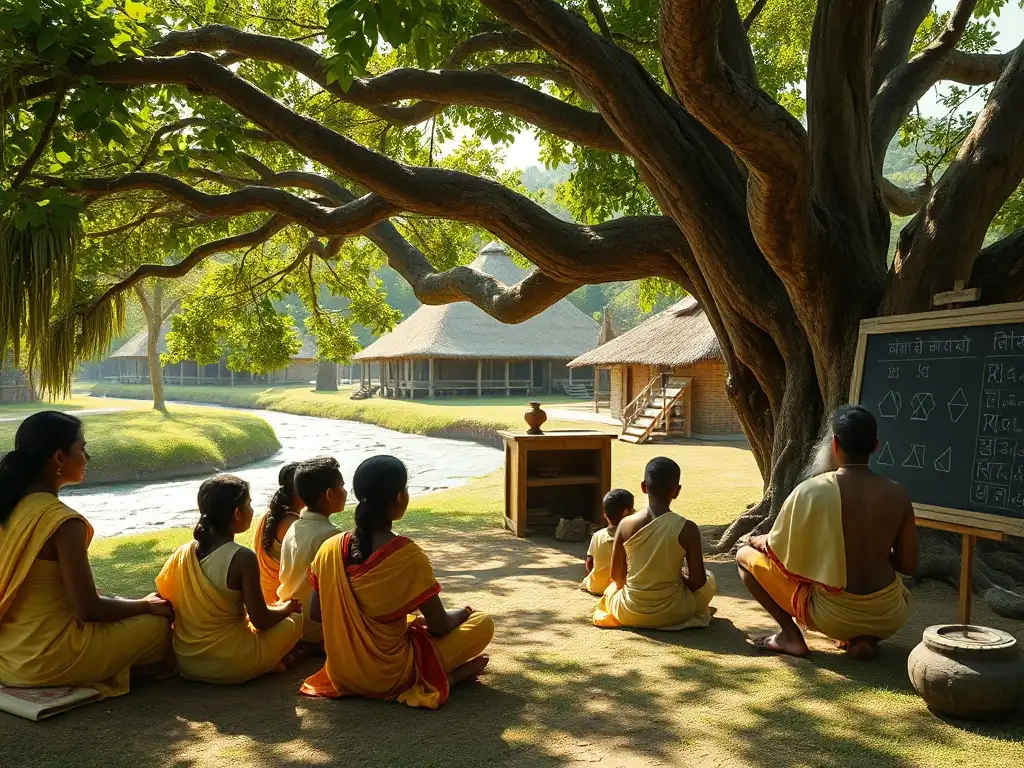
Welcome to Ancient India History, where we delve into the rich and diverse tapestry of ancient Indian civilizations! Today, we invite you to journey through the fascinating evolution of education systems in ancient India, exploring how the transition from informal learning to structured education shaped society. What were the pivotal moments that influenced these educational practices? As you uncover the intricacies of ancient Indian education systems, prepare to be captivated by the profound impact they had on culture, knowledge, and societal development. Join us and let your curiosity lead the way!
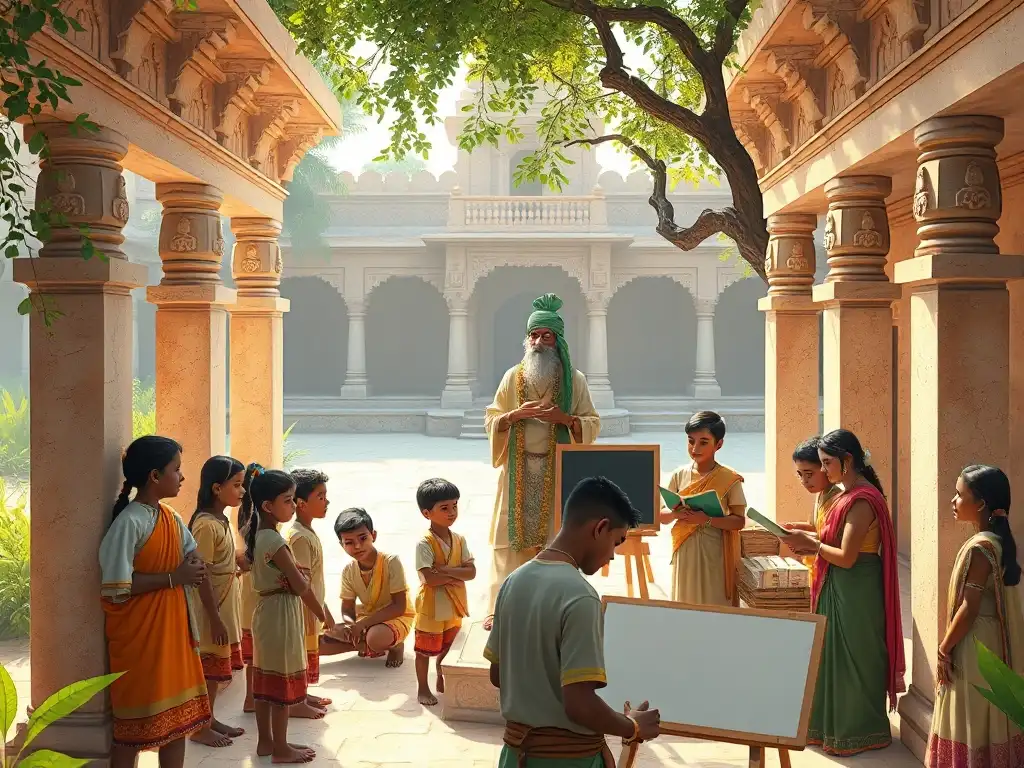
Introduction to Ancient Indian Education Systems
The evolution of education in ancient India is a profound journey that reflects the complexities of its society, culture, and philosophy. This transition from informal to formal education systems highlights how ancient Indian civilizations laid the groundwork for educational practices that resonate even today.
With a rich heritage spanning from the Indus Valley civilization to the Gupta Empire, the ancient Indian education systems were not merely about imparting knowledge; they were integral to the social fabric, shaping individuals and communities. This article will explore the various facets of education in ancient India, focusing on its informal roots and the gradual establishment of more structured educational institutions.
Overview of Education in Ancient India
Education in ancient India was characterized by a blend of spiritual and practical knowledge, underscoring the holistic approach of its educational philosophy. Key features include:
- Diverse Subjects: Students were taught a variety of subjects, including philosophy, mathematics, astronomy, medicine, and the arts.
- Gurukula System: The traditional system of learning often took place in a guru's home (Gurukula), where students lived and studied in close-knit environments.
- Vedic Influence: Much of the educational framework was influenced by the Vedas, which emphasized moral and ethical living alongside academic pursuits.
The transition from informal to formal education can be traced through the evolution of these practices, leading to more structured forms of learning.
Importance of Education in Ancient Indian Society
Education was not just a means to acquire knowledge; it was a vital component of social structure and cultural identity. The significance of education in ancient Indian society can be summarized as follows:
- Social Mobility: Education offered pathways for individuals to rise in social status, especially through the acquisition of knowledge in sacred texts and sciences.
- Cultural Preservation: It played a crucial role in preserving and transmitting cultural values, traditions, and languages from one generation to the next.
- Moral Development: Education was also seen as a way to cultivate virtues and ethical conduct, which were deemed essential for a harmonious society.
Informal Education in Ancient India
Characteristics of Informal Education
Informal education in ancient India was characterized by its flexible and unstructured nature. Key aspects include:
- Experiential Learning: Knowledge was often acquired through direct experience and observation rather than formal lessons.
- Community Involvement: Learning occurred in communal settings, with teachers and learners often being part of the same community.
This informal framework laid the foundation for more organized educational structures in later periods.
Role of Family and Community in Learning
The family and community played pivotal roles in the informal education of children. This learning environment can be understood through:
- Family as First Teacher: Parents were the primary educators, imparting values, skills, and knowledge through daily interactions and practices.
- Community Learning Circles: Knowledge was shared within the community, where elders and experienced individuals passed down wisdom through storytelling and practical demonstrations.
Oral Traditions and Knowledge Transmission
Oral traditions were a cornerstone of knowledge transmission in ancient Indian education. This method included:
- Storytelling: Myths, epics, and moral tales were shared orally, serving both as entertainment and education.
- Recitation of Texts: The oral recitation of Vedic texts and other scriptures was crucial for memorization and understanding, reinforcing cultural and religious values.
Through these practices, informal education not only facilitated learning but also strengthened community bonds and cultural identity.
Transition to Formal Education
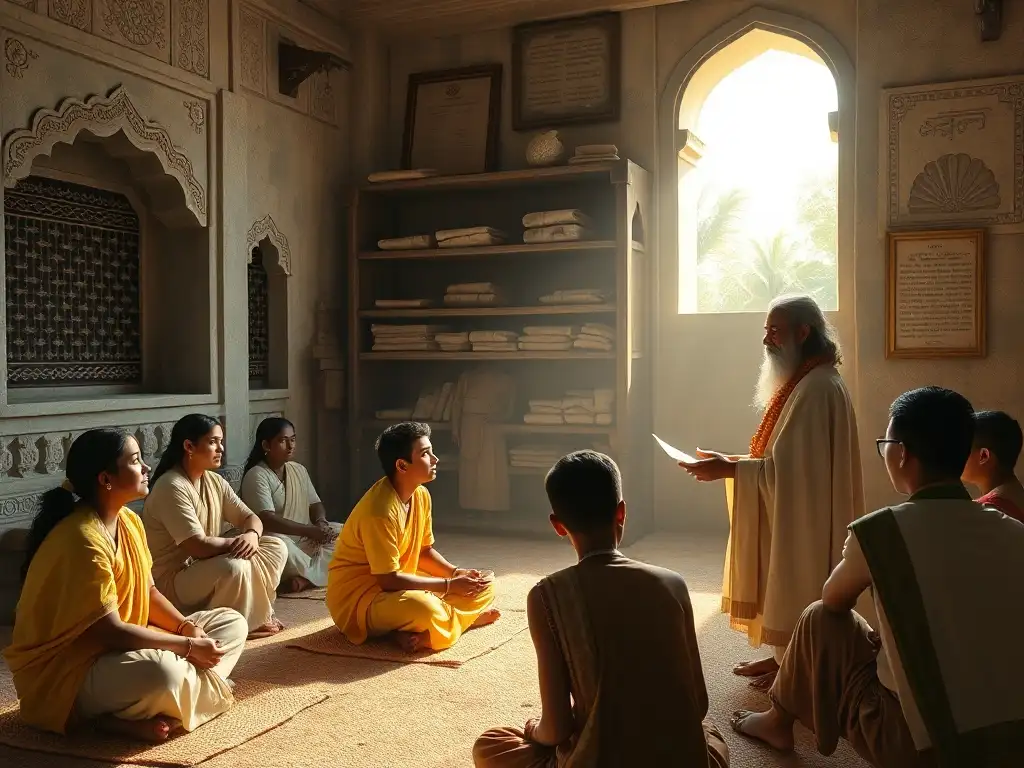
The transition from informal to formal education in ancient Indian society marked a significant evolution in the way knowledge was imparted and acquired. Initially, education in ancient India was predominantly informal, relying on oral tradition, familial teachings, and apprenticeships. Knowledge was passed down through generations, often within the confines of the household or community, focusing on practical skills and cultural values. However, as societies became more complex and interconnected, there arose a necessity for structured systems of learning.
This shift began around the Vedic period (1500 – 500 BCE), where the establishment of the Gurukul system laid the groundwork for formal education. Students, known as 'shishyas', would reside with their 'guru' (teacher) to learn various subjects, including philosophy, mathematics, and the arts.
The formalization of education was driven by the need to preserve religious texts and teachings, leading to the establishment of institutions dedicated to specific fields of study. This period witnessed a gradual transition towards a more organized educational framework, culminating in the sophisticated education systems observed in later periods, such as the Maurya and Gupta empires.
Factors Influencing the Shift to Formal Education
Several key factors influenced the transition from informal to formal education in ancient Indian society:
- Cultural and Religious Needs: The preservation of sacred texts and religious teachings necessitated a more structured approach to education. The Vedas and Upanishads required dedicated scholars to ensure accurate transmission and interpretation.
- Economic Development: As trade and commerce flourished, a literate population became essential for record-keeping and administration. This demand for skilled individuals prompted the establishment of formal educational institutions.
- Social Stratification: The emergence of distinct social classes and castes created a need for specialized education tailored to different societal roles. This stratification facilitated the growth of formal education systems that catered to the diverse needs of society.
- Political Stability: The rise of powerful empires, such as the Mauryas and Guptas, fostered an environment conducive to institutionalized education. These empires invested in the establishment of universities and learning centers, which solidified the transition to formal education.
Development of Educational Institutions
The development of educational institutions was a pivotal aspect of the transition to formal education in ancient India. Notable centers of learning emerged, particularly during the Gupta period (approximately 320 to 550 CE).
- Nalanda University: Established in the 5th century CE, Nalanda became one of the world's first residential universities, attracting scholars from various regions, including China, Korea, and Tibet. It offered a comprehensive curriculum covering subjects like philosophy, medicine, mathematics, and astronomy.
- Takshashila (Taxila): One of the earliest centers of higher learning, Takshashila was known for its diverse curriculum, which included subjects such as warfare, governance, and the arts. It played a crucial role in shaping the educational landscape of ancient India.
- Vikramshila University: Founded in the 8th century CE, Vikramshila focused on Buddhist studies and became an important center for the dissemination of Buddhist philosophy and culture, further highlighting the diversity of educational institutions in ancient India.
These institutions not only served as centers of learning but also as hubs for cultural exchange and intellectual growth, fostering a rich tradition of scholarship that would influence generations to come.
Features of Formal Education in Ancient Indian Society
The formal education system in ancient India was characterized by several distinctive features that shaped the learning experience and the societal role of education.
Curriculum and Subjects Taught
The curriculum of formal education in ancient Indian society was diverse and comprehensive, reflecting the rich intellectual heritage of the time. Key subjects included:
- Vedic Studies: Central to education was the study of the Vedas, which encompassed rituals, philosophy, and ethics.
- Dharma Shastras: These texts provided guidelines on law, morality, and social duties, forming an essential part of the curriculum.
- Mathematics and Astronomy: Ancient Indians made significant contributions to mathematics, including concepts such as zero and decimal systems, as well as advancements in astronomy.
- Arts and Literature: Students were educated in various forms of art, including music, dance, and drama, promoting a holistic approach to education.
- Medicine (Ayurveda): The study of traditional medicine was also an integral part of the curriculum, reflecting the ancient Indian emphasis on health and well-being.
This diverse curriculum not only equipped students with practical skills but also fostered critical thinking and philosophical inquiry.
Role of Teachers (Gurus) in Formal Education
In ancient Indian society, teachers, known as 'gurus', held a revered position and played a crucial role in the educational process. Their responsibilities extended beyond mere instruction; they were seen as mentors and spiritual guides.
- Personalized Instruction: Gurus tailored their teaching methods to the individual needs of students, ensuring that each learner received personalized attention.
- Moral and Ethical Guidance: Education was not solely about academic learning; it also encompassed moral and ethical instruction, with gurus instilling values and virtues in their students.
- Cultural Transmission: Gurus were instrumental in preserving and transmitting cultural heritage, ensuring that traditions, languages, and practices were passed down through generations.
- Community Leaders: Beyond their role as educators, gurus often served as community leaders, contributing to social and spiritual well-being within their communities.
This multifaceted role of the guru underscores the profound respect and significance attributed to education and mentorship in ancient Indian society.
Evaluation and Assessment Methods
The evaluation and assessment methods in ancient Indian education systems were integral to measuring a student's progress and understanding of the material.
- Oral Examinations: One of the primary methods of assessment was through oral examinations, where students demonstrated their knowledge and understanding through discussions and debates.
- Practical Assessments: For subjects like arts, music, and medicine, practical assessments were crucial, allowing students to showcase their skills and application of knowledge.
- Peer Review: Collaborative learning was encouraged, and students often evaluated each other's work, fostering a sense of community and collective growth.
- Guru's Assessment: Ultimately, the guru played a significant role in assessing a student's overall development, considering not only academic performance but also personal growth and ethical conduct.
These methods reflected the holistic approach to education in ancient India, emphasizing not just the acquisition of knowledge but also the development of character and social responsibility.
Impact of Formal Education on Ancient Indian Society
The advent of formal education in ancient Indian society marked a significant turning point that reshaped various aspects of life. Formal education systems, primarily characterized by structured curricula and dedicated institutions, began to emerge around the time of the Vedic period and continued to evolve through subsequent eras. This transition facilitated a more organized dissemination of knowledge, allowing for the preservation of cultural heritage and the advancement of intellectual pursuits.
Formal education fostered a sense of identity and unity within diverse communities, as it provided a common framework for learning that transcended regional differences. It also enabled greater mobility among scholars and students, who traveled across the subcontinent to access renowned centers of learning such as Taxila and Nalanda. As a result, these institutions became melting pots of ideas and innovations, significantly influencing the socio-political landscape of ancient India.
Moreover, formal education played a crucial role in the development of social norms and values, as it was often intertwined with religious teachings and philosophical inquiries. This integration helped cultivate a sense of duty and ethical conduct among learners, which in turn contributed to the stability and cohesion of society.
Social Stratification and Education Access
Social stratification in ancient India, largely defined by the caste system, significantly affected access to formal education. Traditionally, the Brahmins, as the priestly class, held the highest position within the hierarchy and had exclusive access to educational resources. They were the primary custodians of sacred texts and knowledge, imparting education primarily to their own caste members. Consequently, the lower castes, including Shudras and the untouchables, were often denied formal education, leading to a significant disparity in knowledge acquisition.
However, this trend began to shift over time, especially during the Mauryan Empire, when leaders like Ashoka emphasized the importance of education for all. Initiatives were introduced to provide educational opportunities to a broader segment of society, allowing members of various castes to participate in formal learning. This gradual opening up of education contributed to the emergence of a more educated populace and a slow but steady erosion of rigid caste boundaries.
Influence on Culture and Philosophy
Formal education systems in ancient India significantly influenced the development of culture and philosophy. Institutions such as the Gupta-era universities became centers where diverse philosophical schools, including Buddhism, Jainism, and various Hindu doctrines, converged. Students engaged in rigorous debates and discussions, fostering an environment rich in intellectual exchange that propelled philosophical advancements.
The curriculum often encompassed not only religious texts but also secular subjects, including mathematics, astronomy, and literature. This holistic approach to education enabled scholars to contribute substantially to various fields, resulting in a vibrant cultural tapestry that celebrated knowledge and creativity. The philosophical inquiries that emerged from these institutions laid the groundwork for future generations, influencing not only Indian thought but also the broader philosophical discourse across the world.
Contributions to Science and Arts
The formal education systems in ancient India made remarkable contributions to science and the arts, laying the foundation for numerous advancements that are still recognized today. Scholars educated in institutions like Nalanda engaged in substantial research across various disciplines, resulting in groundbreaking works in mathematics, medicine, and astronomy.
For instance, the concept of zero and the decimal system, which originated from ancient Indian mathematicians, were pivotal developments that transformed mathematical practices globally. Similarly, ancient texts such as the "Sushruta Samhita" and "Charaka Samhita" showcased advanced medical knowledge, emphasizing surgical techniques and holistic approaches to health.
In the realm of arts, the formal education system nurtured talents in literature, music, and dance. The patronage of educated rulers led to a flourishing of artistic expression, with notable figures such as Kalidasa contributing timeless literary works that celebrated the human experience. This vibrant cultural heritage continues to influence modern Indian arts and literature.
Comparison of Informal and Formal Education Systems
Key Differences and Similarities
The informal and formal education systems in ancient India exhibited several key differences and similarities. Informal education, often community-based, relied on oral traditions and practical skills passed down through generations. It emphasized experiential learning and was largely accessible to all members of society, regardless of caste, focusing on day-to-day survival skills and cultural values.
In contrast, formal education was structured and institutionalized, typically targeting a select group of individuals, primarily from higher castes. It involved a systematic curriculum that included religious, philosophical, and scientific subjects. Despite these differences, both systems aimed to impart knowledge and values critical for societal cohesion and individual development.
Additionally, both informal and formal education contributed to the preservation of cultural heritage. Informal education ensured the continuity of traditions and practices, while formal education codified and expanded upon this knowledge through written texts and scholarly discourse.
Advantages and Disadvantages of Each System
Both informal and formal education systems had their respective advantages and disadvantages in ancient Indian society.
Advantages of Informal Education:
- Accessibility: Informal education was more widely available, allowing individuals from various backgrounds to learn essential life skills.
- Practical Skills: Focus on experiential learning equipped learners with real-world skills necessary for survival and community participation.
- Cultural Preservation: The oral transmission of knowledge helped maintain cultural traditions and values across generations.
Disadvantages of Informal Education:
- Lack of Structure: The absence of a formalized curriculum could lead to gaps in knowledge and inconsistencies in teachings.
- Limited Scope: Informal education often focused on practical skills, neglecting broader intellectual and philosophical inquiries.
Advantages of Formal Education:
- Structured Learning: Formal education provided a systematic approach to knowledge acquisition, ensuring comprehensive coverage of subjects.
- Intellectual Advancement: Scholars had the opportunity to engage in critical thinking and advanced studies, contributing to significant intellectual developments.
- Cultural Exchange: Formal institutions facilitated interaction among diverse groups, promoting the exchange of ideas and fostering innovation.
Disadvantages of Formal Education:
- Accessibility Issues: Formal education was often restricted to higher castes, leading to social inequalities in knowledge acquisition.
- Rigidity: The structured nature of formal education could stifle creativity and limit the exploration of alternative perspectives.
Both informal and formal education systems played vital roles in shaping ancient Indian society, each contributing uniquely to the collective knowledge and cultural richness of the time.
Conclusion
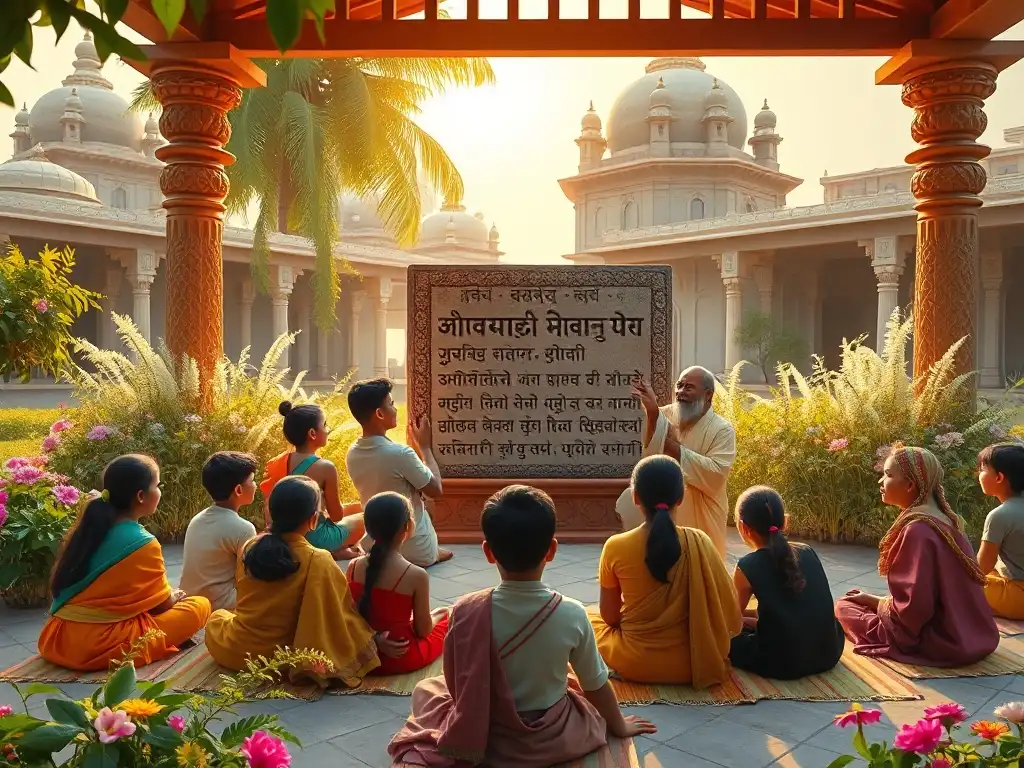
The transition from informal to formal education in ancient Indian society marks a significant evolution in the way knowledge was imparted and preserved. This change not only reflected the growing complexity of society but also the need for systematic teaching methods that could cater to a diverse population. Over the centuries, ancient Indian education systems evolved from oral traditions and informal learning environments to structured educational institutions like the Gurukul and Nalanda, which became renowned centers of learning. This evolution laid the groundwork for a rich intellectual tradition that influenced education systems in various parts of the world.
Summary of the Transition in Ancient Indian Education Systems
The journey from informal to formal education in ancient India can be categorized into several distinct phases. Initially, education was predominantly informal, taking place within family units and community gatherings. Knowledge was passed down orally, focusing on practical skills and cultural values related to daily life. As society progressed, the need for more formalized methods of teaching emerged, leading to the establishment of structured education systems.
- Informal Education: In the early stages, education was largely unstructured, relying on oral transmission. Families and local communities played a vital role in educating children about agriculture, crafts, and ethics.
- Emergence of Gurukuls: With the rise of the Vedic period, Gurukuls became prominent. These were residential schools where students lived with their teachers (gurus) and received instruction in various subjects such as philosophy, mathematics, astronomy, and arts. This marked the beginning of a more organized approach to education.
- Formation of Universities: By the time of the Gupta Empire, centers like Nalanda and Takshashila had evolved into formal universities that attracted scholars from all over the world. These institutions offered specialized courses and fostered critical thinking, making education more accessible and systematic.
Lasting Legacy of Ancient Indian Educational Practices
The educational practices of ancient India have left an indelible mark on the contemporary educational landscape. The focus on holistic development, including moral, physical, and intellectual growth, remains relevant today. Key contributions include:
- Curriculum Design: The ancient emphasis on a diverse curriculum that included arts, sciences, and philosophy serves as a blueprint for modern interdisciplinary studies.
- Pedagogical Approaches: The Gurukul model influenced the teacher-student relationship, fostering mentorship and personalized learning, elements that continue to be valued in modern education.
- Cultural Integration: Ancient Indian education systems integrated cultural values with academic learning, a principle that continues to resonate in many educational frameworks worldwide.
References
Suggested Readings on Ancient Indian Education Systems
- Ranjan, A. (2012). The Gurukul System of Education in Ancient India. New Delhi: Academic Publishers.
- Sharma, R. (2015). Nalanda: The Ancient University of India. New Delhi: Historical Society Publications.
- Gupta, S. (2018). Education in Ancient India: A Historical Perspective. Varanasi: Indian Heritage Press.
Academic Sources and Research Articles
- Desai, J. (2020). "The Role of Gurukuls in Shaping Ancient Indian Education." Journal of Educational History, 15(3), 245-260.
- Kapoor, M. (2019). "Formalization of Education in Ancient India: A Transition from Informal Learning." International Journal of Historical Studies, 22(1), 101-118.
- Mehta, P. (2021). "Ancient Indian Universities: A Study of Nalanda and Takshashila." Journal of Indian Education and Society, 10(4), 67-80.
- Introduction to Ancient Indian Education Systems
- Overview of Education in Ancient India
- Importance of Education in Ancient Indian Society
- Informal Education in Ancient India
- Transition to Formal Education
- Features of Formal Education in Ancient Indian Society
- Impact of Formal Education on Ancient Indian Society
- Comparison of Informal and Formal Education Systems
- Conclusion
- Summary of the Transition in Ancient Indian Education Systems
- Lasting Legacy of Ancient Indian Educational Practices
- References
- What were the primary features of ancient Indian education systems?
- How did the Indus Valley Civilization contribute to education?
- What role did Brahmanical schools play in ancient Indian education?
- How did the Gupta Empire influence educational practices?
- What was the transition from informal to formal education in ancient India?
Frequently Asked Questions
What were the primary features of ancient Indian education systems?
Ancient Indian education systems were characterized by informal learning, emphasizing oral traditions and mentorship through Gurukuls, where students learned vocational and spiritual subjects.
How did the Indus Valley Civilization contribute to education?
The Indus Valley Civilization laid the foundations for structured learning, with evidence of advanced urban planning and trade, suggesting a need for knowledge transmission in various sectors like architecture and commerce.
What role did Brahmanical schools play in ancient Indian education?
Brahmanical schools were pivotal in the formal education system, focusing on scriptures, philosophy, and ritualistic practices, significantly shaping the intellectual landscape of ancient India.
How did the Gupta Empire influence educational practices?
The Gupta Empire marked a golden age in education, promoting higher learning in universities like Nalanda, fostering subjects such as mathematics, astronomy, and medicine, which attracted scholars from across the globe.
What was the transition from informal to formal education in ancient India?
The transition involved a shift from community-based learning to institutionalized education, with the establishment of formal schools and universities, allowing for a more systematic approach to knowledge acquisition and dissemination.
Final Reflection: The Enduring Legacy of Ancient Indian Education Systems
The transition from informal to formal education in ancient Indian society is not just a historical shift; it is a profound testament to the evolution of knowledge and learning that resonates with our current educational landscape. As we navigate the complexities of modern education, the foundational principles established in ancient Indian education systems remind us of the importance of holistic learning, community involvement, and the pursuit of wisdom beyond mere academic achievement.
The influence of ancient Indian education systems continues to shape our cultural and social frameworks today, emphasizing the value of mentorship, experiential learning, and the integration of ethics into education. The Gurukul system, where knowledge was imparted through personal relationships and practical experiences, serves as a model for contemporary educational practices that prioritize student engagement and moral development. Education is the most powerful weapon which you can use to change the world.
– Nelson Mandela. This quote encapsulates the transformative power of education, echoing the sentiments of ancient Indian scholars who believed in the potential of education to uplift individuals and society as a whole.
As we reflect on the lessons from ancient Indian education systems, let us embrace the call to cultivate a learning environment that values curiosity, creativity, and character. I invite you to consider how you can incorporate these timeless principles into your own educational journey or community initiatives. Whether through mentorship, fostering collaborative learning spaces, or prioritizing ethical considerations in education, we all have the power to contribute to a more enlightened and compassionate society, just as the sages of ancient India envisioned.
Embrace the Wisdom of Ancient Education!
Thank you for diving into the fascinating journey of education in ancient Indian society! You've just explored the rich transition from informal teachings to structured learning systems. Now, let’s harness that knowledge and take meaningful action.
Here’s how you can deepen your understanding and connect with this incredible history:
- Explore further: Visit our related articles to uncover more about ancient teaching methods and their impact on contemporary education.
- Share your insights: Discuss what you’ve learned with friends or in online forums. Consider how this historical transition resonates with today’s educational landscape.
- Join the conversation: Connect with fellow history enthusiasts on our platform and share your thoughts on how ancient practices can influence modern learning.
What aspect of ancient education do you find most inspiring, and how do you think it can shape our future?