
The Influence of Ancient Indian Universities on Buddhist Education

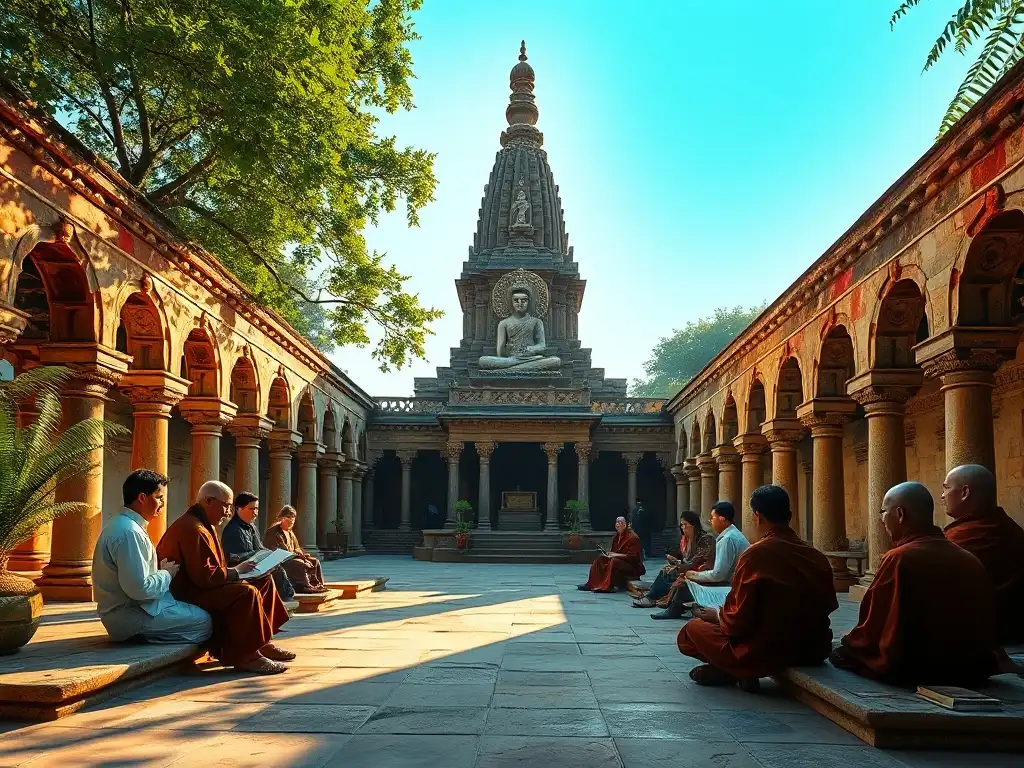
Welcome to Ancient India History, where we embark on a fascinating journey through the rich tapestry of India's past. Here, we delve deep into the influence of ancient Indian universities on Buddhist education, uncovering how these centers of learning shaped not only spiritual thought but also the very fabric of society. What innovations and teachings emerged from these hallowed halls? Join us as we explore the remarkable contributions of ancient civilizations and discover the profound impact they continue to have on education today. Prepare to be captivated by stories that bridge the past and the present!

Introduction to Ancient Indian Universities and Buddhism
The rich tapestry of ancient Indian history is intricately woven with the threads of education and religion, particularly through the lens of Buddhism. Ancient Indian universities, such as Nalanda and Taxila, played a pivotal role in shaping Buddhist education and philosophy, serving as hubs of learning and intellectual discourse.
These institutions not only facilitated the dissemination of Buddhist teachings but also fostered a vibrant cultural and scholarly environment that attracted students from across Asia. In this article, we will explore the profound influence of ancient Indian universities on Buddhist education, examining their historical significance and the enduring legacy they left behind.
Overview of Ancient Indian Universities
- Key Institutions:
- Nalanda: Established in the 5th century CE, Nalanda was renowned for its comprehensive curriculum, which included subjects such as philosophy, mathematics, and medicine. It became a prominent center for Buddhist studies, attracting scholars from various regions.
- Taxila: Another significant university, Taxila, dates back to the 6th century BCE. It offered a diverse range of educational programs and is often credited with laying the groundwork for higher education in ancient India.
- Educational Structure:
- Ancient Indian universities operated on a system of guru-shishya (teacher-student) relationships, emphasizing personal mentorship and rigorous academic discipline.
- Students were often required to engage in debates and discussions, fostering critical thinking and a deep understanding of Buddhist texts.
- Cultural Exchange:
- These institutions became melting pots of culture, where diverse ideas and traditions converged. Scholars from different backgrounds contributed to the rich intellectual environment, influencing the evolution of Buddhist thought.
The Role of Buddhist Education in Ancient India
Buddhism, emerging in the 6th century BCE, profoundly influenced the educational landscape of ancient India. As a religion that values knowledge and wisdom, Buddhism emphasized the importance of education in achieving enlightenment. The establishment of universities was a natural progression in this pursuit, offering structured environments for the study of Buddhist philosophy.
- Curriculum Focus: Buddhist education at ancient universities encompassed:
- Philosophy and Ethics: Core principles of Buddhist thought were explored, including concepts of karma, dharma, and the nature of reality.
- Monastic Training: Monks underwent rigorous training in various disciplines, preparing them to spread Buddhist teachings across Asia.
- Impact on Society:
- The universities not only educated monks but also laypeople, contributing to the broader dissemination of Buddhist values and practices throughout ancient Indian society.
Historical Context of Ancient Indian Universities
Emergence of Universities like Nalanda and Taxila
The rise of ancient Indian universities can be traced back to the flourishing of trade and cultural exchange in the region. As commerce expanded, so did the need for educated individuals who could navigate complex philosophical and theological discussions.
- Nalanda:
- With royal patronage from emperors like Harsha, Nalanda developed into a prestigious institution, attracting thousands of students and scholars.
- Taxila:
- Taxila’s strategic location along trade routes facilitated the influx of diverse cultural influences, enhancing its reputation as a center of learning.
The Cultural and Religious Climate of Ancient India
The cultural and religious milieu of ancient India was characterized by pluralism and tolerance. The coexistence of various religious traditions, including Hinduism, Jainism, and Buddhism, created a fertile ground for intellectual exploration.
- Syncretism: The interaction between different faiths led to a synthesis of ideas, enriching Buddhist education through the incorporation of various philosophical perspectives.
- Patronage and Support:
- Wealthy merchants and rulers often supported educational institutions, recognizing their role in promoting cultural and religious discourse, which ultimately benefitted Buddhist scholarship.
The influence of ancient Indian universities on Buddhist education is a testament to the significant role these institutions played in shaping the intellectual and spiritual landscape of the time. Their legacy continues to resonate in contemporary discussions about education and the dissemination of knowledge.
The Curriculum of Ancient Indian Universities
The curriculum of ancient Indian universities, particularly those renowned for their contributions to Buddhist education, was vast and comprehensive. These institutions did not merely focus on religious instruction; instead, they offered a multidisciplinary approach that included various subjects and disciplines. The structure of the curriculum at universities such as Nalanda and Vikramashila reflected this diversity and complexity, allowing students to engage deeply with both philosophical and practical aspects of knowledge.
Subjects and Disciplines Taught
Ancient Indian universities provided a rich tapestry of subjects that catered to a wide range of intellectual pursuits. The curriculum typically included:
- Philosophy: Central to Buddhist education, philosophy encompassed the study of metaphysics, epistemology, and ethics, allowing students to explore the nature of reality, knowledge, and moral conduct.
- Logic: This discipline was crucial for developing critical thinking skills. Students studied various forms of reasoning, including syllogisms and debates, which were essential for engaging with philosophical texts.
- Language and Literature: Mastery of languages such as Sanskrit and Pali was pivotal for reading and interpreting sacred texts. Literary studies also included poetry and prose, fostering a rich appreciation for cultural heritage.
- Medicine: Practical knowledge of health and healing was included in the curriculum, reflecting the holistic approach to education that ancient Indian institutions espoused.
- Mathematics and Astronomy: These subjects were essential for scientific advancements and were often intertwined with philosophical inquiries into the cosmos and existence.
This diverse curriculum ensured that students emerged not just as scholars of Buddhism but as well-rounded individuals capable of contributing to various fields of knowledge.
The Integration of Buddhist Philosophy in the Curriculum
Buddhist philosophy was not merely an isolated subject; it was intricately woven into the fabric of the entire curriculum at ancient Indian universities. The teachings of the Buddha, focusing on concepts such as the Four Noble Truths and the Eightfold Path, served as foundational principles guiding the academic discourse.
- Interdisciplinary Approach: Many subjects were taught with an emphasis on their Buddhist implications. For instance, in the study of ethics, the moral precepts of Buddhism were integrated into discussions about justice and human behavior.
- Critical Inquiry: Students were encouraged to question and analyze Buddhist texts critically, leading to a deeper understanding of the philosophical underpinnings of Buddhism and its practical applications in daily life.
- Debate and Discussion: Formal debates were a hallmark of the educational experience, where students engaged in discussions that not only tested their knowledge but also fostered a deeper appreciation for differing interpretations of Buddhist doctrines.
Through this integration, ancient Indian universities became vibrant centers of Buddhist thought, significantly influencing the spread and evolution of Buddhist education across Asia.
Influential Figures in Buddhist Education at Ancient Indian Universities
The impact of ancient Indian universities on Buddhist education was profoundly shaped by influential figures who dedicated their lives to teaching and scholarship. These scholars and monks played crucial roles in developing and disseminating Buddhist thought, both in India and beyond.
Prominent Scholars and Monks
Several prominent figures stand out in the history of Buddhist education within ancient Indian universities. Notable among them are:
- Bodhidharma: Often regarded as the founder of Zen Buddhism, Bodhidharma is credited with bringing the principles of meditation and mindfulness to the forefront of Buddhist practice.
- Vasubandhu: A key figure in the development of the Yogacara school of Buddhism, Vasubandhu's writings on consciousness and perception significantly influenced later Buddhist philosophy.
- Dharmakirti: Renowned for his contributions to Buddhist logic and epistemology, Dharmakirti's work helped lay the groundwork for critical inquiry within Buddhist studies.
These individuals not only contributed to the academic landscape of ancient Indian universities but also inspired countless students and future scholars.
Contributions of Figures like Nagarjuna and Asanga
Two of the most influential figures in the context of ancient Indian universities and Buddhism are Nagarjuna and Asanga. Their contributions are paramount in shaping Buddhist philosophy and education.
- Nagarjuna: Often hailed as the "second Buddha," Nagarjuna's development of the concept of "emptiness" (śūnyatā) revolutionized Buddhist thought. His works, particularly the Mūlamadhyamakakārikā, emphasized the importance of understanding the nature of reality and the middle path, which became central themes in Buddhist education.
- Asanga: A pivotal figure in the Yogacara school, Asanga's teachings focused on the nature of consciousness and the role of perception in shaping human experience. His texts, such as the Yogācārabhūmi, were integral to the Buddhist curriculum, emphasizing practical methods for achieving enlightenment.
The legacies of Nagarjuna and Asanga continue to resonate within Buddhist education, highlighting the enduring influence of ancient Indian universities on the development of Buddhist thought and practice. Their teachings remain vital to understanding the complexity and richness of Buddhism as it evolved across different cultures and epochs.
The Relationship Between Buddhism and Educational Systems

The relationship between Buddhism and educational systems in ancient India is deeply intertwined, reflecting a symbiotic evolution that shaped both the religion and the learning institutions of the time. Buddhism emerged in the 5th century BCE as a reformist religious movement, advocating for a path of enlightenment through knowledge, ethical conduct, and meditation. This philosophical foundation laid the groundwork for the establishment of educational systems that would not only support religious training but also foster a broader intellectual discourse.
As Buddhism spread across the Indian subcontinent, it became clear that education was essential for the transmission of its teachings. Monasteries and vihara (Buddhist monasteries) became centers of learning, where monks engaged in rigorous studies of Buddhist texts, philosophy, and the sciences. This integration of education and spiritual practice helped Buddhism build a structured educational framework, which was pivotal in shaping the curricula of ancient Indian universities, such as Nalanda and Vikramashila.
How Buddhism Shaped Educational Practices
Buddhism significantly influenced educational practices in ancient India by promoting inquiry, discussion, and critical thinking. Unlike many contemporary educational systems that emphasized rote learning, Buddhist education encouraged debates and dialogues among students. This pedagogical approach was rooted in the Sutras, which emphasized the importance of understanding and interpreting teachings through discussion and personal reflection.
Monastic universities adopted a curriculum that included subjects such as logic, grammar, medicine, and philosophy, alongside Buddhist texts. This holistic approach to education was designed to cultivate both the mind and spirit, placing equal importance on ethical behavior and knowledge. Furthermore, the notion of Dharma (moral law) encouraged students to apply their learning in practical contexts, fostering a sense of responsibility towards society.
Influence on Teaching Methodologies and Pedagogies
The teaching methodologies employed in ancient Indian universities reflected Buddhist principles, emphasizing experiential learning and mentorship. Senior monks often acted as teachers, guiding students through complex texts and philosophical concepts. This guru-shishya (teacher-student) relationship was central to the educational experience, promoting deep, personal engagement with the material.
Moreover, the use of case studies and real-life applications in teaching allowed students to contextualize their learning within the framework of Buddhist ethics and philosophy. This focus on practical application not only enriched the academic experience but also ensured that Buddhist teachings remained relevant to the students’ lives and societal roles.
The Impact of Ancient Indian Universities on Buddhist Monastic Education
The establishment of ancient Indian universities had a profound impact on Buddhist monastic education, leading to the development of sophisticated educational structures that fostered the growth of Buddhist scholarship. These universities served as hubs of knowledge, where monks from various regions gathered to study, debate, and disseminate Buddhist teachings.
Development of Monastic Universities
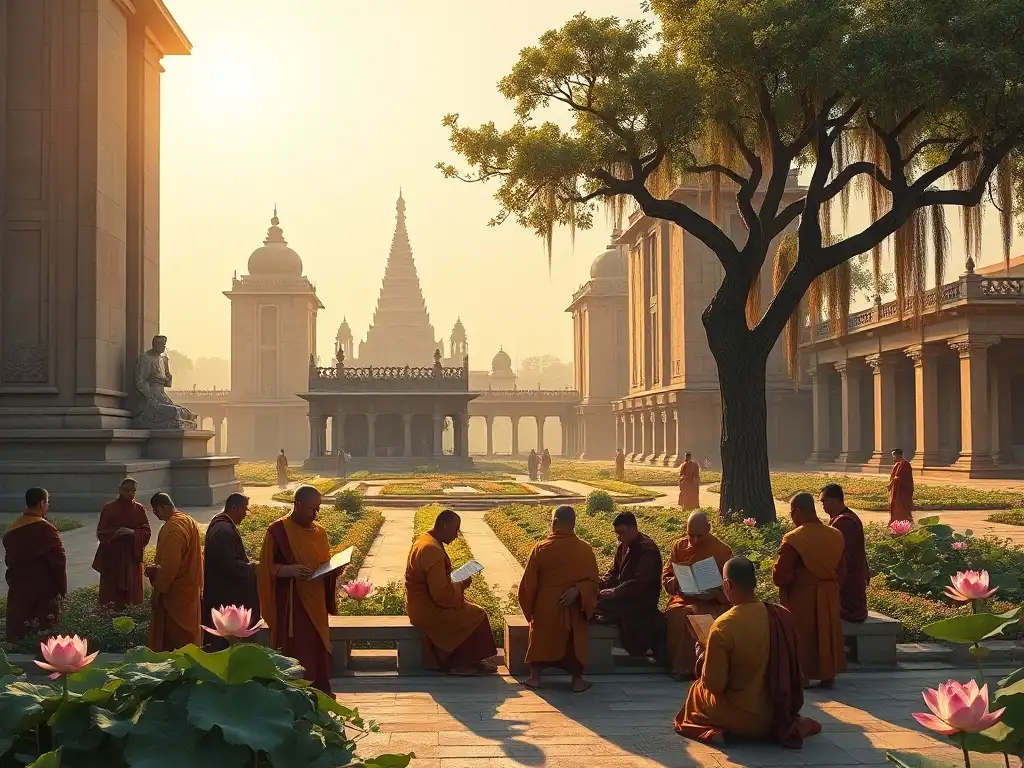
Monastic universities like Nalanda and Vikramashila were pioneering institutions that offered comprehensive education in Buddhist philosophy, logic, and the arts. They attracted scholars from across Asia, including China, Tibet, and Central Asia, creating a vibrant intellectual community. The curriculum was rigorous and expansive, encompassing not only Buddhism but also subjects such as mathematics, astronomy, and medicine.
These universities played a crucial role in the formalization of Buddhist education, standardizing teachings and practices that would influence Buddhist communities for centuries. The physical layout of these institutions facilitated community living, where education, meditation, and communal activities were seamlessly integrated.
Role of Monasteries in Preserving Buddhist Teachings
Monasteries acted as custodians of Buddhist teachings, preserving texts and commentaries through meticulous copying and transcription. Many ancient manuscripts were produced in these monastic settings, ensuring the survival of Buddhist knowledge through turbulent historical periods.
The monks’ commitment to scholarship and the transmission of knowledge was paramount. They not only studied but also engaged in the translation of texts into various languages, thereby expanding the reach of Buddhist teachings beyond India. This role of monasteries as educational and cultural centers was instrumental in the propagation of Buddhism throughout Asia, influencing diverse cultures and societies along the way.
The influence of ancient Indian universities on Buddhist education is a testament to the dynamic interplay between religion and education, resulting in a robust system that fostered intellectual growth and spiritual development.
Legacy of Ancient Indian Universities in the Spread of Buddhism
Ancient Indian universities, particularly Nalanda and Vikramashila, played a pivotal role in the dissemination of Buddhist teachings and philosophy. Established as centers of higher learning, they attracted students from various regions, including Tibet, Mongolia, China, Korea, and Southeast Asia. This influx of scholars not only facilitated the exchange of ideas but also ensured that Buddhist teachings were preserved and propagated across vast distances.
The curriculum in these universities was comprehensive, covering subjects like philosophy, logic, medicine, and linguistics, all intertwined with Buddhist doctrines. The presence of esteemed scholars, such as Nagarjuna and Dharmakirti, further solidified their reputation as leading institutions of Buddhist education. Their teachings were instrumental in shaping the understanding of Buddhist concepts, which were then disseminated through the students who traveled back to their homelands, effectively creating a network of Buddhist learning that spanned continents.
Influence on Buddhist Education in Other Regions

The influence of ancient Indian universities on Buddhist education extended far beyond Indian borders. As students returned home, they carried with them not only texts but also the methodologies of teaching and debate that characterized these institutions. For example, Tibetan Buddhism was significantly shaped by the teachings of Indian scholars like Atisha, who traveled to Tibet to introduce the Buddhist curriculum he had mastered at Nalanda.
In China, the introduction of Chan Buddhism (known as Zen in Japan) was heavily influenced by the principles taught in Indian universities. The emphasis on meditation and direct experience found in these teachings resonated with the philosophical traditions of Chinese culture, leading to a unique form of Buddhism that integrated these elements. Similarly, in Southeast Asia, the spread of Theravada Buddhism was facilitated by scholars who had studied at these ancient centers, leading to the establishment of monasteries and educational institutions that mirrored their Indian counterparts.
The Role of Trade Routes in Cultural Exchange
The Silk Road and other trade routes played a crucial role in the cultural exchange between India and its neighboring regions, enabling the transmission of Buddhist philosophies and practices. These routes facilitated not only the movement of goods but also the movement of people, ideas, and texts. Merchants, pilgrims, and scholars traveled along these paths, often stopping at ancient universities to learn and exchange knowledge.
For instance, the trade route that connected India to Central Asia and China acted as a conduit for Buddhist monks who sought to spread their teachings. The establishment of monasteries along these routes allowed for the creation of a network of learning that fostered intercultural dialogue. This exchange was not limited to Buddhism alone; it also included elements of art, science, and philosophy, enriching the cultural fabric of societies across Asia.
Conclusion
Summary of the Influence of Ancient Indian Universities on Buddhism
The legacy of ancient Indian universities in the spread of Buddhism is profound and multi-faceted. By serving as centers of higher learning, they not only educated countless scholars but also facilitated the exchange of ideas that enriched Buddhist thought. The teachings imparted in these institutions resonated across regions, influencing the development of Buddhist education in Tibet, China, and Southeast Asia, thereby embedding Buddhism deeply within the cultural and educational systems of these societies.
Reflection on the Lasting Impact on Modern Education Systems
The impact of ancient Indian universities extends into modern educational frameworks, particularly in how knowledge is transmitted and debated. The methodologies developed in these institutions—emphasizing critical thinking, dialogue, and holistic education—continue to inspire contemporary educational models. As we reflect on the rich history of ancient Indian universities, we recognize their role not only in the propagation of Buddhism but also in shaping a legacy of educational excellence that persists in various forms today. The principles of intercultural exchange and the quest for knowledge remain as relevant now as they were during the height of these ancient centers of learning.
- Introduction to Ancient Indian Universities and Buddhism
- Historical Context of Ancient Indian Universities
- The Curriculum of Ancient Indian Universities
- Influential Figures in Buddhist Education at Ancient Indian Universities
- The Relationship Between Buddhism and Educational Systems
- How Buddhism Shaped Educational Practices
- Influence on Teaching Methodologies and Pedagogies
- The Impact of Ancient Indian Universities on Buddhist Monastic Education
- Development of Monastic Universities
- Role of Monasteries in Preserving Buddhist Teachings
- Legacy of Ancient Indian Universities in the Spread of Buddhism
- Influence on Buddhist Education in Other Regions
- The Role of Trade Routes in Cultural Exchange
- Conclusion
Frequently Asked Questions
What were the main ancient Indian universities?
The most prominent ancient Indian universities included Nalanda, Taxila, and Vikramashila. They were centers of higher learning and attracted students from across Asia.
How did ancient Indian universities influence Buddhism?
Ancient Indian universities played a crucial role in the dissemination of Buddhist teachings. They provided a structured environment for scholarly debate and study, helping to spread Buddhist philosophy.
What subjects were taught at these universities?
Subjects at ancient Indian universities included philosophy, medicine, astronomy, and Buddhism. This diverse curriculum contributed to a holistic education that emphasized critical thinking.
How did Buddhism contribute to the development of these universities?
Buddhism encouraged the establishment of universities as centers of knowledge and learning. Monasteries often served as educational institutions, promoting the study of Buddhist texts.
What legacy did ancient Indian universities leave on modern education?
Ancient Indian universities established a foundation for higher education and academic freedom. Their influence is seen in the structure and curriculum of modern universities worldwide.
Final Reflection: The Enduring Legacy of Ancient Indian Universities on Buddhism
The influence of ancient Indian universities on Buddhist education remains profoundly relevant today, as they laid the groundwork for the dissemination of knowledge and spiritual wisdom across cultures. The remarkable institutions of learning, such as Nalanda and Takshashila, not only nurtured scholars and monks but also served as vibrant centers of intellectual exchange that transcended geographical boundaries. In an era where education is more accessible than ever, the foundational principles established by these ancient universities remind us of the importance of fostering an inclusive and diverse learning environment.
The impact of these ancient institutions continues to resonate in our cultural and social landscapes, shaping the way we perceive education and spirituality. The teachings and philosophies that emerged from these universities have influenced countless generations, creating a rich tapestry of thought that still informs contemporary Buddhist practices and educational systems. As the Dalai Lama once said, The purpose of our lives is to be happy.
This pursuit of happiness, rooted in wisdom and compassion, echoes the teachings of ancient scholars and serves as a guiding principle for many today.
As we reflect on the lessons imparted by ancient Indian universities, let us consider how we can incorporate their values into our own lives. Embrace the spirit of inquiry, compassion, and collaboration that characterized these institutions, and strive to create spaces where knowledge can flourish and diverse perspectives are celebrated. In doing so, we honor the legacy of those who came before us and contribute to a brighter, more enlightened future for all.
Unveil the Wisdom of Ancient Learning!
Thank you for diving deep into the rich history of ancient Indian universities and their profound impact on Buddhist education. You've just explored how these institutions not only shaped spiritual teachings but also fostered a culture of knowledge and enlightenment. Now it's time to take action and further immerse yourself in this fascinating journey!
Here are a few ways you can continue your exploration:
- Join a local or online discussion group focused on the philosophies of Buddhism and ancient Indian education. Engaging with others can deepen your understanding and expand your perspective.
- Read books or watch documentaries about influential figures in Buddhism and renowned institutions like Nalanda University to gain further insights into their timeless teachings.
- Share this article with friends or family who may be interested in ancient cultures and education, and initiate a conversation about its relevance today.
What aspect of ancient Indian education resonates with you the most, and how can you incorporate that wisdom into your daily life?