
Ancient Indian Scripts: A Linguistic Treasure Trove Awaiting Discovery

Welcome to Ancient India History, where we embark on a journey through time to uncover the rich tapestry of civilizations that shaped the Indian subcontinent. In our featured article, "Ancient Indian Scripts: A Linguistic Treasure Trove Awaiting Discovery," we delve into the fascinating world of ancient Indian scripts history, revealing the intricate symbols and stories that have survived through millennia. Prepare to be captivated as we explore how these scripts not only document the past but also illuminate the vibrant culture and wisdom of ancient India. Dive in and uncover the secrets that await!
- Introduction to Ancient Indian Scripts History
- The Origins of Ancient Indian Scripts
- Major Ancient Indian Scripts and Their Features
- The Linguistic Diversity in Ancient Indian Scripts
- Deciphering Ancient Indian Scripts: Challenges and Methods
- The Cultural Impact of Ancient Indian Scripts
- Modern Relevance of Ancient Indian Scripts
- Conclusion: The Treasure Trove of Ancient Indian Scripts
- Frequently Asked Questions
- Final Reflection: Unveiling the Rich Tapestry of Ancient Indian Scripts
- Unveil the Secrets of Ancient Indian Scripts!
Introduction to Ancient Indian Scripts History
Ancient Indian scripts represent a fascinating and complex tapestry of linguistic evolution and cultural expression that has played a significant role in shaping the history of the subcontinent. From the early symbols of the Indus Valley Civilization to the sophisticated scripts of the Gupta Empire, these ancient writings offer invaluable insights into the social, religious, and economic aspects of various Indian civilizations.
As we delve into the history of ancient Indian scripts, we uncover a treasure trove of knowledge that not only reflects the ingenuity of early Indian scholars but also highlights the interconnectedness of languages and cultures across time and space. This exploration is crucial for understanding the profound contributions of ancient India to the global narrative of written communication.
Overview of Ancient Indian Scripts and Their Significance
Ancient Indian scripts encompass a variety of writing systems that emerged over millennia, each with its unique characteristics and historical context. Some of the most notable scripts include:
- Indus Script: The earliest known writing system in India, found in the ruins of the Indus Valley Civilization (circa 2600-1900 BCE), characterized by its undeciphered symbols.
- Brahmi Script: Emerging around the 3rd century BCE, this script is considered the ancestor of most Indian scripts and significantly influenced the development of writing in Southeast Asia.
- Kharosthi Script: Used primarily in the northwest regions of ancient India, Kharosthi was a contemporary of Brahmi and played a crucial role in the spread of Buddhism through its inscriptions.
These scripts are not merely tools for communication; they are vital artifacts that provide information about ancient Indian society, including its governance, trade, religion, and daily life. The inscriptions found on monuments, coins, and pottery serve as primary sources for historians and linguists alike, revealing the linguistic diversity and cultural richness of ancient India.
Purpose of Exploring Ancient Indian Scripts
The exploration of ancient Indian scripts serves several important purposes:
- Deciphering Historical Context: Understanding the scripts allows historians to reconstruct the events, beliefs, and practices of ancient Indian civilizations, offering a glimpse into their way of life.
- Linguistic Evolution: By studying these scripts, linguists can trace the evolution of language in the Indian subcontinent, shedding light on the relationships between various languages and dialects.
- Cultural Heritage Preservation: Engaging with ancient scripts fosters a deeper appreciation of India's cultural heritage, encouraging efforts to preserve and promote these historical treasures.
- Interdisciplinary Insights: The study of ancient scripts intersects with archaeology, anthropology, and art history, providing a comprehensive understanding of the multifaceted nature of ancient Indian civilizations.
The journey into the history of ancient Indian scripts is not just an academic pursuit; it is a vital endeavor that enriches our understanding of human civilization itself. As we continue to uncover and decipher these scripts, we unlock the stories and knowledge of a remarkable past that continues to resonate in contemporary India.
The Origins of Ancient Indian Scripts
Ancient Indian scripts represent a fascinating aspect of the subcontinent's rich linguistic heritage. From the early inscriptions etched into stone to the sophisticated scripts used in later periods, these writing systems reveal not only the evolution of language but also the socio-cultural dynamics of ancient Indian civilizations. The history of ancient Indian scripts is marked by various influences, innovations, and adaptations that reflect the diverse cultural tapestry of the region.
Early Writing Systems in Ancient India
The earliest known writing system in India can be traced back to the Indus Valley Civilization (circa 3300-1300 BCE). The script used by the inhabitants of this civilization, often referred to as the Indus Script, remains largely undeciphered, sparking considerable debate among scholars.
- Characteristics of the Indus Script:
- Composed of around 400 distinct symbols, often inscribed on seals and pottery.
- Typically written in a right-to-left direction.
- The symbols appear to be a mix of pictographic and abstract forms, indicating a complex system of communication.
The continuity of writing systems in ancient India can be observed in the subsequent Vedic period, where early forms of writing are believed to have been in use, although no direct evidence exists. The Brahmi and Kharosthi scripts emerged around the 3rd century BCE, marking a significant advancement in the history of ancient Indian scripts.
- Brahmi Script:
- Considered the progenitor of most Indian scripts.
- Predominantly used for writing Sanskrit and Prakrit languages.
- Characterized by its phonetic nature, making it easier to represent the sounds of spoken languages.
- Kharosthi Script:
- Primarily used in the Gandhara region (present-day Pakistan and Afghanistan).
- Influenced by Aramaic script, indicating cultural exchanges along trade routes.
- Utilized for writing Buddhist texts, thus playing a vital role in the dissemination of Buddhist teachings.
These early scripts laid the foundation for the development of numerous regional scripts in later centuries, showcasing the adaptability and evolution of written communication in ancient India.
Influence of the Indus Valley Civilization on Scripts
The Indus Valley Civilization had a profound impact on the subsequent development of writing systems in the Indian subcontinent. While the Indus Script itself has not been deciphered, its remnants provide valuable insights into early forms of communication and the cultural milieu of the time.
- Cultural Exchange:
- The trade networks established by the Indus Valley people likely facilitated cultural exchanges that influenced later writing systems. Artifacts from the Indus Valley have been found as far as Mesopotamia, suggesting that writing may have played a role in trade and diplomacy.
- Symbolic Representations:
- The use of symbols in the Indus Script may have inspired the creation of symbols in later scripts. The Brahmi script, for example, shows a remarkable evolution in the representation of sounds and ideas, possibly influenced by earlier pictographic systems.
- Religious Significance:
- Many scholars suggest that the religious practices of the Indus Valley people, evidenced by seals depicting deities and ritualistic motifs, may have contributed to the development of iconography in later scripts, particularly in Buddhist and Jain traditions.
The origins of ancient Indian scripts are deeply intertwined with the cultural, religious, and economic practices of early civilizations. The influence of the Indus Valley Civilization on subsequent writing systems highlights the continuity and adaptation of linguistic practices in ancient India, paving the way for a rich tradition of written communication that continues to be explored and understood today.
Major Ancient Indian Scripts and Their Features
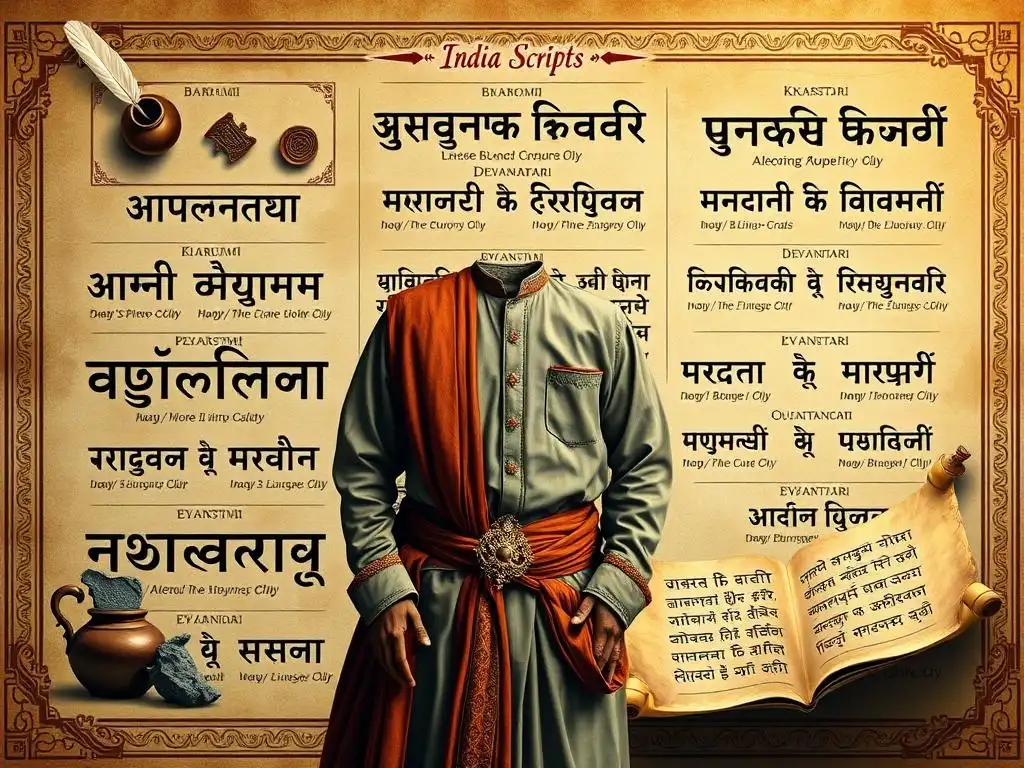
Brahmi Script: The Foundation of Indian Writing
Brahmi script is often regarded as the cornerstone of ancient Indian writing, with its origins dating back to the 3rd century BCE. This script served as a precursor to many modern Indian scripts, making it a pivotal element in the history of ancient Indian scripts.
The Brahmi script is characterized by its abugida nature, where each character represents a consonant with an inherent vowel sound. This feature allows for a systematic representation of syllables, which was innovative for its time. The script consists of 41 basic characters, including consonants and vowels, and it is written from left to right.
Key Features of Brahmi Script:
- Visual Characteristics: Brahmi is known for its distinctive rounded shapes and lines. The characters are generally angular and have a flowing aesthetic.
- Evolution: Over the centuries, Brahmi evolved into various regional scripts, influencing the development of scripts such as Devanagari, Telugu, and Kannada.
- Historical Significance: It was used in numerous inscriptions, including the famous edicts of Emperor Ashoka, which spread Buddhist teachings across the Indian subcontinent.
This script not only represents a significant advancement in written communication but also offers insights into the political and social structures of ancient Indian civilizations.
Kharosthi Script: The Role in Trade and Administration
Kharosthi script, contemporary with Brahmi, emerged around the same time in the northwestern regions of the Indian subcontinent. It played a crucial role in the administration and commerce of ancient Indian kingdoms, particularly during the Maurya and Kushan empires.
This script is unique in its abjad structure, meaning it primarily represents consonants, with vowels often inferred. Kharosthi is written from right to left, which is atypical among ancient scripts of India.
Key Features of Kharosthi Script:
- Trade and Commerce: Kharosthi was widely used in trade documents, coin inscriptions, and administrative records, facilitating communication across vast trade networks with Central Asia and beyond.
- Cultural Exchange: The script reflects the cultural interactions between India and other civilizations, particularly the Hellenistic world, as it borrowed certain stylistic elements.
- Decipherment Challenges: While Kharosthi inscriptions are fewer compared to Brahmi, they present unique challenges for decipherment, often requiring a deep understanding of the historical context in which they were used.
Kharosthi's significance lies in its contribution to the administrative efficiency of ancient empires and its role in the cultural exchanges that shaped the region.
Tamil-Brahmi: A Unique Linguistic Development
Tamil-Brahmi represents a distinct adaptation of the Brahmi script used in the Tamil-speaking regions of southern India. This script emerged around the 3rd century BCE and is vital for understanding the linguistic and cultural developments in ancient Tamil Nadu.
What makes Tamil-Brahmi unique is its incorporation of regional phonetics and expressions, reflecting the Tamil language's characteristics. This script is mainly found in inscriptions on pottery, rocks, and monuments.
Key Features of Tamil-Brahmi:
- Phonetic Adaptation: Tamil-Brahmi includes additional characters to represent sounds specific to the Tamil language, showcasing the script's versatility and adaptability.
- Cultural Significance: Inscriptions in Tamil-Brahmi provide crucial evidence of the early Tamil kingdoms, their social structures, and their literary traditions.
- Literary Contributions: The use of Tamil-Brahmi laid the foundation for later Tamil scripts and literature, influencing subsequent generations of Tamil poets and scholars.
The study of Tamil-Brahmi not only enriches our understanding of ancient Indian scripts but also highlights the linguistic diversity and cultural richness of ancient India, marking a significant chapter in the ancient Indian scripts history.
Other Scripts: Gupta, Siddham, and More
The history of ancient Indian scripts is not limited to the well-known Brahmi and Kharosthi. Among the fascinating array of writing systems that emerged during different periods are the Gupta script and Siddham script, each contributing uniquely to the linguistic heritage of India.
Gupta Script
The Gupta script, developed during the Gupta Empire (approximately 4th to 6th centuries CE), represents a significant evolution in the writing systems of ancient India. This script is characterized by its rounded forms and clear structure, which made it more legible compared to its predecessors.
- Key Features:
- Rounded Letters: The characters exhibit a rounded and more ligatured style, which is visually distinct from the angular forms of Brahmi.
- Vowel Representation: Gupta script includes a more nuanced representation of vowels, allowing for greater phonetic accuracy.
- Influence on Other Scripts: The Gupta script acted as a precursor to several later scripts, including Devanagari, which is widely used today in various languages like Hindi and Sanskrit.
The Gupta script was primarily used for writing Sanskrit and has been found in numerous inscriptions, manuscripts, and coins from the period, serving as a testament to the cultural and administrative sophistication of the Gupta Empire.
Siddham Script
Siddham script originated around the 7th century CE and was primarily used in the context of Buddhist texts. It is notable for its elegant and artistic forms, often employed in religious manuscripts and inscriptions.
- Key Features:
- Complex Characters: Siddham characters are intricate and often embellished, reflecting the artistic trends of the time.
- Use in Tantric Buddhism: This script was particularly significant in the transmission of Tantric Buddhist texts, facilitating the spread of Buddhist philosophy and practice across Asia.
- Connection to Other Scripts: Siddham is considered a precursor to the modern Tibetan and Mongolian scripts, showcasing its influence beyond the Indian subcontinent.
Siddham's significance lies not just in its aesthetic qualities but also in its role as a medium for spiritual and philosophical discourse, making it an essential part of the history of ancient Indian scripts.
Other Notable Scripts
In addition to Gupta and Siddham, several other scripts emerged throughout ancient India, each serving different linguistic and cultural purposes:
- Nagari: A script that evolved from Brahmi, primarily used for writing Hindi, Sanskrit, and other languages.
- Sharada: Used in the Kashmir region, it became prominent from the 8th century CE and was utilized for writing Sanskrit and Kashmiri.
- Tigalari: Predominantly used in the coastal regions of Karnataka and Kerala, this script has historical significance in the context of Kannada literature.
These scripts collectively contribute to the rich tapestry of ancient Indian linguistic heritage, showcasing the diversity and evolution of written communication in the subcontinent. Understanding these scripts not only enhances our knowledge of ancient Indian history but also illustrates the cultural exchanges that occurred over centuries.
The Linguistic Diversity in Ancient Indian Scripts
Ancient India is a remarkable tapestry of languages and scripts, reflecting the region's rich cultural heritage and diverse historical narratives. The scripts used throughout various periods and regions showcase not only the linguistic variations but also the interconnections between different civilizations. Ancient Indian scripts serve as invaluable records, encapsulating the socio-political, religious, and artistic expressions of their time.
Regional Variations in Scripts Across Ancient India
The vast expanse of ancient India encompassed numerous kingdoms and cultures, each contributing to the evolution of distinct scripts. Here are some notable regional variations:
-
Indus Valley Script:
This script remains one of the most enigmatic. Found in seals and pottery, it consists of around 400 symbols, with its precise meaning still undeciphered. The unique pictographic nature suggests a sophisticated system of communication.
-
Brahmi Script:
Emerging around the 3rd century BCE, Brahmi is considered the progenitor of many Indian scripts. Its widespread use in inscriptions, particularly during the Mauryan Empire, indicates a significant linguistic advancement. The script evolved into various forms, including:
- Devanagari: Used for Sanskrit and several modern languages like Hindi.
- Tamil Script: Evolved in southern India, retaining its unique characteristics through centuries.
-
Kharosthi Script:
Predominantly found in the northwestern regions, Kharosthi was used for writing Prakrit and other languages. Its influence extended to Central Asia, showcasing the extent of ancient Indian cultural exchanges.
-
Nalanda and Gupta Scripts:
The Gupta period saw the flourishing of various scripts used in religious and administrative contexts. The inscriptions from this era reflect a blend of regional styles, further illustrating the adaptability and evolution of scripts.
The diversity of scripts across ancient India not only highlights regional identities but also reveals how trade, conquests, and cultural exchanges shaped linguistic development.
The Evolution of Language Reflected in Scripts
The evolution of ancient Indian scripts is intricately linked to the development of languages in the region. As societies advanced, so did their modes of communication:
-
Phonetic Innovation:
Ancient scripts like Brahmi and Kharosthi were phonetic in nature, allowing for the representation of sounds. This innovation facilitated the transition from oral traditions to written records, marking a pivotal moment in linguistic history.
-
Cultural Integration:
With the arrival of different empires, such as the Mauryas and Guptas, there was a significant integration of languages. Sanskrit's prominence during this period paved the way for the emergence of hybrid dialects, reflected in the inscriptions of the time.
-
Regional Adaptations:
As ancient Indian scripts spread across regions, they adapted to local languages and dialects. For instance, the Gupta script influenced many regional scripts, showcasing a blend of linguistic features that catered to local populations.
-
Religious Influences:
The rise of Buddhism and Jainism also contributed to the proliferation of writing. Scriptures and religious texts were written in various languages, further diversifying the script landscape. The use of scripts in religious contexts served to standardize language and promote literacy.
-
Decline and Transformation:
As new empires rose and languages evolved, some ancient scripts gradually fell out of use, while others transformed. The decline of Sanskrit as a lingua franca led to the development of regional languages, each adopting and adapting elements from their predecessors.
The study of ancient Indian scripts not only unveils the history of languages but also provides insight into the broader cultural dynamics of ancient Indian civilization. By understanding these scripts, one can appreciate the rich linguistic heritage that continues to influence modern languages in India today.
Deciphering Ancient Indian Scripts: Challenges and Methods
Historical Context in Deciphering Scripts
The history of ancient Indian scripts is intertwined with the evolution of language and culture across the subcontinent. Understanding this context is crucial for deciphering scripts such as Brahmi and Kharosthi, which emerged around the 3rd century BCE. These scripts provided the foundation for many modern Indian languages and are pivotal in tracing the linguistic lineage of the region.
The Indus Valley Civilization, with its enigmatic seals and undeciphered symbols, presents one of the earliest challenges in ancient script decipherment. The lack of a bilingual inscription, akin to the Rosetta Stone, complicates the understanding of these symbols. This civilization's decline around 1900 BCE marked a significant transition, leading to the rise of more structured scripts in later periods.
In contrast, the scripts from the Maurya and Gupta periods reveal a more systematic approach to writing. The Brahmi script, for example, is considered one of the earliest writing systems in India and played a crucial role in the dissemination of Buddhist texts. The historical context surrounding the emergence of these scripts, influenced by trade, religion, and administrative needs, is essential for epigraphists as they work to unlock the messages of the past.
Tools and Techniques Used by Epigraphists
Epigraphists employ a variety of tools and techniques to decipher ancient Indian scripts, each tailored to the unique challenges posed by different inscriptions.
- Field Surveys: Conducting field surveys allows researchers to locate inscriptions in situ, providing context that is invaluable for understanding their significance.
- Photography and Imaging: Advanced imaging techniques such as infrared photography and multispectral imaging help in highlighting faded inscriptions, making them more legible.
- 3D Scanning: This technology creates detailed models of inscriptions, allowing for in-depth analysis without damaging the original artifacts.
- Comparative Analysis: By comparing known scripts with undeciphered ones, epigraphists can identify patterns and similarities. For example, analyzing the phonetic structures of Brahmi against known languages aids in understanding its evolution and usage.
- Linguistic Modeling: Modern computational techniques, including machine learning algorithms, are increasingly being utilized to predict phonetic values and grammatical structures based on existing knowledge of related languages.
These methodologies not only enhance the accuracy of decipherment efforts but also contribute to a broader understanding of the cultural and historical significance of the texts.
Key Discoveries in Ancient Indian Script Decipherment
The journey of decipherment has led to several key discoveries that have significantly advanced our understanding of ancient Indian scripts history.
- The Brahmi Script: One of the most notable successes in script decipherment is the understanding of Brahmi. Scholars like James Prinsep in the 19th century were instrumental in decoding this script, unveiling numerous inscriptions that provided insights into Mauryan governance and Buddhist teachings.
- Kharosthi Script: Deciphered around the same time as Brahmi, Kharosthi is primarily found in Gandharan Buddhist texts. The decipherment of this script has revealed a wealth of information about early Buddhism and trade routes connecting India with Central Asia.
- Tamil-Brahmi Inscriptions: The discovery of Tamil-Brahmi inscriptions in southern India has illuminated the early evolution of Dravidian languages and their interaction with Indo-Aryan cultures.
- Indus Valley Seals: Although still undeciphered, ongoing research into the seals of the Indus Valley is revealing patterns that may suggest a phonetic system, potentially shedding light on one of the oldest writing systems in the world.
These discoveries not only enhance our understanding of ancient languages but also reflect the rich tapestry of interactions among civilizations in ancient India. The ongoing efforts to decode these scripts are vital for preserving the linguistic heritage of the region and understanding its historical narrative.
The Cultural Impact of Ancient Indian Scripts
Scripts as a Reflection of Ancient Indian Society
Ancient Indian scripts serve as a profound mirror reflecting the intricate tapestry of society, culture, and daily life in various Indian civilizations. The scripts, such as Brahmi, Kharosthi, and others, were not merely communication tools; they encapsulated the beliefs, values, and social norms of their respective eras.
- Social Stratification:
- Different scripts were often associated with specific social classes. For instance, the use of the Brahmi script in inscriptions indicated a literate elite, often linked to the ruling classes and scholars.
- The presence of inscriptions in public spaces suggests that literacy was valued and promoted among higher social strata, indicating a society that prioritized education and record-keeping.
- Religious Influence:
- Many ancient scripts were employed to inscribe religious texts and edicts, showcasing the integration of language and spirituality. For example, the Ashoka Edicts, written in Brahmi and Kharosthi, reveal the emphasis on Dharma (moral law) and the role of religion in governance.
- The scripts also allowed for the dissemination of religious philosophies, facilitating the spread of Buddhism and Hinduism through texts like the Vedas and the Puranas.
- Cultural Identity:
- Scripts contributed significantly to the cultural identity of different regions. The emergence of regional scripts, such as Tamil and Devanagari, reflects the localization of culture and the pride in linguistic heritage.
- These scripts not only preserved linguistic diversity but also celebrated local traditions, folklore, and narratives, thus strengthening community bonds.
Ancient Indian scripts were integral to the social fabric, encapsulating the complexities of societal structures, religious beliefs, and cultural identities that defined ancient Indian civilizations.
Contributions of Ancient Scripts to Literature and Philosophy
The contributions of ancient Indian scripts to literature and philosophy are monumental, marking significant milestones in the intellectual history of the region. These scripts enabled the recording and dissemination of thoughts, ideas, and artistic expressions that have influenced generations.
- Preservation of Literature:
- Epic Narratives: Ancient scripts facilitated the documentation of epic narratives such as the Mahabharata and Ramayana, which are not only literary masterpieces but also philosophical treatises exploring Dharma, morality, and human experience.
- Poetry and Drama: With the advent of scripts, poetry flourished, giving rise to notable works by poets like Kalidasa. His plays, written in Sanskrit using the Brahmi script, exemplify the aesthetic and philosophical depth of ancient literature.
- Philosophical Texts:
- Ancient Indian scripts were instrumental in the preservation of philosophical discourses. Texts like the Upanishads and the Yoga Sutras were penned in these scripts, contributing to the rich philosophical traditions of India.
- The clarity provided by these scripts allowed complex ideas to be systematically expressed and debated, fostering intellectual growth and dialogue among scholars.
- Impact on Linguistic Evolution:
- The evolution of scripts influenced the development of various languages across the Indian subcontinent. The use of Brahmi as a foundation led to the creation of several regional scripts, each contributing to a unique literary tradition.
- This evolution not only enriched the linguistic landscape but also allowed for the cross-pollination of ideas among diverse cultures, facilitating a broader philosophical discourse.
In essence, ancient Indian scripts were pivotal in shaping the literary and philosophical heritage of India. They served as the bedrock for a rich tradition of thought, ensuring that the insights and creativity of ancient scholars continue to resonate through time.
Modern Relevance of Ancient Indian Scripts
The study and appreciation of ancient Indian scripts extends far beyond mere historical interest; it holds significant relevance in contemporary society. These scripts not only represent the linguistic diversity of ancient India but also offer insights into the cultural, philosophical, and social frameworks of their times. This section explores the revival of ancient scripts in modern contexts and the critical importance of preserving these invaluable pieces of heritage.
Revival and Study of Ancient Indian Scripts Today
In recent years, there has been a notable resurgence of interest in ancient Indian scripts, driven by scholars, linguists, and cultural enthusiasts alike. This revival is characterized by several key trends:
-
Academic Research:
Universities and research institutions are increasingly dedicating resources to the study of ancient scripts such as Brahmi, Kharosthi, and Tamil-Brahmi. Academic journals are publishing articles that dissect their linguistic structures, enabling a deeper understanding of their evolution and use.
-
Digital Projects:
Various digital initiatives, such as the Digital South Asia Library, are archiving ancient inscriptions and manuscripts. These platforms make ancient texts accessible globally, facilitating further research and engagement.
-
Workshops and Community Involvement:
Community workshops aimed at teaching ancient scripts are being organized across India. For instance, programs in Tamil Nadu focus on the Tamil script's history, encouraging local populations to connect with their cultural heritage.
-
Interdisciplinary Approaches:
The revival efforts often involve a mix of linguistics, archaeology, and anthropology, leading to a holistic understanding of the scripts' significance across different domains. This interdisciplinary approach enriches the narratives surrounding ancient scripts, making them relevant to various fields of study.
-
Cultural Renaissance:
The incorporation of ancient scripts into art, literature, and popular culture is becoming more common. Artists and writers are drawing inspiration from these scripts, revitalizing interest and appreciation among younger generations.
The Importance of Preserving Ancient Scripts in Modern India
Preserving ancient Indian scripts is crucial for several reasons:
-
Cultural Identity:
Ancient scripts embody the linguistic heritage of diverse communities across India. Preserving them reinforces cultural identity and fosters pride in one's roots.
-
Historical Record:
These scripts serve as vital historical documents that provide insights into the socio-political and economic conditions of ancient civilizations. They allow historians to reconstruct narratives that contribute to a more nuanced understanding of India's past.
-
Linguistic Diversity:
India is home to a multitude of languages and dialects, many of which have their roots in ancient scripts. Preservation efforts help sustain this linguistic diversity, ensuring that future generations can access their linguistic heritage.
-
Educational Value:
Ancient scripts can enhance educational curricula by providing students with a broader perspective on language evolution, cultural exchange, and historical context.
-
Global Significance:
The study of ancient Indian scripts contributes to the global understanding of human civilization. As scholars worldwide investigate these scripts, they highlight the interconnectedness of cultures and the shared journey of humanity.
The modern relevance of ancient Indian scripts is underscored by their revival and the crucial need for preservation. By recognizing their significance, both academically and culturally, we can ensure that these linguistic treasures continue to inspire and educate future generations.
Conclusion: The Treasure Trove of Ancient Indian Scripts
Summary of the Linguistic Heritage of Ancient India
The history of ancient Indian scripts is a fascinating narrative that spans thousands of years, reflecting the evolution of language, culture, and communication. From the early Indus Valley civilization, which utilized a yet undeciphered script, to the various forms of Brahmi and Kharosthi, the scripts of ancient India provide a window into the socio-political dynamics, religious practices, and daily life of the time.
The Indus script, found on seals and pottery, remains one of the most intriguing mysteries. Its symbols, numbering around 400, are thought to represent a language that has not yet been conclusively identified. This script highlights the sophisticated nature of the Indus Valley civilization, suggesting that they had a complex social structure and engaged in trade with distant cultures.
Following the Indus Valley period, the Brahmi script, which emerged around the 3rd century BCE, is widely regarded as the progenitor of many modern Indian scripts. This script, used extensively during the Maurya Empire, played a pivotal role in disseminating Buddhist texts and other literature, thereby shaping the linguistic landscape of the region. Brahmi's adaptability over time led to the creation of various regional scripts, such as Devanagari, Tamil, and Bengali, each contributing to the rich tapestry of Indian literature.
| Script | Period | Description |
|---|---|---|
| Indus Script | c. 2600–1900 BCE | Undeciphered symbols found on seals and pottery. |
| Brahmi | c. 3rd century BCE | Ancient script, basis for many Indian scripts. |
| Kharosthi | c. 3rd century BCE | Used in Gandhara region; important for Buddhist texts. |
| Gupta Script | c. 4th–6th century CE | Developed from Brahmi, used for administrative purposes. |
The Gupta period further advanced the development of scripts, with the Gupta script emerging as a significant milestone. This period is often referred to as the "Golden Age" of India, particularly for its contributions to the arts, science, and mathematics. The scripts from this era, especially the Gupta script, laid the foundations for many modern Indian languages.
Encouragement for Further Exploration and Research
The ancient Indian scripts history is not just a tale of linguistics; it is an invitation to explore the depths of India's cultural and historical heritage. Scholars and enthusiasts alike are encouraged to delve deeper into the study of these scripts. Resources such as archaeological findings, inscriptions, and ancient manuscripts are crucial for uncovering the narratives embedded within these linguistic forms.
To further this exploration, researchers can consider the following:
- Engage in field studies: Visiting archaeological sites can provide firsthand experience with inscriptions and artifacts.
- Collaborate with linguists and historians: Interdisciplinary research can yield new insights into the context and significance of various scripts.
- Utilize digital tools: Online databases and software are available to help decipher and analyze ancient texts, making research more accessible than ever.
The scripts of ancient India represent a treasure trove of knowledge waiting to be fully uncovered. As we continue to study, interpret, and appreciate these scripts, we not only gain a better understanding of India's past but also enrich our present and future cultural identity.
Frequently Asked Questions
What are ancient Indian scripts?
Ancient Indian scripts are writing systems developed in India, including Brahmi, Kharosthi, and Tamil scripts. These scripts played a crucial role in the documentation of literature, religion, and administration in ancient civilizations.
How did ancient Indian scripts evolve?
The evolution of ancient Indian scripts is marked by regional variations and influences from trade and cultural exchanges. Over time, these scripts adapted to local languages and needs, leading to the rich diversity we see today.
What is the significance of Brahmi script?
The Brahmi script is considered one of the most important ancient scripts as it served as the basis for many modern Indian scripts and is linked to the development of writing in South and Southeast Asia.
What contributions did ancient Indian scripts make to literature?
Ancient Indian scripts facilitated the preservation and transmission of literary works, including epics, philosophical texts, and scientific treatises, thus enriching the cultural heritage of India.
Are ancient Indian scripts still relevant today?
Yes, ancient Indian scripts are relevant as they provide insights into historical linguistics, cultural studies, and the development of languages. They continue to be a subject of study for scholars and linguists interested in India's rich cultural legacy.
Final Reflection: Unveiling the Rich Tapestry of Ancient Indian Scripts
The exploration of ancient Indian scripts is not merely an academic pursuit; it is a journey into the heart of a civilization that has shaped the very fabric of human thought and culture. Today, as we stand at the crossroads of technology and tradition, the relevance of these scripts becomes increasingly apparent.
They are not just relics of the past; they are keys to understanding the complexities of our shared history and the evolution of language itself. The revival and study of these scripts can illuminate our present and guide our future, reminding us that the wisdom of the ancients still holds value in our modern lives.
The influence of ancient Indian scripts extends far beyond their historical context; they continue to resonate within our cultural and social landscapes. These scripts serve as a bridge connecting us to our ancestors, offering insights into their beliefs, practices, and ways of life. As we delve deeper into their meanings, we uncover the narratives that have shaped our identities. Language is the road map of a culture. It tells you where its people come from and where they are going.
This quote encapsulates the essence of our exploration, emphasizing that understanding ancient scripts is crucial for appreciating the richness of our cultural heritage and the diversity of human expression.
As we reflect on the significance of ancient Indian scripts, I invite you to embark on your own journey of discovery. Consider how these scripts can inspire you to explore your roots, appreciate the intricacies of language, and foster a deeper connection with the world around you. Let the stories etched in these ancient symbols encourage you to seek knowledge, embrace diversity, and contribute to the preservation of our linguistic heritage. Together, we can ensure that the treasure trove of ancient Indian scripts continues to enlighten future generations, enriching our collective understanding of humanity.
Unveil the Secrets of Ancient Indian Scripts!
Thank you for exploring the rich tapestry of ancient Indian scripts with us! We're thrilled to share the linguistic treasures that shape our history. Now that you’ve delved into these fascinating topics, it’s time to take the next step in your journey of discovery.
Here are a few exciting actions you can take right now:
- Dive deeper into a specific script! Choose one that intrigued you and research its historical significance or find resources to learn how to write in that script.
- Share your newfound knowledge! Discuss your favorite script with friends or on social media to inspire others to appreciate this remarkable heritage.
- Join a community! Engage with online forums or local interest groups focused on ancient languages and scripts to connect with fellow enthusiasts.
What aspect of ancient Indian scripts sparks your curiosity the most, and how do you plan to explore it further?