
Insights into the Language and Poetic Structure of the Ramayana

Welcome to Ancient India History, where we embark on a journey through the vibrant tapestry of India's past! Discover the profound insights into the language and poetic structure of the Ramayana, an epic that not only shaped literature but also the cultural ethos of ancient India. As we delve into this remarkable work, prepare to uncover the intricate layers of meaning and artistry that have resonated through centuries.
Join us as we explore how the melodious verses of the Ramayana continue to influence and inspire, inviting you to unravel the mysteries of this timeless classic. Your adventure through epic literature begins now!
The Ramayana, one of the two great epics of ancient Indian literature, serves as a foundational text that transcends mere storytelling to embody the cultural and spiritual ethos of India. Composed by the sage Valmiki, this epic narrates the life and adventures of Lord Rama, his wife Sita, and his loyal companion Hanuman.
The Ramayana is not just a tale of valor and virtue; it is a sophisticated tapestry woven with intricate language and poetic elements that reflect the diverse thoughts and values of ancient Indian civilization. This article delves into the language and poetry of the Ramayana, exploring its linguistic features, stylistic elements, and the profound impact it has had on Indian culture.
Introduction to the Ramayana
Overview of the Epic
The Ramayana is traditionally divided into seven Kandas (books), each detailing different phases of Rama's life and his quest to rescue Sita from the demon king Ravana. The narrative unfolds in a rich, poetic form, employing a variety of meters and rhymes that enhance its lyrical quality. The epic not only illustrates the moral dilemmas faced by its characters but also encapsulates the ideals of dharma (righteousness) and devotion, making it a timeless guide for ethical living.
Significance of the Ramayana in Ancient Indian Culture
The Ramayana holds a revered place in ancient Indian culture, influencing art, literature, and religious practices over centuries. It serves as a crucial source of philosophical teachings and ethical guidelines, shaping the moral framework of society. Festivals such as Diwali celebrate the themes of good triumphing over evil, as depicted in the Ramayana. Furthermore, the epic has inspired countless adaptations in various languages and forms, from dance dramas to modern literature, underscoring its enduring legacy.
Language of the Ramayana
Linguistic Features of the Ramayana
The language of the Ramayana is characterized by its rhythmic and melodic quality, primarily written in Sanskrit. Valmiki's use of vocabulary is rich and varied, employing a wide range of figures of speech, including metaphors, similes, and alliteration. These linguistic features create a vivid imagery that brings the characters and scenes to life. The use of Sanskrit, a language known for its precision and expressiveness, allows for nuanced meanings and deep emotional resonance within the text.
Stylistic Elements in the Language
The poetic structure of the Ramayana is defined by its metrical composition, predominantly using the Anushtubh meter, which consists of 32 syllables per verse. This meter contributes to the epic's rhythmic flow, making it suitable for oral recitation. Moreover, Valmiki's choice of repetitive phrases and dialogues enhances the dramatic effect, drawing readers into the emotional landscape of the narrative. The interplay of dialogue and narration further enriches the text, making the Ramayana not only a story of gods and heroes but also a profound exploration of human emotions and relationships.
With its intricate language and poetic structure, the Ramayana remains a vital part of the epic literature tradition, inviting readers to explore its depths and appreciate its lasting impact on the cultural fabric of ancient India.
Poetic Structure of the Ramayana
The Ramayana, attributed to the sage Valmiki, is not just a narrative of Lord Rama's life but also a masterful work of poetic structure that enhances its storytelling. The epic is primarily composed in Sanskrit, employing a variety of poetic forms and techniques that contribute to its rhythmic beauty and thematic depth. The structure is methodically designed, capturing the intricate emotions and moral dilemmas faced by its characters while maintaining a lyrical quality that resonates with readers and listeners alike.
Overview of Poetic Forms Used
The Ramayana predominantly employs the Shloka form, characterized by its metrical qualities. The most common meter used is Anushtubh, consisting of 32 syllables divided into two hemistichs of 16 syllables each. This rhythmic structure lends itself to both recitation and memorization, making the epic accessible to a broader audience.
Other poetic forms present in the Ramayana include Trishtubh and Jagati, which vary in syllable count and rhythmic patterns. These variations allow the poet to express different emotions and contexts, enriching the narrative's texture. The use of couplets and quatrains also emerges in certain sections, providing a lyrical quality that enhances the overall poetic experience.
Rhyme and Rhythm in the Ramayana
Rhyme plays a subtle yet significant role in the Ramayana, enhancing its musicality. While the emphasis is largely on meter rather than rhyme, there are instances where end rhymes and internal rhymes are employed to create a melodic flow. The rhythmic cadence of the verses often mirrors the emotional undercurrents of the narrative, allowing the reader to experience the characters' joy, sorrow, and dilemmas more profoundly.
In addition to rhyme, the use of alliteration and assonance contributes to the auditory appeal of the text. These phonetic devices not only embellish the language but also reinforce key themes and motifs throughout the epic. The rhythmic patterns are carefully crafted to align with the narrative pace, ensuring an engaging reading experience from beginning to end.
Themes Reflected in the Language and Poetry
The language and poetry of the Ramayana are rich with themes that resonate across time and culture. Through its verses, the epic delves into profound issues such as duty, love, sacrifice, and heroism. Each theme is intricately woven into the fabric of the language, reflecting the socio-cultural values of ancient Indian society.
Exploration of Dharma through Language
Dharma, or duty, stands as a central theme in the Ramayana, explored through the characters' dialogues and actions. The language used to articulate the dilemmas faced by characters like Rama and Sita is imbued with moral complexity. Valmiki's choice of words and phrases often highlights the tension between personal desires and societal obligations, encouraging readers to reflect on their own understanding of dharma.
The poetic structure amplifies this exploration, as the rhythmic cadences mirror the characters' internal struggles. For instance, Rama's adherence to dharma often contrasts with the emotional turmoil he experiences, a juxtaposition that is powerfully conveyed through the epic's language.
Love and Devotion in Poetic Expressions
Love and devotion, particularly in the relationships between Rama, Sita, and Hanuman, are vividly illustrated through the language of the Ramayana. The poignant expressions of love are richly layered, combining both physical and emotional dimensions. Valmiki employs metaphors and similes that evoke the depth of these relationships, creating a tapestry of devotion that resonates with readers.
The poetic forms used to describe love often shift in tone and rhythm, reflecting the changing dynamics of relationships. For example, the verses depicting Sita's longing for Rama during his exile are imbued with a melancholic rhythm, evoking a sense of yearning that is palpable.
The Role of Heroism in Language and Structure
Heroism is another prominent theme in the Ramayana, and the language used to portray its heroes, particularly Rama, underscores their virtues and moral dilemmas. The epic's structure allows for a gradual build-up of heroic qualities, with Valmiki utilizing elevated language and grand metaphors to depict Rama's valor, righteousness, and compassion.
Through the use of vivid imagery and dramatic dialogues, the language captures the essence of heroism, making it relatable yet aspirational. The rhythmic flow of the verses often mirrors the action sequences, enhancing the reader's engagement and excitement. This interplay between language and structure serves to immortalize the characters' heroic deeds, ensuring their legacy endures through generations.
Influence of the Language and Poetry of the Ramayana
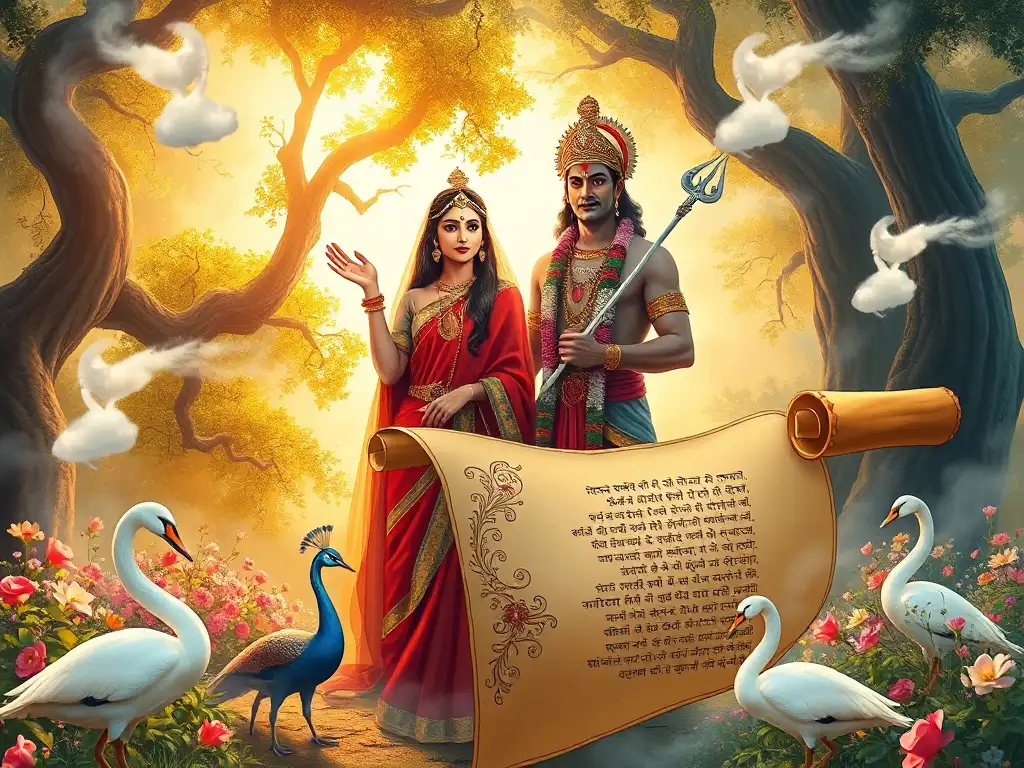
The Ramayana, attributed to the sage Valmiki, is not just a cornerstone of Indian epic literature; it is also a profound linguistic and poetic achievement. The text is primarily composed in Sanskrit, a language that serves as the bedrock of many Indian languages today. The poetic structure of the Ramayana, particularly its use of Shlokas (verses), employs various meters such as Anushtubh and Trishtubh, which contribute to its rhythmic and melodic quality. This intricate interplay of language and form captivates readers and listeners alike, enhancing the narrative's emotional depth.
The Ramayana utilizes a rich vocabulary filled with metaphors, similes, and other literary devices that elevate its storytelling. The choice of words not only conveys the plot but also evokes the cultural and philosophical ethos of ancient India. The language is imbued with a sense of divinity, reflecting the epic's themes of righteousness ( Dharma), duty, and the triumph of good over evil. This linguistic richness has influenced the way stories are told across generations, shaping the narrative styles found in subsequent Indian literature.
Impact on Later Literary Works
The influence of the Ramayana extends significantly into later literary creations. Many poets and writers, inspired by Valmiki's work, have drawn upon its themes, characters, and stylistic elements. For instance, the Kamba Ramayana, composed by the Tamil poet Kambar in the 12th century, showcases the Ramayana's narrative while infusing it with regional nuances and cultural specifics. This adaptation highlights the flexibility of the original text in accommodating diverse interpretations while maintaining its core values.
Furthermore, the Ramayana has inspired various regional retellings and adaptations, such as the Ramcharitmanas by Tulsidas in the 16th century. Tulsidas’s version, written in Awadhi, not only made the epic accessible to a broader audience but also reinforced its moral and spiritual teachings. These adaptations reflect the enduring appeal of the Ramayana, demonstrating how its language and poetry resonate across different cultures and epochs, thus allowing the epic to remain relevant in contemporary discourse.
The Ramayana's Role in Cultural Preservation
The Ramayana serves as a vital instrument for cultural preservation in India. Its narratives encapsulate the moral values, social norms, and religious beliefs of ancient Indian society. By embedding these elements within its poetic framework, the epic ensures the transmission of cultural heritage through generations. The recitation and performance of Ramayana stories, especially during festivals and religious gatherings, reinforce community bonds and instill a sense of identity among practitioners.
Moreover, the Ramayana has played a critical role in the oral tradition of storytelling. The rhythm and structure of its verses facilitate memorization, enabling the epic to be passed down orally before being committed to writing. This oral tradition not only preserves the language and poetic form of the Ramayana but also enriches it with local interpretations, thus fostering a dynamic cultural exchange. The epic continues to be a source of inspiration for various art forms, including dance, theatre, and visual arts, further solidifying its status as a cultural cornerstone.
Conclusion
Summary of Key Insights
The Ramayana stands as a monumental work that intricately weaves language and poetry into its narrative fabric. The use of Sanskrit and the deployment of various poetic meters contribute to its lyrical beauty, while the rich imagery and literary devices enhance its storytelling. The epic's profound influence on later literary works demonstrates its adaptability and relevance, allowing it to resonate with diverse audiences across time and geography. Furthermore, the Ramayana plays a crucial role in cultural preservation, ensuring the continuity of moral values and social norms inherent in ancient Indian civilization.
The Enduring Legacy of the Language and Poetic Structure of the Ramayana
The legacy of the Ramayana is enduring, as its language and poetic structure continue to inspire and influence literature, art, and culture. The Ramayana not only serves as a literary classic but also as a pivotal cultural artifact that encapsulates the essence of ancient Indian thought. Its teachings on righteousness, duty, and the nature of good versus evil remain relevant today, demonstrating the power of language and poetry to transcend time and space. Through its continued adaptation and performance, the Ramayana ensures that its language and poetic brilliance will resonate in the hearts and minds of future generations.
References
The study of the Ramayana and its poetic structure is enriched by a plethora of texts and scholarly works that explore its language, themes, and cultural significance. Below is a selection of key texts and sources that provide valuable insights into the epic's linguistic features and poetic elements.
Key Texts and Sources for Further Study
- The Ramayana of Valmiki
- This is the foundational text of the Ramayana, attributed to the sage Valmiki. Various translations and commentaries are available, offering different perspectives on its language and poetic nuances.
- The Ramayana: A New Translation by R.K. Narayan
- Narayan's translation is accessible and engaging, making it a great starting point for readers new to the Ramayana. It emphasizes the narrative's poetic qualities while maintaining the essence of the original text.
- Ramayana: Divine Loophole by Shubha Vilas
- This text provides a modern retelling of the Ramayana with a focus on its spiritual teachings and poetic form, making it relevant for contemporary readers.
- The Ramayana: An Early Form of the Epic by R. S. Sharma
- Sharma's work delves into the historical context and evolution of the Ramayana, exploring its language and poetic structure within ancient Indian society.
- Poetics of the Ramayana by R. V. Rao
- This scholarly book analyzes the Ramayana's poetics, including its meter, rhyme schemes, and stylistic devices, providing an in-depth understanding of its literary craftsmanship.
Suggested Readings on the Language and Poetry of the Ramayana
- The Language of the Ramayana by A. K. Ramanujan
- Ramanujan's exploration of the Ramayana’s language captures its rich linguistic heritage and its impact on Sanskrit literature.
- Sanskrit Poetics: The Ramayana and Mahabharata by S. K. Sinha
- This book compares the poetic structures of both epics, focusing on the Ramayana's unique features and contributions to the art of storytelling in poetry.
- The Ramayana in Context by R. G. Bhatia
- Bhatia's work contextualizes the Ramayana within its historical and cultural frameworks, discussing its language and poetic traditions.
- Metaphors and Symbols in the Ramayana by N. L. Bhattacharya
- This text examines the metaphoric language used in the Ramayana, highlighting how poetic devices enhance its themes and character portrayals.
- The Poetic Structure of the Ramayana: Recitation and Performance by M. P. Jha
- Jha analyzes the oral traditions associated with the Ramayana, focusing on how its poetic structure influences recitation and performance in various cultural contexts.
These references and suggested readings serve as a robust foundation for anyone interested in exploring the intricate language and poetic structure of the Ramayana, offering deep insights into its enduring legacy in ancient Indian literature.
- Introduction to the Ramayana
- Language of the Ramayana
- Poetic Structure of the Ramayana
- Themes Reflected in the Language and Poetry
- Influence of the Language and Poetry of the Ramayana
- Conclusion
- References
- What is the Ramayana and its significance in ancient Indian literature?
- How does the language of the Ramayana reflect its historical context?
- What are the key poetic structures found in the Ramayana?
- How has the language and poetry of the Ramayana influenced modern literature?
- What role does poetry play in conveying the message of the Ramayana?
Frequently Asked Questions
What is the Ramayana and its significance in ancient Indian literature?
The Ramayana is an ancient Indian epic that narrates the life of Lord Rama, emphasizing dharma and moral values. It is crucial for understanding the cultural and spiritual foundations of ancient India.
How does the language of the Ramayana reflect its historical context?
The language of the Ramayana uses Sanskrit, which was prevalent during its composition. This choice reflects the literary traditions and cultural practices of the time, enhancing its poetic beauty.
What are the key poetic structures found in the Ramayana?
The Ramayana employs various poetic structures, including shlokas and metres like Anushtubh. These forms contribute to its rhythmic quality and aesthetic appeal, making it a memorable text.
How has the language and poetry of the Ramayana influenced modern literature?
The language and poetic styles of the Ramayana have greatly influenced modern Indian literature, inspiring countless adaptations and interpretations across various genres, reflecting its timeless themes.
What role does poetry play in conveying the message of the Ramayana?
Poetry in the Ramayana enhances the conveying of profound philosophical concepts and emotions. Its lyrical quality allows for deeper engagement with the narrative, making its teachings more impactful.
Final Reflection: The Enduring Legacy of Language and Poetry in the Ramayana
The intricate language and poetic structure of the Ramayana are not just relics of ancient literature; they resonate profoundly in today's world. As we navigate a rapidly changing cultural landscape, the timeless themes and artistic expressions found within this epic continue to inspire and guide us. The Ramayana's rich tapestry of language and poetry serves as a reminder of the power of storytelling to transcend generations and connect us to our shared humanity.
The influence of the Ramayana on contemporary literature, art, and even social values is undeniable. Its poetic form and linguistic beauty have shaped countless works and inspired artists across various mediums. As noted by scholar A.K. Ramanujan, The Ramayana is not just a story; it is a way of seeing the world.
This observation highlights how the epic's language and structure provide a lens through which we can explore our own lives and the complexities of our society. The Ramayana's themes of duty, love, and righteousness continue to resonate, encouraging us to reflect on our values and choices.
As you close this chapter on the language and poetry of the Ramayana, I invite you to take a moment to reflect on how these ancient teachings can inform your own journey. Consider how the lessons embedded in this epic can inspire you to embrace the beauty of language and the power of storytelling in your life. Let the Ramayana's enduring legacy motivate you to explore your own narratives, fostering a deeper connection with yourself and the world around you.
Unveil the Timeless Wisdom of the Ramayana!
Thank you for exploring the fascinating world of the Ramayana with us! We hope you've uncovered valuable insights into its rich language and poetic structure that enhance your understanding of this ancient epic. Now, it's time to take the next step in your journey!
Here's how you can deepen your connection with the themes and teachings of the Ramayana:
- Dive deeper into the text: Explore various translations and commentaries to appreciate the nuances of the Ramayana's language and its cultural significance.
- Join a discussion group: Share your thoughts and learn from others by participating in or even starting a local book club focused on ancient literature.
- Create art inspired by the Ramayana: Whether you write a poem, paint, or craft a story, let the epic fuel your creativity!
As you reflect on the timeless lessons from the Ramayana, what personal values or insights resonate with you the most? We’d love to hear your thoughts!