
The Puranas and Their Global Influence: A Comparative Analysis


Welcome to Ancient India History, where we embark on a captivating journey through the rich tapestry of ancient Indian civilizations. Today, we delve into the profound influence of the Puranas on world culture, revealing how these timeless texts have shaped beliefs, traditions, and narratives across the globe. As we explore the intricate connections between these ancient scriptures and contemporary society, you'll uncover fascinating insights that challenge the way we perceive cultural evolution. Get ready to be inspired and intrigued—your adventure into the depths of India's literary heritage begins here!
The Puranas, a significant genre of ancient Indian literature, hold a pivotal role in understanding not only the cultural and spiritual landscape of India but also their profound influence on global civilizations. As repositories of myth, history, and cosmology, these texts offer insights that transcend geographical boundaries, impacting various cultures across the world.
This article delves into the Puranas influence on world culture, examining their themes, historical context, and the unique ways they have shaped global narratives. Through a comparative analysis, we will explore how the teachings and stories within the Puranas resonate with diverse societies and contribute to a shared human experience.
Introduction to the Puranas
What Are the Puranas?
The Puranas are a vast genre of texts that encompass mythological narratives, religious teachings, and cultural lore, primarily associated with Hinduism. Traditionally attributed to the sage Vyasa, these texts are believed to have been composed between 300 CE and 1500 CE, though their oral traditions likely predate this period. The Puranas serve multiple purposes, including:
- Preservation of History: Documenting the history of the universe, dynasties, and deities.
- Religious Instruction: Offering guidance on rituals, ethics, and spirituality.
- Cultural Narratives: Reflecting the societal norms, values, and beliefs of ancient India.
Historical Context of the Puranas
The emergence of the Puranas coincides with significant historical developments in ancient India, including the rise of regional kingdoms and the establishment of Hinduism as a dominant religious force. These texts were crucial in:
- Bridging Oral Traditions and Written Records: They captured the essence of oral storytelling and provided a written framework that preserved ancient history.
- Cultural Unification: Acting as a unifying force among diverse tribes and communities, promoting shared beliefs and practices.
The Puranas are often categorized into 18 major texts, each varying in themes and focus, such as the Vishnu Purana, Shiva Purana, and Devi Bhagavata Purana.
Importance of Puranas in Ancient Indian Literature
The Puranas are integral to understanding ancient Indian literature for several reasons:
- Literary Richness: They employ various literary devices, including poetry, dialogues, and narratives that enhance storytelling.
- Philosophical Depth: The texts explore profound philosophical concepts such as cosmology, dharma (duty), and moksha (liberation).
- Cultural Identity: They help define cultural identity, reflecting the religious and social ethos of the time.
Puranas Influence on World Culture
Overview of Global Cultural Influence
The influence of the Puranas extends far beyond the Indian subcontinent. Their themes have permeated various cultures, impacting literature, art, and philosophy globally. Key aspects of their influence include:
- Adaptation in World Literature: Elements of Puranic stories can be found in global literary works, illustrating universal themes of good versus evil, the hero's journey, and the quest for knowledge.
- Artistic Representations: The vivid imagery and narratives of the Puranas have inspired countless artists, sculptors, and filmmakers across cultures.
- Religious Syncretism: Aspects of Puranic thought have amalgamated with other religious traditions, contributing to a shared spiritual heritage.
Key Themes in the Puranas and Their Universal Appeal
Several themes within the Puranas resonate universally and contribute to their global appeal:
- Cosmic Cycles and Creation Myths: The cyclical nature of time and creation stories in the Puranas parallel similar narratives found in other cultures, emphasizing a shared understanding of existence.
- Moral and Ethical Dilemmas: The exploration of moral challenges faced by characters in the Puranas reflects common human experiences, fostering empathy and reflection among readers.
- Divine Interventions and Human Relationships: The interactions between gods and humans in these texts highlight the complexities of divine grace, justice, and the human condition, appealing to audiences worldwide.
The Puranas not only serve as a cornerstone of ancient Indian literature but also as a bridge connecting diverse cultures through shared narratives and themes. Their influence on world culture continues to inspire and resonate, making them a vital subject for comparative analysis.
Comparative Analysis of Puranas and Global Texts
The Puranas, ancient Indian texts that encompass a wide range of topics including mythology, cosmology, and history, hold a unique place in the tapestry of world literature. Their influence extends beyond the Indian subcontinent, prompting a comparative analysis with various global texts. This examination reveals both shared themes and distinctive cultural interpretations that enrich our understanding of storytelling and belief systems worldwide.
Similarities Between Puranas and Other Religious Texts
The Puranas share notable similarities with religious texts from different cultures, particularly in their narrative styles and thematic elements. For instance:
- Creation Myths: Much like the Genesis creation narrative in the Bible, the Puranas contain elaborate accounts of the universe's creation, often involving divine entities. These stories serve to establish the connection between the divine and the natural world.
- Moral and Ethical Lessons: Similar to the teachings found in the Quran and the Torah, the Puranas emphasize moral codes and ethical dilemmas faced by their characters, guiding followers on how to live virtuous lives.
- Mythical Beings and Deities: The Puranas are replete with gods, goddesses, and mythical creatures, akin to the pantheons in Greco-Roman mythology. This commonality highlights a universal human fascination with the supernatural and its role in explaining the unknown.
These parallels suggest that the Puranas, much like other religious texts, fulfill essential cultural functions such as preserving traditions, imparting wisdom, and fostering community identity.
Differences in Cultural Context and Interpretation
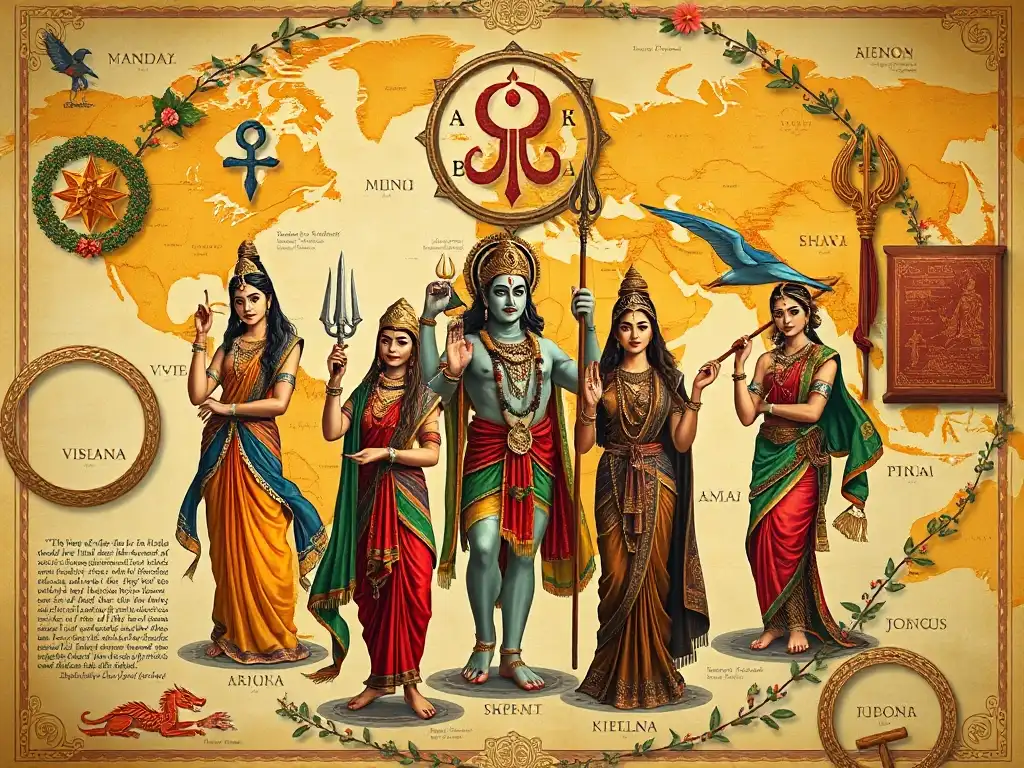
While there are similarities, significant differences in cultural context and interpretation set the Puranas apart from other religious texts. For example:
- Historical Context: The Puranas were composed during a time when Indian society was undergoing significant transformations. They reflect the socio-political landscape of ancient India, which is often absent in Western texts. This context influences the portrayal of deities and heroes, embedding them deeply in local traditions.
- Narrative Structure: Unlike the more linear narratives found in many Western texts, the Puranas often feature a non-linear storytelling style, with multiple layers of narrative interwoven. This complexity allows for diverse interpretations and emphasizes the cyclical nature of time, which contrasts sharply with the more linear progression seen in texts like the Iliad or the Bible.
- Philosophical Perspectives: The Puranas often incorporate philosophical teachings from Hinduism, such as the concepts of dharma (duty) and karma (action and consequence), which may not have direct equivalents in other religious texts. This philosophical depth adds a unique dimension to the Puranic narratives, influencing how they are understood and practiced within their cultural framework.
Case Studies of Puranas Influence on Specific Cultures
The influence of the Puranas on various cultures can be observed through specific case studies, showcasing their far-reaching impact.
Influence on Southeast Asian Cultures
The Puranas have significantly shaped the cultural landscapes of Southeast Asia, particularly in countries like Indonesia, Thailand, and Cambodia. Several key aspects illustrate this influence:
- Art and Architecture: Temples such as Borobudur in Indonesia and Angkor Wat in Cambodia feature intricate bas-reliefs depicting scenes from Puranic narratives. These artworks not only embellish sacred spaces but also serve as educational tools, conveying religious teachings to the masses.
- Dance and Performance: Traditional dance forms in Southeast Asia frequently draw on Puranic stories, with performances reenacting tales from texts like the Ramayana and Mahabharata, which are often interwoven with Puranic elements. This practice highlights the living tradition of storytelling and its adaptability across cultures.
- Religious Practices: The incorporation of Hindu deities and rituals rooted in the Puranas into local practices has resulted in a syncretic blend of beliefs, illustrating how the Puranas have been embraced and adapted within Southeast Asian spiritual contexts.
Impact on Western Literature and Philosophy
The influence of the Puranas extends into Western literature and philosophy, although often in a more indirect manner. Key examples include:
- Literary Adaptations: The themes and characters of the Puranas have inspired Western writers and poets, such as Hermann Hesse and Aldous Huxley, who incorporated Eastern philosophies into their works. This cross-cultural exchange has enriched Western literature, introducing new narrative styles and themes.
- Philosophical Discourse: The concepts of karma and dharma have permeated Western philosophical thought, particularly in the context of discussions about morality and ethics. Thinkers like Carl Jung and Joseph Campbell have drawn parallels between the archetypes found in the Puranas and those in Western mythologies, fostering a greater understanding of the human experience across cultures.
- Interfaith Dialogue: The Puranas have also played a role in interfaith discussions, as they provide a framework for understanding the similarities and differences between Eastern and Western religious traditions. This discourse promotes mutual respect and appreciation, highlighting the universal quest for meaning and understanding.
The Puranas not only reflect the rich cultural heritage of ancient India but also illustrate their profound influence on global cultures, shaping artistic expressions, philosophical dialogues, and religious practices worldwide.
The Role of the Puranas in Shaping Global Spirituality
The Puranas, a genre of ancient Indian literature, have played a pivotal role in shaping not only Indian spirituality but also contributing significantly to global spiritual discourses. Originating from a rich oral tradition, these texts encompass a plethora of mythological narratives, philosophical insights, and cosmological descriptions that resonate across cultures. The Puranas articulate concepts of dharma (righteousness), karma (action and consequence), and moksha (liberation), which have influenced spiritual thought beyond the Indian subcontinent.
As these texts were translated and disseminated through trade routes and cultural exchanges, their philosophies began to permeate various global traditions. The narratives of divine incarnations and moral teachings found parallels in other religious texts, fostering an interconnectedness of spiritual ideas. This cross-pollination of beliefs highlights the Puranas' role in establishing foundational spiritual concepts that continue to inspire seekers worldwide.
Puranic Concepts in Contemporary Spiritual Practices
In contemporary spiritual practices, Puranic concepts remain highly relevant, influencing various movements and philosophies. For instance, the emphasis on karma in modern spiritual circles echoes the teachings found within the Puranas, encouraging individuals to contemplate the moral implications of their actions. This principle has been embraced by numerous global spiritual traditions, leading to a more profound understanding of personal responsibility.
Furthermore, the Puranas introduce various deities and archetypes that serve as focal points for meditation and devotion. Practices such as bhakti (devotion) have transcended geographical boundaries, finding resonance in diverse spiritual communities. The vibrant stories of gods and goddesses from the Puranas are often adapted into contemporary rituals, art, and literature, illustrating their enduring appeal and significance.
Cross-Cultural Exchanges and Adaptations
The influence of the Puranas on world culture can be traced through cross-cultural exchanges that occurred throughout history. As Indian traders and travelers ventured into Southeast Asia, the narratives and teachings of the Puranas were introduced to various cultures, leading to the establishment of Hindu kingdoms in regions like Indonesia and Cambodia. Temples built in honor of Puranic deities, such as those at Angkor Wat, reflect this cultural integration.
Moreover, the adaptation of Puranic themes in Southeast Asian literature and art showcases their global reach. Local adaptations often blend indigenous beliefs with Puranic narratives, resulting in unique interpretations that maintain the essence of the original texts while resonating with local cultures. This dynamic exchange exemplifies how the Puranas have enriched not only spiritual practices but also the artistic expressions of diverse communities.
Conclusion
Summary of Puranas Influence on World Culture
The Puranas have exerted a profound influence on world culture through their rich narratives, philosophical insights, and spiritual teachings. Their role in shaping concepts like karma and dharma has transcended cultural boundaries, fostering dialogues between different spiritual traditions. As the Puranas were shared across continents, they facilitated the exchange of ideas that enriched global spirituality.
The Continuing Legacy of the Puranas in Global Literature and Spirituality
The legacy of the Puranas continues to thrive in contemporary literature and spirituality. Modern authors and spiritual leaders draw upon Puranic themes to explore universal truths, weaving these ancient narratives into the fabric of today's spiritual discourse. The Puranas not only serve as a testament to India’s rich cultural heritage but also as timeless sources of wisdom that guide individuals on their spiritual journeys across the globe. Their adaptability and enduring relevance ensure that the teachings contained within these texts will continue to resonate for generations to come.
- Introduction to the Puranas
- Puranas Influence on World Culture
- Comparative Analysis of Puranas and Global Texts
- Similarities Between Puranas and Other Religious Texts
- Differences in Cultural Context and Interpretation
- Case Studies of Puranas Influence on Specific Cultures
- The Role of the Puranas in Shaping Global Spirituality
- Puranic Concepts in Contemporary Spiritual Practices
- Cross-Cultural Exchanges and Adaptations
- Conclusion
Frequently Asked Questions
What are the Puranas?
The Puranas are ancient Indian texts that contain mythological stories, legends, and traditions. They serve as a crucial source of knowledge about Hindu cosmology, history, and culture.
How have the Puranas influenced world culture?
The Puranas' influence on world culture is evident in various literary works, art forms, and religious practices across different societies, showcasing their universal themes and moral teachings.
What role did the Puranas play in ancient Indian civilization?
In ancient India, the Puranas acted as both historical records and spiritual guides, shaping the religious beliefs and social norms of the time, thus contributing to the civilization's rich cultural tapestry.
Are the Puranas still relevant today?
Yes, the Puranas remain relevant today as they continue to inspire modern literature, theater, and art, while also providing insight into ancient traditions and values that resonate with contemporary audiences.
How can one study the Puranas effectively?
To study the Puranas effectively, one should focus on comparative analysis, engaging with various translations and commentaries to understand their cultural significance and philosophical insights within a global context.
Final Reflection: The Puranas' Enduring Legacy in Global Culture
The Puranas, with their rich narratives and profound philosophies, continue to resonate in today's world, illustrating how ancient texts can shape modern thought and culture. Their influence transcends geographical boundaries, weaving a tapestry of shared stories and values that connect diverse cultures. As we navigate an increasingly interconnected world, the relevance of the Puranas in promoting understanding and unity among different societies becomes ever more apparent.
The Puranas have not only shaped religious and spiritual practices but have also left an indelible mark on art, literature, and social norms across the globe. Their narratives inspire countless adaptations and interpretations, fostering a sense of community and shared heritage among people from various backgrounds. As Mahatma Gandhi once said, "> The best way to find yourself is to lose yourself in the service of others." This sentiment echoes the teachings of the Puranas, reminding us that their wisdom can guide us toward a more compassionate and harmonious existence.
As we reflect on the lessons imparted by the Puranas, let us embrace the opportunity to explore their teachings in our daily lives. Consider how these ancient stories can inspire you to foster connections with others, promote cultural appreciation, and contribute to a more inclusive world. By engaging with the Puranas and their global influence, we can cultivate a deeper understanding of our shared humanity and work towards a future that honors the rich tapestry of cultures that shape our world.
Unveil the Global Influence of the Puranas Today!
Thank you for diving deep into the fascinating study of the Puranas and their far-reaching impact across cultures! Through this journey, you’ve uncovered the rich tapestry of tradition and storytelling that transcends borders. Now, let's channel your newfound knowledge into meaningful actions that can amplify this exploration even further.
Take these steps to deepen your connection with the Puranas:
- Dive into a Puranic Text: Select a specific Purana and dedicate time to reading it. Reflect on its themes and consider their relevance to contemporary life.
- Share Your Insights: Engage in discussions with friends or on social media to ignite interest in this ancient wisdom. Use the hashtag #PuranasInfluence to connect with a broader audience.
- Join a Discussion Group: Look for local or online communities that focus on ancient texts, or create your own group to foster engagement and exploration around this important subject.
Which elements of the Puranas resonate most with your own cultural experiences, and in what ways can this shape your understanding of modern storytelling?