
The Philosophical Debate: Free Will vs. Determinism in Hindu Thought


Welcome to Ancient India History, where we embark on a journey through the rich tapestry of ancient Indian civilizations. Here, we delve into the profound Hindu philosophy on free will, exploring the intricate debate between free will and determinism that has shaped spiritual thought for centuries. Are we the architects of our destiny, or merely players in a cosmic play? Join us as we unravel these timeless questions and discover how ancient wisdom continues to resonate in our lives today. Dive deeper into this philosophical exploration and ignite your curiosity about the complexities of Hindu thought!
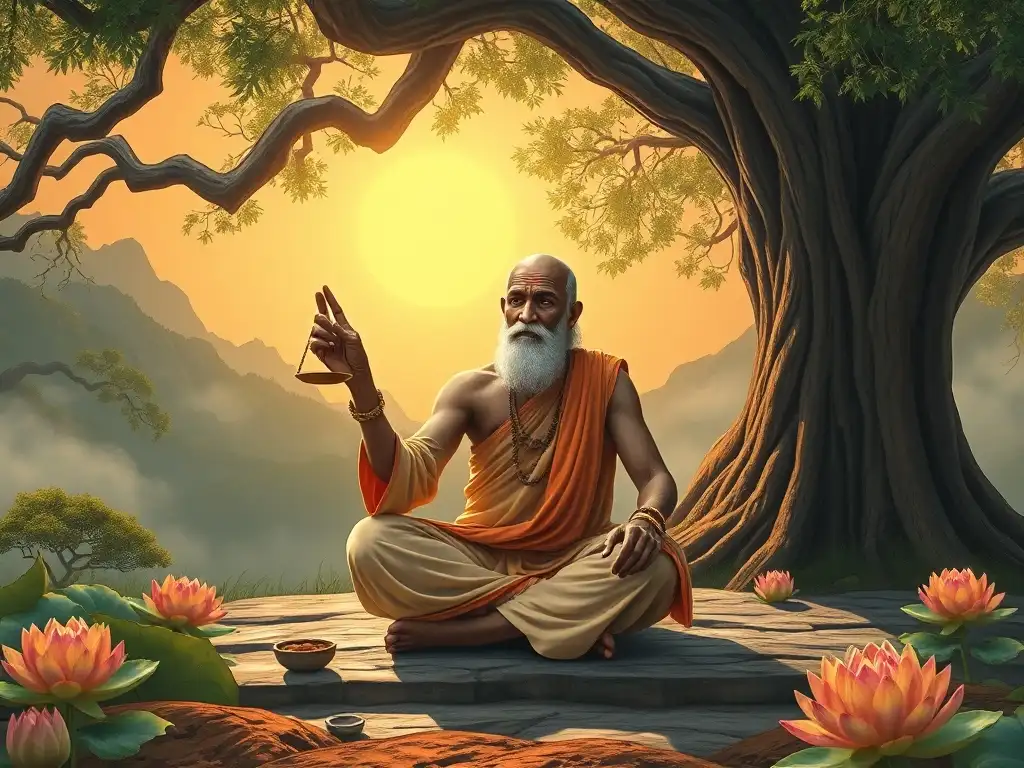
The exploration of free will and determinism within Hindu philosophy presents a captivating landscape of ideas and beliefs that have shaped the spiritual and ethical frameworks of ancient Indian civilizations. This philosophical debate not only delves into the nature of human agency but also interrogates the underlying forces that govern existence.
As we navigate through the rich tapestry of Hindu thought, we will uncover how various schools of philosophy address these profound questions, leading to a deeper understanding of the implications for personal responsibility, moral choice, and the essence of the self. This article aims to illuminate the nuances of Hindu philosophy on free will, examining both the arguments for free will and the deterministic perspectives that have emerged over centuries.
Introduction to Hindu Philosophy on Free Will
The discourse on free will in Hindu philosophy is intricate and multifaceted, presenting a range of interpretations that reflect the diversity of thought within ancient Indian traditions. At its core, free will pertains to the ability of individuals to make choices that are not preordained by external factors or divine will. This notion is juxtaposed against determinism, which posits that all events, including human actions, are ultimately determined by previously existing causes.
Understanding Free Will in Hinduism
In Hinduism, free will is often linked to the concept of karma, the law of cause and effect that governs moral actions. Each individual possesses the capacity to act (or not act) based on their intentions and decisions, which in turn shape their future experiences. This perspective emphasizes personal responsibility and the belief that individuals can influence their own destinies through their choices.
- Key Aspects of Free Will in Hinduism:
- Karma: The interplay of actions and consequences that informs the moral fabric of existence.
- Atman: The individual self, which is considered eternal and capable of making choices.
- Moksha: The ultimate goal of liberation, achievable through right actions and decisions.
The Concept of Determinism in Ancient Indian Thought
Contrasting with the notion of free will, determinism in Hindu thought can be observed in interpretations that emphasize the influence of prakriti (nature) and divine will. Some philosophical schools propose that individual actions are bound by cosmic laws and the inherent tendencies of the material world.
- Deterministic Elements in Hindu Thought:
- Samskaras: Impressions or tendencies that shape behavior and choices based on past experiences.
- Divine Will: The belief that a higher power orchestrates the events of the universe, influencing human actions.
- Material Influence: The notion that the physical and social environment constrains individual choices.
Historical Context of Free Will and Determinism in Hindu Philosophy
The historical evolution of Hindu philosophy has seen various interpretations of free will and determinism emerge, influenced by social, political, and spiritual contexts. Analyzing the historical backdrop allows us to appreciate how these concepts have been debated and understood through different eras.
Key Texts Influencing Hindu Thought on Free Will
Several ancient texts serve as foundational sources for discussions on free will and determinism in Hindu philosophy, including:
| Text | Significance |
|---|---|
| Vedas | Early texts that lay the groundwork for philosophical inquiry. |
| Upanishads | Philosophical dialogues that explore the nature of reality and self. |
| Bhagavad Gita | A critical text discussing duty, action, and the nature of free will. |
| Yoga Sutras | Texts that address mental discipline and the relationship between actions and liberation. |
Influential Philosophers and Schools of Thought
Throughout history, various philosophers and schools have contributed to the discourse on free will and determinism:
- Advaita Vedanta: Advocates of non-dualism that emphasizes the illusory nature of the material world, leading to a deterministic interpretation of existence.
- Samkhya: A dualistic school that distinguishes between consciousness and matter, proposing a deterministic view shaped by prakriti.
- Nyaya and Vaisheshika: Schools that uphold the significance of rational inquiry and can support arguments for free will.
The philosophical debate between free will and determinism in Hindu thought is rich and complex, inviting continued exploration and discussion. By understanding these key concepts and their historical contexts, we can gain insight into the profound implications for human agency and morality in the framework of Hindu philosophy.
Core Concepts of Free Will in Hindu Philosophy
Hindu philosophy presents a rich tapestry of ideas surrounding the concept of free will, often navigating the delicate balance between individual agency and cosmic order. At its core, Hindu thought posits that humans possess the capacity to make choices, which is intricately linked to the understanding of the self, or Atman. This self is viewed as eternal and distinct from the material world, suggesting that individuals have the potential for self-determination and moral responsibility.
Key to this discourse is the principle of Dharma, which refers to the ethical and moral duties that govern individual actions. Free will in this context is not merely about the ability to choose but is also aligned with one’s Dharma, implying that the choices made should reflect moral and ethical considerations. Thus, the exercise of free will is seen as a means to achieve spiritual growth and ultimate liberation ( Moksha), reinforcing the idea that individuals must navigate their paths with awareness and responsibility.
The various schools of Hindu philosophy, especially the Samkhya and Yoga traditions, further elaborate on the interplay of free will and determinism. They suggest that while individuals have the power to choose, their choices are influenced by prior actions ( Karma), inherent tendencies ( Samskaras), and the overarching cosmic order. This complex interplay invites deeper exploration into how free will operates within the broader framework of Hindu thought.
The Nature of Atman and its Role in Free Will
The concept of Atman, or the true self, is fundamental to understanding free will in Hindu philosophy. Atman is considered eternal and unchanging, representing the essence of an individual that transcends physical existence. The recognition of Atman as distinct from the body and mind suggests that true identity lies beyond the constraints of physical reality and societal conditioning.
In the framework of free will, Atman plays a pivotal role by providing individuals with the awareness and capacity to make conscious choices. It is believed that through self-realization, one can understand their divine nature and, consequently, the significance of their choices. This self-awareness empowers individuals to act in alignment with their higher purpose, allowing them to exercise their free will responsibly.
Moreover, the realization of Atman leads to the understanding of interconnectedness with all beings. This interconnectedness emphasizes that while individuals have the power to choose, their actions also affect the cosmic order and the lives of others. Thus, the nature of Atman not only illuminates the path of free will but also instills a sense of duty towards ethical living and harmony in the universe.
Karma: The Link Between Actions and Consequences
Karma is a crucial concept in Hindu philosophy that forms a bridge between free will and determinism. It refers to the law of cause and effect, where every action has consequences that influence an individual's future experiences. This principle underscores that while individuals have the freedom to choose their actions, those choices are not without ramifications.
In the context of free will, Karma suggests that individuals are responsible for their actions, and thus, they have the power to shape their destinies. Each choice made—be it virtuous or harmful—contributes to the accumulation of Karma, which in turn affects one's future circumstances and spiritual journey. This interconnectedness of actions and consequences reinforces the notion that exercising free will is a profound responsibility.
Furthermore, the understanding of Karma extends beyond a single lifetime, encapsulating the idea of rebirth ( Samsara). The consequences of actions can manifest across lifetimes, adding a layer of complexity to the exercise of free will. Hence, individuals are encouraged to make choices that align with their ethical duties and spiritual growth, as these choices will ultimately shape their journey towards liberation ( Moksha).
Determinism in Hindu Thought
While Hindu philosophy acknowledges the concept of free will, it also presents a significant discourse on determinism, particularly through the lens of Karma and divine influence. Determinism in this context suggests that certain aspects of human existence are predetermined by past actions, cosmic order, and divine will, creating a complex interplay with the notion of free will.
In many interpretations of Hinduism, the belief that everything is governed by Karma leads to the understanding that one's current circumstances are a product of past actions. This deterministic view implies that while individuals can make choices, those choices are often influenced and limited by the accumulated Karma from previous lives. In this sense, individuals may find themselves in situations that seem to restrict their free will, prompting a deeper inquiry into the nature of choice and destiny.
The Influence of Karma on Human Behavior
The influence of Karma on human behavior is a central theme in understanding determinism within Hindu thought. It delineates how past actions shape present circumstances, impacting the choices individuals face. Each action taken creates a ripple effect, establishing a framework within which future decisions are made.
For instance, a person who has committed acts of kindness may find themselves in nurturing relationships in the present, while someone with a history of harmful actions may encounter obstacles that limit their opportunities. This does not negate free will; rather, it illustrates how the consequences of previous choices can create patterns that influence current decision-making processes.
Moreover, Karma fosters a sense of accountability, as individuals are reminded that their actions have lasting effects. This understanding encourages individuals to reflect on their behavior and strive for positive actions, knowing that they are contributing to their own future experiences. Thus, while determinism suggests certain constraints, it also empowers individuals to make conscious choices that can alter their Karma and, consequently, their destiny.
The Role of Divine Will in Determinism
Divine will is another significant factor in the discussion of determinism within Hindu philosophy. Many traditions within Hinduism posit that a supreme divine entity or universal consciousness plays a role in shaping the destiny of individuals and the cosmos. This divine influence can be seen as a guiding force that interacts with the principles of Karma and free will.
The belief in divine will suggests that while individuals have the capacity to choose, their choices are ultimately woven into a greater cosmic plan. This perspective can provide comfort and meaning, especially in the face of adversity, as individuals may view challenges as part of a divine scheme that fosters growth and learning.
However, this does not imply that human agency is entirely negated. Instead, the relationship between divine will and human free will is seen as a dynamic interplay. Individuals are encouraged to seek alignment with divine principles, enhancing their ability to exercise free will in a manner that is harmonious with the universe. This balance between determinism and free will ultimately reflects the rich complexity of Hindu philosophy, inviting continual exploration and understanding of one's place within the divine tapestry.
Comparative Analysis: Free Will vs. Determinism in Hinduism

The philosophical debate surrounding free will and determinism in Hinduism is intricate and multifaceted. At its core, Hindu philosophy addresses the tension between individual agency and the forces of karma and dharma—concepts that suggest a predetermined path based on past actions. This analysis reveals how these ideas coexist within traditional texts and interpretations, presenting a unique perspective on human existence.
The discourse on free will is often contextualized within the framework of the Bhagavad Gita, where Lord Krishna elucidates the importance of personal choice in actions while acknowledging the overarching influence of a cosmic order. Similarly, the Upanishads explore the relationship between the self (Atman) and the ultimate reality (Brahman), emphasizing the role of individual choice in realizing one's true nature.
Similarities and Differences Between Free Will and Determinism
In Hindu thought, free will and determinism are not mutually exclusive but rather interdependent concepts. Both are pivotal in shaping moral responsibility and the understanding of human existence.
- Similarities:
- Both concepts engage with the idea of karma, which posits that every action has consequences that affect future experiences. This creates a nuanced view where free will is exercised within the bounds of karmic law.
- Both perspectives emphasize the significance of ethical behavior and moral choices, suggesting that individual actions are significant in the greater scheme of life.
- Differences:
- Free will is often associated with the ability to make choices independent of external influences, while determinism leans towards the belief that actions are influenced by past events, social context, and cosmic law.
- Determinism can sometimes imply a lack of agency, suggesting that outcomes are preordained, whereas free will emphasizes personal responsibility and the capacity for self-determination.
This duality reflects the complexity of Hindu philosophy, where the relationship between free will and determinism fosters a deeper understanding of human agency in a preordained universe.
The Synthesis of Free Will and Determinism in Hindu Philosophy
Hindu philosophy often seeks to synthesize free will and determinism through the concept of dharma, or righteous duty. This notion posits that individuals have the freedom to make choices, but those choices are guided by their societal roles and responsibilities, which are influenced by their past actions (karma).
The synthesis is also evident in the teachings of various philosophical schools, such as Advaita Vedanta, which asserts that while individual actions are determined by past karma, realization of the self (Atman) as part of the universal consciousness (Brahman) transcends these limitations. Thus, individuals can achieve liberation ( moksha) through understanding their true nature and exercising free will in alignment with their dharma.
This harmonization allows for a profound exploration of human existence, where the interplay of free will and determinism shapes one's spiritual journey, encouraging individuals to navigate their lives with awareness and intention.
Contemporary Interpretations of Free Will in Hinduism
In modern times, the debate on free will versus determinism continues to be relevant within Hindu thought, reflecting changing societal values and personal beliefs. Contemporary interpretations stress the importance of individual agency while recognizing the complex influences of culture, tradition, and spirituality.
Modern Philosophical Perspectives on Free Will
Philosophers today engage with Hindu concepts of free will by integrating them with contemporary ethical discussions. Scholars argue that the traditional view of karma does not negate free will but rather complements it by illustrating how past actions shape present circumstances while still allowing for conscious decision-making.
Modern thinkers, such as Swami Vivekananda and contemporary authors like Eknath Easwaran, have popularized the idea that individuals can transcend their circumstances through self-awareness and ethical living. This perspective encourages a proactive approach to spirituality, where individuals are seen as active participants in their destinies.
The Relevance of Free Will in Today's Hindu Practice
In contemporary Hindu practice, the concept of free will is increasingly significant as individuals navigate personal and societal challenges. The emphasis on personal choice aligns with modern values of individualism and self-determination.
Many practitioners find that understanding free will enhances their spiritual lives, as it empowers them to make conscious decisions in alignment with their values and beliefs. Rituals, meditation, and personal reflection are seen as avenues through which individuals exercise their free will, allowing them to engage with their karma constructively.
In this context, free will is not just an abstract philosophical concept but a practical tool for personal growth and ethical living, reinforcing the relevance of Hindu philosophy in addressing contemporary issues and guiding individual behavior in a complex world.
Conclusion
The philosophical debate surrounding free will and determinism in Hindu thought presents a rich tapestry of ideas that have evolved over centuries. While various schools of thought offer differing perspectives, the overarching narrative emphasizes the complexity of human agency within the framework of cosmic order and moral responsibility.
The interplay between karma, dharma, and individual choice highlights the nuanced understanding that Hindu philosophy provides regarding the nature of existence and the human condition. As we reflect on these concepts, it becomes clear that the quest for understanding free will is not merely an intellectual exercise; rather, it is deeply intertwined with the spiritual and ethical dimensions of life.
The Ongoing Debate: Free Will and Determinism in Hindu Thought
The discourse on free will and determinism in Hindu philosophy remains vibrant and ongoing. Various schools, such as Samkhya and Advaita Vedanta, offer distinct interpretations of how free will interacts with determinism.
For instance, Samkhya posits a dualistic perspective, suggesting that while the material world operates under deterministic laws, the soul possesses the agency to make choices, thus enabling a form of free will. In contrast, Advaita Vedanta emphasizes the non-dual nature of reality, proposing that true liberation lies in transcending the illusion of individual agency, leading to the view that free will may be an illusion shaped by ignorance.
This ongoing debate is not only philosophical but also practical, as it influences ethical considerations and personal conduct. The diversity of views encourages adherents to engage with fundamental questions about existence, morality, and the role of individual choice within the broader cosmic framework. This rich discourse continues to inspire contemporary dialogues on free will, ethics, and responsibility.
Implications for Understanding Human Agency in Hindu Philosophy
The implications of the free will versus determinism debate are profound for understanding human agency in Hindu philosophy. The concept of karma plays a pivotal role in this discussion, as it underscores the belief that every action has consequences, thereby connecting individual choices to the broader tapestry of cosmic order. This highlights a dual aspect of human agency: while individuals are accountable for their actions, those actions unfold within a deterministic framework influenced by past deeds.
Furthermore, the emphasis on dharma—righteous duty—adds another layer to the understanding of agency. In Hindu thought, fulfilling one's dharma requires making choices that align with ethical and moral principles, thus reinforcing the significance of conscious decision-making. This interplay between karma, dharma, and individual agency illustrates that while determinism provides a structure within which individuals operate, free will remains essential for navigating life's moral landscape.
Ultimately, the exploration of free will and determinism in Hindu philosophy enriches our comprehension of human agency, urging individuals to reflect on their choices while acknowledging the interconnectedness of all existence. This nuanced understanding fosters a more profound appreciation for the moral responsibilities that come with the exercise of free will within the intricate web of life.
- Introduction to Hindu Philosophy on Free Will
- Historical Context of Free Will and Determinism in Hindu Philosophy
- Core Concepts of Free Will in Hindu Philosophy
- Determinism in Hindu Thought
- Comparative Analysis: Free Will vs. Determinism in Hinduism
- Contemporary Interpretations of Free Will in Hinduism
- Conclusion
- What is the main focus of the article on Hindu philosophy and free will?
- How do Hindu philosophies define free will?
- What are the key arguments for determinism in Hindu philosophy?
- How does the debate on free will vs. determinism influence modern thought?
- Are there any famous texts that discuss free will in Hindu philosophy?
Frequently Asked Questions
What is the main focus of the article on Hindu philosophy and free will?
The article explores the philosophical debate between free will and determinism within Hindu thought, examining how ancient Indian civilizations approached these concepts.
How do Hindu philosophies define free will?
In Hindu philosophy, free will is often viewed as the ability to make choices that are aligned with one's dharma (duty) and karma, emphasizing the interplay between individual agency and cosmic order.
What are the key arguments for determinism in Hindu philosophy?
Proponents of determinism argue that all actions are influenced by karma and the laws of nature, suggesting that human choices are ultimately shaped by past actions and divine will.
How does the debate on free will vs. determinism influence modern thought?
This debate has significant implications for modern discussions on morality, responsibility, and personal autonomy, as it challenges individuals to consider the extent of their freedom in making choices.
Are there any famous texts that discuss free will in Hindu philosophy?
Yes, texts like the Bhagavad Gita and the Upanishads delve deeply into the concepts of free will and determinism, providing insights into the spiritual and ethical implications of these ideas in Hindu thought.
Final Reflection: Embracing the Complexity of Free Will in Hindu Philosophy
The exploration of free will versus determinism in Hindu thought remains profoundly relevant today, as it challenges us to confront our own beliefs about autonomy and fate. In a world increasingly characterized by rapid change and uncertainty, the philosophical debate surrounding free will invites us to question the extent of our agency and the forces that shape our lives. This ongoing dialogue not only enriches our understanding of Hindu philosophy but also compels us to reflect on our personal choices and the consequences that follow.
Hindu philosophy offers a unique lens through which we can examine the interplay between free will and determinism, shaping our cultural and social landscapes in significant ways. The teachings of karma and dharma remind us that while we may possess the freedom to choose, our actions are intricately linked to the broader tapestry of existence. As the philosopher J. Krishnamurti once said, Freedom is not a reaction; it is a state of being.
This perspective encourages us to recognize that our choices are not made in isolation but are part of a larger cosmic order, influencing both ourselves and the world around us.
As we conclude this exploration, I invite you to reflect on the lessons of Hindu philosophy regarding free will and determinism in your own life. Consider how your beliefs about agency shape your actions and interactions with others. Embrace the complexity of this philosophical debate, allowing it to inspire you to make conscious choices that align with your values and aspirations. In doing so, you not only honor the rich tradition of Hindu thought but also contribute to a deeper understanding of your place within the universe.
Embrace Your Choices: Dive Deeper into Free Will and Determinism
Thank you for joining us on this enlightening journey through the philosophical landscape of free will and determinism in Hindu thought. We hope that this exploration has ignited your curiosity and clarified some of the complexities surrounding these concepts.
Now, it’s time to take your understanding to the next level. Here are a few actionable steps you can take:
- Reflect on Your Beliefs: Take a moment to journal about your own views on free will and determinism. Consider how your personal experiences have influenced these beliefs.
- Join the Conversation: Engage with fellow readers and philosophy enthusiasts in the comments section or on social media. Share your insights and discover diverse perspectives!
- Explore Further: Dive into philosophical texts or documentaries that discuss these themes in broader contexts. Look into how these ideas are reflected in contemporary society.
What personal experiences or cultural influences have shaped your understanding of free will and determinism? We’d love to hear your thoughts!