
The Importance of Community (Sangha) in Buddhist Practice


Welcome to Ancient India History—your portal to the fascinating tapestry of ancient Indian civilizations! Here, we delve into the rich and diverse history, culture, and contributions that shaped the subcontinent from the enigmatic Indus Valley to the illustrious Gupta Empire. Today, we invite you to explore the significance of the Buddhist community (Sangha) in Buddhist practice.
Discover how this vital aspect of ancient Indian religions not only fostered spiritual growth but also played a crucial role in shaping social dynamics. Curious about how the Sangha influenced communities and culture? Read on to uncover the profound impact of this ancient institution on the spiritual landscape of India!
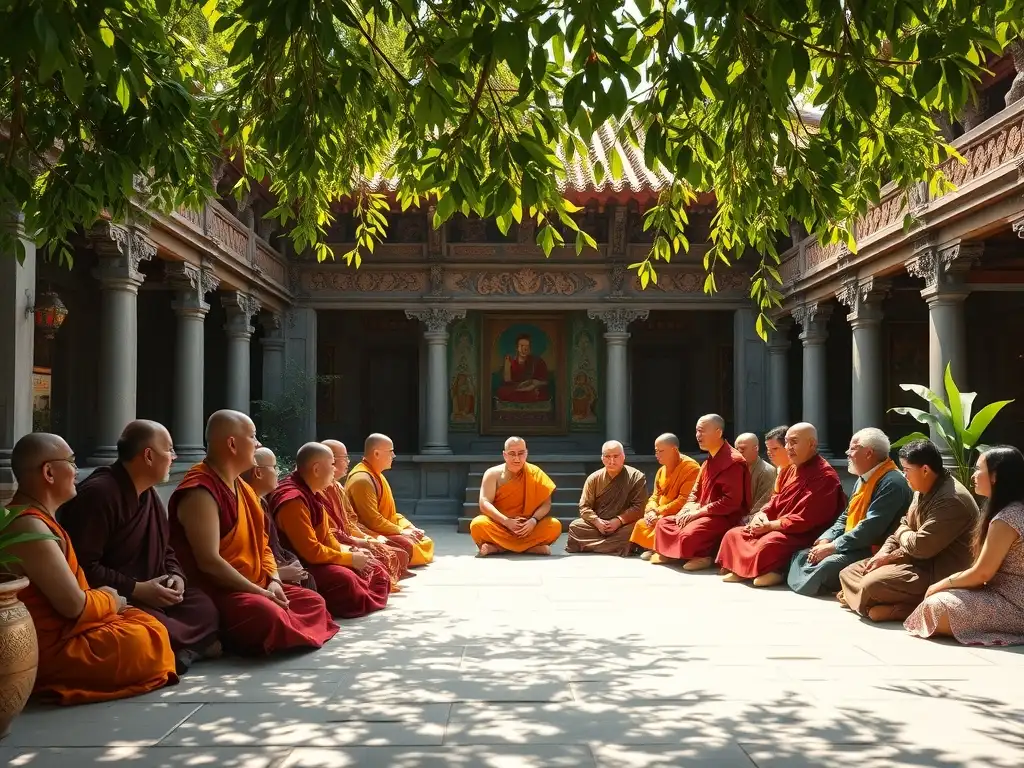
Introduction to Buddhist Community Significance
The concept of Sangha holds a foundational place in Buddhist teachings and practices, symbolizing the community of monks, nuns, and laypeople who collectively support each other on the path to enlightenment. This article explores the Buddhist community significance history, showcasing how the Sangha has evolved over time and its role in nurturing the teachings of the Buddha.
Understanding this community not only illuminates the social dynamics of ancient Indian civilization but also underscores the collective pursuit of wisdom and compassion that transcends individual practice. As we delve into the significance of the Sangha, we will uncover its vital contributions to the preservation and dissemination of Buddhist philosophy through various historical epochs.
Defining Sangha in Buddhism
In Buddhism, the term Sangha refers to the community of practitioners, which includes:
- Monastic Sangha: Composed of ordained monks and nuns who live according to the Vinaya (monastic code).
- Lay Sangha: Includes lay followers who support the monastics and engage in Buddhist practices while leading secular lives.
This dual aspect of the Sangha highlights its inclusivity, emphasizing that enlightenment is accessible not just to monks but to all sincere practitioners, regardless of their social status or lifestyle.
Overview of Buddhist Community Importance in History
Throughout history, the Sangha has played a pivotal role in:
- Preservation of Teachings: Monastics have been responsible for maintaining and transmitting the teachings of the Buddha, ensuring that core principles are not lost over generations.
- Cultural Influence: The Sangha has influenced art, literature, and philosophy in various cultures, fostering a rich tapestry of Buddhist thought.
- Social Support: The community has provided a support system for individuals facing personal challenges, creating a sense of belonging and mutual aid.
The historical importance of the Buddhist community extends beyond its spiritual dimensions, impacting social structures and cultural developments across Asia.
Historical Context of the Sangha
The Origins of the Sangha in Early Buddhism
The origins of the Sangha can be traced back to the time of the Buddha, around the 5th century BCE. After attaining enlightenment, the Buddha established the Sangha as a means to:
- Foster Community: The Sangha served as a gathering for those seeking spiritual growth and understanding.
- Provide Structure: It introduced a framework for practice, with rules and guidelines that fostered discipline and harmony among members.
As the Buddha traveled and taught, he attracted followers who formed the early monastic community, laying the groundwork for a structured and supportive religious environment.
Evolution of the Buddhist Community Over Centuries
Over the centuries, the Sangha has undergone significant transformations influenced by various factors:
- Regional Adaptations: As Buddhism spread across Asia, local cultures and traditions shaped the practices and organization of the Sangha, leading to diverse interpretations and expressions of Buddhism.
- Sectarian Developments: The emergence of different Buddhist schools, such as Theravada and Mahayana, created distinct communities with unique philosophies and practices, further enriching the Buddhist tradition.
- Modern Challenges: In contemporary times, the Sangha faces challenges such as modernization, globalization, and the need to remain relevant in an ever-changing world.
These historical shifts underscore the adaptability and resilience of the Sangha, illustrating its enduring significance in the Buddhist tradition and its role in fostering community across diverse contexts.
Roles and Functions of the Sangha
The Sangha, or the Buddhist community, plays a pivotal role in the practice and propagation of Buddhism. It is not merely a gathering of individuals; rather, it is a vital structure that supports the spiritual journey of its members. The Sangha consists of monks, nuns, and lay practitioners, each contributing to the fabric of Buddhist life in distinct but complementary ways.
One of the primary functions of the Sangha is to provide spiritual guidance and support to its members. This collective fosters an environment where individuals can share their experiences, challenges, and insights, thereby nurturing each other’s spiritual growth. Moreover, the Sangha serves as a repository of wisdom and knowledge, ensuring that the teachings of the Buddha are preserved and transmitted across generations.
Additionally, the Sangha engages with the wider community, embodying the principles of compassion and altruism that are central to Buddhist teachings. Through social engagement and outreach, the Sangha not only helps those in need but also illustrates the practical applications of Buddhist values in everyday life.
Spiritual Guidance and Support in Buddhist Practice
The Sangha provides essential spiritual guidance and support for those on the path of enlightenment. Monastic members, who have dedicated their lives to the study and practice of the Buddha's teachings, are often seen as spiritual mentors. They lead meditation sessions, provide Dharma talks, and offer personalized advice based on the teachings of the Buddha.
Lay practitioners benefit immensely from the Sangha's presence, as it creates a supportive environment where individuals can seek solace and understanding in their spiritual journeys. Group rituals, communal meditation, and shared teachings foster a sense of belonging and encourage members to remain committed to their practice. In times of personal crisis or doubt, the Sangha acts as a refuge, offering emotional and spiritual support that can be transformative.
The Sangha as a Source of Wisdom and Teaching
The Sangha serves as a critical source of wisdom and teaching, preserving the core teachings of Buddhism. Monastic members are often well-versed in the scriptures, including the Pali Canon, and are responsible for teaching these texts to lay practitioners. This transmission of knowledge is vital for maintaining the integrity of the teachings and ensuring they are accurately understood and practiced.
Furthermore, the Sangha engages in scholarly discussions and debates, which contribute to a deeper understanding of Buddhist philosophy. These intellectual exchanges often lead to new interpretations and adaptations of teachings, allowing Buddhism to remain relevant in a changing world. By fostering an atmosphere of inquiry and critical thinking, the Sangha ensures that the teachings of the Buddha continue to resonate with contemporary practitioners.
Community and Social Engagement in Buddhist Traditions
In addition to providing spiritual support, the Sangha plays a significant role in community and social engagement. Many Buddhist communities emphasize the importance of altruism and service, motivating members to participate in charitable activities and social justice initiatives. This engagement reflects the Buddhist principle of compassion, which encourages individuals to alleviate the suffering of others.
The Sangha often organizes events such as food drives, health clinics, and educational programs, reaching out to marginalized groups and fostering social harmony. By acting as a bridge between spiritual practice and social responsibility, the Sangha exemplifies how Buddhist teachings can be applied to address real-world issues, thereby enhancing the significance of the Buddhist community in society.
The Significance of Sangha in Buddhist Teachings
The significance of the Sangha is deeply embedded in the foundational teachings of Buddhism. Recognized as one of the Three Jewels, alongside the Buddha and the Dharma, the Sangha is essential for a holistic understanding and practice of Buddhism.
The Four Noble Truths and the Role of Community
The Four Noble Truths, which outline the essence of Buddhist teaching, emphasize the reality of suffering and the path toward liberation. The Sangha plays a crucial role in this context, as it provides a supportive community for individuals grappling with the challenges of existence. Within the Sangha, practitioners can discuss their suffering openly, seek guidance, and explore the nature of attachment and aversion together.
Furthermore, the Sangha cultivates a sense of collective responsibility in addressing suffering. As members work collaboratively to understand and overcome their struggles, they embody the teachings of the Buddha, reinforcing the idea that liberation is not only an individual pursuit but also a communal endeavor.
The Eightfold Path and Communal Practice
The Eightfold Path serves as a practical guide for ethical and mental development, ultimately leading to enlightenment. The role of the Sangha is particularly significant in facilitating communal practice of the Eightfold Path. By engaging in right understanding, right intention, and other aspects of the path together, members reinforce their commitment to ethical living and mindfulness.
Participating in communal meditation sessions and Dharma discussions strengthens the practice of right effort and right mindfulness, promoting a shared experience that enhances individual growth. This collective journey fosters accountability, encouragement, and inspiration, demonstrating how the Sangha embodies the principles of the Eightfold Path in everyday life.
Interconnectedness within the Buddhist Community
Interconnectedness is a fundamental concept in Buddhism, and the Sangha exemplifies this principle through its communal structure. Each member of the Sangha contributes to the overall well-being of the community, creating a network of support and mutual reliance. This interconnectedness is not only a source of strength but also a reminder of the interdependent nature of all beings.
As members cultivate compassion, wisdom, and understanding within the Sangha, they extend these qualities beyond its boundaries, fostering a sense of harmony and interconnectedness in the wider world. This reflective practice nurtures a deeper appreciation for the shared human experience, encouraging individuals to act with kindness and empathy toward all beings.
Comparison of Sangha Across Different Buddhist Traditions

The concept of Sangha, or community, is central to Buddhism and manifests differently across its various traditions. While all forms of Buddhism emphasize the importance of community in supporting spiritual growth and practice, the structure, role, and functions of Sangha can vary significantly. This comparison highlights key distinctions between Theravada and Mahayana traditions, illustrating how each has adapted the idea of community to fit its theological framework and cultural context.
Theravada vs. Mahayana: Community Practices and Beliefs
In Theravada Buddhism, which is predominantly practiced in countries like Sri Lanka, Thailand, and Myanmar, the Sangha primarily consists of fully ordained monks (bhikkhus). This community is viewed as essential for preserving the teachings of the Buddha and providing guidance to lay followers. Theravada practitioners often engage with the Sangha through acts of merit-making, such as offering alms and supporting monastic needs, reinforcing the bond between laypeople and monks.
Conversely, Mahayana Buddhism, prevalent in regions like China, Japan, and Korea, presents a broader interpretation of Sangha that includes not only monks and nuns but also lay practitioners. The Mahayana tradition emphasizes the concept of the "Bodhisattva," individuals who aspire to attain enlightenment for the benefit of all sentient beings. In this context, community practices often involve collective rituals, communal meditation, and social engagement, reflecting a more inclusive approach to spiritual development. This diversity in community practices signifies differing beliefs about the path to enlightenment and the role of the individual within the community.
The Role of Monastic vs. Lay Communities in Buddhism
In both Theravada and Mahayana traditions, the roles of monastic and lay communities are distinct but interdependent. Monastic communities are seen as the custodians of the Dharma, engaging in rigorous study, meditation, and ethical living. They serve as spiritual leaders and role models for lay practitioners, providing teachings and guidance that are essential for laypeople's practice.
Lay communities, on the other hand, are integral to the sustainability of the Sangha. In Theravada, laypeople support the monastic community through almsgiving and participation in rituals, while in Mahayana, lay practitioners often take on active roles in community service and social activism. The interaction between these communities fosters a symbiotic relationship, where both monastics and laypeople contribute to the continuity and vibrancy of Buddhist practice. This dynamic not only reinforces shared values and teachings but also enhances the overall strength and resilience of the Buddhist community.
Challenges Faced by the Buddhist Community Throughout History
Throughout history, the Buddhist community has faced numerous challenges that have tested its cohesion and integrity. From periods of persecution to modern societal changes, these challenges have shaped the evolution of Sangha and its role in contemporary Buddhist practice.
Historical Persecutions and Their Impact on Sangha
Buddhism has a long history marked by periods of persecution, which have significantly impacted the Sangha. During the reign of certain dynasties and in regions where Buddhism was once flourishing, monastic communities faced suppression, leading to the decline of Buddhist practices and teachings. For instance, during the decline of Buddhism in India, particularly after the 12th century, many monasteries were destroyed, and monks were forced to disband, which greatly weakened the Sangha.
These historical persecutions not only affected the monastic community but also left lasting scars on lay communities that relied on the Sangha for spiritual guidance. The loss of teachings and the fragmentation of communities during these times highlight the vulnerability of the Buddhist community and its dependence on a stable and supportive environment for practice.
Modern Challenges to Community Cohesion in Buddhism
In the modern era, Buddhism faces new challenges that threaten community cohesion. Globalization, secularism, and rapid societal changes have led to a dilution of traditional practices and values. Many lay practitioners find it difficult to maintain their spiritual commitments amidst the demands of contemporary life, leading to a disconnect from the Sangha.
Additionally, the rise of digital technology has transformed how communities interact. While online platforms can foster connections, they can also dilute the sense of belonging and commitment that face-to-face interactions provide. As Buddhism adapts to these changes, the challenge lies in balancing traditional community structures with modern expressions of Sangha, ensuring that the teachings remain relevant and accessible to future generations.
Through these historical and modern challenges, the significance of the Buddhist community remains evident, emphasizing the need for resilience and adaptation in preserving the essential values and teachings of Buddhism.
The Revival of the Sangha in Contemporary Times
The Sangha, or the community of monks, nuns, and lay practitioners, has experienced significant revival in contemporary times. This resurgence can be attributed to various factors, including the modern interest in mindfulness and meditation, which has roots in Buddhist practices. As more individuals seek spiritual fulfillment and mental well-being, they are drawn to the teachings of Buddhism, often seeking community support through local Sanghas.
In urban centers around the world, Buddhist centers and temples have emerged, creating spaces for individuals to gather, practice, and study together. These modern Sanghas often blend traditional teachings with contemporary practices, appealing to a diverse audience. They provide various programs, from meditation classes to discussions on Buddhist philosophy, fostering a sense of belonging among members.
Furthermore, the global context of increased communication and travel has allowed for the exchange of ideas across different Buddhist traditions. This cross-pollination enhances the understanding of Sangha’s role in various cultures, promoting inclusivity and adaptation within the community.
Modern Movements and the Relevance of Community
In recent years, several modern movements within Buddhism have emphasized the importance of community in practice. Engaged Buddhism, for instance, encourages practitioners to actively participate in social justice, environmental activism, and humanitarian efforts, guided by the core teachings of compassion and interdependence. This movement demonstrates that the Sangha is not merely a spiritual entity but a force for positive change in the world.
Additionally, the rise of lay movements has transformed the traditional view of the Sangha, which historically focused on ordained monks and nuns. Lay practitioners now play a crucial role, contributing to the community’s vibrancy and diversity. This shift has led to a redefinition of Sangha, encompassing a broader range of individuals who share a commitment to Buddhist principles, regardless of their level of ordination.
The significance of community in these movements is profound, as practitioners find support, encouragement, and collective strength in their shared goals. The Sangha becomes a space for fostering relationships, sharing resources, and nurturing spiritual growth, thus reinforcing its foundational role in Buddhist practice.
The Role of Technology in Strengthening Buddhist Communities
Technology has played a transformative role in the revival and strengthening of Buddhist communities. Online platforms and social media have made it easier for practitioners to connect, share teachings, and participate in discussions across geographical boundaries. Virtual Sanghas have emerged, where individuals can engage in group meditations, teachings, and community support without the constraints of physical presence.
Moreover, technology enables the dissemination of Buddhist teachings and resources to a wider audience. Websites, podcasts, and video platforms provide access to renowned teachers and teachings that might otherwise be limited to local communities. This democratization of knowledge fosters a global Sangha, where individuals can learn from diverse traditions and perspectives.
However, it is essential to balance these modern technological tools with the traditional practices of community engagement and personal interaction. While online connections are valuable, they should complement rather than replace the in-person experiences that are vital to the Sangha's essence.
Conclusion: The Enduring Importance of the Sangha
The enduring importance of the Sangha in Buddhist practice cannot be overstated. It serves as a vital support system for practitioners, fostering a sense of belonging and shared purpose. The communal aspect of Buddhism encourages individuals to engage with one another, facilitating personal growth and collective spiritual development.
Summary of the Buddhist Community's Significance in History
Throughout history, the Sangha has been central to the transmission of Buddhist teachings and values. It has provided a structured way for individuals to practice, learn, and engage with the teachings of the Buddha. The historical significance of the Sangha is evident in its role in preserving texts, establishing monastic traditions, and influencing cultural practices across different regions.
As Buddhism spread beyond India, the Sangha adapted to various cultural contexts while maintaining its core principles. This adaptability has allowed it to thrive in diverse environments, ensuring the continuation of Buddhist practice and community life throughout the centuries.
Final Thoughts on the Future of Sangha in Buddhist Practice
Looking ahead, the future of the Sangha in Buddhist practice appears vibrant and promising. As the world grapples with challenges such as social disconnection, environmental crises, and political unrest, the communal aspects of Buddhism offer pathways for healing and connection. The Sangha can serve as a powerful model for collaboration, compassion, and collective action in addressing these issues.
Moreover, as new generations engage with Buddhism, the Sangha will likely continue to evolve, integrating modern values while honoring traditional practices. By embracing both the historical significance and contemporary relevance of the Sangha, practitioners can ensure that this vital aspect of Buddhist practice remains meaningful and impactful in the years to come.
- Introduction to Buddhist Community Significance
- Historical Context of the Sangha
- Roles and Functions of the Sangha
- The Significance of Sangha in Buddhist Teachings
- Comparison of Sangha Across Different Buddhist Traditions
- Challenges Faced by the Buddhist Community Throughout History
- The Revival of the Sangha in Contemporary Times
- Conclusion: The Enduring Importance of the Sangha
Frequently Asked Questions
What is the Sangha in Buddhism?
The Sangha refers to the community of monks, nuns, and laypeople who follow the teachings of the Buddha. It plays a crucial role in supporting and maintaining Buddhist practices.
How does the Sangha contribute to the Buddhist community's significance?
The Sangha fosters a sense of belonging and collective support among practitioners, enhancing their spiritual growth and shared values, which are vital for the sustainability of Buddhism.
What historical role did the Sangha play in ancient Indian societies?
Historically, the Sangha served as a social and educational institution, providing guidance and moral support, and contributing to the cultural and intellectual development of ancient Indian civilizations.
Why is the Sangha considered essential in Buddhist practice?
The Sangha is essential because it offers a network of support for individual practitioners, helping them to stay committed to their spiritual journey and adhere to the Buddhist teachings.
How has the significance of the Sangha evolved over time?
Over time, the Sangha has adapted to various social and cultural contexts, maintaining its importance while also influencing the development of Buddhism in different regions and communities worldwide.
Final Reflection: The Enduring Significance of Community in Buddhist Practice
The essence of community, or Sangha, remains a cornerstone of Buddhist practice today, illustrating that the collective journey towards enlightenment is as vital as the individual path. In an increasingly fragmented world, the teachings of the Buddha remind us that connection and support among practitioners are crucial for personal growth and collective well-being. The relevance of Sangha transcends time, echoing the historical significance of communal practice in fostering resilience and understanding within the Buddhist tradition.
The impact of the Buddhist community is profound, shaping not only spiritual practices but also social dynamics across cultures. The Sangha has historically provided a sanctuary for individuals seeking solace and guidance, and its influence continues to resonate in contemporary society. As we navigate the complexities of modern life, the teachings of the Sangha remind us of the importance of unity and shared purpose. When you realize how perfect everything is, you will tilt your head back and laugh at the sky.
– Buddha. This quote encapsulates the joy and peace that can emerge from a supportive community, emphasizing that together, we can find clarity and happiness even amidst chaos.
As we reflect on the importance of community in our lives, let us embrace the lessons of Sangha and actively seek to cultivate connections with those around us. Consider how you can contribute to your own community, fostering an environment of support, understanding, and compassion. By doing so, you not only enrich your own spiritual journey but also help create a more harmonious world. The path of Buddhism is not walked alone; it is a shared journey, and together, we can illuminate the way forward.
Embrace Your Sangha: Take Action Today!
Thank you for exploring the significance of community in Buddhist practice! Your journey toward understanding the profound impact of Sangha provides valuable insights into building supportive connections. Now, let's take that knowledge and translate it into action to strengthen the ties within your own community.
- Join a local meditation group or an online community to share experiences and grow together.
- Reach out to a friend or an individual interested in Buddhist teachings to initiate a meaningful conversation.
- Share this article with your network to inspire others to appreciate the importance of Sangha.
How can you actively contribute to fostering a nurturing Sangha in your life?