
Cultural Crossroads: The Artistic Exchange Between Indian and Greek Civilizations

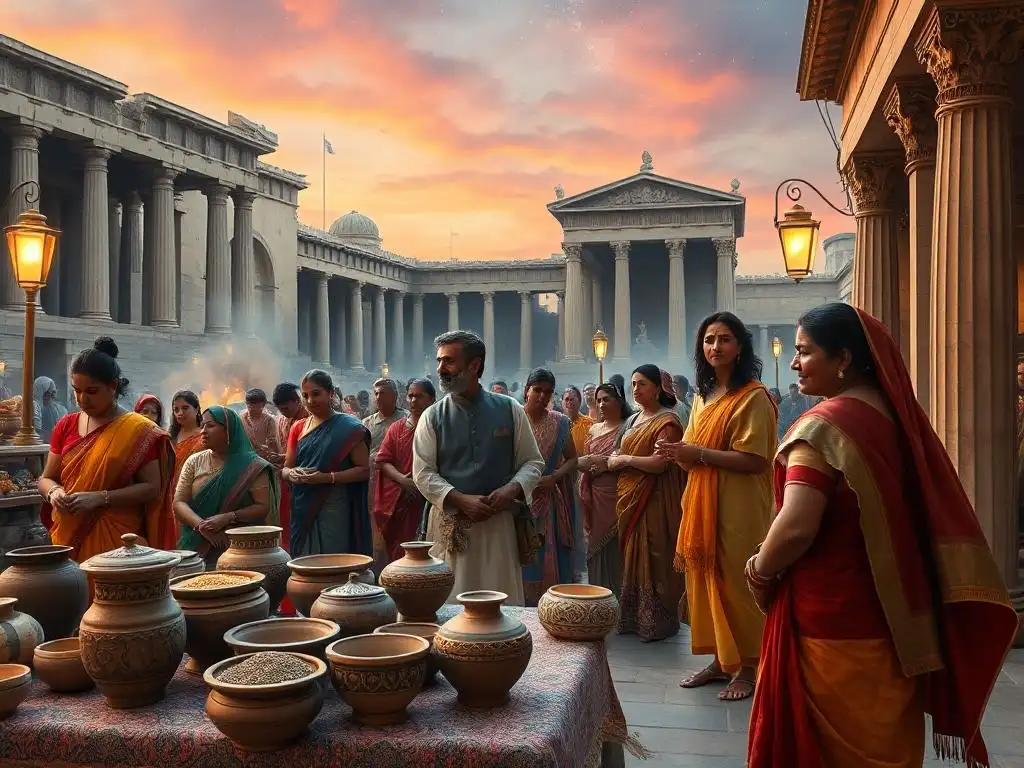
Welcome to Ancient India History, where we embark on a fascinating journey through the intricate tapestry of ancient Indian civilizations. Delve into the captivating narratives of cultural exchanges that shaped this vibrant history, particularly the Indian Greek cultural exchange history. In our featured article, "Cultural Crossroads: The Artistic Exchange Between Indian and Greek Civilizations," we unravel the profound connections that emerged between these two great cultures.
Prepare to be intrigued as we explore how this interaction not only enriched their respective art forms but also laid the groundwork for a legacy that continues to inspire. Join us as we uncover the stories that have endured through the ages!
Introduction to Indian Greek Cultural Exchange History
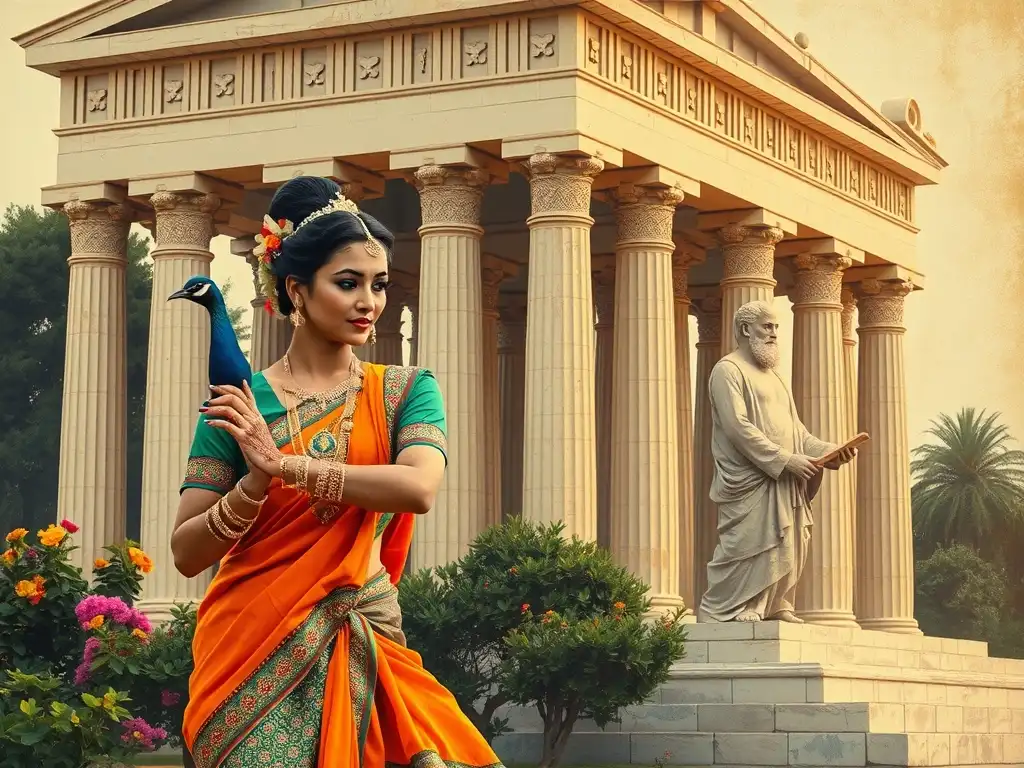
The artistic exchange between Indian and Greek civilizations represents a fascinating chapter in the broader narrative of Indian Greek cultural exchange history. Spanning several centuries, this interaction not only enriched the art forms of both cultures but also forged a unique identity through the blending of diverse traditions and philosophies.
From the early conquests of Alexander the Great to the flourishing of the Indo-Greek kingdoms, the impact of this exchange is evident in various spheres, including art, architecture, and philosophy. Understanding this dynamic relationship deepens our appreciation for the cultural tapestry of ancient India and its interactions with the wider world.
Overview of Indian and Greek Civilizations
The Indian and Greek civilizations, although geographically distant, developed rich cultural heritages that shared a commonality in their pursuit of knowledge, art, and philosophy.
- Indian Civilization: Emerging from the fertile plains of the Indus Valley around 2500 BCE, Indian civilization is marked by significant achievements in literature, mathematics, and spiritualism. The Vedic texts, philosophical schools like Buddhism and Jainism, and the rich traditions of art and sculpture have left an indelible mark on human history.
- Greek Civilization: Conversely, Greek civilization flourished around the Mediterranean, particularly during the Classical period (5th to 4th century BCE). Renowned for its contributions to philosophy, theatre, and political thought, Greece laid the groundwork for Western civilization. Thinkers like Socrates, Plato, and Aristotle profoundly influenced not only their own culture but also the civilizations that followed.
The intersection of these two great cultures led to a renaissance of artistic and intellectual endeavors that resonate to this day.
Importance of Cultural Exchange in History
Cultural exchange has historically played a pivotal role in shaping societies. It fosters mutual understanding, enhances creativity, and encourages innovation. The Indian Greek cultural exchange history showcases how interactions between disparate civilizations can lead to a synthesis of ideas and artistic expressions.
- Artistic Innovation: The influence of Greek art on Indian sculpture, especially during the Gandhara period, is a prime example. The incorporation of Greek techniques and styles into Indian art created a unique blend that can still be seen in various artifacts today.
- Philosophical Dialogues: The exchange of ideas also facilitated philosophical dialogues, contributing to the evolution of thought in areas such as ethics and metaphysics, which were enriched by both Indian and Greek perspectives.
Historical Context of Indian Greek Relations
Understanding the historical context of Indian-Greek relations is essential to appreciate the depth and breadth of their cultural exchanges. The foundations were laid through trade, military conquests, and diplomatic relations, which set the stage for artistic and intellectual collaborations.
Early Interactions Between India and Greece
The earliest interactions between these two civilizations can be traced back to the 6th century BCE, with the establishment of trade routes that connected India to the Mediterranean world.
- Trade Relations: The trade of spices, textiles, and precious stones created a foundation for economic interactions, which soon blossomed into cultural exchanges.
- Military Expeditions: The campaigns of Alexander the Great in the 4th century BCE significantly impacted Indian territories, laying the groundwork for further cultural integration. His brief conquests and subsequent interactions with local rulers opened pathways for artistic exchanges.
Key Historical Events Influencing Cultural Exchange
Several pivotal events shaped the trajectory of Indian-Greek cultural relations:
- The Arrival of Hellenistic Influences: Following Alexander's conquests, the establishment of the Indo-Greek kingdoms, especially under rulers like Menander I, led to the fusion of Greek and Indian artistic styles.
- The Spread of Buddhism: The spread of Buddhism to the West facilitated exchanges of philosophical and artistic ideas, as Buddhist art began to incorporate Hellenistic motifs.
These key historical moments underscore the significance of cultural exchange in enriching and diversifying the artistic heritage of both civilizations, forming a legacy that continues to inspire and inform our understanding of ancient history.
Artistic Influences in Indian Greek Cultural Exchange
The Indian Greek cultural exchange history is rich and multifaceted, particularly in the realms of art and aesthetics. This exchange fostered a unique blending of artistic traditions that shaped both civilizations significantly. The interactions that occurred, especially during and after the conquests of Alexander the Great, laid the groundwork for a synthesis of styles and ideas. This fusion not only enriched the artistic expressions of the time but also created a legacy that influenced subsequent generations of artists, architects, and philosophers in both cultures.
Architecture: Blending Styles and Techniques
The architectural landscape of ancient India and Greece illustrates a fascinating interplay of styles and techniques. One of the most notable examples of this exchange can be found in the Hellenistic influence on Indian stupas and temple architecture. The introduction of colonnades and elaborate façades in Indian structures can be traced back to Greek architectural forms.
For instance, the incorporation of stone-carving techniques and the use of the Corinthian style columns became evident in several Indian monuments. The famous stupa at Sanchi showcases motifs and designs that reflect this Hellenistic influence, merging local traditions with Greek aesthetics. Furthermore, the Greco-Bactrian kingdom, which emerged after Alexander's conquests, played a significant role in this architectural synthesis, as it served as a melting pot for diverse influences, facilitating the exchange of architectural knowledge.
The city of Gandhara, located in present-day Pakistan and Afghanistan, became a focal point for this architectural fusion. Its structures exhibit a blend of Greek and Indian elements, as seen in the intricate carvings and the use of narrative reliefs that tell stories from both Greek mythology and Indian epics. This cross-pollination not only transformed architectural practices but also created a unique cultural identity that resonated through the centuries.
Sculpture: Merging Aesthetic Traditions
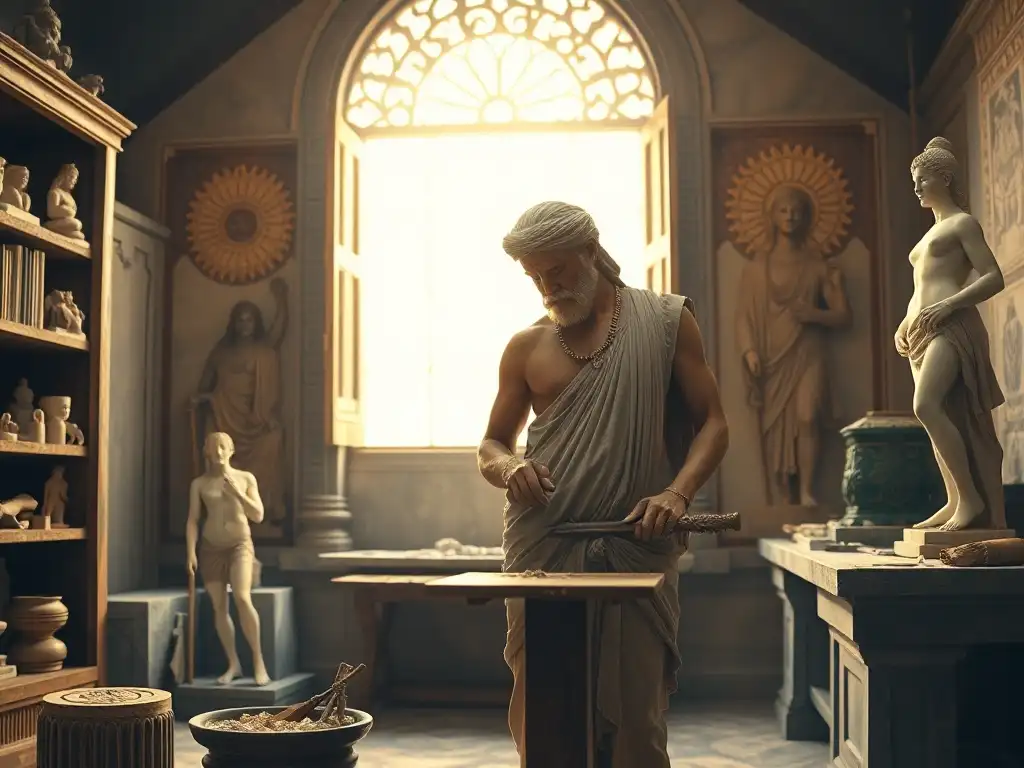
The realm of sculpture also experienced significant influence from the cultural exchange between Indian and Greek civilizations. The introduction of realism in Indian sculpture was largely inspired by Greek techniques, which emphasized naturalism and anatomical precision. This shift can be observed in the depiction of human figures, where a more lifelike representation began to emerge, moving away from the traditional stylized forms prevalent in earlier Indian art.
The Gandhara school of art is a prime example of this fusion, showcasing sculptures that feature Greek artistic principles, such as drapery and facial expressions, intertwined with Indian themes and iconography. Statues of the Buddha from this period often exhibit a blend of Hellenistic features, including curly hair and serene expressions, which reflect the influence of Greek aesthetics on Indian religious art.
Moreover, the narrative reliefs found in Indian sculptures began to incorporate a storytelling technique that was prevalent in Greek art. Scenes from the Mahabharata and Ramayana were rendered with a dynamism and emotional depth that mirrored the dramatic expressions found in Greek sculptures. This merging of aesthetic traditions not only enriched Indian artistry but also provided a new lens through which Greek artistic concepts could be interpreted and appreciated.
Literature and Philosophy: Cross-Pollination of Ideas
The literary and philosophical exchanges between Indian and Greek civilizations marked a significant chapter in the history of intellectual thought. This cross-pollination of ideas contributed to the development of philosophical schools and literary traditions that enriched both cultures.
Greek Philosophy's Impact on Indian Thought
Greek philosophy, particularly the works of Plato and Aristotle, had a profound impact on Indian thought. The introduction of concepts such as metaphysics, ethics, and political philosophy prompted Indian thinkers to engage with these ideas, leading to a synthesis that enriched Indian philosophical discourse. The dialogue between the two traditions is evident in the writings of Indian philosophers like Nagarjuna and Adi Shankaracharya, who incorporated and responded to Greek philosophical ideas.
Furthermore, the interaction between Greek and Indian scholars fostered the exchange of knowledge in areas such as astronomy and mathematics. The translations of Greek texts into Sanskrit facilitated this intellectual exchange, allowing Indian scholars to explore and build upon Greek ideas, leading to advancements in various fields of study.
Indian Literature's Influence on Greek Writers
Conversely, Indian literature also left an indelible mark on Greek writers. The tales of the Panchatantra, with their moral lessons and fables, found their way to Greece, influencing writers such as Aesop. The narrative style and themes of these stories resonated with Greek audiences, leading to a cross-cultural appreciation of storytelling.
Moreover, the epic narratives from Indian literature, particularly the Mahabharata and Ramayana, were introduced to Greek scholars, inspiring them to explore similar themes of heroism, morality, and the human experience in their own works. This exchange not only enriched Greek literary traditions but also fostered a greater understanding of the shared values and ideas that transcended cultural boundaries.
The artistic and intellectual exchanges between Indian and Greek civilizations created a rich tapestry of cultural interaction that continues to influence contemporary thought and art. The legacy of this exchange is a testament to the enduring connections between diverse cultures and the shared journey of human expression.
The artistic exchange between Indian and Greek civilizations extended beyond mere aesthetics; it encompassed profound themes of religion and mythology. Both cultures shared a rich tapestry of beliefs that shaped their artistic expressions, revealing parallels and mutual influences that contributed to a deeper understanding of the human experience.
The Spread of Buddhism and Its Reception in Greece
Buddhism, originating in India during the 5th century BCE, began to spread across Asia, reaching the Hellenistic world around the 3rd century BCE. As Greek rulers like Alexander the Great expanded their territories into India, they encountered Buddhist ideas and practices. The reception of Buddhism in Greece was marked by a blend of curiosity and skepticism. Greek philosophers, intrigued by Buddhist principles, such as the nature of suffering and the quest for enlightenment, began to explore these concepts.
Moreover, the establishment of trade routes facilitated the movement of Buddhist texts and artifacts into Greek territories. The Greco-Buddhist art that emerged from this cultural exchange was characterized by unique representations of Buddhist figures, often incorporating Hellenistic artistic techniques. Statues of the Buddha, adorned with Greek stylistic elements, became symbolic of this intercultural dialogue, illustrating how Buddhism adapted to and influenced Greek thought.
Comparative Analysis of Indian and Greek Mythologies
Indian and Greek mythologies, while distinct in their narratives and deities, share several thematic elements that highlight a common human fascination with creation, morality, and the cosmos. Both traditions encompass a pantheon of gods and goddesses, each representing different aspects of life and nature.
For instance, both cultures feature heroic tales and epic narratives — the Mahabharata in India and the Iliad in Greece — which explore themes of duty, honor, and the consequences of war. Additionally, the concept of divine intervention in human affairs is prevalent in both mythologies. Deities in Indian mythology, such as Krishna and Shiva, parallel Greek gods like Zeus and Athena, who similarly engage in human matters, guiding and influencing events.
The artistic expressions of these myths further reflect shared motifs, such as the use of symbolism and allegory to convey moral lessons. This comparative analysis reveals how the exchange of artistic ideas enriched both cultures, allowing them to explore universal themes through their unique lenses.
Trade Routes: Facilitating Cultural Exchange
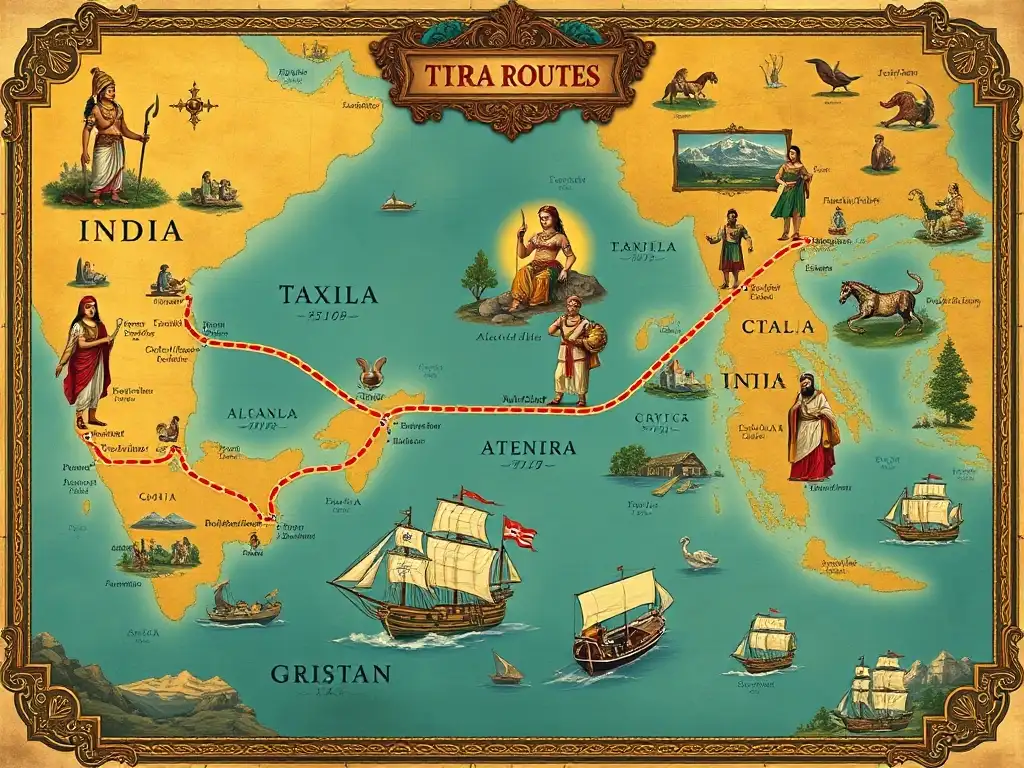
The establishment of trade routes between India and Greece played a crucial role in fostering cultural exchange and artistic dialogue. These routes not only facilitated the movement of goods but also enabled the flow of ideas, philosophies, and artistic techniques.
The Role of the Silk Road in Indian Greek Relations
The Silk Road, a network of trade routes that connected the East and West, served as a vital conduit for cultural interaction between Indian and Greek civilizations. While primarily known for the exchange of silk, spices, and precious metals, the Silk Road also facilitated the transmission of knowledge, art forms, and religious beliefs.
As merchants traveled along these routes, they brought with them not only commodities but also stories and artistic practices. The cross-pollination of ideas led to the emergence of Greco-Buddhist art in regions like Gandhara, where Indian Buddhist themes were infused with Hellenistic artistic styles. This synthesis of cultural elements highlights the importance of the Silk Road in shaping the artistic landscape of both civilizations.
Major Trade Goods and Their Cultural Significance
The trade between India and Greece involved a variety of goods, each carrying significant cultural importance. Among the major trade items were:
- Spices: Indian spices were highly sought after in Greece, often symbolizing wealth and luxury. Their use in Greek cuisine influenced local culinary practices and led to a greater appreciation for Indian agricultural products.
- Textiles: Indian textiles, known for their intricate designs and vibrant colors, became popular in Greek markets. The exchange of textile-making techniques contributed to advancements in Greek craftsmanship.
- Precious Stones and Metals: The trade of gems and metals not only fostered economic ties but also allowed for the exchange of artistic techniques in jewelry and ornamentation.
These trade goods acted as tangible links between the two cultures, fostering a deeper understanding of each other’s artistic expressions and lifestyles. The significance of these exchanges underscores the broader narrative of Indian-Greek cultural relations, illustrating how commerce can pave the way for artistic and ideological collaboration.
Modern Perspectives on Indian Greek Cultural Exchange
The Indian Greek cultural exchange history has evolved into a subject of increasing interest among scholars, artists, and the public alike. Modern perspectives emphasize the profound and multifaceted influences both civilizations had on each other, particularly during the period following Alexander the Great's conquests. This era marked a significant intersection of ideas, art, philosophy, and trade between the two cultures, which is still relevant in contemporary discussions of cultural interactions.
Today, researchers are delving into various aspects of this exchange, including the impact on language, religious thought, and artistic expression. The synthesis of Indian and Greek artistic traditions can be seen in the surviving remnants of sculptures and architecture, which blend styles and motifs from both cultures. Modern interpretations often highlight how this interplay shaped not only the regional dynamics of the ancient world but also laid foundations for later cultural developments in both societies.
In addition, modern technologies such as digital humanities are enabling a deeper exploration of the artifacts and texts from this era, allowing for a more nuanced understanding of the complexities of the Indian Greek cultural exchange. Scholars are increasingly utilizing advanced analytical techniques to study ancient manuscripts, artworks, and archaeological sites, leading to fresh insights and interpretations that challenge previous narratives.
Legacy of Cultural Exchange in Contemporary Society
The legacy of the Indian Greek cultural exchange is visible in many aspects of contemporary society, particularly in the realms of art, philosophy, and religion. For instance, the blending of Hellenistic and Indian artistic styles has influenced various forms of modern art, including sculpture and painting. The iconic Gandhara art, which emerged from the interaction between these cultures, continues to inspire contemporary artists who draw upon these ancient techniques and themes.
Philosophically, the dialogues initiated during this period have persisted into modern discourse. The exchange of ideas on ethics, governance, and metaphysics contributed to the development of various schools of thought in both cultures, influencing contemporary philosophical frameworks. This cross-pollination of ideas highlights the enduring relevance of Indian Greek cultural exchange in shaping modern ideological landscapes.
Religiously, the fusion of Indian and Greek beliefs has left a lasting imprint. The incorporation of Hellenistic elements into Indian religious practices, as seen in the syncretism of deities and rituals, can still be observed today. This legacy fosters a deeper understanding of how cultures can coexist and enrich one another, providing a model for contemporary intercultural dialogue.
Educational and Artistic Collaborations Today
In modern times, educational and artistic collaborations between India and Greece have flourished, reflecting the ongoing interest in the shared heritage of these civilizations. Universities and cultural institutions are increasingly organizing joint research projects, symposiums, and exhibitions that explore the rich tapestry of Indian Greek cultural exchange history. These initiatives not only promote academic scholarship but also foster mutual understanding and appreciation of both cultures.
Artistic collaborations often manifest in exhibitions that showcase the artistic achievements of both civilizations. For instance, exhibitions featuring Gandhara art alongside Hellenistic sculptures allow audiences to witness the convergence of these artistic traditions firsthand. Workshops and artist residencies further promote cross-cultural dialogue, enabling artists from both backgrounds to collaborate and create new works inspired by their shared history.
Furthermore, educational programs that focus on Indian Greek relations are becoming more prevalent in academic curricula. Courses that highlight the historical interactions between these cultures encourage students to engage critically with the past while cultivating an appreciation for intercultural dialogue in the modern world.
Conclusion: The Lasting Impact of Indian Greek Cultural Exchange
The Indian Greek cultural exchange has had a lasting impact on both civilizations, influencing art, philosophy, and social structures in ways that resonate to this day. This complex interplay of ideas and aesthetics laid the groundwork for future interactions and exchanges, shaping the cultural landscapes of both India and Greece.
Summary of Key Contributions and Influences
Key contributions of this exchange include the development of unique artistic styles, such as Gandhara art, which exemplifies the synthesis of Greek and Indian techniques. Philosophically, the blending of ideas around ethics and governance enriched both cultures, providing frameworks that endure in contemporary thought. Moreover, the religious syncretism that emerged from this interaction fostered a deeper understanding of the shared human experience, influencing spiritual practices across cultures.
Future Research Directions in Indian Greek Cultural Exchange History
As interest in the Indian Greek cultural exchange continues to grow, several future research directions offer exciting possibilities. Scholars are encouraged to explore lesser-known aspects of this exchange, such as the role of trade routes in facilitating cultural interactions and the influence of climate and geography on these exchanges. Additionally, interdisciplinary approaches that incorporate anthropology, archaeology, and digital humanities may yield new insights into the complexities of these interactions.
There is also potential for further examination of the impact of this cultural exchange on subsequent civilizations, particularly in the context of the Silk Road and its role in fostering cross-cultural dialogue. By uncovering the intricacies of the Indian Greek relationship, researchers can contribute to a richer understanding of how cultures have shaped one another throughout history.
- Introduction to Indian Greek Cultural Exchange History
- Historical Context of Indian Greek Relations
- Artistic Influences in Indian Greek Cultural Exchange
- Architecture: Blending Styles and Techniques
- Sculpture: Merging Aesthetic Traditions
- Literature and Philosophy: Cross-Pollination of Ideas
- Religion and Mythology: Shared Themes and Beliefs
- Trade Routes: Facilitating Cultural Exchange
- Modern Perspectives on Indian Greek Cultural Exchange
- Conclusion: The Lasting Impact of Indian Greek Cultural Exchange
- What is the significance of the Indian Greek cultural exchange history?
- How did the Indus Valley Civilization influence later cultures?
- What were some key contributions of the Gupta Empire to this exchange?
- Can you name some artistic elements that were exchanged between the two civilizations?
- How did trade facilitate the cultural exchange between India and Greece?
Frequently Asked Questions
What is the significance of the Indian Greek cultural exchange history?
The Indian Greek cultural exchange is significant because it fostered artistic and intellectual collaboration, leading to enriched cultural diversity and innovations in both civilizations.
How did the Indus Valley Civilization influence later cultures?
The Indus Valley Civilization laid the foundation for urban planning, trade, and cultural practices, which were later adapted and further developed by subsequent Indian and Greek cultures.
What were some key contributions of the Gupta Empire to this exchange?
The Gupta Empire was known for its advancements in art, science, and philosophy, which were influenced by Greek thought, leading to a unique blend of ideas that shaped Indian culture.
Can you name some artistic elements that were exchanged between the two civilizations?
Prominent artistic elements included sculpture styles, architectural techniques, and iconography, where Greek styles were integrated into Indian art forms, particularly in Buddhist sculptures.
How did trade facilitate the cultural exchange between India and Greece?
Trade routes enabled the flow of not only goods but also ideas, art, and philosophies, making them crucial in establishing a cultural dialogue that enriched both Indian and Greek civilizations.
Final Reflection: Embracing the Legacy of Indian-Greek Cultural Exchange
The intricate tapestry of Indian and Greek civilizations, woven through centuries of artistic exchange, remains profoundly relevant today. As we navigate an increasingly interconnected world, understanding the Indian-Greek cultural exchange history serves as a reminder of the beauty that arises from collaboration and mutual respect. The artistic dialogues between these two ancient cultures not only enriched their respective societies but also laid the groundwork for a shared human experience that transcends borders.
Cultural exchanges continue to shape our modern landscape, influencing everything from art to philosophy. The legacy of Indian and Greek interactions is evident in contemporary art forms, literature, and even spiritual practices. As we reflect on this rich history, we recognize that the fusion of ideas and aesthetics fosters creativity and innovation. Art is the most beautiful of all lies.
This quote resonates deeply, highlighting how artistic expression can bridge divides and create a shared narrative that honors diverse perspectives.
As you ponder the lessons from this article, consider how you can contribute to the ongoing dialogue of cultural exchange in your own life. Embrace the diversity around you, seek out new perspectives, and celebrate the artistic expressions that emerge from different cultures. By doing so, you not only honor the legacy of the Indian-Greek cultural exchange but also become an active participant in the creation of a more harmonious and enriched world.
Unveil the Rich Tapestry of Cultural Exchange!
Thank you for diving into the fascinating world of Indian and Greek civilizations with us! You’ve explored the intricate artistic exchanges that have shaped our cultural heritage. Now it’s time to take your newfound knowledge and turn it into action!
Here’s how you can contribute to this vibrant dialogue and continue your journey of discovery:
- Start a discussion: Share your insights on social media or in a community group. Invite others to explore the complexities of cultural exchange!
- Visit a local museum: Seek out exhibitions featuring Indian and Greek art. Experience these cultures firsthand and document what inspires you!
- Create a fusion art piece: Blend elements from both traditions. Let your creativity shine and share your artwork with the world!
What unique perspective do you have on the connections between Indian and Greek artistry? We would love to hear your thoughts in the comments below!