
The Symbolism of Numbers in Ancient Indian Culture: A Mathematical Analysis

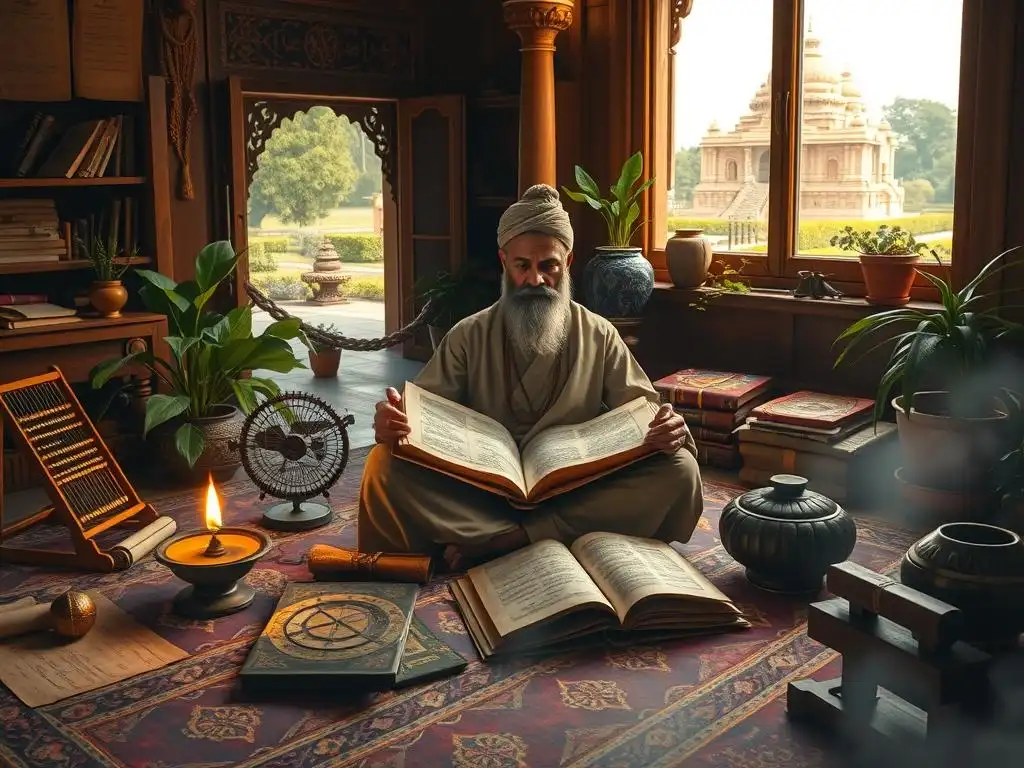
Welcome to Ancient India History, where we embark on a journey through the fascinating tapestry of ancient Indian civilizations! Discover the profound Symbolism of Numbers in Ancient Indian Culture, a topic that unveils the intricate relationship between mathematics and spirituality in the diverse cultures of this remarkable era. From the mystical significance of sacred numbers to their practical applications in daily life, our exploration will challenge your understanding and spark your curiosity. Are you ready to delve deeper into the mathematical marvels that shaped ancient India? Let’s unlock the secrets together!

Introduction to the Symbolism of Numbers in Ancient India
The symbolism of numbers in ancient India extends far beyond mere calculation; it intricately weaves through the fabric of Indian culture, philosophy, and spirituality. Numbers were not just tools for trade or record-keeping; they held profound meanings, shaping the worldview of ancient civilizations. This analysis delves into how numbers were perceived, represented, and utilized in various contexts, illuminating their significance in rituals, arts, and sciences. By exploring the mathematical underpinnings and cultural implications, we can better understand the legacy of ancient Indian mathematics and its impact on later developments.
Definition and Importance of Numerical Symbolism
Numerical symbolism refers to the use of numbers to convey deeper meanings and values beyond their quantitative significance. In ancient Indian culture, numbers symbolized various concepts including:
- Cosmic Order: Numbers like one (1) represented unity, while two (2) symbolized duality.
- Spiritual Significance: Certain numbers were associated with deities and spiritual practices, for example, the number three (3) often represented the Hindu trinity of Brahma, Vishnu, and Shiva.
- Philosophical Concepts: The use of numbers in philosophical texts often illustrated concepts like infinity, cycles of life, and the nature of reality.
Understanding these symbols is crucial for appreciating the cultural and philosophical depth of ancient Indian thought.
Overview of Ancient Indian Culture and Mathematics
The cultural landscape of ancient India was rich and diverse, marked by significant advancements in various fields, including mathematics. Ancient Indian mathematicians and scholars laid the groundwork for many modern mathematical concepts. The following points highlight the essence of mathematics in ancient Indian culture:
- Integration with Daily Life: Mathematics was not a standalone discipline; it was intertwined with astronomy, architecture, and art.
- Contributions to Number Systems: The development of the decimal system and the concept of zero are among India’s most notable contributions to mathematics.
- Cultural Practices: Rituals and festivals often employed mathematical calculations to determine auspicious timings and arrangements.
The interplay between culture and mathematics in ancient India showcases how numbers were more than mere figures; they were essential to understanding the universe.
Historical Context of Numbers in Ancient Indian Society
Understanding the historical context of numerical symbolism requires examining the foundational civilizations that shaped these concepts, particularly the Indus Valley Civilization and the Vedic period.
Influence of the Indus Valley Civilization on Numerical Concepts
The Indus Valley Civilization (c. 3300–1300 BCE) is recognized for its advanced urban planning and trade systems. Evidence suggests that this civilization had a sophisticated understanding of numbers, as indicated by:
- Weights and Measures: Standardized weights found in excavation sites point to a system of trade that required precise calculations.
- Numerical Inscriptions: Seals with inscriptions indicate the use of numbers for administrative purposes, hinting at an early form of numerical symbolism in governance and commerce.
The numerical systems developed during this era laid the groundwork for later mathematical thought, influencing subsequent cultures and societies.
The Role of Numbers in Vedic Literature and Philosophy
The Vedic texts, composed between 1500 and 500 BCE, are foundational to Hindu philosophy and spirituality. Numbers in these texts often symbolized cosmic and metaphysical realities. Key aspects include:
- Sacred Numbers: The number seven (7) frequently appears, representing completion and perfection in various contexts, including rituals and cosmology.
- Mathematical Concepts: The Sulba Sutras, ancient texts focusing on geometry and measurement, reveal that numbers were essential in constructing altars and performing sacrifices, blending mathematics with spirituality.
The philosophical implications of numbers in Vedic literature illustrate how ancient Indians viewed mathematical concepts as integral to understanding the universe and the divine.
Key Numbers and Their Symbolic Meanings
In ancient Indian culture, numbers were not merely quantitative; they held deep symbolic meanings, often intertwined with spiritual beliefs, cosmology, and philosophical concepts. The significance of numbers can be seen in various texts, rituals, and cultural practices that highlight their importance in understanding the universe and human existence. Below, we explore some key numbers that were particularly influential in ancient Indian thought, along with their symbolic meanings.
The Number One: Unity and the Concept of Brahman
The number one is profoundly significant in ancient Indian philosophy, symbolizing unity and the ultimate reality known as Brahman. In Hinduism, Brahman is considered the source of all existence, representing the singular consciousness that pervades the universe. This concept of oneness is reflected in various texts, including the Upanishads, where the realization of the non-duality of the self (Atman) and Brahman is a central theme.
Furthermore, the number one signifies the beginning of all numerical systems, emphasizing the idea that everything originates from a singular point. This unity is also mirrored in the practices of meditation and yoga, where the goal is to transcend individual identity and align with the universal consciousness. As such, the number one embodies the essence of non-duality and the interconnectedness of all beings in ancient Indian thought.
The Number Three: The Trimurti and Cosmic Balance
The number three holds significant importance in ancient Indian culture, symbolizing balance and harmony through the concept of the Trimurti—the triad of divine entities comprising Brahma (the creator), Vishnu (the preserver), and Shiva (the destroyer). This trinity represents the cyclical nature of existence, where creation, preservation, and destruction are interconnected processes that maintain the cosmic order.
In addition to the Trimurti, the number three is also prevalent in various philosophical and spiritual traditions. For example, the three gunas (qualities) of nature— sattva (purity), rajas (passion), and tamas (inertia)—illustrate the dynamic interplay of forces within the universe. This tripartite division reflects the complexity of existence and the necessity for balance among these elements, reinforcing the idea that harmony is essential for spiritual growth and understanding.
The Number Seven: Spirituality and the Seven Chakras
The number seven is often associated with spirituality and the human body’s energy centers, known as chakras. In ancient Indian philosophy, there are seven main chakras, each corresponding to different aspects of consciousness and spiritual development. These chakras are believed to influence physical, emotional, and spiritual well-being, forming a holistic system that guides practitioners on their journey toward enlightenment.
Each chakra, from the Muladhara (root chakra) at the base of the spine to the Sahasrara (crown chakra) at the top of the head, is linked to specific elements, deities, colors, and sounds, creating a rich tapestry of symbolic associations. The number seven signifies completeness and the journey through the chakras reflects the process of awakening and self-realization. Thus, in ancient Indian culture, the number seven embodies the path to spiritual enlightenment and the integration of body, mind, and spirit.
The Number Twelve: Zodiac and Cosmic Order
The number twelve is deeply embedded in ancient Indian cosmology, particularly in the context of astrology. The zodiac, consisting of twelve signs, is a crucial aspect of Vedic astrology, which forms an integral part of the cultural and religious practices in ancient India. Each zodiac sign is believed to represent distinct characteristics and influences, shaping an individual's destiny and personality.
In addition to astrology, the number twelve is also reflected in the twelve Adityas, solar deities mentioned in Hindu scriptures, representing different aspects of the sun and its significance in the cycle of life. This connection to the cosmos illustrates the ancient Indians’ understanding of the interconnectedness of celestial bodies and earthly existence. The number twelve, therefore, symbolizes cosmic order and the intricate relationship between the universe and human life, emphasizing the belief in a structured and harmonious cosmos.
The symbolism of numbers in ancient India was not confined to philosophical or spiritual realms; it also had practical implications in mathematics. Ancient Indian mathematicians integrated symbolic meanings with numerical systems, leading to significant contributions that have influenced mathematical thought across generations.
Early Indian Mathematicians and Their Insights
Prominent mathematicians such as Brahmagupta and Aryabhata made notable contributions to mathematics while also reflecting on the symbolic meanings of numbers. Brahmagupta's work in the Brahmasphutasiddhanta introduced concepts such as zero and negative numbers, showing an understanding of unity and balance in mathematics. His exploration of arithmetic operations and their implications on real-world situations exemplifies how ancient Indian mathematicians merged numerical understanding with philosophical insights.
Similarly, Aryabhata’s treatise, the Aryabhatiya, delves into the significance of numbers and their relationships, showcasing an awareness of mathematics as both a practical tool and a philosophical inquiry. His contributions to trigonometry, algebra, and place-value notation demonstrate the advanced mathematical thinking present in ancient India, emphasizing the intertwined nature of mathematics and symbolic meaning.
The Connection Between Numerology and Mathematics in Ancient Texts
In ancient Indian literature, numerology played a vital role in understanding the world and its complexities. Texts like the Ganita Sutras discuss mathematical operations while highlighting the symbolic significance of numbers. The intricate relationship between numbers and mathematics is evident in how ancient scholars viewed numerical patterns as reflections of cosmic principles.
Moreover, numerology often found its way into architectural design, music, and art, where specific numbers were believed to possess unique energies and vibrations. This belief in the mystical properties of numbers fostered a culture where mathematics was not only a scientific discipline but also a means to connect with the divine. The synthesis of numerology and mathematics in ancient Indian texts illustrates the profound respect and understanding of numbers as representations of deeper truths, thus enriching the cultural and intellectual landscape of ancient India.
Symbolism of Numbers in Ancient Indian Art and Architecture

The symbolism of numbers in ancient Indian culture profoundly influenced various artistic expressions, particularly in architecture and sculpture. Numbers were not merely quantitative; they held deep spiritual and philosophical meanings. For example, the number three represented the trinity of creation, preservation, and destruction, correlating with deities such as Brahma, Vishnu, and Shiva. Similarly, the number seven is often linked to the sacredness of the seven sages (Saptarishi) and the seven notes of music (saptak).
Architectural designs frequently incorporate these symbolic numbers, reflecting an underlying cosmology. The layout of temples, for instance, often follows specific numerical proportions believed to resonate with cosmic harmony. Temples are commonly structured in a way that their dimensions relate to sacred numbers, creating a divine geometry that enhances their spiritual significance.
Representation of Numerical Concepts in Temples and Structures
Numerical concepts are represented in various dimensions of ancient Indian temples, from their layout to their decorative motifs. The mandala, or sacred diagram, is a prime example where numbers play a crucial role. These geometric patterns often express the universe's structure and are meticulously planned using specific numerical ratios. For instance, many temples are built in multiples of 108, a number that holds immense significance in Hinduism, Buddhism, and Jainism, symbolizing the universe's wholeness.
Additionally, the shikhara (spire) of a temple often consists of a specific number of tiers, each tier representing a step towards spiritual elevation. The ornamentation on the temple walls can also include carvings depicting numerical sequences or groupings, such as the ashta dikpalas, the eight directional guardians, representing the harmony of the universe.
Case Studies of Notable Sites: Brihadeeswarar Temple, Konark Sun Temple
The Brihadeeswarar Temple in Thanjavur, built during the Chola dynasty, exemplifies the intricate use of number symbolism. The temple's architecture features a massive vimana (tower) that stands 66 meters high, demonstrating the significance of the number 6 and its multiples in conveying divine stature. The temple's layout and dimensions are meticulously designed to create an alignment with celestial bodies, reflecting the ancient Indian belief in the connection between the earthly and the divine.
Similarly, the Konark Sun Temple, dedicated to the Sun God, showcases number symbolism through its chariot-like structure, which is adorned with 24 wheels, each representing a specific time of day. The wheels are divided into eight spokes, symbolizing the eight directions. This not only emphasizes the importance of time in daily rituals but also highlights the ancient understanding of astronomical phenomena.
The Influence of Number Symbolism on Modern Mathematics
The influence of number symbolism from ancient Indian culture extends into modern mathematics, where foundational concepts can be traced back to earlier numerical ideas. Ancient Indian mathematicians, such as Aryabhata and Brahmagupta, not only contributed to arithmetic and algebra but also embedded their work with symbolic meanings that resonate even today.
Continuity of Ancient Symbolism in Contemporary Practices
Many contemporary mathematical practices continue to reflect the ancient Indian view of numbers as symbols with deeper meanings. For example, the use of zero as a placeholder and its conceptualization as a number with its own value are critical advancements attributed to ancient Indian mathematicians. The philosophical implications of nothingness and infinity in mathematics can be traced back to ancient texts, which explored the implications of void and fullness in existence.
Moreover, the concept of numerical harmony found in ancient texts resonates in modern mathematical theories, particularly in fields such as number theory and geometry. The principles guiding the construction of mathematical models today often echo the harmonious relationships emphasized in ancient Indian philosophy.
How Ancient Indian Numerical Concepts Shape Modern Mathematical Thought
Ancient Indian numerical concepts have profoundly shaped modern mathematical thought, particularly in areas such as combinatorics and algebra. The emphasis on number patterns and sequences laid the groundwork for contemporary mathematical explorations. For instance, the sophisticated understanding of Pascal's triangle can find parallels in the ancient Indian treatise Chandahshastra, which explored poetic metrics using combinatorial principles.
Additionally, the philosophical underpinnings of mathematics in ancient India fostered an appreciation for abstraction and theoretical exploration that continues to influence mathematical research today. Concepts such as infinity and the nature of numbers as both abstract entities and practical tools are deeply rooted in the traditions of ancient Indian scholars, demonstrating a continuity of thought that enriches the field of mathematics in the modern era.
Conclusion: The Lasting Legacy of Number Symbolism in Ancient Indian Culture
The exploration of the symbolism of numbers in ancient India reveals a profound and intricate relationship between mathematics, philosophy, and spirituality. Numbers were not merely tools for calculation; they were imbued with deep meanings that influenced various aspects of life, from astrology and architecture to literature and religion. This legacy has persisted through centuries, shaping not only the cultural landscape of India but also influencing the mathematical thought processes globally.
Ancient Indian mathematicians, including notable figures such as Aryabhata and Brahmagupta, utilized numbers symbolically to convey complex concepts, intertwining numerical values with cosmic principles and philosophical teachings. The rich tapestry of numerical symbolism can be seen in texts such as the Brahmasphutasiddhanta, which illustrates the significance of zero, and the Sulbasutras, which highlight the sacred geometry of Vedic rituals. As a result, the numbers 1 through 9, as well as zero, transcended their mathematical functions, becoming integral to understanding the universe.
In sum, the symbolism of numbers in ancient India serves as a foundation for many modern mathematical principles and philosophies, illustrating how numerical concepts can carry layers of meaning that resonate beyond their immediate utility.
Summary of Key Insights
- Cultural Integration: Numbers in ancient Indian culture were deeply intertwined with various domains, including religion, philosophy, and art. For instance, the number 108 is significant in Hinduism and Buddhism, representing the universe's wholeness.
- Numerical Systems: The development of the decimal system and the concept of zero were monumental contributions from ancient India. These innovations not only advanced mathematics but also facilitated the representation of complex ideas.
- Astrology and Rituals: The use of numbers in astrology demonstrated their perceived influence on human lives and destiny. Certain numbers were associated with specific deities and cosmic events, reinforcing their symbolic importance.
- Philosophical Underpinnings: Many mathematical concepts were linked to deep philosophical inquiries about existence, time, and space. This connection provided a holistic approach to understanding reality.
- Legacy and Influence: The numerical symbolism of ancient India has had a lasting impact on various fields, including mathematics, astronomy, and even modern art. The principles established thousands of years ago continue to inspire contemporary thinkers and practitioners.
Reflection on the Relevance of Ancient Numerical Symbolism Today
The symbolism of numbers in ancient India continues to resonate in contemporary society, demonstrating the timeless nature of these concepts. In a world increasingly driven by data and analytics, the foundational ideas established by ancient mathematicians are more relevant than ever. For instance, the understanding of zero not only revolutionized mathematics but also laid the groundwork for modern computing and digital technology.
Moreover, many spiritual practices and philosophies still draw from the numerical symbolism of ancient texts. Numbers like 3, 7, and 9 hold significance in various cultural contexts, often representing completeness, spiritual awakening, and transformation. This reflects a continuity of thought that emphasizes the importance of numbers beyond their mathematical properties.
In education, revisiting the ancient Indian approach to numbers can inspire new methods of teaching mathematics that highlight their cultural and historical significance. By integrating these insights into modern curricula, educators can foster a deeper appreciation for mathematics in students, encouraging them to view numbers not just as symbols on paper but as carriers of rich meaning and heritage.
Ultimately, the symbolism of numbers in ancient India serves as a bridge between the past and present, reminding us that mathematics is not solely a science but also an art form deeply embedded in culture and human experience.
- Introduction to the Symbolism of Numbers in Ancient India
- Historical Context of Numbers in Ancient Indian Society
- Key Numbers and Their Symbolic Meanings
- Mathematical Contributions Related to Number Symbolism
- Symbolism of Numbers in Ancient Indian Art and Architecture
- The Influence of Number Symbolism on Modern Mathematics
- Conclusion: The Lasting Legacy of Number Symbolism in Ancient Indian Culture
- What is the symbolism of numbers in ancient Indian culture?
- How did ancient Indians use mathematics in their culture?
- Which numbers were considered sacred in ancient India?
- What contributions did ancient Indian civilizations make to numerical systems?
- How is the symbolism of numbers reflected in ancient Indian art?
Frequently Asked Questions
What is the symbolism of numbers in ancient Indian culture?
The symbolism of numbers in ancient India reflects spiritual significance, where each number carries its own meaning, often linked to cosmic principles and philosophical concepts.
How did ancient Indians use mathematics in their culture?
Ancient Indians utilized mathematics not only for practical applications like trade and architecture but also for astronomy, astrology, and ritualistic purposes, showcasing their advanced understanding.
Which numbers were considered sacred in ancient India?
Numbers such as one (1), representing unity, and three (3), symbolizing the trinity of gods, held special significance, often used in spiritual texts and rituals.
What contributions did ancient Indian civilizations make to numerical systems?
Ancient Indian civilizations developed the decimal system and made significant contributions to algebra and geometry, influencing mathematics worldwide.
How is the symbolism of numbers reflected in ancient Indian art?
The symbolism of numbers is evident in ancient Indian art through the use of geometric patterns and religious motifs, where specific numbers enhance the spiritual meaning of the artwork.
Final Reflection: The Enduring Legacy of Number Symbolism in Ancient India
In exploring the symbolism of numbers in ancient India, we uncover a rich tapestry of cultural significance that resonates profoundly in today's world. The intricate relationship between mathematics and spirituality in ancient Indian culture not only reflects the intellectual prowess of the time but also offers timeless insights into how we perceive and interact with the universe. As we navigate a world increasingly driven by data and numbers, understanding their historical and cultural context becomes essential for appreciating their deeper meanings.
The influence of number symbolism extends far beyond historical texts and artifacts; it continues to shape our cultural and social landscapes. From the sacred geometry of temples to the astrological practices that guide personal decisions, the legacy of ancient Indian numerology is woven into the very fabric of contemporary life. As we engage with these concepts, we are reminded of the words of the mathematician and philosopher, Bhaskara II: Mathematics is the language of the universe.
This perspective encourages us to recognize the profound connections between numbers and our spiritual and cultural identities.
As we conclude this exploration, I invite you to reflect on the role that numbers play in your own life. Consider how the lessons of ancient Indian culture can inspire you to seek deeper meanings in the numerical patterns that surround us. Embrace the opportunity to engage with these symbols, allowing them to enrich your understanding of the world and your place within it. Let the wisdom of the past guide you as you navigate the complexities of the present and future, reminding you that every number carries a story waiting to be discovered.
Unveil the Secrets of Ancient Indian Numerology!
Thank you for diving deep into the fascinating world of ancient Indian numbers with us. We hope this exploration has sparked your curiosity and enriched your understanding of the profound symbolism that numbers held in ancient Indian culture. Now, it’s time to turn that knowledge into action!
Here’s how you can further your journey into this captivating topic:
- Explore a Local Workshop: Seek out workshops or seminars focused on numerology or ancient mathematics in your area to deepen your understanding and connect with fellow enthusiasts.
- Join Online Communities: Engage with forums or social media groups dedicated to ancient cultures, sharing your thoughts and discoveries while participating in discussions that broaden your insights.
- Read More and Reflect: Choose a book on ancient Indian philosophy or mathematics, and contemplate how these timeless concepts can be applied in today's world.
What intrigues you the most about the connection between numbers and spirituality in ancient cultures? We invite you to share your thoughts in the comments below!