
The Role of Religion in the Maurya Empire: Influential Figures and Their Impact

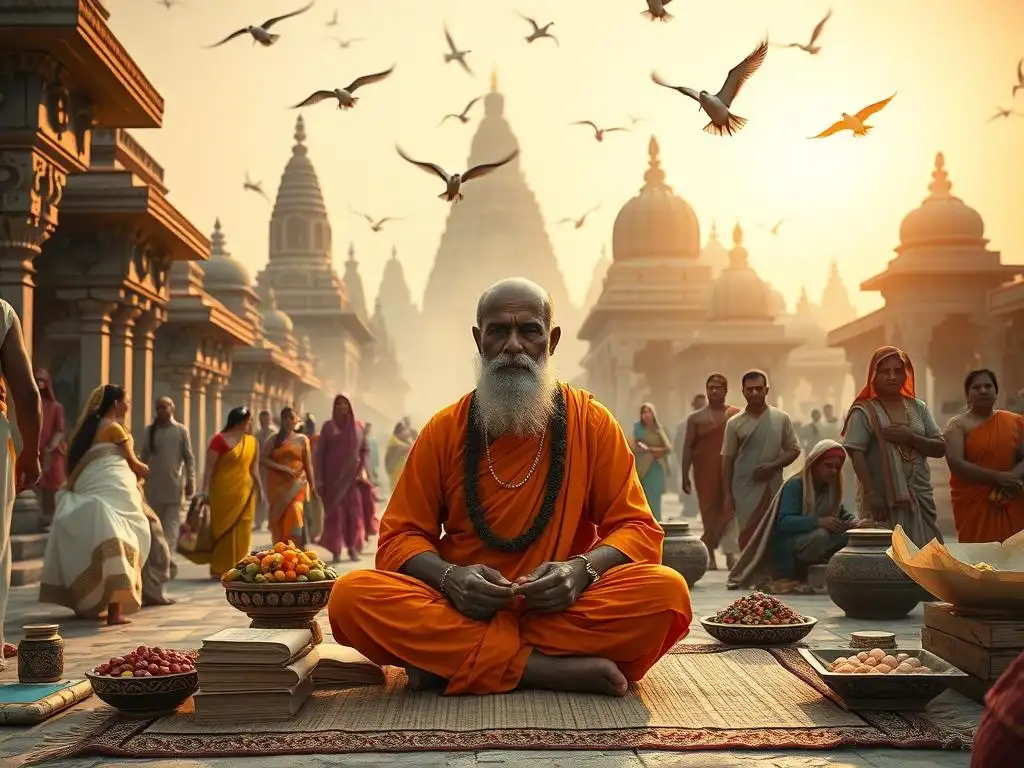
Welcome to Ancient India History, where we embark on a journey through the rich tapestry of ancient Indian civilizations. Today, we delve into the profound influence of religion in the Maurya Empire, a pivotal era that shaped the spiritual and cultural landscape of India. From the impactful teachings of revered figures to the intricate interplay of faith and governance, this exploration unveils how religion was not just a belief system but a powerful force that molded society.
Are you ready to uncover the fascinating stories and insights that lie within? Let’s dive deeper into the legacy of the Maurya Empire and its enduring impact on modern India!
Introduction to Religion in the Maurya Empire
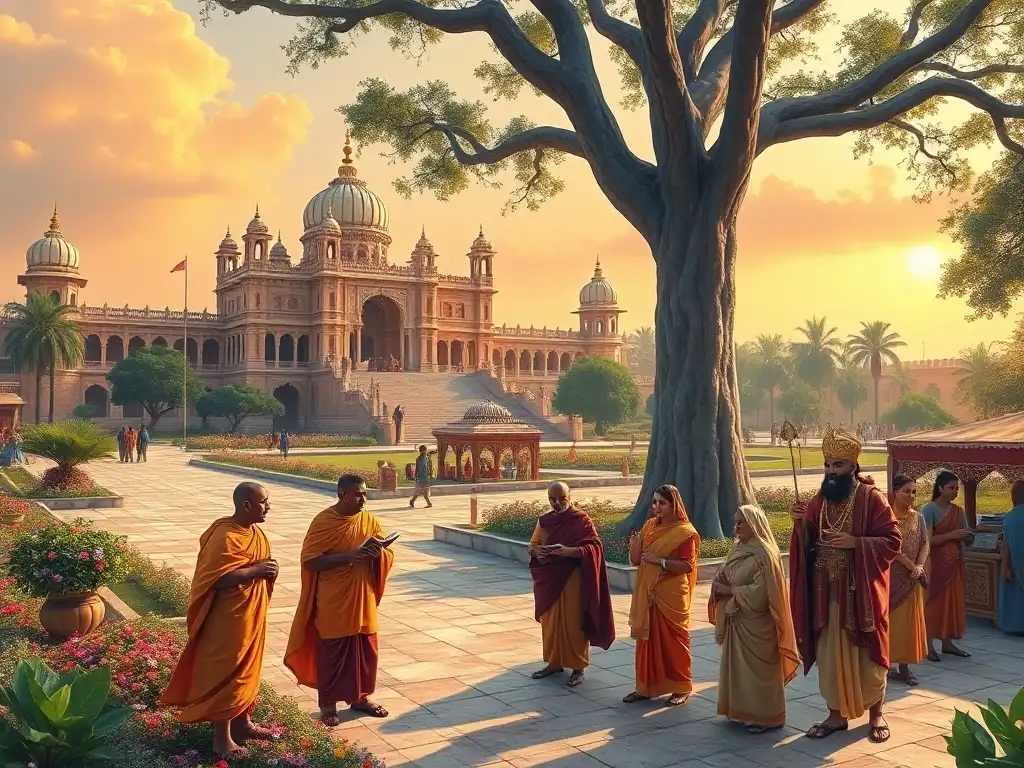
The Maurya Empire, which thrived from approximately 322 to 185 BCE, stands as one of the most significant empires in ancient Indian history. It was an era marked by remarkable advancements in administration, culture, and religion. The role of religion during this period was not merely a personal belief system; it was intricately woven into the fabric of governance and societal norms.
From the foundations laid by Chandragupta Maurya to the transformative reign of Emperor Ashoka, religion profoundly influenced the political landscape, cultural development, and social cohesion of the empire. Understanding the multifaceted nature of religion in the Maurya Empire allows us to appreciate the legacy left by its influential figures, whose beliefs and practices shaped an entire civilization.
Overview of the Maurya Empire's Historical Context
The Maurya Empire emerged in the wake of the fragmentation that followed the decline of the Nanda Dynasty. Founded by Chandragupta Maurya, the empire expanded rapidly, eventually encompassing a vast territory that included much of the Indian subcontinent. Under his grandson, Ashoka the Great, the empire reached its zenith, both in terms of territorial expansion and cultural achievements. The Maurya period was characterized by a complex interplay of various regional cultures, languages, and, importantly, religions.
During this time, the Mauryan rulers employed religion as a tool to unify their diverse subjects while also reinforcing their authority. The state supported and patronized various religious traditions, which played a crucial role in governance and societal stability. The Maurya Empire's historical context is essential to grasp the significant impact of religion on its development and legacy.
The Importance of Religion in Ancient Indian Civilizations
Religion in ancient Indian civilizations was not only a matter of personal faith but a crucial element that shaped the social and political frameworks. It provided a moral compass, influencing laws and ethical standards while serving as a catalyst for cultural expressions such as art, literature, and philosophy.
- Social Cohesion: Religion fostered a sense of community and belonging among people, leading to the formation of shared values and practices.
- Political Legitimacy: Rulers often claimed divine sanction for their authority, using religious doctrines to justify their rule and policies.
- Cultural Identity: The diverse religious practices contributed to a rich tapestry of cultural expressions, reflecting the complexities of ancient Indian life.
Understanding the importance of religion in this context helps illuminate its pivotal role in the Maurya Empire, where it not only influenced individual lives but also shaped the very nature of governance and societal structure.
Major Religions During the Maurya Empire
Hinduism: The Foundation of Spiritual Life
Hinduism, one of the oldest religions in the world, served as a foundational spiritual framework during the Maurya Empire. It provided a rich tapestry of rituals, philosophies, and deities that influenced daily life and governance. The Vedic texts, which form the basis of Hindu belief, emphasized dharma (duty) and karma (action), concepts that were instrumental in guiding societal norms and individual conduct.
- Ritual Practices: The Mauryan rulers often engaged in elaborate rituals to seek favor from the gods, reinforcing their divine right to rule.
- Cultural Integration: Hinduism's adaptability allowed for the incorporation of local traditions, promoting a sense of unity across the empire.
Buddhism: The Rise and Influence of Ashoka
Buddhism rose to prominence during the Maurya Empire, particularly under the reign of Emperor Ashoka, who converted to Buddhism after the Kalinga War. Ashoka's commitment to the teachings of Buddha marked a significant shift in the empire's religious landscape.
- Edicts of Ashoka: The emperor issued edicts promoting Buddhist principles such as non-violence, compassion, and tolerance, which aimed to guide his subjects towards ethical living.
- Spread of Buddhism: Ashoka's patronage led to the establishment of monasteries and stupas, facilitating the spread of Buddhism beyond India.
Jainism: Coexistence and Contributions
Jainism also played a vital role in the religious milieu of the Maurya Empire. With its emphasis on non-violence (ahimsa) and asceticism, Jainism resonated with many who sought an alternative spiritual path.
- Philosophical Contributions: Jain thinkers contributed significantly to discussions on ethics, cosmology, and metaphysics, enriching the intellectual landscape of the period.
- Cultural Harmony: Jainism coexisted alongside Hinduism and Buddhism, contributing to a culture of pluralism and mutual respect within the empire.
The intricate tapestry of religions during the Maurya Empire not only shaped individual beliefs but also influenced the political and cultural evolution of one of ancient India's most significant civilizations. The interplay between these religions and their key figures provides a deeper understanding of the era's historical significance.
Key Religious Figures in the Maurya Empire
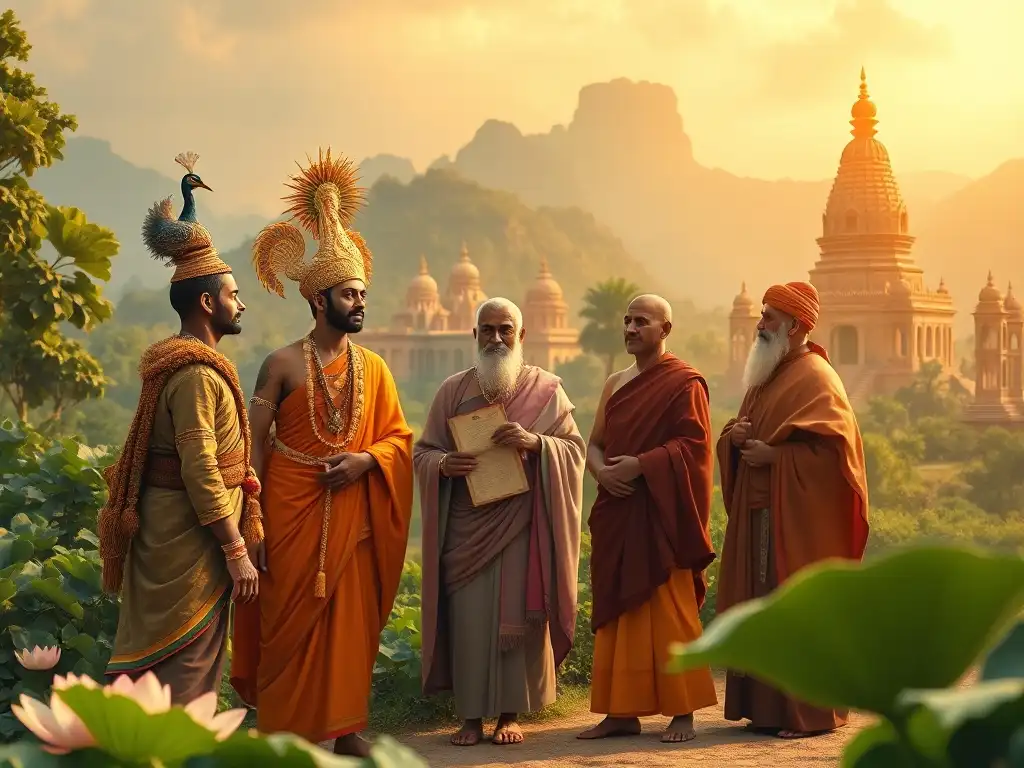
The Maurya Empire, one of the largest empires in ancient India, was marked by significant religious influences that shaped its governance, culture, and society. At the forefront of this religious landscape were key figures whose beliefs and actions left a lasting impact. Among these figures, Chandragupta Maurya and his grandson Ashoka the Great stand out prominently. Additionally, philosophers like Nagarjuna contributed to the intellectual discourse surrounding religion during this period. This rich tapestry of religious leadership played a crucial role in not only shaping the empire's policies but also in fostering a diverse cultural milieu.
Chandragupta Maurya: The Role of Religion in Governance
Chandragupta Maurya, the founder of the Maurya Empire, utilized religion as a tool for governance and unification. He was influenced by various religious traditions, including Hinduism and Jainism. His reign began around 322 BCE, and during this time, he sought to consolidate his power through religious legitimacy. Chandragupta’s association with Jainism, particularly later in his life, showcased his commitment to non-violence and asceticism, values that resonated deeply with his subjects.
Chandragupta's conversion to Jainism, as documented in various historical texts, led him to abdicate the throne in favor of his son, Bindusara. His actions were a reflection of a leader who recognized the importance of religious values in governance. By aligning his empire with Jain principles, he not only gained the loyalty of his subjects but also set a precedent for future rulers to consider the moral implications of their governance.
Ashoka the Great: Transformative Influence of Buddhism
Ashoka the Great, grandson of Chandragupta Maurya, is perhaps the most iconic figure in the context of religion in the Maurya Empire. Ascending to the throne in 268 BCE, Ashoka is renowned for his profound transformation through Buddhism after the Kalinga War. The massive loss of life in this conflict deeply affected him, prompting a shift from militarism to a focus on dharma, or righteous living, which became central to his reign.
Under Ashoka, Buddhism flourished as the state religion, and he actively promoted its teachings throughout his empire and beyond. He established stupas, edicts, and pillars inscribed with Buddhist principles that emphasized non-violence, compassion, and tolerance. Ashoka’s efforts extended to sending missionaries to various regions, including Sri Lanka, which helped to spread Buddhism widely. His reign exemplifies the profound impact of a ruler's personal faith on the broader cultural and religious landscape of an empire.
Other Influential Figures: Nagarjuna and his Philosophical Contributions
Alongside the political figures, philosophers like Nagarjuna played a critical role in the religious discourse of the Maurya Empire. Nagarjuna, a prominent Buddhist philosopher, is known for developing the concept of "emptiness" (śūnyatā) and for his arguments that challenged the inherent existence of phenomena. His ideas contributed significantly to Mahayana Buddhism, emphasizing a more nuanced understanding of reality and the nature of suffering.
Nagarjuna's philosophical contributions not only enriched Buddhist thought but also influenced the broader intellectual environment of the Maurya Empire. His work encouraged critical thinking and debate, which allowed for a diverse array of beliefs to coexist. By advocating for a middle path and exploring the nature of existence, Nagarjuna helped bridge philosophical discussions between different religious traditions, fostering a climate of inquiry and acceptance.
The Impact of Religion on Mauryan Society
The role of religion in the Maurya Empire extended beyond the personal beliefs of its leaders; it permeated every aspect of society. The intertwining of governance and religion created a unique environment where spiritual and political life influenced one another, shaping the daily experiences of its citizens.
Religious Tolerance and Pluralism in the Maurya Empire
One of the hallmarks of the Maurya Empire was its emphasis on religious tolerance and pluralism. Influenced by rulers like Ashoka, who preached non-violence and respect for all faiths, the empire became a melting pot of diverse religious practices. Hinduism, Buddhism, Jainism, and various local beliefs coexisted, fostering an environment where dialogue and mutual respect thrived.
Ashoka's edicts explicitly called for the respect of all sects and the promotion of harmony among different religious communities. This approach not only strengthened social cohesion but also allowed for a rich cultural exchange, as individuals from varied backgrounds shared their traditions and beliefs. The Maurya Empire thus set a precedent for pluralism that resonated throughout Indian history.
The Role of Monasteries and Temples in Daily Life
Monasteries and temples played a vital role in the daily lives of people in the Maurya Empire. These religious institutions served as centers of worship, learning, and community engagement. Buddhist monasteries, in particular, became hubs for education, where monks taught various subjects, including philosophy, medicine, and ethics.
Temples, whether dedicated to Hindu deities or Buddhist figures, were not only places of worship but also community gathering spots. They hosted festivals, rituals, and social events that reinforced communal bonds. The economic activities surrounding these institutions, such as donations and patronage, contributed to local economies, further embedding religion into the fabric of everyday life.
Religion and Governance: How Religion Shaped Policies
The influence of religion on governance in the Maurya Empire is evident in the formulation of policies that aligned with spiritual principles. Ashoka's commitment to dharma led to the establishment of a legal framework that prioritized moral conduct over mere punitive measures. His edicts promoted ethical governance, social welfare, and justice, reflecting his belief that a ruler should be a moral guide for the people.
Furthermore, the integration of religious values into statecraft encouraged the protection of various sects and the promotion of religious infrastructure. This approach not only enhanced state legitimacy but also fostered a sense of shared identity among the diverse populace. The Maurya Empire exemplified how religious beliefs directly influenced governance, leading to a more compassionate and inclusive political landscape.
Cultural Contributions Influenced by Religion
The Maurya Empire, one of the largest and most powerful empires in ancient India, exhibited a profound interconnection between religion and culture. This influence is evident in various aspects of society, including art, architecture, literature, and philosophy. Religion played a pivotal role in shaping the cultural milieu of the empire, which is reflected in the artistic expressions and intellectual developments of the period.
The patronage of religious institutions by Mauryan rulers led to a flourishing of cultural activities. The integration of religious themes into various art forms and the establishment of educational and philosophical discourses were significant outcomes of this relationship. As a result, the Maurya Empire became a center of cultural innovation, where religion not only provided a moral framework but also inspired creativity and intellectual exploration.
Art and Architecture: Religious Themes in Mauryan Creations
Mauryan art and architecture are distinguished by their rich religious themes that reflect the spiritual values of the time. The most notable example of this is the Ashoka Pillars, a series of columns erected by Emperor Ashoka, which are adorned with inscriptions promoting Buddhist teachings and moral edicts. These pillars not only served as markers of the emperor’s authority but also as a medium to spread the principles of Buddhism across the empire.
Another significant architectural contribution is the Stupa, particularly the Great Stupa at Sanchi, which became a symbol of Buddhist reverence. These structures, with their elaborate carvings and sculptures, depict various scenes from the life of the Buddha and Jataka tales, illustrating the integration of religious narratives into the artistic fabric of the empire. The use of motifs and symbols associated with Hinduism, Jainism, and Buddhism in Mauryan art highlights a syncretic approach, showcasing the coexistence of multiple religious traditions.
Literature and Philosophy: The Intellectual Legacy of Religious Thought
The Maurya Empire was a period of rich literary and philosophical output, largely influenced by religious thought. Texts such as the Arthashastra, attributed to Kautilya (Chanakya), reflect the intertwining of politics and ethics, with significant references to the moral and philosophical teachings derived from both Hindu and Buddhist traditions. This work emphasizes the importance of dharma (righteousness) in governance, illustrating how religious principles were applied to statecraft.
Furthermore, the period saw the emergence of various philosophical schools that debated the nature of existence, ethics, and the human condition. The dialogues and discourses fostered by scholars associated with Buddhism and Jainism contributed to the rich intellectual landscape of the time. The philosophical inquiries during the Maurya Empire laid the groundwork for subsequent developments in Indian philosophy, influencing thinkers for generations to come.
The Decline of Religious Influence in the Maurya Empire
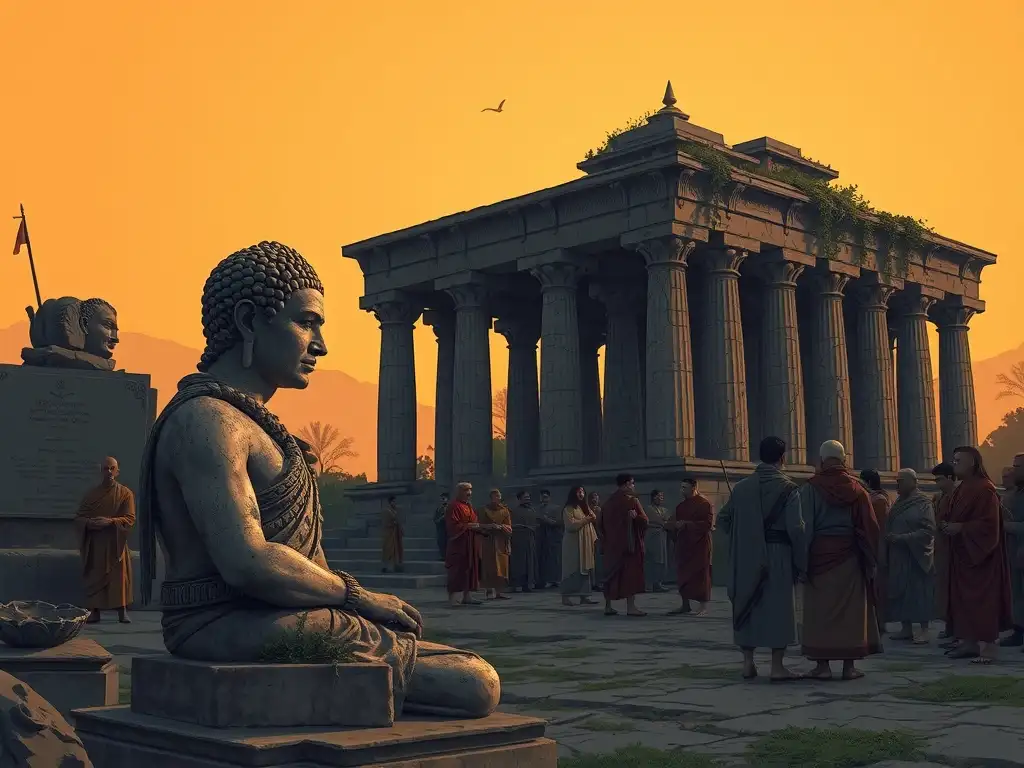
As the Maurya Empire progressed, the initial religious fervor began to wane, leading to a significant decline in the influence of religion on the empire's governance and culture. The transition from a unified Mauryan rule to a fragmented political landscape marked the beginning of this decline. A series of internal strife and external pressures contributed to the erosion of religious authority during the later years of the empire.
The changing dynamics of power and belief systems resulted in a shift in the cultural and religious practices of the populace. As new ideologies emerged, the once-dominant religious institutions faced challenges that redefined their roles in society.
Factors Leading to the Erosion of Religious Authority
Several factors contributed to the decline of religious authority during the Maurya Empire. One significant element was the increasing centralization of power within the royal court, where emperors like Ashoka initially promoted Buddhism but later struggled to maintain the same level of influence as new rulers ascended. The focus shifted towards political stability and military prowess, often at the expense of religious patronage.
Additionally, the rise of regional powers and the decentralization of governance led to the fragmentation of religious institutions. Local rulers began to assert their independence, promoting their own religious affiliations and practices, thereby undermining the previously unified religious framework established during the height of the Maurya Empire. This fragmentation diluted the authority of major religious figures and institutions, resulting in a diminished focus on religion in governance and public life.
Transition to Successor States and Changes in Religious Landscape
The decline of the Maurya Empire paved the way for the emergence of successor states, which marked a significant transformation in the religious landscape of ancient India. As the empire fragmented, various regional dynasties emerged, each with its own religious preferences and cultural identities. The Shunga and Kanva dynasties, for instance, saw a resurgence of Brahmanical traditions while simultaneously incorporating elements of Buddhism.
This transition led to increased competition among different religious ideologies, with Hinduism, Buddhism, and Jainism vying for prominence. The patronage of different rulers often reflected their personal beliefs, influencing the development of regional art, architecture, and literature. As a result, the religious pluralism that characterized the Maurya Empire evolved into a more diverse and multifaceted religious landscape, shaping the trajectory of Indian civilization in the centuries to follow.
While the Maurya Empire initially showcased the profound influence of religion on its culture, the decline of religious authority and the rise of successor states heralded a new era marked by a rich tapestry of beliefs and practices that continue to shape India’s spiritual heritage.
Conclusion: The Lasting Legacy of Religion in the Maurya Empire
The Maurya Empire, which flourished from 321 to 185 BCE, was marked by profound religious influences that shaped its governance, culture, and societal structures. The legacy of religion during this era is evident in the way it fostered unity among diverse populations and promoted ethical governance through principles derived from various faiths, particularly Buddhism and Jainism. The Mauryan emperors, especially Ashoka, were pivotal in institutionalizing religious tolerance and encouraging the dissemination of spiritual teachings, which laid the groundwork for a rich cultural tapestry in ancient India.
The impact of religion extended beyond the Maurya Empire, influencing neighboring regions and future Indian dynasties. This legacy continues to resonate in contemporary Indian society, where the teachings and philosophies of this period still inspire millions. The integration of spiritual values in governance and daily life remains a significant aspect of India's cultural identity, showcasing how the Maurya Empire's religious framework contributed to the civilization's enduring nature.
Summary of Key Influences and Figures
The Maurya Empire was significantly influenced by several key figures whose thoughts and actions shaped the religious landscape of ancient India. Notably, Emperor Ashoka stands out for his role in promoting Buddhism after the Kalinga War, where he experienced a profound transformation. His edicts, inscribed on pillars and rocks, spread messages of non-violence, compassion, and the importance of dharma (moral law).
In addition to Ashoka, other influential personalities included various monks and scholars who traveled across the empire to promote their beliefs. For instance, the Buddhist monk Mahinda, Ashoka's son, was instrumental in establishing Buddhism in Sri Lanka, highlighting the empire's outreach beyond its borders. Jain leaders and their teachings also played a crucial role, advocating for non-violence and asceticism, which resonated with the populace.
The synthesis of these religious ideologies contributed to a broader societal acceptance of diverse beliefs, fostering an environment of mutual respect and coexistence among different faiths in the Maurya Empire.
Reflections on the Role of Religion in Shaping Ancient Indian Civilization
Religion in the Maurya Empire played a transformative role in shaping ancient Indian civilization. It was not merely a set of beliefs but a guiding force that influenced politics, culture, and social norms. The use of religious principles in governance, especially by Ashoka, exemplified how leaders could utilize spiritual doctrines to promote social welfare and ethical conduct among their subjects.
Moreover, the spread of Buddhism and Jainism during this period introduced new philosophical ideas that encouraged the questioning of traditional practices and the pursuit of spiritual enlightenment. This intellectual and spiritual renaissance laid the foundation for future philosophical discourses in India, leading to schools of thought that would emerge long after the decline of the Maurya Empire.
The legacy of religion from the Maurya period is evident in the enduring cultural practices, art, and architecture that reflect the religious fervor of the time. Temples, stupas, and inscriptions from this era continue to be studied for their historical significance and artistic value, demonstrating the profound and lasting impact of religion on Indian civilization.
References for Further Reading on Religion in the Maurya Empire
Suggested Books and Articles
- "Ashoka: The Search for India’s Lost Emperor": by Charles Allen - This book provides a comprehensive look at Ashoka's reign and his influence on Buddhism and governance.
- "Buddhism in India: Challenging Brahmanical Hegemony": by Upinder Singh - An exploration of how Buddhism emerged and flourished in the context of the Maurya Empire.
- "The Mauryan Empire" by Romila Thapar - This scholarly work discusses the political, cultural, and religious dimensions of the Maurya Empire.
- "Jainism: A Guide for the Perplexed": by Sherry Fohr - This book delves into Jain philosophy and its influence on Indian culture during the Maurya period.
Online Resources and Archives on Ancient Indian Religions
- The Digital South Asia Library: Offers access to a range of texts and resources related to ancient Indian history, including religious texts.
- Ancient India: A Historical Overview: This site provides articles and references on the various religions that shaped ancient Indian societies.
- The Buddhist Heritage Archive: A resource dedicated to the study of Buddhism, its texts, and its influence in ancient India.
- Jain Studies Resources: A compilation of articles, research papers, and texts focusing on Jainism and its historical context in India.
These resources provide valuable insights for anyone looking to deepen their understanding of the role of religion in the Maurya Empire and its broader implications for ancient Indian civilization.
- Introduction to Religion in the Maurya Empire
- Overview of the Maurya Empire's Historical Context
- The Importance of Religion in Ancient Indian Civilizations
- Major Religions During the Maurya Empire
- Key Religious Figures in the Maurya Empire
- The Impact of Religion on Mauryan Society
- Cultural Contributions Influenced by Religion
- The Decline of Religious Influence in the Maurya Empire
- Conclusion: The Lasting Legacy of Religion in the Maurya Empire
- References for Further Reading on Religion in the Maurya Empire
- What was the significance of religion in the Maurya Empire?
- Who were the influential figures in the Maurya Empire regarding religion?
- How did Ashoka's conversion to Buddhism affect the Maurya Empire?
- What were the main religions practiced during the Maurya Empire?
- How did the Maurya Empire influence the development of religion in India?
Frequently Asked Questions
What was the significance of religion in the Maurya Empire?
Religion played a central role in unifying the diverse populations of the Maurya Empire, promoting social harmony and political stability through shared beliefs and values.
Who were the influential figures in the Maurya Empire regarding religion?
Key figures included Emperor Ashoka, who championed Buddhism after the Kalinga War, and Brahmin scholars, who upheld Hindu traditions and rituals, influencing governance and culture.
How did Ashoka's conversion to Buddhism affect the Maurya Empire?
Ashoka's conversion led to the spread of Buddhism across the empire and beyond, promoting non-violence, tolerance, and ethical governance, significantly shaping Indian civilization.
What were the main religions practiced during the Maurya Empire?
The Maurya Empire was marked by a diverse religious landscape, primarily consisting of Hinduism, Buddhism, and Jainism, each contributing uniquely to cultural and philosophical development.
How did the Maurya Empire influence the development of religion in India?
The Maurya Empire facilitated the patronage of religious institutions, leading to the flourishing of philosophical thought and the establishment of monastic communities, which laid the groundwork for future religious developments in India.
Final Reflection: The Enduring Legacy of Religion in the Maurya Empire
The exploration of religion in the Maurya Empire reveals its profound influence on governance, culture, and societal values, underscoring that the spiritual framework of a civilization shapes its very essence. Today, as we navigate a world increasingly defined by cultural diversity and interfaith dialogue, the lessons from the Maurya Empire remind us of the power of belief systems in fostering unity and understanding. The intricate relationship between religion and state during this period serves as a compelling reminder of how spiritual ideologies can guide ethical leadership and societal cohesion.
The impact of influential figures like Ashoka and their commitment to spreading Buddhist principles illustrates how religion can transcend mere belief and become a guiding force for social reform. The greatest victory is the victory over oneself.
This quote encapsulates the transformative power of religious teachings, which continue to resonate in contemporary discussions about morality, governance, and personal growth. The Maurya Empire's embrace of diverse religious practices not only enriched its cultural tapestry but also laid the groundwork for future empires to navigate the complexities of faith and governance.
As we reflect on the role of religion in the Maurya Empire, let us consider how these historical insights can inspire our actions today. I invite you to explore your own beliefs and values, recognizing their potential to influence your community positively. By engaging with the lessons of the past, we can cultivate a more inclusive and compassionate society, where the teachings of various faiths guide us toward a shared vision of peace and understanding. Embrace the opportunity to learn from history, and let it illuminate your path forward.
Uncover the Spiritual Legacy of the Maurya Empire!
Thank you for diving into the fascinating world of the Maurya Empire and exploring the profound role religion played during this remarkable period! Your interest not only enriches your understanding of ancient history but also opens doors to deeper insights about the connections between faith and governance.
Now, let's take this knowledge further with some meaningful actions:
- Explore more: Discover influential figures of the Maurya Empire by checking out various articles on our website. Deepening your understanding can reveal even more fascinating connections!
- Share your insights: Discuss the impact of religion in the Maurya Empire with friends or on social media. Start a conversation that inspires others to learn!
- Reflect and connect: Consider how the religious practices from this era influence modern beliefs and governance. What parallels do you observe?
What aspect of religious influence in the Maurya Empire surprised you the most, and how do you think it shaped the subsequent society? Let's engage in a thought-provoking discussion!