
The Impact of Geography on Ancient Indian Trade Routes

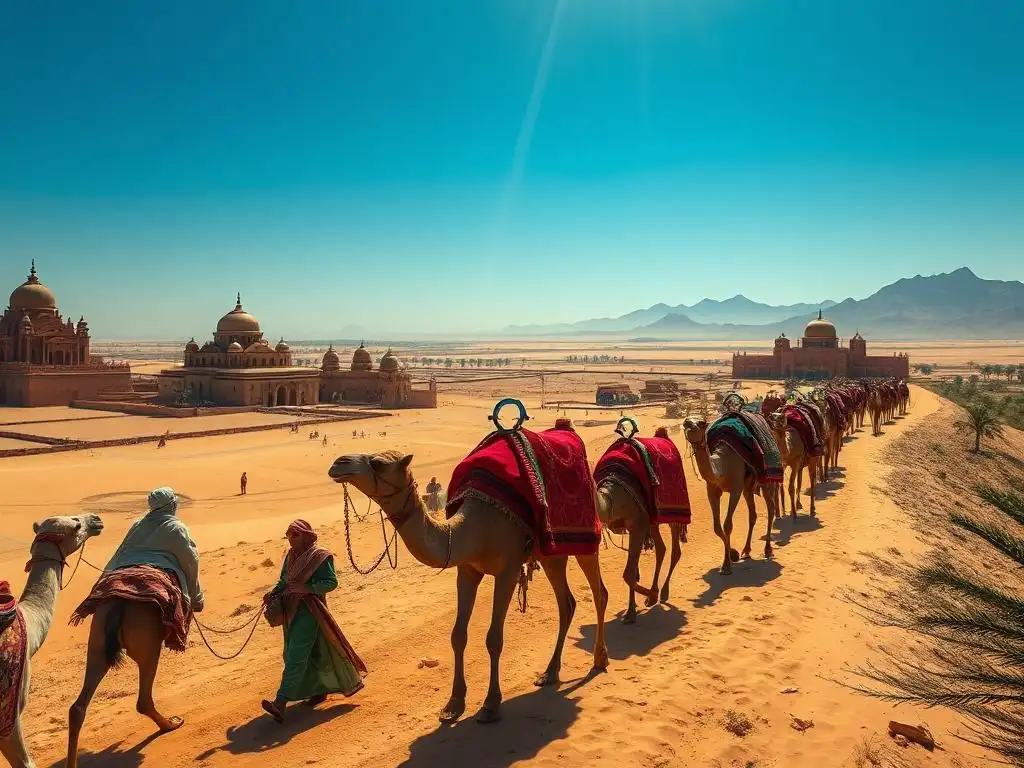
Welcome to Ancient India History, where we embark on a journey through the remarkable tapestry of ancient Indian civilizations. Dive into our latest exploration, “The Impact of Geography on Ancient Indian Trade Routes,” and uncover how the intricate interplay of geography shaped the vibrant trade networks that flourished from the Indus Valley to the Gupta Empire. Prepare to be captivated by the stories of commerce, culture, and connectivity that have left an indelible mark on history.
Join us as we unravel the mysteries of ancient Indian trade routes and discover the profound impact they had on the economy and society of the time. Your adventure into the past begins here!
Introduction to Ancient Indian Trade Routes
The intricate tapestry of ancient Indian trade routes is a testament to the vibrant interactions between diverse cultures and economies that flourished over millennia. The geography of India played a pivotal role in shaping these trade networks, facilitating the exchange of goods, ideas, and innovations across vast distances.
From the bustling markets of the Indus Valley Civilization to the intellectual exchanges during the Gupta Empire, the geographical landscape served as both a facilitator and barrier to trade. Understanding how the geography influenced ancient Indian trade routes not only sheds light on economic history but also highlights the interconnectedness of civilizations in a time when the world was still largely undiscovered.
Overview of Ancient Indian Trade Networks
Ancient India was a hub of trade, connecting various regions within the subcontinent and extending to far-off lands. The trade networks were characterized by:
- Land Routes: These included the overland trade connections with Central Asia, Persia, and beyond, often traversing the rugged terrains and mountain passes.
- Maritime Routes: The extensive coastline along the Arabian Sea and Bay of Bengal facilitated maritime trade with Southeast Asia, the Middle East, and even parts of Africa.
Through these networks, commodities such as spices, textiles, precious stones, and metals were exchanged, leading to economic prosperity and cultural diffusion.
Importance of Geography in Trade Development
The geographical features of ancient India were instrumental in the development of trade routes for several reasons:
- Natural Resources: The availability of resources like cotton, silk, and spices made India a sought-after trading partner.
- Accessibility: The presence of rivers, mountains, and coastlines dictated the routes traders would take, shaping the overall flow of commerce.
- Cultural Exchange: Geography not only allowed for trade but also facilitated the mingling of cultures, languages, and religions.
Understanding these geographical influences is crucial for appreciating the complexity and legacy of ancient Indian trade.
Key Geographical Features Influencing Trade Routes
The Role of the Indus River Valley
The Indus River Valley, with its fertile plains and reliable water supply, served as the cradle of one of the earliest civilizations in human history. Key aspects include:
- Agricultural Abundance: The river supported agriculture, which in turn stimulated trade with neighboring regions.
- Trade Hubs: Cities like Harappa and Mohenjo-Daro emerged as bustling trade centers, connecting local producers to distant markets.
The Himalayan Mountain Range and its Impact
The formidable Himalayan mountain range acted as both a barrier and a conduit for trade:
- Natural Barrier: It restricted direct overland trade with northern regions, leading to the development of specific trade routes through mountain passes.
- Cultural Exchange: The passes allowed traders to facilitate exchanges not only of goods but also of ideas and religious beliefs, linking India with Tibet and Central Asia.
Coastal Geography: Arabian Sea and Bay of Bengal
The vast coastlines along the Arabian Sea and Bay of Bengal were critical for maritime trade:
- Port Cities: Important ports like Lothal and Sopara became centers for maritime commerce, linking India with global trade networks.
- Trade Winds: The monsoon winds facilitated predictable sea routes, enhancing trade efficiency and stimulating economic growth.
The geography of ancient India was not just a backdrop but a dynamic force that shaped the course of trade and cultural exchanges, contributing significantly to the rich historical legacy of the region.
Major Trade Routes in Ancient India
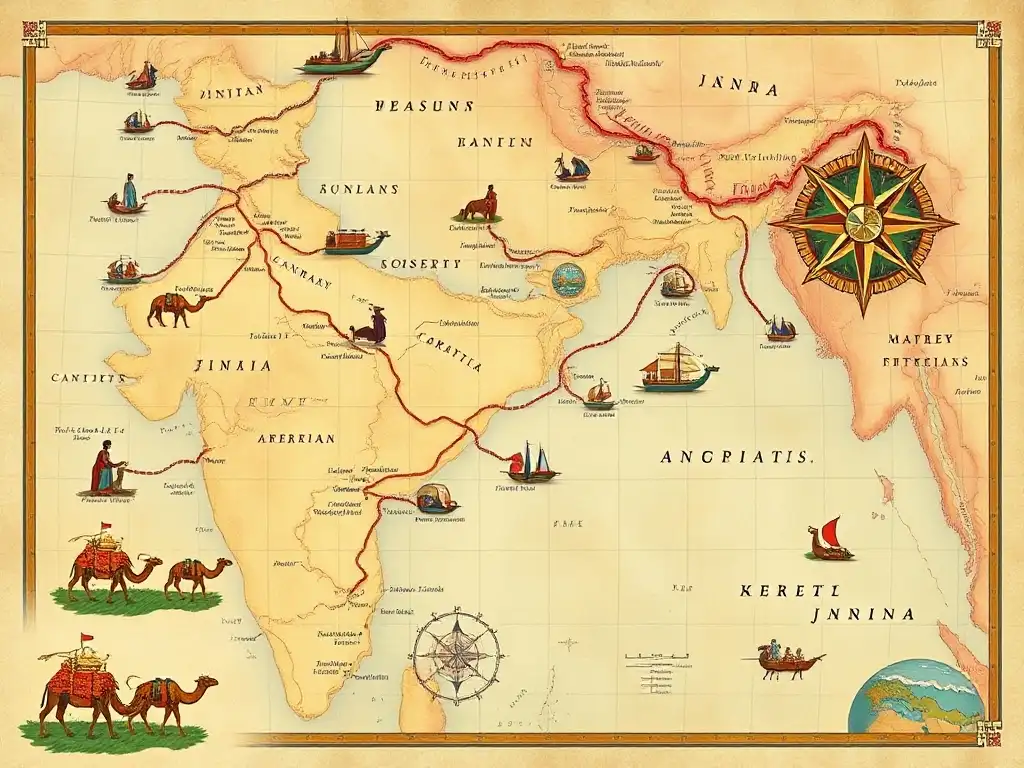
Ancient India was strategically positioned at the crossroads of several major trade routes, which facilitated the exchange of goods, ideas, and cultures. These routes were essential not just for the economy but also for the spread of religions and philosophies. The major trade routes can be categorized into overland and maritime pathways, each playing a critical role in connecting India with distant civilizations.
The Silk Road was one of the most significant overland trade routes, linking India with Central Asia, the Middle East, and beyond. Alongside it, the Southern Trade Routes emerged as crucial pathways for the export of spices and textiles, which were in high demand globally. Additionally, the Indian Ocean trade network fostered maritime trade, connecting India with Africa, the Arabian Peninsula, and Southeast Asia. Together, these routes made India a pivotal player in the ancient global economy.
The Silk Road and Its Connection to India
The Silk Road was a vast network of trade routes that connected the East and West, facilitating not only the exchange of silk but also other commodities such as spices, precious stones, and textiles. Originating in China, the Silk Road traversed through Central Asia and extended to India, where it played a significant role in the socio-economic landscape.
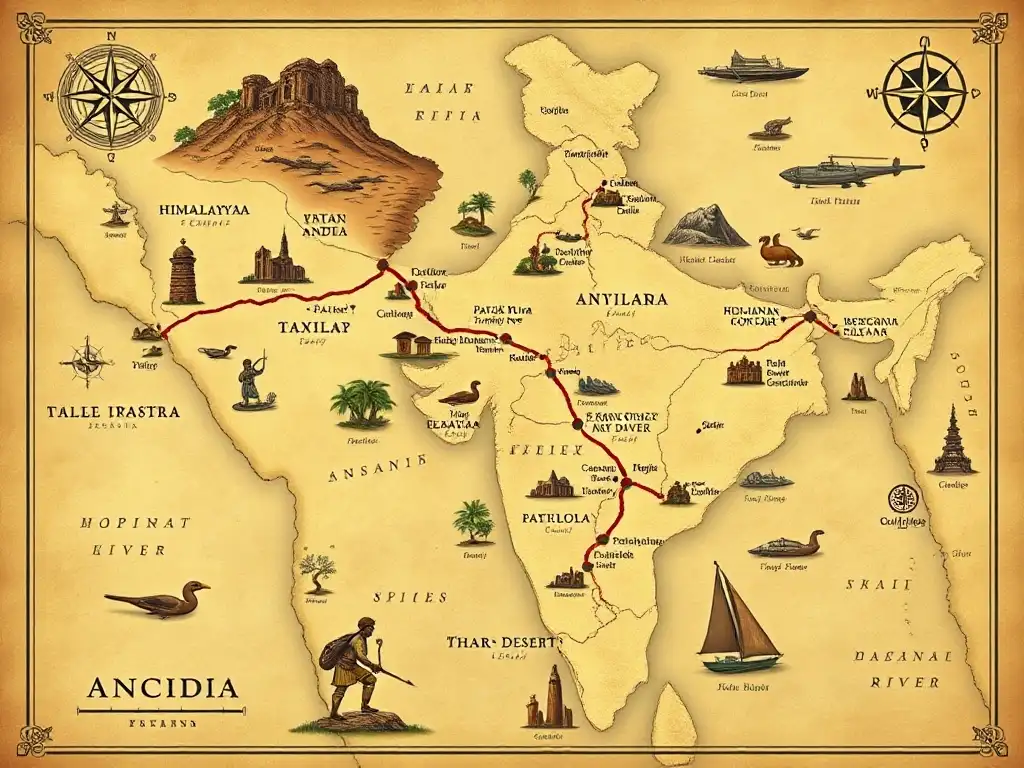
Indian cities such as Taxila and Pataliputra became vital trading hubs along the Silk Road. These cities were well-positioned to serve as points of exchange for goods and cultural interactions. Indian merchants traded valuable items like textiles, spices, and gems in return for silk, ceramics, and other luxury goods from the West. The influence of the Silk Road extended beyond mere trade; it facilitated the spread of ideas, religions, and technologies, significantly impacting India's cultural development.
The Southern Trade Routes: Spice and Textile Trade
The Southern Trade Routes, particularly those traversing the Indian Ocean, were vital for the export of spices, textiles, and other luxury goods. Ancient Indian ports such as Kochi, Kaveripattinam, and Surat became bustling centers for trade with regions like Southeast Asia, the Middle East, and even East Africa.
Spices such as black pepper, cardamom, and cinnamon were highly sought after in foreign markets, making them a cornerstone of ancient Indian trade. The textile industry, particularly silk and cotton production, also thrived along these routes, with Indian fabrics renowned for their quality and intricate designs. The Southern Trade Routes not only boosted India's economy but also established it as a significant player in the global market.
The Role of Overland Routes in Ancient Indian Trade
Overland routes were critical for connecting India with neighboring regions and facilitating trade with distant lands. These routes, such as the Grand Trunk Road, allowed for the movement of goods across the Indian subcontinent and into Central Asia.
Merchants utilized camels and caravans to transport goods through challenging terrains, including deserts and mountainous regions. The overland routes enabled the flow of commodities like textiles, spices, and agricultural products while also promoting cultural exchanges. The establishment of trading posts and caravanserais along these routes provided necessary infrastructure, further enhancing trade activities.
Geographic Barriers and Trade Challenges
While geography facilitated trade in ancient India, it also presented significant challenges. Natural barriers, such as mountains and deserts, often posed obstacles to trade routes, influencing the flow of goods and the establishment of trade networks.
Natural Barriers: Mountains and Deserts
The geography of ancient India was characterized by substantial natural barriers that impacted trade routes. The Himalayas to the north acted as a formidable barrier, limiting access to Central Asia and influencing trade dynamics. Similarly, the Thar Desert in the west created challenges for land-based trade, making it difficult for caravans to traverse.
These natural obstacles often led traders to seek alternative routes or methods of transportation. For instance, maritime routes became increasingly important as traders sought to bypass difficult overland paths. The adaptation to these geographical challenges shaped the development of trade networks, with merchants continuously evolving their strategies to facilitate commerce.
Climatic Challenges Affecting Trade
The climate of ancient India also played a significant role in shaping trade routes. Seasonal monsoons affected agricultural production and the availability of goods for trade. Periods of heavy rainfall could disrupt overland routes, while dry seasons could limit maritime trade.
Additionally, extreme weather conditions, such as heatwaves and heavy storms, posed risks to traders and their goods. The unpredictability of climate necessitated careful planning and timing for trade expeditions. Merchants had to be acutely aware of weather patterns, which influenced their trading strategies and the overall flow of commerce in ancient India.
The geography of ancient India was a double-edged sword: it provided opportunities for trade through strategic routes while also presenting challenges that required adaptability and resilience from traders.
The Interaction of Geography and Cultural Exchange
The geography of ancient India played a pivotal role in shaping trade routes, which in turn facilitated cultural exchange between diverse civilizations. The natural landscape, including mountains, rivers, and coastlines, dictated the pathways traders would take. As a result, these trade routes became conduits not just for goods, but also for ideas, beliefs, and cultural practices.
The rich tapestry of geographical features in India, such as the Himalayas to the north and the Indian Ocean to the south, created distinct zones that influenced trade dynamics. This geographical diversity led to interactions with neighboring regions like Central Asia, the Middle East, and Southeast Asia. Cultures blended through these exchanges, impacting language, art, religion, and cuisine. For instance, the spread of Buddhism and Hinduism into Central Asia and beyond was facilitated by the trade routes, demonstrating how geography acted as a bridge for cultural diffusion.
How Geography Influenced Cultural Interactions
Geographical features such as rivers and mountain passes were critical in determining the movement of people and goods. Major rivers like the Indus, Ganges, and Brahmaputra served as vital transportation networks, allowing for the easy movement of trade goods and cultural exchanges. The fertile plains surrounding these rivers became hubs of agricultural production, which also attracted traders from distant lands.
Moreover, mountain passes such as the Khyber Pass served as gateways for invaders and traders alike, allowing for the mixing of cultures. These routes not only facilitated trade but also allowed for the movement of diverse groups, leading to a rich exchange of traditions, languages, and technologies. The interactions often resulted in the assimilation of various cultural elements, enriching the local cultures in the regions along these trade paths.
Trade Goods: What Geography Brought to the Markets
The geographical diversity of ancient India contributed to a wide range of trade goods that were available in markets. The arid regions produced spices and textiles, while the river valleys were known for grains and metals. Coastal areas supplied seafood and precious stones, which were highly sought after in distant markets.
Additionally, the geographic positioning of India made it a vital link between the East and West. The Silk Road and maritime routes allowed Indian traders to exchange their abundant goods, such as cotton, silk, and spices, for valuable items like gold, silver, and glassware from other civilizations. This interplay not only enriched the Indian economy but also established India as a key player in global trade, demonstrating how geography directly influenced the variety and volume of trade goods.
Case Studies: Specific Trade Routes and Their Geographic Significance
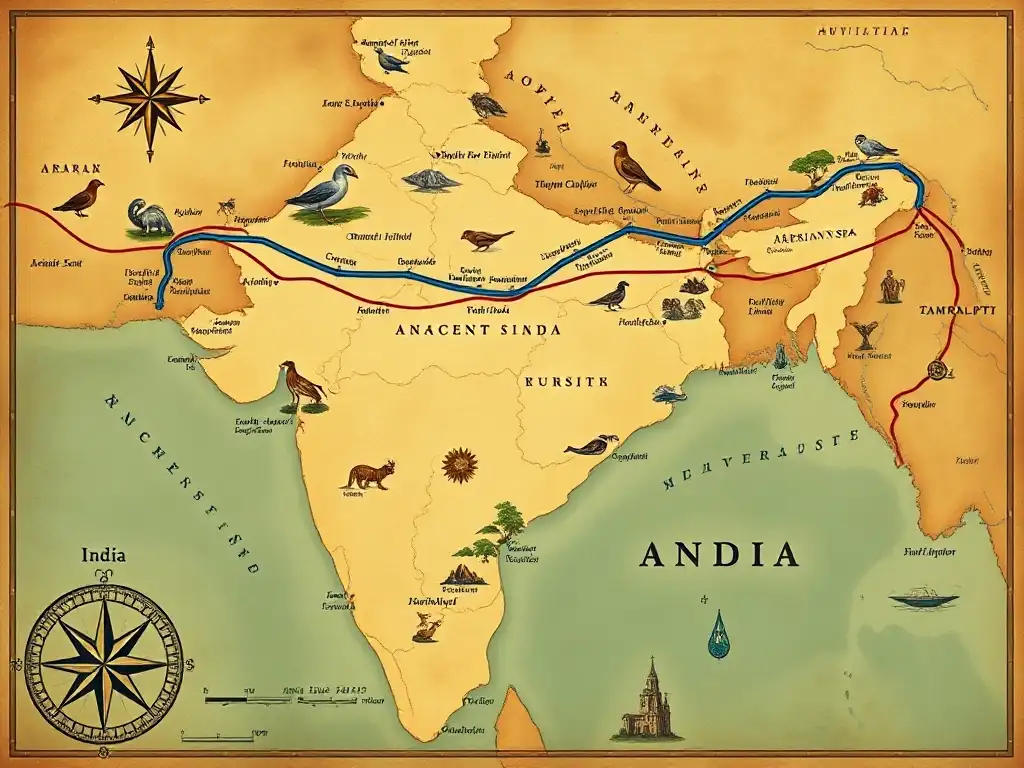
Exploring specific trade routes reveals how geography shaped ancient Indian commerce. The intersections of land and sea routes provided unique economic opportunities and cultural exchanges that were instrumental in developing ancient Indian society.
The Northern Trade Route: Geography and Its Economic Impact
The Northern Trade Route, which connected India to Central Asia and beyond, was significantly influenced by the geography of the region. The presence of the Himalayas and the vast plains of northern India created a natural corridor for trade. This route facilitated the movement of goods such as silk, spices, and precious stones, which were transported across mountain passes and through valleys.
The economic impact of this route was profound; it not only allowed for the exchange of goods but also fostered political alliances and cultural interactions. The influx of Central Asian traders brought new ideas and technologies to India, further enhancing the economic landscape. Additionally, the stability of the northern routes allowed for the establishment of thriving trade cities, which became melting pots of culture and commerce, showcasing the significance of geography in shaping economic activity.
The Maritime Trade Routes: Geography of Coastal Trading Ports
The maritime trade routes along the Indian coastline were equally important in shaping ancient Indian trade. Geography played a crucial role in determining the locations of major coastal trading ports, such as Lothal, Calicut, and Kochi. These ports were strategically situated near navigable waters, enabling easy access for ships from various regions, including Africa, the Arabian Peninsula, and Southeast Asia.
The coastal geography facilitated the exchange of not only goods but also cultural practices and technologies. Indian merchants traded spices, textiles, and gems in exchange for ivory, silk, and other exotic goods. The development of these maritime routes significantly contributed to the economy of ancient India, helping it to become a major player in international trade networks. Furthermore, the interactions that occurred at these ports often led to the establishment of vibrant communities, resulting in a rich blend of cultures along the coast.
Conclusion: The Lasting Impact of Geography on Ancient Indian Trade Routes
The geography of ancient India played a pivotal role in shaping the trade routes that facilitated economic development and cultural exchange. The unique positioning of the Indian subcontinent, bordered by the towering Himalayas to the north and the vast Indian Ocean to the south, created a natural framework for trade activities.
The fertile plains of the Indus and Ganges rivers provided agricultural surplus, while the coastal regions allowed maritime trade to flourish. As a result, ancient Indian trade routes not only connected local markets but also linked India with distant civilizations, including those in Mesopotamia, Persia, and later, the Roman Empire.
The interaction of diverse cultures along these trade routes led to the exchange of goods, ideas, and technologies, contributing significantly to the overall growth and evolution of ancient Indian society. The legacy of these trade routes continues to resonate today, as they laid the groundwork for India’s historical role as a hub of commerce and cultural exchange in the region.
Summary of Key Geographic Influences on Trade
Several geographic factors significantly influenced ancient Indian trade routes:
- Topography: The varied landscape, including mountains, rivers, and plains, dictated the ease or difficulty of travel and the establishment of trade routes. For example:
- Himalayan Passes: Provided critical pathways for trade with Central Asia.
- River Systems: The Indus and Ganges rivers were vital for transporting goods.
- Climate: The monsoonal climate affected agricultural cycles and, consequently, the availability of trade goods. This led to:
- Seasonal migrations of traders based on harvests.
- The establishment of trade networks aligning with favorable weather patterns.
- Natural Resources: Regions rich in specific resources, such as spices, textiles, and precious stones, became trade hotspots. This resulted in:
- The emergence of trade cities like Taxila and Ujjain, which thrived on the exchange of these commodities.
- Coastal Proximity: Access to the Indian Ocean facilitated maritime trade, connecting India to distant markets. Key points include:
- Ports like Lothal and Sopara, which were essential for overseas trade with Africa and Southeast Asia.
The Legacy of Ancient Indian Trade Routes in Modern Context
The ancient Indian trade routes have left an indelible mark on contemporary commerce and cultural exchanges. Their historical significance can be observed in several ways:
- Cultural Influence: The exchange of ideas facilitated by these routes has contributed to the rich tapestry of Indian culture, evident in language, religion, and art forms that have evolved through centuries of interaction with various civilizations.
- Modern Trade Networks: Today's trade routes, both land and sea, can trace their origins back to these ancient pathways, demonstrating the continuity and adaptation of trade practices over time. The current initiatives to revive the Silk Road and enhance connectivity reflect the enduring legacy of ancient trading practices.
- Tourism and Heritage: The routes have become focal points for tourism, with many travelers seeking to explore the historical and cultural sites along these ancient pathways. This has fostered a greater appreciation for India's historical role in global trade.
References
Notable Sources on Ancient Indian Trade Routes Geography
- Ray, Himanshu Prabha. "The Archaeology of Trade and Exchange in Early India." This work delves into the archaeological evidence of trade routes and their geographical implications.
- Mukherjee, Ranjana. "Trade and Commerce in Ancient India: A Historical Perspective." This book offers a comprehensive overview of the trade practices and routes in ancient India.
- Sahu, S. K. "Geography and Trade in Ancient India." An exploration of how geographical factors influenced trade dynamics throughout Indian history.
Further Reading on Trade and Economy in Ancient India
- Thapar, Romila. "Early India: From the Origins to AD 1300." This book provides an in-depth analysis of ancient Indian society, including economic aspects influenced by trade.
- Chakravarti, Ranabir. "Trade in Early India." A detailed study focusing on the commercial exchanges and trade networks established in ancient times.
- Basham, A. L. "The Wonder That Was India." This classic text includes discussions on the economy and trade routes of ancient India, set against the backdrop of its rich cultural history.
- Introduction to Ancient Indian Trade Routes
- Overview of Ancient Indian Trade Networks
- Importance of Geography in Trade Development
- Key Geographical Features Influencing Trade Routes
- Major Trade Routes in Ancient India
- Geographic Barriers and Trade Challenges
- The Interaction of Geography and Cultural Exchange
- Case Studies: Specific Trade Routes and Their Geographic Significance
- Conclusion: The Lasting Impact of Geography on Ancient Indian Trade Routes
- References
Frequently Asked Questions
What were the major trade routes in ancient India?
Ancient India was connected by several major trade routes, including the Silk Road and the Maritime Spice Route, which facilitated trade across Asia and beyond.
How did geography influence trade in ancient India?
The geography of India, with its diverse landscapes and proximity to oceans, significantly affected trade routes, making them accessible for transporting goods to various regions.
What commodities were traded along ancient Indian routes?
Merchants traded spices, textiles, jewelry, and precious stones, which were highly sought after in both domestic and international markets.
How did ancient Indian trade routes contribute to cultural exchange?
These trade routes were not just for goods; they also enabled cultural exchange, spreading ideas, religions, and innovations across different civilizations.
What was the role of the Gupta Empire in ancient trade?
The Gupta Empire played a crucial role in enhancing trade by establishing a stable political environment and promoting economic prosperity, which led to increased trade activity within and outside India.
Final Reflection: The Enduring Legacy of Ancient Indian Trade Routes Geography
The intricate relationship between geography and ancient Indian trade routes continues to shape our understanding of economic and cultural exchanges today. As we explore the vast networks that once connected diverse regions, we uncover not only the logistical brilliance of these routes but also their profound impact on the civilizations they nurtured. The geographical features of India, from its mountain ranges to river valleys, were not mere backdrops but active participants in the flourishing of trade, illustrating how the land itself can dictate the course of history.
The influence of ancient Indian trade routes extends far beyond their historical context, resonating in contemporary discussions about globalization and cultural exchange. These routes were conduits of not just goods, but ideas, religions, and innovations, fostering a rich tapestry of interconnectedness that still inspires us today. Trade is the lifeblood of civilization, and the routes we forge define our legacy.
This observation reminds us that the paths carved by our ancestors continue to inform our modern world, urging us to recognize the value of collaboration and understanding across cultures.
As we reflect on the lessons of ancient Indian trade routes geography, let us embrace the call to action: to cultivate connections in our own lives and communities. Consider how the principles of trade—exchange, cooperation, and mutual benefit—can guide our interactions in an increasingly interconnected world. By honoring the legacy of those who traversed these ancient paths, we can foster a spirit of unity and exploration that transcends borders, ensuring that the lessons of the past illuminate our journey into the future.
Embark on Your Journey Through Ancient Trade!
Thank you for diving into the fascinating world of ancient Indian trade routes! You’ve uncovered how geography shaped commerce and culture in remarkable ways. Now, it’s time to take the next step and explore these insights further.
Here's how you can engage with this topic:
- Explore historical trade routes in your area by visiting local museums or browsing online archives to understand their impact on contemporary society.
- Share your newfound knowledge! Discuss the significance of geography on trade with friends or in community forums to inspire their curiosity.
- Join a history group or an online community focused on ancient civilizations, where you can learn and exchange ideas with fellow enthusiasts.
What aspect of ancient trade routes intrigues you the most—was it the geographical factors, the variety of goods exchanged, or the diverse cultures involved?