
The Intersection of Science and Spirituality in Ancient Indian Astronomy


Welcome to Ancient India History, where we delve into the rich tapestry of history, culture, and incredible contributions of ancient Indian civilizations. In this exploration, we invite you to uncover the fascinating realm of Ancient Indian astronomy and spirituality. Discover how these two seemingly disparate domains intertwined to shape the understanding of the universe in ways that still inspire awe today. Are you ready to embark on a journey that reveals the profound wisdom of the past? Join us as we explore The Intersection of Science and Spirituality in Ancient Indian Astronomy—a captivating revelation awaits!
Introduction to Ancient Indian Astronomy and Spirituality
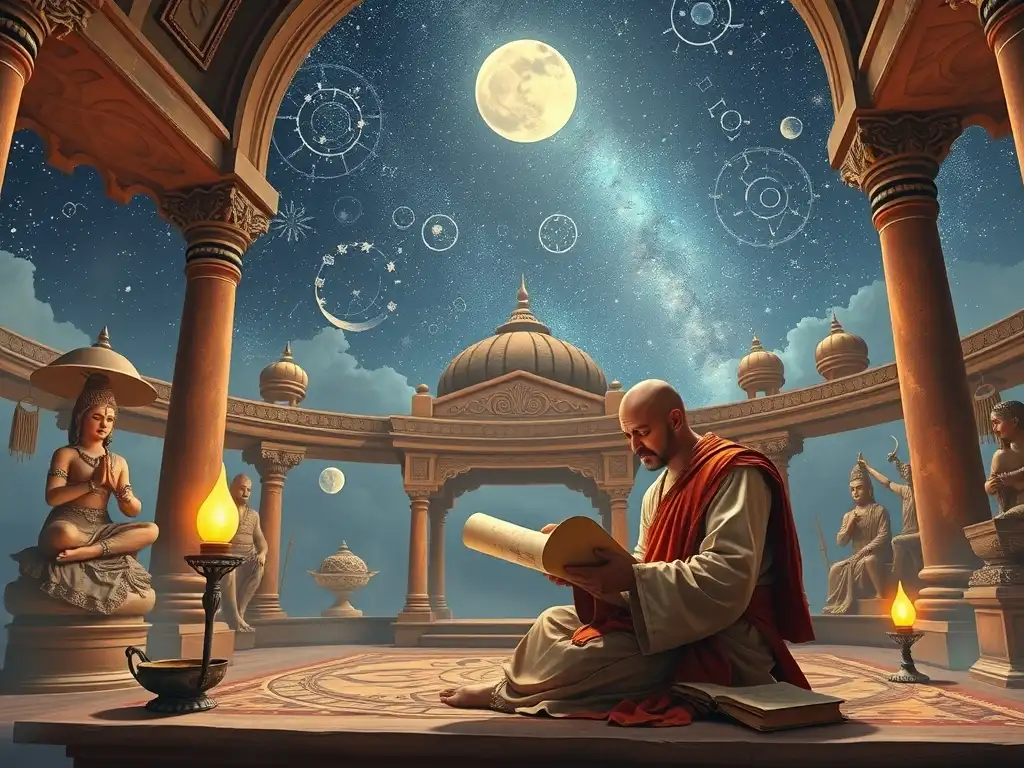
Ancient Indian astronomy is a fascinating confluence of scientific inquiry and spiritual contemplation, reflecting the profound understanding that ancient civilizations had of the cosmos. This intricate relationship not only exemplifies the advancements in mathematical calculations and celestial observations but also highlights the philosophical and spiritual dimensions that influenced these scientific pursuits.
From the meticulous star charts of the Indus Valley civilization to the profound astronomical texts of the Gupta Empire, the journey of ancient Indian astronomy is marked by a unique blend of empirical knowledge and metaphysical thought. In this article, we will explore how ancient Indian astronomy and spirituality intersected, shaping not only the scientific landscape of the time but also the cultural and spiritual ethos of the civilization.
Overview of Ancient Indian Astronomy
Ancient Indian astronomy, known as Jyotisha, was a well-developed field that encompassed both observational practices and theoretical frameworks. Scholars and astronomers meticulously studied celestial bodies, meticulously recording their movements and developing calendars that were crucial for agricultural and religious purposes. The Surya Siddhanta, one of the earliest known astronomical texts, is a testament to the sophisticated understanding of calculations related to time, planetary motion, and eclipses.
- Key Contributions:
- Mathematics: Ancient Indians pioneered techniques in trigonometry and calculus to calculate the positions of celestial bodies.
- Observational Tools: Development of tools such as the gnomon and astronomical instruments allowed for accurate measurements.
- Calendrical Systems: The crafting of lunar and solar calendars that guided agricultural practices and religious ceremonies.
The Role of Spirituality in Ancient Science
Spirituality played a crucial role in shaping the scientific endeavors of ancient Indian astronomers. The universe was viewed not merely as a physical entity but as a manifestation of the divine. This belief influenced their scientific inquiries, as celestial events were often interpreted through a spiritual lens.
- Interconnections:
- Astrology and Astronomy: The intertwining of astrology within astronomical studies reflects the belief that celestial movements impacted human affairs, blurring the lines between science and spirituality.
- Philosophical Texts: Works such as the Vedas and Upanishads offered philosophical insights that guided the scientific exploration of the cosmos, suggesting that understanding the universe was a path to spiritual enlightenment.
Historical Context of Astronomy in Ancient India
The historical context of astronomy in ancient India reveals a rich tapestry of contributions from various civilizations that flourished across the subcontinent. Each civilization brought its own perspectives and methodologies, enriching the field of astronomy.
Key Civilizations Contributing to Astronomy
- Indus Valley Civilization:
- Known for its advanced urban planning, it also laid the groundwork for astronomical observations, evidenced by the alignment of cities with celestial bodies.
- Vedic Period:
- Astronomy flourished during this time, with texts like the Vedanga Jyotisha providing systematic approaches to celestial phenomena.
- Gupta Empire:
- Often referred to as the Golden Age of Indian sciences, this period saw remarkable advancements in astronomical research, including the work of renowned astronomers like Aryabhata.
Influences of Religion and Philosophy on Astronomy
The interplay between religion and astronomy in ancient India is profound. Various religious texts provided frameworks for understanding celestial phenomena, while philosophical doctrines influenced the interpretation of astronomical data.
- Hindu Cosmology:
- The cyclical nature of time and the concept of cosmic cycles (Yugas) shaped how astronomers viewed celestial movements and their implications for human life.
- Buddhist and Jain Contributions:
- Both religions contributed to astronomical knowledge, emphasizing the interconnectedness of all existence and the role of observation in spiritual practice.
The intersection of science and spirituality in ancient Indian astronomy reveals a rich and complex legacy that continues to influence modern interpretations of both fields today. By understanding this intricate relationship, we can appreciate the depth of ancient Indian contributions to the world of astronomy and spirituality.
Major Texts and Treatises on Astronomy and Spirituality

Ancient Indian astronomy is deeply intertwined with spirituality, as evidenced by various texts that not only discuss celestial phenomena but also reflect philosophical and spiritual insights. These texts served as foundational works that bridged the realms of scientific inquiry and spiritual understanding. Key treatises such as the Surya Siddhanta, various Vedic scriptures, and the Aryabhatiya showcase this intricate relationship, offering both astronomical knowledge and spiritual teachings. They highlight how ancient Indian scholars perceived the cosmos not just as a physical expanse but as a manifestation of divine principles that govern the universe.
The Surya Siddhanta: Bridging Science and Spirituality
The Surya Siddhanta is one of the most revered texts in ancient Indian astronomy, attributed to an unknown author and likely composed around the 4th to 5th century CE. This treatise provides comprehensive methods for calculating planetary positions, eclipses, and the timing of various celestial events. However, its significance goes beyond mere calculations; it integrates spiritual concepts, asserting that understanding the cosmos is essential for attaining higher knowledge and enlightenment.
The text posits that the sun, as a central celestial body, is not just a physical entity but also a symbol of the divine light that illuminates the path to spiritual awakening. By studying the stars and planets, one can align their life with cosmic rhythms, fostering a deeper connection to the universe and its creator.
Vedic Texts and Their Astronomical Insights
The Vedic texts, which date back to approximately 1500–500 BCE, contain numerous references to celestial bodies and phenomena. These scriptures, particularly the Rigveda and the Yajurveda, illustrate early astronomical knowledge and its spiritual implications. For instance, the Vedas describe the movements of the sun and moon and their relevance in determining auspicious timings for rituals and ceremonies.
Moreover, the concept of Yugas (epochs) in Vedic philosophy reflects an understanding of time cycles that correlate with astronomical observations. The Vedic texts emphasize the idea that the cosmos operates in harmony with spiritual laws, suggesting that celestial events are manifestations of divine will, guiding human actions and ethical conduct.
The Aryabhatiya and Its Spiritual Implications
Composed by the eminent mathematician and astronomer Aryabhata in the 5th century CE, the Aryabhatiya is a seminal work that combines mathematical rigor with astronomical observations. Aryabhata’s innovative approach to calculating planetary motions and eclipses had a profound influence on later astronomical studies.
However, the Aryabhatiya also delves into the philosophical aspects of astronomy, suggesting that the pursuit of knowledge about the cosmos is a spiritual endeavor. Aryabhata emphasizes that understanding the universe leads to a greater comprehension of one's place within it, thus reinforcing the notion that science and spirituality are not separate but are intertwined pathways to ultimate truth.
The Integration of Astronomy and Spiritual Practices
The integration of astronomical knowledge into spiritual practices is a hallmark of ancient Indian culture. This relationship is evident in the way astronomical events are celebrated and observed in spiritual contexts, providing a rich tapestry of beliefs and rituals that reflect the cosmos's influence on human life.
Astrological Beliefs and Their Scientific Foundations
Astrology in ancient India, known as Jyotisha, is deeply rooted in astronomical observations. Ancient Indian astrologers meticulously charted the positions of celestial bodies and correlated these patterns with earthly events and individual destinies. This practice was not purely superstitious; it was based on systematic calculations that required a deep understanding of astronomy.
Astrological beliefs posited that celestial movements could influence human behavior and the natural world. Thus, astrology served as a guiding framework for making significant life decisions, reinforcing the idea that understanding the cosmos can lead to a more harmonious life aligned with universal laws.
Rituals and Festivals Based on Astronomical Events
Many ancient Indian rituals and festivals are timed according to astronomical events, showcasing the practical applications of astronomy in spiritual life. Festivals like Makar Sankranti and Diwali are aligned with specific celestial alignments, celebrating the changing seasons and the cycles of nature.
These events often involve rituals that honor celestial bodies, emphasizing gratitude and reverence for the forces that govern the universe. Such practices illustrate how ancient Indians not only observed the cosmos but also integrated their findings into the fabric of spiritual life, reinforcing the connection between the material and spiritual realms.
The Concept of Time in Ancient Indian Spirituality
Time, or Kala, holds a significant place in ancient Indian spirituality, with its understanding deeply influenced by astronomical observations. Ancient texts describe various time divisions, from Yugas to Muhurta (auspicious moments), reflecting a sophisticated grasp of temporal cycles.
The cyclical nature of time in Hindu philosophy underscores the belief that life is a continuum of birth, death, and rebirth. This concept is mirrored in astronomical observations, where celestial bodies follow predictable patterns. By aligning their lives with these cycles, ancient Indians sought to achieve spiritual growth and harmony with the universe, viewing time not as linear but as a divine rhythm that guides existence.
Contributions of Notable Astronomers
Ancient Indian astronomy is marked by significant contributions from several renowned astronomers whose works not only advanced scientific understanding but also intertwined with spiritual beliefs. Their innovations laid the groundwork for future astronomical studies and influenced various cultures around the world. Let’s delve into the remarkable achievements of three key figures in ancient Indian astronomy: Aryabhata, Varahamihira, and Brahmagupta.
Aryabhata: The Pioneer of Ancient Indian Astronomy
Aryabhata, born in 476 CE, is often regarded as the first major mathematician and astronomer of ancient India. His seminal work, the Aryabhatiya, was groundbreaking in its approach to astronomy and mathematics. Aryabhata introduced the concept of zero and developed a place-value numeral system that laid the foundation for modern mathematics.
In Aryabhatiya, he presented a heliocentric model of the solar system, proposing that the Earth rotates on its axis, which was a revolutionary idea at the time. Aryabhata also accurately calculated the circumference of the Earth and the length of the solar year, showcasing his deep understanding of celestial mechanics. In addition to his scientific contributions, Aryabhata's work reflected a spiritual ethos, as he believed that understanding the cosmos could lead to a greater comprehension of the self and the universe.
Varahamihira: Merging Science with Spirituality
Varahamihira, a prominent astronomer and polymath of the 6th century, is known for his influential text, the Brihat Samhita. This extensive work covers a wide range of subjects, including astronomy, astrology, architecture, and medicine, demonstrating the integrated nature of knowledge in ancient India.
Varahamihira's approach to astronomy was deeply intertwined with spirituality. He believed that celestial phenomena were linked to human affairs, and his astrological insights emphasized the moral and ethical dimensions of astronomical observations. His predictions and methods were widely respected, and he advocated for a harmonious relationship between science and spirituality, suggesting that understanding celestial cycles could enhance one's spiritual journey. His contributions underscore the belief that astronomy was not merely a scientific endeavor but also a path to spiritual enlightenment.
Brahmagupta: Innovations and Spiritual Insights
Brahmagupta, who lived in the 7th century, made significant contributions to mathematics and astronomy through his works, particularly the Brahmasphutasiddhanta. He is credited with formalizing rules for arithmetic operations involving zero and negative numbers, which were revolutionary concepts at the time.
In astronomy, Brahmagupta provided detailed algorithms for calculating the positions of planets and eclipses, enhancing the predictive capabilities of ancient Indian astronomers. His perspective on the cosmos was also imbued with spiritual significance; he viewed celestial events as manifestations of divine order and cosmic rhythm. This belief reinforced the idea that understanding astronomy could lead to a deeper connection with the universe and a greater appreciation of its spiritual dimensions.
The Influence of Ancient Indian Astronomy on Other Cultures
The remarkable advancements in ancient Indian astronomy left an indelible mark on various cultures across the globe. The knowledge and practices developed by Indian astronomers were disseminated through trade, conquests, and cultural exchanges, influencing astronomical thought in diverse civilizations.
The Spread of Indian Astronomical Knowledge
Indian astronomical texts were translated into Arabic and Latin, facilitating the dissemination of knowledge throughout the Islamic world and Europe during the Middle Ages. Scholars like Al-Biruni and later European astronomers drew upon Indian methods and calculations to enhance their own understanding of astronomy. The introduction of concepts such as zero and the decimal system from India significantly impacted mathematical practices worldwide.
Furthermore, the Indian system of zodiac signs and astrology influenced Islamic astrology, which in turn shaped European astrological traditions. The integration of Indian astronomical knowledge into these cultures illustrates the profound impact of ancient India on global scientific thought.
Cross-Cultural Exchanges in Astronomy and Spirituality
The intersection of astronomy and spirituality in ancient Indian thought resonated with other cultures, leading to a rich exchange of ideas. For instance, the spiritual significance attributed to celestial bodies in Indian astronomy found parallels in Greek and Islamic astronomical practices, where celestial movements were often associated with divine influence.
These cross-cultural exchanges fostered a collaborative environment where ideas were shared and adapted. Astronomers from different cultures engaged in dialogues that enriched their respective practices, merging scientific inquiry with spiritual beliefs. This synthesis not only advanced astronomical knowledge but also highlighted the universal quest for understanding the cosmos and its connection to human existence.
Modern Interpretations of Ancient Indian Astronomy and Spirituality
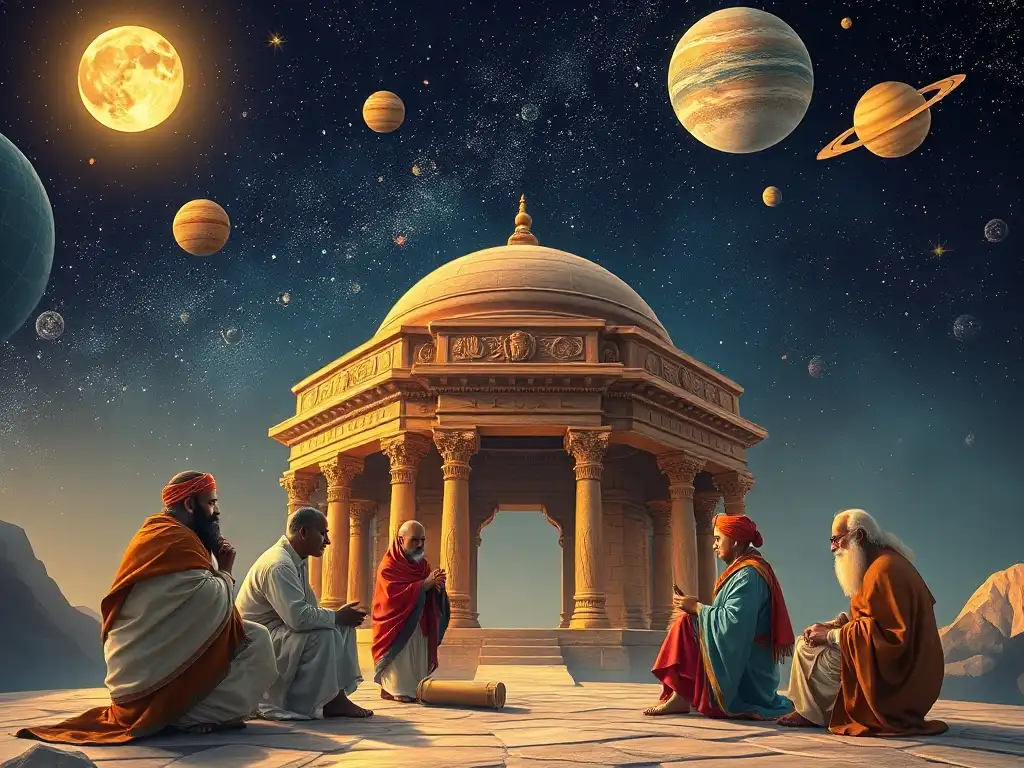
Modern interpretations of ancient Indian astronomy and spirituality reveal a fascinating intersection that continues to influence contemporary thought. Scholars and practitioners alike have begun to reassess the intricate relationship between astronomical observations and spiritual beliefs in ancient Indian civilizations. The Vedic texts, for example, contain numerous references to celestial bodies, which were not merely seen as physical entities but were imbued with spiritual significance.
The concept of time in ancient Indian astronomy, especially as articulated in the Surya Siddhanta, reflects a deep understanding of cosmic cycles and their spiritual implications. For instance, the notion of Kalpa (cosmic time cycle) emphasizes the cyclical nature of time, which resonates deeply with many spiritual philosophies today. This duality of scientific rigor and spiritual depth invites modern scholars to explore how ancient practices can inform contemporary spiritual and scientific discourse.
Relevance in Contemporary Spiritual Practices
Contemporary spiritual practices continue to draw from ancient Indian astronomical concepts, emphasizing the holistic connection between the universe and individual well-being. For instance, practices such as yoga and meditation often incorporate astrological elements, where the positioning of celestial bodies is believed to influence human behavior and spiritual progress.
Moreover, festivals like Diwali and Makar Sankranti are not only rooted in agricultural cycles but also in celestial events, reflecting ancient astronomical knowledge. The alignment of these festivals with lunar phases underscores the relevance of astronomy in shaping spiritual practices and community rituals. Today, many spiritual leaders encourage the study of these ancient texts to foster a deeper understanding of one's place in the cosmos, bridging the gap between science and spirituality.
Scientific Validation of Ancient Astronomical Concepts
The scientific validation of ancient Indian astronomical concepts has gained traction in recent years, as researchers utilize modern techniques to explore historical texts and artifacts. The precision of ancient astronomical calculations, such as those found in the Aryabhatiya of Aryabhata, has been compared with contemporary astronomical data, revealing remarkable accuracy in predicting eclipses and planetary positions.
For example, the ancient method of calculating the lengths of solar and lunar cycles has been corroborated by modern astronomical observations. This validation not only highlights the advanced understanding of astronomy in ancient India but also raises questions about the transmission of this knowledge across cultures and epochs. By examining texts through a scientific lens, scholars can uncover the layers of wisdom that ancient Indian astronomers embedded within their works, further intertwining the realms of science and spirituality.
Conclusion: The Legacy of Ancient Indian Astronomy and Spirituality
The legacy of ancient Indian astronomy and spirituality is profound, showcasing a civilization that viewed the cosmos as a sacred entity intertwined with human existence. This worldview fostered a unique approach to knowledge, where scientific inquiry and spiritual understanding were not seen as separate but as complementary pathways to truth.
The exploration of celestial phenomena through a spiritual lens has left an indelible mark on Indian philosophy, influencing fields such as metaphysics, ethics, and cosmology. This integrated perspective continues to inspire modern thinkers who seek to reconcile scientific discoveries with spiritual insights, creating a rich tapestry of knowledge that honors the past while addressing contemporary challenges.
The Enduring Impact on Science and Spirituality Today
Today, the enduring impact of ancient Indian astronomy and spirituality can be seen in various aspects of life, from holistic health practices to environmental consciousness. The acknowledgment of the interconnectedness of all things fosters a sense of responsibility towards the planet, encouraging sustainable practices that reflect ancient wisdom.
Moreover, the dialogue between science and spirituality in modern contexts, such as in psychology and quantum physics, echoes the ancient understanding that the universe is a complex web of relationships. This realization is prompting a new generation of thinkers to explore how ancient insights can inform modern scientific inquiries, leading to innovative approaches in both fields.
Future Directions in Research on Ancient Indian Astronomy
Future research on ancient Indian astronomy holds tremendous potential to further uncover the complexities of this rich tradition. Scholars are encouraged to utilize interdisciplinary approaches, combining archaeology, history, astronomy, and spiritual studies to create a comprehensive understanding of how these elements interacted in ancient times.
Emerging technologies, such as digital humanities and data analytics, can enable researchers to analyze vast amounts of ancient texts and artifacts, revealing patterns and insights that were previously obscured. Furthermore, cross-cultural studies that compare ancient Indian astronomical practices with those of other civilizations can enrich our understanding of global scientific heritage. By continuing to explore these avenues, researchers can illuminate the profound connections between science and spirituality that have characterized ancient Indian thought, inspiring future generations to appreciate and build upon this legacy.
References
In the study of ancient Indian astronomy and its intertwining with spirituality, numerous texts and scholarly works shed light on the profound insights and contributions from this rich tradition. Below is a compilation of key texts and suggested readings that provide a deeper understanding of this fascinating intersection.
Key Texts on Ancient Indian Astronomy and Spirituality
-
Aryabhatiya by Aryabhata
This seminal work from the 5th century CE encapsulates Aryabhata's thoughts on mathematics and astronomy, showcasing how these fields were often influenced by spiritual beliefs and philosophical ideas prevalent at the time.
-
Surya Siddhanta
A foundational text in Hindu astronomy, the Surya Siddhanta discusses celestial bodies, their movements, and the calculation of time, reflecting a deep connection between astronomical phenomena and spiritual practices.
-
Brahmasphutasiddhanta by Brahmagupta
Written in the 7th century CE, this text presents comprehensive theories on mathematics and astronomy, while also integrating concepts of astrology and spirituality, demonstrating how these disciplines coexisted in ancient Indian thought.
-
Mahabharata
Beyond its narrative, the Mahabharata contains numerous references to celestial phenomena and astrological principles, illustrating how ancient Indians perceived the cosmos in a spiritual context.
-
Panchanga
This traditional calendar system not only serves practical purposes but also reflects the spiritual significance of celestial events in ancient Indian culture, linking astronomical observations to rituals and festivals.
Suggested Readings for Further Exploration
-
"The History of Indian Astronomy" by C. V. Vaidya
This comprehensive book explores the evolution of astronomical thought in India, highlighting the relationship between scientific advancement and spiritual beliefs.
-
"Indian Astronomy: A Historical Perspective" by K. V. Sarma
This text delves into the historical development of astronomy in India, emphasizing the philosophical and spiritual dimensions that shaped its practices.
-
"Cosmology and Astronomy in Ancient India" by S. K. Sinha
An insightful exploration of how ancient Indian cosmology influenced astronomical knowledge and how these concepts were deeply rooted in spiritual and religious contexts.
-
"Astrology in Ancient India" by R. N. Iyengar
This book examines the role of astrology in ancient Indian society, shedding light on how astronomical observations were often intertwined with spiritual practices and beliefs.
-
"Science and Spirituality in Ancient India" by A. P. Sharma
This work discusses the broader implications of ancient Indian science, particularly astronomy, and its connections to the spiritual and philosophical systems of the time.
These texts serve as essential resources for anyone interested in understanding the profound interplay between ancient Indian astronomy and spirituality, illuminating the depth of knowledge and belief systems that characterized this remarkable period in history.
- Introduction to Ancient Indian Astronomy and Spirituality
- Overview of Ancient Indian Astronomy
- The Role of Spirituality in Ancient Science
- Historical Context of Astronomy in Ancient India
- Major Texts and Treatises on Astronomy and Spirituality
- The Integration of Astronomy and Spiritual Practices
- Contributions of Notable Astronomers
- The Influence of Ancient Indian Astronomy on Other Cultures
- Modern Interpretations of Ancient Indian Astronomy and Spirituality
- Conclusion: The Legacy of Ancient Indian Astronomy and Spirituality
- References
- What is the significance of ancient Indian astronomy in historical context?
- How did spirituality influence ancient Indian astronomical practices?
- What contributions did ancient Indian astronomers make to the field of science?
- Are there any notable ancient texts on astronomy and spirituality?
- How can we see the blend of science and spirituality in ancient Indian culture?
Frequently Asked Questions
What is the significance of ancient Indian astronomy in historical context?
Ancient Indian astronomy was crucial in developing mathematical concepts and understanding celestial movements, influencing both science and spirituality.
How did spirituality influence ancient Indian astronomical practices?
Spirituality played a vital role in astronomy, as many celestial events were linked to religious beliefs and rituals, highlighting the interconnection between the cosmos and human existence.
What contributions did ancient Indian astronomers make to the field of science?
Ancient Indian astronomers contributed significantly through texts like Aryabhatiya, which introduced concepts such as zero and decimal systems, laying the groundwork for future scientific advancements.
Are there any notable ancient texts on astronomy and spirituality?
Yes, texts like the Surya Siddhanta and Aryabhatiya provide insights into astronomical calculations while intertwining them with philosophical and spiritual reflections.
How can we see the blend of science and spirituality in ancient Indian culture?
The blend is evident in the way ancient Indians viewed the universe as a reflection of divine order, where scientific observations were often interpreted through a spiritual lens, enriching both realms.
Final Reflection: The Harmonious Dance of Ancient Indian Astronomy and Spirituality
In exploring the intersection of science and spirituality, we uncover a profound relevance that resonates with our contemporary understanding of the universe. Ancient Indian astronomy, with its intricate blend of observational science and spiritual philosophy, offers us a unique lens through which to view our place in the cosmos. Today, as we grapple with the complexities of modern science and the quest for deeper meaning, the wisdom of our ancestors reminds us that knowledge and spirituality are not mutually exclusive; rather, they can coexist in a harmonious dance that enriches our understanding of existence.
The influence of ancient Indian astronomy and spirituality extends far beyond historical significance; it continues to shape our cultural and social landscape. This interplay invites us to reflect on our own beliefs and practices, challenging us to integrate the empirical with the ethereal.
As we navigate the challenges of the modern world, we can draw inspiration from the words of the ancient sage, "The stars are not just distant lights; they are the reflections of our inner selves." > This quote encapsulates the essence of how our understanding of the cosmos can illuminate our spiritual journeys, urging us to seek connections between the physical and the metaphysical.
As we conclude this exploration, I invite you to reflect on how the lessons of ancient Indian astronomy and spirituality can be woven into your own life. Consider how the stars above can inspire you to seek balance between knowledge and intuition, science and spirituality.
Embrace the idea that every observation of the night sky can be a moment of introspection, a reminder of the vastness of the universe and your unique place within it. Let this reflection guide you toward a deeper understanding of both the cosmos and your own spirit, encouraging you to engage with the world in a way that honors both the scientific and the sacred.
Embrace the Wisdom of Time: Act Now!
Thank you for exploring the fascinating relationship between science and spirituality in ancient Indian astronomy with us! You've unearthed valuable insights that highlight how these timeless beliefs continue to shape our understanding of the universe. Now, it’s time to take those insights and put them into action!
- Dive Deeper: Research specific astronomical texts or practices from ancient India that inspire you, and consider how these principles can be integrated into your daily life.
- Share Your Journey: Share your discoveries with friends or engage in discussions within online communities, inspiring others to appreciate the combined wisdom of science and spirituality.
- Reflect and Meditate: Take a moment to meditate on the cosmos using the techniques you've learned, allowing yourself to connect with the larger universe in a meaningful way.
What ancient practice resonates with you the most, and how do you see it influencing your life today?