
The Historical Impact of Chanakya on Buddhist Thought and Governance


Welcome to Ancient India History, where we embark on a fascinating journey through the rich tapestry of ancient Indian civilizations. Today, we delve into the profound influence of Chanakya on Buddhism, a topic that intertwines the realms of philosophy and governance, showcasing how one remarkable thinker shaped the spiritual landscape of a nation.
As we explore Chanakya’s strategic insights and their lasting impact on Buddhist thought, prepare to uncover the intricate connections that have shaped India's historical narrative. Join us in this exploration, and let the echoes of the past inspire your understanding of a culture that continues to resonate today.

Introduction to Chanakya and His Significance
Chanakya, also known as Kautilya or Vishnugupta, is a towering figure in the landscape of ancient Indian history, renowned for his profound intellect and strategic prowess. His influence extends beyond mere political maneuvering; it permeates the realms of governance, economics, and philosophy, leaving an indelible mark on the evolution of Indian thought and culture. His teachings, particularly encapsulated in the ancient treatise Arthashastra, provide insightful perspectives on statecraft and administration, which have resonated through the ages.
One of the remarkable aspects of Chanakya's legacy is his nuanced interplay with Buddhist thought. Despite the apparent differences between his pragmatic philosophy and the spiritual pursuits of Buddhism, there are significant intersections that warrant exploration. This article delves into the multifaceted influence of Chanakya on Buddhist thought and governance, shedding light on how his principles contributed to shaping the ideological landscape of ancient India.
Who Was Chanakya?
Chanakya lived during the 4th century BCE and is primarily celebrated as the chief architect behind the establishment of the Maurya Empire. After witnessing the humiliation of his king by the Nanda dynasty, he vowed to overthrow them, which led him to mentor Chandragupta Maurya. Together, they successfully dismantled the Nanda rule, marking the dawn of a new era in Indian history.
Chanakya's life is often depicted as a tapestry of wisdom, resilience, and strategic brilliance. He not only played a pivotal role in political affairs but was also a philosopher, teacher, and economist. His insights into governance and ethics continue to be relevant, making him a subject of study in various disciplines even today.
Overview of Chanakya's Contributions to Ancient India
Chanakya's contributions to ancient India are manifold. His magnum opus, the Arthashastra, serves as a comprehensive guide to statecraft, warfare, and economic policy. It emphasizes the importance of realpolitik, advocating for a pragmatic approach to governance that prioritizes the state's stability and prosperity. Some of his key contributions include:
- Statecraft and Diplomacy: Chanakya advocated for shrewd political maneuvers, stressing the need for diplomacy and espionage.
- Economic Strategies: He outlined various economic policies that emphasized trade, agriculture, and resource management.
- Ethical Governance: While often perceived as ruthless, Chanakya’s writings also reflect a deep understanding of ethics in governance, integrating moral philosophy with practical governance strategies.
Through these contributions, Chanakya not only facilitated the rise of one of India's greatest empires but also established a framework for governance that would influence future generations.
Chanakya's Philosophical Foundations
The Core Principles of Chanakya's Thought
At the heart of Chanakya's philosophy lies a set of core principles that emphasize practicality, efficiency, and the importance of knowledge. His thoughts can be distilled into several key ideas:
- Realism in Governance: Chanakya believed in recognizing the harsh realities of political life, often advising rulers to act decisively and without moral hesitation when necessary.
- Knowledge as Power: He emphasized the role of education and knowledge as vital tools for effective governance, advocating for wise and informed leadership.
- The Role of Ethics: Despite his realist approach, Chanakya acknowledged the importance of ethics, suggesting that rulers should balance power with moral considerations.
These principles fostered a school of thought that prioritized the effectiveness and sustainability of governance while acknowledging the complexities of human nature.
Intersections Between Chanakya's Philosophy and Buddhism
The intersection between Chanakya's philosophy and Buddhism is intriguing, as both systems of thought address the complexities of human behavior and governance, albeit from different vantage points. Some notable intersections include:
- Ethical Leadership: Both Chanakya and Buddhist philosophy advocate for ethical leadership, albeit with different interpretations. Chanakya’s pragmatic realism complements the Buddhist emphasis on compassion and moral responsibility.
- Governance for the Common Good: Chanakya’s focus on statecraft aligns with the Buddhist ideal of governance aimed at the welfare of the populace, reflecting a shared understanding of the ruler's responsibilities.
- Conflict Resolution: Both philosophies provide frameworks for conflict resolution, emphasizing the importance of wisdom and strategic thought in achieving peace and stability.
The dialogue between Chanakya's practical governance and Buddhist ethical teachings enriches our understanding of ancient Indian philosophy, showcasing a complex interplay that influenced the socio-political dynamics of the time.
Chanakya's influence on Buddhism, particularly in the context of governance, is a vital area of study that highlights the richness of ancient Indian thought. By exploring these connections, we can gain deeper insights into the historical and philosophical frameworks that shaped the civilizations of ancient India.
Chanakya's Influence on Buddhist Thought
Chanakya, also known as Kautilya, was a pivotal figure in ancient Indian history, renowned for his wisdom in statecraft and philosophy. His influence on Buddhist thought is multifaceted, interweaving his pragmatic approach to governance with the ethical and moral underpinnings of Buddhism. The interplay between Chanakya's ideas and Buddhist principles can be observed in the emphasis on dharma (righteousness) and the welfare of the state.
Chanakya's strategic mindset advocated for a ruler's responsibility to ensure the well-being of his subjects, a concept that resonates with Buddhist teachings on compassion and altruism. His thoughts on governance emphasized the importance of a ruler's moral authority, aligning with the Buddhist ideal that leadership should be based on virtue and benevolence. This synthesis of ideas contributed to a broader understanding of governance in ancient India, where political authority was increasingly seen as intertwined with ethical responsibility.
Chanakya's Role in Shaping Buddhist Ideals
Chanakya played a crucial role in shaping the political landscape of his time, particularly during the Mauryan Empire, which saw the rise of Buddhism as a major religious force. His mentorship of Chandragupta Maurya, the founder of the Mauryan Empire, laid the foundation for a political structure that would support and encourage Buddhist ideologies.
Through his writings and teachings, Chanakya emphasized the significance of governance in promoting social harmony, which dovetails with Buddhist principles of right conduct and community welfare. His recognition of the importance of education and the promotion of knowledge also mirrored Buddhist values that advocate for learning and self-improvement. These contributions helped establish a governance model where ethical considerations were paramount, thereby influencing the integration of Buddhist ideals in statecraft.
Key Texts Reflecting Chanakya's Influence on Buddhism
Several key texts from ancient India reveal the profound impact Chanakya had on Buddhist thought. The Arthashastra, a treatise attributed to Chanakya, not only addresses political philosophy but also touches upon ethical governance, which resonates with Buddhist teachings.
Moreover, Buddhist scriptures, such as the Dhammapada, reflect ideas that parallel Chanakya's thoughts on moral responsibility and the consequences of actions. These texts illustrate a shared understanding of the importance of ethical leadership, highlighting how Chanakya's ideas contributed to the broader discourse on governance in Buddhist contexts. The synthesis of Chanakya's pragmatic strategies with Buddhist ethical frameworks created a rich tapestry of thought that influenced subsequent generations of rulers and philosophers.
Governance and Chanakya's Political Strategies
Chanakya's contributions to governance extend beyond mere political theory; they encompass practical strategies that shaped the very fabric of ancient Indian administration. His insights into statecraft have left an indelible mark on political thought, particularly in relation to governance aligned with moral and ethical considerations.
The Arthashastra: A Treatise on Governance
The Arthashastra is perhaps Chanakya's most notable work, serving as a comprehensive guide on political strategy, economics, and governance. In this treatise, Chanakya articulates the necessity of a ruler’s wisdom in navigating the complexities of power dynamics and state management.
His emphasis on the importance of dharma, or righteousness, in governance is particularly significant. Chanakya argues that a ruler must balance the pursuit of power with ethical considerations, a notion central to Buddhist philosophy. This alignment of Chanakya’s ideas with Buddhist thoughts on governance showcases a sophisticated understanding of leadership that prioritizes both effectiveness and morality.
Chanakya's Political Strategies and Their Alignment with Buddhist Governance
Chanakya’s political strategies are characterized by a pragmatic approach to governance that prioritizes stability and prosperity. His belief in the ruler’s duty to protect and promote the welfare of the subjects aligns closely with Buddhist governance principles, which advocate for compassion and the alleviation of suffering.
For instance, Chanakya’s use of espionage and intelligence gathering, although sometimes viewed as ruthless, was ultimately aimed at preventing conflict and ensuring peace within the realm. This strategic mindset can be seen as complementary to the Buddhist ideal of non-violence (ahimsa), as it seeks to preemptively address threats to societal harmony.
Chanakya's political strategies and teachings contributed significantly to the governance frameworks that supported Buddhist ideals, fostering a political environment where ethical leadership could thrive. His influence not only shaped the governance of his time but also left a lasting legacy on the integration of Buddhism within the fabric of political thought in ancient India.
Case Studies: Chanakya's Governance in Action
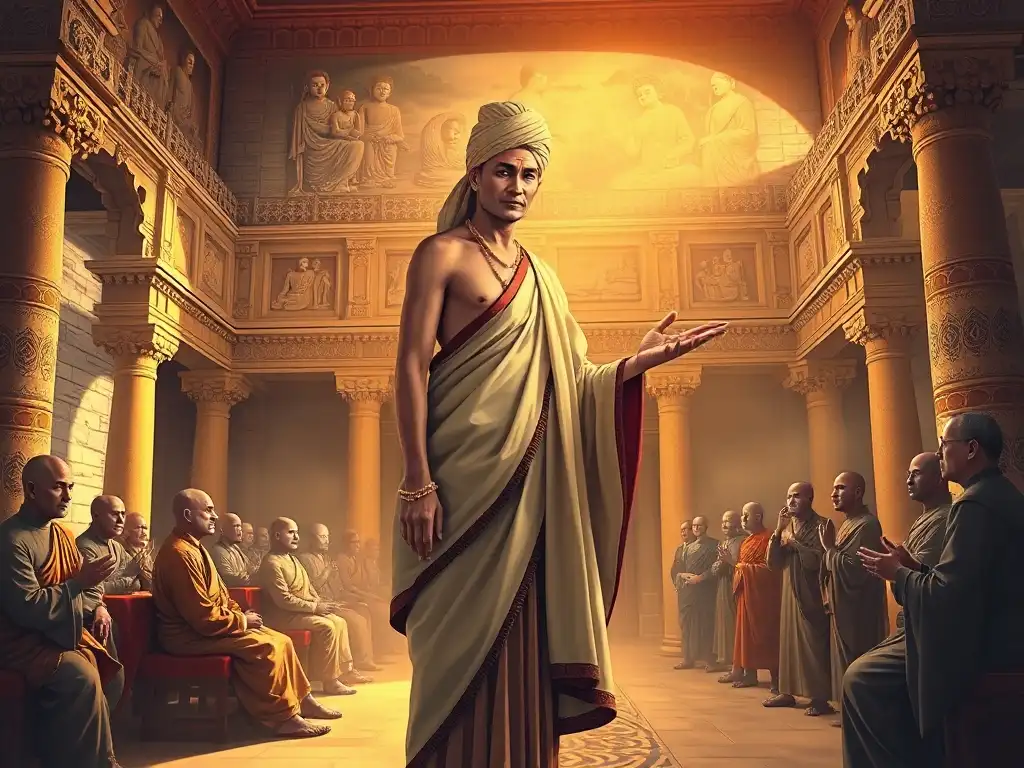
Chanakya, also known as Kautilya, is widely regarded as one of the most influential figures in ancient Indian political philosophy. His work, the Arthashastra, serves as a foundational text on statecraft, economic policy, and military strategy. Several case studies illustrate how Chanakya’s governance principles were put into action, particularly in relation to Buddhist rulers and their states.
One notable instance is the establishment of the Maurya Empire under Chandragupta Maurya, whom Chanakya mentored and advised. Chanakya utilized his strategic acumen to overthrow the Nanda Dynasty, which was perceived as corrupt and ineffective. His methods included espionage, diplomacy, and military tactics, reflecting his belief that governance must be pragmatic and robust. The success of this empire laid the groundwork for the spread of Buddhism, as Chandragupta later embraced Buddhism and encouraged its propagation, influenced by Chanakya's emphasis on moral governance.
Another significant case involves the administration of Ashoka the Great, who, after his conversion to Buddhism, integrated Chanakya’s principles into his rule. Ashoka’s edicts, which promoted non-violence and dharma, can be seen as a continuation of Chanakya's philosophy, emphasizing the importance of ethical governance. This transition shows how Chanakya's teachings were adaptable, guiding rulers towards a more enlightened approach while maintaining effective governance.
Examples of Chanakya's Influence on Buddhist Rulers
Chanakya's influence on Buddhist rulers can be observed in various historical contexts. One of the most prominent examples is Ashoka, who is often cited as a ruler who successfully blended Chanakya's political strategies with Buddhist ideals. Following the bloody Kalinga War, Ashoka embraced Buddhism and adopted a governance style that emphasized ethical rulership, reflecting Chanakya’s teachings on the responsibilities of a king.
Additionally, rulers like Kanishka of the Kushan Empire implemented Chanakya’s strategies, focusing on trade and economic stability while promoting Buddhism across their territories. The flourishing trade routes during Kanishka's reign, particularly along the Silk Road, facilitated cultural exchanges that led to the spread of Buddhism beyond India. This demonstrates how Chanakya’s influence extended beyond mere governance to encompass the promotion of a religion that emphasized peace and compassion.
In the context of Southeast Asia, Chanakya's principles can be seen in the governance of Buddhist monarchs who utilized strategic alliances and military prowess to expand their influence. The integration of Buddhist thought with Chanakya's pragmatic governance ensured that these rulers maintained stability and fostered the growth of Buddhism in their regions.
Long-term Impacts of Chanakya's Governance on Buddhist States
The long-term impacts of Chanakya's governance on Buddhist states are profound and multifaceted. His emphasis on strategic statecraft laid the groundwork for future rulers in India and beyond, shaping the political landscape for centuries. The synthesis of Chanakya's pragmatic approach with Buddhist principles resulted in a unique model of governance that prioritized both effectiveness and morality.
One of the most lasting impacts was the establishment of a centralized administration in various Buddhist states, allowing for efficient governance and the management of diverse populations. This model of governance facilitated the spread of Buddhism, as rulers who adhered to Chanakya's teachings were more likely to support monastic communities and promote Buddhist values.
Furthermore, the integration of Chanakya's ideas into the governance of Buddhist states contributed to the preservation of Buddhist texts and traditions. Rulers who recognized the importance of knowledge and scholarship often patronized universities and monasteries, ensuring that Buddhist teachings survived through the ages.
The Legacy of Chanakya in Buddhist Context
Chanakya’s legacy within the Buddhist context remains significant, as his ideas continue to resonate in both historical and contemporary discussions on governance and ethics. His ability to adapt political strategies to align with Buddhist values reflects a deep understanding of the interplay between politics and spirituality.
Buddhist scholars and leaders often revisit Chanakya's Arthashastra to glean insights into effective governance while remaining true to the ethical teachings of Buddhism. His emphasis on dharma and moral responsibilities has influenced the way Buddhist leaders approach governance, balancing the need for authority with compassion and justice.
How Chanakya's Ideas Resonate in Modern Buddhist Thought
In modern Buddhist thought, Chanakya's ideas are often revisited in the context of ethical leadership and social responsibility. His insights into statecraft and governance provide a framework for contemporary leaders seeking to govern in a manner that promotes peace and harmony within society.
Many modern Buddhist practitioners emphasize the importance of applying Chanakya's teachings to contemporary socio-political issues. His call for pragmatic governance that does not sacrifice moral integrity resonates strongly in discussions about ethical leadership, particularly in regions where Buddhism plays a significant role in cultural and political life.
Moreover, Chanakya's belief in the importance of education and knowledge continues to inspire modern Buddhist educators and leaders. The emphasis he placed on informed decision-making and strategic planning is reflected in current educational programs that aim to cultivate responsible leaders within the Buddhist community.
The Continuing Relevance of Chanakya's Influence on Governance in Buddhist Societies
Chanakya's influence on governance remains relevant in today’s Buddhist societies, where the challenges of modernity require a blend of traditional wisdom and contemporary strategies. His principles of effective governance, statecraft, and ethical leadership are applied by leaders and policymakers who strive to balance the demands of modern governance with the moral imperatives of Buddhism.
In various Buddhist-majority countries, leaders often invoke Chanakya’s teachings when addressing issues such as social justice, economic development, and environmental sustainability. His insights into the nature of power and the responsibilities of a ruler serve as a reminder that leadership must be grounded in ethical considerations.
Furthermore, the adaptability of Chanakya's teachings allows them to be relevant across different cultural contexts. As Buddhist societies continue to evolve, the principles laid out by Chanakya provide valuable guidance for navigating the complexities of governance while remaining true to the core tenets of Buddhism. This enduring legacy ensures that Chanakya's influence will continue to shape Buddhist thought and governance for generations to come.
Conclusion
The historical impact of Chanakya on Buddhist thought and governance is a multifaceted subject that reveals the intricate connections between political strategy and spiritual philosophy in ancient India. As a philosopher, teacher, and strategist, Chanakya's contributions not only shaped the governance of his time but also influenced the development of Buddhist ideologies. His pragmatic approach to leadership and governance offered a framework that resonated with Buddhist principles, emphasizing ethics, social responsibility, and the importance of wisdom in decision-making.
Summary of Chanakya's Historical Impact on Buddhism
Chanakya, also known as Kautilya, is best remembered for his seminal work, the Arthashastra, which outlines various strategies for governance and statecraft. His insights into political administration were revolutionary and left a lasting impact on the governance structures in ancient India. More importantly, his teachings intersected with Buddhist thought, particularly in the areas of ethical governance and the role of the ruler in promoting the welfare of the people.
- Ethical Governance: Chanakya's vision of a ruler's duty aligns closely with Buddhist values, where the well-being of the subjects is of paramount importance. His advocacy for dharma (righteousness) in governance complemented the Buddhist emphasis on ethical conduct.
- Promotion of Education and Knowledge: Chanakya emphasized the importance of education and knowledge in leadership, which resonated with Buddhist teachings that prioritize wisdom as a path to enlightenment. His support for learning and intellectual discourse contributed to the flourishing of educational institutions that also catered to Buddhist scholarship.
- Political Strategy and Buddhist Monasticism: Chanakya's strategies often called for the protection and support of monastic communities, recognizing their role in societal stability and moral guidance. This support was crucial for the preservation and expansion of Buddhist teachings during his era.
Chanakya's influence on Buddhism can be seen in the way he integrated philosophical ideals into practical governance, thereby creating a framework that supported the growth of Buddhist thought within the socio-political landscape of ancient India.
Final Thoughts on Chanakya's Enduring Influence in Ancient Indian Religions
Chanakya's enduring influence extends beyond Buddhism to encompass various aspects of ancient Indian religions. His principles of governance and ethical conduct have been referenced by numerous leaders and thinkers throughout history, demonstrating the timelessness of his insights. The intersection of Chanakya’s political acumen and Buddhist philosophy presents a rich tapestry of cultural and spiritual evolution in ancient India.
As modern scholars continue to explore the dynamics of political thought and its relationship with religious ideologies, Chanakya remains a pivotal figure. His ability to blend practical governance with moral philosophy offers valuable lessons for contemporary discussions on leadership and ethical responsibility. The study of Chanakya's influence on Buddhism not only enriches our understanding of ancient Indian history but also provides a framework for reflecting on the relevance of these teachings in today's world.
References
Key Texts and Sources on Chanakya and Buddhism
- Arthashastra by Kautilya (Chanakya): A foundational text on statecraft and political philosophy that discusses governance, economics, and military strategy.
- Buddhism and Politics: An exploration of the relationship between Buddhist thought and political leadership, emphasizing historical figures like Chanakya.
- The Life and Times of Chanakya: A historical account detailing the life of Chanakya and his contributions to Indian political philosophy.
Suggested Reading for Further Exploration of Chanakya's Influence
- The Chanakya Neeti: A collection of aphorisms attributed to Chanakya, offering wisdom on ethics and governance.
- Buddhist Philosophy: A Historical Analysis: This work examines the evolution of Buddhist thought, including influences from key figures like Chanakya.
- The Influence of Chanakya on Indian Statecraft: A comprehensive study on how Chanakya's ideas shaped governance and political philosophy in ancient India, with a focus on their impact on Buddhism.
- Introduction to Chanakya and His Significance
- Chanakya's Philosophical Foundations
- Chanakya's Influence on Buddhist Thought
- Governance and Chanakya's Political Strategies
- Case Studies: Chanakya's Governance in Action
- The Legacy of Chanakya in Buddhist Context
- Conclusion
- References
Frequently Asked Questions
What was Chanakya's role in ancient Indian history?
Chanakya, also known as Kautilya, was a political strategist and philosopher who played a crucial role in the establishment of the Maurya Empire, influencing governance and administration.
How did Chanakya influence Buddhism?
Chanakya's teachings emphasized pragmatism and ethics, which significantly impacted Buddhist thought, particularly in areas of governance and the importance of moral leadership.
What are the key texts associated with Chanakya?
The primary text attributed to Chanakya is the Arthashastra, which outlines strategies for governance, economics, and military tactics, intertwining political philosophy with moral principles.
How did Chanakya's philosophies align with Buddhist principles?
Chanakya's focus on dharma (moral duty) and effective governance resonates with Buddhist values, promoting a just society and the welfare of the community, which are central to Buddhist teachings.
What lasting effects did Chanakya have on Indian governance?
Chanakya's influence extended beyond his time, shaping administrative practices and political theories that contributed to the governance models seen in subsequent Indian empires, including those influenced by Buddhism.
Final Reflection: The Enduring Legacy of Chanakya's Influence on Buddhism
The profound insights of Chanakya continue to resonate in today's world, illustrating how ancient wisdom can shape modern thought and governance. As we navigate complex societal challenges, the principles laid out by Chanakya serve as a guiding light, reminding us of the importance of strategic thinking and ethical leadership. His influence on Buddhism not only enriched the spiritual landscape but also provided a framework for governance that remains relevant in contemporary discussions about leadership and morality.
Chanakya's teachings have woven themselves into the fabric of cultural and social discourse, influencing not just political leaders but also everyday individuals seeking guidance in their personal and professional lives. His ability to blend practical governance with philosophical depth has created a lasting impact that transcends time. The greatest teacher is the one who shows you how to think, not what to think.
This quote encapsulates the essence of Chanakya's influence on Buddhism, emphasizing the importance of critical thinking and self-awareness in our journey toward enlightenment.
As we reflect on the teachings of Chanakya, let us invite ourselves to embrace his wisdom in our daily lives. Consider how his principles can guide your decisions, inspire your leadership, and deepen your understanding of ethical governance. In a world that often feels chaotic, the teachings of Chanakya remind us that thoughtful reflection and strategic action can lead to meaningful change. Take a moment to ponder how you can incorporate these timeless lessons into your own life, fostering a legacy of wisdom and integrity that echoes through generations.
Unveil the Wisdom of Chanakya: Take Action Today!
Thank you for diving into the rich world of Chanakya and his profound influence on governance and ethical thought! You’ve gained insight into the timeless strategies and philosophies that shape our understanding of leadership. Now, it’s time to put this wisdom into action!
Here are a few steps you can take to explore and share Chanakya's legacy further:
- Delve Deeper: Read books or articles that focus on Chanakya’s insights into governance to fully appreciate his impact on both historical and modern contexts.
- Engage with the Community: Join discussion forums or social media groups dedicated to ancient Indian philosophy to exchange ideas and deepen your understanding with others who share your interest.
- Share Your Insights: Write a reflection or post a quote from Chanakya that resonates with you on social media, encouraging meaningful conversations with your friends!
What aspect of Chanakya’s teachings do you find most relevant to today's world, and how will you incorporate them into your life?