
The Connection Between Astronomy and Agriculture in Ancient India


Welcome to Ancient India History, where we embark on an enlightening journey through the mesmerizing tapestry of ancient Indian civilizations. Discover how the brilliance of astronomy intertwined with the practices of agriculture, shaping not only the landscape but also the very fabric of society in ancient India. In our featured article, "The Connection Between Astronomy and Agriculture in Ancient India," we unravel the profound insights and innovations that emerged from this harmonious relationship.
Prepare to be captivated as we explore how celestial observations guided agricultural practices, fostering a legacy that continues to inspire. Dive deeper with us and uncover the secrets of a civilization that thrived under the stars!
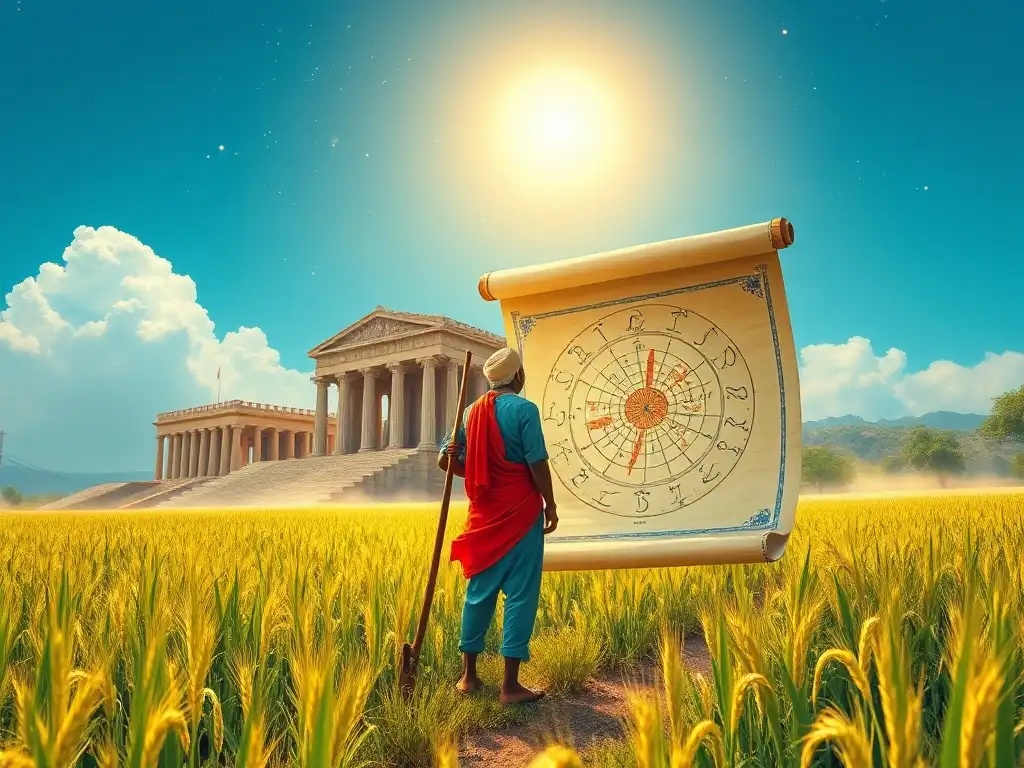
Introduction to Ancient India Astronomy and Agriculture Connection
The intricate relationship between astronomy and agriculture in ancient India serves as a fascinating lens through which we can explore the remarkable achievements of early Indian civilizations. As societies developed in the fertile plains of the Indus Valley and later expanded across the subcontinent, their agricultural practices became increasingly intertwined with celestial observations. Ancient Indian astronomers meticulously charted the movements of celestial bodies, leading to significant advancements in agricultural practices. This connection not only highlights the ingenuity of these civilizations but also illustrates how their understanding of the cosmos directly influenced their agricultural cycles, rituals, and societal structures.
Overview of Ancient Indian Civilizations
Ancient India was home to numerous civilizations, each contributing to the rich tapestry of its history. From the Indus Valley Civilization (circa 3300–1300 BCE), known for its advanced urban planning and trade networks, to the later kingdoms such as the Maurya and Gupta Empires, these societies flourished in diverse environments. Their agricultural practices were largely dependent on seasonal changes, and this reliance on the natural world fostered a deep respect for celestial phenomena.
- Key Civilizations:
- Indus Valley Civilization
- Maurya Empire
- Gupta Empire
Importance of Astronomy in Ancient Indian Culture
Astronomy played a pivotal role in ancient Indian culture, not merely as a scientific discipline but as a fundamental aspect of religious and cultural life. The movements of the sun, moon, and stars were not only observed for agricultural purposes but also intertwined with various mythologies and spiritual beliefs. Festivals, planting seasons, and harvesting times were all aligned with astronomical events, showcasing the profound respect these civilizations had for the cosmos.
- Cultural Significance:
- Festivals aligned with celestial events
- Agricultural calendars based on lunar cycles
- Integration of astronomy in spiritual practices
The Role of Agriculture in Sustaining Civilizations
Agriculture was the backbone of ancient Indian societies, providing sustenance and economic stability. The success of agricultural practices directly affected population growth, urbanization, and trade. Ancient texts reveal that agricultural techniques were often developed in accordance with astronomical observations, such as the timing of monsoons and seasonal changes. This synergy between astronomy and agriculture not only ensured food security but also fostered technological innovations in farming practices.
- Key Agricultural Practices:
- Seasonal planting and harvesting
- Use of irrigation techniques
- Crop rotation and soil management
Historical Context of Astronomy in Ancient India
The rich history of astronomy in ancient India can be traced through various texts and practices that emerged over millennia. Understanding this historical context is crucial for appreciating the sophisticated knowledge systems that existed and their significant contributions to both science and agriculture.
Development of Astronomical Knowledge
The development of astronomical knowledge in ancient India was marked by meticulous observations and record-keeping. Early astronomers utilized simple tools like the gnomon and water clocks to track celestial movements. Over time, this foundational knowledge laid the groundwork for more complex astronomical theories and methods.
- Key Developments:
- Use of observational instruments
- Theoretical advancements in celestial mechanics
- Integration of astronomy with mathematics
Key Astronomical Texts and Contributions
Several key texts from ancient India encapsulate the astronomical knowledge of the time. Works such as the Aryabhatiya by Aryabhata and the Surya Siddhanta provided comprehensive insights into the movements of celestial bodies and their applications in agriculture. These texts not only served as educational resources but also influenced subsequent generations of astronomers across cultures.
- Notable Texts:
- Aryabhatiya (by Aryabhata)
- Surya Siddhanta
- Brahmasphutasiddhanta (by Brahmagupta)
Prominent Astronomers of Ancient India
Ancient India produced several prominent astronomers whose contributions significantly shaped the field of astronomy. Figures such as Aryabhata, Brahmagupta, and Varahamihira advanced the understanding of celestial phenomena and their implications for agriculture. Their innovative ideas and methods exemplify the profound connection between astronomy and agriculture in ancient Indian society.
- Notable Astronomers:
- Aryabhata: Introduced concepts of algebra and trigonometry.
- Brahmagupta: Developed rules for calculations involving zero.
- Varahamihira: Explored astrology and its agricultural implications.
This exploration of the connection between astronomy and agriculture in ancient India reveals a sophisticated understanding of the natural world, showcasing how early Indian civilizations thrived through their integration of celestial observations into daily life and agricultural practices.
The Influence of Astronomy on Agricultural Practices
Agricultural practices in ancient India were profoundly influenced by astronomical observations. The farmers relied on celestial bodies, including the sun, moon, and stars, to determine the optimal times for planting and harvesting crops. This connection between astronomy and agriculture was not merely incidental; it was rooted in the understanding of seasonal changes and the rhythms of nature.
The alignment of celestial events with agricultural cycles allowed farmers to maximize crop yields and ensure food security in their communities. This intricate relationship illustrates how ancient Indian civilizations integrated scientific knowledge into everyday life, creating a harmonious balance between agriculture and astronomy.
Understanding Seasonal Cycles through Astronomy
The ancient Indian agrarian society was deeply attuned to the changing seasons, which were closely monitored through celestial observations. The position of the sun in the sky, the phases of the moon, and the appearance of specific constellations signified the onset of different agricultural seasons. For example, the arrival of the monsoon was often associated with specific astronomical phenomena, such as the visibility of certain stars or the position of the sun in relation to the horizon.
Farmers observed these celestial markers to optimize their planting schedules, ensuring that crops received adequate water and sunlight. This systematic understanding of seasonal cycles allowed for more efficient farming practices, thereby enhancing agricultural productivity.
Calendrical Systems and Their Impact on Farming
Ancient Indian civilizations developed sophisticated calendrical systems that were intricately linked to both astronomy and agriculture. The Hindu calendar, known as the Panchang, was structured around lunar phases and solar cycles, providing a framework for agricultural activities throughout the year. Each month was associated with specific agricultural tasks, such as sowing seeds, weeding, or harvesting.
This calendar not only helped in organizing farming activities but also played a crucial role in religious and cultural practices that were tied to agricultural cycles. As a result, the calendrical systems served as a vital tool for farmers, helping them to navigate the complexities of agricultural life in accordance with celestial events.
The Role of Celestial Events in Agricultural Timing
Celestial events, such as eclipses, solstices, and equinoxes, held significant importance in the agricultural practices of ancient India. Eclipses were often viewed as omens that could influence crop yields and were thus closely monitored. The summer solstice, marking the longest day of the year, indicated a critical period for preparing fields for planting, while the winter solstice signaled the time for harvesting.
Furthermore, the timing of these celestial events was believed to affect soil fertility and crop health. By aligning farming activities with these significant celestial markers, ancient Indian farmers not only honored their agricultural traditions but also harnessed the wisdom of their astronomical observations to enhance their livelihoods.
Techniques and Tools Used in Ancient Indian Astronomy
The ancient Indians developed various techniques and tools for astronomy that were instrumental in connecting their agricultural practices with celestial phenomena. These innovations were tailored to meet the practical needs of farmers, ensuring that they could accurately track the movements of celestial bodies and incorporate this knowledge into their agricultural planning.
Instruments for Observation and Measurement
Ancient Indian astronomers employed a variety of instruments for observing celestial bodies and measuring time. Notable among these were gnomons, which were used to determine the position of the sun and thus track time throughout the day. Additionally, water clocks and shadow clocks provided reliable methods for measuring hours and minutes, aiding farmers in scheduling their daily activities. The use of instruments like the astrolabe allowed for more precise calculations regarding celestial positions, which in turn facilitated a deeper understanding of seasonal changes critical for agriculture.
Methods for Predicting Weather Patterns
Weather prediction was a crucial aspect of agricultural planning in ancient India, and astronomers developed methods to anticipate weather changes based on celestial observations. By monitoring the position of stars and the phases of the moon, they could infer upcoming weather conditions, such as the arrival of rain or the onset of drought. This predictive capability enabled farmers to make informed decisions about when to plant or harvest crops, significantly reducing the risks associated with unpredictable weather patterns. The integration of astronomical insights into weather forecasting underscored the vital role of astronomy in supporting sustainable agricultural practices.
Integration of Astronomy in Agricultural Planning
The integration of astronomy into agricultural planning was a hallmark of ancient Indian civilization. Farmers relied on astronomical calendars to dictate the timing of their agricultural activities, aligning actions such as plowing, sowing, and harvesting with celestial cycles. This synchronization ensured that crops were planted during periods of favorable conditions, maximizing yield potential.
Moreover, the knowledge gained from astronomy was often shared through oral traditions and written texts, ensuring that future generations of farmers could benefit from the accumulated wisdom. The seamless blend of astronomy and agriculture not only optimized food production but also fostered a deeper cultural appreciation for the natural world and its celestial influences.
Case Studies of Agriculture and Astronomy in Ancient Indian Cultures

The interplay between astronomy and agriculture in ancient India is richly documented through various civilizations, each demonstrating unique methodologies and insights. These case studies illustrate how ancient Indian cultures utilized celestial phenomena to enhance agricultural productivity. By examining specific civilizations, we can understand the profound connections that shaped agricultural practices and their dependence on astronomical observations.
The Indus Valley Civilization: Agricultural Techniques and Astronomical Insights
The Indus Valley Civilization (circa 3300–1300 BCE) is renowned for its advanced urban planning and agricultural systems. Archaeological evidence suggests that the inhabitants cultivated a variety of crops, including wheat, barley, and cotton, leveraging the fertile alluvial plains of the Indus River.
One striking aspect of their agricultural practices was the alignment of their farming activities with seasonal celestial events. The Indus people likely monitored the heliacal rising of specific stars, which marked the onset of the monsoon season. This astronomical insight allowed them to time their sowing and harvesting effectively, ensuring optimal yields. Additionally, the well-planned drainage and irrigation systems reflect an understanding of seasonal changes, which were possibly informed by celestial observations.
Vedic Period: Aligning Agricultural Practices with Astronomical Events
During the Vedic Period (circa 1500–500 BCE), agriculture became deeply intertwined with religious and astronomical beliefs. The Vedic texts, such as the Rigveda, contain numerous references to celestial bodies and their significance in agricultural cycles.
Farmers in this era aligned their agricultural practices with important astronomical events, such as solstices and equinoxes. For instance, the winter solstice was celebrated with rituals that coincided with the sowing of seeds, reflecting a belief that celestial cycles directly influenced crop growth. The timing of these rituals was often dictated by the lunar calendar, emphasizing the connection between lunar phases and agricultural activities.
Furthermore, the concept of “Ritu,” or seasons, as described in Vedic literature, underscores the importance of understanding seasonal changes in relation to celestial occurrences. This systematic observation allowed farmers to optimize their planting and harvesting schedules, thereby enhancing agricultural productivity.
Gupta Empire: Innovations in Farming and Astronomy
The Gupta Empire (circa 320–550 CE), often referred to as the Golden Age of India, witnessed significant advancements in both agriculture and astronomy. During this period, agricultural techniques became more sophisticated, with the introduction of new tools and crop rotation methods.
Astronomers such as Aryabhata and Varahamihira made notable contributions, linking astronomical calculations to agricultural practices. Aryabhata's work on the calculation of the solar year and the motion of celestial bodies provided farmers with essential information to determine the best times for planting and harvesting.
Additionally, the Gupta rulers promoted agrarian policies that encouraged the cultivation of diverse crops, such as sugarcane and various legumes. The integration of astronomical knowledge into agricultural practices during this time not only improved crop yields but also fostered a culture of scientific inquiry and innovation.
Myths and Realities: Misconceptions about Astronomy and Agriculture
Despite the rich history of astronomy and agriculture in ancient India, several misconceptions persist. Understanding these myths and the underlying realities can help clarify the significant role that astronomy played in agricultural practices.
Common Myths Surrounding Ancient Indian Agricultural Practices
One prevalent myth is that ancient Indian farmers relied solely on traditional knowledge passed down through generations, without any scientific basis. While it is true that oral traditions played a significant role, this perspective overlooks the sophisticated understanding of astronomy that these farmers possessed.
Another misconception is that agriculture was entirely dependent on weather patterns, disregarding the contributions of astronomical observations. In reality, ancient Indian farmers meticulously tracked celestial events to inform their agricultural decisions, demonstrating a remarkable integration of observational science into their practices.
The Reality of Astronomical Influence on Crop Production
The reality is that astronomical knowledge significantly influenced crop production in ancient India. Farmers observed celestial bodies and seasonal changes, allowing them to make data-driven decisions regarding planting and harvesting. This methodical approach resulted in enhanced agricultural efficiency and productivity.
Moreover, the alignment of farming practices with astronomical events not only maximized yields but also established a cultural framework where science and spirituality coexisted. Understanding these realities underscores the importance of astronomy in shaping the agricultural landscape of ancient India, revealing a complex relationship that contributed to the success of its civilizations.
Conclusion: The Lasting Impact of Astronomy on Agriculture in Ancient India
The interplay between astronomy and agriculture in ancient India was profound, shaping not only agricultural practices but also the cultural and societal frameworks of the time. The meticulous observations of celestial bodies and their cycles provided essential data that farmers relied upon to determine the right times for sowing, harvesting, and other farming activities. This connection not only maximized agricultural yields but also contributed to the establishment of a structured calendar that integrated lunar months and solar years, fostering a deeper understanding of time and its relationship to natural phenomena.
Summary of Key Points
- Celestial Calendars: Ancient Indian civilizations developed calendars based on lunar and solar cycles, enabling them to predict seasonal changes crucial for agriculture.
- Alignment of Rituals: Farming activities were often aligned with astronomical events, such as solstices and equinoxes, which held significant cultural importance.
- Agricultural Texts: Texts like the Aryabhatiya and Brahmasphutasiddhanta detailed astronomical calculations that directly influenced agricultural practices.
- Technological Innovations: Advances in tools and techniques, driven by astronomical knowledge, improved irrigation, land management, and crop rotation.
- Cultural Significance: The integration of astronomy into agriculture reflected the holistic worldview of ancient Indian societies, where science, religion, and daily life were interconnected.
The Legacy of Ancient Indian Astronomy in Modern Agriculture Practices
The legacy of ancient Indian astronomy is still palpable in modern agricultural practices. Many contemporary farmers continue to rely on traditional calendars that reflect astronomical observations. For instance, some regions observe the timing of the monsoon based on the positioning of stars and planets, demonstrating a continuity of knowledge passed down through generations.
Additionally, modern agricultural techniques, such as precision farming, can find roots in the systematic approaches developed by ancient astronomers. The principles of timing, spatial awareness, and environmental observation laid the groundwork for today’s agricultural science. Furthermore, festivals and rituals surrounding agricultural activities often echo the astronomical traditions of ancient times, illustrating how deeply ingrained this knowledge remains in cultural practices.
Final Thoughts on the Interconnection of Astronomy and Agriculture
The connection between astronomy and agriculture in ancient India serves as a testament to human ingenuity and adaptability. By observing the cosmos, ancient Indians did not merely seek to understand the heavens; they harnessed this knowledge to enhance their agricultural productivity and societal stability. This interconnection highlights the importance of interdisciplinary approaches in understanding historical developments.
As we continue to explore the implications of ancient astronomical practices on modern agriculture, it becomes clear that the wisdom of the past can inform our approaches today. In the face of modern challenges such as climate change and food security, revisiting these ancient practices might offer valuable insights for sustainable agricultural development. The rich tapestry of ancient Indian civilization reminds us that the quest for knowledge often transcends individual disciplines, weaving together science, culture, and the natural world into a cohesive narrative that continues to inspire.
- Introduction to Ancient India Astronomy and Agriculture Connection
- Historical Context of Astronomy in Ancient India
- The Influence of Astronomy on Agricultural Practices
- Techniques and Tools Used in Ancient Indian Astronomy
- Case Studies of Agriculture and Astronomy in Ancient Indian Cultures
- Myths and Realities: Misconceptions about Astronomy and Agriculture
- Conclusion: The Lasting Impact of Astronomy on Agriculture in Ancient India
- What was the role of astronomy in ancient Indian agriculture?
- How did ancient Indian civilizations utilize celestial observations?
- Were there any specific astronomical texts related to agriculture in ancient India?
- How did the Indus Valley civilization incorporate astronomy into their agricultural practices?
- What contributions did the Gupta Empire make to the connection between astronomy and agriculture?
Frequently Asked Questions
What was the role of astronomy in ancient Indian agriculture?
Astronomy played a crucial role in ancient Indian agriculture by helping farmers determine optimal planting and harvesting times based on celestial events and seasonal changes.
How did ancient Indian civilizations utilize celestial observations?
Ancient Indian civilizations used celestial observations to create calendars that guided agricultural practices, ensuring timely sowing and harvesting aligned with monsoon patterns.
Yes, ancient Indian texts like the Aryabhatiya and Surya Siddhanta included sections that discussed the relationship between celestial bodies and agricultural cycles, providing insights into seasonal changes.
How did the Indus Valley civilization incorporate astronomy into their agricultural practices?
The Indus Valley civilization utilized astronomical knowledge to design urban layouts and agricultural systems that were aligned with seasonal cycles, enhancing their farming efficiency.
What contributions did the Gupta Empire make to the connection between astronomy and agriculture?
During the Gupta Empire, scholars made significant advances in astronomy and mathematics, further refining agricultural techniques and calendars that helped boost agricultural productivity across the region.
Final Reflection: The Enduring Legacy of Ancient India's Astronomy and Agriculture Connection
The intricate relationship between astronomy and agriculture in ancient India is not just a relic of the past; it remains profoundly relevant today. As we navigate the complexities of modern agriculture and climate change, the wisdom of our ancestors offers invaluable insights. The celestial observations that guided ancient farmers in their planting and harvesting cycles remind us that understanding our environment is essential for sustainable living. This connection underscores the timeless truth that knowledge of the cosmos can illuminate our earthly endeavors.
The influence of this ancient connection continues to resonate in our cultural and social landscapes. The practices and philosophies derived from ancient Indian astronomy and agriculture serve as a foundation for contemporary agricultural techniques and ecological awareness. As we strive for food security and environmental sustainability, we can draw inspiration from the harmonious relationship that ancient civilizations nurtured with nature. To know the universe is to know oneself.
This quote encapsulates the essence of how our understanding of the cosmos can enrich our lives and inform our stewardship of the Earth.
As we reflect on the lessons from ancient India, I invite you to consider how you can integrate this wisdom into your own life. Whether it's through sustainable farming practices, community gardening, or simply being more mindful of the natural rhythms around you, each small action can contribute to a greater understanding of our place in the universe. Let us honor the legacy of our ancestors by fostering a deeper connection with the land and the skies, ensuring that their knowledge continues to guide us into the future.
Unlock the Secrets of Ancient Wisdom!
Thank you for exploring the fascinating connection between astronomy and agriculture in ancient India! Your interest in this rich history not only enhances your understanding but also links you to the innovative practices of our ancestors. Now, it’s time to take action and further investigate this unique intersection!
Here are some impactful steps you can take:
- Discover more: Visit our resources page to delve into ancient texts and practices that illustrate the relationship between celestial movements and agricultural cycles.
- Join the conversation: Share your thoughts in the comments section about how ancient wisdom can influence contemporary agricultural methods.
- Engage with the community: Connect with local historians or agricultural organizations to participate in workshops or lectures on this topic—who knows what new insights you might uncover!
What aspect of ancient astronomy do you believe holds the most significance for today's agriculture? Your insights are invaluable and could spark an engaging discussion!