
The Innovations in Indus Valley Agriculture: From Tools to Techniques

Welcome to Ancient India History, where we embark on a mesmerizing journey through the vibrant tapestry of ancient Indian civilizations. Dive deep into the fascinating world of Indus Valley agriculture innovations, where groundbreaking tools and techniques revolutionized farming practices and laid the foundation for thriving societies. As you explore our featured article, "The Innovations in Indus Valley Agriculture: From Tools to Techniques," prepare to uncover the ingenuity and resilience of a civilization that continues to inspire. Join us as we unravel the mysteries of the past and celebrate the remarkable contributions of ancient India!
Introduction to Indus Valley Agriculture Innovations
The Indus Valley Civilization, one of the world's earliest urban cultures, thrived between 3300 BCE and 1300 BCE in what is now modern-day Pakistan and northwest India. Renowned for its advanced city planning, architecture, and social organization, this civilization also made significant strides in agriculture. The innovations in Indus Valley agriculture not only facilitated food production but also laid the groundwork for sustainable farming practices that influenced subsequent Indian civilizations. This article delves into the remarkable agricultural advancements of the Indus Valley, exploring the tools, techniques, and methodologies that transformed their agrarian society.
Overview of the Indus Valley Civilization
The Indus Valley Civilization, often referred to as the Harappan Civilization, was characterized by its sophisticated urban centers such as Harappa and Mohenjo-Daro. This civilization boasted a well-planned layout, complete with drainage systems, granaries, and public baths, indicating a high level of societal organization.
- Geographical Span: The civilization extended over a vast area, encompassing parts of present-day Pakistan, India, and Afghanistan.
- Population: Estimates suggest that the population of the Indus Valley could have reached up to five million people at its peak.
- Trade and Economy: Agriculture was the backbone of the economy, with trade networks extending to regions as far as Mesopotamia.
Importance of Agriculture in Ancient India
Agriculture played a pivotal role in the sustenance and economic stability of ancient Indian civilizations. In the context of the Indus Valley, it was not merely a means of survival but a catalyst for cultural and technological advancements.
- Food Security: The ability to produce surplus crops ensured food security for the growing population.
- Social Structure: Agriculture contributed to the formation of complex social hierarchies, with roles emerging for farmers, traders, and artisans.
- Cultural Significance: Agricultural festivals and practices were intertwined with the religious and cultural fabric of society.
Key Innovations in Indus Valley Agriculture
The agricultural innovations of the Indus Valley were diverse, reflecting their adaptability and ingenuity in farming practices. These innovations were crucial in maximizing productivity and efficiency in their agricultural pursuits.
Advanced Agricultural Tools and Equipment
The Indus Valley farmers developed a range of tools that significantly enhanced their agricultural output.
- Ploughs: Evidence suggests that wooden ploughs were used, enabling deeper tillage of the soil and improved seed placement.
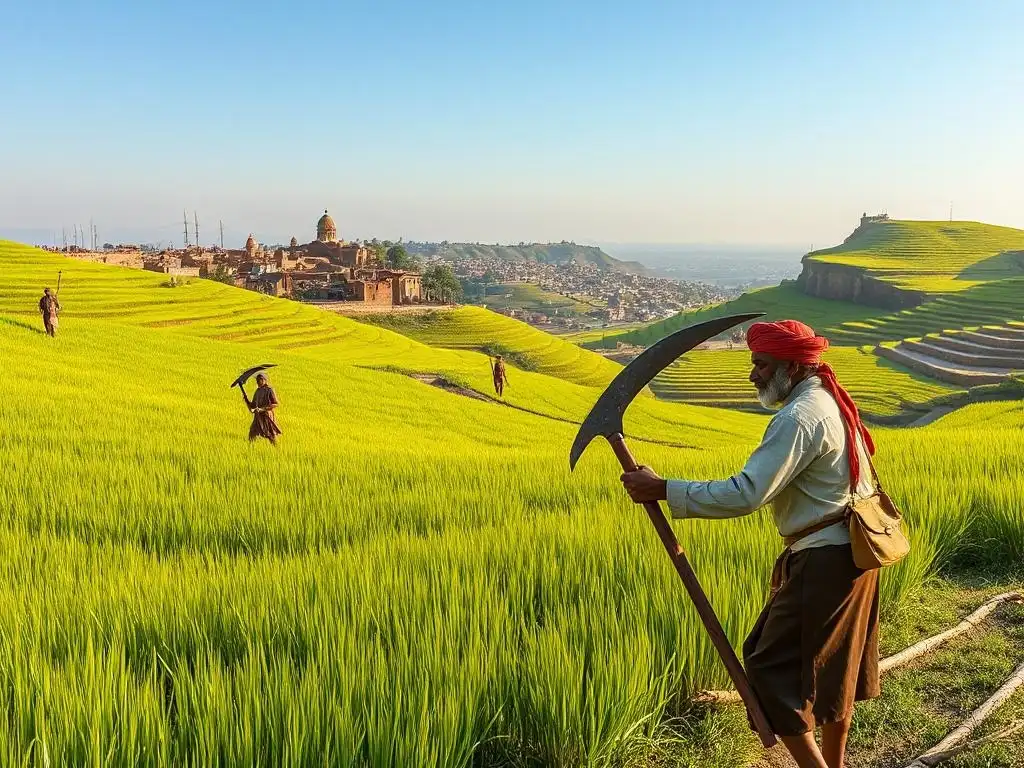
- Sickle: The sickle, a curved blade, facilitated efficient harvesting of crops such as wheat and barley.
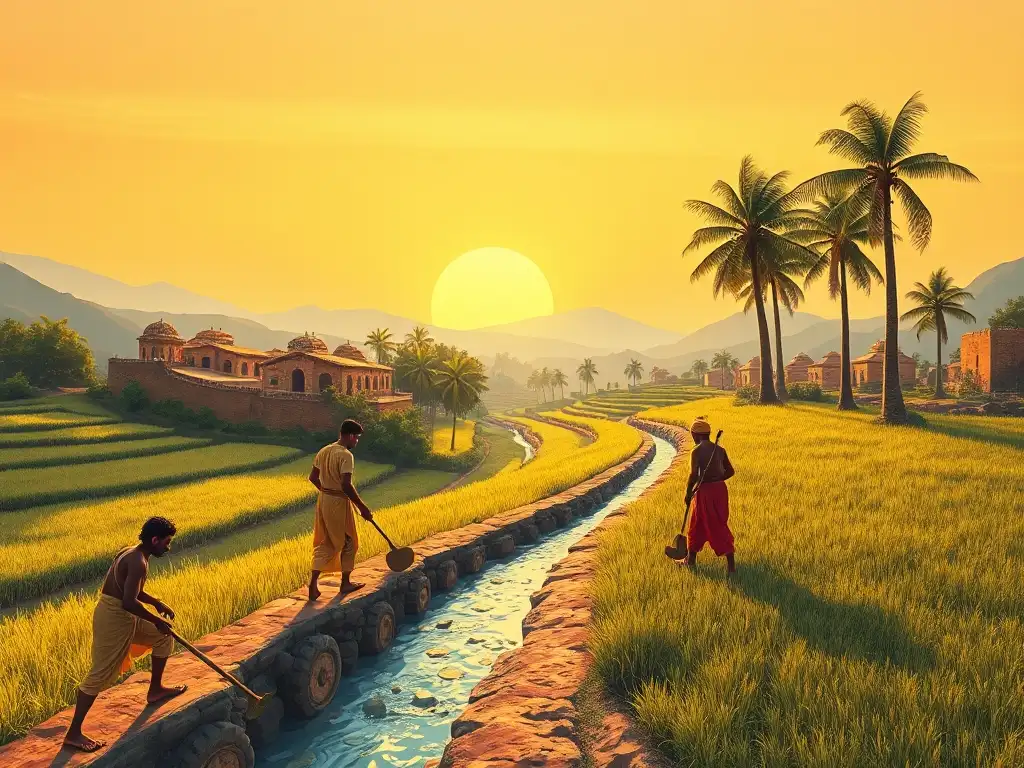
- Irrigation Techniques: The use of canals and reservoir systems allowed for the effective management of water resources, crucial in a region subject to varying rainfall patterns.
Crop Selection and Diversity
The agricultural practices of the Indus Valley were marked by a keen understanding of crop selection and diversity.
- Cereal Crops: Wheat and barley were staple crops, cultivated using sophisticated methods.
- Legumes and Pulses: The inclusion of legumes, such as lentils, contributed to soil fertility through nitrogen fixation.
- Cotton Cultivation: The domestication of cotton was significant, as it marked the beginning of textile production in the region, showcasing the intertwining of agriculture and industry.
These innovations not only reflect the agricultural prowess of the Indus Valley Civilization but also underscore their role in shaping the agricultural practices that would influence future generations in India and beyond. As we explore further, we will delve deeper into specific tools and techniques that exemplified their agricultural ingenuity.
Agricultural Techniques of the Indus Valley
The Indus Valley Civilization, which flourished from approximately 3300 to 1300 BCE, is renowned for its advanced agricultural techniques that laid the foundation for sustainable and productive farming. Central to their agricultural success was the use of a sophisticated irrigation system, which enabled the cultivation of crops in a region characterized by both seasonal monsoons and arid conditions.
The people of the Indus Valley developed canals and reservoirs to manage water supply effectively. These water management systems not only facilitated the cultivation of staple crops like wheat, barley, and pulses but also supported the growth of cotton, which became a significant cash crop. Furthermore, the strategic use of crop rotation and intercropping ensured soil fertility and crop yield stability across seasons.
Another notable technique was the use of plows, which were likely made of wood and possibly metal. The plowing process helped in turning the soil, aerating it, and preparing it for seeding, which significantly enhanced agricultural productivity. The integration of livestock, particularly cattle, into farming practices also played a crucial role in plowing fields and providing manure, thus contributing to soil enrichment.
Sustainable Farming Practices
Sustainability was a hallmark of agricultural practices in the Indus Valley. The civilization's farmers employed techniques that minimized environmental degradation and ensured long-term agricultural productivity. One of the key sustainable practices was the use of organic fertilizers, such as animal waste, which enriched the soil without introducing harmful chemicals. This emphasis on natural inputs helped maintain soil health and fertility over generations.
Moreover, the practice of crop diversification reduced the risk of total crop failure due to pests or diseases. By planting various crops, farmers could hedge against unpredictable weather and market fluctuations, ensuring a steady food supply. Evidence suggests that the Indus Valley farmers were also adept at selecting drought-resistant varieties, allowing them to adapt to changing climatic conditions.
The emphasis on communal land management further exemplifies their sustainable approach. Fields were often shared among neighboring farmers, promoting resource sharing and reducing individual risk. This collaborative spirit not only fostered a sense of community but also ensured that farming practices aligned with the ecological capacities of the region, thus safeguarding natural resources for future generations.
Community-based Agricultural Practices
Community involvement was essential in shaping the agricultural landscape of the Indus Valley. The civilization's agrarian society thrived on a network of cooperation, where farming techniques, tools, and knowledge were often shared among community members. This collective approach allowed farmers to learn from one another, improving agricultural methods and productivity collectively.
Evidence of communal granaries indicates that surplus production was stored and managed collectively, which played a crucial role in food security during lean seasons. These granaries not only served as storage spaces but also as centers for trade and distribution, fostering economic interdependence among different communities.
Additionally, local festivals and rituals often revolved around agricultural cycles, emphasizing the importance of community in farming practices. These events helped reinforce social bonds and collective responsibility for agricultural stewardship, ensuring that the community worked together to optimize agricultural outcomes.
Impact of Innovations on Society
The agricultural innovations of the Indus Valley Civilization had profound implications for its society. The advancements in farming techniques and tools not only enhanced food production but also catalyzed significant socio-economic changes.
Economic Growth Through Agricultural Advancements
The agricultural innovations directly contributed to the economic prosperity of the Indus Valley Civilization. By increasing the efficiency of food production, these innovations enabled the growth of surplus crops. Surplus production was crucial as it allowed for trade with neighboring regions, facilitating economic exchange and the development of specialized crafts and industries.
The emergence of a thriving trade network, bolstered by agricultural surplus, led to the rise of urban centers like Harappa and Mohenjo-Daro. These cities became bustling hubs of commerce, where agricultural products were exchanged for goods such as pottery, textiles, and metalwork. This economic diversification not only strengthened the local economy but also laid the groundwork for a more complex socio-economic structure.
Furthermore, agricultural advancements allowed for an increase in population density, as more food supported larger communities. This population growth necessitated improvements in infrastructure, including roads and irrigation systems, thus further stimulating economic development.
Social Structure and Agricultural Innovations
The agricultural innovations of the Indus Valley also significantly influenced the social structure of the civilization. As farming became more productive and specialized, it led to the emergence of distinct social roles. Some individuals became specialized farmers, while others engaged in trade, craftsmanship, or administration, resulting in a more stratified society.
The wealth generated from agriculture contributed to the rise of a merchant class, which played a crucial role in trade networks. This class not only facilitated economic transactions but also influenced cultural exchange and the dissemination of ideas across the region.
Additionally, the advancements in agriculture allowed for the establishment of more complex governance structures. As agricultural surplus required management and distribution, leadership roles evolved to oversee these processes, giving rise to early forms of political organization and social governance.
The innovations in Indus Valley agriculture, from sophisticated tools to community-based practices, transformed not only the landscape of farming but also the very fabric of society, laying the foundations for future civilizations in ancient India.
Comparisons with Contemporary Agricultural Practices
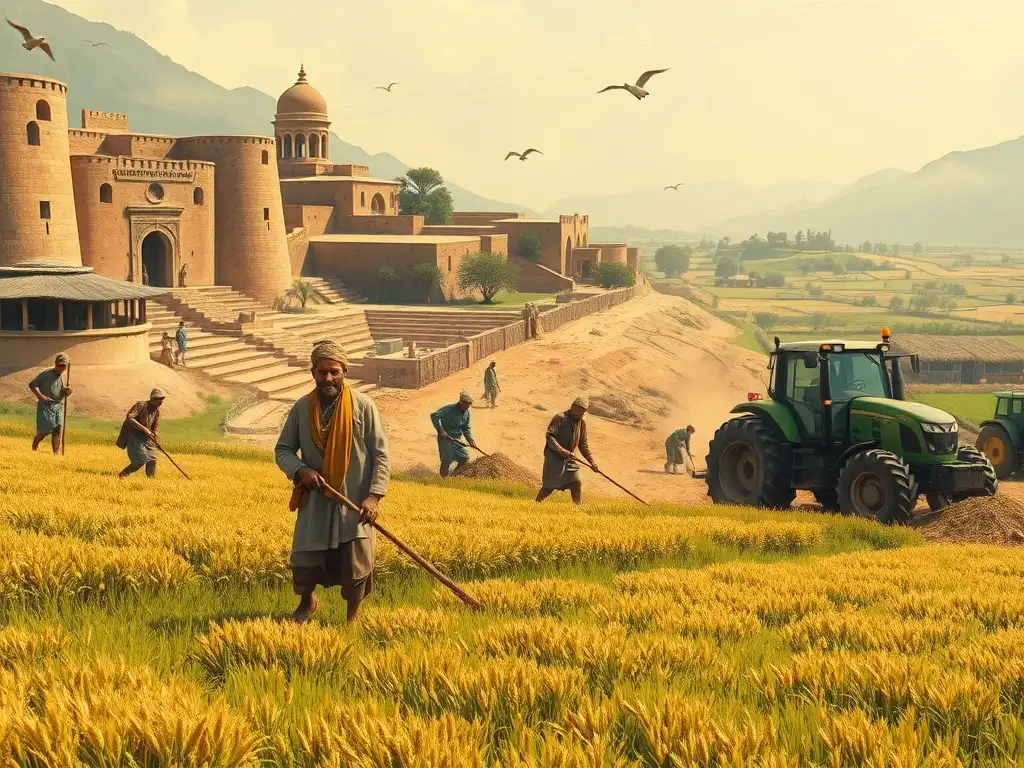
The agricultural practices of the Indus Valley Civilization (IVC) present intriguing comparisons to contemporary agricultural methods. While the foundational principles of agriculture, such as cultivation and irrigation, remain relevant, the techniques and tools have evolved significantly. The IVC, flourishing around 2500 BCE, laid the groundwork for various agricultural innovations that have influenced modern practices.
One key similarity is the emphasis on irrigation. The IVC utilized sophisticated water management systems, including canals and reservoirs, to support their crops. This practice is mirrored in modern agriculture, where irrigation remains vital for maximizing crop yields, particularly in arid regions.
However, differences are also pronounced. The IVC relied heavily on manual labor and basic tools such as wooden plows and sickles. In contrast, today's agricultural sector employs advanced machinery and technology, allowing for increased efficiency and productivity. Moreover, modern practices often incorporate scientific advancements, such as genetically modified organisms (GMOs) and precision farming techniques, which were absent in the ancient context.
Conclusion: The Legacy of Indus Valley Agriculture Innovations
The agricultural innovations of the Indus Valley Civilization have left an indelible mark on the history of agriculture, influencing subsequent generations and practices in the region and beyond. The sophisticated techniques developed during this era not only supported a thriving urban society but also laid the groundwork for future agricultural advancements.
Lasting Impact on Indian Agriculture
The impact of IVC agricultural practices can still be observed in contemporary Indian agriculture. Many of the crops cultivated by the IVC, such as wheat, barley, and peas, continue to be staple foods in India today. Additionally, the techniques of crop rotation and water conservation established during this period have informed agricultural practices across the subcontinent.
The emphasis on sustainable farming methods, seen in the IVC's holistic approach to land and water management, resonates with modern initiatives aimed at promoting environmental sustainability. This legacy highlights the continuity and evolution of agricultural practices through the ages.
Lessons for Modern Sustainable Practices
The innovations in Indus Valley agriculture offer valuable lessons for today's agricultural practices, particularly in the context of sustainability. The civilization's ability to adapt to environmental challenges through irrigation and crop diversification underscores the importance of resilience in agriculture.
Moreover, the cooperative farming practices observed in the IVC can inspire modern communities to embrace collective farming methods, enhancing food security and community ties. As the world grapples with climate change and food scarcity, revisiting ancient wisdom and practices can inform contemporary strategies aimed at fostering sustainable agriculture.
The agricultural innovations of the Indus Valley Civilization not only shaped the ancient world but continue to influence modern agricultural practices, providing insights that remain relevant in today's quest for sustainability and efficiency.
References for Further Reading on Indus Valley Agriculture Innovations
To gain a deeper understanding of the innovations in agriculture during the Indus Valley Civilization, a variety of books, articles, and online resources are available. These references provide comprehensive insights into the agricultural practices, tools, and techniques that were pivotal in shaping the agrarian society of ancient India.
Recommended Books and Articles
- "The Indus Civilization: A Contemporary Perspective" by Gregory L. Possehl
- This book offers an in-depth analysis of the Indus Valley Civilization, including its agricultural innovations and tools. Possehl examines the agricultural practices and their significance in the broader context of the civilization's development.
- "Agriculture in Ancient India" by R. S. Sharma
- A detailed examination of agricultural practices in ancient India, this book highlights the methodologies and advancements made during the Indus Valley period. Sharma discusses the tools used and the techniques developed to optimize crop production.
- "The Archaeology of Early Historic South Asia: Rise of the Mauryas" by Robin Coningham and Ruth Young
- This work explores the transition from the Indus Valley Civilization to later periods, shedding light on the continuity and changes in agricultural practices. The authors provide insights into how innovations in farming laid the groundwork for future agricultural systems.
- "Indus Valley Civilization: A Historical Perspective" by Michael Jansen
- Jansen’s article focuses on the technological advancements in the Indus Valley, including irrigation methods and the use of plows. It contextualizes these innovations within the larger framework of ancient agricultural societies.
- "Ancient Indian Agriculture" by M. R. Singh
- This book explores the agricultural landscape of ancient India, providing a comprehensive look at the tools and techniques employed by the Indus Valley farmers. It covers the socio-economic impacts of these innovations.
Online Resources and Academic Journals
- JSTOR
- A digital library for academic journals, books, and primary sources, JSTOR has numerous articles focusing on the technological advancements of the Indus Valley Civilization, including its agricultural innovations. Search for keywords like "Indus Valley agriculture" to find relevant studies.
- "Indus Valley Civilization: The Forgotten Empire" – BBC History
- This online resource provides a concise overview of the Indus Valley Civilization, with sections dedicated to its agricultural practices and innovations. It is a great starting point for those unfamiliar with the topic.
- ResearchGate
- A network where researchers publish their papers, ResearchGate hosts a wealth of academic articles discussing various aspects of the Indus Valley Civilization, including its agricultural techniques. Users can search for specific topics and access full-text articles when available.
- "The Role of Agriculture in the Development of the Indus Valley Civilization" – Journal of World Prehistory
- This academic journal article provides an analytical view of how agriculture influenced the growth and sustainability of the Indus Valley Civilization. It discusses innovations and their impacts on society.
- The Archaeological Survey of India (ASI)
- The ASI's official website includes reports and findings from excavations in the Indus Valley. These resources often highlight the technological advancements in agriculture discovered during archaeological digs.
These resources will enrich your understanding of the innovations in Indus Valley agriculture, showcasing the remarkable advancements that laid the foundation for future agricultural practices in India.
- Introduction to Indus Valley Agriculture Innovations
- Key Innovations in Indus Valley Agriculture
- Agricultural Techniques of the Indus Valley
- Impact of Innovations on Society
- Comparisons with Contemporary Agricultural Practices
- Conclusion: The Legacy of Indus Valley Agriculture Innovations
- References for Further Reading on Indus Valley Agriculture Innovations
- What were some key innovations in Indus Valley agriculture?
- How did agriculture impact the economy of the Indus Valley?
- What crops were primarily cultivated in the Indus Valley?
- Were there any tools that facilitated agricultural practices in the Indus Valley?
- How did Indus Valley agriculture compare to other ancient civilizations?
Frequently Asked Questions
What were some key innovations in Indus Valley agriculture?
The Indus Valley civilization showcased remarkable agricultural innovations, including advanced irrigation systems, crop rotation, and the use of plows, which significantly enhanced productivity.
How did agriculture impact the economy of the Indus Valley?
Agriculture was the backbone of the Indus Valley economy, providing a stable food supply that supported trade, urbanization, and the growth of complex societies.
What crops were primarily cultivated in the Indus Valley?
Farmers in the Indus Valley primarily grew wheat, barley, peas, and cotton, which were vital for sustenance and trade with neighboring regions.
Were there any tools that facilitated agricultural practices in the Indus Valley?
Yes, the Indus Valley civilization developed tools such as sickle blades, wooden plows, and irrigation implements that greatly improved their agricultural efficiency.
How did Indus Valley agriculture compare to other ancient civilizations?
The Indus Valley agriculture was notably advanced for its time, with sophisticated techniques and tools that were on par with or even surpassed those of other ancient civilizations like Mesopotamia and Egypt.
Final Reflection: The Enduring Legacy of Indus Valley Agriculture Innovations
The innovations in Indus Valley agriculture have not only shaped the ancient world but continue to resonate in today's agricultural practices. The sophisticated tools and techniques developed by the Indus Valley civilization laid the groundwork for sustainable farming methods that we still rely on. As we face modern challenges such as climate change and food security, revisiting these ancient innovations becomes increasingly crucial. Their relevance is a testament to the ingenuity of our ancestors and their ability to adapt to their environment.
The impact of these agricultural innovations extends far beyond their time, influencing contemporary farming practices and cultural attitudes toward agriculture. The methods employed by the Indus Valley civilization remind us of the importance of sustainability and community in food production. Their legacy is a powerful reminder that innovation is not merely a modern phenomenon but a continuous thread woven through human history. Innovation distinguishes between a leader and a follower.
– Steve Jobs. This quote encapsulates the spirit of the Indus Valley farmers, who were leaders in their own right, pioneering techniques that would influence generations to come.
As we reflect on the lessons from the Indus Valley, let us consider how we can incorporate these time-tested practices into our own lives and communities. I invite you to explore your relationship with agriculture—whether through supporting local farms, adopting sustainable practices, or simply appreciating the rich history of food production. By honoring the innovations of the past, we can cultivate a more sustainable future for ourselves and generations to come.
Unleash the Secrets of Ancient Farming Innovations!
Thank you for diving into the fascinating world of Indus Valley agriculture with us! You've uncovered the remarkable innovations that shaped one of the earliest civilizations. Now, it’s time to take your newfound knowledge and explore further!
Here are some actionable steps you can take:
- Join a local archaeological group to learn about ancient farming techniques directly from experts and enthusiasts.
- Share your insights with friends and family by hosting a discussion group centered around agricultural history and its impact on modern farming.
- Explore ancient farming practices in your own garden by implementing techniques inspired by the Indus Valley!
Which ancient agricultural innovation are you most excited to try in your own life? Let’s discuss in the comments!