
The Aesthetics of Vaisheshika: Beauty in Simple Existence


Welcome to Ancient India History, where we embark on a fascinating journey through time to uncover the rich tapestry of India's ancient civilizations. In our exploration today, we delve into the profound realm of Vaisheshika philosophy and aesthetics, revealing how this ancient school of thought perceives beauty in the simplicity of existence. Join us as we unravel the intricate connections between art, architecture, and philosophy, and discover how the principles of Vaisheshika have shaped our understanding of beauty and existence throughout the ages. Prepare to be captivated and inspired—your adventure into the depths of ancient wisdom begins here!
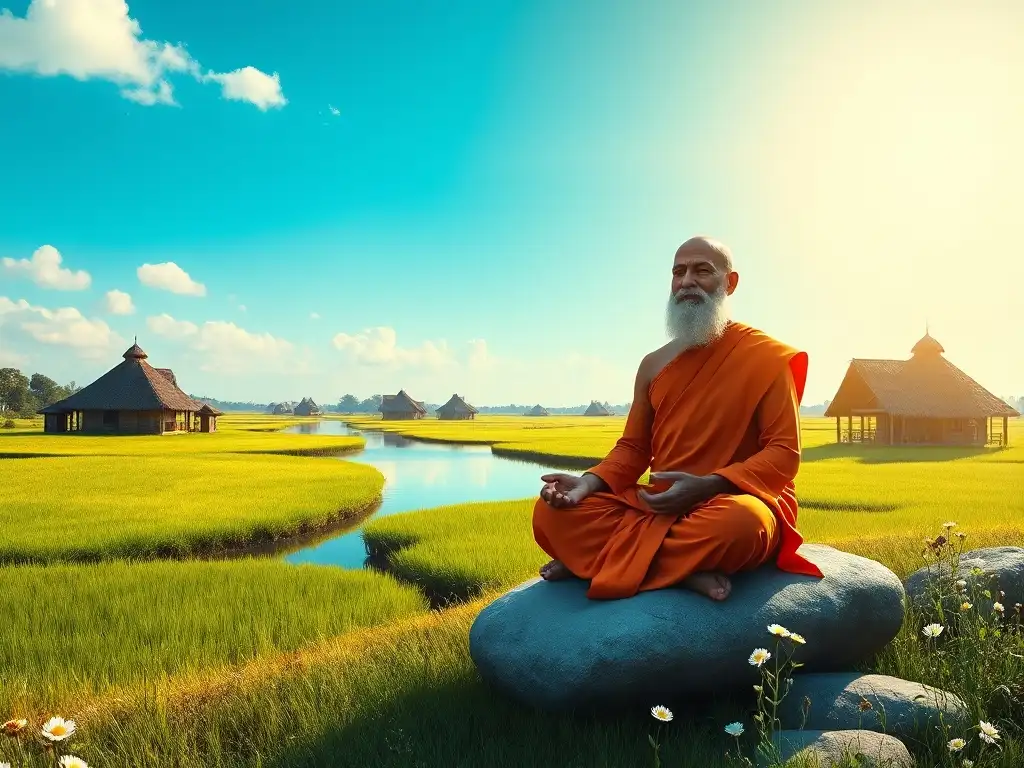
Introduction to Vaisheshika Philosophy and Aesthetics
The Vaisheshika philosophy is one of the six classical schools of Indian philosophy, renowned for its unique approach to understanding the nature of reality and existence. Originating in ancient India, this philosophical school emphasizes a systematic categorization of the physical and metaphysical world, leading to profound implications for aesthetics. Vaisheshika, with its foundational concepts rooted in the pursuit of knowledge and understanding of the universe, offers a perspective that intertwines beauty with simplicity. This article explores the intricate relationship between Vaisheshika philosophy and aesthetics, illustrating how these ancient ideas remain relevant in contemporary discussions of art and beauty.
Overview of Vaisheshika Philosophy
Vaisheshika, attributed to the sage Kanada, is primarily concerned with the classification of reality into distinct categories, known as padartha. These categories include substance, quality, action, generality, particularity, and inherence. The philosophy posits that understanding these elements leads to a deeper comprehension of existence itself. Vaisheshika asserts that the universe is composed of individual entities that interact through their inherent qualities and actions, fostering a worldview that appreciates the diversity and complexity of existence.
- Key Features of Vaisheshika Philosophy:
- Focus on empirical observation and logical reasoning.
- Classification of reality into six main categories.
- Emphasis on the interconnectedness of all entities.
Historical Context of Vaisheshika in Ancient India
The emergence of Vaisheshika philosophy can be traced back to the 6th century BCE during a time of significant intellectual ferment in ancient India. Alongside its contemporaries like Nyaya, Sankhya, and Buddhism, Vaisheshika contributed to a rich tapestry of philosophical discourse. The dialogues and debates among these schools helped to refine ideas and methodologies, making ancient Indian philosophy a vibrant field of study.
Vaisheshika's enduring legacy can be seen in its influence on later philosophical thought and its integration with other schools, particularly during the Gupta Empire (c. 4th to 6th century CE), when philosophy and science flourished.
Significance of Aesthetics in Vaisheshika Thought
In Vaisheshika, aesthetics is not merely about the appreciation of beauty but is deeply intertwined with the philosophy of existence. The aesthetic experience is viewed as a pathway to understanding the fundamental nature of reality. Beauty, in this context, emerges from the harmony and balance within the categories of existence. The philosophy teaches that true beauty lies in recognizing the simplicity of existence and the relationships that bind diverse entities together.
Core Concepts of Vaisheshika Philosophy
The Nature of Reality in Vaisheshika
According to Vaisheshika philosophy, reality is composed of multiple, distinct entities that can be perceived through the senses. The school emphasizes the importance of empirical knowledge, suggesting that the nature of reality is best understood through observation and logical analysis. This approach not only fosters a deeper understanding of the physical world but also cultivates an appreciation for the aesthetic qualities inherent in nature.
- Core Principles:
- Reality is multifaceted and can be categorized.
- Knowledge arises from sensory experience and rational inquiry.
- Aesthetic qualities are derived from the nature of existence.
The Role of Categories (Padartha) in Understanding Existence
The concept of padartha is central to Vaisheshika philosophy. It outlines the different categories through which reality can be comprehended, including both physical and metaphysical aspects. Each category plays a vital role in establishing a framework for understanding existence and its aesthetic dimensions.
| Category | Description |
|---|---|
| Substance | The basic entities that exist independently. |
| Quality | The attributes that characterize substances. |
| Action | The activities or movements of substances. |
| Generality | The universal aspects shared by entities. |
| Particularity | The individual characteristics that distinguish entities. |
| Inherence | The relationship between qualities and substances. |
The Interrelation of Aesthetics and Ontology
In Vaisheshika thought, aesthetics and ontology are intricately linked. The study of being (ontology) informs the appreciation of beauty (aesthetics) by revealing the underlying principles that govern existence. By understanding the categories of reality, one can discern the aesthetic qualities that arise from the interplay of these elements. This philosophical insight encourages a deeper engagement with both the natural world and artistic expressions, highlighting the beauty found within the simplicity of existence.
The Vaisheshika philosophy and aesthetics encapsulate a rich tradition of inquiry that continues to resonate in the exploration of beauty and existence today. As we delve deeper into the nuances of these concepts, we uncover a profound appreciation for the simplicity that underlies complex realities.
The Aesthetic Experience in Vaisheshika
Vaisheshika philosophy, rooted in ancient Indian thought, posits a unique perspective on aesthetics that emphasizes the intrinsic value of the aesthetic experience. This experience is not merely a fleeting moment of beauty but an integral part of understanding the universe and our place within it. The aesthetic experience in Vaisheshika is characterized by the engagement of the senses and the intellect, leading to a deeper appreciation of both the material world and the metaphysical principles that govern it.
Defining Aesthetic Experience in Vaisheshika Philosophy
In the context of Vaisheshika philosophy, aesthetic experience can be defined as the direct interaction between an observer and an object of beauty, which leads to a realization of truth and harmony. This experience transcends mere sensory pleasure, as it involves cognitive engagement and emotional resonance. The Vaisheshika school posits that beauty is not just an external quality but a manifestation of underlying principles that govern existence. Thus, the aesthetic experience is a holistic interaction where sensory perception is intertwined with intellectual understanding.
The Connection Between Perception and Beauty
Vaisheshika philosophy asserts a profound connection between perception and beauty, emphasizing that beauty is perceived through the senses but understood through the intellect. The act of perceiving beauty involves recognizing the qualities of objects, such as color, form, and texture, which are essential to their aesthetic appeal. This connection is not arbitrary; it reflects the inherent order and structure of the universe that Vaisheshika seeks to explain. The interplay of sensory perception and intellectual comprehension fosters a sense of unity and harmony, enabling individuals to appreciate beauty in its simplest forms.
Beauty in Simple Existence: An Exploration
The Vaisheshika perspective champions the beauty found in simplicity and existence itself. Rather than seeking grandeur or complexity, this philosophy encourages individuals to find aesthetic value in the mundane aspects of life. Objects that are simple yet harmonious, such as a leaf or a stone, embody beauty through their intrinsic qualities. This exploration of beauty emphasizes the importance of recognizing the aesthetic dimensions of everyday life, suggesting that a deeper appreciation of simple existence can lead to profound insights about the nature of reality and our existence within it.
Vaisheshika and the Nature of Beauty
Vaisheshika philosophy presents a distinctive understanding of beauty, which is deeply intertwined with its metaphysical principles. Beauty is not perceived as an isolated quality but as a characteristic that emerges from the interaction of substances and their attributes. This comprehensive view fosters a nuanced understanding of beauty that extends beyond the visual to encompass a broader spectrum of experiences.
Characteristics of Beauty in Vaisheshika Philosophy
The characteristics of beauty in Vaisheshika philosophy revolve around its intrinsic qualities, such as clarity, harmony, and proportion. These qualities are essential in determining the aesthetic value of an object. For instance, a beautiful object is often one that exhibits a balance of its attributes, resonating with the observer's sense of order and symmetry. Moreover, beauty is often linked with the concept of "sattva," which symbolizes purity and harmony in nature. This indicates that beauty is not merely a subjective experience but is grounded in objective qualities that can be recognized universally.
The Influence of Substance and Quality on Aesthetic Value
In Vaisheshika, the relationship between substance and quality plays a crucial role in determining aesthetic value. Each substance possesses inherent qualities that contribute to its beauty. For example, the smoothness of a marble statue or the vibrant colors of a flower are qualities that enhance their aesthetic appeal. The philosophy posits that understanding these qualities allows individuals to appreciate the beauty embedded in substances. This perspective encourages a deeper inquiry into the nature of objects, leading to a richer understanding of the interplay between materiality and aesthetics.
Aesthetic Appreciation and its Philosophical Implications
The appreciation of aesthetics within the framework of Vaisheshika philosophy has significant philosophical implications. It invites individuals to engage with the world around them thoughtfully, fostering a sense of mindfulness and awareness. This appreciation transcends superficial judgments of beauty, encouraging a deeper exploration of the qualities that constitute aesthetic value. By cultivating aesthetic appreciation, one can also develop a greater understanding of the universe's underlying principles, ultimately leading to a more profound grasp of existence itself. Thus, the philosophical implications of aesthetic appreciation in Vaisheshika extend into ethical and existential realms, highlighting the interconnectedness of beauty, truth, and reality.
Comparisons with Other Philosophical Schools

The Vaisheshika philosophy, while unique in its aesthetic perspective, often finds itself in dialogue with other philosophical schools, particularly Nyaya and Sankhya. Each school offers distinct insights that contribute to a more comprehensive understanding of beauty and existence in ancient Indian thought. By examining these comparative relationships, we can appreciate the nuances and intersections in their approaches to aesthetics.
Vaisheshika vs. Nyaya: Divergence in Aesthetic Perspectives
The Nyaya philosophy, primarily focused on logic and epistemology, presents a contrasting view to the Vaisheshika school, which emphasizes the categorization of reality. While Nyaya seeks to establish truth through rigorous reasoning and debate, Vaisheshika adopts a more empirical approach. In terms of aesthetics, Nyaya articulates beauty as a combination of qualities that evoke pleasure, stressing the importance of perception and cognition in the appreciation of art.
On the other hand, Vaisheshika perceives beauty in the simplicity and inherent qualities of objects. It posits that beauty arises from the essence of things rather than from their relational attributes. This divergence highlights a fundamental difference: Nyaya's logic versus Vaisheshika's ontological focus, leading to varied interpretations of what constitutes aesthetic experience.
Aesthetic Insights from Sankhya Philosophy
Sankhya philosophy introduces another dimension to the discussion of aesthetics through its dualistic framework of Purusha (consciousness) and Prakriti (matter). It posits that beauty emerges from the interplay between these two fundamental principles. Sankhya’s emphasis on the evolution of matter and the subjective experience of beauty resonates with Vaisheshika's notion of individual substances possessing unique characteristics.
While Sankhya presents a more abstract understanding of aesthetics, it complements Vaisheshika by acknowledging the importance of individual perception. The aesthetic experience, therefore, is seen as a harmonious interaction between the observer and the observed, where both the material and the conscious contribute to the beauty of existence.
The Unique Contribution of Vaisheshika to Indian Aesthetics
Vaisheshika's unique contribution to Indian aesthetics lies in its focus on the characteristics of individual substances. By categorizing reality into distinct categories such as earth, water, fire, air, and ether, it emphasizes the beauty found within the simplicity of existence. This approach highlights how beauty can be appreciated in the inherent qualities of the natural world, free from convoluted interpretations.
Moreover, Vaisheshika aesthetics celebrates the notion of 'svarupa', or the essence of an object. This perspective encourages a deeper appreciation for the simplicity and purity of things, suggesting that true beauty is found in understanding the fundamental nature of existence. Thus, the Vaisheshika school enriches Indian aesthetics by promoting a philosophy that values simplicity and clarity over complexity and embellishment.
Practical Implications of Vaisheshika Aesthetics
The practical implications of Vaisheshika aesthetics extend beyond philosophical discourse to influence various art forms, architecture, and contemporary aesthetic thought. By embodying the principles of simplicity and intrinsic beauty, Vaisheshika philosophy offers valuable insights for artists and thinkers alike.
Vaisheshika Aesthetics in Art and Architecture
In art and architecture, the principles of Vaisheshika can be observed in the emphasis on clarity, balance, and harmony. Traditional Indian art often reflects these ideals through the use of natural materials, symmetrical designs, and a focus on the essence of forms. For example, the intricate yet balanced designs of ancient temples illustrate the application of Vaisheshika aesthetics, where beauty is found in the purity of form and the materials used.
Additionally, modern artists inspired by Vaisheshika aesthetics often seek to strip away the superfluous, focusing instead on the beauty of simple, everyday objects. This approach not only honors the philosophy's principles but also resonates with contemporary movements advocating for minimalism and sustainability in art and architecture.
Influence on Contemporary Aesthetic Discourses
Vaisheshika aesthetics continues to influence contemporary discussions around beauty, simplicity, and existence. In a world increasingly driven by complexity and superficiality, the Vaisheshika perspective encourages a return to fundamental qualities and intrinsic beauty. This influence is evident in various fields such as design, where minimalism and functionality echo Vaisheshika ideals.
Furthermore, contemporary philosophers and artists often draw upon Vaisheshika concepts to challenge prevailing notions of beauty, advocating for a more profound connection to the essence of materials and forms. This discourse fosters a holistic understanding of aesthetics that transcends cultural and temporal boundaries.
Applications of Vaisheshika Philosophy in Modern Contexts
The applications of Vaisheshika philosophy in modern contexts are manifold, particularly in areas like environmental ethics, design thinking, and mindfulness practices. The emphasis on understanding the essence of things can lead to more sustainable practices that honor the intrinsic qualities of materials and the environment.
In design thinking, Vaisheshika principles encourage creators to focus on the core functionalities and beauty of their products, fostering innovation that is both practical and aesthetically pleasing. Additionally, mindfulness practices that draw from Vaisheshika philosophy promote an awareness of the present moment, allowing individuals to appreciate the beauty of existence in its simplest forms.
The influence of Vaisheshika philosophy and aesthetics is profound, offering valuable insights that resonate in both historical and contemporary contexts. By embracing simplicity and intrinsic beauty, Vaisheshika invites us to explore a deeper understanding of existence and the aesthetic experiences that arise from it.
Conclusion: The Lasting Legacy of Vaisheshika Philosophy and Aesthetics
The Vaisheshika philosophy, with its roots in ancient Indian thought, presents a unique perspective on aesthetics that emphasizes simplicity, individuality, and the essence of existence. Its contributions extend beyond mere philosophical discourse into the realms of art and culture, influencing various aspects of Indian civilization. The legacy of Vaisheshika continues to inspire scholars, artists, and thinkers, highlighting the intrinsic beauty found in the natural world and the importance of understanding the individual elements that constitute reality.
The aesthetics of Vaisheshika reflect a profound appreciation for the simplicity of existence and the interconnectedness of all things. By fostering a deeper understanding of the material world, Vaisheshika encourages a form of beauty that emerges from clarity and discernment rather than embellishment. This philosophy not only offers insights into ancient Indian aesthetics but also resonates with contemporary values that prioritize authenticity and meaningful expression.
Summary of Key Insights on Vaisheshika Aesthetics
The exploration of Vaisheshika aesthetics reveals several key insights:
- Simplicity as Beauty: Vaisheshika posits that true beauty lies in simplicity, where the essence of objects and their inherent qualities are appreciated without unnecessary adornment.
- Individuality and Uniqueness: Each substance is seen as unique, contributing to the overall beauty of the universe. This emphasis on individuality encourages a deeper appreciation of diversity.
- Nature and Reality: Vaisheshika aesthetics connects closely with the understanding of nature, asserting that beauty is best found in the natural state of things, emphasizing the need for harmony with the environment.
- Philosophical Foundation: The philosophical underpinnings of Vaisheshika provide a structured approach to understanding beauty, grounded in metaphysical principles that define the interaction between objects and the observer.
These insights collectively contribute to a richer understanding of aesthetics, transcending the boundaries of philosophy and permeating various cultural expressions.
The Relevance of Vaisheshika in Today's Philosophical Landscape
In the contemporary philosophical landscape, the principles of Vaisheshika remain remarkably relevant. As modern society grapples with issues of consumerism and the quest for meaning, the Vaisheshika emphasis on simplicity and authenticity offers a refreshing counter-narrative.
- Environmental Consciousness: The focus on nature and its intrinsic beauty aligns with contemporary movements advocating for sustainability and environmental awareness, prompting a re-evaluation of our relationship with the natural world.
- Mindfulness and Presence: The Vaisheshika approach encourages mindfulness, urging individuals to appreciate the present moment and the beauty inherent in everyday experiences, which resonates with current trends in mental health and wellness.
- Interdisciplinary Influence: Scholars in various fields, including art, psychology, and ecology, find value in Vaisheshika's insights, leading to interdisciplinary dialogues that enrich both philosophical inquiry and practical application.
Ultimately, the relevance of Vaisheshika philosophy extends beyond its historical context, offering meaningful contributions to contemporary discussions on existence, beauty, and ethics.
Future Directions for Research on Vaisheshika Philosophy and Aesthetics
As interest in ancient philosophies grows, there are several promising directions for future research on Vaisheshika philosophy and aesthetics:
- Comparative Studies: Investigating the parallels and contrasts between Vaisheshika and other philosophical schools, such as Nyaya and Sankhya, could yield new insights into the development of Indian thought and its global impact.
- Application in Modern Contexts: Exploring how Vaisheshika principles can be applied in modern contexts, such as art, design, and environmental ethics, will provide practical relevance and foster interdisciplinary collaboration.
- Translation and Interpretation: Continued efforts in translating and interpreting ancient texts related to Vaisheshika will help preserve its teachings and make them accessible to a broader audience, facilitating deeper engagement with its concepts.
- Cultural Impact Studies: Researching the influence of Vaisheshika on various cultural expressions throughout Indian history can uncover its role in shaping artistic traditions, literature, and social practices.
By pursuing these avenues, scholars can contribute to a more comprehensive understanding of Vaisheshika philosophy and aesthetics, ensuring its legacy endures in the discourse of contemporary philosophy.
- Introduction to Vaisheshika Philosophy and Aesthetics
- Core Concepts of Vaisheshika Philosophy
- The Aesthetic Experience in Vaisheshika
- Vaisheshika and the Nature of Beauty
- Comparisons with Other Philosophical Schools
- Practical Implications of Vaisheshika Aesthetics
- Conclusion: The Lasting Legacy of Vaisheshika Philosophy and Aesthetics
Frequently Asked Questions
What is Vaisheshika philosophy?
Vaisheshika philosophy is an ancient Indian school of thought that focuses on the nature of existence and reality. It emphasizes the categorization of objects and their qualities to understand the universe.
How does Vaisheshika relate to aesthetics?
Vaisheshika aesthetics explores the concept of beauty in simplicity and the inherent qualities of objects. It suggests that true beauty can be appreciated through an understanding of the fundamental principles of existence.
What are the key contributions of Vaisheshika to Indian philosophy?
Vaisheshika has significantly contributed to metaphysics and epistemology, providing a framework for understanding the nature of reality. Its teachings on categorization have influenced other philosophical schools in India.
How does the Vaisheshika perspective differ from other Indian philosophies?
Unlike Advaita Vedanta, which emphasizes non-dualism, Vaisheshika focuses on the plurality of existence and the classification of entities. This approach allows for a more nuanced understanding of the material world.
Why is the study of Vaisheshika philosophy important today?
Studying Vaisheshika philosophy is essential for appreciating the rich intellectual traditions of ancient India. It offers insights into the interconnectedness of existence and the nature of beauty, relevant in contemporary discussions on art and philosophy.
Final Reflection: Embracing the Beauty of Simple Existence
In a world that often prioritizes complexity and grandeur, the principles of Vaisheshika philosophy remind us of the profound beauty found in simplicity. This ancient Indian philosophy, with its emphasis on the unique qualities of individual entities, resonates deeply in today's fast-paced society. As we navigate through layers of distractions and superficiality, the call to appreciate the essence of existence becomes increasingly relevant. The Vaisheshika perspective invites us to slow down, observe, and find beauty in the ordinary, challenging us to redefine our understanding of what it means to live beautifully.
The influence of Vaisheshika philosophy extends beyond the realm of aesthetics; it shapes our cultural and social landscapes by encouraging mindfulness and appreciation for the present moment. In my own journey, I have discovered that embracing simplicity fosters a deeper connection with both myself and the world around me. This philosophy teaches us that beauty is not merely an external attribute but a reflection of our inner state.
As Mahatma Gandhi once said, "> Live as if you were to die tomorrow. Learn as if you were to live forever." This sentiment encapsulates the essence of Vaisheshika, urging us to cherish the fleeting moments of life and recognize the inherent beauty in our everyday experiences.
As we conclude this exploration of Vaisheshika aesthetics, I invite you to reflect on your own life and consider how you can cultivate a deeper appreciation for simplicity. Ask yourself: How can you find beauty in the mundane? Whether it's through mindful observation, engaging with nature, or nurturing meaningful relationships, let the teachings of Vaisheshika inspire you to embrace the richness of simple existence. In doing so, you not only enhance your own life but also contribute to a more harmonious and aesthetically aware world.
Embrace the Beauty of Simple Existence Today!
Thank you for exploring the rich aesthetics of Vaisheshika with us! We hope you’ve gained a deeper appreciation for the beauty found in simplicity and how it shapes our understanding of existence. Now, it's time to take these insights to heart and act!
Here are some ways you can engage further:
- Reflect on your daily life and identify moments of simplicity that bring you joy. Document these experiences in a journal and revisit them regularly!
- Share your newfound appreciation with friends or family by discussing the principles of Vaisheshika and how they influence your perspective on beauty and existence.
- Join a community that focuses on philosophical discussions or the exploration of ancient Indian thought. Consider attending a local meet-up or participating in an online forum!
What small change can you make today to celebrate the beauty in your everyday existence?