
The Indus Valley Civilization: Unraveling the Architectural Secrets of Ancient Cities

Welcome to Ancient India History, where we embark on an enthralling journey through the captivating tapestry of India's past. Here, you will discover the rich and diverse history, culture, and extraordinary contributions of ancient Indian civilizations. In our featured article, "The Indus Valley Civilization: Unraveling the Architectural Secrets of Ancient Cities," we delve into the intriguing architectural secrets that lie beneath the remnants of one of the world's earliest urban centers.
What mysteries do these ancient structures hold? Join us as we unlock the door to the past and explore the remarkable ingenuity of the Indus Valley, inviting you to delve deeper into the wonders of ancient Indian architecture and thought. Your adventure begins now!
Introduction to the Indus Valley Civilization
The Indus Valley Civilization (IVC), one of the world's earliest urban cultures, flourished between approximately 3300 BCE and 1300 BCE in what is now Pakistan and northwest India. This remarkable civilization is known for its advanced urban planning, sophisticated drainage systems, and monumental structures, all of which are testaments to the ingenuity and architectural prowess of its people. As we explore the Indus Valley architectural secrets, we unveil not only the physical remnants of their cities, such as Harappa and Mohenjo-Daro, but also the cultural significance and technological innovations that shaped their urban landscapes.
In this article, we will delve into the architectural marvels of the Indus Valley, examining the key features that define their cities and contribute to our understanding of ancient urban life. By studying these structures, we gain insights into the social, economic, and religious practices of the IVC, allowing us to appreciate the complexity and richness of ancient Indian civilization.
Overview of the Indus Valley Civilization
The Indus Valley Civilization emerged around 3300 BCE, characterized by its well-planned cities, advanced drainage systems, and the use of standardized fired brick in construction. Spanning across a vast area, the IVC included major urban centers like Harappa, Mohenjo-Daro, and Dholavira.
- Geographical Reach: The civilization extended from the Indus River basin in the west to parts of the Ganges River valley in the east.
- Population: It is estimated that the civilization supported a population of over 5 million at its peak.
- Economy: The IVC thrived on agriculture, trade, and crafts, with evidence of well-developed systems for irrigation and agricultural production.
The scientific and technological advancements of the IVC set a foundation for future civilizations in the region, making it a pivotal period in ancient Indian history.
Importance of Architectural Studies in Ancient Civilizations
Studying the architecture of ancient civilizations like the Indus Valley is crucial for several reasons:
- Cultural Insights: Architectural styles and urban layouts provide valuable information about the daily lives, beliefs, and social structures of ancient societies.
- Technological Advances: Understanding the construction techniques and materials used in ancient architecture helps us appreciate the technological progress achieved by these civilizations.
- Urban Planning: The planning and organization of cities reflect the societal priorities and governance of the time, showcasing how ancient peoples adapted to their environments.
Through architectural studies, we can connect the past with the present, revealing how ancient innovations continue to influence modern urban design and construction practices.
The Architectural Marvels of the Indus Valley
The architectural achievements of the Indus Valley Civilization stand as a testament to the sophistication and ingenuity of its inhabitants. Their cities were meticulously planned and constructed, reflecting a high degree of social organization and technical skill.
Key Features of Indus Valley Architecture
The architecture of the Indus Valley Civilization is distinguished by several key features:
- Grid Layout: Cities like Harappa and Mohenjo-Daro were designed with a grid-like layout, emphasizing order and functionality.
- Advanced Drainage Systems: The IVC boasted one of the earliest known drainage systems, with covered drains and soak pits that maintained sanitation and hygiene.
- Standardized Brick Sizes: The use of uniform baked bricks facilitated the construction of durable structures, ensuring that buildings were resilient to the elements.
- Public and Ritual Structures: The presence of large public baths and granaries indicates the civilization's emphasis on communal activities and economic organization.
Each of these features not only highlights the architectural skills of the Indus Valley people but also provides clues about their societal values and priorities, laying the groundwork for further exploration of this ancient civilization's architectural secrets.
Major Indus Valley Cities and Their Unique Structures
The Indus Valley Civilization (IVC), flourishing around 2500 BCE, is renowned for its advanced urban planning and architectural prowess. Two of the most prominent cities from this civilization, Harappa and Mohenjo-Daro, stand out for their unique structural designs and engineering marvels. Each city reveals distinct features that showcase the sophistication of Indus Valley architecture, reflecting a deep understanding of urban infrastructure, social organization, and resource management.
Harappa: A Blueprint of Urban Design
Harappa serves as a quintessential example of urban design in the Indus Valley Civilization. The layout of Harappa is meticulously planned, featuring a grid pattern that is strikingly advanced for its time. Streets were wide and lined with brick structures, which often included residential and commercial spaces. Here are some notable aspects of Harappa's architectural design:
- Grid Layout: The city was organized in a grid system, with streets intersecting at right angles. This facilitated efficient movement and trade.
- Standardized Brick Sizes: Harappa utilized uniform baked bricks in construction, which allowed for stability and ease of building. This standardization is a notable architectural secret that contributed to the resilience of structures.
- Multi-Story Buildings: Evidence suggests that many buildings were multi-storied, indicating an understanding of vertical construction and maximizing space.
Overall, Harappa exemplifies a sophisticated approach to urban planning, blending functionality, aesthetics, and community needs.
Mohenjo-Daro: The Heart of Indus Engineering
Mohenjo-Daro is often considered the hallmark of Indus Valley engineering, with its remarkable structures and innovative designs. The city is famous for its advanced drainage system and public baths, which are indicative of the civilization's commitment to hygiene and urban sanitation. Key features of Mohenjo-Daro include:
- The Great Bath: A monumental structure, the Great Bath is believed to have served both ritualistic and social purposes. It reflects the importance of water in the Indus culture and their architectural ability to manage large water bodies.
- Complex Drainage Systems: Mohenjo-Daro's drainage systems were highly sophisticated, featuring covered drains that ran alongside streets, ensuring that waste was efficiently managed.
- Residential Blocks: The residential areas were organized in clusters, with each block containing houses that had private bathrooms and wells, indicating a high standard of living.
The architectural secrets of Mohenjo-Daro reveal an advanced understanding of engineering principles and a deep respect for community health and welfare.
Architectural Secrets Revealed
The architectural achievements of the Indus Valley Civilization are not merely confined to individual cities but showcase a series of innovations and secrets that reflect the ingenuity of its people. These architectural secrets include groundbreaking techniques and methods that laid the foundation for future urban development.
Innovations in Building Techniques
The Indus Valley builders employed innovative techniques that were ahead of their time. Some of these innovations include:
- Mud and Fired Brick Construction: Using a combination of mud and fired bricks, the Indus builders created structures that were both durable and sustainable. The use of fired bricks also indicated an advanced knowledge of material properties.
- Intricate Joinery and Masonry: The buildings featured precise joinery techniques, enhancing structural integrity. The use of corbelled arches in some structures shows an understanding of weight distribution and architectural design.
- Use of Geometry: The planning of buildings and city layouts demonstrated a profound understanding of geometric principles, which helped in creating aesthetically pleasing and functional designs.
These innovations illustrate how the Indus Valley Civilization was a pioneer in architectural practices, influencing future generations.
The Role of Water Management in Indus Architecture
Water management played a crucial role in the architectural design of the Indus Valley cities. The civilization's ability to harness and manage water resources is a testament to their advanced engineering skills. Key aspects include:
- Wells and Water Storage: Each house often had access to private wells, ensuring a steady supply of water. The presence of large reservoirs in cities reflects a sophisticated approach to water storage and distribution.
- Drainage Systems: The covered drainage systems not only facilitated hygiene but also showcased an understanding of hydrology. This system helped prevent flooding and managed stormwater effectively.
- Water Harvesting Techniques: The use of rainwater harvesting techniques indicates a proactive approach to resource management, ensuring that water was available even during dry periods.
The emphasis on water management in Indus architecture highlights the civilization's ecological awareness and innovative spirit, which contributed to the sustainability of their urban environments.
Cultural Significance of Indus Valley Architecture
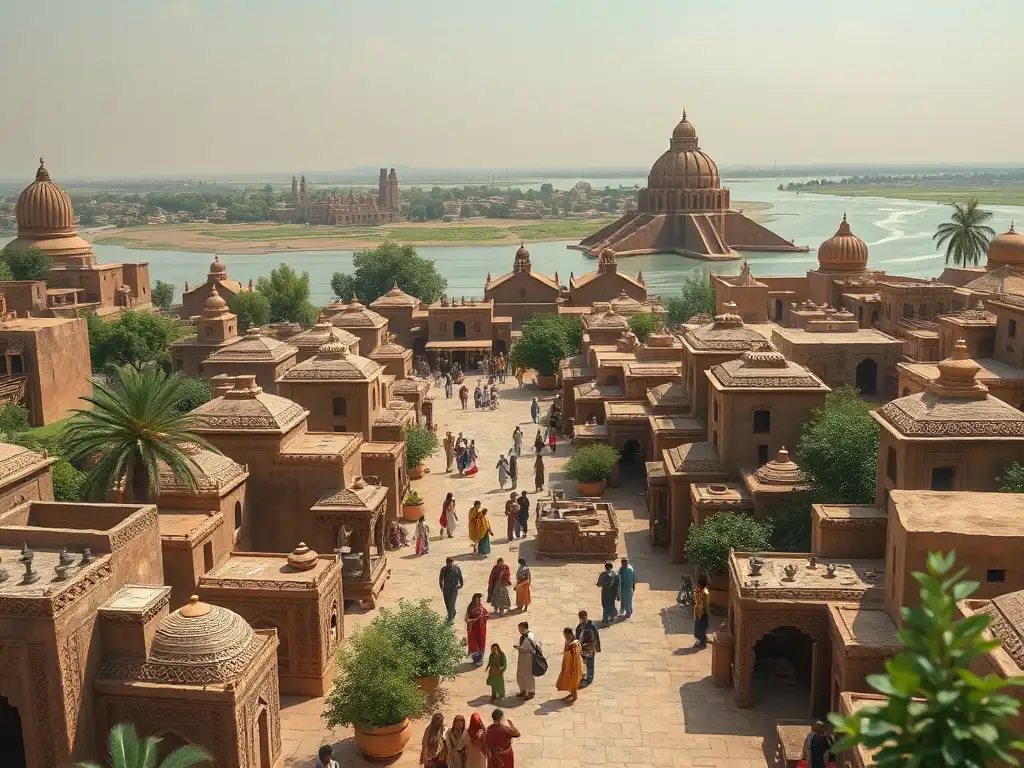
The architecture of the Indus Valley Civilization (IVC) serves as a testament to the cultural intricacies and societal norms of one of the world's earliest urban societies. Built around 2500 BCE, the cities of Harappa and Mohenjo-Daro exhibit a high level of urban planning, showcasing a complex relationship between the built environment and the social fabric. The well-organized streets, standardized baked bricks, and sophisticated drainage systems highlight a commitment to cleanliness and public health, which were culturally significant values of the time.
Moreover, the architectural designs of residential and public buildings reflect the importance placed on community and social interaction. The presence of large public baths, such as the Great Bath of Mohenjo-Daro, suggests a cultural emphasis on ritual cleanliness and possibly religious practices. These features underscore the sophisticated understanding of water management and urban infrastructure, all of which played a crucial role in the daily lives of the inhabitants.
The layout of the cities indicates a level of social stratification, with larger homes likely belonging to the elite, while smaller dwellings catered to the working class. This architectural diversity not only reflects the economic conditions but also the social hierarchy that existed within the civilization.
Reflection of Social Structure and Governance
The architectural planning of the Indus Valley cities reveals much about the governance and social structure of the IVC. The uniformity in building materials and city layouts suggests a central authority or a governing body that enforced regulations on construction and urban planning. This centralized control reflects an organized society capable of mobilizing resources and labor for large-scale construction projects, indicating a sophisticated level of governance.
The existence of citadels—elevated areas that likely served as administrative or religious centers—points to a delineation of public and private spaces, reinforcing the notion of governance and communal identity. These structures, often situated at the center of urban areas, served both defensive purposes and as monumental representations of power and control.
Moreover, the presence of granaries and warehouses indicates a system of resource management, essential for trade and sustenance, which would have been overseen by local rulers or leaders. In this way, the architectural remnants of the Indus Valley Civilization reflect a complex interplay between social organization, governance, and economic systems, which laid the foundation for future Indian societies.
Influence on Later Indian Architectural Styles
The architectural innovations of the Indus Valley Civilization significantly influenced subsequent Indian architectural styles. Elements such as the use of baked bricks, advanced drainage systems, and urban planning principles can be traced in later periods, particularly during the Maurya and Gupta Empires. The emphasis on urban design seen in IVC cities laid the groundwork for the development of cities in ancient India that followed.
Notably, the concept of well-planned cities with designated public spaces—such as plazas and marketplaces—was carried forward, impacting the architecture of later eras. Additionally, the intricate craftsmanship displayed in IVC pottery and seals influenced artistic expressions in subsequent Indian cultures, merging functionality with aesthetic appeal.
Religious architecture, too, was shaped by the principles established by the Indus Valley builders, as seen in the later construction of stupas and temples that often incorporated similar elements of symmetry and alignment with natural features. This continuity highlights the enduring legacy of the IVC's architectural secrets as they evolved and adapted through various historical phases.
Conclusion: Legacy of the Indus Valley Architectural Secrets
The legacy of the architectural secrets of the Indus Valley Civilization extends far beyond its time, influencing not only the immediate successors but also shaping the architectural discourse in the Indian subcontinent. The ingenuity displayed in urban planning, construction techniques, and public infrastructure reflects a civilization that prioritized innovation and adaptability to its environment.
Lasting Impact on Modern Architecture
The principles of urban planning and infrastructure management established by the Indus Valley Civilization resonate in modern architectural practices. Contemporary urban planners and architects often draw inspiration from the civilization’s efficient drainage systems and waste management strategies, which are increasingly relevant in today's context of urbanization and environmental sustainability.
Moreover, the idea of creating harmonious living spaces that integrate with the natural landscape is a legacy that persists in modern architecture, emphasizing the importance of ecological balance and community-focused design. The architectural secrets of the Indus Valley continue to inspire a holistic approach to urban living, demonstrating the civilization’s forward-thinking ethos.
Continued Research and Discoveries in Indus Architecture
The exploration of Indus Valley architecture is an ongoing field of study, with archaeologists and researchers continuously unearthing new findings that expand our understanding of this ancient civilization. Recent excavations and technological advancements, such as remote sensing and 3D modeling, have revealed previously undiscovered structures and urban layouts, shedding light on the complexity of IVC architecture.
Additionally, interdisciplinary studies that incorporate anthropology, environmental science, and history are enriching the narrative surrounding the architectural secrets of the Indus Valley. This ongoing research not only enhances our knowledge of ancient urbanism but also contributes to the broader discourse on historical architecture's relevance in contemporary society.
The Indus Valley Civilization's architectural secrets continue to be a source of fascination and inspiration, revealing the sophistication of ancient Indian societies and their lasting impact on both historical and modern architectural practices.
References and Further Reading on Indus Valley Architectural Secrets
The architectural secrets of the Indus Valley Civilization have fascinated historians, archaeologists, and architects alike. To gain a deeper understanding of the sophisticated urban planning, construction techniques, and cultural significance of these ancient cities, several resources offer valuable insights. Below, we explore suggested books, articles, and online resources that provide in-depth knowledge on this topic.
Suggested Books and Articles
-
"The Indus Valley Civilization: A Contemporary Perspective" by Jane McIntosh
This comprehensive book delves into the social, economic, and architectural aspects of the Indus Valley Civilization. McIntosh examines the advanced urban planning and infrastructure that characterized cities like Harappa and Mohenjo-Daro.
-
"Harappa: An Archaeological History" by Shereen Ratnagar
Ratnagar's work offers a detailed exploration of the archaeological discoveries at Harappa. The author discusses the significance of urban design and public architecture, shedding light on the civilization's architectural innovations.
-
"The Indus Valley Civilization: An Encyclopedia" by S. R. Rao
This encyclopedia serves as a thorough reference guide, providing detailed entries on various architectural features, including drainage systems, residential buildings, and public structures, making it an essential resource for anyone interested in Indus Valley architecture.
-
"Cities of Ancient India" by D. P. Agrawal
Agrawal's book highlights the architectural and urban planning aspects of various ancient Indian cities, including those of the Indus Valley. The author emphasizes the significance of these cities in the broader context of Indian history.
-
Research Articles in Journals
- "Urban Planning in the Indus Valley Civilization" published in the Journal of Archaeological Science, which discusses the layout and design principles of Indus cities.
- "Water Management in the Indus Valley Civilization" published in the International Journal of Water Resources Development, focusing on the innovative water management systems that supported urban life.
Online Resources for In-Depth Study
-
The Archaeological Survey of India (ASI)
The ASI website offers a wealth of information about archaeological findings in the Indus Valley, including detailed reports and publications on excavations and architectural studies.
-
Digital Archaeological Atlas of the Indus Valley (DAAIV)
This online resource provides access to maps, 3D reconstructions, and visualizations of the major sites in the Indus Valley Civilization, enabling users to explore the architectural features interactively.
-
YouTube Documentaries and Lectures
There are numerous documentaries available on platforms like YouTube that explore the Indus Valley Civilization's architecture. Channels focusing on archaeology often present expert lectures and visual tours of the ancient cities.
-
Online Courses
Websites like Coursera and edX offer courses on ancient civilizations, including modules dedicated to the Indus Valley Civilization. These courses can provide a structured learning experience that covers architectural secrets and urban planning strategies.
Exploring these resources will enhance your understanding of the architectural marvels of the Indus Valley Civilization and their lasting impact on urban planning and architecture in subsequent cultures.
- Introduction to the Indus Valley Civilization
- The Architectural Marvels of the Indus Valley
- Major Indus Valley Cities and Their Unique Structures
- Architectural Secrets Revealed
- Cultural Significance of Indus Valley Architecture
- Conclusion: Legacy of the Indus Valley Architectural Secrets
- References and Further Reading on Indus Valley Architectural Secrets
- What is the Indus Valley Civilization known for?
- How did the architecture of the Indus Valley differ from other ancient civilizations?
- What are some specific architectural secrets of the Indus Valley?
- How did the contributions of the Indus Valley influence later civilizations?
- Why is studying the Indus Valley architectural secrets important today?
Frequently Asked Questions
What is the Indus Valley Civilization known for?
The Indus Valley Civilization is renowned for its advanced urban planning, sophisticated drainage systems, and remarkable architectural designs, reflecting a high level of engineering and organization.
How did the architecture of the Indus Valley differ from other ancient civilizations?
The architecture of the Indus Valley was characterized by grid patterns, standardized baked bricks, and multi-storied buildings, which set it apart from contemporaneous civilizations, emphasizing uniformity and functionality.
What are some specific architectural secrets of the Indus Valley?
Some architectural secrets include the use of water management systems, such as wells and reservoirs, and the strategic layout of cities like Mohenjo-Daro and Harappa, which facilitated efficient living and trade.
How did the contributions of the Indus Valley influence later civilizations?
The contributions of the Indus Valley, such as their urban planning techniques and trade practices, significantly influenced later civilizations in the region, laying the groundwork for future urban development in India.
Why is studying the Indus Valley architectural secrets important today?
Studying the Indus Valley architectural secrets provides insights into ancient engineering, cultural practices, and urban living, which can inform modern sustainable architecture and urban planning strategies.
Final Reflection: Unveiling the Timeless Legacy of Indus Valley Architectural Secrets
The architectural wonders of the Indus Valley Civilization serve as a profound reminder of humanity's ingenuity and adaptability. Today, as we grapple with urbanization and environmental challenges, the innovative urban planning and sustainable practices of these ancient cities resonate more than ever. The secrets embedded in their structures not only reflect a sophisticated understanding of architecture but also offer valuable lessons for modern society.
The influence of the Indus Valley's architectural secrets extends beyond mere historical curiosity; it shapes our cultural and social landscapes today. From the meticulous drainage systems to the grid-like city layouts, these elements inspire contemporary architects and urban planners to rethink how we design our cities. As the renowned architect Charles Correa once said, "> The past is not a burden; it is a treasure trove of ideas." This perspective encourages us to look back at the achievements of civilizations like the Indus Valley to inform our future endeavors.
As we reflect on the architectural secrets of the Indus Valley Civilization, I invite you to consider how these ancient innovations can inspire your own life and work. What lessons can you draw from their sustainable practices and community-oriented designs? Embrace the challenge of integrating these timeless principles into your daily decisions, whether in your personal space or in broader societal contexts. By doing so, we not only honor the legacy of the Indus Valley but also pave the way for a future that values sustainability, creativity, and connection.
Unveil the Secrets of Ancient Architecture Today!
Thank you for diving into the fascinating world of the Indus Valley Civilization! Your interest in their architectural ingenuity reveals the beauty of ancient innovations that still inspire us. Now, it’s time to take your engagement further.
Here are a few **exciting ways** you can continue exploring this ancient marvel:
- Visit a nearby museum to experience artifacts and exhibits that showcase the legacy of the Indus Valley.
- Join a local history group or participate in an online forum to share insights and learn from fellow enthusiasts.
- Write a blog post or share on social media about your favorite facts regarding Indus architecture, encouraging others to appreciate this ancient wonder!
What architectural feature of the Indus Valley Civilization fascinates you the most, and why? Let’s spark some conversation!