
How Vaisheshika Challenges Materialism: A Unique Perspective on Existence

Welcome to Ancient India History, where we embark on a fascinating journey through the tapestry of time, uncovering the rich and diverse legacies of ancient Indian civilizations. In our featured article, “How Vaisheshika Challenges Materialism: A Unique Perspective on Existence,” we delve into the intriguing realm of Vaisheshika philosophy and its unique stance against materialism. Prepare to explore thought-provoking ideas that have shaped philosophical discourse for centuries. What insights will this ancient perspective offer in our modern world? Dive in and discover the profound connections that bind our past to the present!
- Introduction to Vaisheshika Philosophy and Materialism
- Historical Context of Vaisheshika Philosophy
- Core Concepts of Vaisheshika Philosophy
- Vaisheshika Philosophy's Challenge to Materialism
- The Nature of Reality According to Vaisheshika
- Implications of Vaisheshika Philosophy on Modern Thought
- Conclusion: The Unique Perspective of Vaisheshika on Materialism
- Frequently Asked Questions
- Final Reflection: Embracing Vaisheshika Philosophy to Transcend Materialism
- Challenge Your Perspective on Existence Today!
Introduction to Vaisheshika Philosophy and Materialism
The Vaisheshika philosophy, one of the six classical schools of Indian philosophy, offers a profound and intricate perspective on existence that challenges conventional materialism. Originating in ancient India, this philosophical framework emphasizes the unique nature of individual entities and their properties, positing that understanding the universe requires a nuanced approach that goes beyond mere physical existence.
This article will delve into how Vaisheshika philosophy not only critiques materialistic views but also provides a distinctive lens through which to examine reality, existence, and the nature of knowledge. By exploring the fundamental tenets of Vaisheshika and its relationship with materialism, we aim to uncover the richness of ancient Indian thought and its relevance in contemporary philosophical discourse.
Overview of Vaisheshika Philosophy
Vaisheshika philosophy, attributed to the sage Kanada, is primarily concerned with categorizing and understanding the material world and its constituents. It proposes that the universe is composed of six categories known as "padarthas," which include:
- Dravya (Substance): The physical entities that exist in the universe.
- Guna (Quality): The attributes or properties that substances possess.
- Karma (Action): The activities that arise from substances.
- Samanya (Universality): The shared characteristics among different substances.
- Vishesha (Particularity): The unique qualities that distinguish one substance from another.
- Abhava (Non-existence): The absence of a substance or quality.
This classification system is foundational to Vaisheshika's argument against materialism, which tends to reduce existence to mere physical substance. Instead, the Vaisheshika philosophy posits that understanding existence requires acknowledging the complexity of both tangible and intangible aspects of reality. The emphasis on individual substances and their unique qualities creates a multifaceted view of existence that starkly contrasts with the reductionist tendencies of materialism.
Significance of Materialism in Philosophy
Materialism, as a philosophical doctrine, asserts that matter is the fundamental substance in nature, and everything, including consciousness and thought, can be explained in terms of material interactions. This perspective has dominated much of Western philosophy and science, leading to a view of existence that prioritizes physical reality over metaphysical considerations.
However, the significance of materialism extends beyond mere physicality; it invites critical examination of the nature of existence itself. Philosophers have long debated the implications of materialism on ethics, consciousness, and the human experience. Vaisheshika challenges the materialist standpoint by suggesting that reality encompasses more than just material components. It introduces the idea that qualitative differences and individual entities play a crucial role in understanding the universe.
By engaging with both the Vaisheshika philosophy and materialism, one can appreciate the depth of philosophical inquiry in ancient India. This exploration not only highlights the relevance of Vaisheshika in contemporary discussions about existence and consciousness but also encourages a broader understanding of how diverse philosophical traditions can inform and enrich our comprehension of reality.
Historical Context of Vaisheshika Philosophy
The Vaisheshika philosophy is one of the six orthodox schools of Indian philosophy, known as the Darshanas. It primarily focuses on the nature of reality, categorizing existence into distinct elements. Understanding the historical context of Vaisheshika is crucial to appreciate its intricate relationship with materialism and how it presents a unique perspective on existence.
Origins and Development of Vaisheshika
The origins of Vaisheshika can be traced back to the early centuries of the first millennium BCE. This philosophy was primarily established by Kanada, a sage who is credited with founding the school. His work, the Vaisheshika Sutras, outlines a systematic framework for understanding the nature of the universe, its components, and their interactions.
- Fundamental Concepts:
- Vaisheshika posits that the material world is composed of substances, qualities, actions, and their respective categories.
- The philosophy divides existence into dravya (substance), guna (quality), and karma (action), providing a structured approach to categorizing the universe.
- Influence of Nyaya:
- Vaisheshika is often studied alongside Nyaya, the philosophy of logic and epistemology. Together, these schools complement each other, with Nyaya focusing on the means of obtaining knowledge and Vaisheshika on the nature of existence.
- This interaction has enriched both philosophies, allowing for deeper discussions on the nature of reality and the processes of reasoning.
- Later Developments:
- By the time of the Gupta Empire (approximately 320 to 550 CE), Vaisheshika had further evolved, integrating advancements in logic and metaphysics.
- Scholars like Udayana and Vatsyayana contributed to the discourse, refining the principles of Vaisheshika and addressing critiques from opposing philosophies.
The development of Vaisheshika philosophy reflects a transition from a purely metaphysical framework to a more comprehensive system that engages with ethical and epistemological questions, directly challenging materialistic views of existence.
Key Figures in Vaisheshika Philosophy
Several key figures have played a pivotal role in shaping Vaisheshika philosophy, each contributing unique insights that have influenced its development and application.
- Kanada:
- Often referred to as the founder of Vaisheshika, Kanada's contributions are foundational. His Vaisheshika Sutras articulate the core tenets of the philosophy and its categorization of reality.
- Quote: "The atoms are the causes of substances, and their combinations lead to the diversity of the world."
- Udayana:
- A significant figure during the medieval period, Udayana expanded upon the original doctrines of Vaisheshika. He is known for his work Nyayakusumanjali, which addresses objections from Buddhist and other philosophical schools.
- He emphasized the importance of inference and perception, arguing that knowledge arises through logical reasoning.
- Vatsyayana:
- Another prominent philosopher associated with the Vaisheshika school, Vatsyayana is best known for his commentaries on both the Vaisheshika Sutras and the Nyaya Sutras.
- His interpretations helped clarify complex concepts and fostered a more nuanced understanding of reality, making the philosophy accessible to a broader audience.
Through the contributions of these key figures, Vaisheshika philosophy evolved into a robust framework that continues to challenge materialistic interpretations of existence, urging a deeper exploration of the nature of reality and consciousness.
Core Concepts of Vaisheshika Philosophy
The Vaisheshika philosophy, primarily attributed to the ancient sage Kanada, provides a unique perspective on existence that diverges from materialism. Central to this philosophical school is the assertion that the universe is composed of indivisible particles, or atoms, which form the basis of all matter. Unlike materialism, which posits that only physical substances exist, Vaisheshika embraces a more nuanced understanding of reality that includes both material and immaterial aspects.
Atomism and Its Role in Vaisheshika
At the heart of Vaisheshika philosophy is the concept of atomism. According to this school, everything in the universe is composed of atoms, which are eternal, indivisible, and intrinsic to the nature of all entities. This atomistic view is not merely a physical explanation but serves as a foundational principle for understanding change, causation, and existence itself.
- Nature of Atoms:
- Atoms are considered the smallest units of matter, and they combine in various ways to form more complex substances.
- Each atom possesses unique qualities, making them distinct from one another, and these qualities determine the properties of the substances they compose.
- Interaction of Atoms:
- The interactions among atoms lead to the formation of larger entities. For instance, water is formed when hydrogen and oxygen atoms combine, and this process illustrates the dynamic nature of existence.
- Vaisheshika emphasizes that these combinations are not random but follow specific laws of nature, governed by the principles of causation and change.
- Relation to Materialism:
- While materialism often reduces existence to mere physical interactions, Vaisheshika introduces a more sophisticated framework that acknowledges the role of both material and non-material elements, such as time and space, in the process of becoming.
Categories of Existence in Vaisheshika Philosophy
Vaisheshika philosophy categorizes existence into various classes, providing a comprehensive framework for understanding the universe. These categories are essential for distinguishing between different types of entities and their interactions.
| Category | Description |
|---|---|
| Dravya (Substance) | The fundamental entities that exist in the universe, including earth, water, fire, air, and space. |
| Guna (Quality) | The attributes or properties of substances, such as color, taste, and texture, which help in identifying them. |
| Karma (Action) | The activities performed by substances, which lead to changes in their state or interaction with other substances. |
| Samanya (Generality) | The common features shared by multiple substances, allowing for classification and understanding of categories. |
| Vishesha (Particularity) | The unique characteristics that distinguish one entity from another, emphasizing individuality within the broader categories. |
| Abhava (Non-existence) | Acknowledges the absence of entities, which is crucial for understanding negation and change. |
The categories outlined by Vaisheshika not only challenge materialism's reductionism but also illustrate a rich tapestry of existence that encompasses both the tangible and intangible. By recognizing the interplay of these categories, one can appreciate the complexity of the world as envisioned by Vaisheshika philosophy.
Vaisheshika philosophy offers a profound critique of materialism by positing a multi-faceted view of existence. Through its principles of atomism and categorization, it presents a framework that encourages deeper philosophical inquiry into the nature of reality.
Vaisheshika Philosophy's Challenge to Materialism

The Vaisheshika philosophy, one of the six orthodox schools of Indian philosophy, offers a distinctive perspective on existence that challenges the tenets of materialism. Rooted in the work of sage Kanada, Vaisheshika emphasizes the understanding of the universe through a framework of substances, qualities, and actions. This philosophy posits that reality is not solely comprised of physical matter but includes non-material aspects such as consciousness and the interplay of various categories that shape existence.
At its core, Vaisheshika asserts that the material world is made up of atoms (paramanu) that combine to form substances. However, it goes further by introducing the idea of an eternal, non-physical reality that encompasses the ultimate nature of existence. This perspective fundamentally questions the reductionist approach of materialism, which posits that everything can be explained by physical processes alone.
Understanding Materialism in Philosophical Terms
Materialism, in the philosophical context, is the doctrine that everything that exists is either made of matter or is dependent on matter for existence. This worldview asserts that all phenomena, including thoughts, emotions, and consciousness, can be explained through interactions of physical substances.
Key characteristics of materialism include:
- Physicalism: The belief that everything is physical and that there is nothing beyond the physical realm.
- Reductionism: The approach of explaining complex phenomena by breaking them down into their simpler components.
- Empirical Verification: The reliance on observable and measurable evidence as the basis for knowledge.
While materialism has been a dominant framework in Western philosophy, it faces critiques regarding its inability to fully account for subjective experiences or the qualitative aspects of consciousness.
Contrasting Vaisheshika's Perspective with Materialist Views
Vaisheshika challenges materialism by proposing a more nuanced ontology that encompasses both material and non-material elements. Below are key contrasts between Vaisheshika and materialist views:
- Existence of Non-Material Entities:
- Vaisheshika: Acknowledges the existence of non-material entities, such as the soul (atman), which is eternal and distinct from the body. This concept emphasizes that consciousness cannot be reduced to mere physical interactions.
- Materialism: Denies the existence of anything beyond the physical realm, asserting that all experiences and consciousness are products of brain activity.
- Nature of Reality:
- Vaisheshika: Proposes a pluralistic view of reality, consisting of multiple categories including substance, quality, action, generality, and particularity. This allows for a more comprehensive understanding of existence.
- Materialism: Adopts a monistic perspective, reducing reality to physical matter and interactions, often neglecting the complexities of qualitative experiences.
- Causality and Agency:
- Vaisheshika: Emphasizes the role of agency and intentionality in the interactions of substances, suggesting that conscious beings have an intrinsic role in shaping their experiences.
- Materialism: Views causality as a strict sequence of physical events, often dismissing the implications of agency and intentionality in favor of deterministic explanations.
- Epistemology:
- Vaisheshika: Advocates for a comprehensive epistemological framework that includes inference (anumana) and testimony (shabda) as valid sources of knowledge, allowing for insights beyond empirical observation.
- Materialism: Primarily relies on empirical methods, often overlooking insights gained through introspective or non-material means.
Vaisheshika philosophy presents a profound challenge to materialism by advocating for a multi-faceted understanding of existence that includes both material and non-material dimensions. This unique perspective encourages deeper exploration of consciousness and reality, positioning Vaisheshika as a significant philosophical counterpoint to materialist doctrines.
The Nature of Reality According to Vaisheshika
The Vaisheshika philosophy, attributed to the sage Kanada, presents a unique perspective on existence that challenges the materialist viewpoint. It posits that reality is composed of a plurality of substances, each defined by their inherent qualities and actions. Unlike materialism, which often reduces existence to mere physical matter, Vaisheshika emphasizes the interplay between substances, their properties, and their interactions. This nuanced understanding of reality allows for a richer exploration of existence that transcends mere materialism.
The Concept of Substance and Its Implications
At the core of Vaisheshika philosophy lies the concept of substance (dravya), which is understood as anything that exists independently and can be perceived. Vaisheshika identifies six fundamental categories of substances, namely:
- Earth (prithvi) - Represents solidity and stability.
- Water (apah) - Symbolizes fluidity and cohesion.
- Fire (tejas) - Embodies energy and transformation.
- Air (vāyu) - Denotes motion and change.
- Space (ākāśa) - Provides the dimension in which substances exist.
- Time (kāla) - Governs the duration and sequence of events.
The implications of this categorization are profound. Each substance is not merely a physical entity but a complex interplay of qualities (guna) and actions (karma). For instance, the earth's solidity is not just a physical attribute; it also contributes to the stability of other substances, thereby influencing their interactions. This interconnectedness challenges the simplistic view of materialism by asserting that substances cannot be understood in isolation, but rather in relation to their qualities and actions.
The Role of Qualities and Actions in Existence
In Vaisheshika, qualities (guna) and actions (karma) are integral to understanding existence. Qualities are the attributes that define a substance, while actions refer to the changes or processes that substances undergo. Vaisheshika categorizes qualities into several types, including:
- Color (varṇa)
- Taste (rasa)
- Odor (gandha)
- Touch (sparśa)
- Number (saṅkhya)
- Size (pramāṇa)
These qualities inform how substances interact with one another and with their environment. For example, the color of a substance can influence its perception and the way it interacts with light, which is a vital aspect of existence.
Actions, on the other hand, represent the dynamic aspect of reality. They encompass processes such as growth, decay, and movement. Vaisheshika posits that understanding the interplay between qualities and actions is essential for grasping the nature of reality. This perspective stands in contrast to materialism, which often overlooks the significance of these dynamics in favor of a static view of existence.
The Vaisheshika philosophy offers a comprehensive framework for understanding reality that transcends mere materialism. By emphasizing the importance of substances, their qualities, and their actions, it challenges the reductionist tendencies of materialist thought and encourages a more holistic view of existence.
Implications of Vaisheshika Philosophy on Modern Thought
Vaisheshika and Contemporary Philosophical Discussions
The Vaisheshika philosophy, rooted in ancient Indian thought, provides a unique lens through which to examine materialism and existence. This school of thought, attributed to the sage Kanada, posits that the universe is composed of atoms (anu) and that these indivisible particles form the basis of all material existence. The implications of this philosophy extend into contemporary discussions, particularly concerning the nature of reality and the relationship between the material and the immaterial.
In modern philosophical discourse, the Vaisheshika perspective challenges the strict materialist view that equates existence solely with physical matter. By introducing the concept of dravyas (substances), which includes not only physical entities but also qualities and actions, Vaisheshika opens up avenues for integrating non-materialistic elements into our understanding of the universe. This synthesis encourages contemporary philosophers to reevaluate the dichotomy between mind and matter, emphasizing that reality encompasses more than just observable phenomena.
Furthermore, the Vaisheshika school’s emphasis on categorizing reality into different classes—such as substance, quality, action, generality, particularity, and inherence—offers a structured approach that can enhance modern philosophical debates. For instance, in discussions surrounding the philosophy of science, the categorization of substances and their properties can provide insights into the nature of scientific inquiry and the limits of empirical observation.
Relevance of Vaisheshika in Understanding Existence Today
The relevance of Vaisheshika philosophy in contemporary times is underscored by its potential to address existential questions that resonate with many modern thinkers. In a world increasingly defined by technological advancements and material pursuits, Vaisheshika invites a deeper exploration of what it means to exist beyond mere physicality.
- Interconnectedness of Existence: Vaisheshika posits that all substances interact through their qualities and actions. This interconnectedness can be likened to modern ecological and environmental philosophies, which highlight the relationships between entities in nature. The understanding that everything exists in relation to everything else encourages a holistic view of existence, fostering greater awareness of our impact on the world.
- Mind-Body Dualism: The Vaisheshika perspective also offers valuable insights into the ongoing debate about mind-body dualism. While materialism often neglects the non-physical aspects of human experience, Vaisheshika acknowledges the role of the mind and consciousness, suggesting that understanding existence requires a synthesis of both material and immaterial elements. This resonates with current explorations in psychology and cognitive science, where the nature of consciousness remains a pivotal question.
- Ethical Implications: Lastly, the ethical dimensions of Vaisheshika philosophy contribute to contemporary discussions on moral philosophy. Its recognition of various forms of existence encourages a broader ethical consideration that includes not just human beings but all living entities. This perspective aligns with modern movements that advocate for animal rights and environmental ethics, promoting a more inclusive understanding of moral responsibility.
Vaisheshika philosophy not only enriches our understanding of existence but also provides a robust framework for engaging with contemporary philosophical challenges. Its unique perspective on materialism encourages a comprehensive exploration of reality that transcends physical limitations, fostering a deeper appreciation of the diverse dimensions of life.
Conclusion: The Unique Perspective of Vaisheshika on Materialism
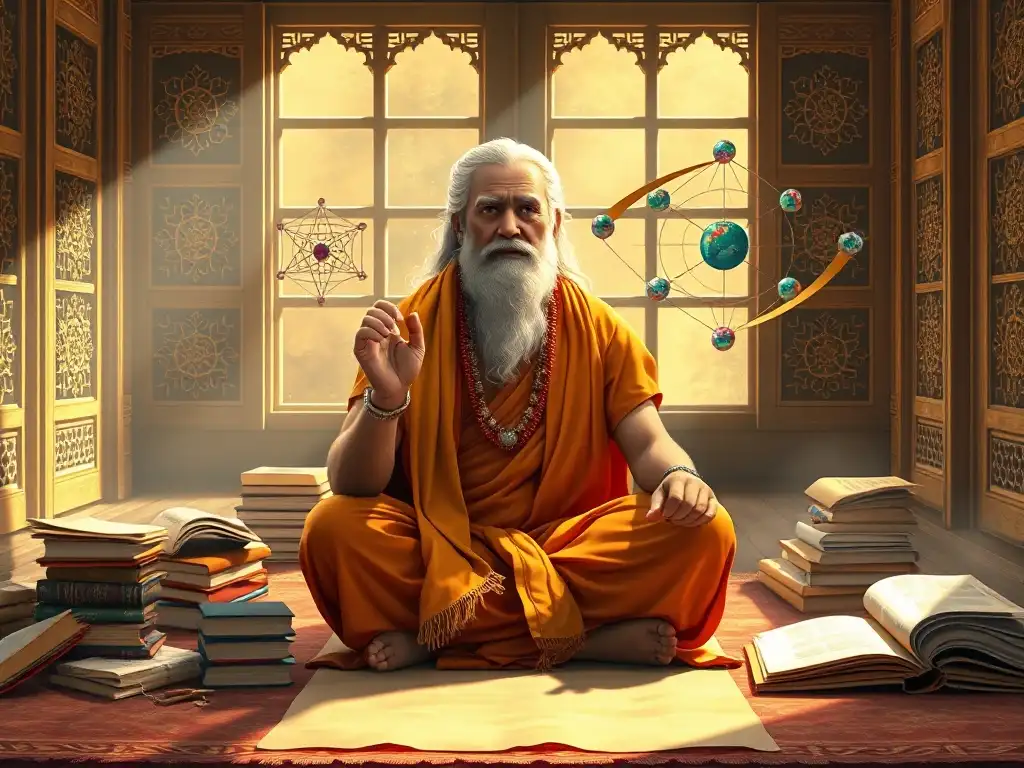
The Vaisheshika philosophy offers a distinctive critique of materialism by positing a more nuanced understanding of existence that transcends mere physicality. Rooted in the works of sage Kanada, Vaisheshika delineates a metaphysical framework that integrates the material with the non-material, emphasizing the significance of substances, qualities, and actions. This approach challenges the reductionist view of materialism, which often overlooks the complexities of consciousness and perception.
Summary of Key Points
- Substance and Quality: Vaisheshika identifies substances as the fundamental components of reality, categorizing them into groups such as earth, water, fire, air, and ether. Each substance possesses unique qualities (gunas) that contribute to its nature. This classification underscores the idea that reality encompasses more than mere physical matter.
- Atomic Theory: The philosophy introduces an early atomic theory, asserting that all matter is composed of indivisible atoms (anu) that combine to form complex substances. This notion not only paved the way for later scientific explorations but also highlighted the interplay between the material and the non-material.
- Causation and Action: Vaisheshika emphasizes the role of causation, proposing that every effect has a cause. This principle extends beyond physical interactions to include mental actions, acknowledging the importance of intention and consciousness in shaping reality.
- Existence of Non-Material Entities: The philosophy posits the existence of non-material entities, such as the self (atman) and consciousness (citta), which are integral to understanding existence. This duality challenges the materialist perspective that equates existence solely with physical entities.
- Ethics and Liberation: Vaisheshika also addresses ethical considerations, linking moral behavior to the pursuit of knowledge and liberation (moksha). This connection reinforces the idea that understanding the nature of reality involves both intellectual and ethical dimensions.
The Lasting Impact of Vaisheshika Philosophy on Philosophy and Culture
The influence of Vaisheshika extends beyond its immediate philosophical contributions, shaping various aspects of Indian thought and culture. Its integration of metaphysical concepts with practical ethics has created a rich tapestry of ideas that continue to resonate today.
- Philosophical Dialogue: Vaisheshika has engaged in enduring dialogues with other philosophical schools, such as Nyaya and Sankhya. These interactions have led to a more comprehensive understanding of epistemology, logic, and metaphysics in Indian philosophy.
- Cultural Reflections: The principles of Vaisheshika philosophy can be observed in various cultural expressions, including literature, art, and education. The emphasis on inquiry and understanding the nature of reality has fostered a culture of intellectual curiosity that persists in contemporary Indian society.
- Scientific Thought: The early atomic theory proposed by Vaisheshika has inspired scientific inquiry in various fields, including physics and chemistry. By framing the discussion of matter within a philosophical context, Vaisheshika has contributed to a broader discourse about the nature of reality.
The Vaisheshika philosophy offers a profound challenge to materialism by promoting a holistic understanding of existence that encompasses both the material and the non-material. This unique perspective not only enhances philosophical discourse but also enriches cultural and scientific endeavors, ensuring its relevance in the ongoing exploration of reality.
Frequently Asked Questions
What is Vaisheshika philosophy?
Vaisheshika philosophy is an ancient Indian school of thought that emphasizes the nature of reality through a detailed analysis of substance, qualities, and actions.
How does Vaisheshika challenge materialism?
Vaisheshika challenges materialism by proposing that existence is comprised of both physical and metaphysical elements, suggesting that reality cannot be solely understood through materialistic perspectives.
What are the key contributions of Vaisheshika philosophy?
The key contributions include the development of a unique ontology, categorization of substances, and the introduction of concepts like atoms and imperceptible entities that extend beyond mere physical existence.
How does Vaisheshika relate to other philosophical schools in ancient India?
Vaisheshika is often discussed alongside Nyaya philosophy, as both schools share insights on logic and epistemology, yet they diverge in their views on material existence and how it interacts with the metaphysical.
Why is the study of Vaisheshika important in contemporary philosophy?
The study of Vaisheshika is important as it provides a comprehensive framework for understanding the intersection of material and non-material realities, which remains relevant in modern debates on existence and consciousness.
Final Reflection: Embracing Vaisheshika Philosophy to Transcend Materialism
In a world increasingly dominated by materialism, the insights offered by Vaisheshika philosophy resonate more than ever. This ancient Indian school of thought challenges the notion that existence is solely defined by physical matter, urging us to explore deeper dimensions of reality. As we navigate a society that often equates success with material wealth, the teachings of Vaisheshika remind us that true fulfillment lies beyond the tangible, inviting us to engage with the essence of existence itself.
The influence of Vaisheshika philosophy extends far beyond its historical roots, shaping contemporary discussions around consciousness, ethics, and the nature of reality. This philosophy encourages us to reflect on our values and priorities in a world that often prioritizes consumerism over spiritual growth.
As we grapple with the implications of our choices, we can draw inspiration from the words of the philosopher Acharya Kanada, who stated, "> The essence of existence is not merely in what we possess, but in what we understand and experience." This perspective invites us to cultivate a deeper awareness of our interconnectedness and the impermanence of material possessions.
As we conclude our exploration of Vaisheshika philosophy and its challenge to materialism, I invite you to reflect on your own relationship with the material world. Consider how you can integrate the principles of Vaisheshika into your daily life, fostering a sense of purpose that transcends mere accumulation. Let this be a call to action: to seek wisdom, nurture your inner self, and embrace the richness of existence that lies beyond the physical. In doing so, we can collectively move towards a more meaningful and fulfilling life, one that honors both our material and spiritual dimensions.
Challenge Your Perspective on Existence Today!
Thank you for taking the time to explore the fascinating intersections between Vaisheshika philosophy and materialism! You've uncovered insights that not only illuminate ancient thought but also encourage modern reflections on existence itself. Now, let's build on this knowledge and turn contemplation into action.
- Engage with the concepts: Start a discussion about Vaisheshika and its views on materialism within your community. Share what you learned and invite your friends to share their perspectives!
- Explore related philosophies: Read more about other Hindu philosophical systems. Consider how they compare to Vaisheshika and what insights they offer about our perception of reality.
- Join a community: Find online forums or local discussion groups that focus on philosophy and spirituality. Engaging with others can deepen your understanding and lead to new insights.
Which aspect of Vaisheshika’s challenge to materialism resonates most with your beliefs about existence? Let's start the conversation!