
The Cultural Exchange Between Ancient India and Southeast Asia Through Dance and Music

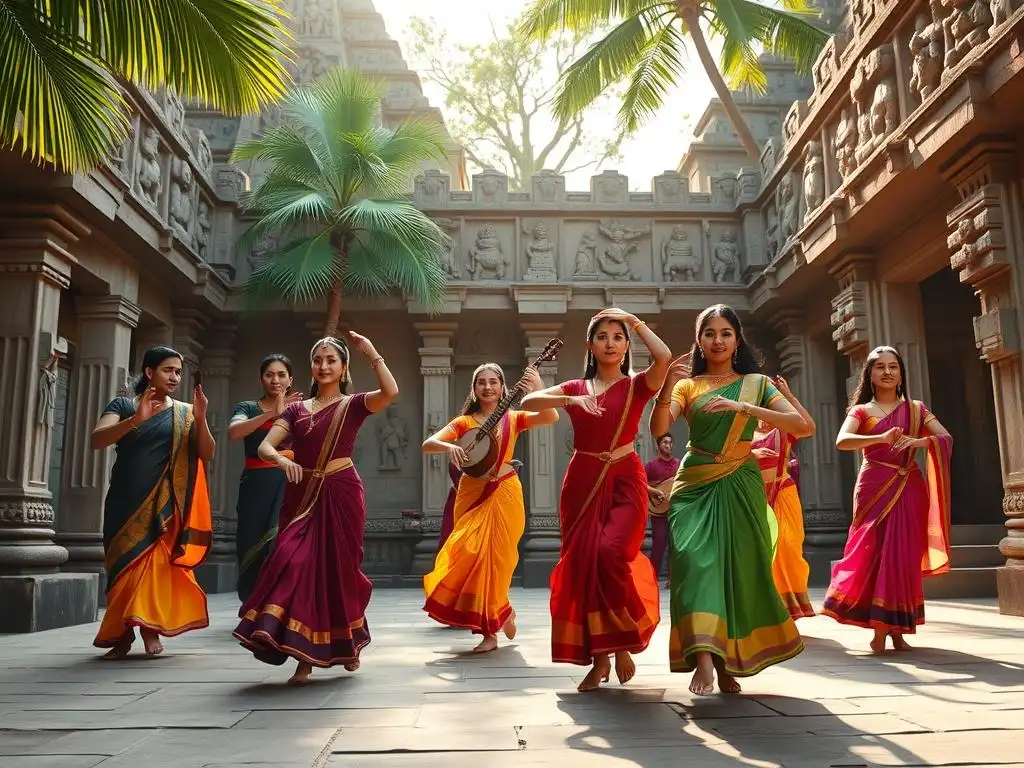
Welcome to Ancient India History, where we delve into the rich tapestry of history, culture, and contributions of ancient Indian civilizations. Have you ever wondered how the vibrant dance and music of ancient India influenced cultures across Southeast Asia? Join us as we explore the captivating journey of cultural exchange through our featured article, "The Cultural Exchange Between Ancient India and Southeast Asia Through Dance and Music."
Uncover the intricate connections that shaped not only art forms but entire societies, and prepare to be inspired as you discover the profound impact of these artistic traditions. Let's embark on this enlightening journey together!
- Introduction to Cultural Exchange Between Ancient India and Southeast Asia
- Historical Context of Dance and Music in Ancient India
- The Role of Dance and Music in Ancient Indian Society
- Cultural Exchange Mechanisms: How Ancient India Influenced Southeast Asia
- Dance Forms Influenced by Ancient Indian Traditions in Southeast Asia
- Musical Traditions: The Impact of Ancient Indian Music on Southeast Asia
- Case Studies of Dance and Music Cultural Exchange
- The Legacy of Ancient India’s Dance and Music in Southeast Asia
- Conclusion: The Enduring Impact of Ancient India and Southeast Asia’s Dance and Music Connection
-
Frequently Asked Questions
- What is the significance of dance and music in ancient Indian culture?
- How did cultural exchange occur between ancient India and Southeast Asia?
- What role did religion play in the dance and music of ancient India?
- Can you name some dance forms that originated from ancient India?
- How did Southeast Asian music evolve due to Indian influence?
- Final Reflection: The Enduring Legacy of Ancient India and Southeast Asia's Dance and Music
- Embrace the Rhythm of Cultural Exchange!
Introduction to Cultural Exchange Between Ancient India and Southeast Asia
The cultural exchange between ancient India and Southeast Asia is a fascinating aspect of history that highlights the interconnectedness of civilizations long before the advent of modern globalization. This exchange was particularly evident in the realms of dance and music, where influences transcended geographical boundaries. Ancient Indian civilizations, known for their rich cultural heritage, played a pivotal role in shaping the artistic traditions of Southeast Asia.
From the intricate rhythms of classical Indian dance to the melodious strains of Indian music, these art forms found new expressions and adaptations in various Southeast Asian cultures. Understanding this dynamic relationship not only sheds light on the historical ties between these regions but also emphasizes the lasting impact of ancient Indian art forms on the cultural landscape of Southeast Asia.
Overview of Ancient India’s Influence on Southeast Asia
Ancient India’s influence on Southeast Asia can be traced back to as early as the 1st century CE, where Indian traders, scholars, and monks traveled to regions now known as Indonesia, Malaysia, Thailand, and Cambodia. This interaction facilitated the spread of Indian culture, religion, and artistic practices, including dance and music.
Key elements of this cultural exchange include:
- Trade Routes: The maritime trade routes that connected India with Southeast Asia were instrumental in the dissemination of cultural practices.
- Religion: The introduction of Hinduism and Buddhism laid the groundwork for the integration of Indian art forms into local traditions.
- Artistic Adaptations: Southeast Asian cultures began to incorporate Indian themes and styles into their own dance and music, resulting in unique hybrid forms.
The impact of ancient Indian civilizations on the artistic expressions of Southeast Asia is profound, as they not only borrowed from Indian traditions but also reinterpreted them through local lenses, creating a vibrant tapestry of cultural fusion.
Importance of Dance and Music in Cultural Exchange
Dance and music serve as powerful mediums for cultural expression and communication, making them essential components of the exchange between ancient India and Southeast Asia. These art forms convey emotions, stories, and spiritual beliefs, fostering a deeper understanding of shared human experiences.
Key reasons for the significance of dance and music in this exchange include:
- Cultural Identity: Dance and music are integral to the cultural identities of both Indian and Southeast Asian societies. They reflect historical narratives, social structures, and religious beliefs.
- Social Cohesion: Participating in dance and music fosters community bonds and collective identity, making them vital in both regions' cultural practices.
- Preservation of Heritage: Through dance and music, ancient traditions are preserved and passed down through generations, ensuring the survival of cultural legacies.
The interplay of these art forms not only enriched the cultural landscapes of both ancient India and Southeast Asia but also established a legacy of artistic collaboration that continues to influence contemporary practices today. Understanding this cultural exchange provides valuable insights into the historical connections that shaped the civilizations of Asia.
Historical Context of Dance and Music in Ancient India
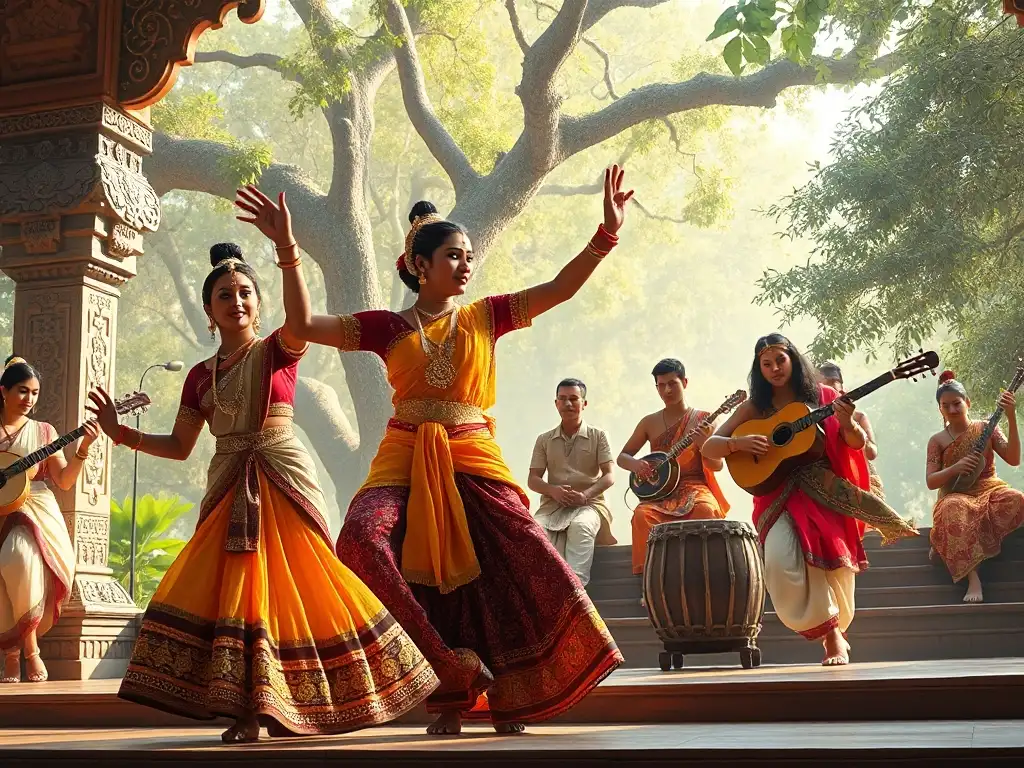
The historical context of dance and music in ancient India is deeply intertwined with the sociocultural fabric of its civilizations. As early as the Indus Valley Civilization (circa 3300–1300 BCE), evidence of dance and music can be traced through sculptures and artifacts. These ancient relics suggest that rhythmic movement and musical expression were integral to spiritual and communal activities.
In Vedic texts, dating back to around 1500 BCE, references to music (known as gāyatrī) and dance highlight their importance in rituals and ceremonies. The Natyashastra, a seminal text attributed to Bharata Muni around 200 BCE to 200 CE, serves as a critical source for understanding the theoretical framework of dance and drama in ancient India. It outlines various dance styles and their emotional expressions, or rasa, emphasizing the connection between movement, music, and storytelling.
Political and economic developments throughout ancient Indian history also facilitated cultural exchanges, notably during the Maurya Empire (circa 322–185 BCE) and the Gupta Empire (circa 320–550 CE). Trade routes established between India and Southeast Asia became conduits for the flow of artistic ideas, where local traditions began to intermingle with Indian cultural practices, leading to a rich tapestry of artistic expression.
Evolution of Dance Forms in Ancient India
The evolution of dance forms in ancient India is marked by diversity and regional variation, reflecting the myriad cultural influences across the subcontinent. Dance during this period was not merely a form of entertainment; it was a vital component of religious and cultural rituals.
- Classical Dance Styles:
- Bharatanatyam: Originating in Tamil Nadu, it is characterized by intricate footwork, expressive gestures ( mudras), and storytelling through dance. It was traditionally performed by Devadasis in temples.
- Kathak: Emerging from North India, Kathak incorporates rapid foot movements, spins, and expressive storytelling, often reflecting themes from mythology.
- Odissi: This dance form from Odisha is known for its fluid movements and sculptural poses, often depicting spiritual themes related to Hindu deities.
- Folk Dances:
- Folk dances varied significantly across regions, with each community celebrating its harvest, festivals, or rituals through dance. For instance, the Garba of Gujarat and the Bhangra of Punjab are culturally significant and showcase communal harmony and celebration.
- Integration with Music:
- The integration of music with dance in ancient India is evident in the use of traditional instruments like the tabla, sitar, and veena. The synergy between rhythm and movement created a captivating experience that resonated with audiences during temple festivities and royal courts.
Development of Musical Traditions in Ancient Indian Culture
The development of musical traditions in ancient Indian culture is a reflection of its philosophical, spiritual, and artistic evolution. Music in ancient India can be categorized into two primary traditions: Shastra (theoretical) and Laya (rhythmic).
- Vedic Chanting:
- The earliest form of music in India is rooted in the Vedic texts, where hymns were chanted during sacrifices and rituals. The Sama Veda is particularly noteworthy for its musical notations, which laid the foundation for the development of Indian classical music.
- Ragas and Talas:
- The concept of ragas (melodic frameworks) and talas (rhythmic cycles) emerged during this period, forming the backbone of Indian classical music. Each raga is associated with a particular mood and time of day, enriching the emotional experience of music.
- Influence of Instruments:
- Various musical instruments were developed and refined, including string instruments like the rudra veena and percussion instruments like the mridangam. These instruments played a crucial role in both solo performances and ensemble settings, often accompanying dancers in classical performances.
- Cross-Cultural Influences:
- The interaction with neighboring cultures, particularly through trade and migration, facilitated the exchange of musical ideas. This is evident in the incorporation of Southeast Asian musical elements into Indian traditions, leading to a fusion of styles that enriched both regions.
The cultural exchange between ancient India and Southeast Asia through dance and music was a dynamic process, reflecting the complexities of human expression and creativity. The legacy of these art forms continues to inspire and shape contemporary practices, showcasing the enduring impact of ancient civilizations on modern culture.
The Role of Dance and Music in Ancient Indian Society
Religious and Spiritual Significance of Dance and Music
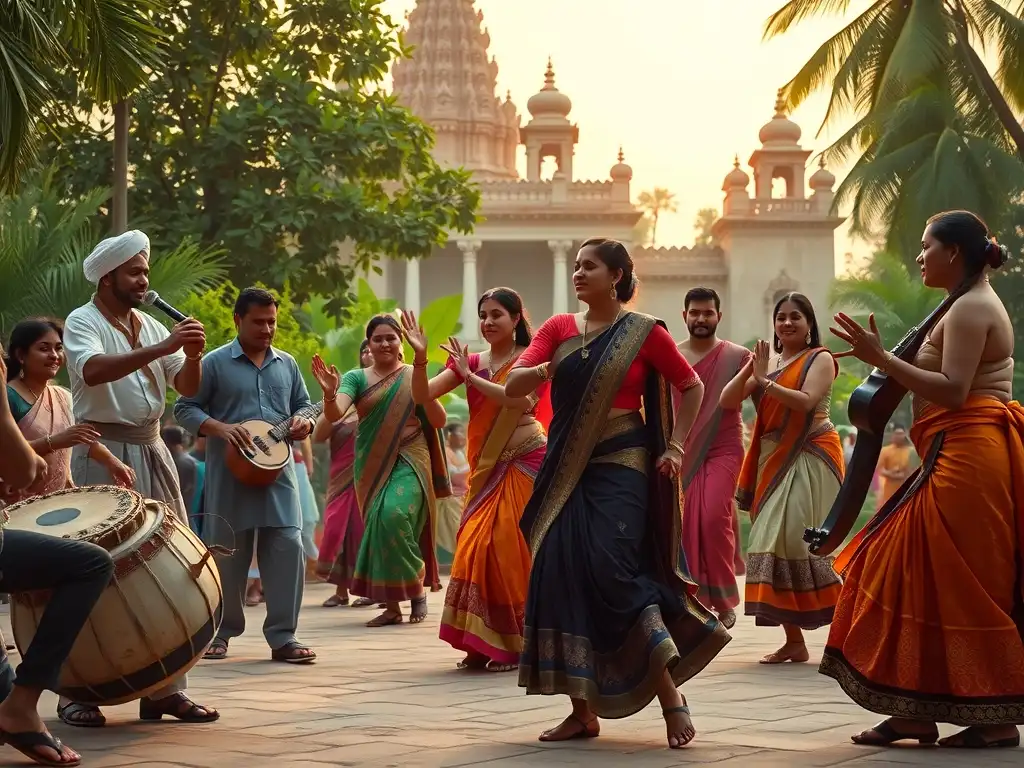
In ancient India, dance and music were integral to religious practices and spiritual expressions, serving as conduits for connecting the divine with the earthly realm. These art forms transcended mere entertainment, embodying profound cultural values and beliefs.
- Devotional Practices: Many forms of dance, such as Bharatanatyam and Odissi, were performed in temples as offerings to deities. The elaborate gestures and rhythmic patterns conveyed devotion, while the accompanying music, often featuring classical instruments like the veena and mridangam, created an atmosphere of reverence.
- Rituals and Ceremonies: Dance and music played crucial roles in various rituals, from birth and marriage ceremonies to festivals such as Navaratri and Diwali. For instance, during the Navaratri festival, the Garba dance celebrates the goddess Durga, showcasing vibrant community participation and spiritual fervor.
- Philosophical Interpretations: The ancient texts, such as the Natya Shastra by Bharata Muni, establish a philosophical framework for dance and music as essential to human experience. It delineates the concept of rasa (aesthetic flavor), suggesting that dance and music evoke emotional responses that lead to spiritual enlightenment. This connection between art and spirituality not only highlights the sanctity of these practices but also their role in fostering community bonds.
- Transcendence Through Performance: The act of performing dance and music is considered a way to transcend the mundane. Dancers and musicians often enter a meditative state, allowing them to channel divine energy. This transformative experience underscores the belief that art can serve as a bridge to the divine, promoting a sense of unity with the cosmos.
Dance and Music as a Means of Storytelling in Ancient India
Dance and music in ancient India were not merely artistic expressions but powerful tools for storytelling, disseminating historical narratives, myths, and moral lessons across generations.
- Theatrical Elements: Traditional Indian dance forms incorporated theatrical elements, often depicting stories from epics like the Ramayana and Mahabharata. For example, Kathakali, a dance-drama from Kerala, combines expressive hand gestures ( mudras), elaborate costumes, and dramatic facial expressions to narrate mythological tales. This form of storytelling captivated audiences and made complex narratives accessible.
- Folklore and Oral Traditions: Many regional dance forms, such as Bhangra and Lavani, draw from local folklore, encapsulating the traditions, struggles, and aspirations of communities. Through lively rhythms and engaging lyrics, these performances preserve cultural heritage while educating audiences about their roots.
- Symbolism and Allegory: The use of symbolic gestures in dance allows for multifaceted interpretations of stories. For instance, the abhinaya (expressive dance) in Bharatanatyam conveys emotions and narratives through intricate movements, embodying characters from mythology. This non-verbal form of storytelling enriches the audience's understanding and engagement with the narrative.
- Music as Narrative Support: The musical compositions accompanying dance performances often contain lyrics that narrate the story, enhancing the overall experience. The interplay between dance and music not only brings the story to life but also enriches the audience's emotional response, thus making the performance a holistic experience.
In essence, dance and music served as vital channels for preserving and transmitting the rich tapestry of ancient Indian culture, allowing for a dynamic exchange of ideas, values, and artistry that resonated well beyond their immediate context. The emphasis on storytelling through these art forms also highlights their role in fostering a shared cultural identity, both within ancient Indian society and in its interactions with Southeast Asia.
Cultural Exchange Mechanisms: How Ancient India Influenced Southeast Asia
Trade Routes Facilitating Cultural Exchange
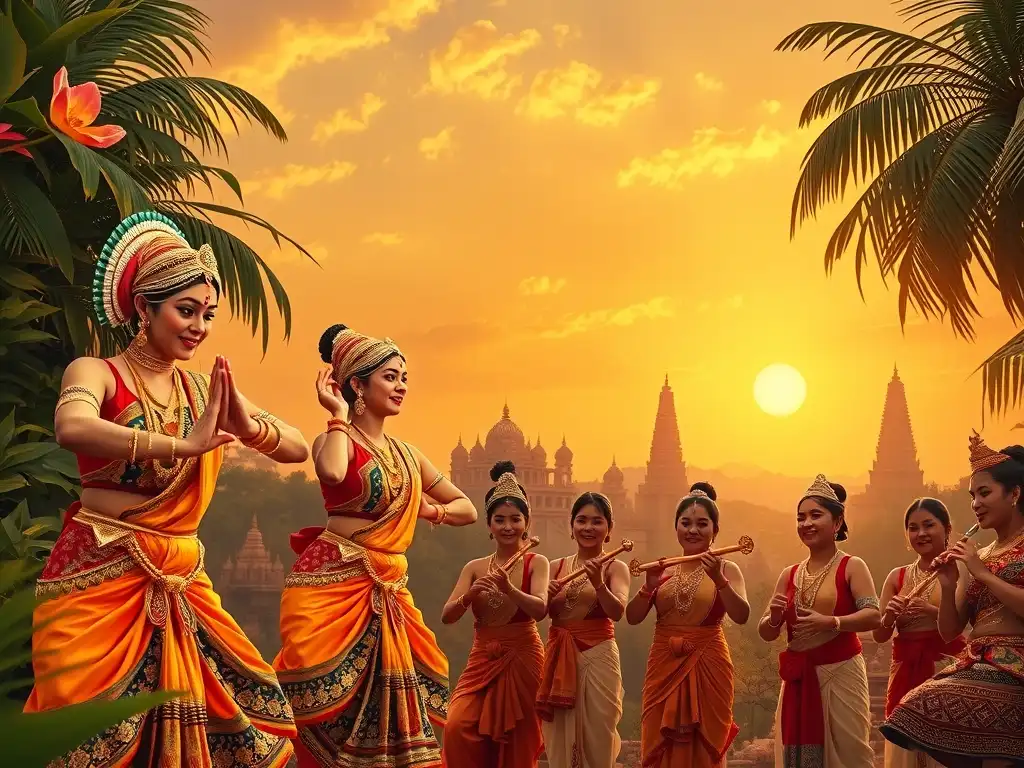
The intricate trade networks that developed between Ancient India and Southeast Asia played a pivotal role in the cultural exchange of dance and music. These trade routes, both overland and maritime, not only facilitated the movement of goods but also allowed for the flow of ideas and artistic expressions. Key trade routes included the Silk Road and the Maritime Silk Route, which connected major Indian ports like Kolkata and Kochi with Southeast Asian hubs such as Java, Sumatra, and Borneo.
Key Trade Routes:
- Silk Road: An overland network that extended through Central Asia, linking India to China and beyond.
- Maritime Silk Route: A sea-based route that allowed traders to navigate from Indian coastal cities directly to Southeast Asia.
These routes not only transported spices, textiles, and precious stones but also allowed cultural interactions through the movement of merchants, travelers, and missionaries. The sharing of art forms was often an incidental benefit of these exchanges. For instance, the arrival of Indian merchants in Southeast Asia introduced local populations to various Indian dance styles and musical instruments, which were adapted to local tastes and traditions.
As a result, many Southeast Asian cultures began incorporating elements of Indian classical dance forms, such as Bharatanatyam and Kathak, into their own traditions. The influence is evident in the movements, themes, and narratives found in Southeast Asian dance, which often reflect Hindu and Buddhist motifs prevalent in Ancient Indian arts.
Role of Indian Diaspora in Southeast Asian Countries
The Indian diaspora in Southeast Asia has been instrumental in fostering cultural exchanges, particularly in the fields of dance and music. From as early as the 1st century CE, Indian traders and settlers began to establish communities across the region. This migration led to the establishment of vibrant Indian cultural enclaves in countries like Malaysia, Indonesia, and Thailand.
Contributions of the Indian Diaspora:
- Cultural Ambassadors: Indian migrants served as cultural ambassadors, sharing their artistic traditions and practices with local populations. Festivals, religious ceremonies, and communal gatherings became platforms for showcasing Indian dance and music.
- Integration and Adaptation: Over time, Indian artistic traditions were integrated into local practices. For example, traditional Balinese dance shows clear influences from Indian classical dance forms in both choreography and thematic storytelling.
The presence of Indian temples, such as the Brahma Temple in Thailand and the Shiva Temples in Indonesia, underscores how deeply rooted Indian culture became in Southeast Asian societies. These temples not only served as religious sites but also as centers for the performance of dance and music, reinforcing the bonds between the two regions.
The Indian diaspora's influence on Southeast Asian dance and music is a testament to the enduring legacy of Ancient India's cultural heritage. The cross-pollination of artistic traditions continues to enrich the cultural tapestry of Southeast Asia, making it a vibrant hub for dance and music that echoes the past while embracing modernity.
Dance Forms Influenced by Ancient Indian Traditions in Southeast Asia
Bharatanatyam and its Southeast Asian Adaptations
Bharatanatyam, one of the oldest classical dance forms of India, has significantly influenced various dance styles across Southeast Asia. Originating from Tamil Nadu, Bharatanatyam is characterized by its intricate footwork, expressive gestures (mudras), and detailed facial expressions (abhinaya). The dance form was traditionally performed in temples and as part of spiritual offerings, which made its transition to Southeast Asia seamless, especially in regions with strong historical ties to Indian culture, such as Indonesia and Malaysia.
In Indonesia, particularly in Bali, the influence of Bharatanatyam can be observed in the traditional dance known as Balinese dance. This dance form incorporates similar rhythmic foot patterns and facial expressions, creating a narrative that often revolves around themes from Hindu epics like the Ramayana. The Balinese dancers have adopted elements of Bharatanatyam's mudras, enhancing their own storytelling with intricate hand movements that convey specific meanings.
Similarly, in Malaysia, the dance form known as Kuchipudi exhibits adaptations of Bharatanatyam techniques. While Kuchipudi is primarily rooted in Indian traditions, its performance often includes local themes and narratives, showcasing the cultural amalgamation that occurred due to the migration of Indian artists and traders. The incorporation of Bharatanatyam's vibrant costumes and expressive movements has enriched Kuchipudi, making it a unique representation of Indian heritage blended with Malay culture.
The adaptations of Bharatanatyam in Southeast Asia highlight a vibrant cultural exchange, as local artists embraced and modified Indian dance elements, creating new forms that reflect the diverse narratives and aesthetics of their regions.
Influence of Kathakali on Southeast Asian Dance Styles
Kathakali, another classical dance-drama from India, has played a pivotal role in shaping various dance forms in Southeast Asia, particularly in countries like Thailand and Malaysia. Known for its elaborate costumes, detailed makeup, and dramatic storytelling, Kathakali is a performance art that combines dance, music, and theatrical elements, often depicting tales from Hindu mythology.
In Thailand, the influence of Kathakali is evident in the traditional dance-drama known as Khon. Khon features similar characteristics, including intricate movements and expressive storytelling through gestures. The use of detailed masks in Khon can be traced back to the stylized facial expressions of Kathakali performers, who use their painted faces to convey emotions and character traits. Both dance forms share a commitment to highlighting moral values and heroic tales, creating a cultural bridge that emphasizes common narratives across Indian and Southeast Asian traditions.
Moreover, in Malaysia, the performance art known as Mak Yong has absorbed elements of Kathakali, particularly in its use of narrative structure and character portrayal. Mak Yong incorporates dance, music, and drama in a manner reminiscent of Kathakali, often showcasing local folklore with a strong influence from Indian epics. The rhythmic footwork and expressive hand movements found in Kathakali have also found their way into Mak Yong, enriching its visual and emotional appeal.
The influence of Kathakali on Southeast Asian dance styles illustrates the profound impact of ancient Indian culture on the region. The adaptations made by Southeast Asian artists provide a testament to the enduring legacy of Indian dance, as it continues to inspire and evolve within diverse cultural contexts.
Musical Traditions: The Impact of Ancient Indian Music on Southeast Asia
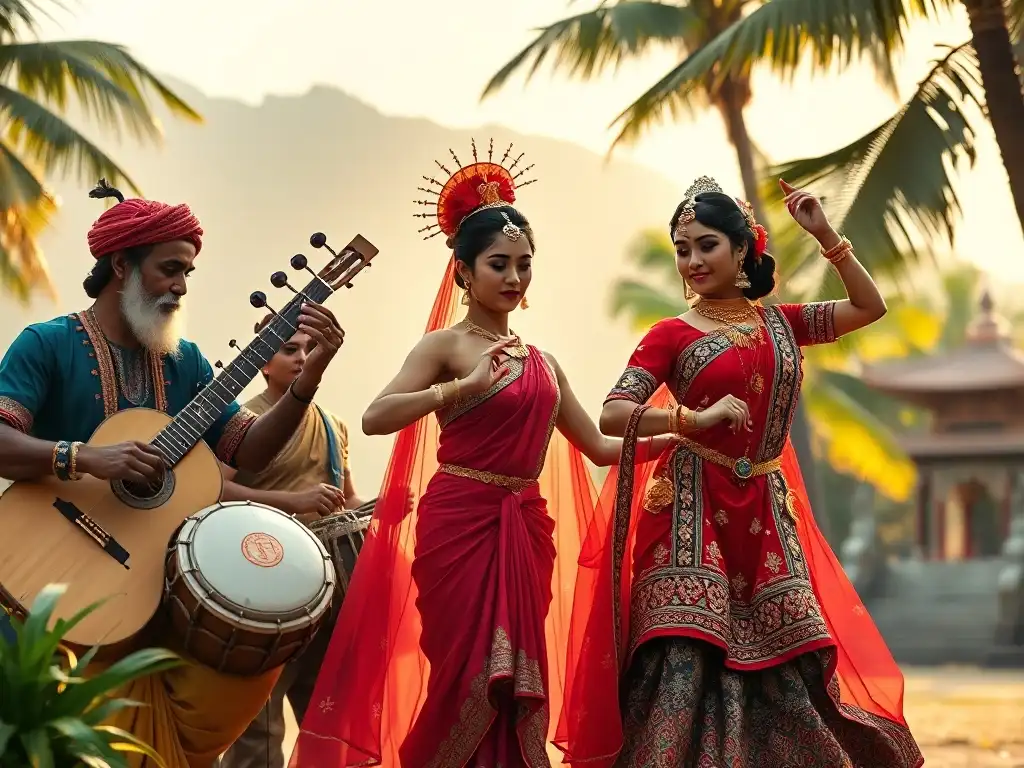
Instruments from Ancient India Adopted in Southeast Asia
The musical landscape of Southeast Asia has been significantly shaped by the influence of ancient Indian instruments. As trade routes expanded and cultural exchanges flourished between these regions, various musical instruments were introduced and adapted, enriching the local soundscapes. Here are some key instruments that found their way from ancient India to Southeast Asia:
- Veena: This stringed instrument, akin to the lute, played a pivotal role in both devotional and classical music in ancient India. In Southeast Asia, variations of the veena can be seen, such as the rebab in Indonesia and Malaysia, which retains the plucked string techniques while incorporating local musical styles.
- Mridangam: A percussion instrument integral to Indian classical music, the mridangam has influenced local drumming traditions in Southeast Asia. In countries like Thailand, the klong sabad reflects the rhythmic patterns and playing techniques that can be traced back to Indian origins.
- Bansuri: The bamboo flute, known as bansuri in India, has inspired similar wind instruments across Southeast Asia. The suling in Indonesia and the bamboo flute in the Philippines showcase the melodic and improvisational aspects that originate from Indian music.
- Harmonium: Although a more modern addition, the harmonium was introduced to Southeast Asia through Indian merchants and musicians. It has been integrated into various music forms, including traditional Malay and Indonesian genres, providing a harmonic foundation that complements local melodies.
The adoption of these instruments is not merely a replication but often involves a fusion with local musical practices, creating unique regional variations that reflect both Indian and Southeast Asian influences.
The Fusion of Indian Ragas with Southeast Asian Melodies
The interaction between ancient Indian music and the local traditions of Southeast Asia has resulted in a fascinating fusion of styles, particularly through the adaptation of Indian ragas into Southeast Asian music. Ragas, with their intricate melodic frameworks and emotional expressiveness, have found a new voice in the musical traditions of this region.
- Adaptation of Ragas: Southeast Asian musicians have embraced Indian ragas, often incorporating them into their traditional performances. For instance, in Bali, the use of ragas can be heard in the gamelan music, where Indian melodic structures are blended with local rhythms and instruments. This cross-cultural adaptation has led to a rich tapestry of sound that reflects both influences.
- Influence on Local Genres: The integration of Indian ragas has also impacted various local music genres. In Thai classical music, one can observe the use of ragas in compositions that emphasize improvisation and emotional depth, similar to Indian traditions. The piphat ensemble, for example, includes elements that resonate with ragas, showcasing a hybrid musical identity.
- Ritualistic and Devotional Contexts: The spiritual and ritualistic aspects of Indian music have been mirrored in Southeast Asian practices. Many traditional ceremonies incorporate Indian ragas, enhancing the emotional experience of the events. Music in Cambodia, for instance, often features raga-inspired compositions during religious ceremonies, further solidifying the cultural exchange.
- Collaborative Performances: Contemporary musicians have also begun to explore this fusion, with collaborations between Indian and Southeast Asian artists resulting in innovative performances that celebrate both traditions. These cross-genre collaborations not only preserve the heritage of ancient music but also pave the way for new interpretations and styles.
Through this ongoing dialogue between ancient Indian music and Southeast Asian melodies, a vibrant musical culture continues to thrive, highlighting the enduring legacy of ancient India in Southeast Asia. The fusion of these traditions not only enriches the musical landscape but also serves as a testament to the shared history and cultural connections between these regions.
Case Studies of Dance and Music Cultural Exchange
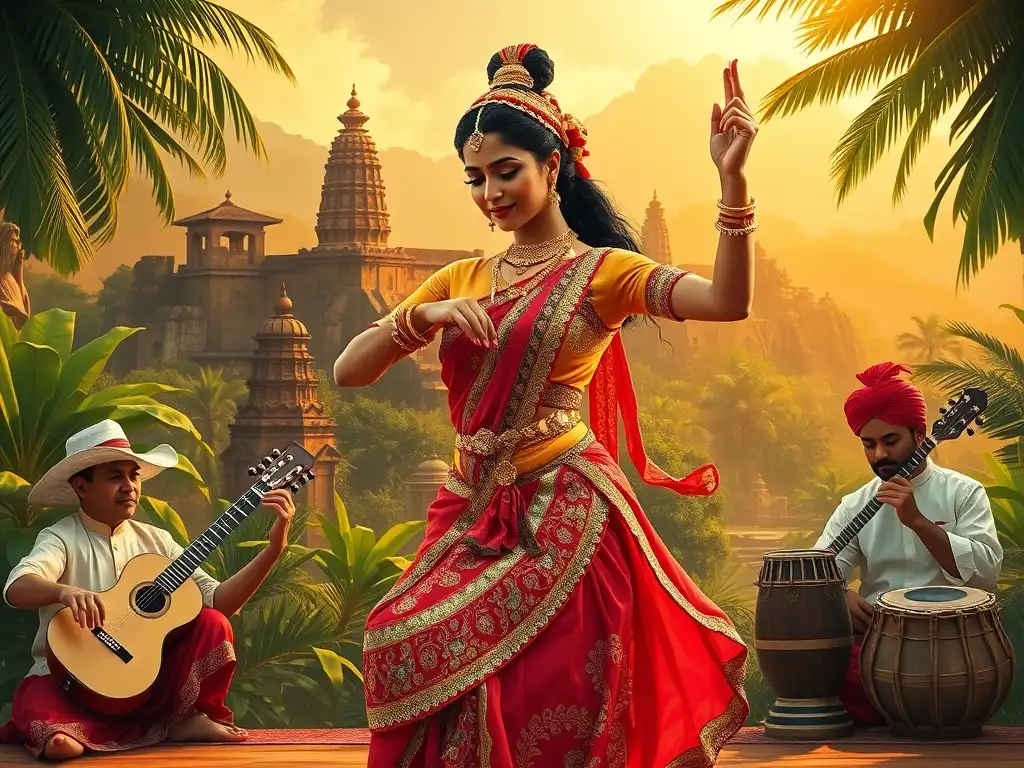
Case Study: The Ramayana Dance in Southeast Asia
The Ramayana, an ancient Indian epic, has profoundly influenced the cultural landscape of Southeast Asia, particularly through its adaptation into various dance forms. The narrative of Ramayana, which tells the story of Prince Rama's quest to rescue his wife Sita, has transcended its Indian origins and found a unique expression in countries such as Indonesia, Thailand, and Cambodia.
In Indonesia, the Wayang Kulit shadow puppetry incorporates elements of the Ramayana, blending storytelling with intricate shadow play. The accompanying dance performances often depict scenes from the epic, showcasing the characters through elaborate costumes and movements. This form of artistic expression not only entertains but also serves as a medium for moral and ethical teachings rooted in the Ramayana.
In Thailand, the Khon dance drama presents a stylized retelling of the Ramayana, known locally as the Ramakien. This dance form is characterized by its ornate costumes, intricate choreography, and the use of masks to represent different characters. The performances are highly ritualistic, often held during royal ceremonies and festivals, reflecting the deep cultural reverence for the Ramayana.
The Cambodian version, known as Reamker, adapts the Ramayana narrative to local cultural contexts, further embedding it within the Cambodian identity. Traditional performances feature a combination of dance, music, and elaborate costumes, illustrating the epic's enduring legacy.
Through these adaptations, the Ramayana not only highlights the shared cultural heritage but also showcases the unique interpretations of the narrative in each Southeast Asian country, demonstrating the dynamic interplay between ancient India and Southeast Asia in the realms of dance and music.
Case Study: The Use of Indian Instruments in Traditional Southeast Asian Music
The influence of ancient Indian music on Southeast Asia is vividly illustrated through the incorporation of Indian instruments into the region's traditional music practices. Instruments such as the sitar, tabla, and bansuri have migrated and evolved within Southeast Asian musical traditions, enhancing their richness and diversity.
The sitar, primarily associated with Indian classical music, has found its way into the traditional music of countries like Malaysia and Indonesia. In Indonesia, the sitar is often used in gamelan ensembles, where it blends with local instruments to create a unique soundscape. The synthesis of Indian and local musical elements showcases the adaptability of the sitar and its ability to resonate with diverse cultural contexts.
Similarly, the tabla, a pair of hand-played drums, has influenced percussion styles across Southeast Asia. In Thailand, the tabla's rhythmic patterns can be observed in traditional piphat ensembles, where it complements other instruments like the ranat ek (bamboo xylophone). This fusion of Indian and Thai musical traditions illustrates the historical connections that have shaped the region's musical identity.
The bansuri, an Indian bamboo flute, has also been embraced in various Southeast Asian musical forms. In Myanmar, the bansuri's melodic qualities are integrated into traditional folk music, where it serves as a bridge between Indian classical influences and local melodies.
These case studies exemplify the profound impact of ancient India on the musical traditions of Southeast Asia, reflecting a rich tapestry of cultural exchange that has evolved over centuries. This interplay not only enriches the musical heritage of the region but also underscores the historical ties that continue to influence contemporary artistic expressions.
The Legacy of Ancient India’s Dance and Music in Southeast Asia
The legacy of ancient India’s dance and music has left an indelible mark on the cultural landscape of Southeast Asia. This influence can be traced back to the early interactions between Indian and Southeast Asian civilizations, which facilitated the exchange of artistic traditions through trade, migration, and religious missions.
The introduction of Hinduism and Buddhism into Southeast Asia played a pivotal role in this cultural exchange. Many classical dance forms and musical practices of the region adopted elements from Indian traditions. For instance, the intricate gestures (mudras) used in Bharatanatyam, a classical Indian dance, have parallels in several Southeast Asian dance forms, showcasing a shared aesthetic sensibility.
Continuing Influence in Contemporary Art Forms
The impact of ancient Indian dance and music continues to resonate in contemporary art forms across Southeast Asia. Modern dance troupes often incorporate classical Indian styles into their performances, blending them with local traditions to create unique hybrid forms.
- Theatrical Performances: In countries like Indonesia, traditional shadow puppetry (Wayang Kulit) often features musical scores influenced by Indian ragas. These performances serve as a narrative medium, bringing ancient stories to life through a fusion of dance and music.
- Festivals and Cultural Events: Festivals such as the Bali Arts Festival highlight the integration of Indian dance forms, featuring performances that pay homage to ancient Indian epics like the Ramayana. This not only preserves the traditional art but also promotes cultural tourism.
- Educational Institutions: Dance academies in countries like Thailand and Malaysia are increasingly offering courses in classical Indian dance, ensuring that these ancient practices are passed down to future generations.
Preservation of Ancient Practices in Modern Southeast Asia
The preservation of ancient Indian dance and music practices in modern Southeast Asia is vital for cultural identity. Several approaches are being taken to ensure that these art forms continue to thrive:
- Cultural Heritage Organizations: Various organizations are dedicated to preserving the rich tapestry of dance and music influenced by ancient Indian traditions. They conduct workshops, seminars, and performances to educate the public about these cultural ties.
- Documentation and Research: Scholars and researchers are actively documenting ancient texts and manuscripts that detail dance and music practices from the Indian subcontinent and their adaptations in Southeast Asia. This research serves as a reference for contemporary artists and educators.
- Community Engagement: Local communities are encouraged to participate in traditional dance and music events, fostering a sense of pride and connection to their heritage. Initiatives like community dance festivals allow for the celebration and revitalization of these ancient art forms.
The cultural exchange between ancient India and Southeast Asia through dance and music has created a vibrant legacy that continues to flourish today. By preserving these traditions and integrating them into modern practices, the rich history of ancient India not only survives but also thrives in the contemporary cultural milieu of Southeast Asia.
Conclusion: The Enduring Impact of Ancient India and Southeast Asia’s Dance and Music Connection
The cultural exchange between Ancient India and Southeast Asia has left a profound legacy in the realms of dance and music, fundamentally shaping the artistic expressions of both regions. This connection, marked by the intermingling of styles, techniques, and instruments, highlights the dynamic nature of cultural interactions that transcended geographical boundaries.
Summary of Key Contributions and Cultural Significance
The contributions of Ancient India to the dance and music of Southeast Asia are manifold and significant. Notably, the Natyashastra, an ancient Indian treatise on performing arts, has had a lasting influence on the dance traditions of Southeast Asia. This text not only laid the groundwork for the theory and practice of dance but also established the importance of music in performance. The integration of Indian classical dance forms, such as Bharatanatyam and Odissi, can be observed in the traditional dances of countries like Cambodia and Indonesia, where similar postures, movements, and expressions are prevalent.
In terms of music, the adoption of Indian instruments, such as the veena and mridangam, into Southeast Asian orchestras illustrates the deep-rooted connections. The blending of indigenous sounds with Indian tonalities has given rise to unique musical styles, such as the Gamelan in Indonesia, which incorporates rhythmic and melodic elements reminiscent of Indian classical music. This fusion not only enriched the local musical traditions but also created a new cultural identity that celebrates both heritage and innovation.
Furthermore, the significance of these art forms extends beyond mere entertainment; they serve as a means of storytelling, ritualistic expression, and spiritual connection. The intricate dance forms and melodious music often encapsulate the philosophical and religious narratives shared between these regions, fostering a sense of unity and cultural identity that persists to this day.
Future Directions for Research and Appreciation of Cultural Exchange
As we look toward the future, there are numerous avenues for further research and appreciation concerning the cultural exchange of dance and music between Ancient India and Southeast Asia. Scholars can delve into the historical texts and archaeological findings that document these interactions, providing a deeper understanding of how these art forms evolved together over centuries.
Additionally, interdisciplinary studies that incorporate anthropology, history, and musicology could yield new insights into the socio-political contexts that facilitated this cultural exchange. For instance, examining trade routes, migration patterns, and the role of religious missions in the dissemination of artistic practices could illuminate the pathways of influence that shaped both Indian and Southeast Asian cultures.
Moreover, there is a growing need to promote cultural heritage through educational programs and workshops that explore the shared legacies of dance and music. By fostering appreciation for these art forms, communities can build bridges across cultures, encouraging greater collaboration and celebration of their intertwined histories.
In essence, the rich tapestry of dance and music that characterizes the connection between Ancient India and Southeast Asia is not only a testament to their historical interactions but also a vibrant space for future exploration and appreciation. Embracing this shared heritage can inspire contemporary artists and scholars alike, ensuring that the legacy of this cultural exchange continues to thrive.
Frequently Asked Questions
What is the significance of dance and music in ancient Indian culture?
Dance and music were vital aspects of spiritual and social life in ancient India, serving as means of expression and community bonding through rituals and celebrations.
How did cultural exchange occur between ancient India and Southeast Asia?
Cultural exchange occurred through trade routes and migration, where Indian art forms, including dance and music, influenced Southeast Asian traditions, creating a rich tapestry of shared heritage.
What role did religion play in the dance and music of ancient India?
Religion was central to ancient Indian dance and music, often used in rituals and temple performances, highlighting the connection between the divine and the artistic expression.
Can you name some dance forms that originated from ancient India?
Prominent dance forms include Bharatanatyam, Kathak, and Odissi, each embodying unique styles and narratives that reflect ancient Indian culture and spirituality.
How did Southeast Asian music evolve due to Indian influence?
Southeast Asian music incorporated elements from Indian ragas and rhythms, leading to the development of distinct musical styles that blend local traditions with Indian influences, enriching their cultural landscape.
Final Reflection: The Enduring Legacy of Ancient India and Southeast Asia's Dance and Music
The cultural exchange between Ancient India and Southeast Asia through dance and music is not merely a historical footnote; it is a vibrant thread that continues to weave through the fabric of our contemporary world. As we explore the intricate rhythms and movements that have transcended time and geography, we recognize that these art forms are not just relics of the past but living expressions that resonate with our current cultural landscape. The legacy of this exchange reminds us that art has the power to unite diverse communities and foster understanding across borders.
The influence of this rich cultural interplay can be seen in the ongoing evolution of dance and music in both regions. From the classical forms of Bharatanatyam to the enchanting melodies of gamelan, these art forms serve as a testament to our shared heritage. They inspire modern artists and performers, creating a dialogue that bridges generations and cultures. As the renowned Indian dancer Rukmini Devi Arundale once said, Dance is the hidden language of the soul.
This sentiment encapsulates the essence of how these art forms continue to speak to us, reflecting our collective emotions and experiences.
As we reflect on the significance of this cultural exchange, I invite you to consider how you can engage with and celebrate these artistic traditions in your own life. Whether through learning a dance form, attending a performance, or simply appreciating the music that has traveled through time, each of us has the opportunity to honor this legacy. Let us embrace the lessons of unity and creativity that emerge from the rich tapestry of Ancient India and Southeast Asia's dance and music, allowing them to inspire our actions and connections in the future.
Embrace the Rhythm of Cultural Exchange!
Thank you for diving into the fascinating world of the cultural ties between ancient India and Southeast Asia through dance and music! We hope you discovered the vibrant connections and historical significance that these art forms share. Now, it’s time to take the next step and deeply engage with this rich cultural heritage.
Here’s how you can continue your exploration:
- Join a local dance or music workshop that focuses on Indian or Southeast Asian traditions to experience firsthand the rhythms and movements that have shaped these cultures.
- Share your newfound knowledge! Write a post or initiate a discussion in a community group about how these cultural exchanges have influenced contemporary art forms.
- Discover more about this topic by visiting museums or cultural centers featuring exhibits on South Asian history and its global impact.
What new insights or inspirations will you bring from these rich artistic traditions into your daily life?