
The Influence of Religion on the Evolution of Dance and Music in Ancient India

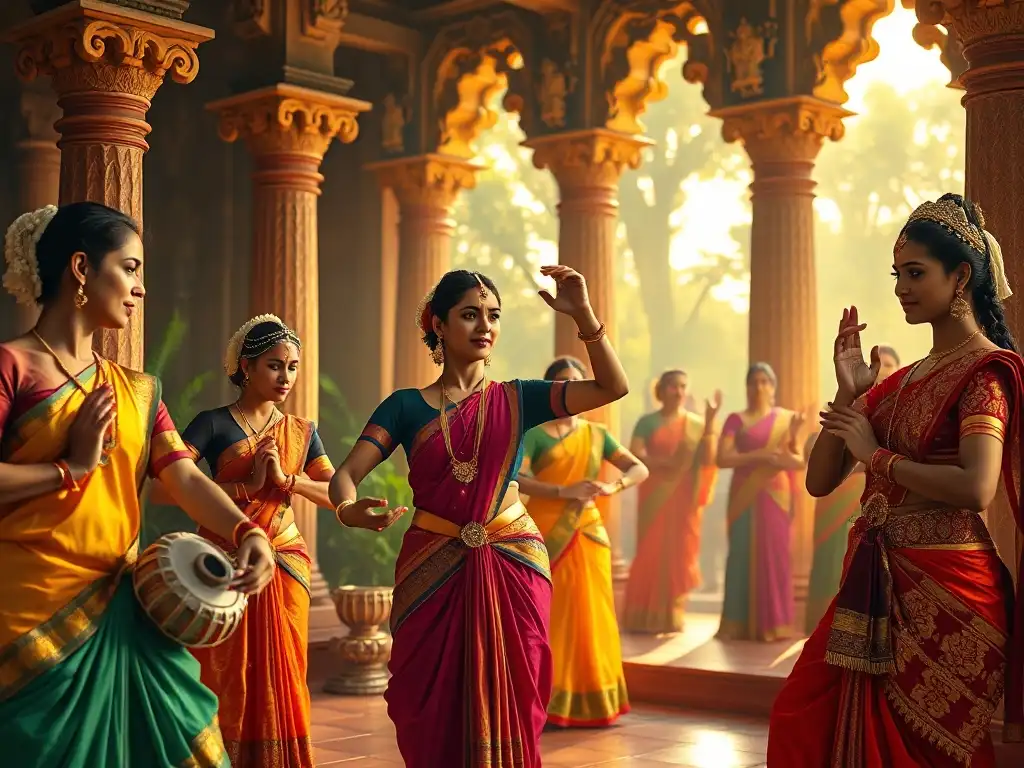
Welcome to Ancient India History, where we embark on a fascinating journey through the rich tapestry of India's past! Delve into the intricate connections between religion and the evolution of dance and music in ancient Indian civilizations. How did spiritual beliefs shape the vibrant art forms we see today? As you explore our main article, "The Influence of Religion on the Evolution of Dance and Music in Ancient India," prepare to uncover the profound impact of faith on artistic expression. Let the rhythm of history guide you as you discover the enchanting stories that have shaped our cultural heritage!
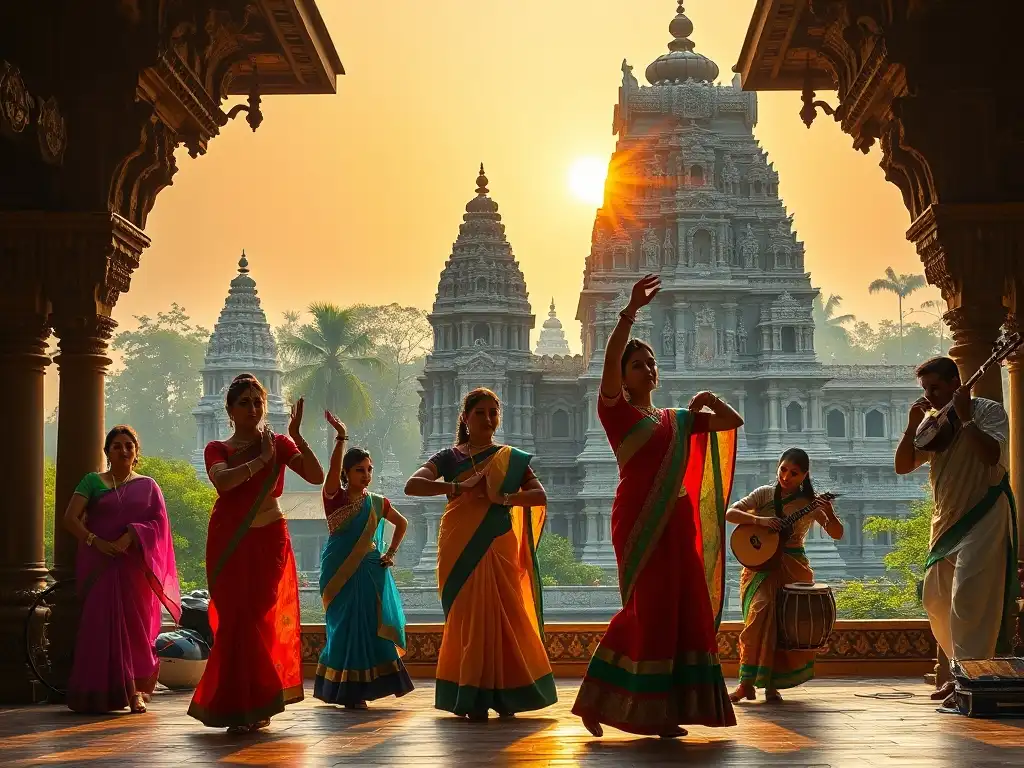
Introduction to Religion's Impact on Ancient Indian Dance
The intricate tapestry of ancient Indian civilization is woven with threads of spirituality, culture, and art. Among the myriad forms of expression that emerged during this era, dance and music stand out as vital components influenced profoundly by the religious beliefs and practices of the time. The evolution of these art forms cannot be fully appreciated without recognizing the significant role that religion played in shaping their styles, themes, and performances. This article delves into the impact of religion on ancient Indian dance, highlighting how spiritual ideologies contributed to the development and transformation of these artistic expressions throughout history.
Overview of Ancient Indian Dance and Music
Ancient Indian dance and music are not merely forms of entertainment; they are deeply rooted in the cultural and religious fabric of the society. These art forms served as a medium for storytelling, ritualistic practices, and even spiritual enlightenment. Various styles of dance, such as Bharatanatyam, Kathak, and Odissi, along with diverse musical traditions, evolved to depict narratives from mythology, scriptures, and everyday life, often reflecting the divine.
- Key Characteristics of Ancient Indian Dance:
- Expressive Movements: Each gesture (mudra) conveys a specific emotion or idea.
- Thematic Content: Many performances revolve around religious themes, particularly from Hindu mythology.
- Costumes and Accessories: Elaborate attire and ornaments enhance the visual appeal and signify the cultural context.
- Musical Elements:
- Instruments Used: Traditional instruments like the veena, mridangam, and bamboo flute played a significant role.
- Raga and Tala: The structured melodic and rhythmic frameworks that guide the musical compositions, often tied to specific moods or times of the day.
Importance of Religion in Ancient Indian Culture
Religion was the cornerstone of ancient Indian culture, influencing various aspects of daily life, societal norms, and artistic endeavors. The spiritual beliefs of the time were not limited to personal faith; they permeated communal activities, including dance and music. Festivals, religious ceremonies, and temple rituals often featured performances that celebrated deities and narrated sacred stories, thereby intertwining the sacred with the artistic.
- Key Functions of Religion in Art:
- Ritualistic Significance: Many dances and musical forms were performed as offerings to the gods.
- Cultural Preservation: Religious texts and oral traditions were embodied in dance and music, preserving the cultural heritage for future generations.
Historical Context of Religion in Ancient India
Understanding the historical context of religion in ancient India is essential to grasp the evolution of dance and music. The subcontinent witnessed the rise and fall of several dynasties, each contributing to the rich cultural milieu and religious landscape.
Major Religions and Philosophies in Ancient India
The religious landscape of ancient India was diverse, encompassing Hinduism, Buddhism, Jainism, and later, Islam. Each of these religions brought unique philosophies and artistic expressions that influenced dance and music.
| Religion | Key Contributions to Dance and Music |
|---|---|
| Hinduism | Emphasis on mythological themes and temple rituals |
| Buddhism | Integration of meditation and spiritual narratives |
| Jainism | Focus on non-violence and purity, influencing lyrical content |
| Islam | Introduction of new musical forms and styles |
The Role of Religion in Society and Culture
In ancient India, religion was not merely a personal belief system; it dictated social hierarchies, cultural practices, and artistic expressions. The patronage of kings and temples often depended on religious affiliations, which in turn influenced the development of dance and music.
- Patronage Systems: Many dancers and musicians were supported by royal courts, where religious observances often dictated the types of performances commissioned.
- Cultural Festivals: Religious festivals provided platforms for showcasing artistic talents, thus reinforcing the connection between art and spirituality.
By exploring these dimensions, we can better appreciate how deeply intertwined religion and the evolution of dance and music were in ancient India, setting the stage for future artistic expressions that continue to resonate today.
The Interconnection of Religion and Dance in Ancient India
The relationship between religion and dance in ancient India is deeply rooted in the cultural and spiritual fabric of the civilization. Dance was not merely a form of artistic expression; it served as a medium for conveying religious stories, rituals, and emotions.
This interconnection can be traced back to the Vedic period, where dance was often associated with religious ceremonies aimed at appeasing deities and seeking blessings. The ancient texts, including the Natya Shastra attributed to Bharata Muni, highlight the significance of dance in rituals, suggesting that it was perceived as a divine act that connected the earthly realm with the spiritual.
Classical dance forms such as Bharatanatyam, Kathak, and Odissi evolved from this sacred nexus, integrating movement with storytelling, mythology, and spiritual practice. The dancers often embody deities, narrating tales from Hindu epics like the Ramayana and Mahabharata, thus creating a tangible connection between the performer, the audience, and the divine. This intertwining of religion and dance not only enriched the performance art but also ensured the preservation of ancient narratives and religious values through generations.
Religious Themes in Classical Dance Forms
Classical dance forms in ancient India are rich in religious themes, reflecting the diverse spiritual beliefs of the time. Each dance style has its distinct narrative elements, often rooted in Hindu mythology, showcasing the lives and exploits of gods and goddesses. For instance, Bharatanatyam often depicts the stories of deities like Shiva and Parvati, illustrating their cosmic dance and the balance of creation and destruction.
In Kathak, the themes of devotion (bhakti) are prevalent, where dancers express their love and reverence for Lord Krishna through intricate footwork and expressive facial gestures. The emotive quality of dance allows for an exploration of deep spiritual sentiments, transcending mere entertainment to become a spiritual offering. The use of sacred texts, such as the Bhagavad Gita and various Puranas, further emphasizes the religious context, providing dancers with a wealth of narratives to interpret through movement.
Ritualistic Dance Practices in Religious Contexts
Ritualistic dance practices have played a pivotal role in religious contexts throughout ancient India. These dances were performed during specific ceremonies, festivals, and rites of passage, often aimed at invoking divine blessings or celebrating seasonal changes. For example, the Garba dance, traditionally performed during the Navaratri festival, honors the goddess Durga and symbolizes the victory of good over evil.
Moreover, temple dance forms, such as Devadasi performances, were integral to worship in ancient Indian temples, where dancers would perform in front of idols, creating a sacred atmosphere. These performances were not merely artistic expressions; they were acts of devotion, seen as a way to connect with the divine. The rhythmic movements and elaborate gestures in these rituals served to elevate the spiritual experience for both the dancers and the worshippers, reinforcing the profound bond between religion and dance.
The Influence of Religion on Music in Ancient India
Religion has significantly influenced the evolution of music in ancient India, shaping its forms, styles, and purposes. Sacred music was an important aspect of religious rituals, serving to enhance the spiritual ambiance and facilitate a connection with the divine. The Vedas, particularly the Samaveda, emphasize musical recitation as a means of worship, indicating that music was intertwined with the liturgical practices of the time.
As the centuries progressed, various forms of religious music emerged, including devotional hymns (bhajans), classical ragas, and folk songs, each reflecting the diverse religious landscape of ancient India. Music became a vital part of temple rituals, festivals, and personal devotion, further solidifying its role as a spiritual practice.
Sacred Music and Its Role in Worship
Sacred music in ancient India was not only an artistic expression but also a fundamental aspect of worship. The chanting of mantras and hymns played a crucial role in religious ceremonies, believed to invoke divine presence and blessings. This practice can be traced back to the Vedic traditions, where the recitation of the Samaveda was specifically designed for musical performance during rituals.
Additionally, the use of devotional music in temples accompanied various rituals, enhancing the spiritual experience for devotees. Instruments such as the veena and mridangam were often employed to create an atmosphere conducive to worship, allowing the congregation to immerse themselves in a transcendent experience. This sacred music has continued to evolve, influencing various musical genres while maintaining its core function in religious practices.
Musical Instruments Associated with Religious Practices
The development of musical instruments in ancient India is closely linked to religious practices. Many instruments were designed specifically for use in temples and during rituals. For instance, the nadaswaram, a traditional wind instrument, is often played during ceremonies and auspicious occasions, symbolizing the presence of the divine.
Moreover, percussion instruments like the tabla and mridangam were integral to classical music, providing rhythmic support for devotional songs and dance. The ghungroo, ankle bells worn by dancers, also contributed to the musical aspect of dance, creating an auditory experience that complemented the visual performance. The evolution of these instruments reflects the ongoing relationship between music and spirituality, highlighting their importance in ancient Indian culture.
The Evolution of Musical Styles Through Religious Influence
The evolution of musical styles in ancient India was profoundly shaped by religious influence. As different religious movements emerged, they brought with them unique musical traditions that enriched the cultural landscape. The Bhakti movement, for example, emphasized personal devotion and led to the proliferation of devotional music across various regions, resulting in distinct styles like kirtan and bhajan.
Similarly, the interaction between different religious communities facilitated the exchange of musical ideas and practices, resulting in a fusion of styles that enriched the Indian musical repertoire. The emergence of classical music systems, such as Hindustani and Carnatic music, can also be traced back to these religious influences, as they incorporated elements of sacred texts and devotional themes.
Through centuries, the evolution of musical styles has continued to reflect the changing religious context, showcasing how religion serves as a catalyst for artistic expression and innovation in ancient Indian music.
Case Studies: Exemplifying Religion's Impact on Dance and Music
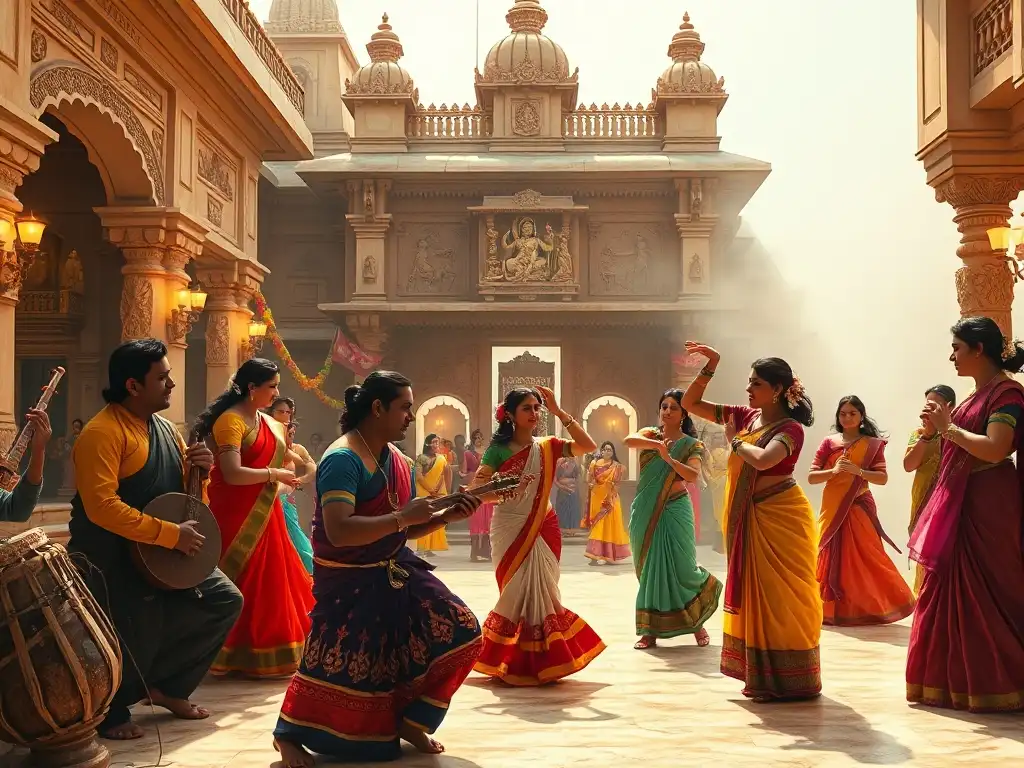
Religion played a pivotal role in shaping the artistic expressions of ancient India, especially in dance and music. Various case studies highlight how religious beliefs influenced these art forms, creating unique styles that resonated with spiritual narratives and rituals.
One prominent example is the classical dance form of Bharatanatyam, which originated in the temples of Tamil Nadu. This dance is deeply intertwined with Hindu mythology and religious practices, often depicting stories of gods and goddesses through expressive movements and intricate facial expressions. The music that accompanies Bharatanatyam, rooted in Carnatic traditions, enhances the spiritual experience, creating a holistic form of worship.
Similarly, the ancient practice of Sufi music, particularly Qawwali, illustrates the intersection of religion and music in the Islamic tradition. Qawwali performances, often held during religious gatherings, invoke a sense of divine connection and serve as a medium for spiritual expression. These performances, rich in poetic content, draw on themes of love, devotion, and the quest for the divine, demonstrating how religion influences the thematic elements of music.
The Role of Temples in Promoting Dance and Music
Temples in ancient India were not merely places of worship; they were vibrant cultural hubs that promoted dance and music. Many classical dance forms, such as Odissi, Kathakali, and Manipuri, have their roots in temple rituals. These forms were often performed as a part of religious offerings, thereby elevating their status as sacred arts.
The architecture of temples often included spaces specifically designed for dance and music performances, such as the Natya Mandapa in Hindu temples. These spaces allowed for the performance of ritualistic dances that narrated stories from religious texts, fostering a community spirit and deepening the connection between the devotees and the divine.
Moreover, temples served as training grounds for artists. Gurus would impart knowledge to their disciples, ensuring the preservation and evolution of various dance and music styles. This nurturing environment not only enhanced the artistic quality but also integrated religious teachings into the performances, further solidifying the bond between religion and the arts.
Festivals as Catalysts for Dance and Music Evolution
Festivals in ancient India acted as significant catalysts for the evolution of dance and music. These celebrations provided a platform for artists to showcase their talents and often featured elaborate performances that were intricately linked to religious narratives.
For instance, during the festival of Navaratri, the dance form Garba becomes a central feature. This dance, dedicated to the goddess Durga, transforms communal spaces into vibrant arenas of expression and devotion. The rhythm of the music, combined with the energy of the dance, fosters a sense of unity among participants and enhances the spiritual atmosphere of the celebration.
Similarly, the annual celebration of the Durga Puja in West Bengal sees traditional performances of Baul music and dance, which reflect the region's spiritual and cultural heritage. These performances not only entertain but also educate the audience about religious stories and values, showcasing how festivals can serve as a breeding ground for artistic innovation while remaining rooted in religious significance.
Comparison of Dance and Music Across Different Religions
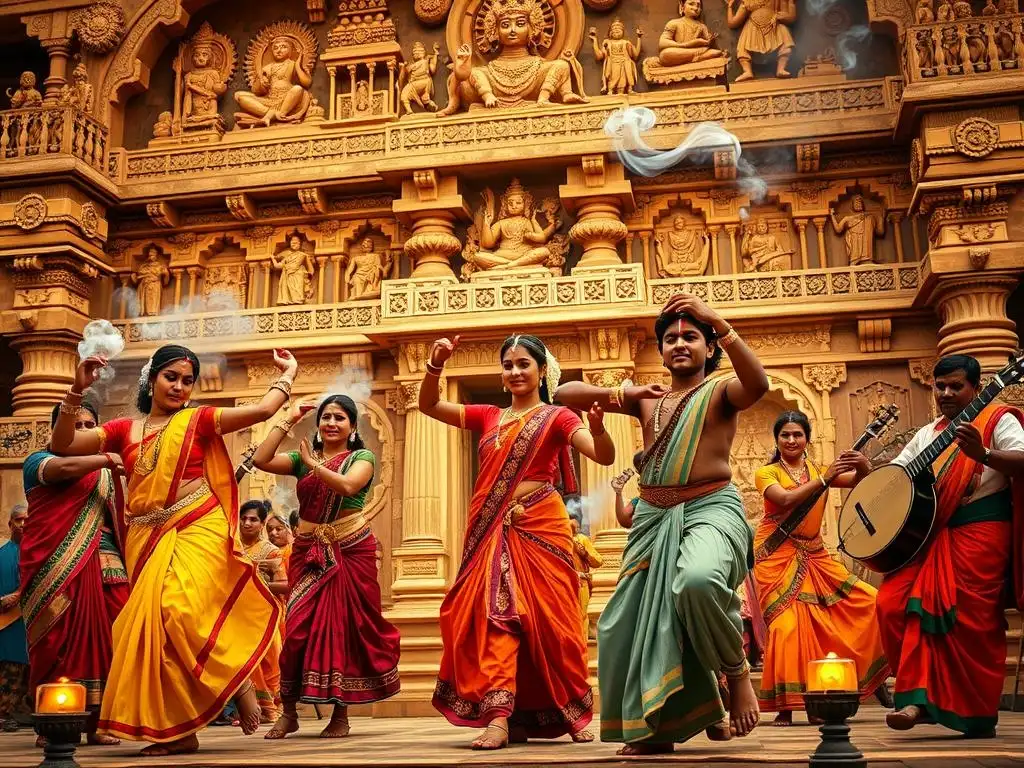
The comparison of dance and music across different religions in ancient India reveals both distinct styles and common threads that unify these art forms. Each religion contributed unique elements that enriched the cultural tapestry of the subcontinent.
Distinct Styles and Forms in Hinduism, Buddhism, and Jainism
Hinduism is characterized by its diverse range of classical dance forms like Bharatanatyam, Kathak, and Odissi, which often narrate stories from epics like the Mahabharata and Ramayana. The music accompanying these dances typically comprises intricate ragas and talas, reflecting the complexity and depth of Hindu spirituality.
Buddhism, on the other hand, introduced dance forms that were less focused on narrative and more on meditation and spiritual expression. Tibetan Buddhist dance, for instance, incorporates ritualistic movements that aim to evoke a sense of transcendence and connection to the divine.
Jainism's influence on dance and music is evident in the serene and contemplative nature of its performances, often emphasizing themes of non-violence and spirituality. The rituals surrounding Jain festivals may include traditional music that promotes introspection and moral teachings.
Shared Elements and Cross-Influences
Despite the distinct styles, there are notable shared elements across the dance and music of these religions. One significant commonality is the use of rhythmic patterns (tala) and melodic frameworks (raga), which transcend individual religious boundaries and create a shared musical language.
Moreover, the themes of devotion, spirituality, and the quest for the divine are prevalent across all three religions. This thematic overlap allows for cross-influences; for instance, the incorporation of Buddhist motifs into Hindu dance forms or the exchange of musical styles during inter-religious festivals.
Overall, the interaction between different religious traditions enriched the artistic expressions of ancient India, illustrating the profound impact of religion on the evolution of dance and music.
Conclusion: The Lasting Legacy of Religion on Ancient Indian Dance and Music
The interplay between religion and the arts in ancient India has left an indelible mark on the evolution of dance and music, shaping their forms, themes, and practices throughout history. Rooted deeply in spiritual traditions, dance and music were not merely entertainment; they served as vehicles for devotion, storytelling, and community bonding. The intricate relationship between various religious beliefs—such as Hinduism, Buddhism, and Jainism—and these art forms is evident in the way they were performed, the narratives they conveyed, and the rituals they accompanied.
As a result, the legacy of religious influence is not just historical but continues to resonate in contemporary practices. The classical dance forms like Bharatanatyam, Kathak, and Odissi are steeped in religious narratives, often depicting themes from spiritual texts and mythologies.
Similarly, the music of ancient India, characterized by ragas and talas, remains intertwined with religious expression, serving as an integral part of worship and cultural ceremonies. This enduring connection highlights the significance of religion in the artistic landscape of ancient India, reminding us that these art forms are as much about cultural identity as they are about spiritual expression.
Reflection on the Evolution of Art Forms in Ancient India
The evolution of dance and music in ancient India reflects a continuous dialogue between cultural heritage and spiritual beliefs. From the early rituals of the Indus Valley civilization, where music and dance likely played roles in religious ceremonies, to the grand temples of the Gupta Empire where performances became elaborate cultural expressions, the journey is rich and complex.
Each period in ancient Indian history saw the adaptation and transformation of these art forms in response to changing religious ideologies and societal structures. For instance, the emergence of Bhakti and Sufi movements introduced new themes of devotion and love into dance and music, allowing for greater emotional expression and inclusivity. This fluidity in art forms illustrates how they were not static but rather dynamic entities influenced by the prevailing religious and cultural currents.
The Continuing Influence of Ancient Religious Practices on Contemporary Indian Dance and Music
The religious practices of ancient India have profoundly influenced contemporary dance and music, ensuring that the spiritual essence remains vibrant in modern interpretations. Today, classical dance forms still draw heavily from ancient texts, with performances often narrating mythological stories, exploring themes of divinity, and embodying religious rituals.
Moreover, modern musicians frequently incorporate traditional ragas and rhythms into their compositions, bridging the gap between the past and present. Festivals and cultural events often showcase these art forms as a means of connecting with heritage, underscoring their significance in contemporary society. As artists continue to explore and reinterpret ancient themes, the essence of these religious practices is preserved, allowing for a rich tapestry of cultural expression that honors its roots while evolving with the times.
References for Further Reading
Suggested Books and Articles on Ancient Indian Dance and Religion
- "The Dance of Shiva: Fourteen Indian Essays" by Ananda K. Coomaraswamy
- This collection explores the relationship between dance, religion, and the cultural identity of India.
- "Indian Classical Dance: Tradition in Transition" by Leela Venkataraman
- An insightful examination of how traditional dance forms have adapted to modern contexts while retaining their religious significance.
- "The Music of India: The Art of Indian Classical Music" by Raghavendra Rao
- A comprehensive overview of the evolution of Indian classical music, emphasizing its connections to spirituality and religious practices.
Documentaries and Online Resources for Exploration
- "The Dance of India" (Documentary)
- This documentary explores various dance forms across India, highlighting their historical roots and religious significance.
- "Sacred Music of India" (Online Resource)
- An interactive platform offering insights into the sacred music traditions of India, showcasing performances, interviews, and cultural contexts.
- YouTube Channels such as "NCPA India"
- These channels provide access to performances and discussions related to Indian classical music and dance, often featuring the religious underpinnings of the art forms.
The intersection of religion and the arts in ancient India continues to inspire and inform contemporary practices, offering a rich field of study for those interested in understanding the profound impact of spirituality on cultural expression.
- Introduction to Religion's Impact on Ancient Indian Dance
- Historical Context of Religion in Ancient India
- The Interconnection of Religion and Dance in Ancient India
- The Influence of Religion on Music in Ancient India
- Case Studies: Exemplifying Religion's Impact on Dance and Music
- The Role of Temples in Promoting Dance and Music
- Festivals as Catalysts for Dance and Music Evolution
- Comparison of Dance and Music Across Different Religions
- Conclusion: The Lasting Legacy of Religion on Ancient Indian Dance and Music
- References for Further Reading
- What role did religion play in ancient Indian dance?
- How did the Indus Valley Civilization contribute to dance?
- What are the main religions that influenced ancient Indian dance?
- How did the Gupta Empire affect the evolution of dance and music?
- Are there specific dance forms that showcase religious influence?
Frequently Asked Questions
What role did religion play in ancient Indian dance?
Religion was a central influence on ancient Indian dance, shaping its themes, movements, and performances. Dance often served as a form of worship, expressing devotion to deities.
How did the Indus Valley Civilization contribute to dance?
The Indus Valley Civilization laid the groundwork for many cultural practices, including dance. Archaeological findings suggest that dance was an integral part of their rituals and celebrations.
What are the main religions that influenced ancient Indian dance?
Key religions such as Hinduism, Buddhism, and Jainism significantly impacted the evolution of dance. Each religion contributed distinct styles and narratives, enriching the dance forms.
How did the Gupta Empire affect the evolution of dance and music?
The Gupta Empire is known for its cultural renaissance, where dance and music flourished. This period saw the formalization of classical dance forms, heavily influenced by religious themes.
Are there specific dance forms that showcase religious influence?
Yes, dance forms like Bharatanatyam, Kathak, and Odissi prominently feature religious narratives and themes. They often depict stories from scriptures and are performed in temples and during festivals.
Final Reflection: The Enduring Legacy of Religion's Impact on Ancient Indian Dance
The intricate relationship between religion and the evolution of dance and music in ancient India continues to resonate profoundly in our contemporary world. Today, as we witness a resurgence of interest in traditional art forms, it is essential to recognize how these spiritual practices shaped the very fabric of cultural expression. The rhythms and movements that once served as offerings to deities now inspire modern performances, reminding us that art is not merely a reflection of society but a vessel for spiritual connection and transcendence.
Culture is a living entity, continuously influenced by its historical roots. The legacy of ancient Indian dance and music, deeply intertwined with religious beliefs, has left an indelible mark on the social landscape. As we explore these art forms, we uncover layers of meaning that speak to the human experience, bridging the gap between the sacred and the secular. Dance is the hidden language of the soul.
This quote encapsulates the essence of how these ancient practices continue to inspire and elevate our collective consciousness, inviting us to engage with our own spiritual journeys through movement and melody.
As we reflect on the lessons of this article, I invite you to explore how the influence of religion on ancient Indian dance can inspire your own creative expressions. Consider how spirituality, in its many forms, can enrich your life and the lives of those around you.
Whether through dance, music, or other artistic endeavors, let the legacy of ancient traditions guide you in finding your unique voice and connecting with the deeper rhythms of existence. Embrace the transformative power of art, and allow it to illuminate your path as you contribute to the ongoing dialogue between the sacred and the secular in our ever-evolving cultural landscape.
Unveil the Rhythms of Ancient Spirituality!
Thank you for journeying through the rich tapestry of how religion shaped dance and music in Ancient India. Your interest in this captivating subject not only deepens your understanding but also enriches your appreciation of the cultural evolution present in history. Now that you’ve explored these fascinating connections, it's time to take action!
- Dive deeper into the rhythms: Attend a local event or class that showcases traditional Indian dance or music. Immerse yourself in these art forms that were once sacred practices.
- Share your insights: Engage in discussions about the interplay between religion and music with friends or on social media. Start a conversation about how these ancient forms continue to influence modern creativity.
- Join a community: Seek out online forums or local groups that focus on Indian history, dance, or music. Connect with others who share your passion and learn together!
Which aspect of Ancient India's dance and music has inspired you to explore further?