
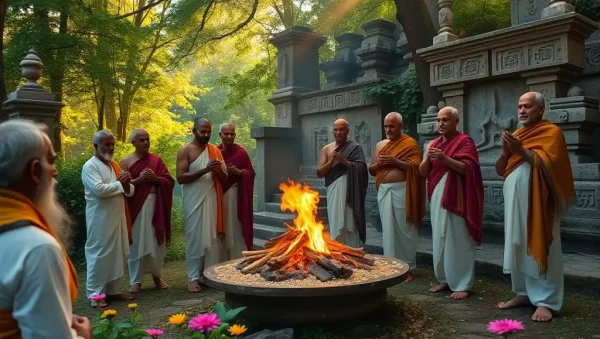
Hinduism - Scriptures (Vedas, Upanishads)
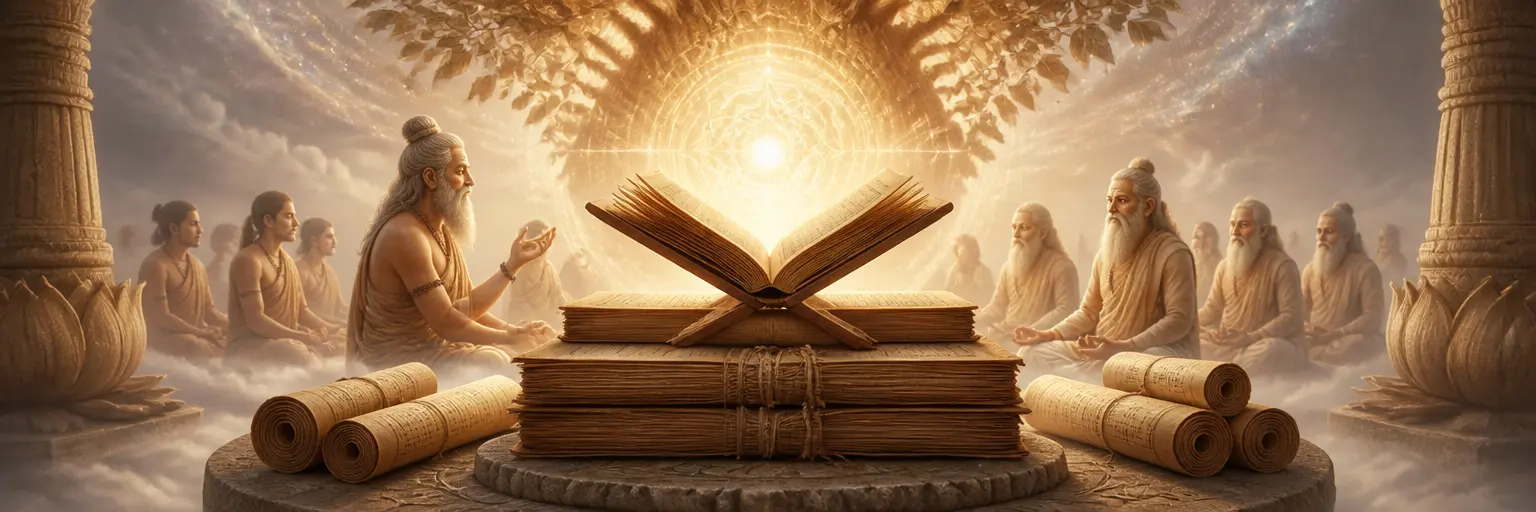

Hinduism - Scriptures (Vedas, Upanishads)
64 articles in this topic
Start here
- Hinduism - Scriptures (Vedas, Upanishads)The Mysteries of the Vedas: Unraveling Ancient Knowledge Systems
- Hinduism - Scriptures (Vedas, Upanishads)The Vedic Tradition of Chanting: Its Importance in Hindu Worship
- Hinduism - Scriptures (Vedas, Upanishads)The Role of Meditation in Vedic and Upanishadic Teachings
Read more about this topic
Explore the sacred wisdom of Hinduism through the Vedas and Upanishads 📜✨—foundational scriptures that illuminate ancient Indian philosophy, spirituality, rituals, cosmology, and the pursuit of ultimate truth. Discover their enduring influence on Hindu traditions and the intellectual heritage of ancient India.
More in Hinduism - Scriptures (Vedas, Upanishads)
Hinduism - Scriptures (Vedas, Upanishads)
Understanding the Four Vedas: A Comprehensive Overview

Hinduism - Scriptures (Vedas, Upanishads)
The Mystical Symbolism in Upanishadic Teachings
Hinduism - Scriptures (Vedas, Upanishads)
The Language of the Vedas: Sanskrit's Role in Hindu Scriptures
Hinduism - Scriptures (Vedas, Upanishads)
How the Vedas Addressed the Social Issues of Ancient India
Hinduism - Scriptures (Vedas, Upanishads)
Upanishads Unveiled: The Philosophical Depth of Hindu Thought
Hinduism - Scriptures (Vedas, Upanishads)
The Vedic Approach to Life: Lessons from Ancient Indian Scriptures
Hinduism - Scriptures (Vedas, Upanishads)
The Upanishads and the Quest for Ultimate Truth: Insights for Today
Hinduism - Scriptures (Vedas, Upanishads)
The Evolution of Hindu Philosophy: From Vedas to Upanishads
📜 Hinduism Scriptures: Vedas, Upanishads and Ancient Indian Sacred Texts
Explore the spiritual, philosophical, and literary foundations of Hinduism through the Vedas, Upanishads, Brahmanas, Aranyakas, and related Sanskrit scriptures. This subcategory on Ancient India History examines how sacred texts shaped ancient Indian religion, rituals, mythology, ethics, social ideas, meditation, and the search for ultimate reality. Discover reliable historical context, accessible explanations, translations, key concepts, and interpretations of India’s oldest religious literature.
🕉️ The Vedas: Foundations of Hindu Religious Tradition
The Vedas are among the oldest surviving sacred texts of ancient India and form the foundation of Vedic religion and early Hindu thought. Readers can learn about the Rigveda, Samaveda, Yajurveda, and Atharvaveda, including their hymns, chants, sacrificial formulas, prayers, rituals, and references to deities such as Agni, Indra, Soma, Varuna, and Surya.
This section explains the historical development, oral transmission, Sanskrit language, and religious purpose of Vedic literature. Articles may explore Vedic sacrifices, fire rituals, priestly traditions, sacred sound, cosmology, and ancient Indian society, helping readers understand how the Vedas influenced later Hindu philosophy and religious practice.
📖 Understanding the Four Vedas
Each Veda has a distinct role within the wider Vedic tradition. The Rigveda preserves ancient hymns, the Samaveda organizes verses for ritual singing, the Yajurveda contains sacrificial formulas, and the Atharvaveda includes prayers, healing traditions, household rites, and protective charms. Together, they provide valuable evidence for studying ancient Indian religion and culture.
Readers can compare the contents, structure, themes, and historical importance of the four Vedas. Clear explanations introduce the Samhitas, ritual usage, priestly functions, and the relationship between Vedic scripture and later Hindu texts, making this subcategory useful for students, researchers, and anyone interested in India’s religious heritage.
🌿 The Upanishads and the Search for Ultimate Reality
The Upanishads represent a major development in Indian philosophical thought. These profound texts examine Brahman, Atman, karma, rebirth, moksha, consciousness, knowledge, meditation, and the nature of reality. Rather than focusing only on external ritual, the Upanishads explore inner wisdom and the relationship between the individual self and the universal principle.
Expect accessible discussions of important Upanishadic teachings, including the ideas of “Tat Tvam Asi”, the unity of Atman and Brahman, and the pursuit of spiritual liberation. Articles may also introduce major texts such as the Brihadaranyaka, Chandogya, Katha, Kena, Isha, Mundaka, Mandukya, and Taittiriya Upanishads.
🔥 Vedic Rituals, Sacrifice and Sacred Knowledge
Vedic rituals played a central role in ancient Indian religious life. This section explores yajna, soma rituals, fire offerings, mantras, altar construction, priests, and the relationship between ritual action and cosmic order, often expressed through the concept of rta. These subjects reveal how early communities understood divine powers, nature, kingship, prosperity, and social responsibility.
Readers can discover how ritual knowledge was preserved through memorization and oral recitation for generations. Content also explains the symbolism of fire, offerings, sacred speech, and ceremonial performance, showing how Vedic ritual traditions contributed to the later development of Hindu worship, temple practices, philosophy, and spiritual disciplines.
🧘 Philosophy, Meditation and Liberation
The later Vedic and Upanishadic traditions introduced influential ideas that shaped Indian philosophy. Topics include karma and rebirth, the meaning of dharma, the distinction between knowledge and ignorance, meditation, renunciation, self-discipline, and moksha. These concepts became central to Hindu religious thought and influenced schools such as Vedanta, Samkhya, Yoga, and Mimamsa.
Expect explanations of difficult philosophical ideas in their historical and cultural context. Rather than treating the scriptures as isolated works, this subcategory connects them with the broader intellectual history of ancient India, including ascetic movements, debates about ritual authority, and the evolution of spiritual paths based on knowledge, action, devotion, and meditation.
🏺 Historical Context of Vedic and Upanishadic Literature
Understanding Hindu scriptures requires attention to the societies that produced and preserved them. This section examines the transition from early Vedic communities to later Iron Age cultures, the growth of kingdoms, changing social structures, pastoral and agricultural life, and the emergence of new religious and philosophical questions in ancient India.
Readers can explore how historians use language, archaeology, comparative religion, textual analysis, and traditional commentaries to study Vedic literature. Articles emphasize historical context, chronology, authorship, oral tradition, manuscript transmission, and scholarly interpretation while recognizing that many scriptures developed over long periods rather than being written by a single author.
📚 Frequently Asked Questions About the Vedas and Upanishads
❓ What are the Vedas?
The Vedas are a collection of ancient Sanskrit sacred texts that form the foundation of Vedic religion and Hindu tradition. The four principal Vedas are the Rigveda, Samaveda, Yajurveda, and Atharvaveda. They contain hymns, prayers, chants, ritual instructions, sacrificial formulas, and reflections on the gods and cosmos.
❓ What is the difference between the Vedas and the Upanishads?
The Vedas include early hymns and ritual literature connected with sacrifice and worship, while the Upanishads focus more strongly on philosophical and spiritual questions. The Upanishads explore concepts such as Brahman, Atman, karma, rebirth, meditation, knowledge, and liberation, and are traditionally regarded as the concluding portion of Vedic literature.
❓ Which is the oldest Vedic scripture?
The Rigveda is generally regarded as the oldest of the four Vedas. It contains hundreds of hymns dedicated to deities and natural powers, including Agni, Indra, Soma, and Varuna. Its verses provide important evidence for understanding early Vedic religion, language, mythology, and society.
❓ What do the Upanishads teach?
The Upanishads teach that spiritual knowledge can reveal the deeper nature of reality and the self. Many Upanishadic passages examine the relationship between Atman, the inner self, and Brahman, ultimate reality. They also discuss meditation, ethical discipline, karma, rebirth, renunciation, and moksha, or liberation from the cycle of rebirth.
❓ Why are the Vedas and Upanishads important in ancient Indian history?
The Vedas and Upanishads are essential sources for studying the religious, philosophical, linguistic, and cultural history of ancient India. They preserve traditions about rituals, social life, cosmology, sacred learning, and spiritual practice, while also influencing later Hinduism, Indian philosophy, Sanskrit literature, yoga, Vedanta, and religious thought across Asia.